Overland 4x4 desert safari from Al-Ukhaidir to Bahr Al-Najaf
Overview
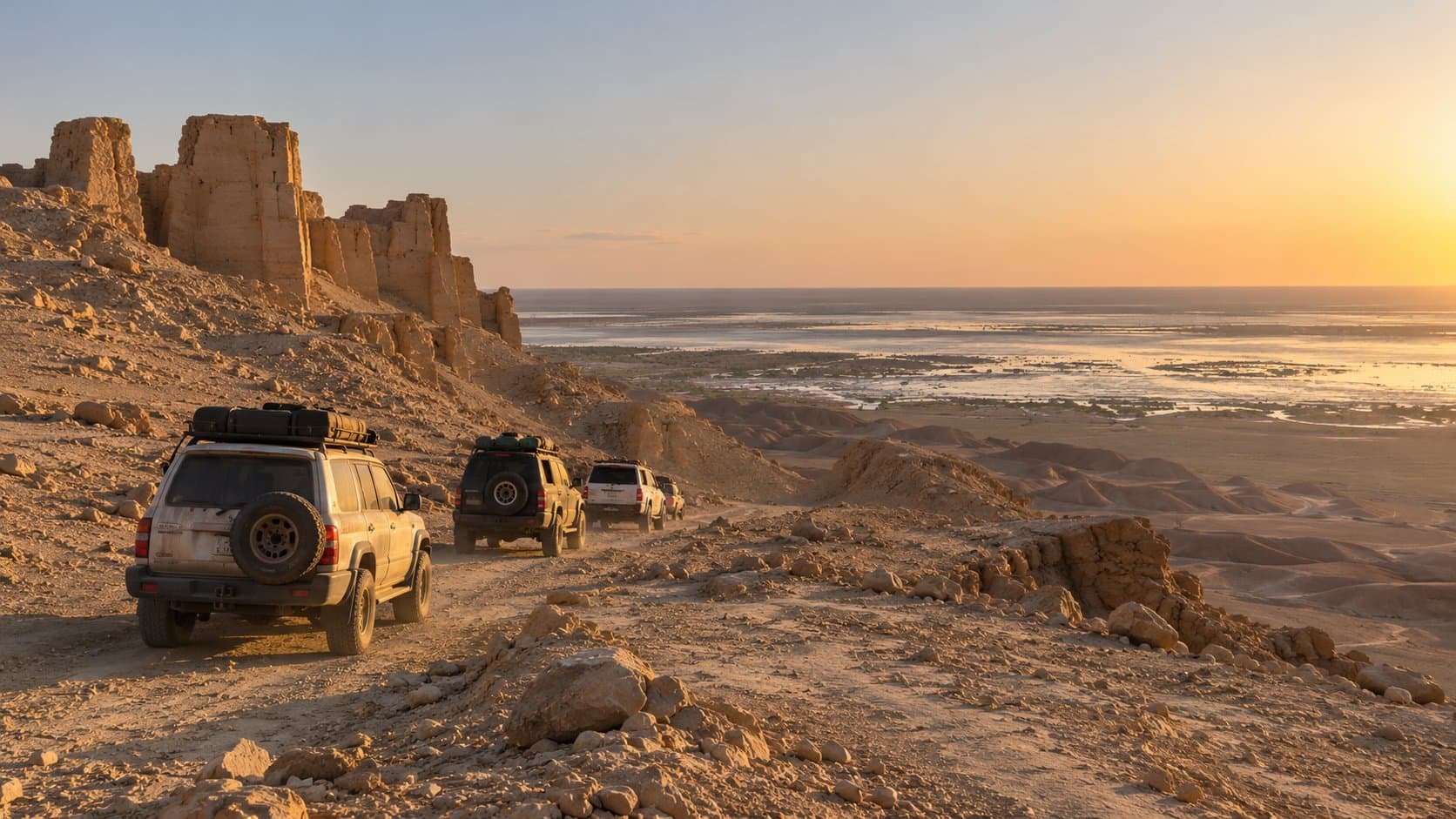
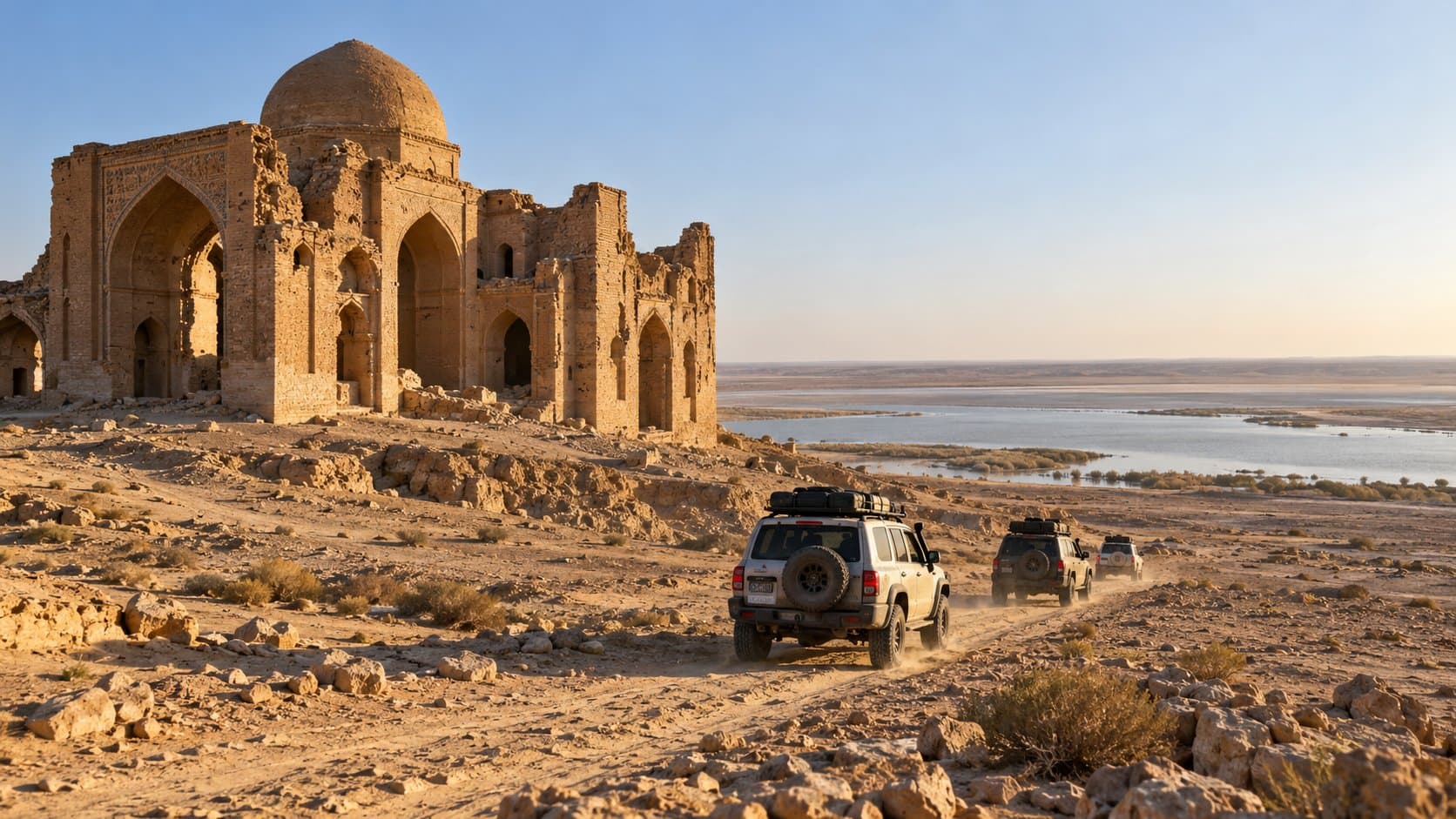
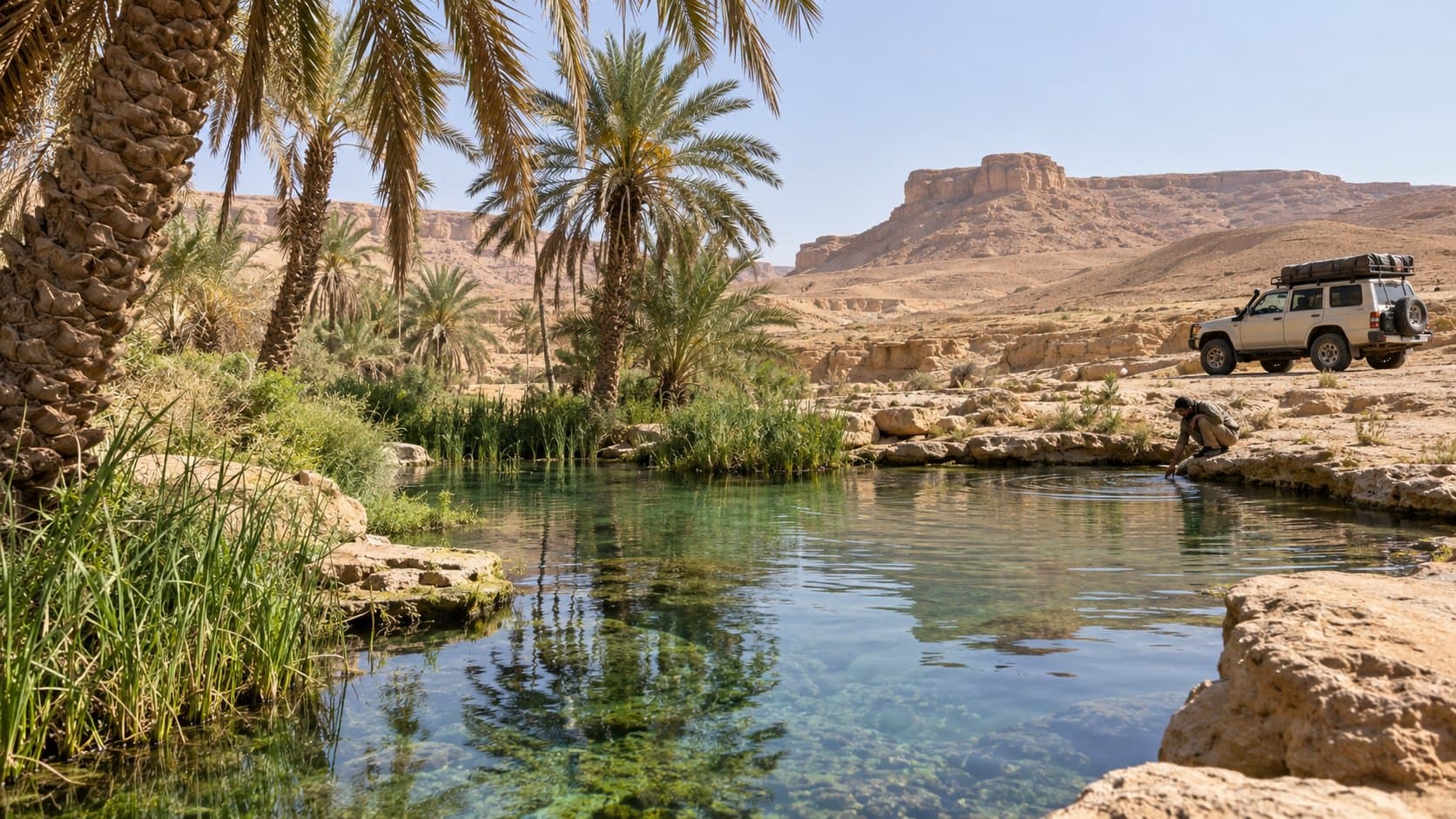
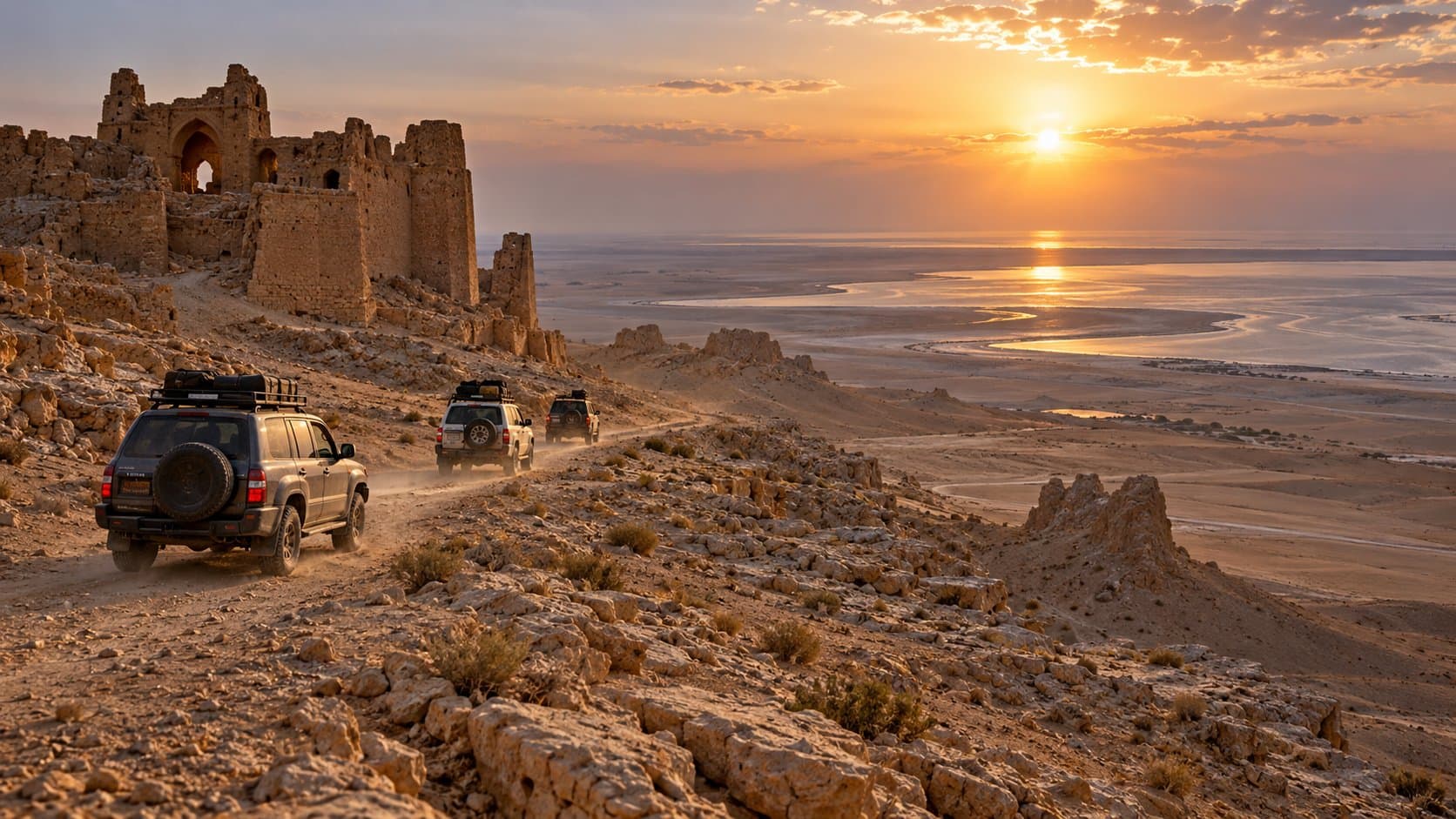
# Overland 4x4 desert safari from Al-Ukhaidir to Bahr Al-Najaf Al-Ukhaidir provides a compelling start to this journey, with limestone walls, shaded vaulted corridors, and courtyards that reward exploration on foot. Ain Tamr shifts the focus to oasis agriculture, where underground springs feed date palm groves. Ending near Bahr Al-Najaf rounds out an intriguing overland concept, but travelers should not mistake this idea for an established desert driving trail. This guide outlines stops to discuss with an experienced local operator. It does not establish a continuous off-road route, guarantee legal access to desert tracks, or verify safe fossil-viewing stops. ## Before you consider the drive Security comes before vehicle choice. At the time of research, the UK Foreign, Commonwealth & Development Office advised against all but essential travel to Karbala Province and southern sections of Najaf Province. The office also warned that travelling against official advice can invalidate travel insurance. Read the [current Iraq travel advice](https://www.gov.uk/foreign-travel-advice/iraq) and your own government's guidance before making plans. A holiday desert safari does not count as essential travel. Treat this route as a planning concept while those advisories remain in place. Hiring a guide, joining a convoy, or driving a capable 4x4 does not eliminate the underlying risk. {{image}} ## Start with Al-Ukhaidir's Abbasid architecture Al-Ukhaidir is an eighth-century Abbasid palace-fortress near Karbala. The complex holds courtyards, a mosque, and vaulted reception halls that warrant thorough exploration. The [fortress reference](https://en.wikipedia.org/wiki/Al-Ukhaidir_Fortress) describes its stone and brick construction and notes its inclusion on UNESCO's Tentative List. That tentative status is not the same as a confirmed World Heritage inscription. Give the fortress an unhurried visit rather than burning daylight on the road. Notice how the passages link the courtyards and how the arches frame successive rooms. The architecture is the reason to stop, not a backdrop for parking a vehicle. Have your operator confirm opening hours, admission charges, and photography rules before setting out. Never assume an online listing means the gate is open. Stay within permitted visitor paths, and keep vehicles well clear of the ancient masonry. {{image}} ## Make Ain Tamr a separate oasis stop Ain Tamr, also written Ayn al-Tamr, lies west of Karbala near Lake Razzaza. Its settlements center on mineral springs and date palm orchards, according to the [Ayn al-Tamr reference](https://en.wikipedia.org/wiki/Ayn_al-Tamr). While the oasis makes a logical stop, travelers should not expect public swimming facilities or open access to every spring. Ask your operator to name the specific spring or grove on the itinerary and confirm entry permissions with local custodians beforehand. Walking through an orchard with someone who understands irrigation and date cultivation gives the stop real purpose. Never enter private farms without permission, never drink untreated spring water, and never assume swimming is permitted. If you plan to visit Al-Ukhaidir and Ain Tamr on the same day, state that clearly to your driver. Request a mapped road route before committing. A list of nearby destinations on paper does not prove a passable desert track connects them. {{image}} ## Approach Bahr Al-Najaf without promising a fossil safari Bahr Al-Najaf, a large depression and seasonal lake west of Najaf, is the proposed end of this route. Demand an exact, verified viewpoint rather than accepting a vague pin on a map. No survey confirms a continuous off-road trail running directly from Al-Ukhaidir, nor does evidence guarantee access to fossil-bearing escarpments along the rim. If an operator advertises fossil cliffs, ask for the specific location name, supporting geological context, and confirmation that civilian visitors can legally and safely stop there. Do not accept claims about ancient marine deposits based solely on photos of shell impressions. If you visit an outcrop with an experienced guide, treat it as an educational look at desert geology, not a souvenir hunt. Leave all stones and fossils exactly where they lie. Never hammer into rock faces, scale crumbly bluffs, or drive four-wheel-drive vehicles up to cliff edges. Pick an established overlook only after the operator verifies current ground conditions and checkpoint clearance. If the guide cannot verify the stop, drop it from the day's plan. ## Build the trip around confirmed roads and daylight A clear, road-based outline is far safer than an unverified GPS track across open desert: 1. Confirm opening hours at Al-Ukhaidir and tour the fortress on foot. 2. Visit a prearranged date grove or named spring at Ain Tamr. 3. Stick to paved regional highways for the transfer south toward Najaf. 4. Stop at a Bahr Al-Najaf overlook only after verifying local access. 5. Spend the night at booked city accommodation rather than attempting an informal desert camp. Never book this as an ambitious one-day off-road trek. Demand real highway mileages, realistic buffer time for military checkpoints, daylight margins, and clear cancellation terms. If the operator proposes any off-pavement driving, treat it as an optional detour and insist on proof that the route is permitted and scouted recently. Najaf sits in a hot arid climate with blistering summer temperatures, as detailed in the [Najaf climate reference](https://en.wikipedia.org/wiki/Najaf). Late autumn through early spring offers milder daytime weather, but seasonal averages do not guarantee good conditions. Dust storms, intense wind, and sudden rains can make desert tracks impassable. Cancel open desert legs if visibility drops or bad weather rolls in. ## What to ask a 4x4 operator Get written details on the vehicle model, driver experience, planned route, and emergency protocols before paying a deposit. For any remote driving off main highways, insist on traveling with a second support vehicle. Verify that the crew carries sand ladders, tow straps, a working winch, extra fuel, and satellite communications or two-way radios that work outside cellular range. Pack ample drinking water, shelf-stable food, sun protection, personal medication, and sturdy walking shoes. Verify that your travel insurance policy covers Iraq, off-road vehicle travel, and emergency medical evacuation. Clarify whether the operator secures provincial permits and checkpoint clearances in advance. Keep cameras and phones away at all military checkpoints and government facilities. Never approach metal scrap or unusual roadside debris. The [FCDO advice](https://www.gov.uk/foreign-travel-advice/iraq) warns explicitly against touching drone fragments, missile remnants, or unexploded ordnance. The real reward of this journey lies in the architecture of Al-Ukhaidir and the quiet palm groves of Ain Tamr. Use four-wheel drive as practical transport between real sites, not as an excuse to push into uncharted desert. ## Frequently asked questions ```json {"faqs":[{"id":"faq-1","question":"Is there a verified off-road route between Al-Ukhaidir and Bahr Al-Najaf?","answer":"No. This itinerary links distinct regional destinations, not a verified continuous desert track. Travel between them using paved highways, and rely on an experienced local operator for any authorized side trips."},{"id":"faq-2","question":"Is it safe to book this safari as a tourist right now?","answer":"Official travel advisories, including guidance from the UK Foreign Office, advise against all but essential travel to Karbala Province and southern Najaf Province. Check your government's current safety advice before making any plans."},{"id":"faq-3","question":"What can visitors see at Al-Ukhaidir Fortress?","answer":"The eighth-century Abbasid complex has massive limestone walls, internal courtyards, an early mosque, vaulted corridors, and grand reception halls. Confirm site hours and local visitor rules before arrival."},{"id":"faq-4","question":"Can travelers swim in the mineral springs at Ain Tamr?","answer":"Most springs in the oasis sit on private farmland or serve local irrigation. Do not expect public swimming facilities. Have your operator confirm access to a specific site, and never drink untreated water."},{"id":"faq-5","question":"Are fossil cliffs guaranteed near Bahr Al-Najaf?","answer":"No specific fossil site along the escarpment is verified for open tourism on this route. Ask your tour guide for exact coordinates and site permissions before visiting, and leave all rocks and fossils untouched."},{"id":"faq-6","question":"What equipment and planning should a desert 4x4 tour include?","answer":"Bookings should include a proven four-wheel-drive vehicle, an experienced driver, recovery gear like sand ladders and tow straps, backup communications, and a solid emergency plan. Ensure your insurance explicitly covers off-road travel in Iraq."}]} ``` ## Sources - UK Foreign, Commonwealth & Development Office. "Iraq travel advice." https://www.gov.uk/foreign-travel-advice/iraq. Accessed 25 October 2026. - Wikipedia contributors. "Al-Ukhaidir Fortress." https://en.wikipedia.org/wiki/Al-Ukhaidir_Fortress. Accessed 25 October 2026. - Wikipedia contributors. "Ayn al-Tamr." https://en.wikipedia.org/wiki/Ayn_al-Tamr. Accessed 25 October 2026. - Wikipedia contributors. "Najaf." https://en.wikipedia.org/wiki/Najaf. Accessed 25 October 2026.