Winter Birdwatching in the Central Marshes
Overview
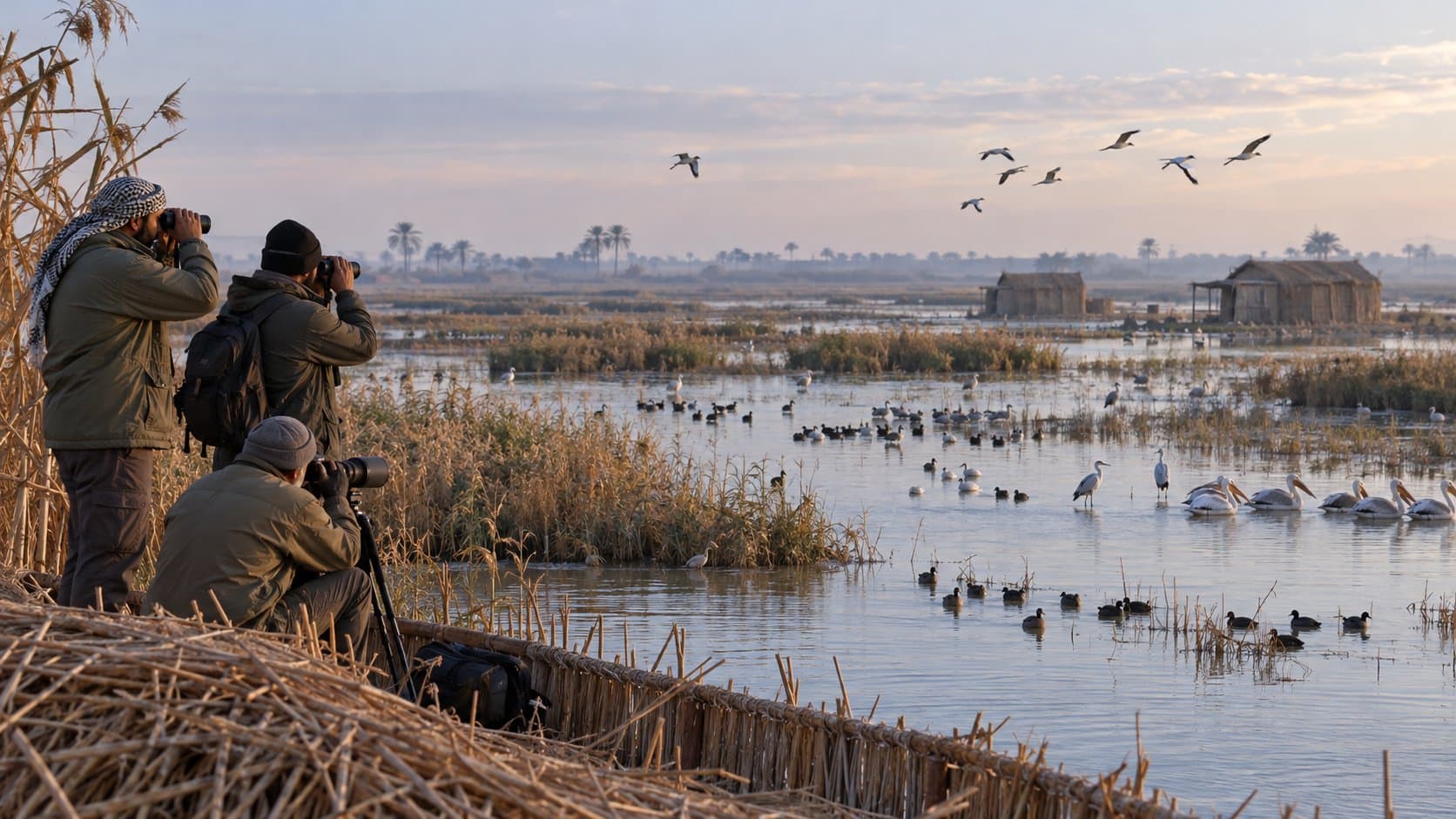
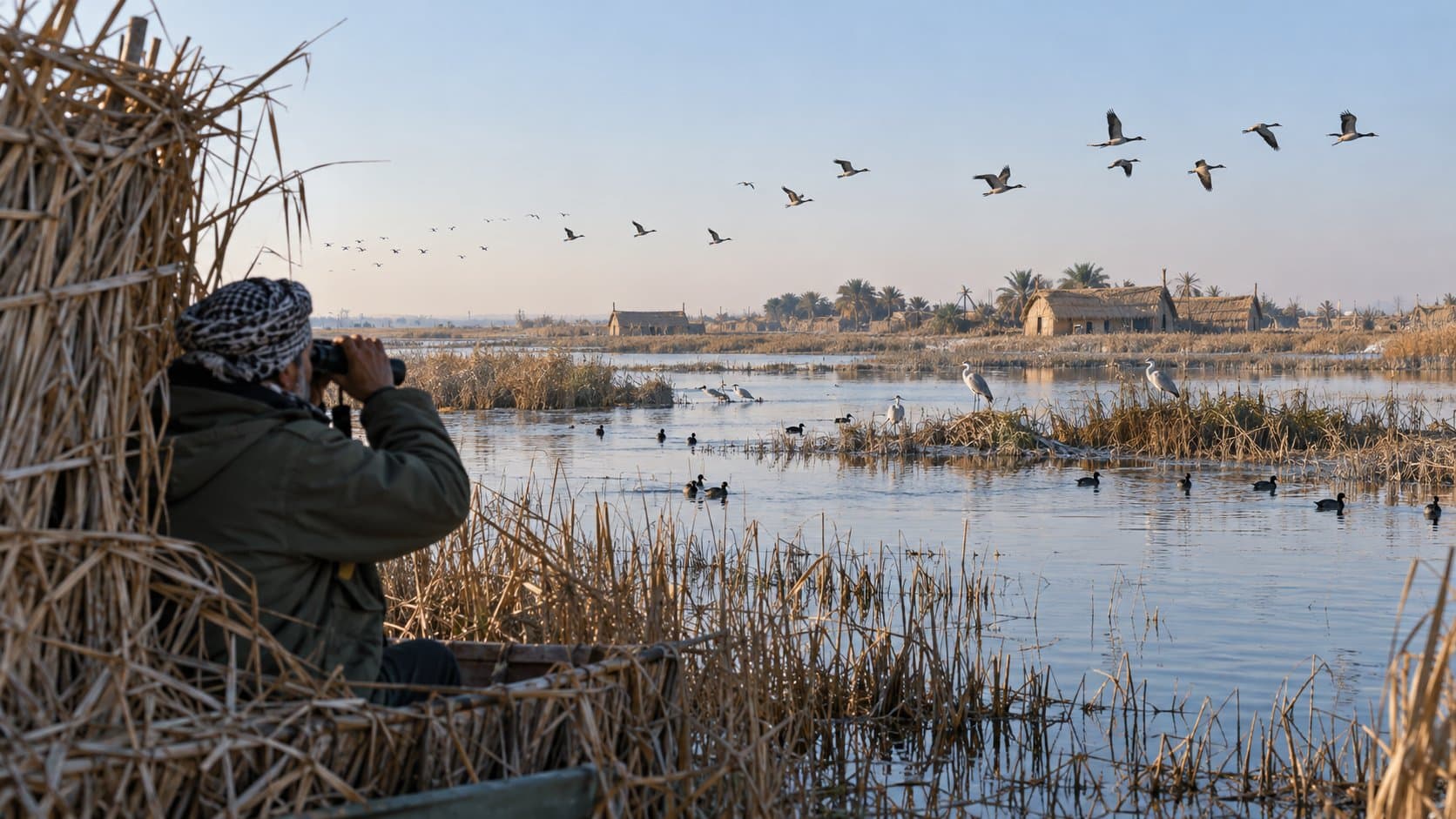
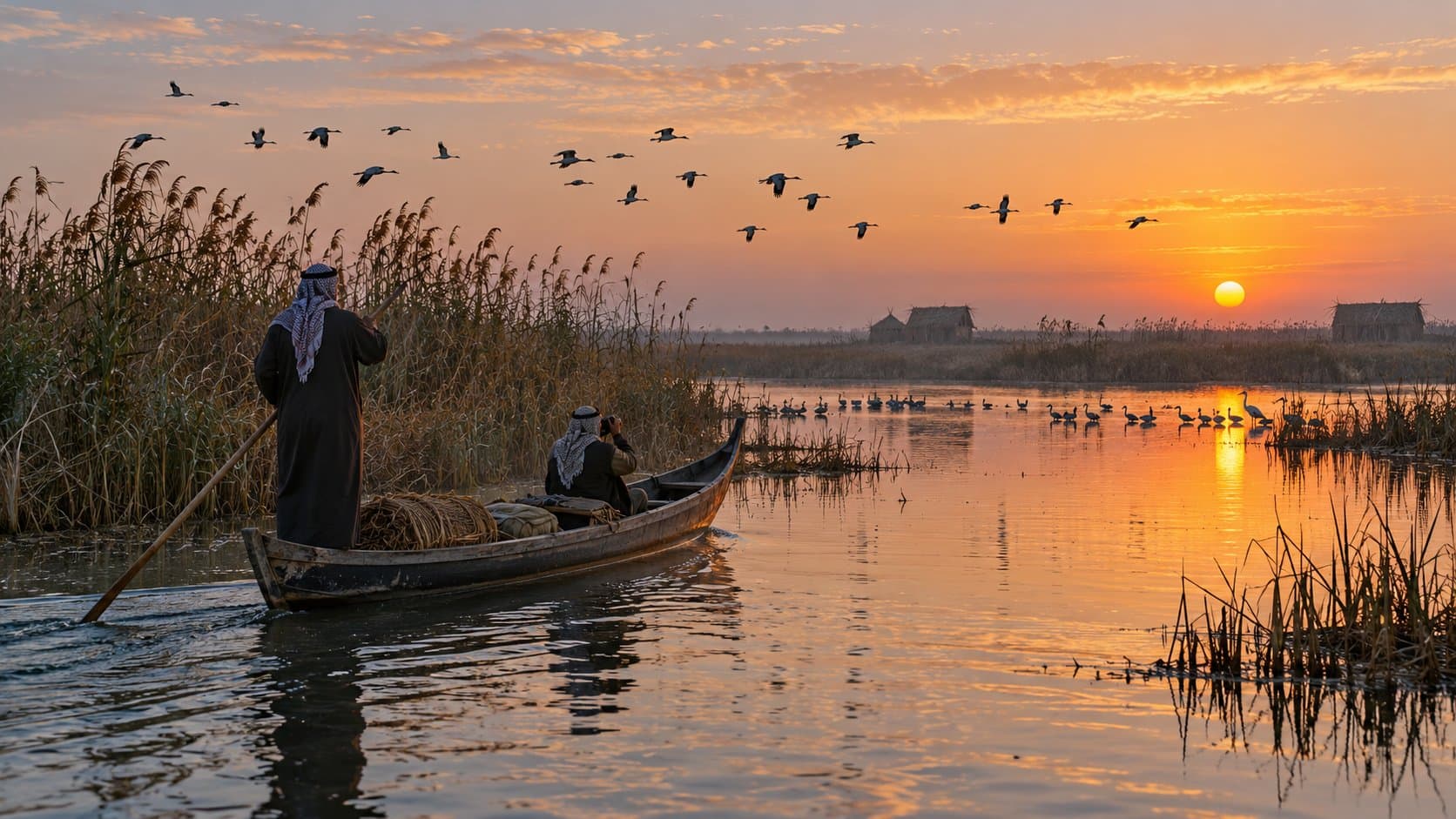
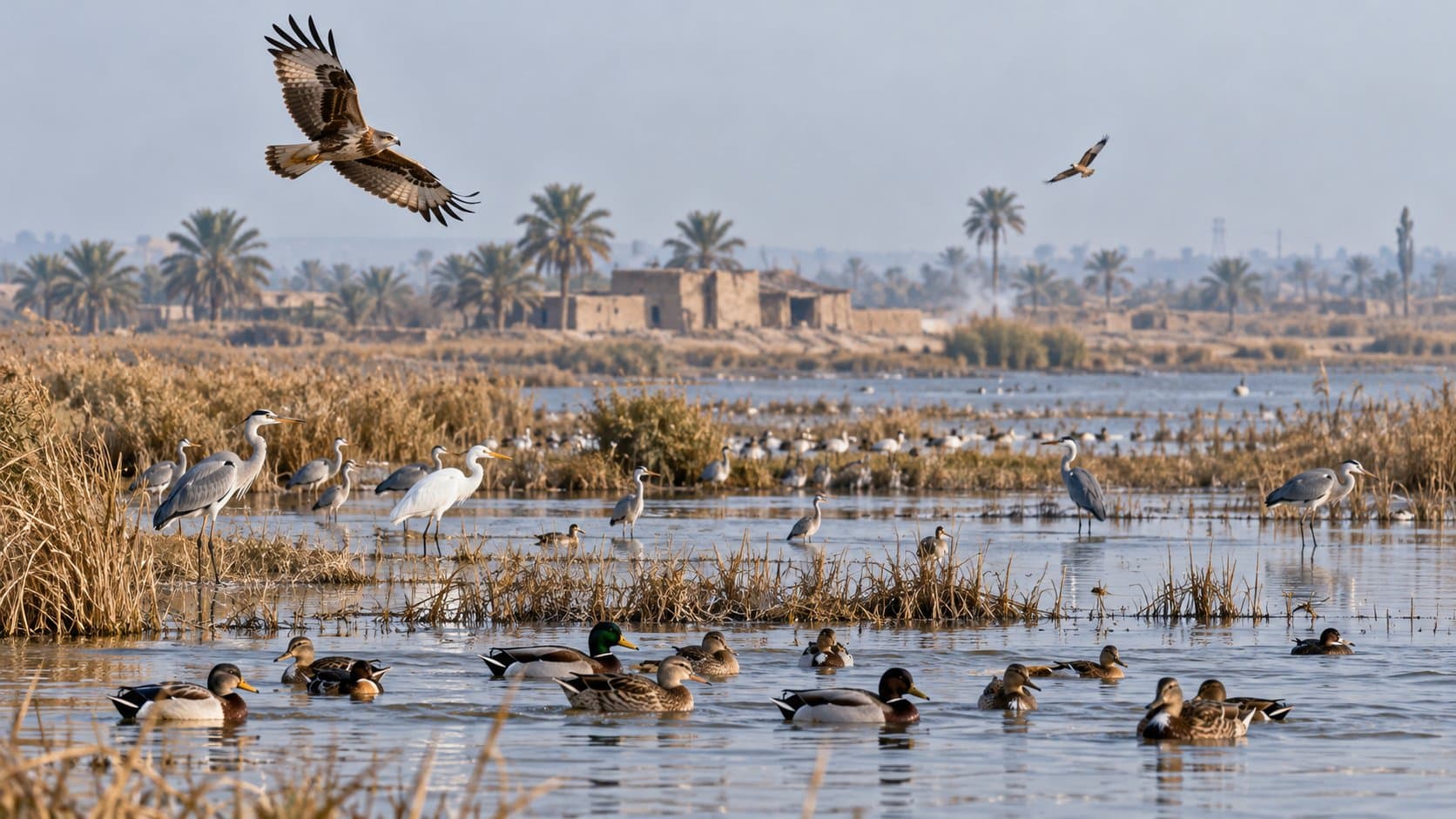
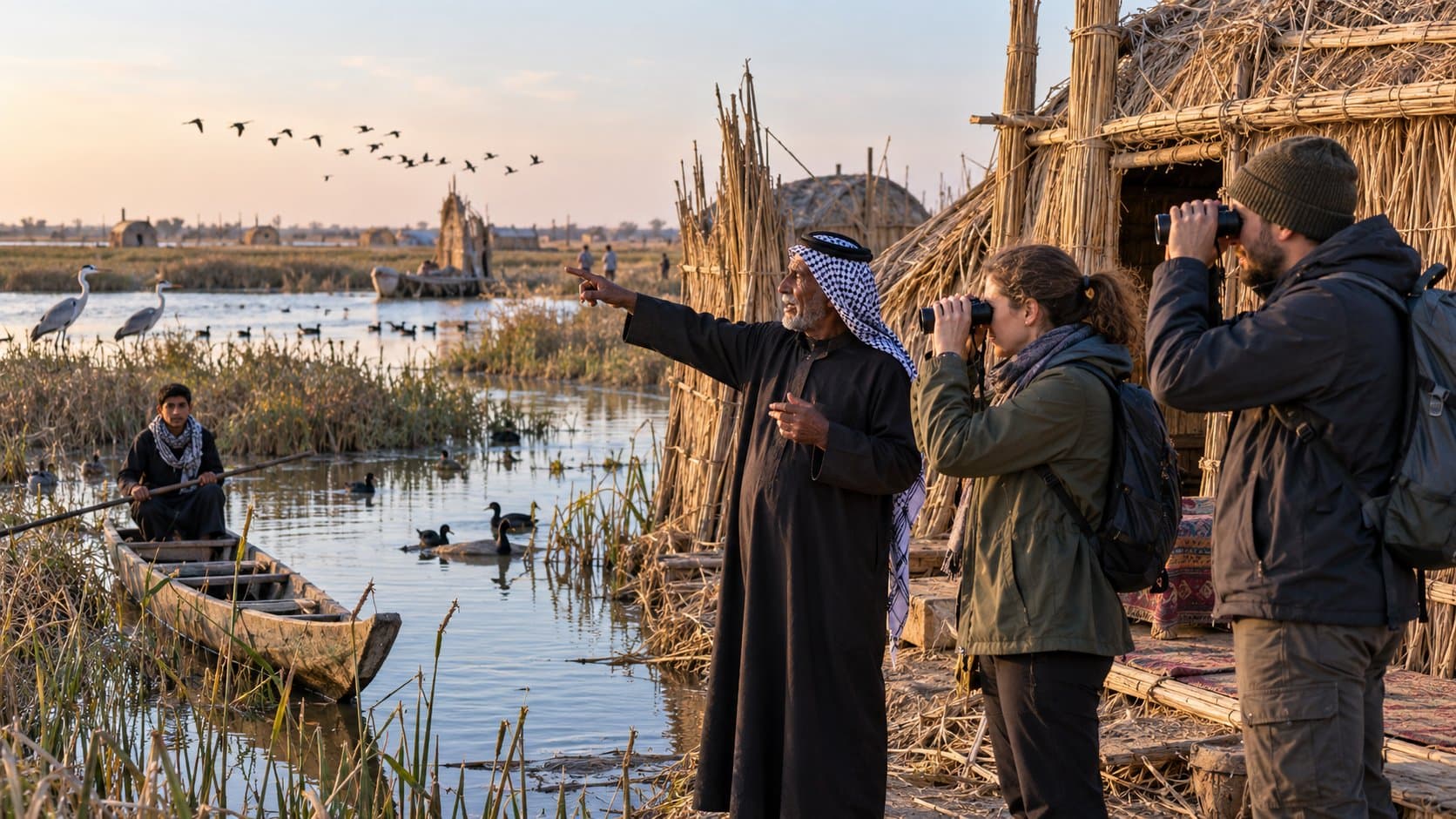
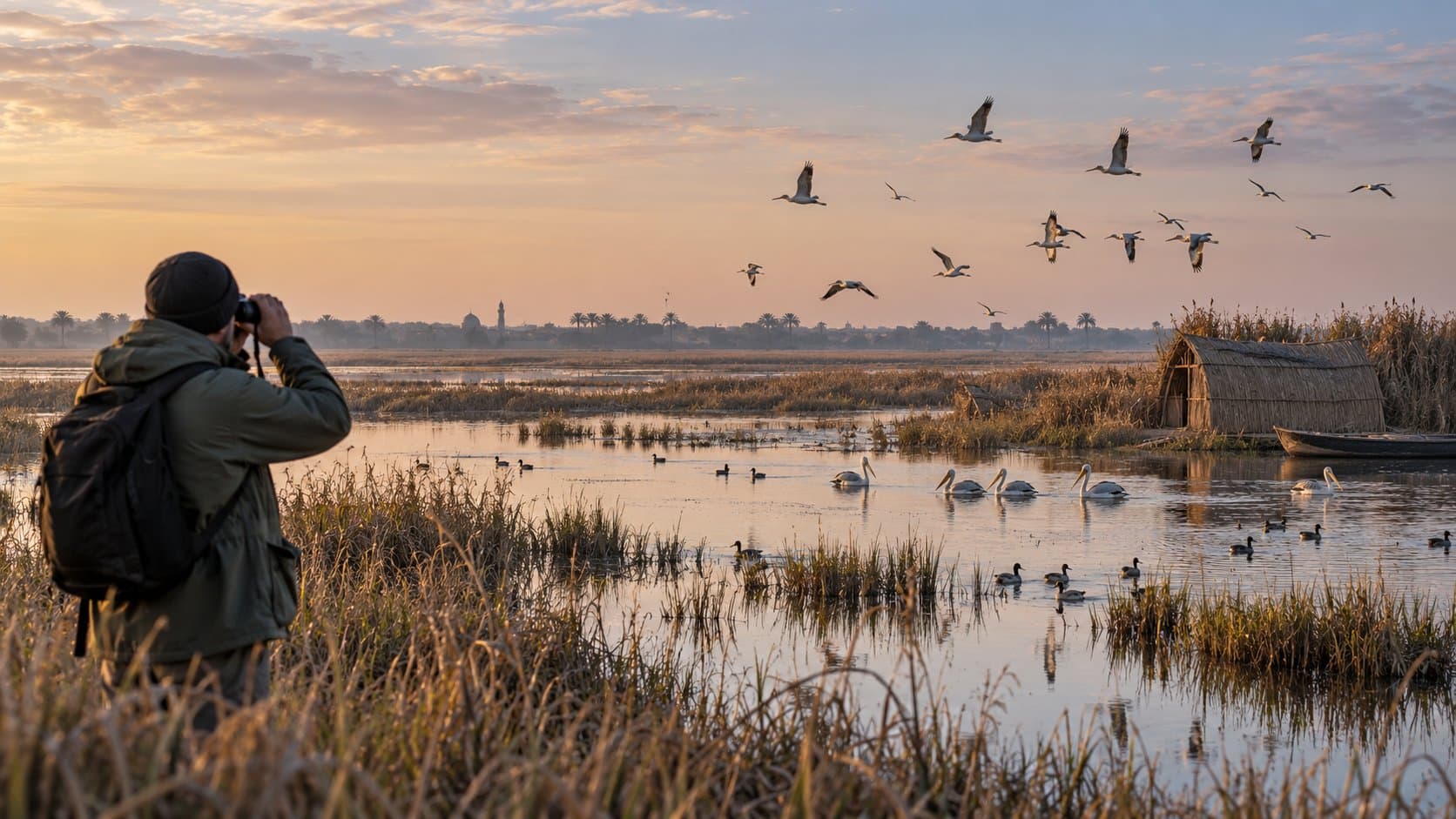
Gliding through tall reeds (Phragmites australis) before sunrise in southern Iraq reveals a wetland shaped by millennia of history and wildlife migration. The Central Marshes (Al-Ahwar Al-Wusta), positioned between Nasiriyah and Al-Qurnah across the Tigris-Euphrates delta, form the core of the UNESCO World Heritage site known as the Ahwar of Southern Iraq. Winter is the most rewarding season for birdwatchers in the marshes, with millions of migratory birds stopping along the West Asian-East African flyway.
Historical Context
The Mesopotamian Marshes once formed western Eurasia's largest wetland ecosystem. Despite massive drainage in the 1990s, community-led restoration beginning in 2003 revived major sections. Inscribed as a UNESCO World Heritage site in 2016 and a Ramsar wetland, the area preserves Sumerian riverine traditions alongside vital ecological flyways.
Travel Tips
Depart at dawn (between 05:00 and 06:00) for the calmest waters and best bird activity. Arrange trips via local eco-camps in Al-Chibayish. Always hire local boatmen directly to support the community and ensure safe passage through changing water channels.
What to Bring
8x42 or 10x42 binoculars, telephoto lens (300mm–600mm), waterproof dry bag, warm layered clothing for cold early mornings, neutral earth-toned attire, sun protection, and drinking water.
Accessibility Information
Boarding a traditional low-slung mashoof requires moderate mobility to step into and out of the canoe from muddy banks or reed platforms. Not wheelchair accessible. Participants sit low on wooden crossbeams or cushioned reed mats.