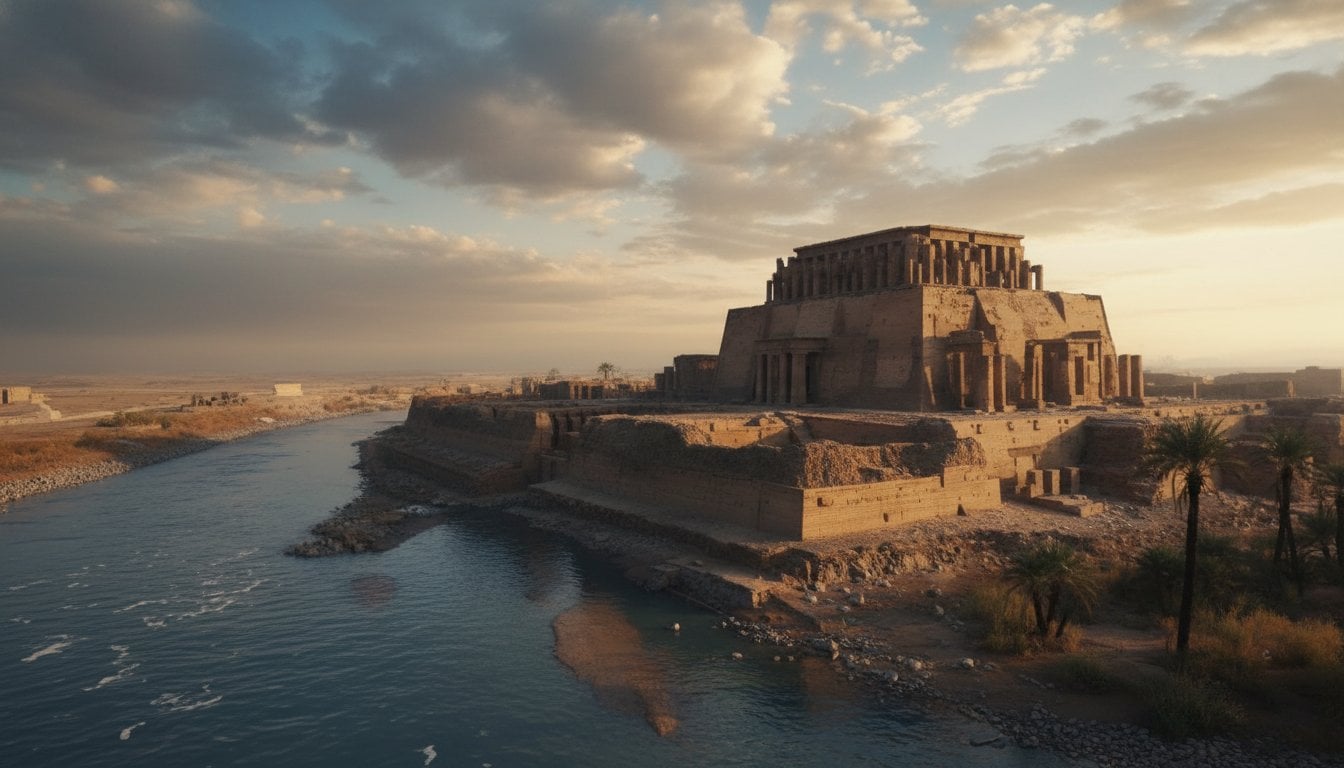
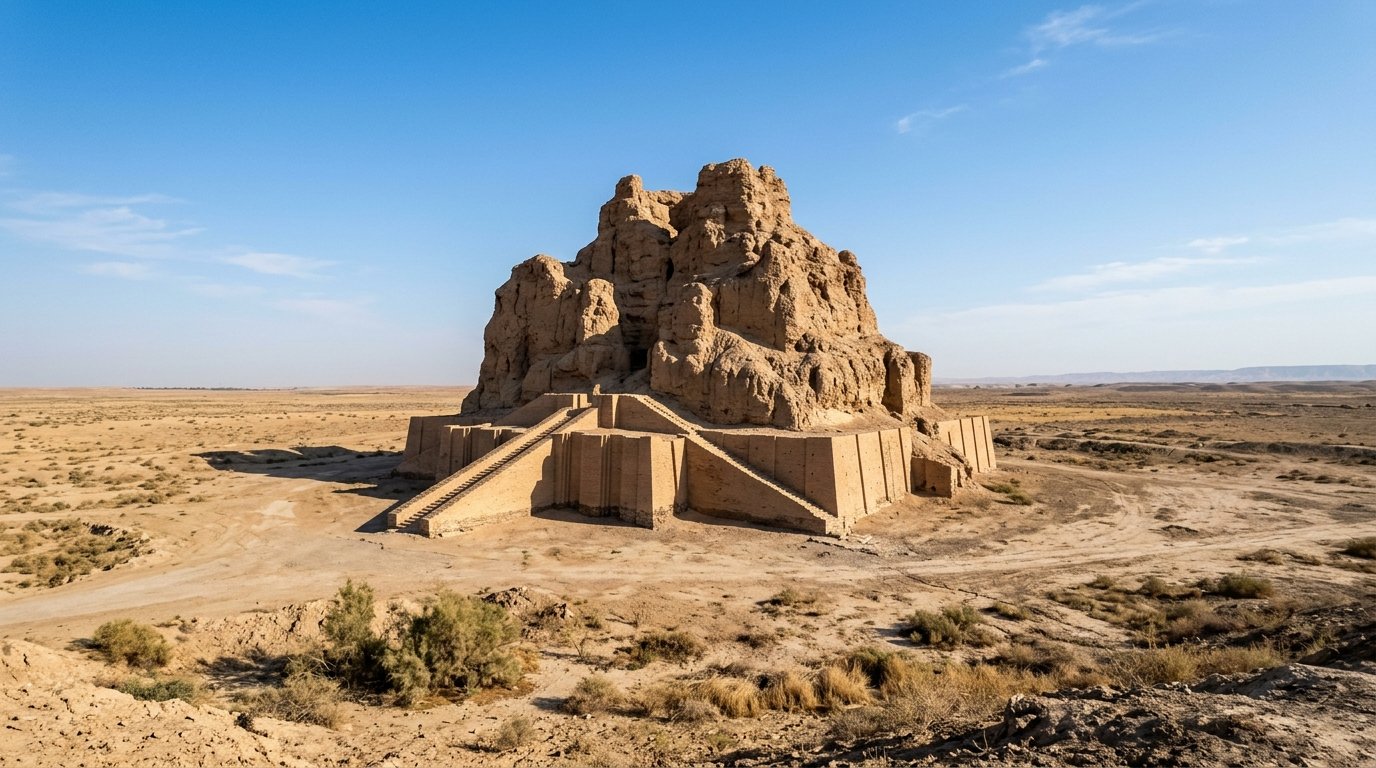
Rising 52 meters above the desert plain just west of Baghdad, the Ziggurat of Aqar Quf preserves over 3,400 years of Kassite royal history and monumental Mesopotamian mud-brick engineering. This practical travel guide details the site's 14th-century BC origins under King Kurigalzu I, architectural features, and key logistics for planning a half-day trip from central Baghdad.
What is the Ziggurat of Aqar Quf?
The Ziggurat of Aqar Quf is the towering remnant of Dur-Kurigalzu, an ancient fortified royal capital founded in the early 14th century BC by the Kassite king Kurigalzu I. Located approximately 30 kilometers west of central Baghdad in the Abu Ghraib district of the Baghdad Governorate, the structure remains one of the most prominent surviving landmarks of ancient Mesopotamia, as documented by Wikipedia's archaeological survey of Dur-Kurigalzu.
The city took its name from King Kurigalzu I, who ruled Babylonia until around 1375 BC. In the Akkadian language, Dur means "fortress of", while Kurigalzu translates to "shepherd of the Kassites", according to historical records compiled by The British Museum via World History Encyclopedia. Built along a limestone ridge between the Tigris and Euphrates river systems, Dur-Kurigalzu guarded a strategic trade corridor extending east across the Iranian plateau toward Central Asia. At its height, the walled urban center spanned over 225 hectares, housing royal palaces, administrative complexes, and nine separate temples.
For centuries, camel caravans and international travelers crossing the Mesopotamian plains relied on the ziggurat as a visual beacon indicating their close approach to Baghdad. From the 16th century onward, European travelers who encountered the immense, weathered ruin frequently mistook its ragged silhouette for the biblical Tower of Babel.
Why did the Kassites build Dur-Kurigalzu?
The Kassites were a mountain people originating from the Zagros region east of Mesopotamia who gained control over southern Babylonia following the Hittite raid that sacked Babylon in 1595 BC, as detailed in research published by The Metropolitan Museum of Art. The Kassite dynasty governed Babylonia for roughly four centuries until 1155 BC, establishing the longest continuous rule of any single dynasty in Babylonian history.
During the reign of Kurigalzu I, the royal court sought to build a dedicated imperial fortress and ceremonial capital outside Babylon. The new city served both administrative and religious purposes:
- Religious devotion to Enlil: The main ziggurat complex, designated in cuneiform as E-U-GAL, was dedicated to Enlil, the chief deity of the Mesopotamian pantheon associated with air, wind, and cosmic order, as explained by World History Encyclopedia's study on ziggurats.
- Strategic territorial defense: Situated near the ancient Patti-Enlil canal (later known as the Isa Canal), the city commanded the western approach to the Mesopotamian floodplains and secured trade routes supplying valuable goods like Afghan lapis lazuli, as noted by Wikipedia's historical account of Kurigalzu I.
- Royal palatial administration: Excavations at the nearby mound of Tell al-Abyadh revealed the vast Egal-kišarra ("Palace of the Whole World"), which contained painted plaster walls, columned porticoes, and royal archives.
The city functioned as a primary royal residence and religious sanctuary until the collapse of the Kassite dynasty around 1155 BC, following devastating invasions by the Elamites.
How was the ziggurat constructed?
The engineering of Aqar Quf explains why its monumental core still stands 52 meters tall after more than three millennia of exposure to desert winds and seasonal rains.
The foundation of the ziggurat measures roughly 69 meters by 67 meters. Unlike Egyptian pyramids, which contain interior burial chambers and passageways, Mesopotamian ziggurats are solid masses of masonry built from the ground up to support a high sanctuary at their summit.
The builders used a composite technique:
- Sun-dried mud bricks: The central core consists of millions of square, sun-dried clay bricks (liben), packed tightly in mortar.
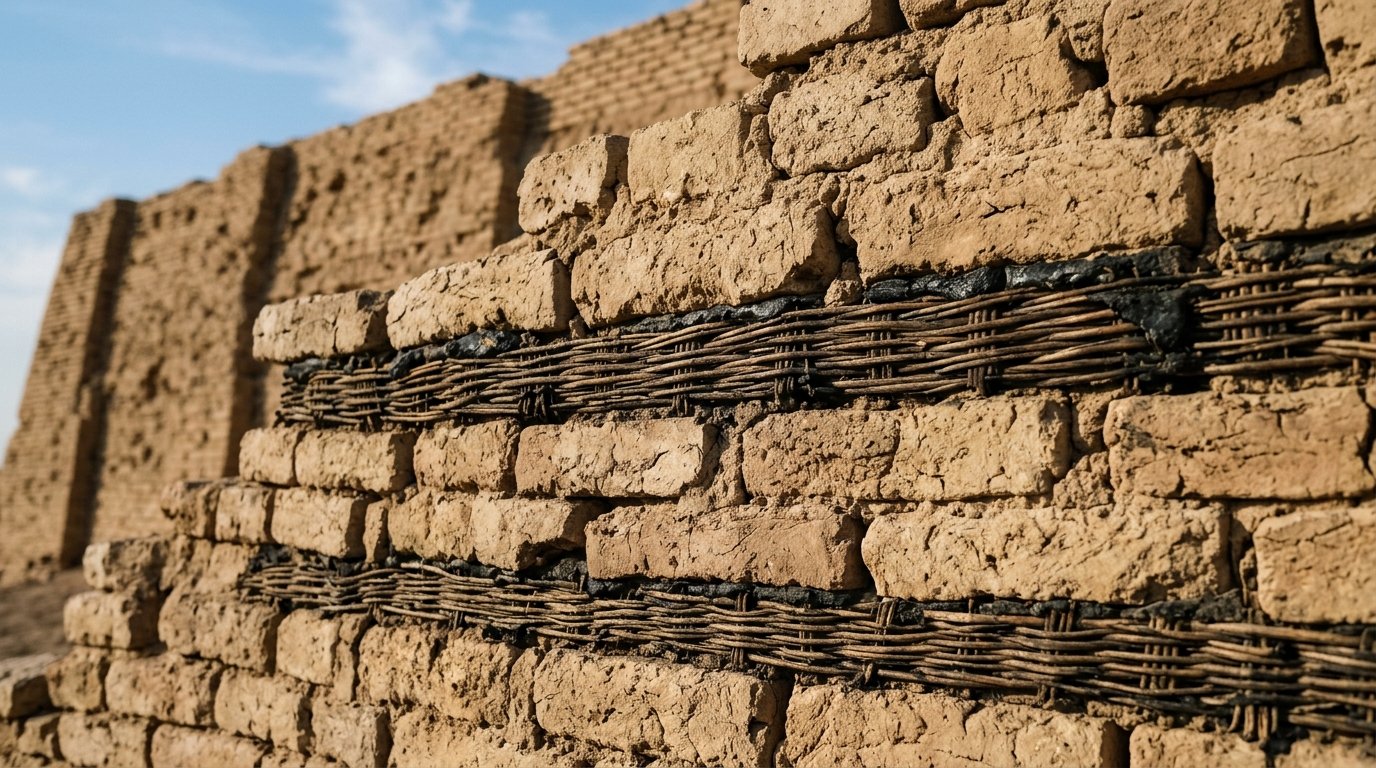
- Reinforcing reed mats: At regular intervals of every seven to eight layers of mud bricks, the builders laid thick mats of woven reeds (agag), bonded with bitumen and clay. These reed layers distributed structural weight evenly, absorbed seismic vibrations, and prevented horizontal sliding.
- Plaited reed ropes: Heavy reed cords run horizontally through the brickwork to anchor the core from within.
- Baked brick exterior: The outer facade and monumental staircases were originally faced with kiln-fired bricks stamped with cuneiform inscriptions dedicating the temple to Enlil.
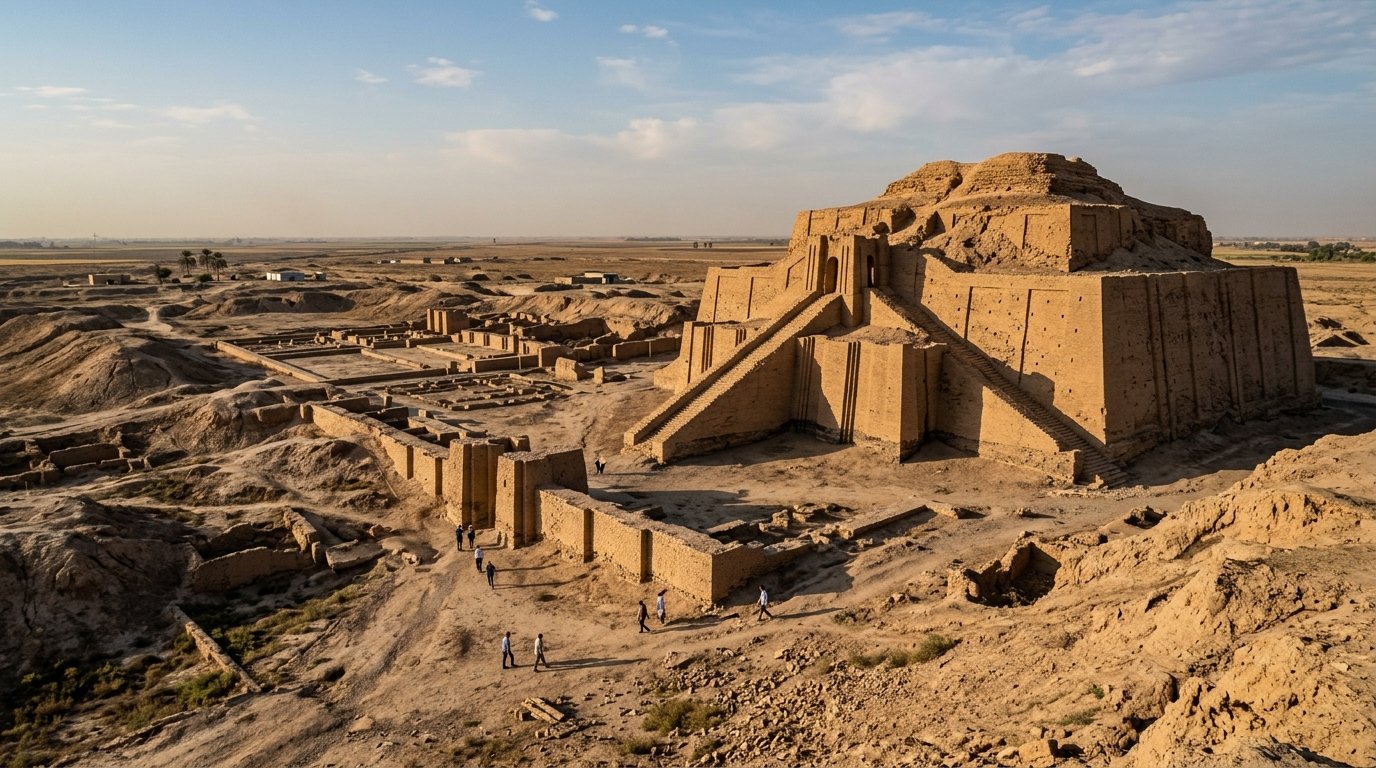
Between 1942 and 1945, Iraqi archaeologist Taha Baqir and British archaeologist Seton Lloyd conducted systematic excavations at the site on behalf of the Iraqi Directorate-General of Antiquities. Later, between 1968 and the late 1970s, the Iraqi antiquities authority completed extensive reconstruction work on the lowest tier and central monumental staircase. Today, visitors see a distinct visual contrast between the crisp, modern yellow brickwork of the restored base and the rugged, eroded ancient core that towers above it.
What can visitors see at the archaeological site?
Visiting Aqar Quf offers a quiet look at Mesopotamian history outside central Baghdad.
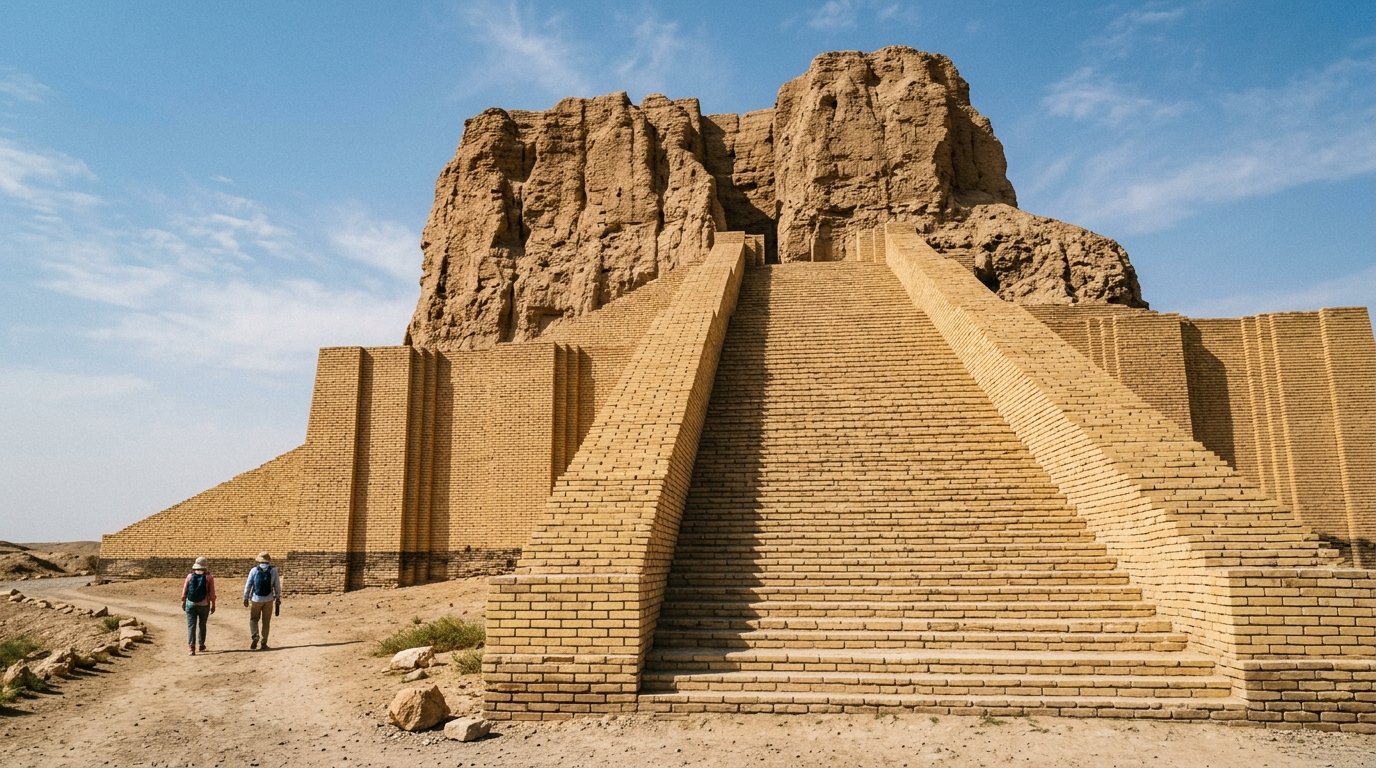
The main highlights accessible around the archaeological compound include:
- The Ziggurat Core: You can walk completely around the base of the ziggurat to inspect the exposed ancient reed mat layers jutting out from the weathered mud bricks.
- The Processional Staircase: The reconstructed central flight of stairs leads to the first terrace platform, demonstrating how ancient priests ascended toward the upper shrine. Climbing beyond designated paths is prohibited to protect the structure.
- Surrounding Temple Foundations: Ground-level foundations of three subsidiary temples and courtyards surround the main ziggurat mound.
- Artifacts at the Iraq Museum: While the archaeological site itself does not house a permanent indoor exhibition, the major finds from Aqar Quf, including cuneiform tablets, royal statuary fragments of Kurigalzu II, and Kassite decorative arts, are displayed in the Mesopotamian galleries of The Iraq Museum in central Baghdad.
How to plan a day trip from Baghdad
Aqar Quf is one of the easiest ancient archaeological sites to visit from Baghdad, making for a straightforward half-day trip.
Distance and travel time
The site sits roughly 30 kilometers west of central Baghdad. The drive takes between 45 and 60 minutes each way, depending on traffic along the western ring roads and the speed of routine security checkpoints, as noted in the Evendo travel guide to Mesopotamia.
Transportation options
- Private driver or guided tour: Hiring a private car and driver for a half-day trip is the most practical and reliable option. Having the driver wait at the site guarantees transport back into the city without delays.
- Taxi: You can arrange a round-trip fare with a city taxi from central Baghdad neighborhoods such as Karrada or Al-Mansour. Agree on the total price and waiting time beforehand (expect to pay approximately 40,000 to 60,000 IQD for a round trip with waiting time).
- Public transport: Shared taxis run from western Baghdad transit hubs toward Abu Ghraib, but finding direct return transport from the rural turnoff back to the city center can be unpredictable for international visitors.
Checkpoints and required documents
You will pass Iraqi military and federal police checkpoints on the road west out of Baghdad. Keep your original passport and a copy of your valid Iraqi visa with you in the vehicle. Security personnel may ask for your identification and purpose of travel; simply state that you are visiting the Zaqurat Aqarquf (زقورة عقرقوف).
Practical visitor tips
- Timing: Visit during the morning between 8:30 AM and 11:30 AM or in late afternoon before sunset. Midday desert temperatures can be extreme, particularly from May to October.
- Site facilities: On-site amenities are limited to a small ticket and guard booth. Restroom facilities may not always be accessible, and there are no food vendors at the site. Carry bottled drinking water, sunscreen, and a hat.
- Footwear: Wear sturdy walking shoes or sneakers, as the ground around the mound consists of uneven dirt, gravel, and loose clay.
- Photography: Personal photography is welcome throughout the ruins. As with all sites in Iraq, avoid pointing cameras or smartphones at military personnel, security equipment, or nearby checkpoints.
Sources
- Wikipedia — Dur-Kurigalzu — https://en.wikipedia.org/wiki/Dur-Kurigalzu — Accessed 2026-03-30
- Wikipedia — Kurigalzu I — https://en.wikipedia.org/wiki/Kurigalzu_I — Accessed 2026-03-30
- The Metropolitan Museum of Art — The Middle Babylonian / Kassite Period (ca. 1595–1155 B.C.) in Mesopotamia (Elizabeth Knott, Heilbrunn Timeline of Art History) — https://www.metmuseum.org/toah/hd/kass/hd_kass.htm — Accessed 2026-03-30
- World History Encyclopedia — Kassite (British Museum) — https://www.worldhistory.org/kassite/ — Accessed 2026-03-30
- World History Encyclopedia — Ziggurat: Mountains of the Gods (Joshua J. Mark) — https://www.worldhistory.org/ziggurat/ — Accessed 2026-03-30
- Evendo — Dur-Kurigalzu (Ziggurat at Aqar Quf), Mesopotamia Travel Guide — https://evendo.com/locations/iraq/mesopotamia/attraction/dur-kurigalzu-ziggurat-at-aqar-quf — Accessed 2026-03-30
- Wikipedia — Iraq Museum — https://en.wikipedia.org/wiki/National_Museum_of_Iraq — Accessed 2026-03-30
❓Frequently Asked Questions
Here are answers to frequently asked questions about the content above
The Ziggurat of Aqar Quf is located in the Abu Ghraib district of the Baghdad Governorate, roughly 30 kilometers (19 miles) west of central Baghdad, Iraq.
The ziggurat was built in the early 14th century BC by the Kassite king Kurigalzu I as the central religious monument of his new royal capital city, Dur-Kurigalzu.
The ziggurat survived largely because Kassite engineers placed reinforcing layers of woven reed mats and plaited ropes every seven to eight courses of sun-dried mud bricks, bound with bitumen and clay mortar to absorb stress and prevent structural slipping.
A visit takes roughly 3 to 4 hours in total, including 45 to 60 minutes of driving each way from central Baghdad and about an hour to explore the ruins and take photographs.
The most convenient way to visit is by hiring a private driver or booking a taxi for a round trip with waiting time included, ensuring reliable transportation back into central Baghdad.
The artifacts found during excavations at Aqar Quf, including cuneiform tablets, royal statues, and decorative objects, are preserved and exhibited at the Iraq Museum in central Baghdad.