Amba in Iraqi Sandwiches
street foodVegetarianBaghdad
About
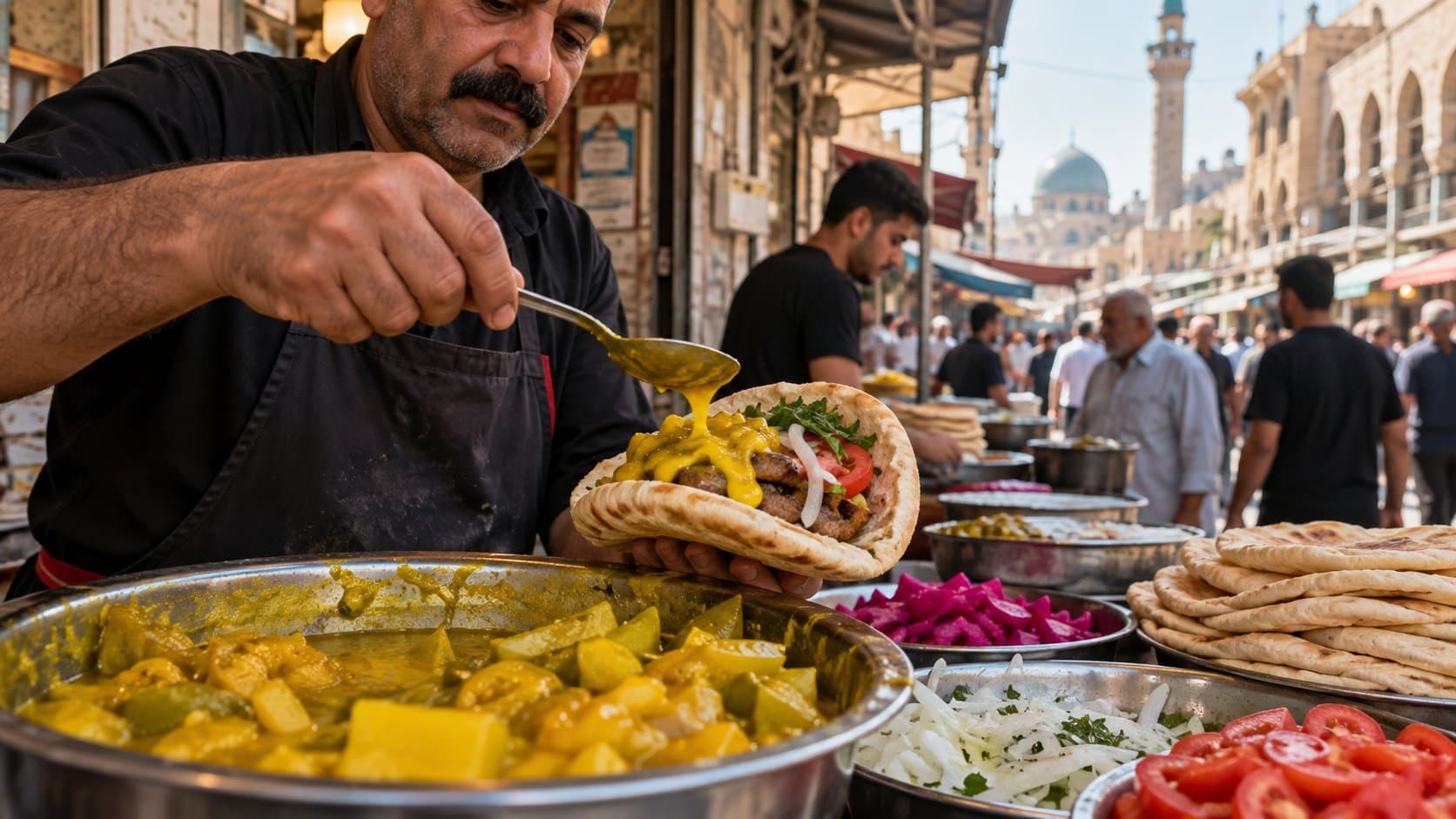
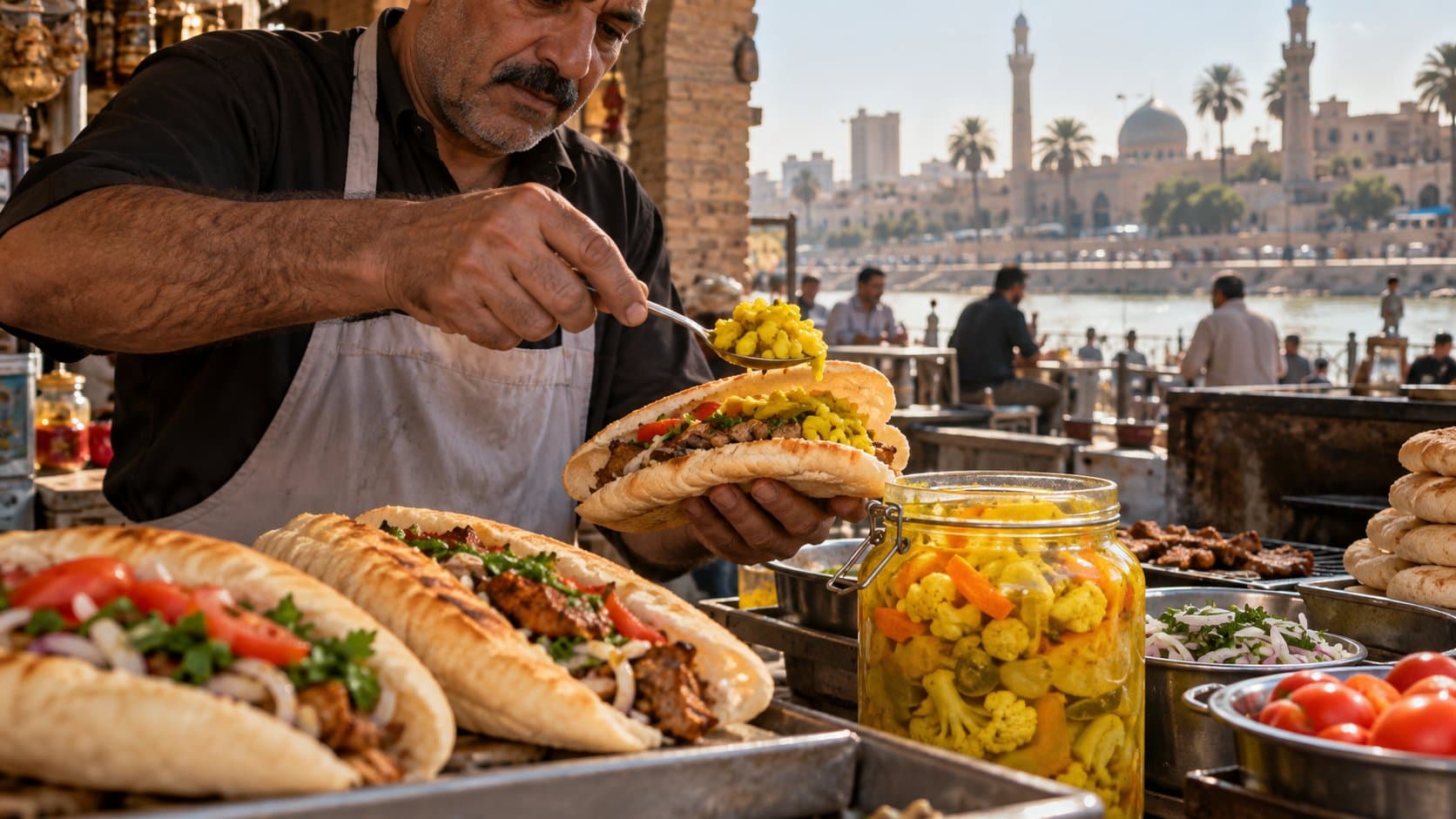
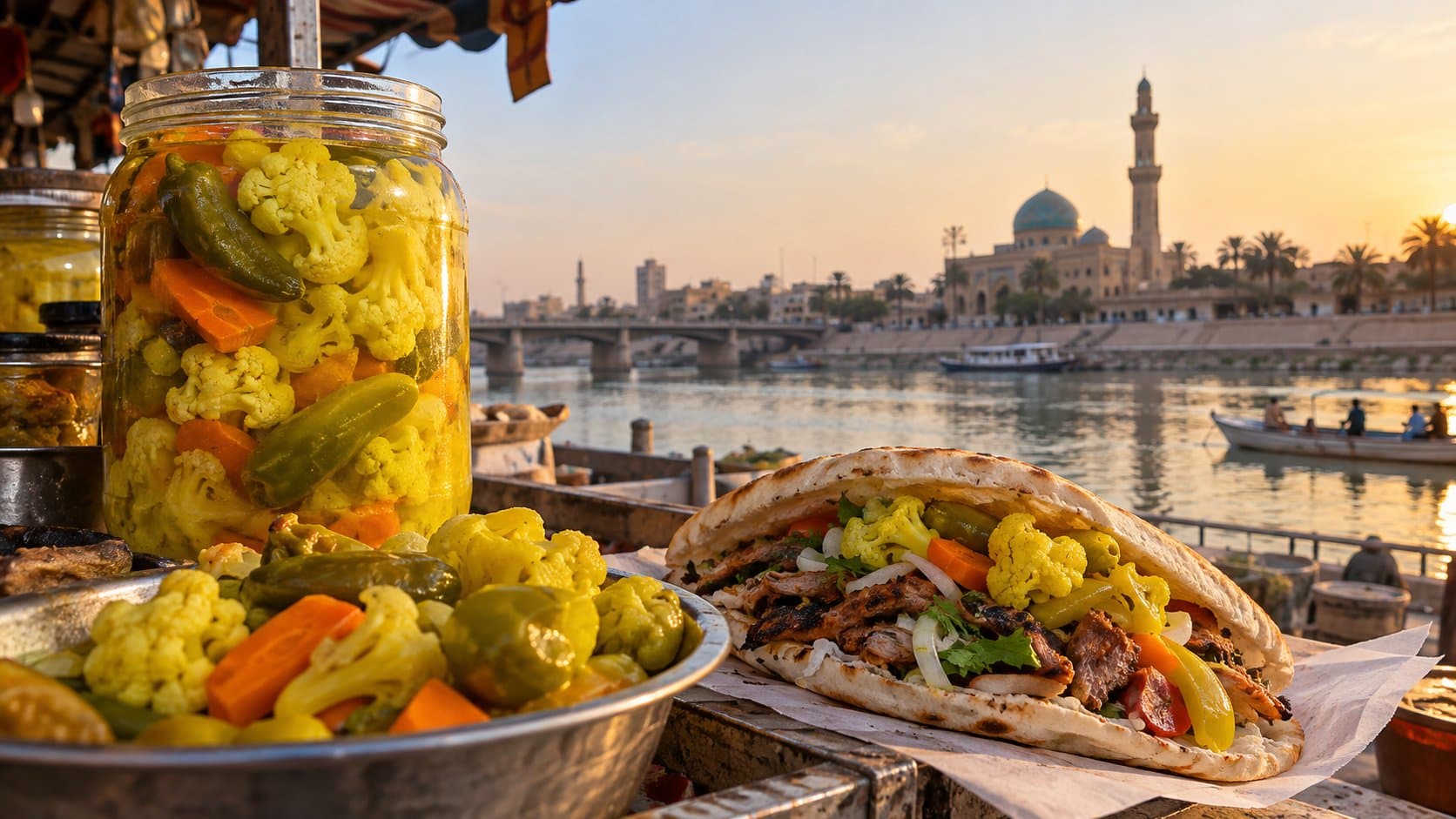
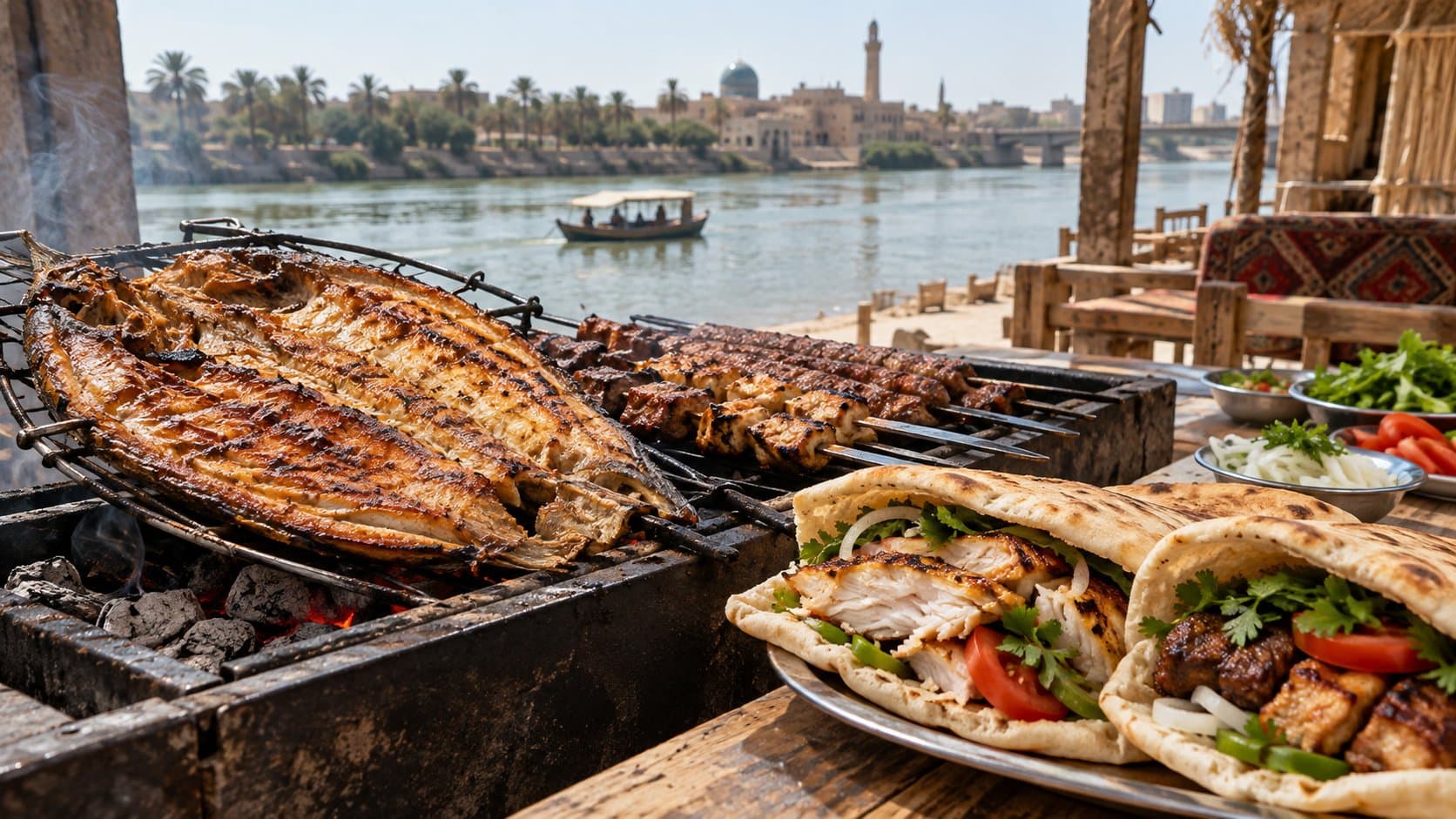
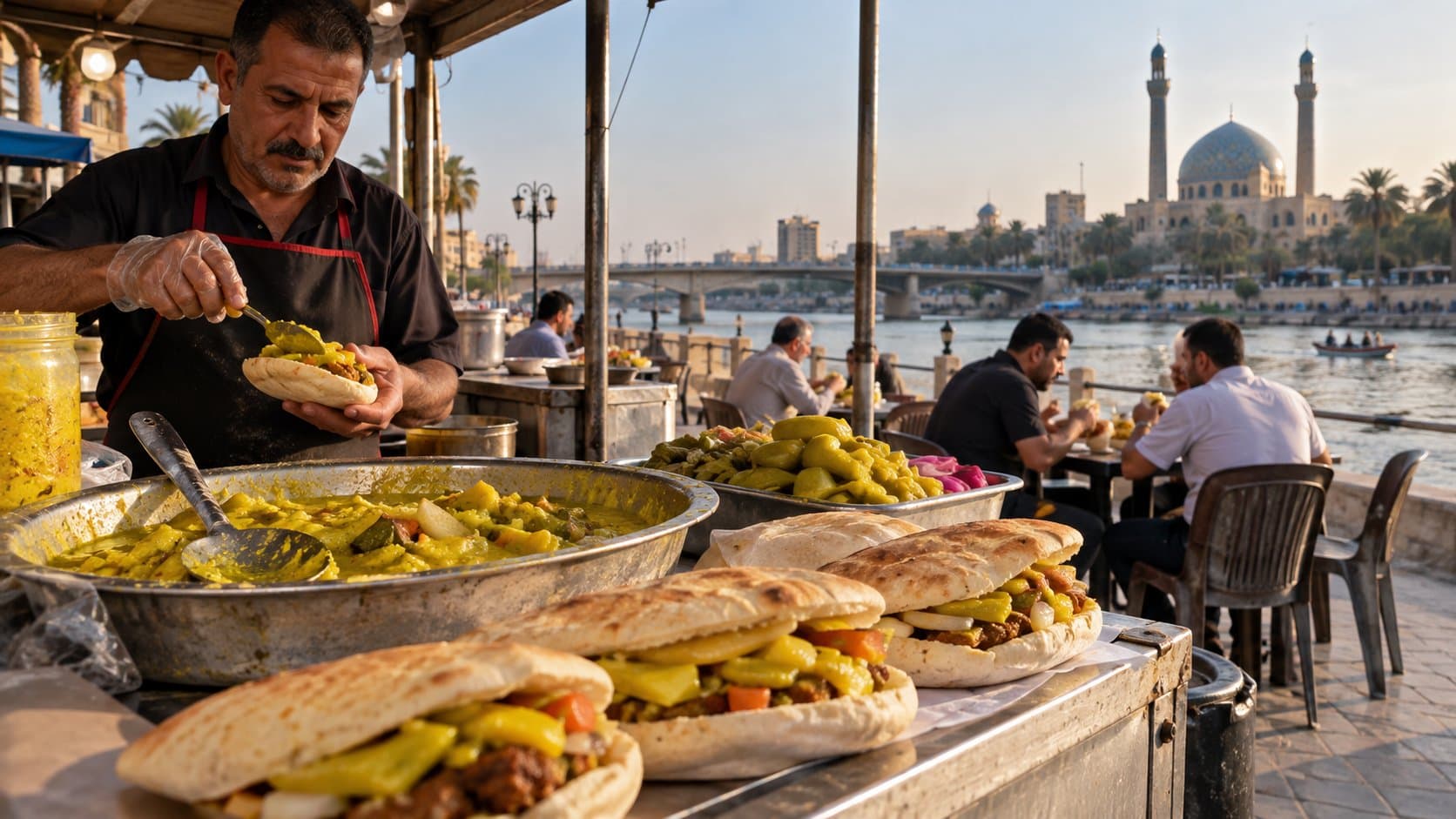
# Amba in Iraqi Sandwiches: The Tangy Mango Condiment and Baghdad’s Street Food Soul Walk past a street cart in Baghdad, Basra, or Erbil around midday, and a sharp aroma catches the air. It is earthy, sour, and warm with turmeric and fenugreek. Follow the smell, and you will see a vendor cut open a diamond-shaped loaf of *samoon*, pack it with fried falafel or shaved shawarma, and ladle a bright yellow sauce over the top. That sauce is **amba** (*'anba* in Iraqi Arabic)—the pickled mango condiment central to Iraqi street food. {{image}} A tropical fruit condiment tucked inside a Mesopotamian sandwich surprises first-time visitors. Yet amba is a fixture across the country, shaped by centuries of Indian Ocean trade and the culinary heritage of the Baghdadi Jewish community. --- ## What Exactly Is Amba? Amba is a tart, spicy, savory sauce made from unripe green mangoes cured in brine, vinegar, salt, chili, ground fenugreek (*hilbeh*), and turmeric. The name comes from the Marathi word *āmba*, meaning mango. Unlike sweet South Asian chutneys, Iraqi amba focuses on sharp acidity, mild heat, and the slight bitterness of fenugreek. Green mangoes provide crunch and clean sourness, while turmeric gives the sauce its fluorescent yellow color. Iraqi spice markets sell amba in two standard forms: 1. **Pickled wedges:** Whole or sliced mangoes cured in jars with spiced brine. 2. **Pourable sauce:** A smooth emulsion made by grinding cured mangoes with vinegar, water, and amba spice powder until thick. {{image}} --- ## The Iraqi Jewish Roots of Amba Mangoes entered Iraqi cooking through Indian Ocean trade routes. In the eighteenth and nineteenth centuries, Baghdadi Jewish trading houses—led by families like the Sassoons—built commercial networks connecting Baghdad and Basra to Bombay (Mumbai) and Calcutta (Kolkata). Merchants shipped Iraqi dates, horses, and fabrics east, returning with Indian timber, silks, and spices. In India, Baghdadi traders encountered regional mango pickles (*aam ka achar*). Lacking local mango groves in Mesopotamia, merchants worked out how to import the preserved fruit instead. According to historical culinary accounts documented by [The Nosher](https://www.myjewishlearning.com/the-nosher/meet-amba-the-funkiest-jewish-condiment/) and [The Chaldean News](https://www.chaldeannews.com/2023-content/2023/11/1/first-tango-with-mango-iraqi-amba), trading firms transported wooden barrels of unripe mangoes cured in salt and vinegar by sea to Basra. Riverboats then moved the barrels up the Tigris into Baghdad's markets, including Souq Hanoun in the Jewish quarter and the spice alleys of Souq Al-Shorja. Baghdadi Jewish home cooks altered the Indian recipe to suit local tastes. They reduced the chili heat, dialed back heavy oil, and increased the vinegar, salt, and fenugreek. Amba became a staple for Saturday Shabbat meals, spooned over fried eggplant, boiled eggs (*haminados*), and potatoes. When most of Iraq's Jewish population departed in the mid-twentieth century, they brought amba with them, later popularizing the combination in the Levant as *sabich*. Within Iraq, amba remained an everyday staple across Muslim, Christian, and Mandaean communities. --- ## Why Amba Belongs in Iraqi Sandwiches Amba works in Iraqi sandwiches because its sharp fruit acid cuts through fried and rich fillings that overwhelm milder sauces. {{image}} ### 1. Falafel in Samoon The quintessential pairing is falafel packed inside freshly baked *samoon*—the Iraqi tandoor flatbread shaped like an elongated diamond. Vendors fill the bread with hot chickpea patties, cucumber, tomato, and fried eggplant. A spoonful of amba soaks into the crumb, cutting the oil of the fried patties with clean vinegar and sour mango. ### 2. Meat and Chicken Shawarma (*Gass*) Iraqi shawarma, known as *gass*, consists of spiced beef, lamb, or chicken sliced from vertical spits. The meat is basted with sheep's tail fat (*leeyah*). Amba cuts straight through that rich fat, bringing brightness and pungent mustard-fenugreek warmth to the charred meat. ### 3. Fried Eggplant and Boiled Egg Rolls Carrying over the older Baghdadi breakfast style, breakfast kiosks wrap fried eggplant, sliced boiled eggs, and parsley in flatbread. Amba serves as the main seasoning, seasoning the rich egg yolk and fried aubergine. ### 4. Masgouf and Grilled Meats Amba also appears beside grilled fish. Along Abu Nuwas Street in Baghdad, diners spoon amba alongside *masgouf*—carp butterflied and roasted over fruitwood fires along the Tigris. The smoky, fatty freshwater fish balances against the fermented acidity of the mango sauce. {{image}} --- ## The Sensory Signature: Fenugreek and Iraqi Nostalgia For Iraqis at home and abroad, amba carries an instantly recognizable scent. Fenugreek contains sotolon, an aromatic compound with a lingering, maple-herbal note. Baghdadis often joke that a sandwich heavy on amba leaves its scent on your hands long after lunch. From school carts in Karrada to wholesale alleys in Shorja, amba remains an everyday sign of Baghdad’s trade history—a simple reminder of how maritime shipping reshaped local street food. ```json { "faqs": [ { "id": "faq-1", "question": "What is amba sauce made of in Iraq?", "answer": "Authentic Iraqi amba is made from pickled green, unripe mangoes, vinegar, salt, ground fenugreek seeds, turmeric, and dried chilies. The mixture produces a tangy, savory, and golden-yellow condiment." }, { "id": "faq-2", "question": "How did amba originate in Iraqi cuisine?", "answer": "Amba was introduced to Iraq in the nineteenth century by Baghdadi Jewish merchants trading between India and Basra. They shipped barrels of green mangoes cured in vinegar and spices back to Baghdad, adapting Indian mango pickle into a smoother, vinegar-forward Iraqi staple." }, { "id": "faq-3", "question": "Why is amba bright yellow?", "answer": "The vivid golden-yellow color of amba comes from generous amounts of ground turmeric used in the pickling spice blend, which also enhances its earthy aroma." }, { "id": "faq-4", "question": "What street food sandwiches pair best with amba?", "answer": "Amba is most famously ladled into diamond-shaped samoon bread filled with hot falafel, fried eggplant, and fresh salad. It is also paired with Iraqi meat shawarma (gass), boiled eggs, and grilled kebabs." }, { "id": "faq-5", "question": "What does amba taste like?", "answer": "Amba has an intense, multi-layered flavor profile: deeply sour and tangy from vinegar and green mangoes, slightly bitter and nutty from fenugreek, mildly spicy from chilies, and rich in savory umami." }, { "id": "faq-6", "question": "Is amba the same as Indian mango chutney?", "answer": "No. While related to Indian mango pickle (aam ka achar), Iraqi amba uses tart, unripe green mangoes preserved in vinegar and heavy fenugreek rather than sweet fruit cooked with sugar or heavy mustard oil, giving it a much sharper, savorier punch." } ] } ``` --- ## Sources - **Chaldean News** – *First Tango with Mango: Iraqi Amba*, by Adhid Miri, PhD (November 1, 2023) URL: https://www.chaldeannews.com/2023-content/2023/11/1/first-tango-with-mango-iraqi-amba *Accessed: April 2026* - **The Nosher (My Jewish Learning)** – *Meet Amba: The Funkiest Jewish Condiment*, by Aryeh Genger (December 19, 2023) URL: https://www.myjewishlearning.com/the-nosher/meet-amba-the-funkiest-jewish-condiment/ *Accessed: April 2026* - **Wikipedia** – *Amba (condiment)* URL: https://en.wikipedia.org/wiki/Amba_(condiment) *Accessed: April 2026* - **Tasting Table** – *The Middle Eastern Condiment Made With Pickled Mango* (November 2022) URL: https://www.tastingtable.com/1116694/the-middle-eastern-condiment-made-with-pickled-mango/ *Accessed: April 2026*