Harissa in Iraq
traditional dishes
About
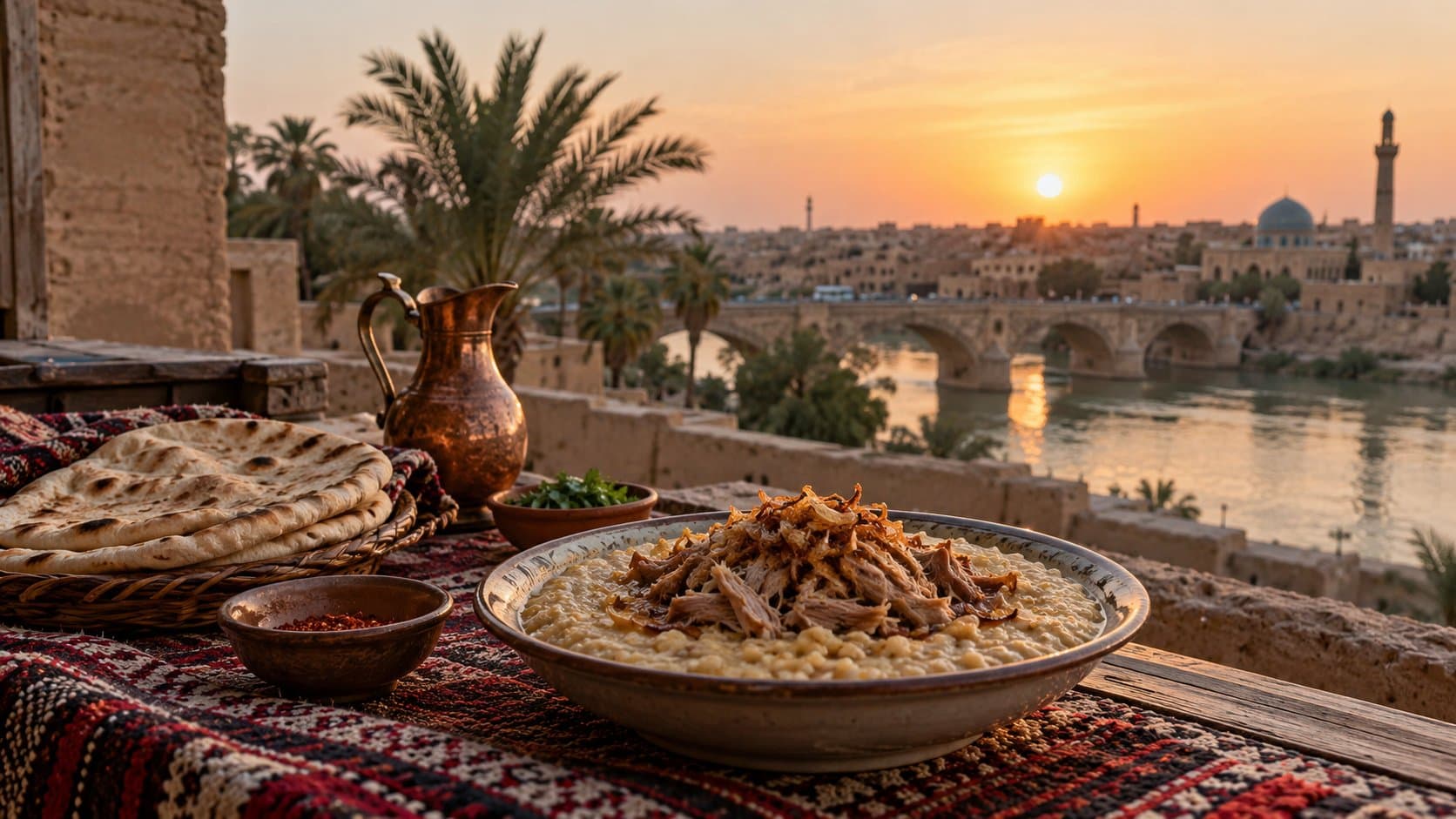
# Harissa in Iraq Harissa in Iraq is a slow-cooked wheat and meat porridge, not the red chilli paste of North African cooking. You will also see it written as hareesa, harees, or harise. The hallmark of the dish is its texture. Long simmering softens the grain and meat, and vigorous beating merges them into a thick, uniform porridge. [196 flavors describes the dish and its Iraqi name](https://www.196flavors.com/iraq-harees/). A bowl can look deceptively simple. It is pale, dense, and usually glossed with hot fat or dusted with spice. The real work happens hours earlier over low heat, where time breaks down the starch and muscle fibres into comfort food. {{image}} ## What goes into the pot? Wheat and meat form the foundation. Lamb is the traditional choice in Iraq, while chicken features across the wider harees tradition. Water, salt, and fat complete the base. As the wheat softens, it provides body, while the meat breaks down into fine threads that melt into the porridge. The result is closer to a thick grain porridge than a stew with separate meat chunks. [196 flavors](https://www.196flavors.com/iraq-harees/) describes the finished dish as smooth and slightly elastic. The type of wheat dictates the cooking time. Whole wheat berries, pearl wheat, and cracked grain behave differently in the pot. The recipe from 196 flavors calls for whole or pearl wheat with an overnight soak. If you cook harissa at home, tailor your cooking time to the specific cut of wheat you buy rather than following a generic schedule. Shared names can confuse visitors. [The harees reference overview](https://en.wikipedia.org/wiki/Harees) distinguishes this wheat-and-meat porridge from both the fiery North African condiment and the Levantine semolina dessert called harissa. If you are ordering in an unfamiliar restaurant, ask for the meat-and-grain dish to avoid confusion. ## Why it takes so long Harissa cannot be rushed. Whole grains require hours to soften completely, and tough stewing cuts need time to turn tender enough to shred. In the [196 flavors preparation](https://www.196flavors.com/iraq-harees/), the cook soaks wheat for eight hours, simmers the grain, and then cooks it with lamb on low heat for about four hours. Exact times vary depending on the cut of meat, the age of the grain, and the heat of the stove. Once the wheat and meat are completely tender, the cook removes any bones and beats the mixture. Cooks traditionally use a heavy wooden beater, though a large wooden spoon or an immersion blender works as well. Beating releases the starch from the grain and pulls the meat into fine threads. Without this step, you would have boiled grain floating in broth next to loose pieces of meat. Beating creates the cohesive, smooth bowl. When eating, look at the spoonful. You want soft grain tightly bound with meat strands, not separate grains like rice pilaf. {{image}} ## Iraqi harissa and its regional relatives Harissa belongs to a broad family of wheat-and-meat dishes shared across the Middle East, the Caucasus, and the Gulf. That shared history explains why spellings, garnishes, and serving occasions overlap. The [196 flavors account](https://www.196flavors.com/iraq-harees/) identifies harise with Iraqi cuisine and notes lamb and chicken variations across neighboring countries. Iraqi servings often arrive with seasoned ghee poured across the surface, accented with cinnamon and cumin, garlic and cardamom, or even a dusting of cinnamon and sugar. The sugar topping lets sweetness play against the rich meat base. Armenian harissa is a close relative, pairing shredded chicken or lamb with cracked wheat, traditionally prepared for Easter. Across the Gulf, harees holds a similar place in communal gatherings. [UNESCO's account](https://ich.unesco.org/en/RL/harees-dish-know-how-skills-and-practices-01744) describes wheat, meat, and ghee cooked in large batches for celebrations in the United Arab Emirates, Oman, and Saudi Arabia. While that inscription belongs to Gulf nations rather than Iraq, it reflects the same communal spirit. Across Iraq, preparations follow household preference rather than a single rulebook. Expect variations in the cut of meat, the choice of fat, and the final spices from one kitchen to the next. ## When is it served in Iraq? Harissa has deep ties to communal and religious life in Iraq. [The harees reference overview](https://en.wikipedia.org/wiki/Harees) records its preparation by Iraqi Shia Muslims during Ashura. In that setting, huge cauldrons simmer for hours so portions can be shared among neighbors, pilgrims, and passersby as an act of remembrance and charity. Ramadan is another central occasion. [196 flavors](https://www.196flavors.com/iraq-harees/) notes the popularity of harees in Iraq and across the Gulf throughout the fasting month, when the calorie-dense grain and meat provide steady sustenance after sunset. The account also notes its place at weddings and Eid feasts. Large pots suit this dish best. Once a cook commits to an overnight soak, hours of simmering, and the work of beating the pot, making a tiny portion makes little sense. Harissa is built for sharing. {{image}} ## How to approach a bowl Start with a small bowl if you have never tried meat-and-grain porridge. Notice how the topping works with the grain. A pool of hot butter or ghee creates richness at the surface, while the porridge beneath carries a gentle savory flavor. Ask what meat the kitchen used and how they seasoned the top. Ground cinnamon does not mean a bowl is sweet. The [196 flavors recipe](https://www.196flavors.com/iraq-harees/) includes both savory spice finishes and cinnamon-sugar options over the savory base. If you travel in Iraq and want to taste harissa, ask a local host or guide where it is being cooked that day. Because it demands hours of work and belongs mainly to community gatherings and religious observances, you cannot count on finding it on standard restaurant menus every afternoon. For dietary concerns, check the ingredients before eating. Standard harissa relies on wheat, so it contains gluten. It always contains meat, making it unsuitable for vegetarians, and finishing additions of ghee or butter add dairy. The most useful question for any cook is simple: "How do you make yours?" It honors their method and tells you exactly what to expect in your bowl. ## Frequently asked questions ```json {"faqs":[{"id":"faq-1","question":"What is harissa in Iraq?","answer":"It is a thick porridge made of whole wheat and meat, slow-cooked for hours and beaten until smooth and cohesive. It is also written as hareesa, harees, or harise."},{"id":"faq-2","question":"Is Iraqi harissa the same as North African chilli paste?","answer":"No. Iraqi harissa is a wheat and meat porridge. North African harissa is a hot red pepper condiment with a shared Arabic name root."},{"id":"faq-3","question":"What meat is used in Iraqi harissa?","answer":"Lamb is traditional in Iraq, though chicken is also common across regional harees recipes."},{"id":"faq-4","question":"When is harissa served in Iraq?","answer":"Cooks serve it during religious and communal gatherings, especially during Ashura commemorations and Ramadan evenings, as well as at weddings and family celebrations."},{"id":"faq-5","question":"How long does harissa take to cook?","answer":"It takes several hours. Recipes typically require soaking wheat overnight, followed by four or more hours of gentle simmering and physical beating to blend the grain and meat."},{"id":"faq-6","question":"Is Iraqi harissa vegetarian or gluten-free?","answer":"No. Traditional harissa contains wheat berries, which have gluten, and shredded lamb or chicken. It is usually finished with butter or ghee, which adds dairy."}]} ``` ## Sources - **196 flavors**. "Harees (Jareesh or Harissa)." https://www.196flavors.com/iraq-harees/. Accessed 25 October 2026. Recipe, Iraqi terminology, preparation and regional comparisons. - **UNESCO Intangible Cultural Heritage**. "Harees dish: know-how, skills and practices." https://ich.unesco.org/en/RL/harees-dish-know-how-skills-and-practices-01744. Accessed 25 October 2026. Regional context for the United Arab Emirates, Oman and Saudi Arabia, not an Iraqi inscription. - **Wikipedia**. "Harees." https://en.wikipedia.org/wiki/Harees. Accessed 25 October 2026. Secondary overview used for the distinction between similarly named foods and the Iraqi Ashura association. The page flags a need for additional citations.