Iraqi Turshi
traditional dishesVegetarianBaghdad
About
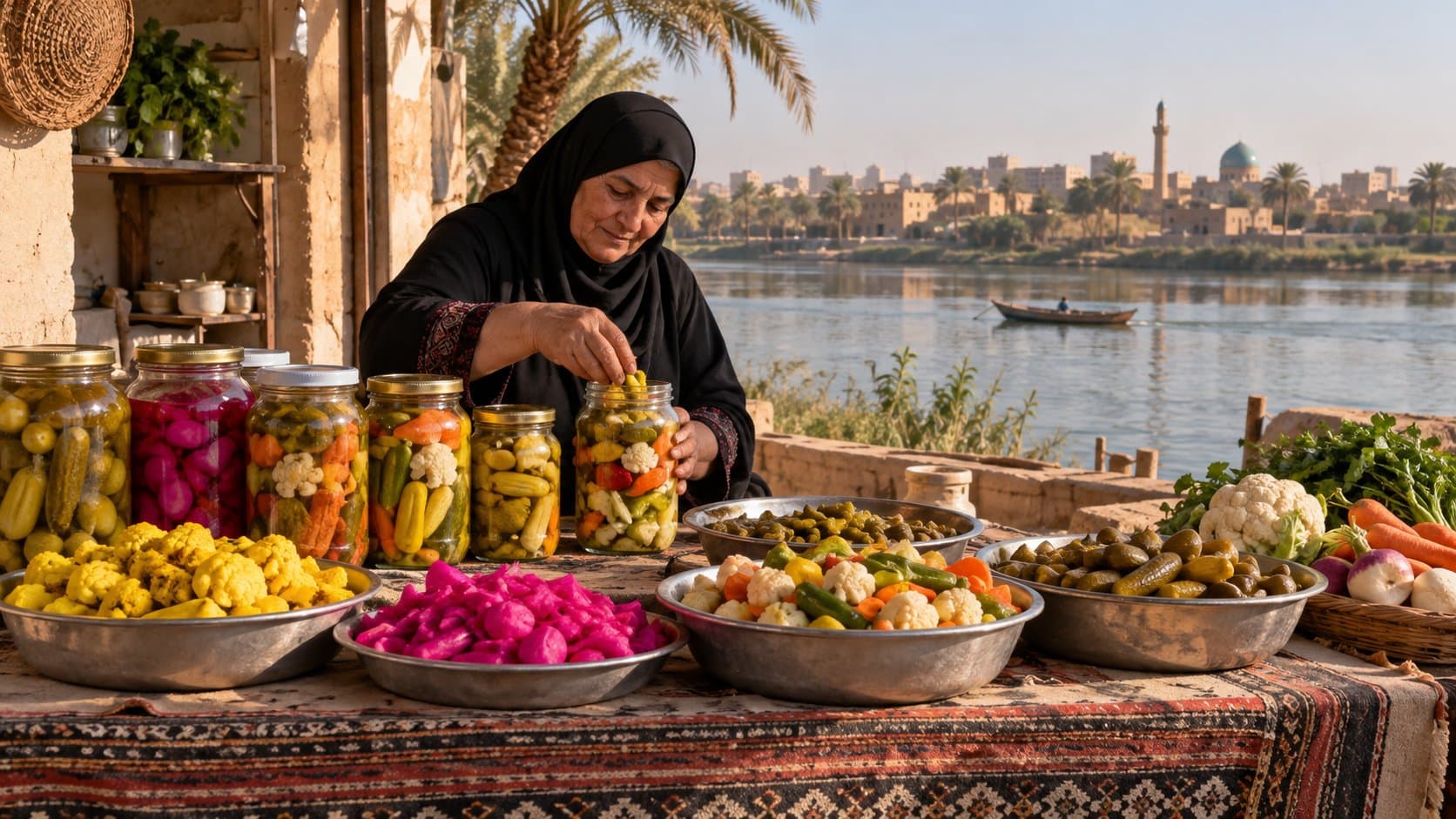
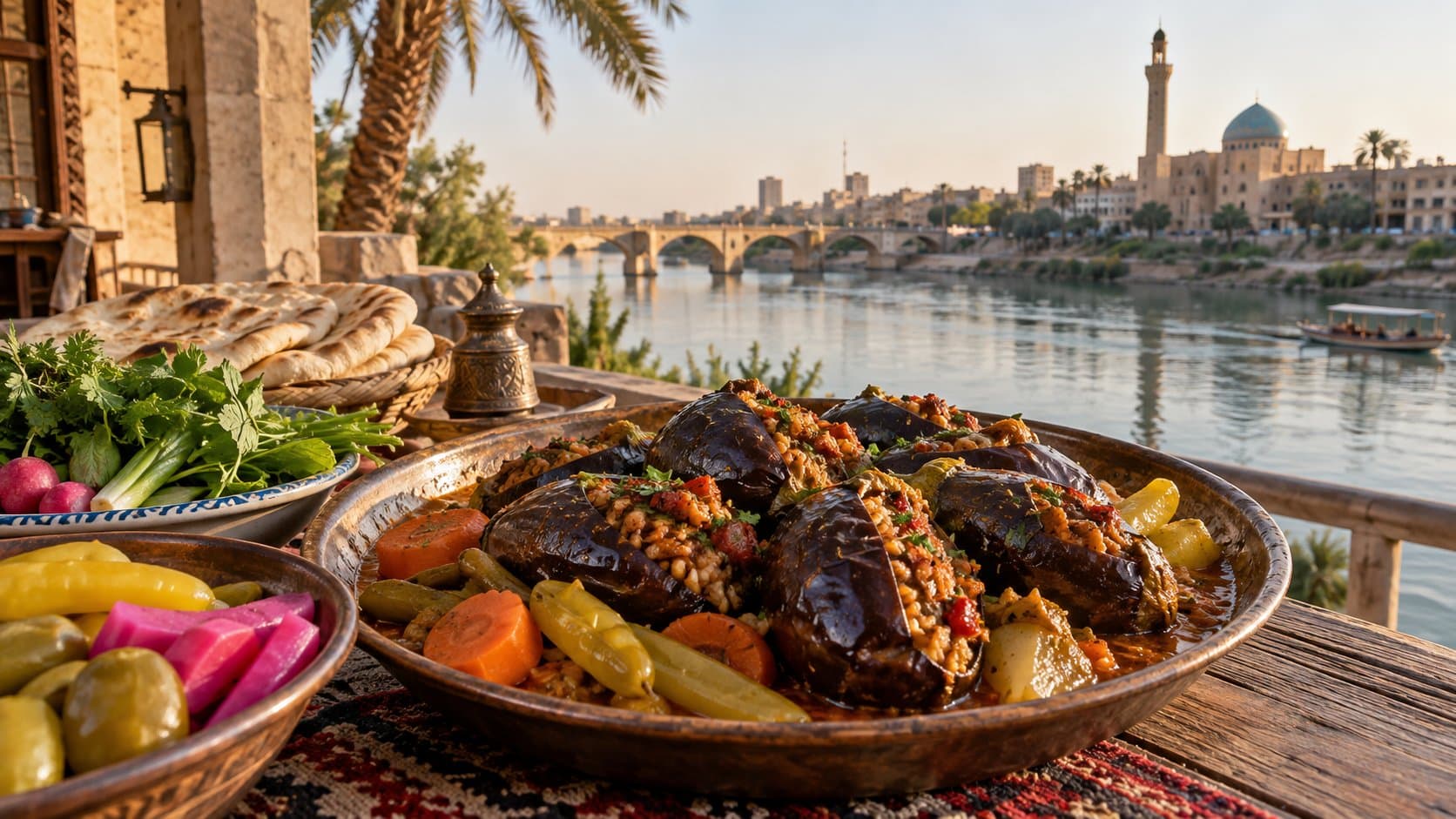
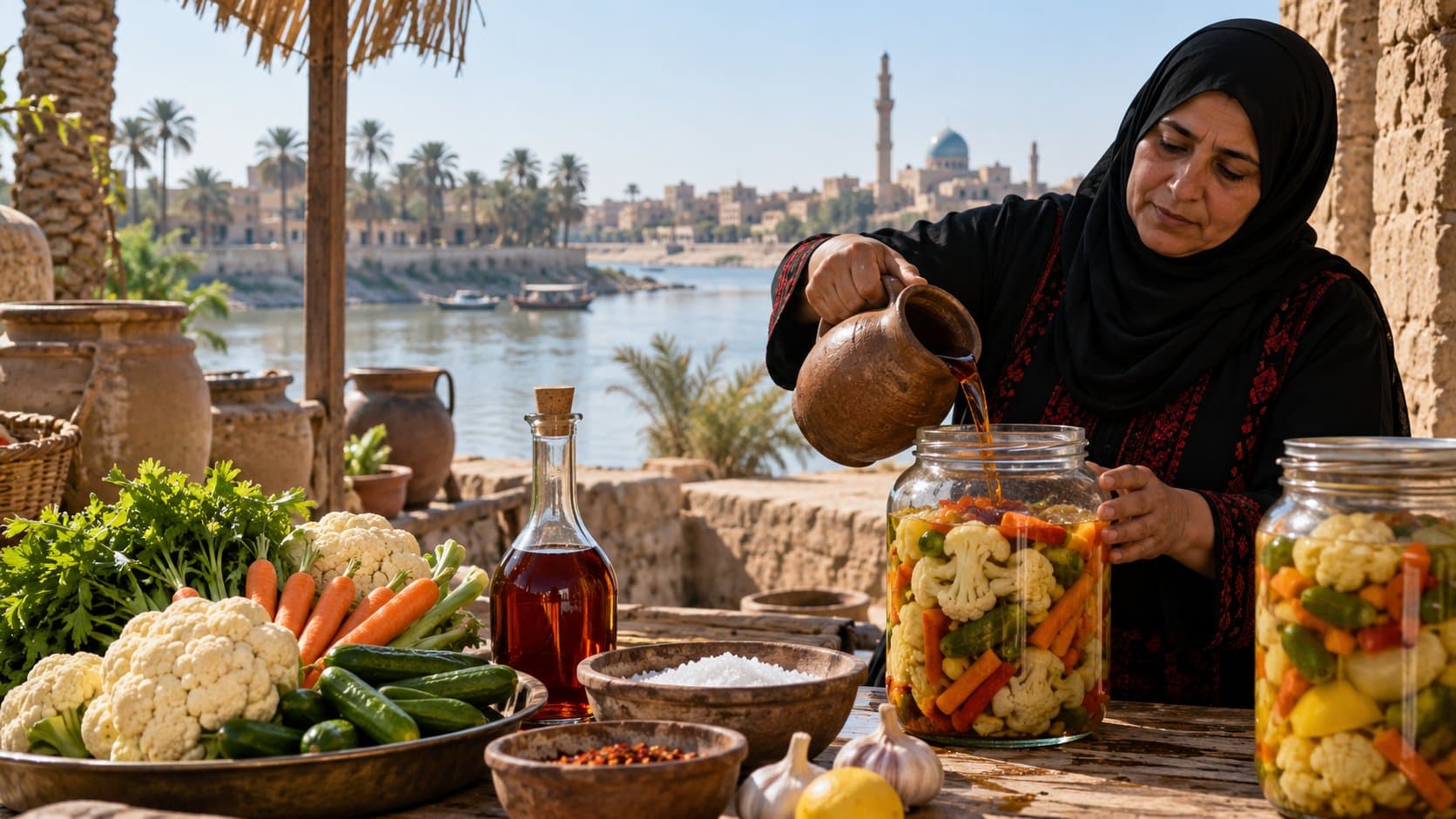
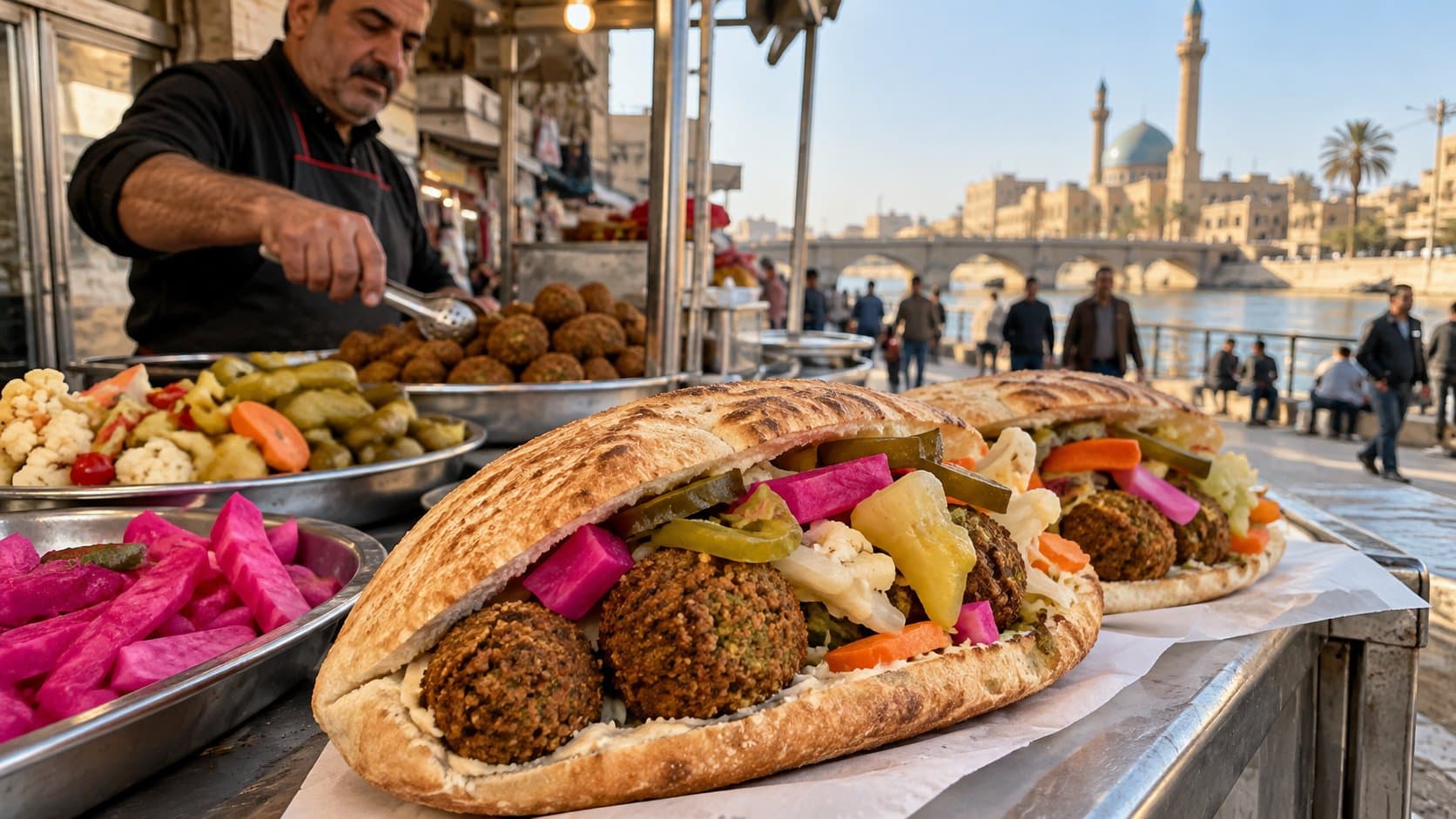
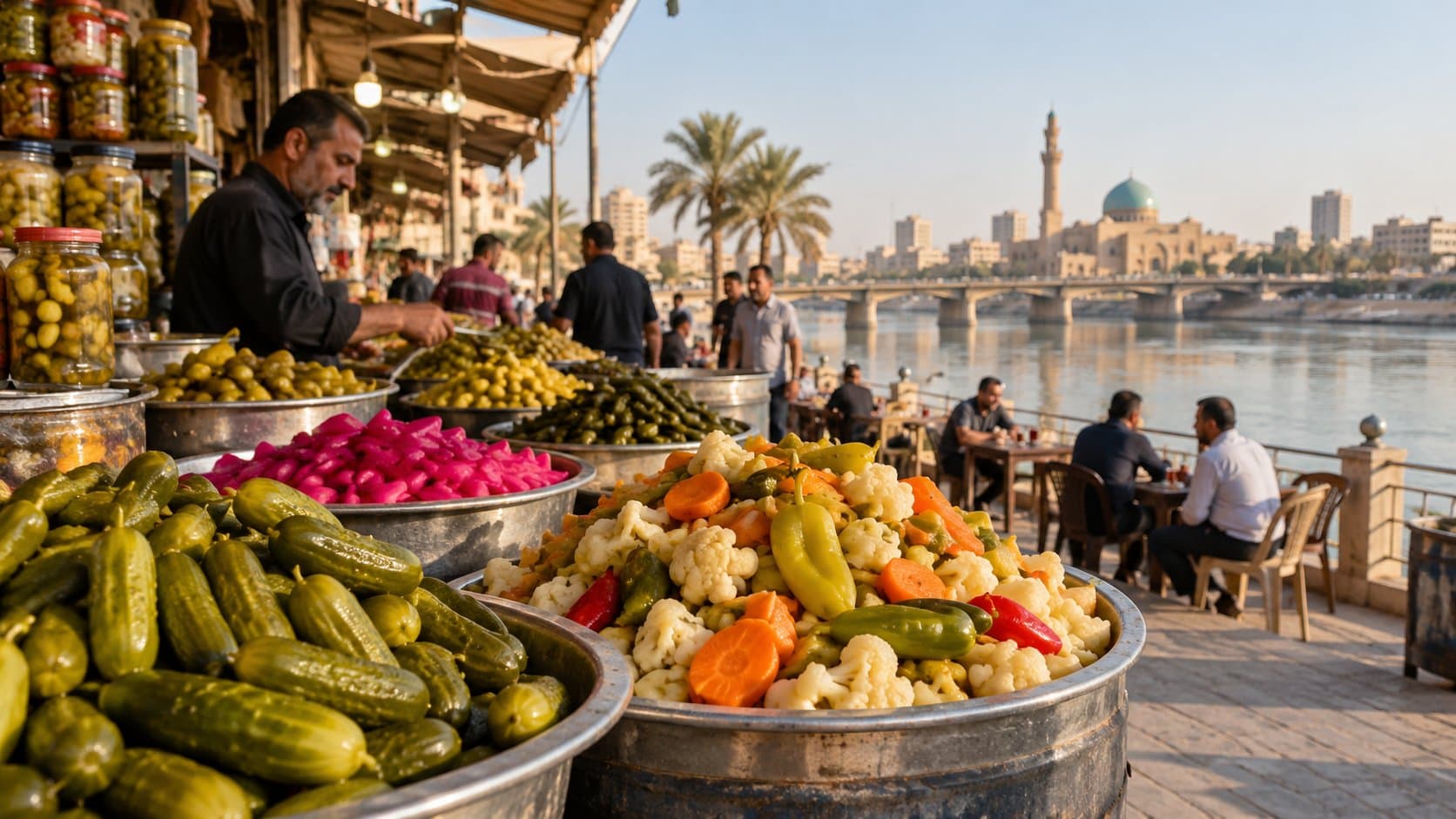
No Iraqi table feels complete without a dish of crisp, tangy pickles. Known locally as turshi (طرشي), these sour, spiced vegetable preserves have anchored the Mesopotamian palate for centuries. From storefronts in old Baghdad stacked with earthenware barrels to glass jars curing on sunny kitchen balconies, turshi is much more than a condiment. It supplies the bright acidity that cuts through rich grilled meats, deep-fried street foods, and everyday sandwiches across Iraq. According to culinary historians cited in [Wikipedia's entry on Pickling](https://en.wikipedia.org/wiki/Pickling), preserving vegetables in brine and vinegar began in ancient Mesopotamia around 2400 BCE, with archaeological evidence of pickled cucumbers along the Tigris River Valley dating to roughly 2030 BCE. Millennia later, this technique remains essential to everyday home cooking and regional food culture across the country. {{image}} ## Varieties and Flavors of Iraqi Turshi The word *turshi* comes from the Persian *torsh*, meaning sour. Across the Middle East, pickled vegetables take many regional forms, but Iraqi turshi stands apart through its warm spices, distinct vinegars, and diverse vegetable medleys. ### Turshi Mudawaf: The Classic Mixed Pickle The standard household pickle is *turshi mudawaf* (mixed turshi). It brings together seasonal vegetables chopped into bite-sized pieces: * **Turnips and Beets (*Shalgam wa Shamandar*):** Turnip batons pickled with fresh red beet slices develop a distinct pink hue and an earthy crunch. * **Small Cucumbers (*Khiyar*):** Pickling cucumbers cured in salted brine with garlic, coriander seeds, and dill stems to stay crisp. * **Cauliflower and Carrots (*Qarnabeet wa Jazar*):** Florets and sliced carrots that absorb spices while keeping a firm snap. * **Green Peppers and Wild Herbs:** Pointed green peppers add mild heat, accented by wild celery (*karafs*), garlic cloves, and mint. ### Turshi Mahshi: Stuffed Baby Eggplant Among the most prized styles of Iraqi pickling is *turshi mahshi* (stuffed pickles), especially stuffed baby eggplants (*betinjan mahshi*). Small eggplants are slit lengthwise, lightly blanched, and packed with finely chopped garlic, minced celery leaves, fresh parsley, and a pinch of ground coriander or cumin. Bound gently with celery stalks or thread, they cure in aged date vinegar or spiced brine until the skin softens and the stuffing infuses the flesh. {{image}} ### Turshi bil-Amba: Pickles in Mango and Fenugreek In central and southern Iraq, *turshi bil-amba* holds pride of place. For this style, blanched turnips, cauliflower, and carrots are tossed in a golden sauce made from pickled green mango, turmeric, fenugreek, and mustard seeds. As noted in the history of [Amba on Wikipedia](https://en.wikipedia.org/wiki/Amba_(condiment)), this savory mango condiment arrived via trade routes between Bombay and the port city of Basra, quickly becoming a fixture in Baghdad's sandwich shops and markets. ## Traditional Home Preparation Making turshi at home is both a seasonal routine and practical preservation. Iraqi home cooks rely on two main methods: lacto-fermented saltwater brining and vinegar pickling. ### 1. Cleaning and Pre-Salting Crunch is essential. Cooks scrub the vegetables thoroughly and often toss denser vegetables like turnips and cauliflower in coarse salt before packing. This draws out excess moisture so the vegetables stay crisp in the jar. ### 2. Spices and Aromatics Before adding vegetables, cooks build an aromatic base at the bottom of the jar. Sliced garlic cloves, crushed coriander seeds, cumin, black peppercorns, dried chili, and generous bunches of fresh wild celery (*karafs*) line the bottom. Celery is the defining aromatic of Iraqi pickles, giving them their characteristic savory aroma. ### 3. The Curing Liquid: Date Vinegar and Brine While white vinegar is widely available, traditional Iraqi recipes favor aged date vinegar (*khall tamr*), a dark vinegar produced from fermented dates. Date vinegar lends a mellow acidity and subtle sweetness that works well with warm spices like turmeric, cloves, and allspice. For pink turnip pickles, cooks rely on an uniodized salt brine colored with red beet wedges, allowing natural lactic acid fermentation over 7 to 10 days at room temperature. {{image}} ## How Turshi Accompanies Grilled Foods and Sandwiches In [Iraqi cuisine](https://en.wikipedia.org/wiki/Iraqi_cuisine), turshi acts as an essential palate cleanser. Traditional meals feature rich spiced meats, buttery rice, and flatbreads. A bite of cold, acidic pickle between morsels resets the palate and aids digestion. ### The Grills: Kebab and Masgouf When skewers of minced lamb *kebab arbil*, charred chicken tikka, or charcoal-grilled *masgouf* arrive at the table, bowls of mixed turshi, fresh parsley, sliced onions with sumac, and hot flatbread (*khubz*) sit beside them. The sharp acidity cuts cleanly through charcoal smoke and rendered fat. ### Street Sandwiches: Falafel and Samoon Turshi is central to street food culture across the country. Diamond-shaped *samoon* bread is cut open and filled with fried falafel patties, roasted eggplant, or shawarma. Before serving, vendors tuck in pickled cucumbers and pink turnips, followed by a spoonful of amba. The crisp, sour crunch cuts the richness of the fried fillings. {{image}} ```json { "faqs": [ { "id": "faq-1", "question": "What does the word turshi mean in Iraqi cuisine?", "answer": "The word turshi comes from the Persian word torsh, meaning sour. In Iraq, it refers broadly to mixed pickled vegetables cured in vinegar, brine, and aromatic spices." }, { "id": "faq-2", "question": "How do Iraqi pink pickled turnips get their distinct bright color?", "answer": "Iraqi pink turnips (turshi shalgham) get their vibrant hue naturally from slices of fresh red beetroot packed alongside the turnips in a salted water brine." }, { "id": "faq-3", "question": "What is turshi mahshi?", "answer": "Turshi mahshi refers to stuffed pickled vegetables, most commonly small eggplants slit open and packed with a mixture of minced garlic, fresh celery leaves, parsley, and spices before curing." }, { "id": "faq-4", "question": "What kind of vinegar is traditionally used for Iraqi pickles?", "answer": "Traditional Iraqi pickling often uses dark date vinegar (khall tamr), which imparts a rich, mellow acidity and subtle fruity sweetness compared to ordinary white distilled vinegar." }, { "id": "faq-5", "question": "Why is turshi served with grilled meats and fried foods?", "answer": "The high acidity and crisp crunch of turshi cut through the richness and fat of grilled lamb kebabs, fried eggplant, and falafel, acting as a refreshing palate cleanser." }, { "id": "faq-6", "question": "What is the difference between regular turshi and turshi bil-amba?", "answer": "Regular turshi is typically cured in clear brine or date vinegar, while turshi bil-amba incorporates a spiced pickled mango sauce seasoned with fenugreek and turmeric for a pungent, tangy coating." } ] } ``` ## Sources * **Wikipedia**: "Pickling" — [https://en.wikipedia.org/wiki/Pickling](https://en.wikipedia.org/wiki/Pickling) (Accessed: May 2024) * **Wikipedia**: "Iraqi cuisine" — [https://en.wikipedia.org/wiki/Iraqi_cuisine](https://en.wikipedia.org/wiki/Iraqi_cuisine) (Accessed: May 2024) * **Wikipedia**: "Amba (condiment)" — [https://en.wikipedia.org/wiki/Amba_(condiment)](https://en.wikipedia.org/wiki/Amba_(condiment)) (Accessed: May 2024) * **Wikipedia**: "Pickled cucumber" — [https://en.wikipedia.org/wiki/Pickled_cucumber](https://en.wikipedia.org/wiki/Pickled_cucumber) (Accessed: May 2024) * **Wikipedia**: "List of pickled foods" — [https://en.wikipedia.org/wiki/List_of_pickled_foods](https://en.wikipedia.org/wiki/List_of_pickled_foods) (Accessed: May 2024)