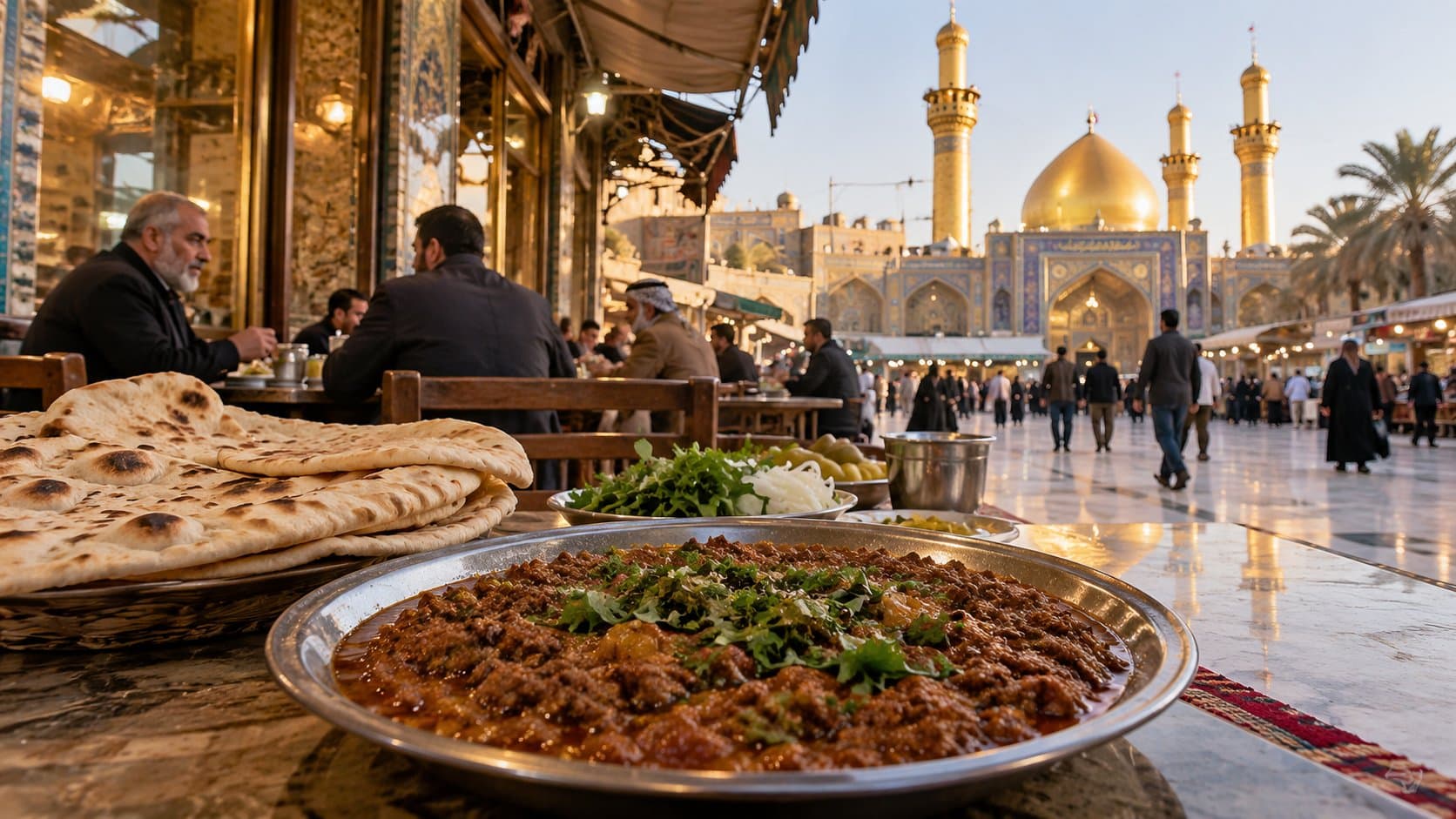
Najaf-style qeema
traditional dishesNajaf
About
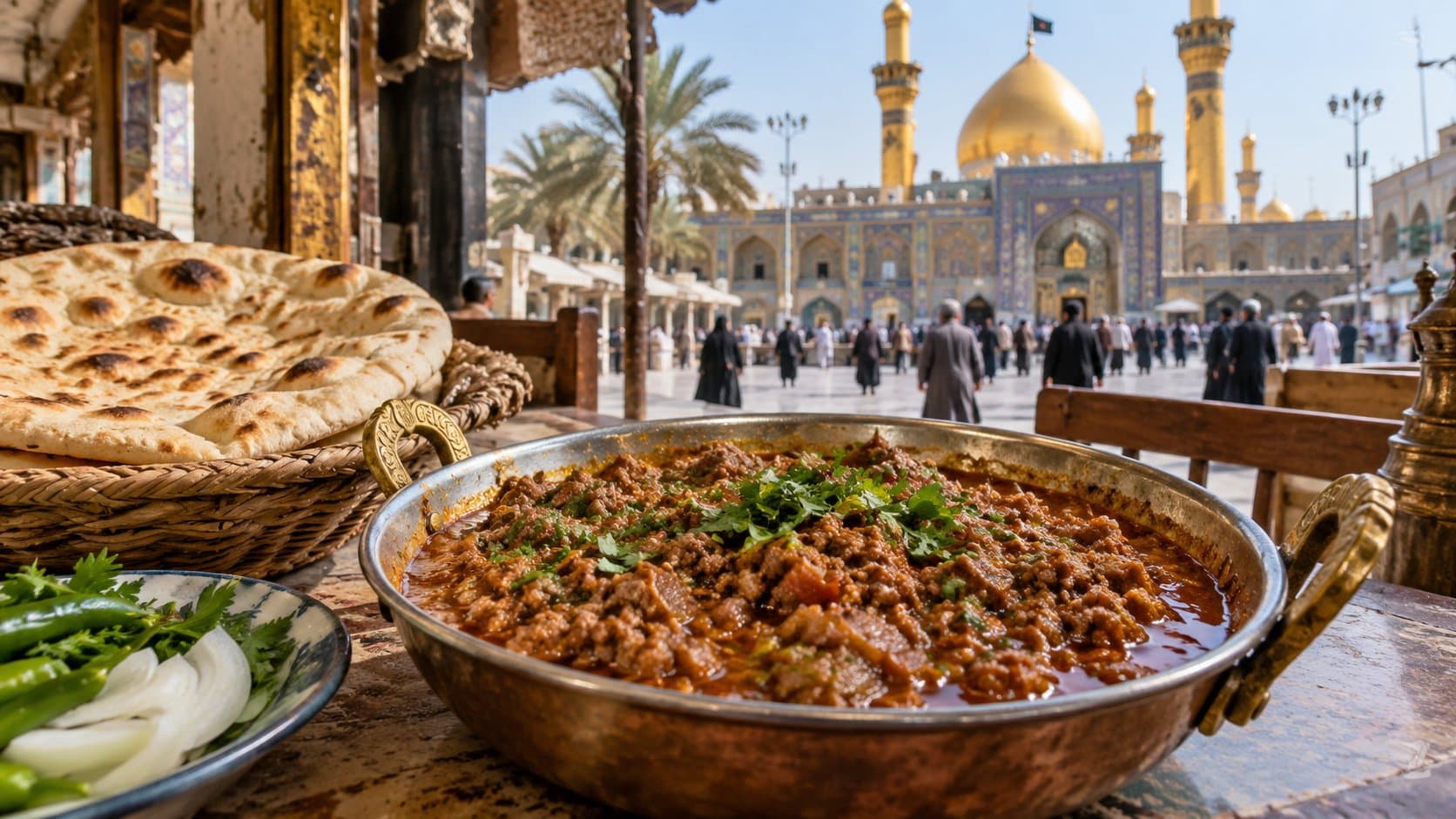
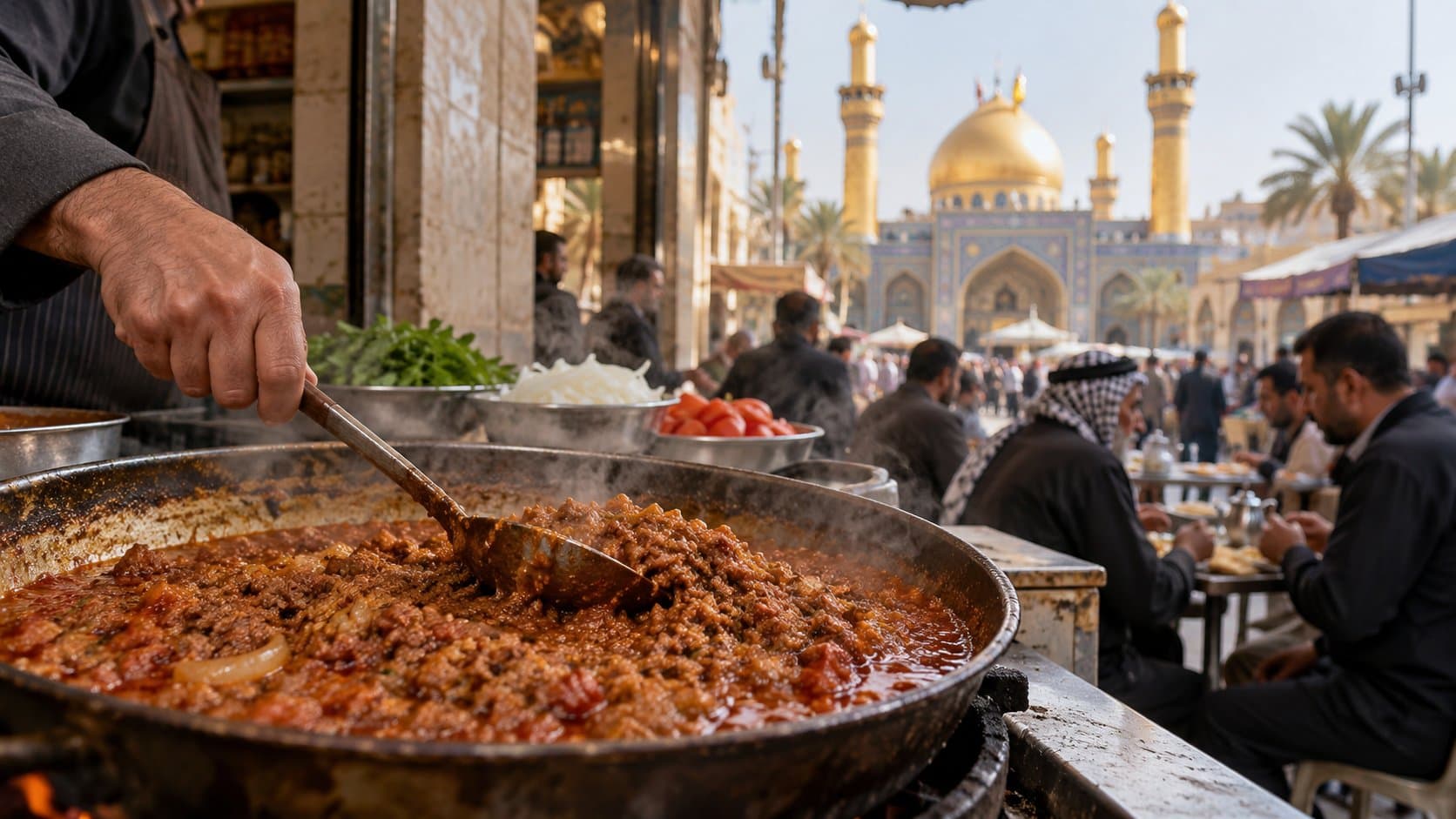
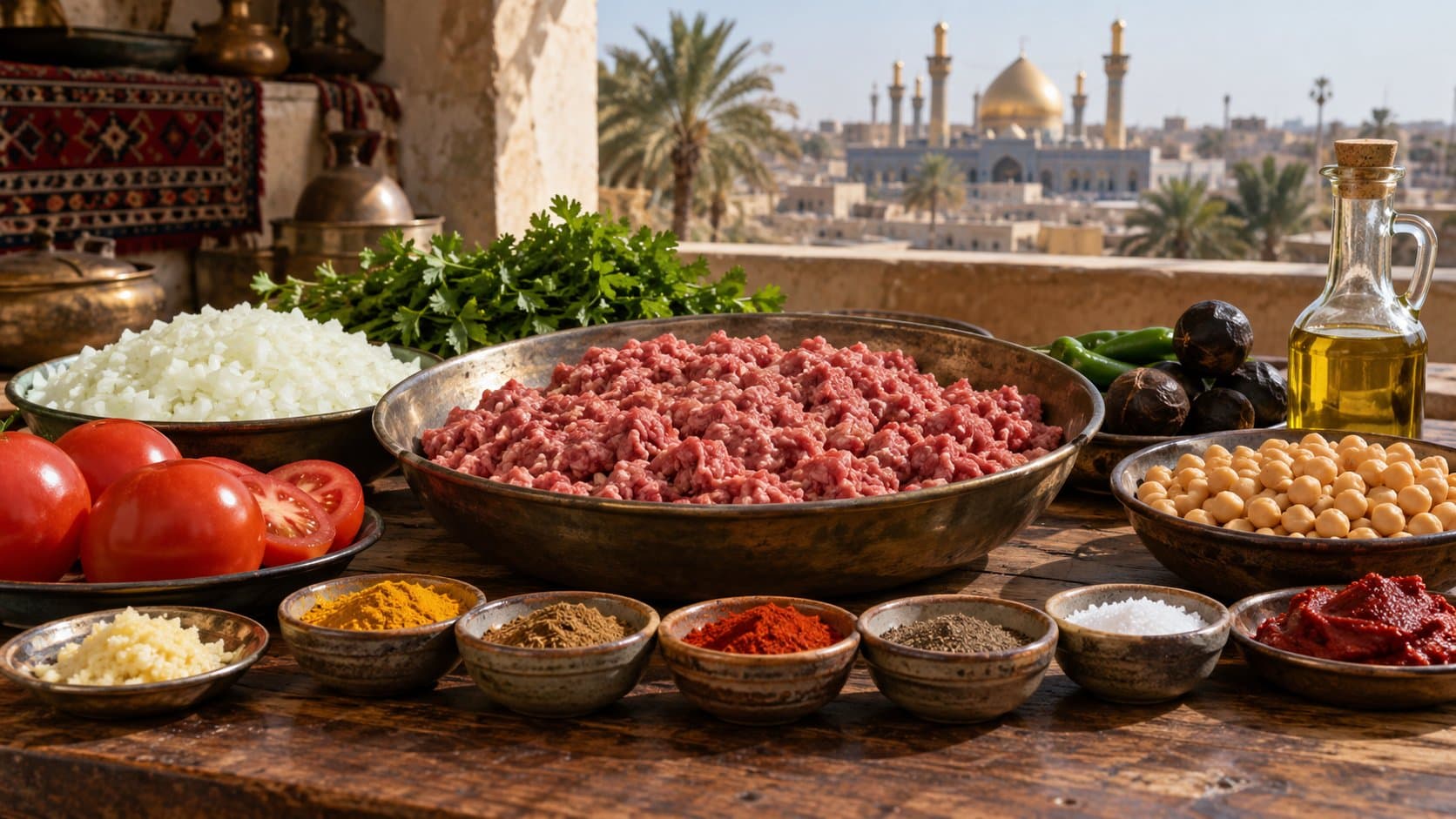
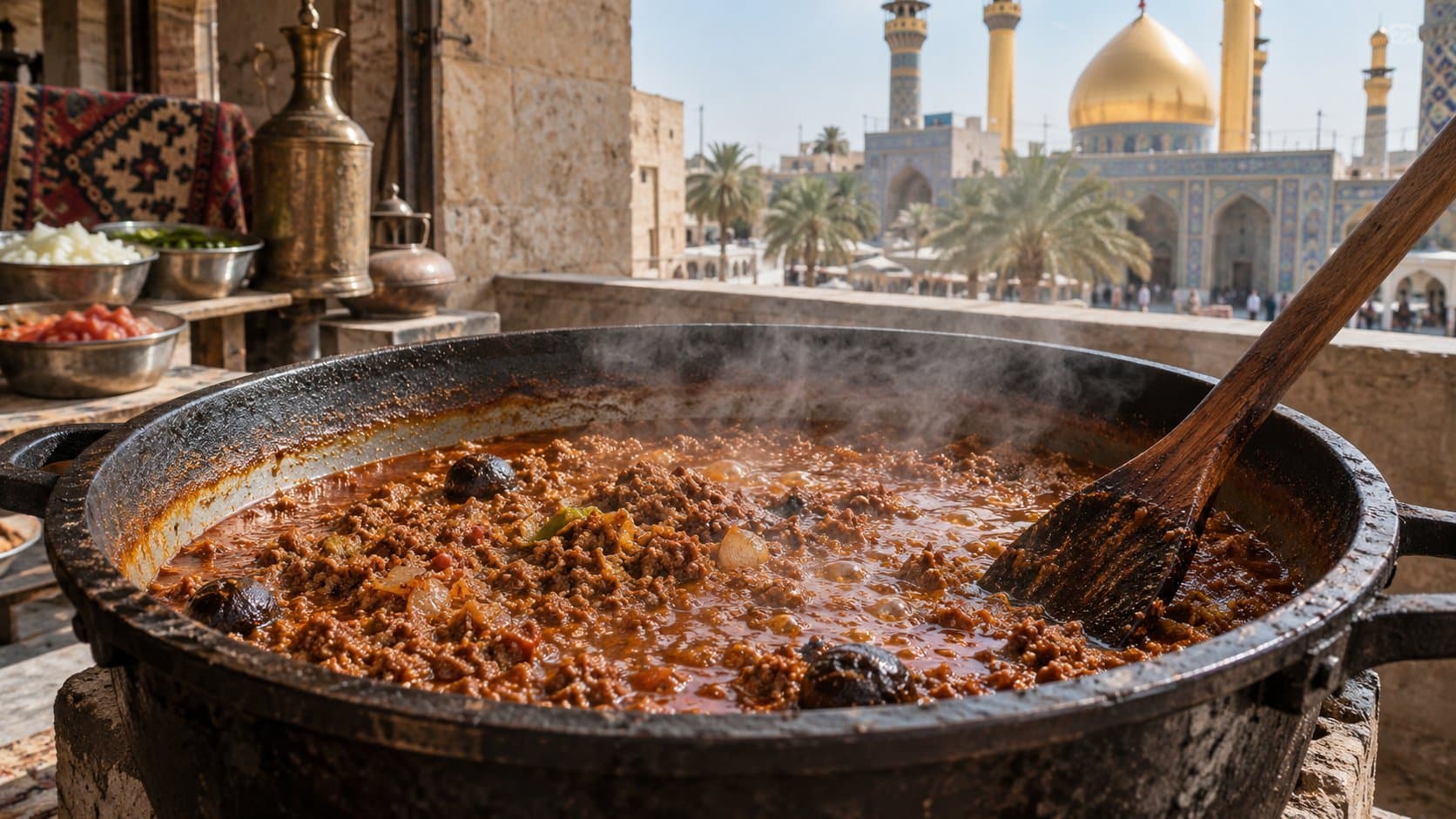
Najaf-style qeema (*Qeema Najafia*) comes from the holy city of Najaf in southern-central Iraq. Unlike versions across South Asia or the Levant that keep ground meat loose in a spiced sauce, cooks in Najaf boil bone-in or diced meat with chickpeas for hours, then pound everything into a thick, uniform paste with heavy pestles. The result is a dense, savory stew where shredded meat fibers bind directly with mashed chickpeas. Ladled over aromatic rice, it feeds millions of visitors and serves as a core dish of Iraqi communal dining. {{image}} ## Origins and cultural significance The word *qeema* traces back to ancient Akkadian roots referring to minced or finely chopped meat, a lineage preserved in Mesopotamian culinary records (see [Wikipedia's Iraqi cuisine reference](https://en.wikipedia.org/wiki/Iraqi_cuisine)). Najaf turned that idea into its own communal preparation. Persian *gheimeh* uses diced lamb and split yellow peas in a tomato broth with dried limes (detailed on [Wikipedia's Gheimeh article](https://en.wikipedia.org/wiki/Gheimeh)). Najafi cooks instead combine whole chickpeas with lamb or beef, mashing them together into a thick paste. The dish anchors public feasts across southern and central Iraq during the Islamic month of Muharram and the pilgrimage of Arbaeen. Tens of millions of pilgrims walk toward Karbala through Najaf (as detailed on [Wikipedia's Arba'in pilgrimage article](https://en.wikipedia.org/wiki/Arba%27een_pilgrimage)). Along pilgrim routes, volunteer stations known as *mawakib* set up open-air kitchens to feed travelers at no charge. Teams of cooks work in shifts around cauldrons, taking turns pounding the stew with heavy wooden mallets. Preparing and sharing the meal counts as *thawab*, an act of religious charity and community service. Families also make Najafi qeema for weddings, memorials, and neighborhood gatherings in Baghdad, Karbala, and southern provinces (as noted on [Wikipedia's Qeema Najafi page](https://en.wikipedia.org/wiki/Qeema_Najafi)). {{image}} ## Ingredients and seasonings The dish balances meat, legumes, and sour-sweet spices: - **Meat**: Boneless lamb neck, shank, or shoulder, sometimes combined with beef. Cuts with connective tissue work best because their collagen melts during boiling, making the meat shred cleanly under a mallet. - **Chickpeas (*Hummus*)**: Dried chickpeas soaked overnight and simmered until soft. They thicken the stew naturally without starch or flour. - **Dried black limes (*Noomi Basra*)**: Sun-dried limes from Basra give the stew its signature sour, slightly fermented taste. Cooks deseed them to remove bitterness, then grind the hulls into powder or simmer them whole. - **Spices**: Ground cardamom, cinnamon, cumin, and black pepper. Cardamom dominates the aroma, balancing the sharp lime and rich lamb. - **Tomato paste and onions**: Diced onions cooked in oil or ghee, followed by tomato paste fried until deep red, create the stew base. {{image}} ## Preparation steps Making authentic Najafi qeema requires long cooking times and physical effort during the pounding stage. ### 1. Boiling the meat and chickpeas Cooks place soaked chickpeas and large meat cuts into deep pots, cover them with water, and bring them to a boil. They skim the foam off the surface, add bay leaves and cardamom pods, and keep the pot at a low simmer for hours until both ingredients crush easily between two fingers. ### 2. Pounding (*Al-Daqq*) Cooks strain the meat and chickpeas from the broth, saving the cooking liquid. In large kitchens, teams use heavy wooden pestles to pound the hot mixture against the base and sides of the pot. Home cooks use heavy potato mashers or stand mixers. The motion shreds the meat into thin strands and crushes the chickpeas into a dense paste without turning it into a puree. ### 3. Frying the base In a second pot, cooks fry chopped onions in ghee or oil until golden, then stir in tomato paste. Cooking the paste directly in fat removes its raw tinny edge. Cooks then stir in ground *noomi Basra*, cardamom, cinnamon, and cumin so the spices bloom in the hot oil. ### 4. Simmering and reduction The pounded meat and chickpeas go into the tomato base along with the reserved cooking broth. The pot simmers over low heat for an hour or more, with regular stirring to keep the bottom from catching. As the water evaporates, starches from the chickpeas and meat strands thicken the liquid into a dense, smooth stew. {{image}} ## How to serve Najafi qeema Cooks serve Najafi qeema hot over white rice. In southern Iraq, households pair it with *timman anbar*, an aromatic long-grain rice grown along the Middle Euphrates. The stew covers the rice completely. At communal gatherings, hosts serve the meal on large round trays (*siniya*) alongside flatbreads like *samoon* or *khubz tannur*, pickled vegetables (*turshi*), radishes, and fresh mint. Diners gather around the shared platter, eating together from the center. --- ```json { "faqs": [ { "id": "faq-1", "question": "What makes Najaf-style qeema different from other qeema stews?", "answer": "While typical South Asian or Middle Eastern keema consists of loose minced meat in a gravy, Najaf-style qeema is made by slow-cooking whole cuts of meat and chickpeas until tender, then thoroughly mashing them together with wooden pounders. This creates a dense, silky, cohesive texture with shredded meat fibers suspended in a chickpea puree." }, { "id": "faq-2", "question": "When is Najaf-style qeema traditionally prepared?", "answer": "It is most famously cooked during the Islamic commemorations of Muharram and the Arbaeen pilgrimage, when volunteers prepare massive cauldrons of the stew to feed millions of pilgrims for free. It is also a staple at weddings, family celebrations, and funerals across Iraq." }, { "id": "faq-3", "question": "What gives Najafi qeema its distinctive sour and aromatic taste?", "answer": "The stew's signature tangy and fragrant profile comes from powdered dried black lime (noomi Basra), combined with generous measures of ground green cardamom, cinnamon, and cumin cooked into tomato paste." }, { "id": "faq-4", "question": "What type of meat is traditionally used in Najafi qeema?", "answer": "Tender cuts of lamb shoulder, shank, or beef with ample connective tissue are traditionally used. As the meat simmers, the collagen dissolves, allowing it to shred into delicate ribbons during the mashing step." }, { "id": "faq-5", "question": "What is the best rice to serve with Iraqi qeema?", "answer": "Najafi qeema is traditionally served over Iraqi amber rice (timman anbar), a highly aromatic long-grain variety cultivated in the Middle Euphrates region, often lightly seasoned or tinted with saffron." }, { "id": "faq-6", "question": "Can Najaf-style qeema be made at home without specialized equipment?", "answer": "Yes. Home cooks can simmer the meat and chickpeas in a standard heavy-bottomed pot or pressure cooker, then shred the meat and mash the chickpeas using a sturdy potato masher or stand mixer paddle before simmering them in the spiced tomato broth." } ] } ``` --- ## Sources - **Wikipedia**: "Iraqi cuisine", [https://en.wikipedia.org/wiki/Iraqi_cuisine](https://en.wikipedia.org/wiki/Iraqi_cuisine), accessed March 2025. - **Wikipedia**: "Qeema Najafi", [https://en.wikipedia.org/wiki/Qeema_Najafi](https://en.wikipedia.org/wiki/Qeema_Najafi), accessed March 2025. - **Wikipedia**: "Gheimeh", [https://en.wikipedia.org/wiki/Gheimeh](https://en.wikipedia.org/wiki/Gheimeh), accessed March 2025. - **Wikipedia**: "Arba'in pilgrimage", [https://en.wikipedia.org/wiki/Arba%27een_pilgrimage](https://en.wikipedia.org/wiki/Arba%27een_pilgrimage), accessed March 2025. - **World Food Guide**: "Qeema (Iraqi)", [https://worldfood.guide/dish/qeema/](https://worldfood.guide/dish/qeema/), accessed March 2025.