Al-Qishla is a 19th-century Ottoman administrative compound and clock tower on the Tigris River in Baghdad, anchoring the cultural life of Al-Mutanabbi Street.
Al-Qishla and Clock Tower in Baghdad: Historic Ottoman Administrative Center, Tigris Garden, and Mutanabbi Cultural Hub
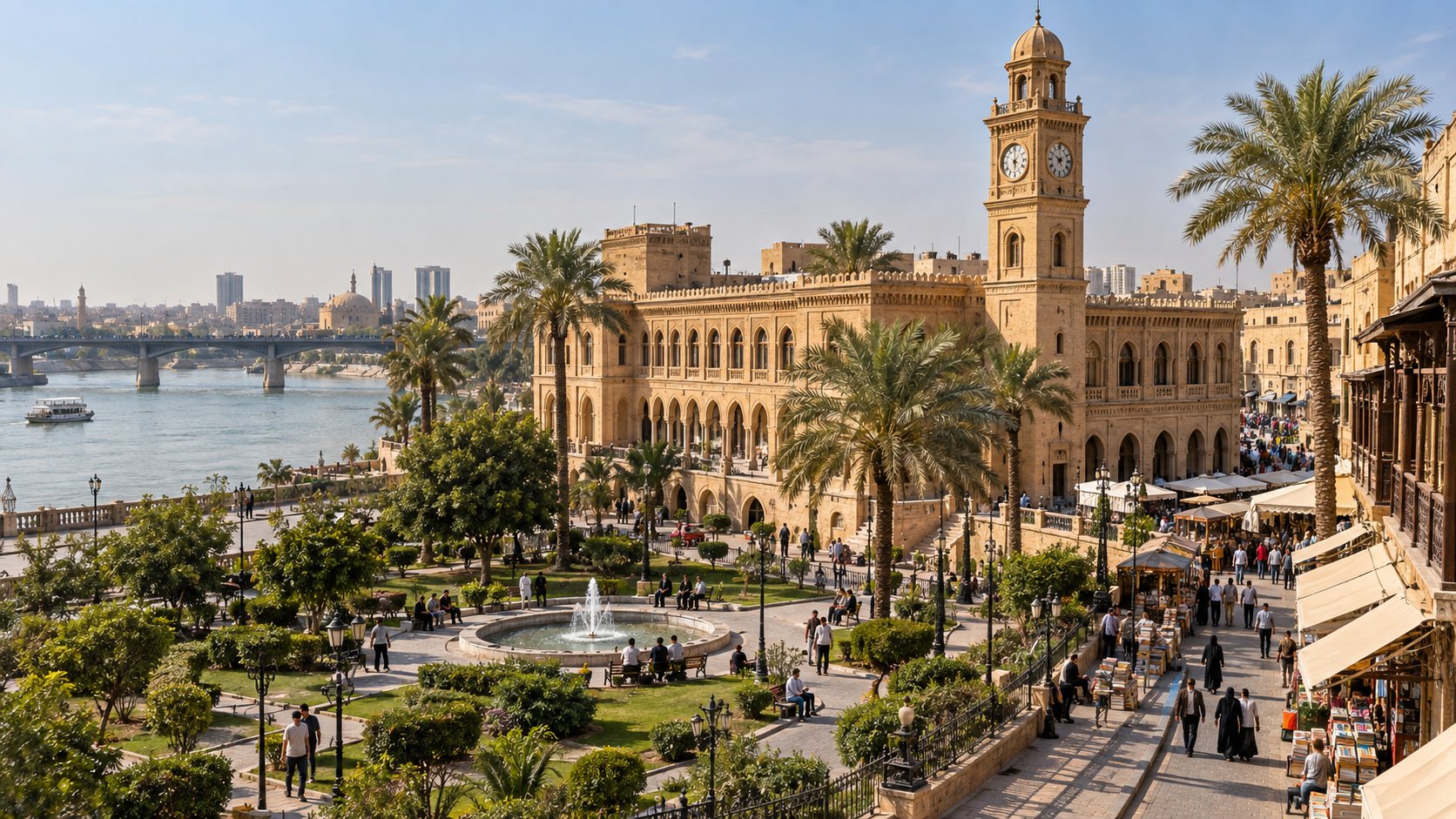
Along the eastern bank of the Tigris River in Baghdad’s historic Al-Rusafa district stands Al-Qishla, one of the most prominent Ottoman-era architectural monuments in Iraq. Anchoring a waterfront courtyard planted with date palms and lawns, the brick compound and its clock tower link Baghdad's imperial administrative history with contemporary urban life. Once a military garrison and bureaucratic center under late Ottoman governance, Al-Qishla now serves as the green, open gathering space at the river terminus of Al-Mutanabbi Street.
Historical Origins and Ottoman Civic Architecture
The name Qishla (also rendered Qushla or Qishleh) comes from the Ottoman Turkish kışla, meaning winter military quarters or army barracks. Construction of the administrative compound began in 1861 under Mehmed Namık Pasha, the Ottoman Wali (governor) of Baghdad. Built to bring provincial offices, regional courts, and infantry barracks together inside a single governmental district called the Serail (Saray), the complex reflected broader administrative centralisation in Ottoman Mesopotamia.
The complex took its final shape under reformist Wali Midhat Pasha between 1869 and 1871. Midhat Pasha, known across the late Ottoman Empire for municipal, educational, and legal reforms during the Tanzimat period, planned Al-Qishla as an organized civic seat. Built in traditional Baghdadi yellow-and-red brick masonry, the two-story rectangular structure enclosed an expansive central courtyard facing the Tigris riverbank.
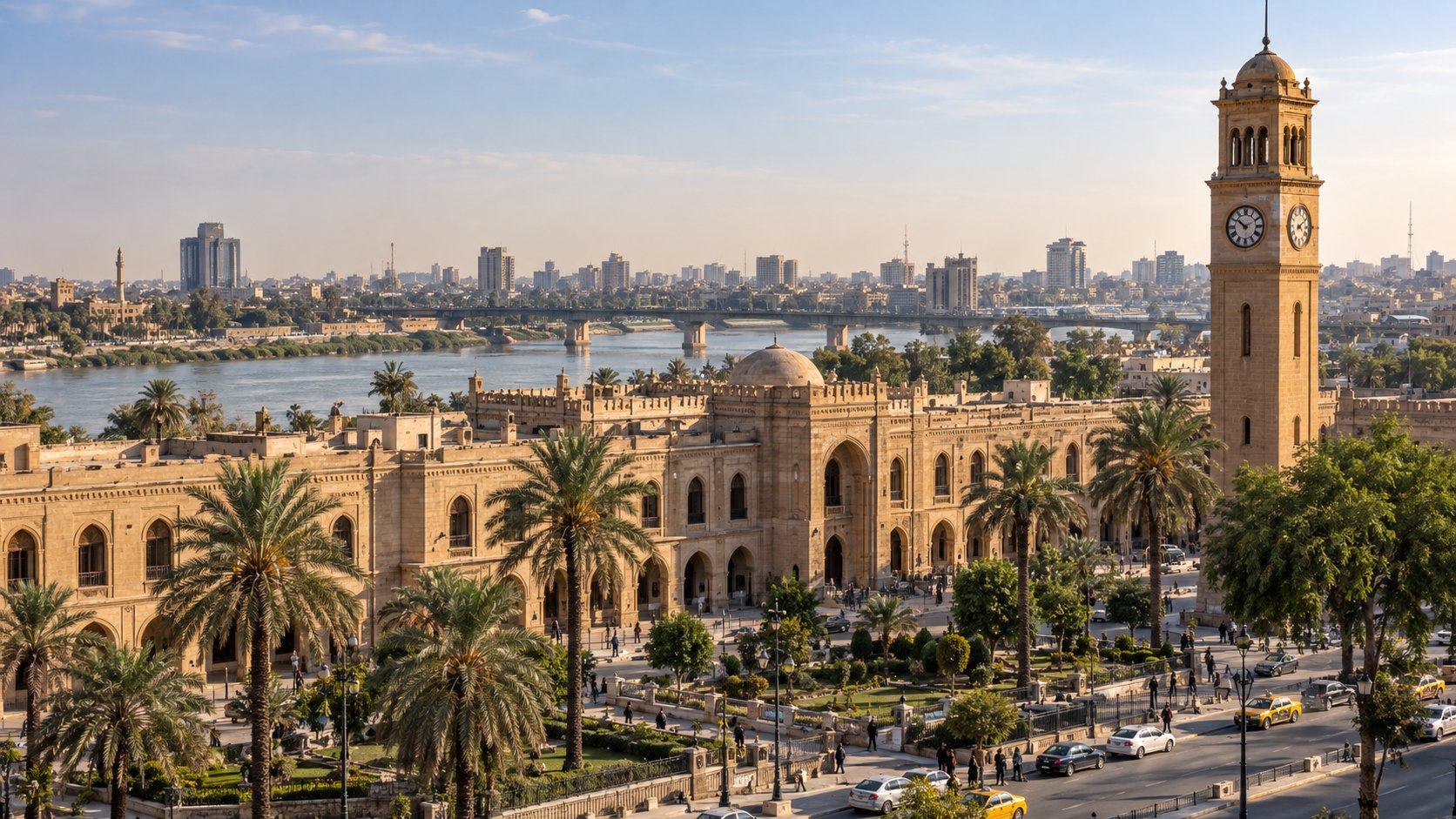
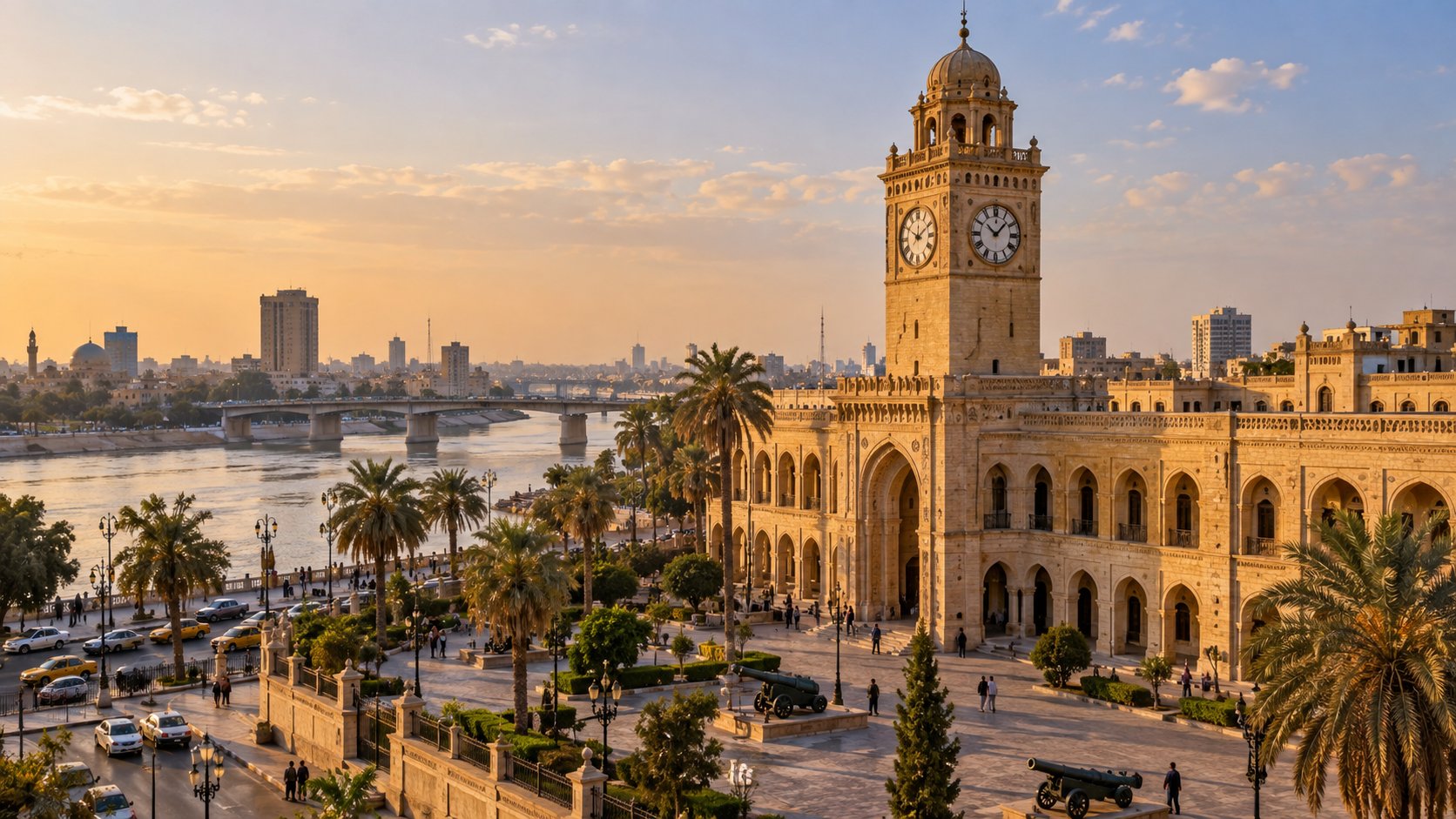
To coordinate the garrison and provide civil time for the surrounding city, Ottoman engineers added a brick clock tower inside the riverside courtyard. The tower tapers upward to an observation balcony and bell cupola, reaching a height of roughly 23 to 26 meters. Seventy-three winding interior steps lead to the upper mechanism room. In an era when Baghdad's daily rhythm relied on solar calls to prayer, the striking bells of Al-Qishla introduced mechanical public timekeeping to the riverfront skyline.
Monarchical Transitions and the 1927 British Clock
Following the collapse of Ottoman rule during World War I, British forces occupied Baghdad in March 1917, briefly hoisting the Union Jack from Al-Qishla's tower. In August 1921, the courtyard served as the coronation site for King Faisal I, formally installing the monarch of the Kingdom of Iraq and marking the emergence of modern Iraqi governance.
The clock mechanism itself dates from a later diplomatic exchange. As documented by the United Nations in Iraq, British monarch King George V gifted a four-faced mechanical clock mechanism to King Faisal I in 1927. The clock was installed inside the tower's upper chamber. Reflecting its regional setting, two dials display classical Arabic numerals, while the other two display Latin numerals. Maintained by local horologists, the mechanism still strikes over the Rusafa riverbank.
The Serail compound housed Iraqi government offices through much of the 20th century. Decades of conflict and deferred maintenance degraded the brickwork, but municipal conservation work completed around 2013 restored the site and reopened its grounds as a public heritage park. The complex is documented on the UNESCO World Heritage Tentative List as part of the historic features of the Tigris River in Rusafa.
The Modern Cultural Pulse: Fridays at Al-Qishla
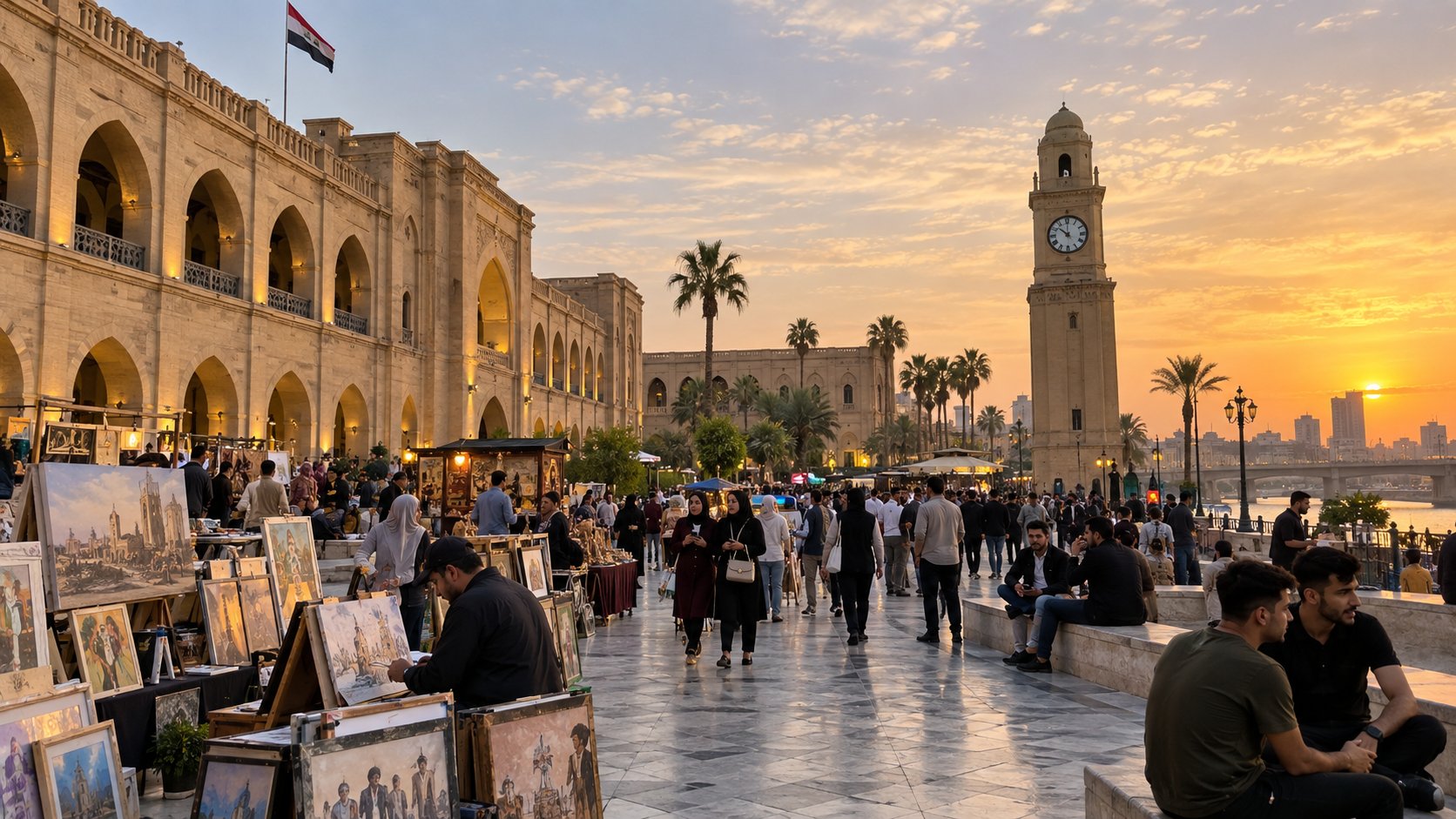
Al-Qishla now serves as an open-air gathering space for Baghdad's literary and artistic communities. Located directly beside the southern end of Al-Mutanabbi Street—the historic hub of Baghdad's booksellers, publishers, and stationery shops—the complex fills with visitors every Friday morning.
Crowds move into the gardens after browsing street stalls and stopping for tea at Shabandar Café. The lawns and shaded perimeter arcades accommodate temporary art exhibitions, craft displays, poetry readings, oud performances, and public discussions. The riverside promenade offers open views of river traffic and historic bridges across the Tigris, making the courtyard one of the most accessible public heritage spaces in the capital.
Practical Visitor Information
- Location: Al-Mutanabbi Street, Al-Rusafa district, central Baghdad, on the eastern embankment of the Tigris River.
- Opening Hours: Open daily, typically from 8:30 AM to 6:00 PM. Activity peaks on Friday mornings and early afternoons (9:00 AM – 2:00 PM), when the book market and courtyard gatherings are in full swing.
- Admission: Entry to the gardens and open courtyards is free.
- Photography: Courtyard and exterior architectural photography is permitted; the brick tower against the palm canopy and riverfront offers one of central Baghdad's most recognizable views.
Sources
- United Nations in Iraq, "Baghdad’s Qishla", https://iraq.un.org/en/169914-baghdad%E2%80%99s-qishla, accessed April 2026.
- UNESCO World Heritage Centre, "Historical Features of the Tigris River in Baghdad Rusafa, which extends from the school Al-Mustansiriya to the Abbasid Palace", https://whc.unesco.org/en/tentativelists/5880/, accessed April 2026.
- Wikipedia, "Qushla", https://en.wikipedia.org/wiki/Qushla, accessed April 2026.
- Ard Al-Hani, "Qushla Clock Tower — Baghdad's Timeless Icon", https://ardalhani.com/destinations/qushla-clock-tower, accessed April 2026.
❓Frequently Asked Questions
Here are answers to frequently asked questions about the content above
The name Al-Qishla originates from the Ottoman Turkish word kışla, meaning military barracks or winter quarters, reflecting the building's 19th-century origin as an Ottoman garrison and administrative center.
Construction began in 1861 under Ottoman Governor Mehmed Namık Pasha and was completed around 1869–1871 under the reformist governor Midhat Pasha as part of the Serail administrative complex.
The clock mechanism was gifted in 1927 by King George V of the United Kingdom to King Faisal I of Iraq. It features four faces: two showing Arabic numerals and two showing Latin numerals.
Al-Qishla is situated on the eastern bank of the Tigris River in the Al-Rusafa district, directly at the riverside terminus of Baghdad's famous Al-Mutanabbi Street book market.
On Friday mornings, the landscaped courtyard turns into Baghdad's premier cultural forum, drawing crowds for open-air book browsing, poetry readings, art exhibitions, musical performances, and family leisure.
General entry to Al-Qishla's courtyard and gardens is free of charge, though specific cultural festivals or private events in adjacent halls may occasionally require admission or registration.