Rising 30 meters above the regional capital of Iraqi Kurdistan, the Erbil Citadel is recognized by UNESCO as one of the world's longest continuously inhabited settlements. This practical guide covers the citadel mound, top museums, opening hours, and walking routes down to Qaysari Bazaar and Machko Tea House.
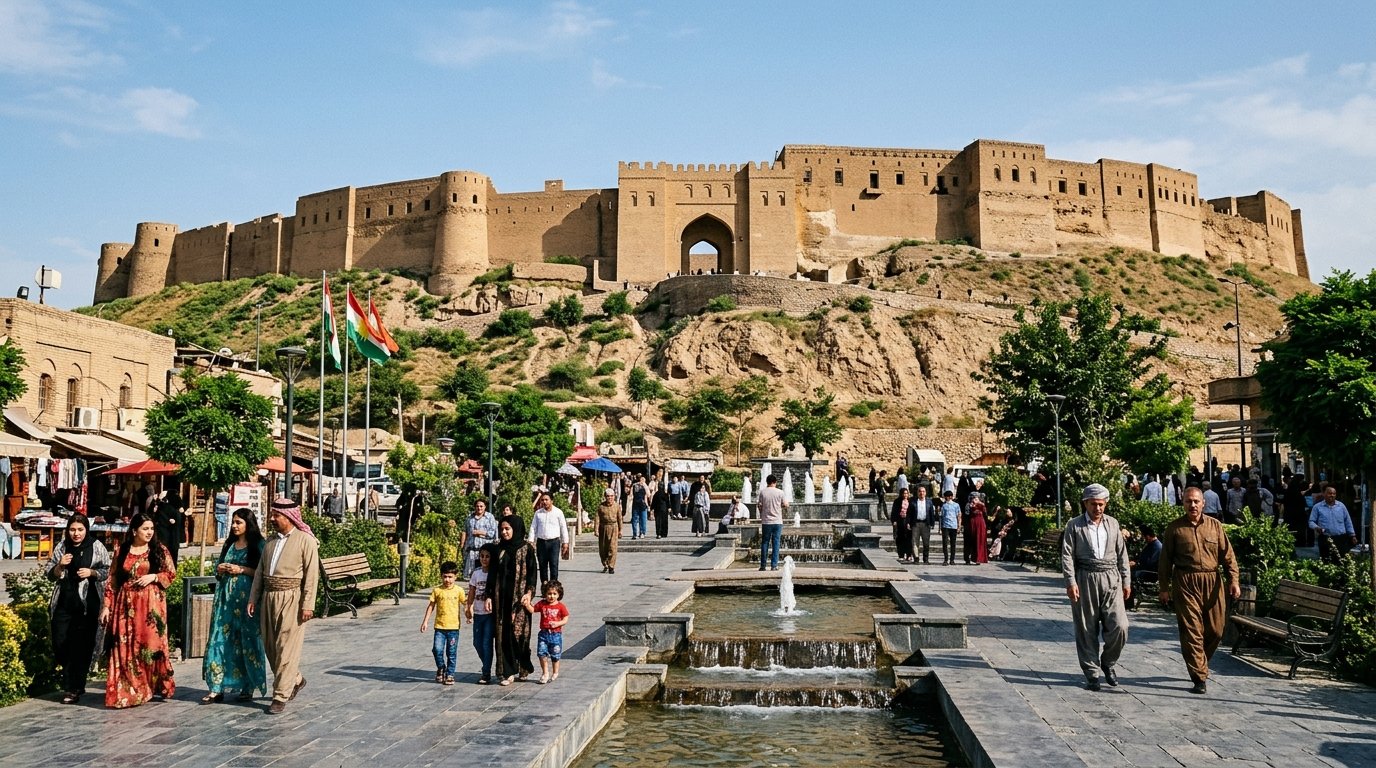
The Citadel of Erbil, known locally in Kurdish as Qellat Hewler or simply Qala, sits at the heart of Erbil, the capital of the Kurdistan Region of Iraq. Rising between 25 and 32 meters above the surrounding plain, this massive earthen tell spans an oval footprint of 430 by 340 meters, covering roughly 102,000 square meters as documented by UNESCO and archaeological surveys recorded on Wikipedia's Citadel of Erbil record. The mound was formed across millennia as successive civilizations built, levelled, and rebuilt mudbrick and stone structures on the exact same location.
Below the citadel mound lies the historic commercial core of the city, centered on Shar Square and the covered lanes of Qaysari Bazaar. Visitors can explore the fortified perimeter, walk the central alley, tour traditional craft museums, and step directly down into Ottoman-era market passages within a single morning or afternoon.
History and UNESCO World Heritage Status
Archaeological evidence places the earliest human settlements on the citadel mound in the Chalcolithic period during the 5th millennium BC, with ceramic sherds suggesting occupation may extend into the earlier Neolithic era. Historical records mention the settlement as Irbilum in the Ebla archives around 2300 BC, and later as Urbilum during the Sumerian Ur III period under King Shulgi, as detailed on Wikipedia.
During the Neo-Assyrian Empire, the city was named Arbi-Ilu, meaning Four Gods. It served as a major religious sanctuary dedicated to the goddess Ishtar of Arbela, rivaling Nineveh and Babylon. Following the fall of Assyria, the area witnessed the decisive Battle of Gaugamela in 331 BC, where Alexander the Great defeated Darius III. Through the Hellenistic, Parthian, Roman, and Sasanian eras, Arbela developed into an influential metropolitan see for Eastern Christianity.
Muslim forces incorporated Erbil in the 7th century. In the late 12th and early 13th centuries, the Turcoman Begteginid ruler Muzaffar al-Din Gokbori expanded the city beyond the mound into the lower town, establishing madrasas, hospitals, and foundational market structures. The citadel endured a six-month siege during the Mongol invasion of 1258 before falling.
In modern times, the citadel remained an inhabited urban quarter divided into three historic neighborhoods: Saray, Topkhana, and Takya. Continuous residential occupation continued until 2007, when municipal authorities and heritage agencies relocated residents to initiate comprehensive conservation under the High Commission for Erbil Citadel Revitalization (HCECR). On June 21, 2014, UNESCO inscribed the Erbil Citadel as a World Heritage Site under Criterion (iv). A major long-term conservation partnership supported by UNESCO, HCECR, and private development initiatives continues to restore at-risk brickwork, alleys, and historic mansions across the mound, as reported by UNESCO's project office.
What to See on Top of the Citadel
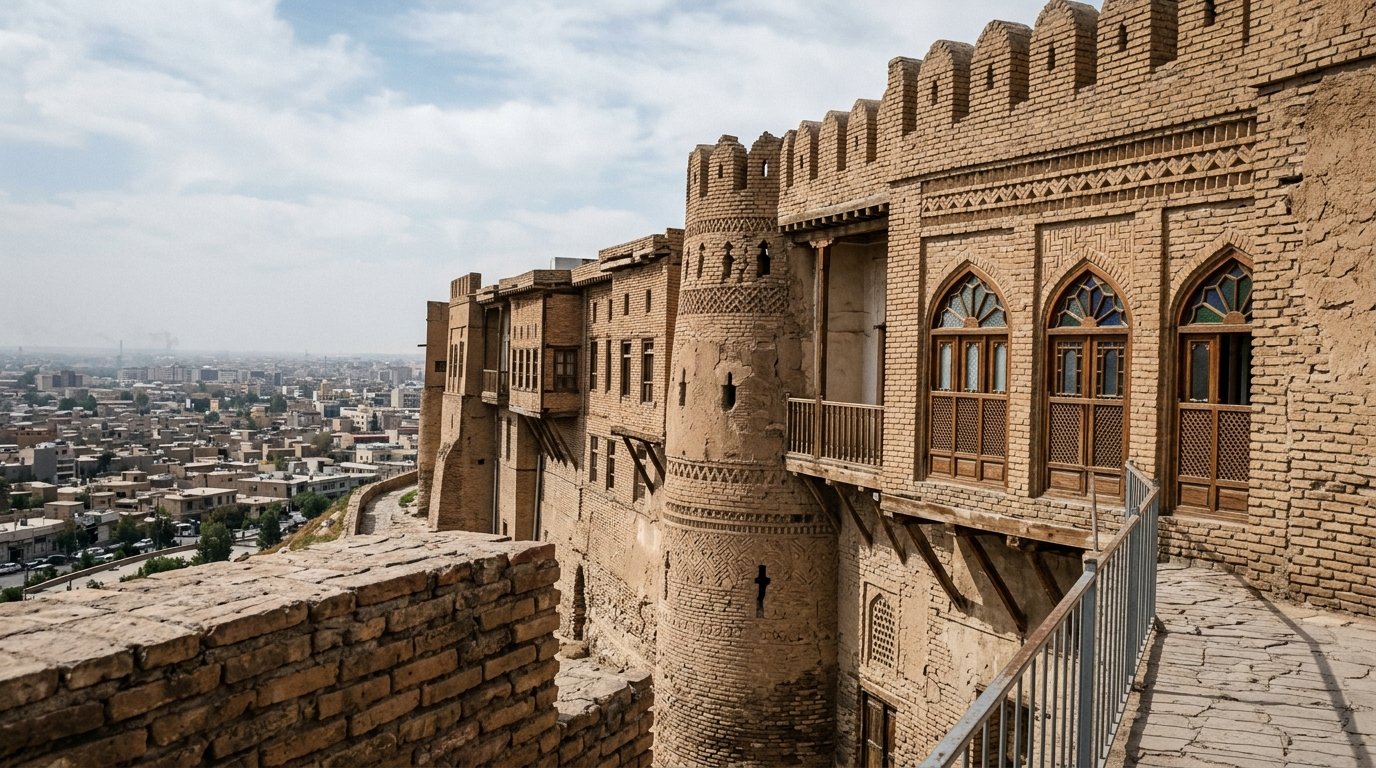
The perimeter of the citadel presents a continuous facade of tall 19th and early 20th-century brick houses. These exterior domestic walls combine to create the visual effect of a fortified castle wall overlooking the city below. The central axis runs between the modern Grand South Gate and the historic Bab al-Ahmadi to the north.
Kurdish Textile and Cultural Museum
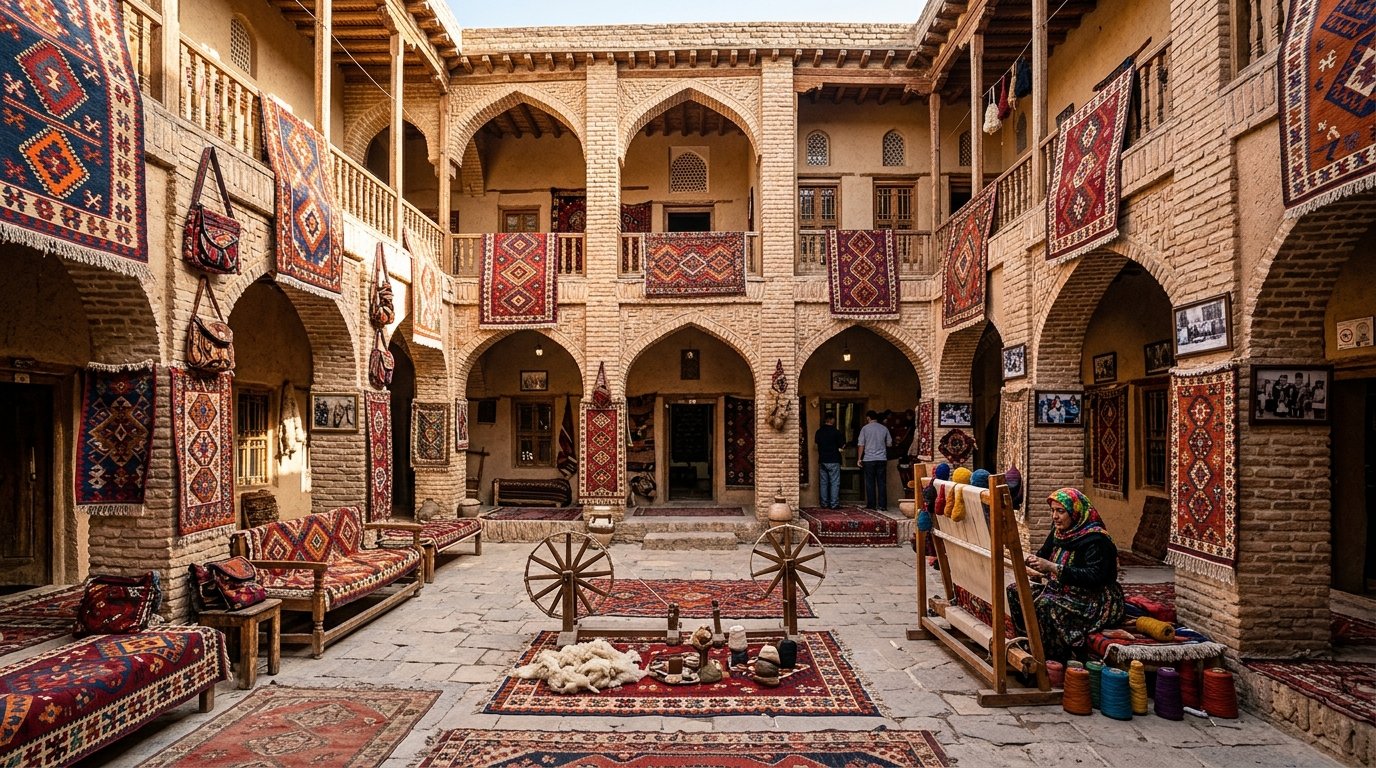
Housed inside a renovated multi-story mansion in the citadel's southeast quarter, this institution opened in 2004 through the efforts of Lolan Sipan. As noted on Wikipedia's Kurdish Textile Museum profile, the museum preserves hand-weaving traditions across Iraqi Kurdistan and neighboring regions. Exhibits include tribal flat-weave kilims, pile carpets, nomadic saddlebags, sheep-wool felt crafts, and traditional Kurdish outfits. Master weavers occasionally demonstrate loom techniques on site.
Erbil Stones and Gems Museum
Located in a restored two-story brick townhouse near the textile museum, this collection was established by geologist Sarbast Majeed. According to the Erbil Stones and Gems Museum record, the museum houses minerals, fossil specimens, meteorite fragments, and regional semi-precious stones collected over four decades. A small upper-floor shop sells polished regional stones and handcrafted jewelry.
Cultural Centers and Panoramic Lookouts
Several additional historic homes along the central pedestrian spine function as public galleries:
- Citadel Photo Gallery and Archive: Displays black-and-white archival photography illustrating life in Erbil and the wider region during the late Ottoman and early 20th-century periods.
- Mulla Afandi Mosque: The primary surviving historical mosque structure on the mound, maintaining traditional regional masonry.
- Citadel Overlook Points: The open terrace near the Grand South Gate offers direct views over the radial road layout of modern Erbil, which expands outwards in concentric rings from 30-Meter Street to 120-Meter Street.
Connecting to Shar Square and Qaysari Bazaar
A broad pedestrian staircase and paved ramp descend from the Grand South Gate down to the base of the mound, connecting the citadel directly to the civic and commercial center of Erbil.
Shar Square and Fountains
Directly at the southern foot of the citadel lies Shar Square, also known as Shar Park. This large urban plaza has stone benches, illuminated water fountains, a clock tower, and bronze statues commemorating regional literary figures, including the 13th-century biographical historian Ibn Khallikan. In the afternoons and evenings, local residents and elders gather here to socialize.
Machko Tea House
Tucked directly into the stone retaining wall at the south-western foot of the citadel mound, Machko Tea House (Chai Khana Machko) has operated since 1940. Founded by Majid Machko, the cafe is a long-standing gathering spot for writers, artists, and journalists, as documented by Kurdshop. Visitors sit on traditional wooden benches draped in Kurdish carpets beneath black-and-white portraits of Kurdish cultural figures, drinking strong black tea brewed with cardamom (Chai Kurdi) served in small glass cups (istikan).
Qaysari Bazaar
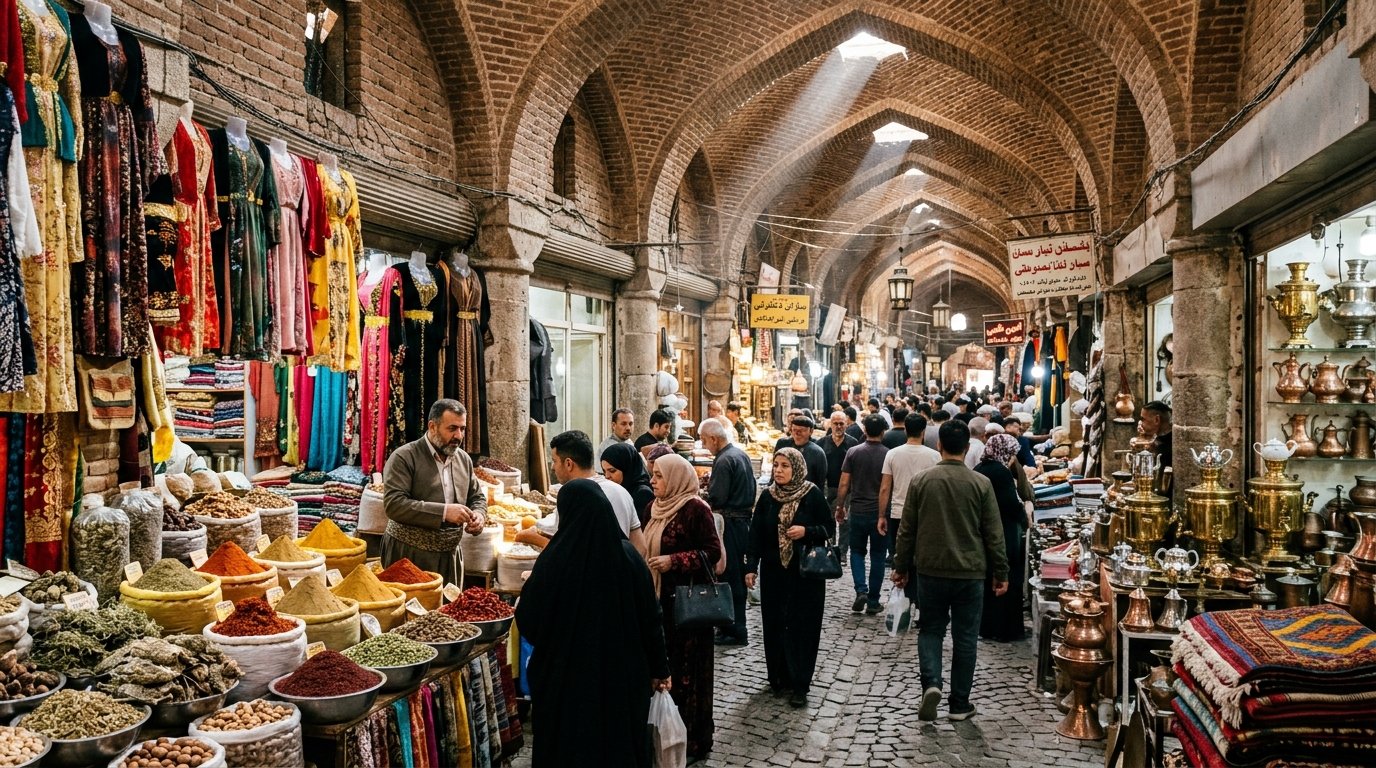
Directly across Shar Square to the south sits the entrance to Qaysari Bazaar (Bazaari Qaysari). Dating back in tradition to the 13th century under governor Gokbori with extensive Ottoman-era additions, this covered marketplace forms a grid of brick-vaulted and sheltered alleys, as detailed by Kurdish History and Wikipedia.
The bazaar is divided into specialized quarters:
- Gold and Jewelry Souq (Zargari): Dozens of side-by-side shops displaying 21-karat Kurdish bridal gold sets, necklaces, and coins.
- Spice and Herb Alleys: Stalls piled with sumac, wild mountain thyme, dried limes, saffron, and wild terebinth pistachios (Qazwan), often used for traditional rosary beads.
- Dairy and Mountain Provisions: Located along the north-eastern alleys, vendors sell mountain honey combs, Kurdish brine cheeses, and walnut grape-syrup rolls (sujuk).
- Textile and Traditional Attire: Tailors and fabric shops offering bright silks, sequined dresses (kawa u salta), and loose-fitting men's traditional trousers (sharwal) with wide fabric sashes (pshtend).
- Mam Khalil Tea Shop: A small, historic tea room operating inside the market corridors since 1952, lined with decades of historical photographs and banknotes.
Practical Visitor Information
Opening Hours and Entry Fees
- Citadel Grounds: General access through the main south gate is open daily from approximately 8:00 AM to 6:00 PM (or until sunset during summer months), as outlined in the What's On in Erbil visitor guide. Admission to the citadel grounds is free.
- Kurdish Textile and Cultural Museum: Open Saturday through Thursday from 9:00 AM to 3:00 PM. Closed on Fridays. Entry is free, though modest donations for heritage preservation are welcome.
- Erbil Stones and Gems Museum: Open daily during daytime hours. Entry costs approximately 1,500 IQD (around 1.00 to 1.20 USD).
- Qaysari Bazaar: Open Saturday through Thursday from roughly 8:30 AM until 8:00 PM. On Fridays, morning trade is quiet, with many stalls reopening after the midday prayer.
Best Time to Visit
The most comfortable seasons to visit Erbil are spring (March to May) and autumn (October to November), when daytime temperatures average between 20°C and 28°C. During summer (June to August), midday temperatures routinely exceed 42°C; if visiting in summer, tour the open citadel mound between 8:00 AM and 10:30 AM, then take refuge in the sheltered alleys of Qaysari Bazaar. Friday late afternoons are the liveliest time to observe local family life around Shar Square.
Transportation and Getting There
The citadel sits at the geographical center of Erbil (coordinates: 36.1910°N, 44.0091°E).
- From Ankawa: A 10 to 15-minute taxi ride costs between 4,000 and 6,000 IQD.
- From Erbil International Airport (EBL): A 15 to 20-minute taxi ride costs approximately 15,000 to 25,000 IQD.
- Local Taxis: Official beige taxis are ubiquitous. You can ask for Qala (Citadel) or Souq (Bazaar). Ride-hailing apps such as Careem operate reliably across Erbil.
Safety, Currency, and Etiquette
Erbil is the administrative center of the autonomous Kurdistan Region and maintains strict regional security checkpoints, making it one of the safest destinations in Iraq.
- Currency: The Iraqi Dinar (IQD) is the standard currency. Small vendors in Qaysari Bazaar and street cafes deal exclusively in cash; ATMs dispensing IQD and USD are available around central Erbil and Ankawa.
- Dress Code: Casual, modest clothing is appropriate. Both men and women should keep shoulders and knees covered when walking through the bazaar and religious structures.
- Walking Advice: Wear sturdy walking shoes. Citadel paths include cobblestones, unpaved restoration tracks, and ramps.
Sources
- UNESCO World Heritage Centre — Reviving the World Heritage Site of Erbil Citadel (Accessed May 2026)
- Wikipedia — Citadel of Erbil (Accessed May 2026)
- What's On in Erbil — Erbil Citadel (Qala) — Visitor Guide 2026 | Opening Hours & Tips (Accessed May 2026)
- Wikipedia — Kurdish Textile and Cultural Museum (Accessed May 2026)
- Wikipedia — Erbil Stones and Gems Museum (Accessed May 2026)
- Wikipedia — Qaysari Bazaar (Accessed May 2026)
- Kurdish History — The Qaysari Bazaar: Erbil's Covered Market (Accessed May 2026)
- Kurdshop — Machko, the Most Famous Tea House in the Capital of the Kurdistan Region (Accessed May 2026)
❓Frequently Asked Questions
Here are answers to frequently asked questions about the content above
Yes. Walking through the main gate onto the citadel mound and exploring the open alleys and viewpoints is free. Some specialized private exhibits on top charge small admission fees, such as the Erbil Stones and Gems Museum (around 1,500 IQD).
The citadel grounds are generally accessible daily from 8:00 AM to 6:00 PM (closing around sunset). The Kurdish Textile and Cultural Museum is open Saturday through Thursday from 9:00 AM to 3:00 PM and closed on Fridays.
Inscribed as a UNESCO World Heritage Site in 2014, the Erbil Citadel is an archaeological tell with evidence of continuous urban occupation extending back over 6,000 years through the Chalcolithic, Assyrian, Hellenistic, and Islamic periods.
The entrance to Qaysari Bazaar sits directly across Shar Square at the southern base of the citadel mound. Visitors walk down the paved south ramp, cross the square past the fountains, and step straight into the covered bazaar alleys.
Machko Tea House is located at the foot of the citadel mound on the south-west side, right near the base of the pedestrian ramp leading up to the main gate.
Yes. Erbil and the Kurdistan Region of Iraq maintain high security standards and stable local infrastructure. The citadel and bazaar area are well-patrolled, pedestrian-friendly, and welcoming to foreign visitors.