The Malwiya Minaret in Samarra is an icon of Abbasid architecture and one of the most distinctive landmarks in the Islamic world, with its unique spiral shape that defies time.
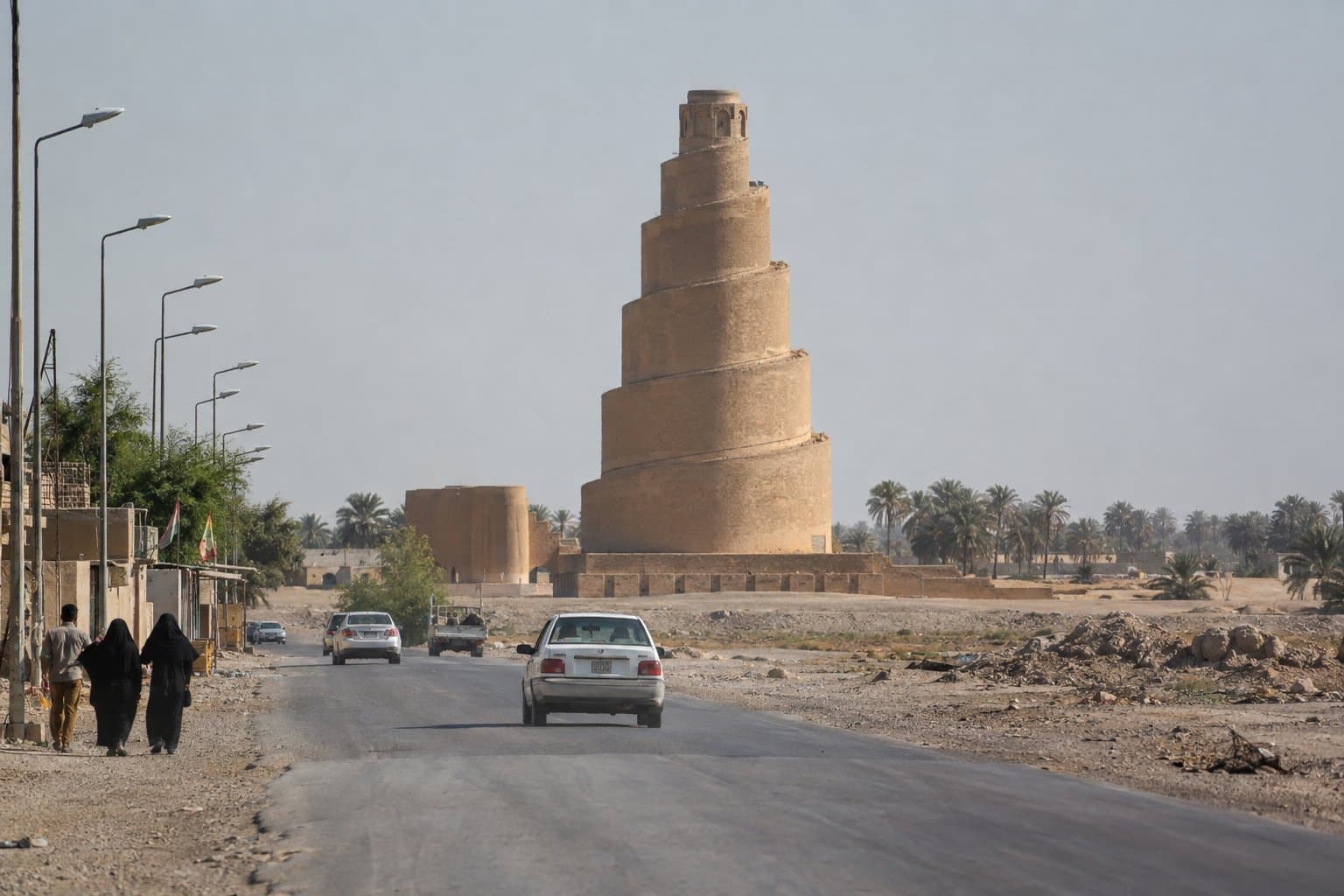
The Malwiya Minaret stands tall in the city of Samarra, witnessing the greatness of the Abbasid Caliphate in the ninth century AD. It was built as a minaret for the Great Mosque, which was the largest in the world at the time, and today attracts thousands of tourists and photographers thanks to its unique design that winds upward towards the sky [1].
What does the Malwiya Minaret look like to a visitor?
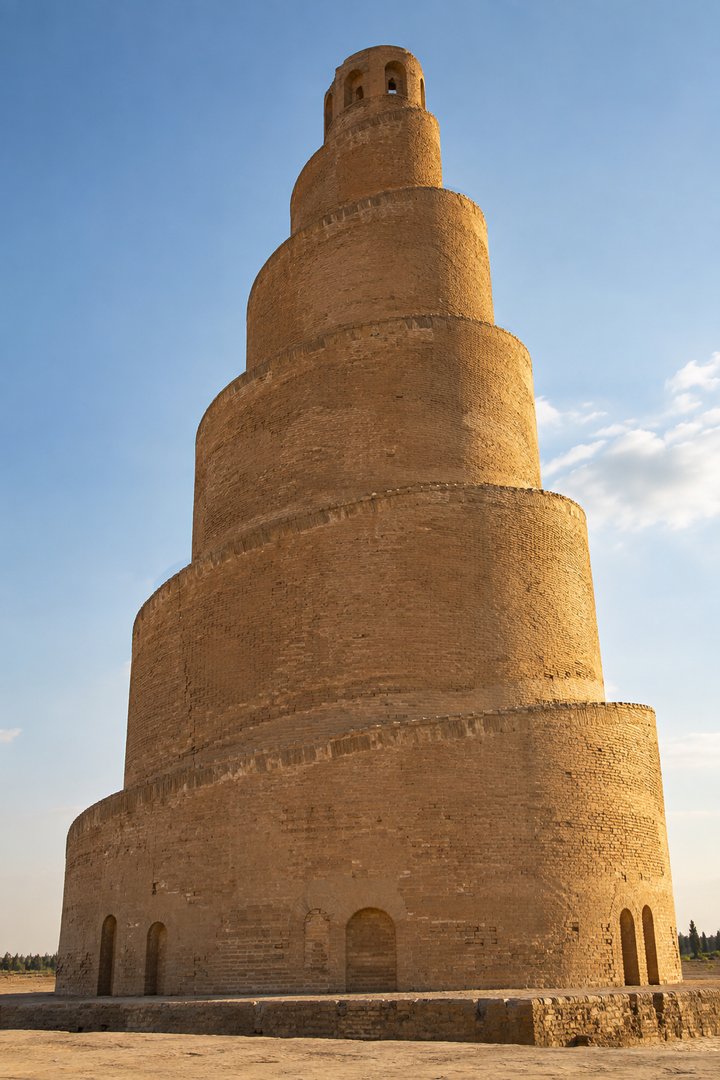
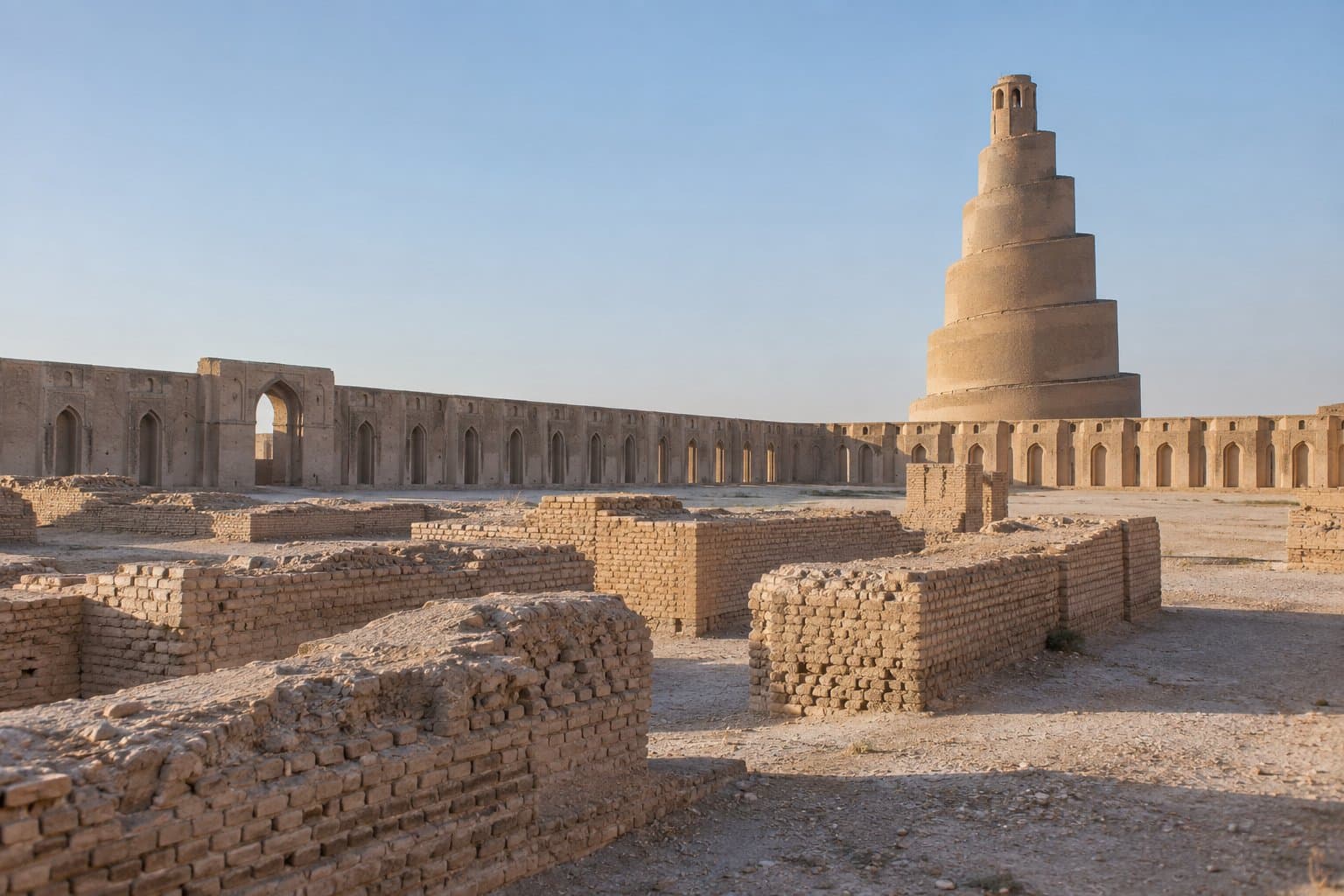
As you approach the site, you will be impressed by the soaring height of the minaret, reaching 52 meters. The design is spiral (helical), winding counter-clockwise, with exposed external steps that narrow as they ascend. The atmosphere at the site combines historical awe and architectural beauty, especially at dusk when the Malwiya is bathed in a magical golden color [2].
When is the best time to visit?
The best time to visit Samarra is in winter and spring (from October to April), when temperatures are moderate and suitable for walking and climbing. It is recommended to visit in the early morning or before sunset to avoid direct sunlight and to get the best lighting for photography.
How do I get to the Malwiya Minaret?
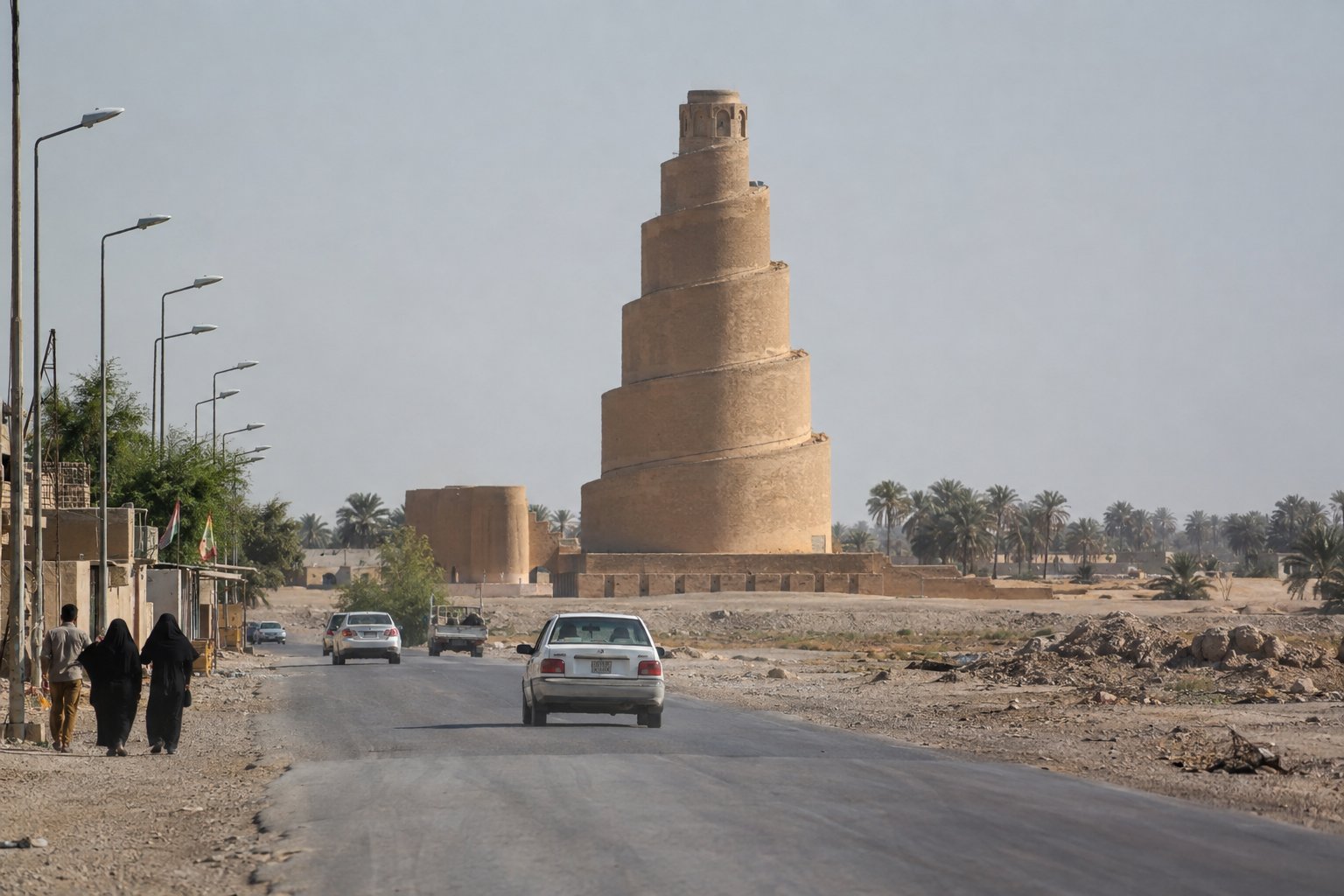
The Malwiya is located in the city of Samarra, about 125 kilometers north of Baghdad.
- By car: The trip from Baghdad takes about two hours via the Baghdad-Mosul road.
- Public transport: Taxis and microbuses are available from the "Al-Alawi" garage in Baghdad.
- Cost: The entrance fee for the site is approximately 25,000 Iraqi Dinars for foreigners, and less for Iraqis [3].
Where do I stay?
Due to Samarra's proximity to the capital, most visitors prefer to stay in Baghdad and take a day trip. However, there are some modest hotels and guesthouses in Samarra for those who wish to spend more time exploring other Abbasid landmarks like Al-Ashiq Palace and Al-Baraka [3].
What are the main landmarks and activities?
- Climbing the Minaret: The most famous activity, where you can climb 399 steps to reach the top and enjoy a panoramic view of the city and the Tigris River.
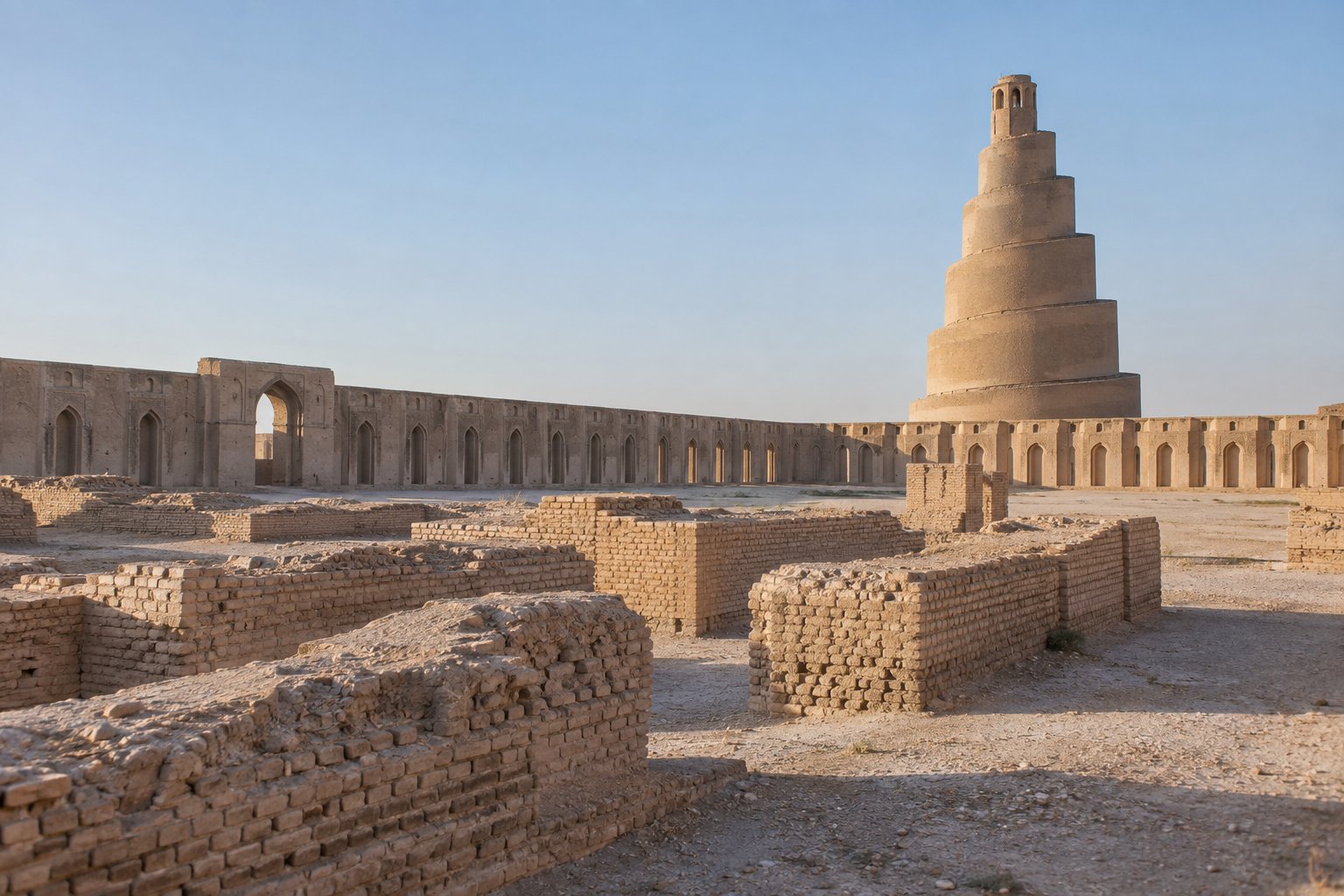
- Ruins of the Great Mosque: Exploring the massive walls and foundations that formed the largest mosque in the Islamic world.
- Photography: Taking stunning photos of the minaret from different angles, especially from the base of the old mosque.
Security and practical tips
- Caution when climbing: There are no protective railings (handrails) on the outer sides of the minaret. Extreme caution must be exercised, especially for children or those suffering from vertigo [1].
- Clothing: It is preferable to wear comfortable clothes and sports shoes suitable for climbing, taking into account modest dress due to the nature of the area.
- Inspection: There are security checkpoints at the entrances to the city, so make sure to carry your ID or passport at all times.
- Escort: It is preferable to visit the site with a local tour guide to facilitate entry procedures and understand the historical details more deeply [3].
Sources
- History of the Malwiya Minaret — Arabic Wikipedia — https://ar.wikipedia.org/wiki/مئذنة_الملوية
- Malwiya Minaret.. Icon of Abbasid Architecture — CNN Arabic — https://arabic.cnn.com/travel/article/2020/02/10/iraq-samarra-malwiya-minaret
- Samarra Travel Guide — Spirit Travelers — https://spirit-travelers.com/visiting-samarra-iraq/
Gallery
❓Frequently Asked Questions
Here are answers to frequently asked questions about the content above
Climbing is possible but requires extreme caution as there are no protective barriers on the sides. It is not recommended for children without supervision or for those who fear heights.
The fee for foreigners is about 25,000 Iraqi Dinars, which includes entry to the Great Mosque and the minaret.
It was built during the reign of the Abbasid Caliph Al-Mutawakkil ala Allah between 848 and 852 AD.
The external spiral staircase has approximately 399 steps.
Yes, the Samarra Archaeological City, including the Malwiya, has been listed as a UNESCO World Heritage Site since 2007.
Yes, it is only about two hours from Baghdad by car, making it an ideal destination for day trips.