Explore the historical heart of Mosul, where modernity embraces old wounds at the Al-Nuri Mosque and its famous Al-Hadba minaret, in a journey that reflects the resilience and spirit of this ancient city.
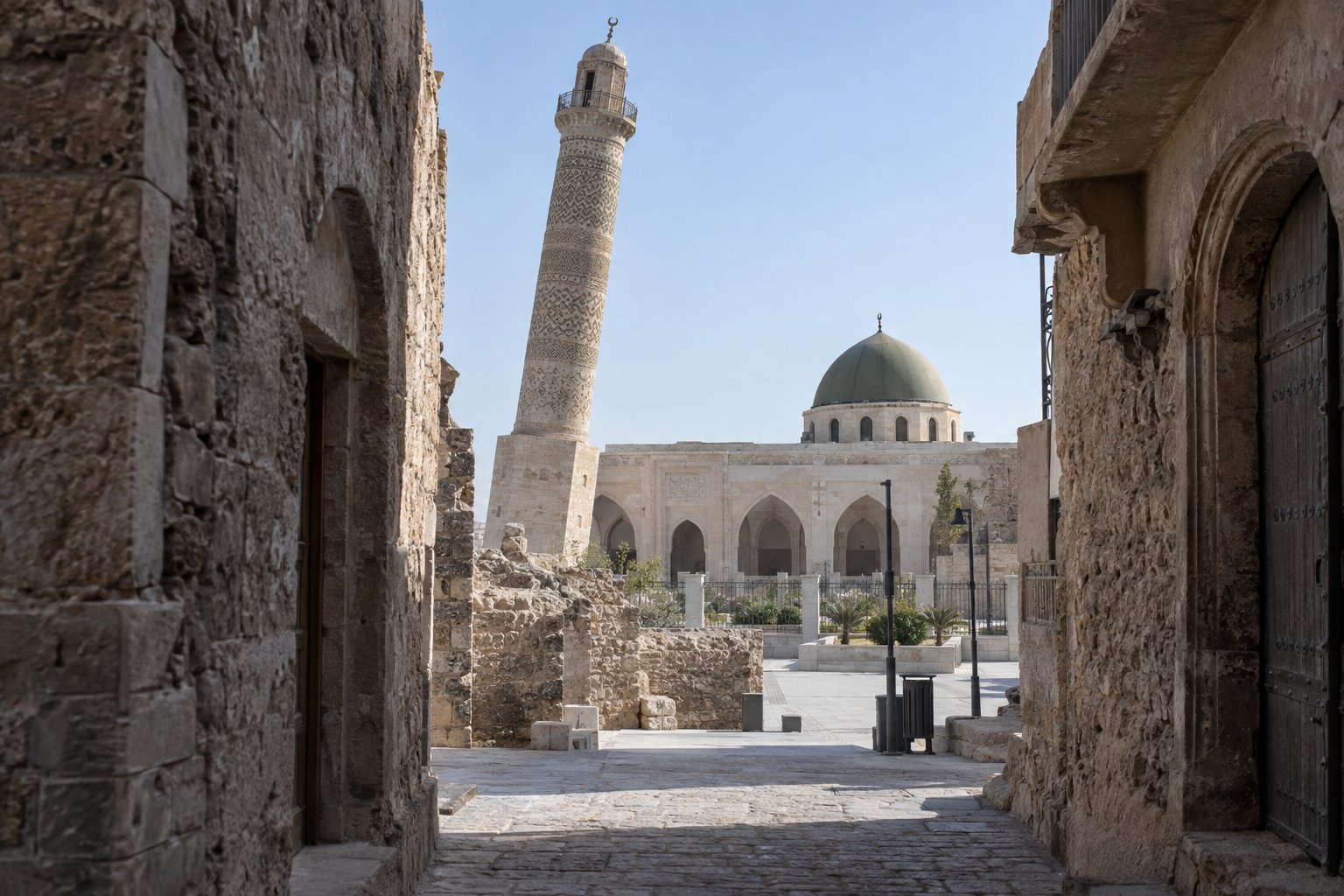
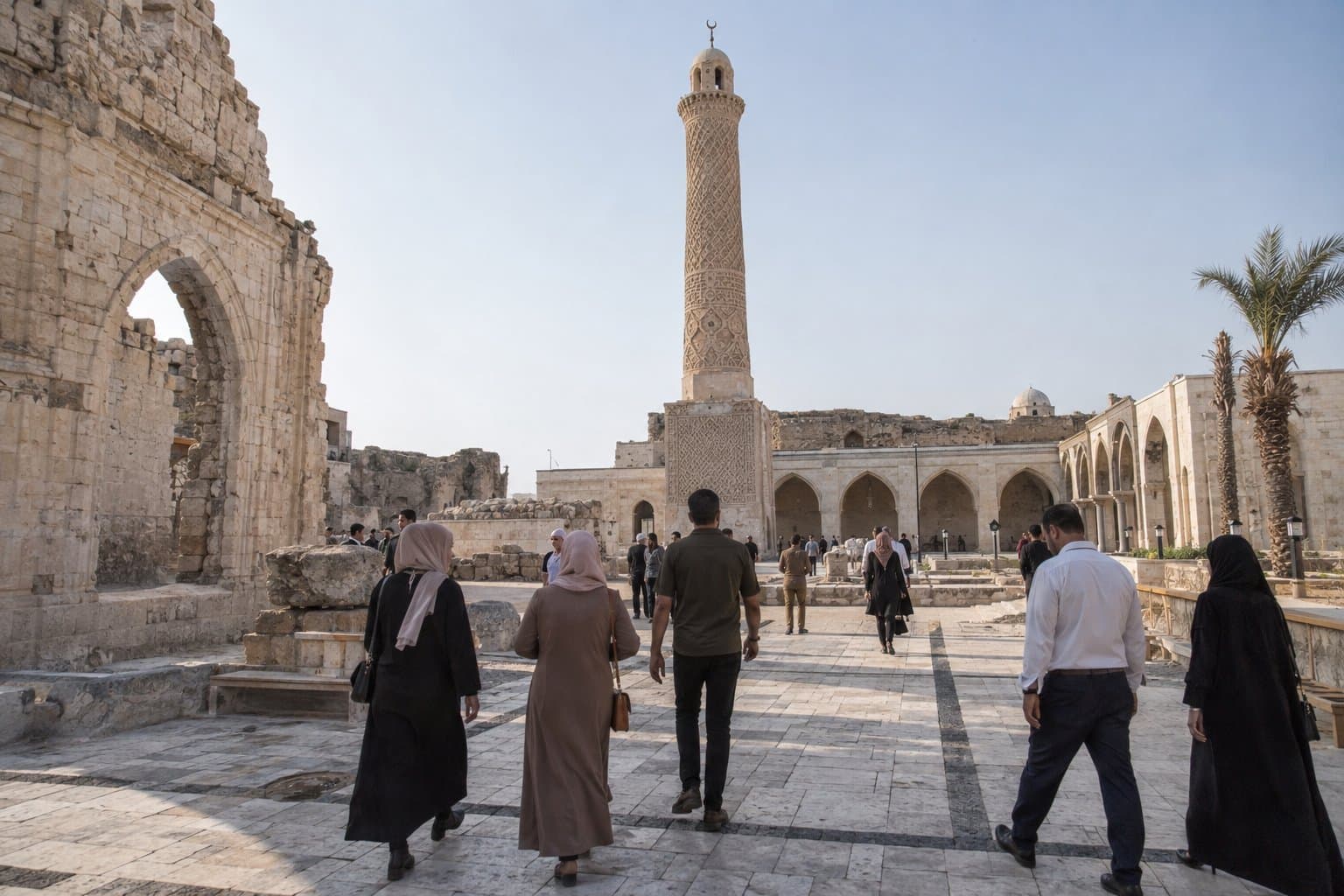
The Old City of Mosul is a symbol of resilience and rising from the ashes. At its heart lies the Great Al-Nuri Mosque and its famous "Al-Hadba" (the hunchback) minaret, which characterized the city's skyline for centuries. After years of destruction, the area is witnessing large-scale reconstruction to revive its unique architectural heritage that spans thousands of years [1].
What does the Old City look like to a visitor?
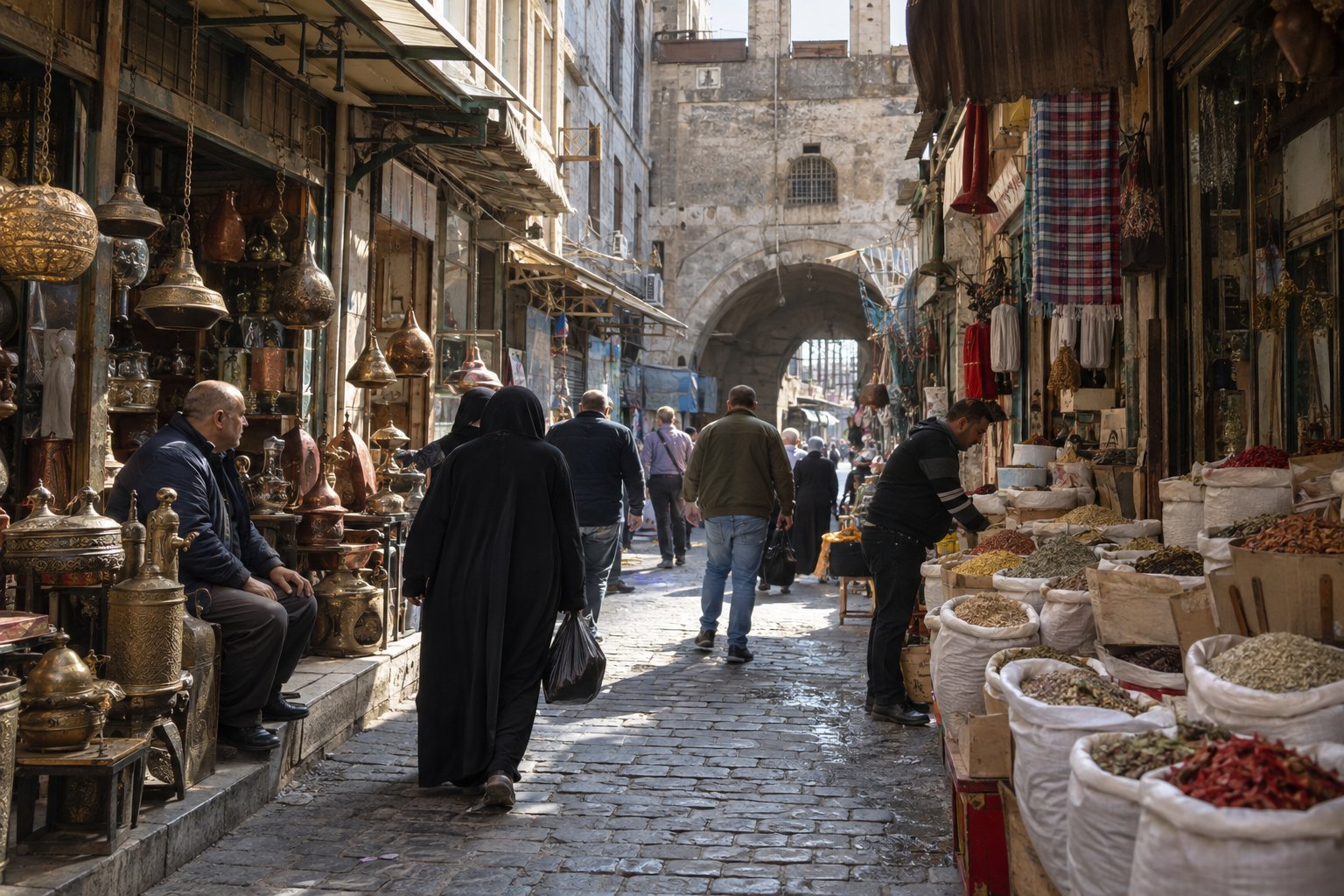
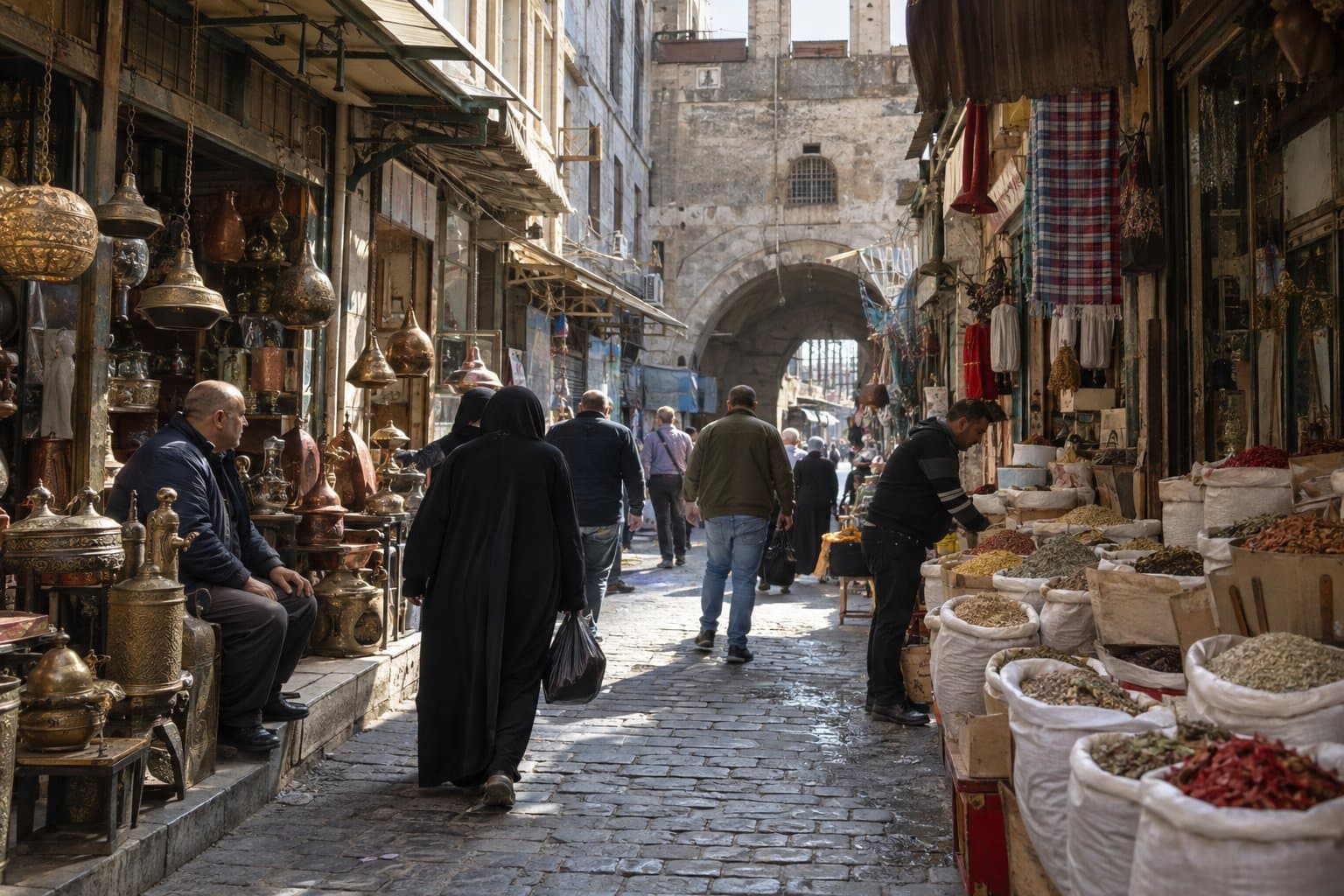
Wandering through the alleys of the Old City is an emotionally rich experience. You will see traditional houses built from Mosul stone (blue marble) and the plaster decorations that characterize Mosul architecture. The atmosphere is a mixture of commercial activity in the old souks and spiritual tranquility around the Al-Nuri Mosque, which was officially reopened in September 2025 after years of meticulous work [2].
When is the best time to visit?
The best time to visit Mosul is in the spring and autumn (March, April, October, November). Mosul's spring is famous for its exceptional beauty and pleasant weather, making walking in the Old City alleys a very enjoyable experience.
How do I get to the Old City?
The area is located on the right (western) side of the city of Mosul.
- From Baghdad: Mosul can be reached by road (about 4-5 hours) or via Erbil airport and then heading overland to Mosul (about an hour and a half).
- Internal transport: Taxis and smart transport services (such as the Baly app) are available to move within the city. Walking is the best way to explore the narrow Old City alleys.
Visiting Etiquette and Respect
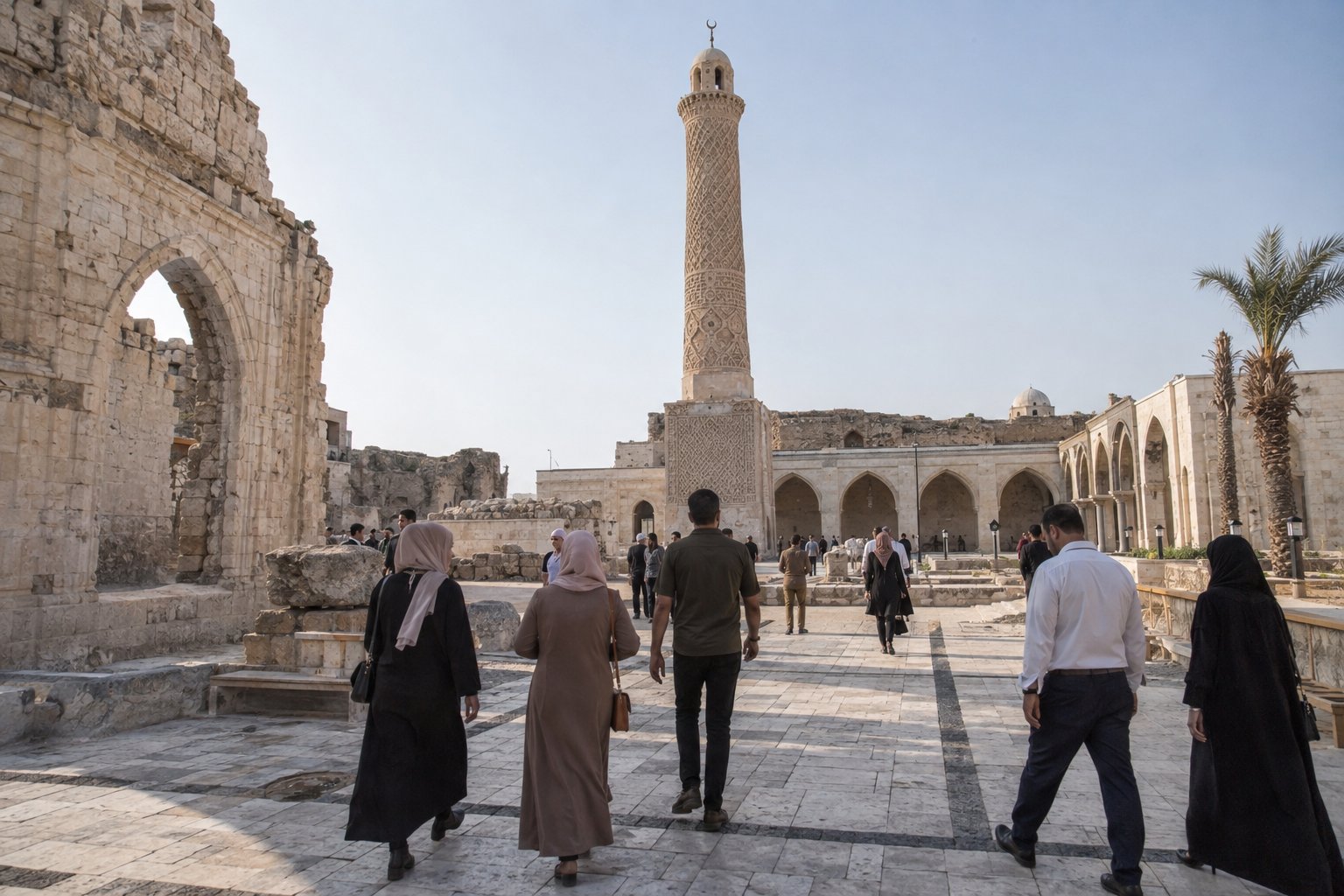
Given that the Al-Nuri Mosque is an active place of worship and a sensitive cultural symbol:
- Clothing: Modest clothing must be worn when entering the mosque and surrounding areas.
- Photography: Generally permitted, but it is always preferable to ask for permission before photographing people or worshippers.
- Behavior: Maintain silence and respect the sanctity of the place and the ongoing reconstruction efforts [3].
What are the main landmarks and activities?
- Al-Nuri Mosque and Al-Hadba Minaret: See the results of UNESCO's "Revive the Spirit of Mosul" project to rebuild the mosque and minaret with their historical details.
- Al-Sa'a Church (Clock Church): Another nearby historical landmark reflecting the religious and cultural diversity of Mosul.
- Old Mosul Souks: Wander through Souk al-Saffarin and Souk al-Attarin to taste local products and buy handicrafts.
- Mosul Cuisine: Don't miss the experience of "Mosul Kibbeh" and "Pacha" in one of the traditional restaurants in the Old City.
Security and practical tips
- Security: The area is very safe currently and is witnessing a flow of local and international tourists, but it is always good to follow the latest security updates.
- Checkpoints: You may encounter some security checkpoints at city entrances or bridges; make sure to carry your passport.
- Tour Guide: It is highly recommended to hire a local guide from Mosul's youth, as they will add narrative and historical dimensions to your visit not found in books.
Sources
- Revive the Spirit of Mosul — UNESCO — https://www.unesco.org/en/revive-spirit-mosul
- Reopening of Al-Nuri Mosque in Mosul — News reports 2025 — https://en.wikipedia.org/wiki/Great_Mosque_of_al-Nuri_(Mosul)
- Mosul Travel Guide — Fire Risk Heritage — https://fireriskheritage.net
Gallery
❓Frequently Asked Questions
Here are answers to frequently asked questions about the content above
Yes, the mosque was officially reopened in September 2025 and is currently receiving worshippers and visitors.
Yes, the area is very safe and witnesses active tourist movement, and the locals are very welcoming to visitors.
It is a project led by UNESCO in cooperation with Iraq and the UAE to reconstruct historical monuments in Mosul such as the Al-Nuri Mosque and Al-Sa'a Church.
Yes, Mosul is about an hour and a half away from Erbil by car, and there are shared and private taxis between the two cities.
It is characterized by its unique tilt and intricate brick decorations, and is a historical symbol of the city dating back to the 12th century AD.
If you have a federal Iraqi visa, you can enter Mosul. If you are in Kurdistan with an Erbil-only visa, you may need a federal visa to cross to Mosul.