A historic monastery of caves and monastic rooms carved into the mountain above Alqosh.
Rabban Hormizd Monastery
Above Alqosh, Rabban Hormizd Monastery occupies a rocky hollow in the mountain. Its church and monastic rooms sit among caves cut into the slope, linked by narrow paths. The site remains a place of religious importance, so visit respectfully.
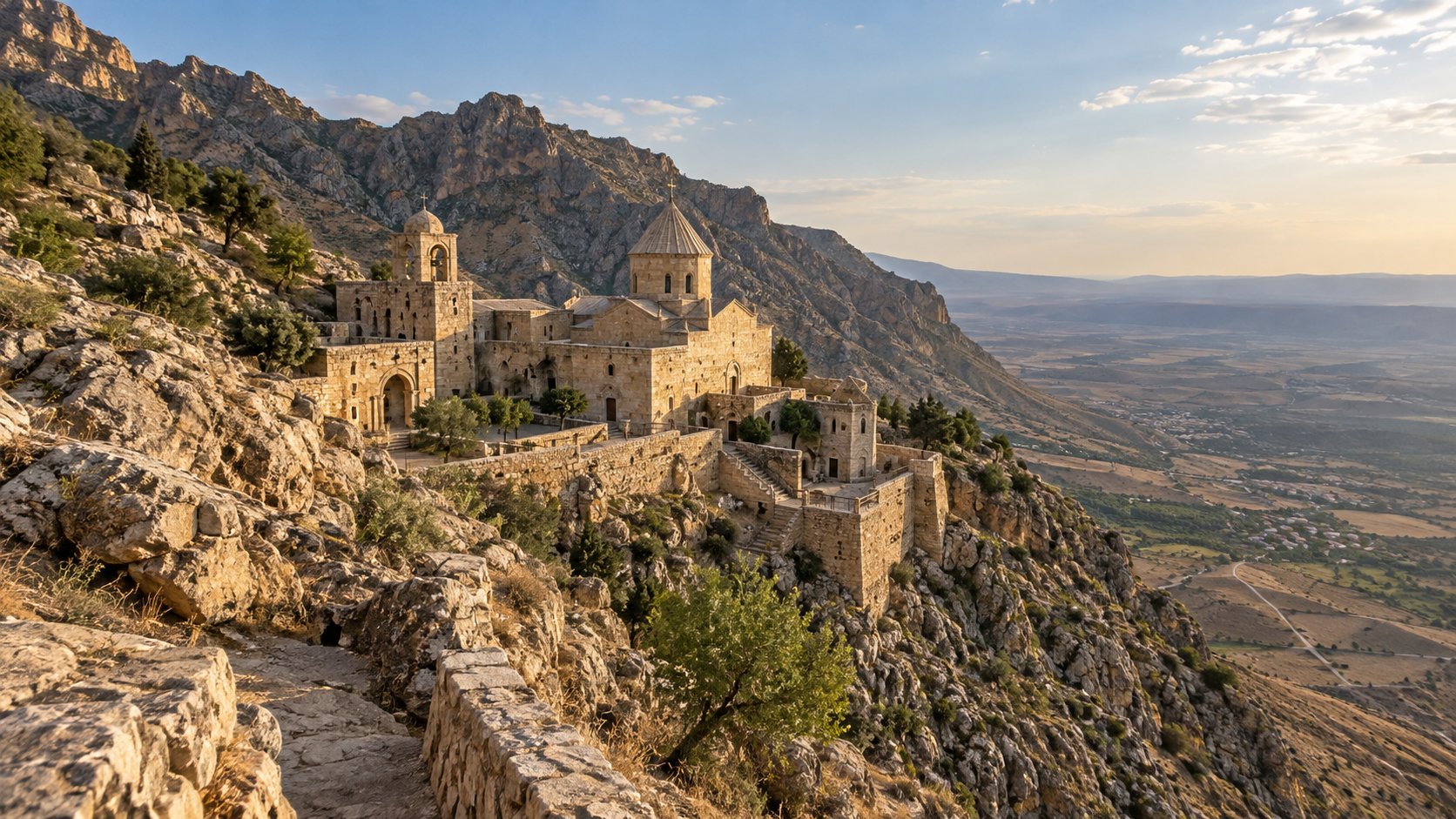
A monastery carved into the mountain
Tradition dates Rabban Hormizd Monastery to around the 7th century. Syriaca.org places it on a mountain ridge northeast of Alqosh and records its role in Syriac literature and the Church of the East. It later became important to the Chaldean Catholic Church (Syriaca.org, “Rabban Hormizd”).
The buildings and caves follow the rock. In an 1890 account, E. A. Wallis Budge described a stone church on a large rock and rows of cells cut into the surrounding hills. Narrow terraces led to some cells, while others were difficult to reach (E. A. Wallis Budge’s description, quoted in “Rabban Hormizd Monastery”). The complex is a group of small spaces shaped by the mountain and generations of monastic use.
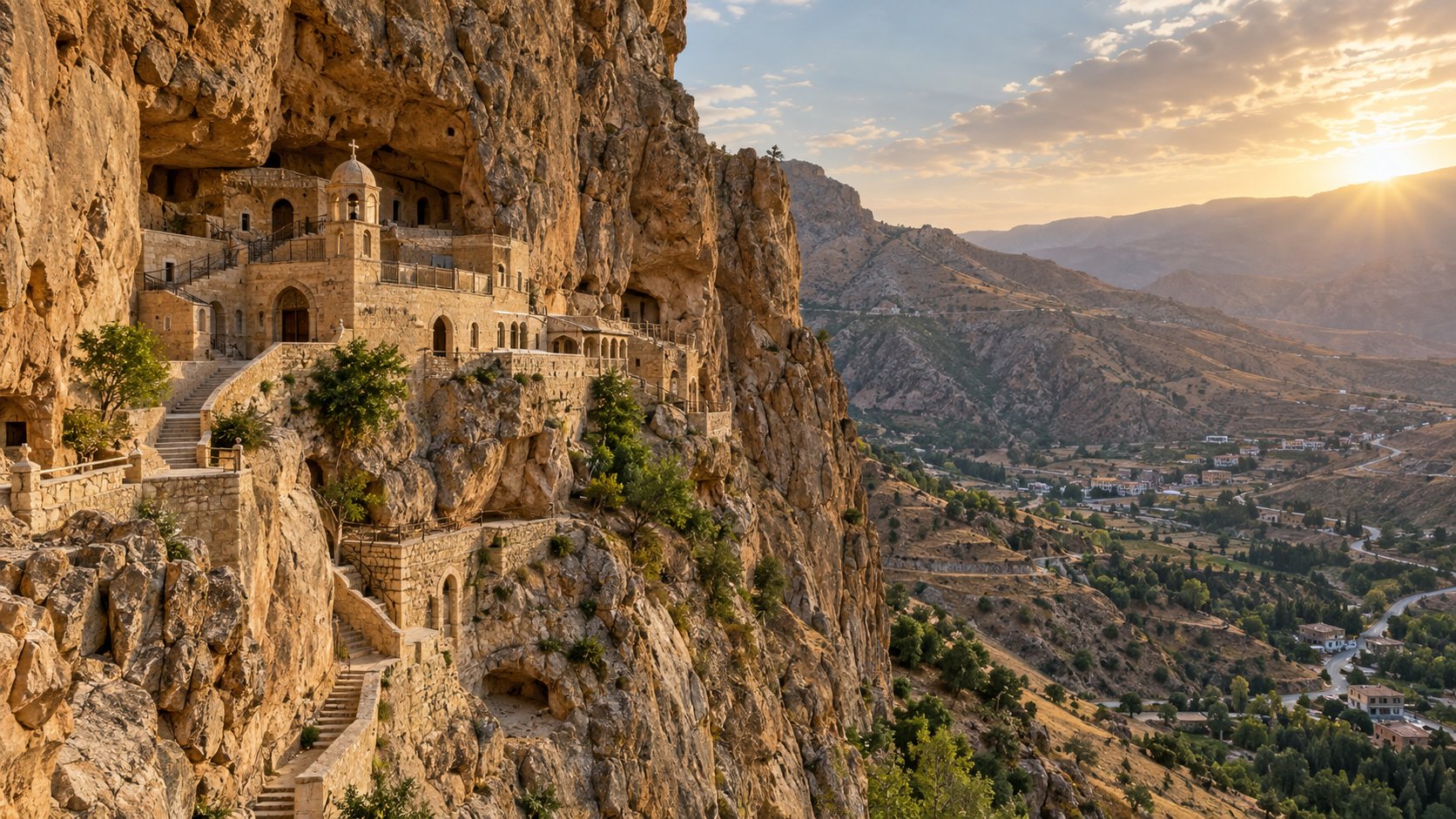
History and religious importance
The monastery takes its name from Rabban Hormizd, a monk associated with the Church of the East. It became a religious center and later held patriarchal tombs. Syriaca.org records tomb inscriptions from 1497, 1538, and 1558 (Syriaca.org).
After attacks and periods of abandonment, the monk Gabriel Dambo re-established monastic life at Rabban Hormizd in 1808. The mountain site remained exposed to attack, so Chaldean patriarch Joseph Audo commissioned a monastery nearby. Our Lady of the Seeds opened in 1859, and much of the community moved there (“Rabban Hormizd Monastery”). The older monastery continued as a sacred site.
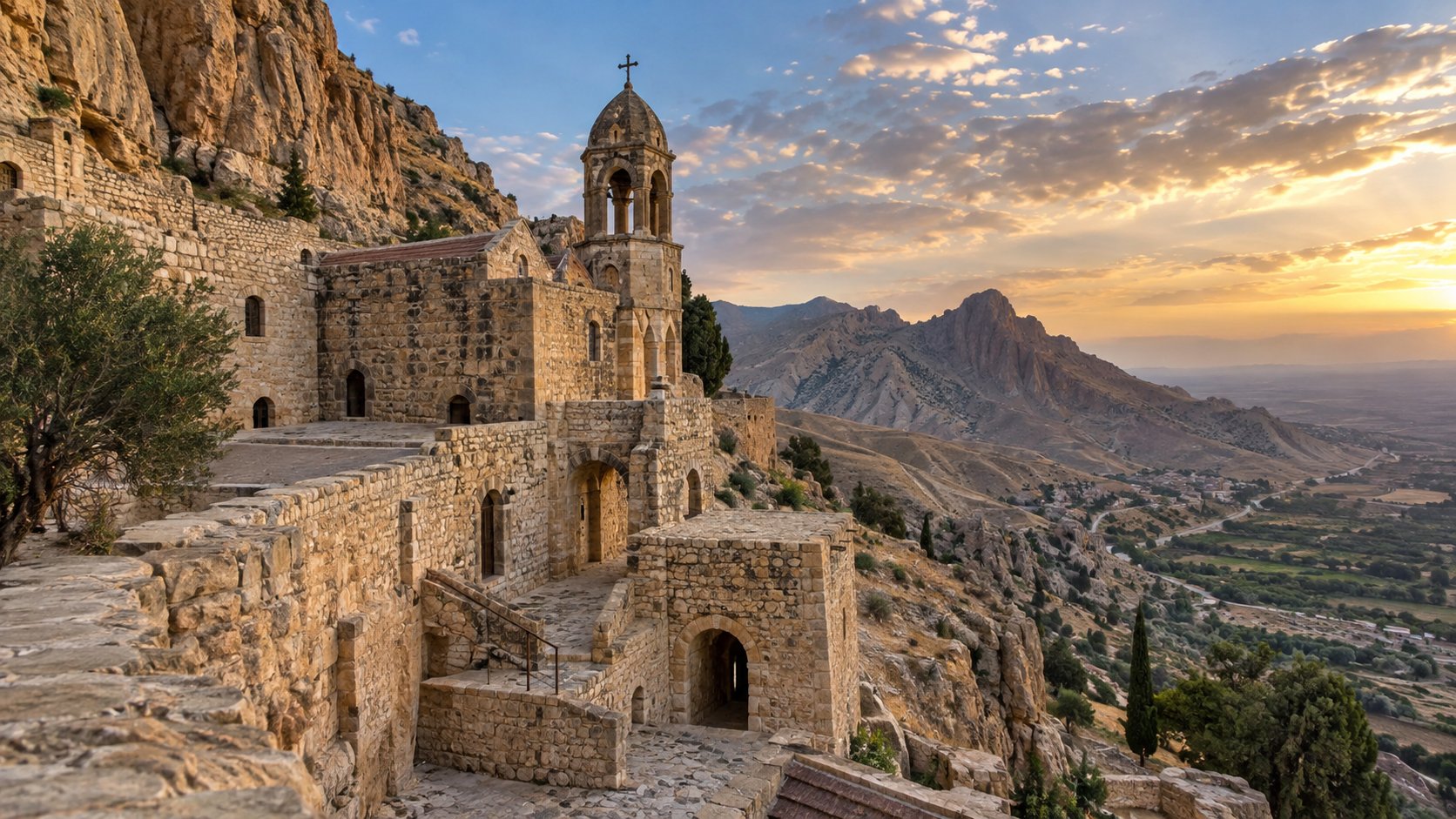
What to look for
Notice how the caves and rooms follow the rock rather than a regular plan. Parts of the complex may be closed. A local report recommends contacting Alqosh’s administration to arrange a guide (Kurdish Globe, “Rabban Hormizd Monastery: A Religious Tourism Masterpiece and a Significant Middle Eastern Landmark”).
The monastery is on a mountain slope above Alqosh. Wear shoes with good grip, bring water, and allow time for uneven paths. Check access arrangements locally before setting out. Keep voices low near worship spaces, follow caretakers’ instructions, and stay out of closed areas.
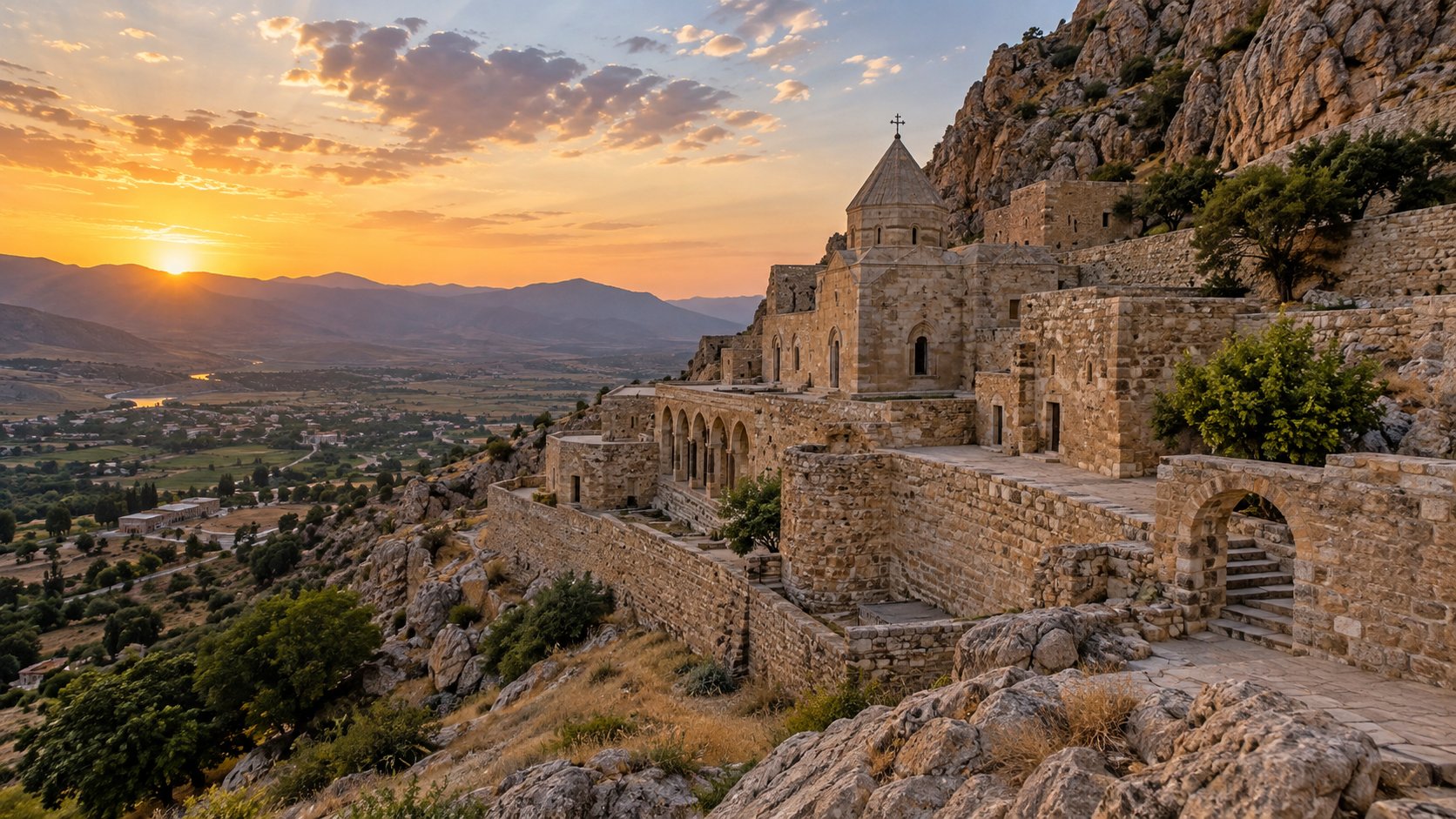
Visiting Rabban Hormizd
Many visitors combine the monastery with a visit to Alqosh. The older mountain site differs from the newer Our Lady of the Seeds monastery below it. Seeing both gives a clearer picture of the community’s move to a safer location.
Rabban Hormizd’s caves and rooms are weathered, modest spaces cut into the mountain. Their layout offers a close view of monastic life and the region’s Christian history.
[
  {"id":"faq-1","question":"Where is Rabban Hormizd Monastery?","answer":"It is on a mountain slope northeast of Alqosh in northern Iraq."},
  {"id":"faq-2","question":"How old is the monastery?","answer":"Tradition dates its founding to around the 7th century."},
  {"id":"faq-3","question":"What is the monastery known for?","answer":"Its church, monastic rooms, and caves follow the contours of the mountain."},
  {"id":"faq-4","question":"Can visitors enter all parts of the monastery?","answer":"Not necessarily. Some areas may be closed, so follow local guidance and posted instructions."},
  {"id":"faq-5","question":"How should I prepare for a visit?","answer":"Wear shoes with good grip, bring water, and check access arrangements locally before you go."},
  {"id":"faq-6","question":"Can I visit Our Lady of the Seeds as well?","answer":"Yes. It is a newer monastery below the mountain site, and many visitors see both."}
]
Sources
- Syriaca.org, “Rabban Hormizd”. Accessed 2026-10-13.
- Wikipedia, “Rabban Hormizd Monastery”. Accessed 2026-10-13.
- Kurdish Globe, “Rabban Hormizd Monastery: A Religious Tourism Masterpiece and a Significant Middle Eastern Landmark”. Accessed 2026-10-13.