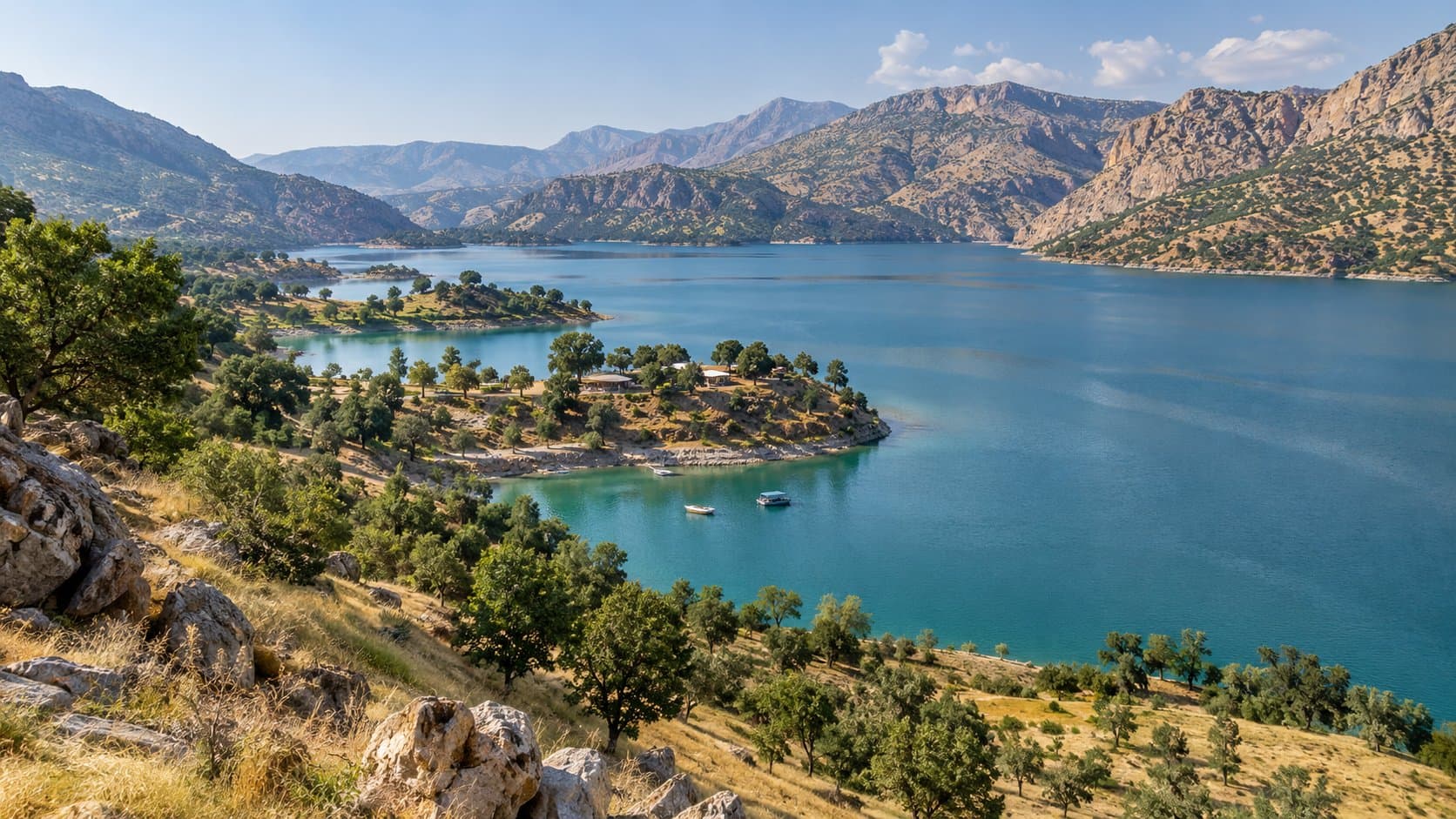
Darbandikhan Lake Outdoor Day Trip
Overview
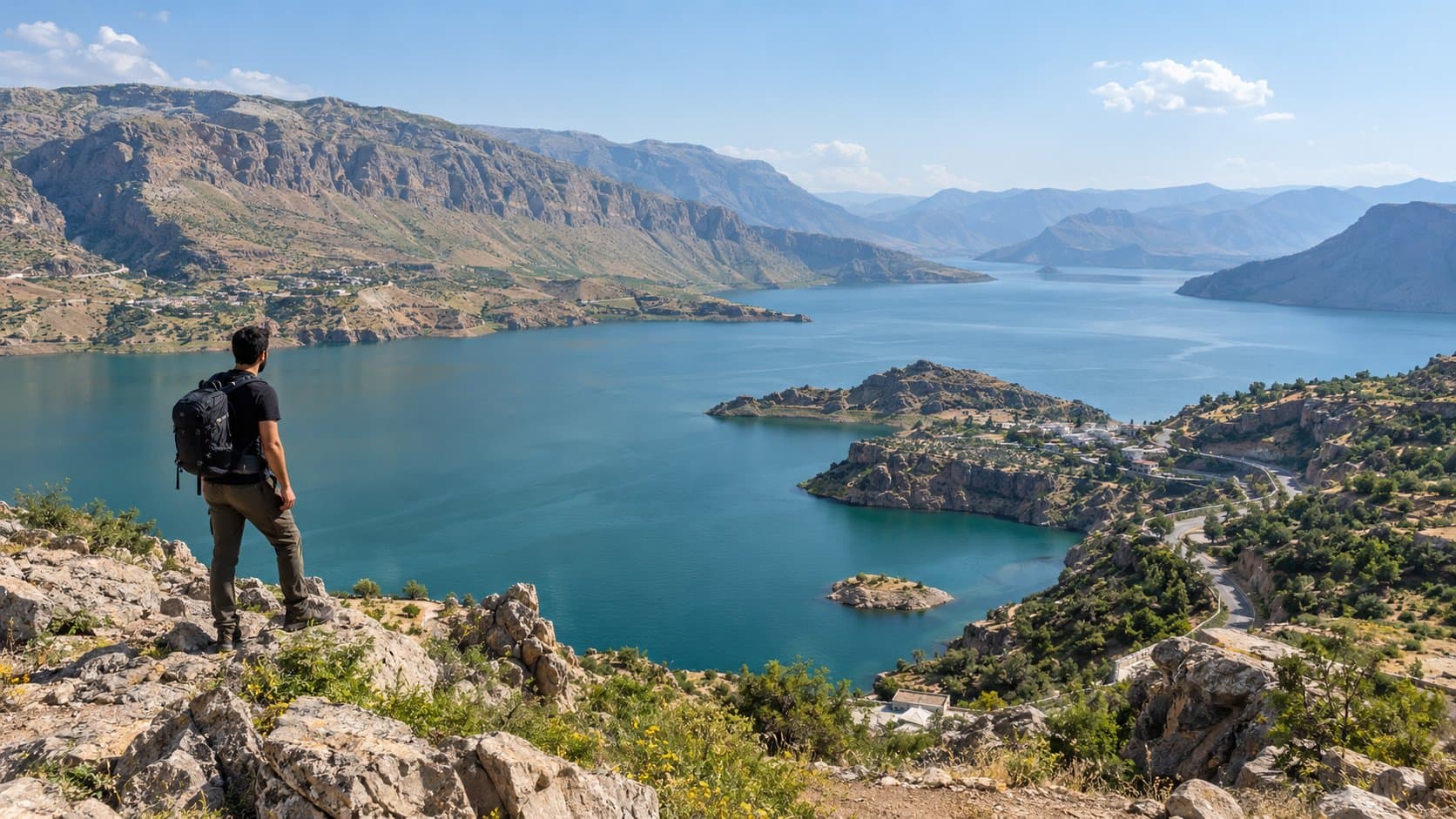
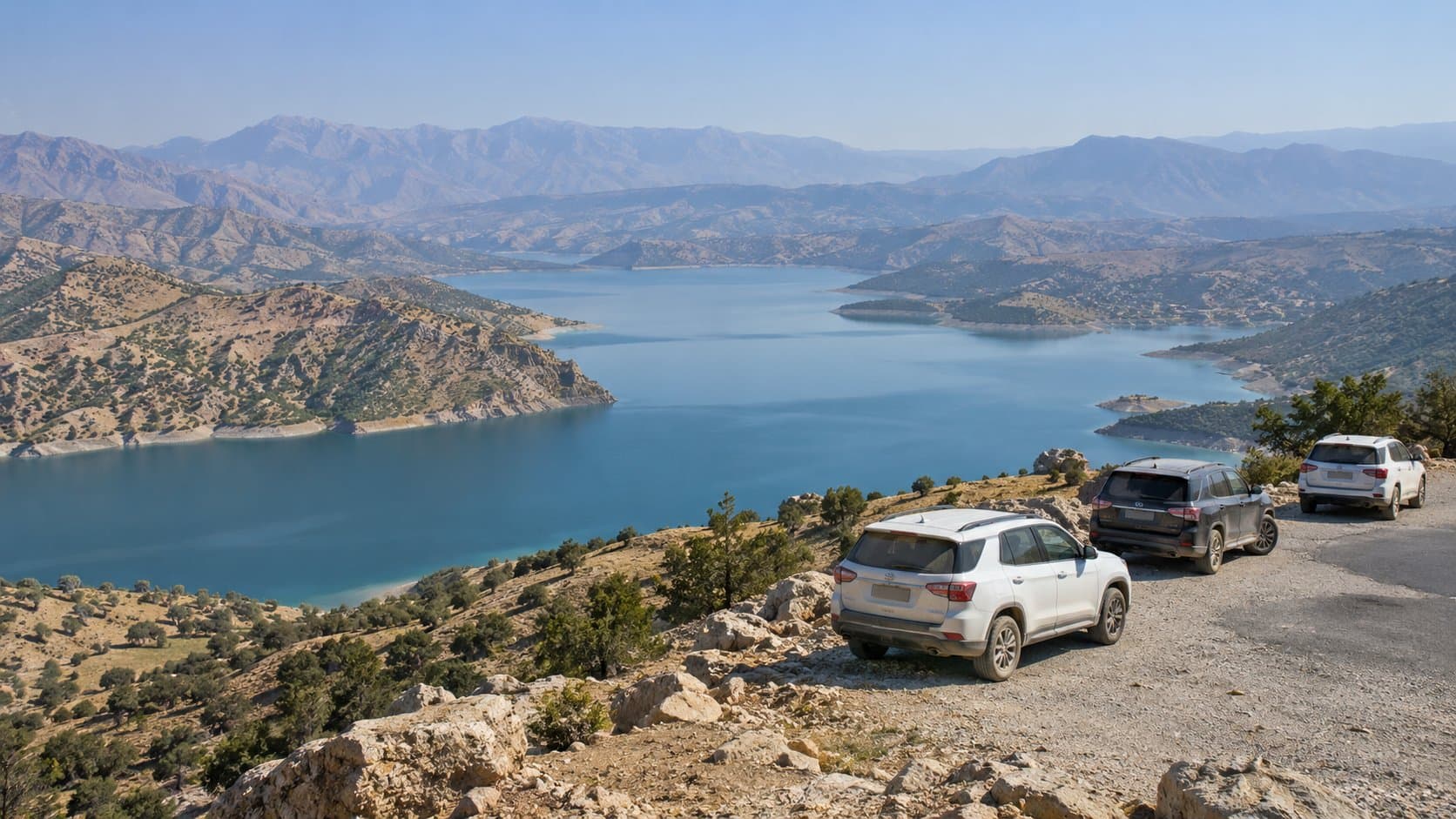
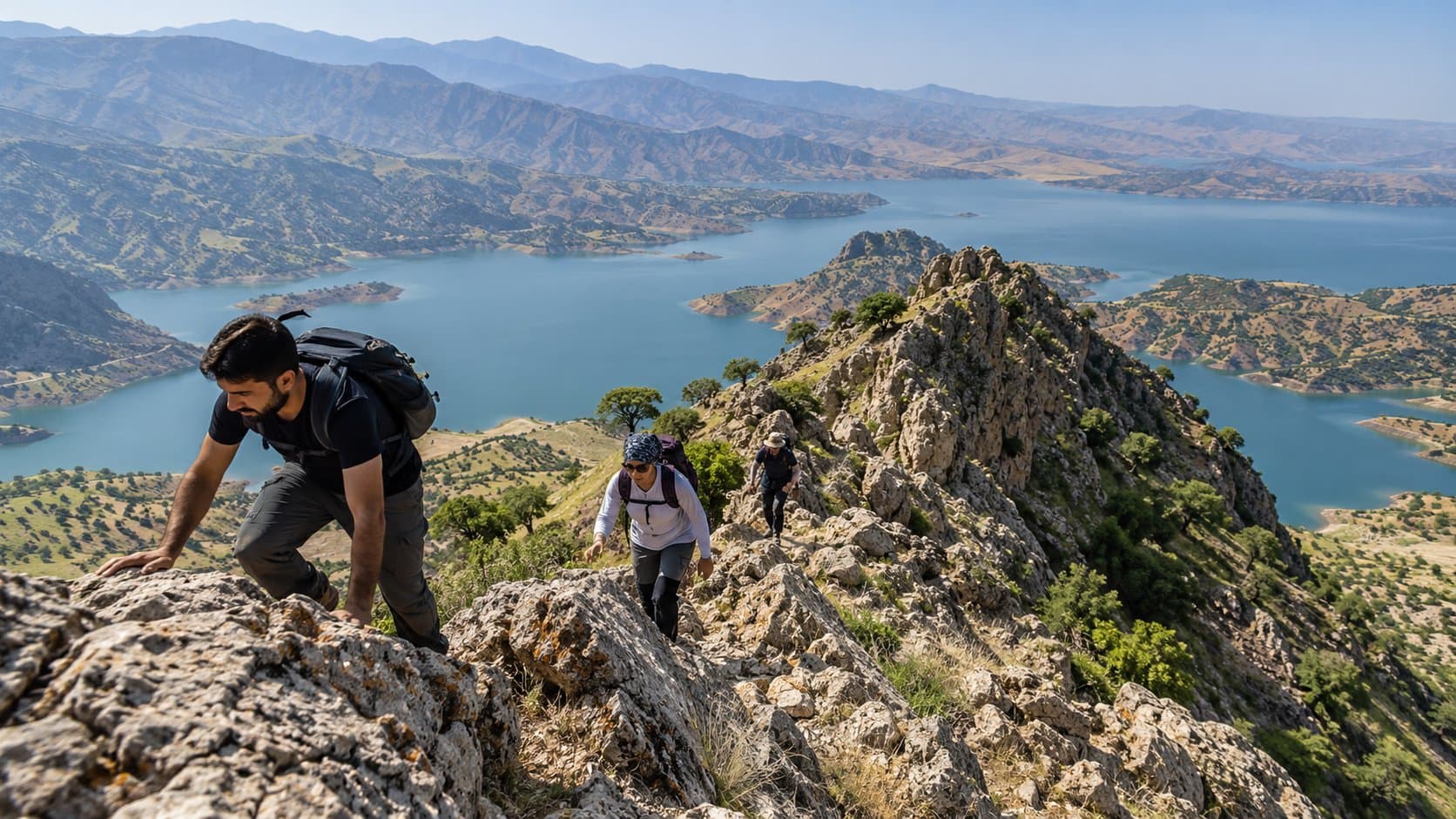
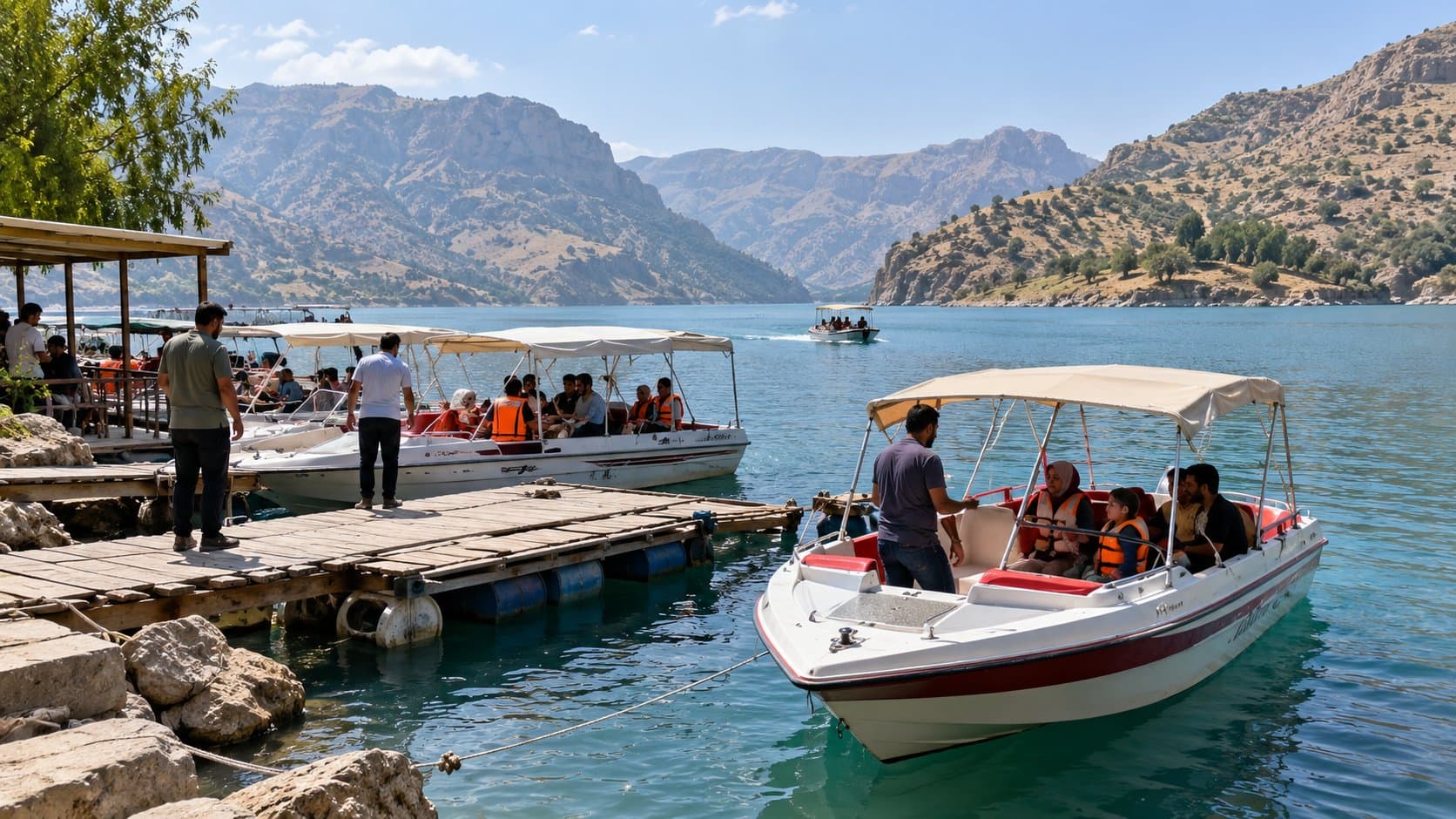
Framed by the Zagros Mountains roughly 65 kilometers southeast of Sulaymaniyah, Darbandikhan Lake offers a practical outdoor day trip in Iraqi Kurdistan. Created between 1956 and 1961 by the construction of the 128-meter-tall Darbandikhan Dam on the Sirwan River (Diyala River), this reservoir holds up to 3 billion cubic meters of water. While Lake Dukan draws heavy weekend crowds to lakeside resorts in the north, Darbandikhan stays quiet and largely uncommercialized. It suits self-guided travelers looking for open shoreline walks, ridgeline vistas, grilled fish lunches, and casual boat rides.
Historical Context
Darbandikhan Dam was constructed between 1956 and 1961 by the American engineering firm Harza Engineering Company to manage the seasonal flooding of the Sirwan (Diyala) River, generate hydroelectric power, and irrigate downstream agricultural land. The resulting multi-branching reservoir flooded steep limestone gorges and reshaped regional transport links between Sulaymaniyah and the Garmian plains.
Travel Tips
Visit between March and May for lush green scenery and mild temperatures, or October to November for clear skies. Avoid midday summer heat which regularly exceeds 40°C (104°F). Carry cash in Iraqi Dinars (IQD) for transport, boat rides (15,000–30,000 IQD), and fresh fish meals, as credit cards are not accepted. Foreign visitors must carry their original passport with a valid Iraqi Kurdistan entry visa or stamp for routine security checkpoints (Asayish) along Highway 4. Always pack out all personal trash to preserve the reservoir banks.
What to Bring
Sturdy hiking shoes or boots with deep traction for loose limestone scree, at least 2 liters of drinking water per person, high-SPF sun protection (hat, sunglasses, sunscreen), lightweight windbreaker layer, personal flotation vest if boating with children, offline GPS navigation map, cash in Iraqi Dinars, and a small bag for packing out waste.