In the heart of Mesopotamia, where the Tigris and Euphrates meet, the Iraqi Marshlands stretch as a green oasis telling the story of a 5000-year-old civilization and a unique human heritage unchanged for centuries.
Iraqi Marshlands: Journey to the Earthly Garden of Eden
In the heart of Mesopotamia, where the Tigris and Euphrates meet, the Iraqi Marshlands stretch as a green oasis telling the story of a 5000-year-old civilization and a unique human heritage unchanged for centuries.
Introduction
The marshlands of southern Iraq, also known as the Mesopotamian Marshes, are among the most unique tourist destinations in the world. These vast water bodies, inscribed on the UNESCO World Heritage List in 2016, are not just a nature reserve, but a living testament to the oldest human civilizations and the cradle of writing and the first cities.
Many scholars and theologians believe that these marshlands were the inspiration for the biblical Garden of Eden, where the Book of Genesis describes a garden from which four rivers branch out, two of which are the Tigris and Euphrates feeding these marshes. This spiritual and historical connection gives the region a magical dimension that attracts travelers from all over the world.
In this comprehensive guide, we will take you on a journey through the Iraqi Marshlands, exploring together how to get there, the best times to visit, expected costs, and the unique cultural experiences waiting for you in this earthly paradise.
How to Get to the Marshlands
From Baghdad to Nasiriyah
Most trips to the Marshlands start from the city of Nasiriyah, the main gateway to this enchanting region. From Baghdad, you can take a shared taxi from Al-Allawi South Garage for approximately 25,000 IQD (4-5 hour trip). If you prefer privacy, private cars are available for an average of 140,000 IQD.
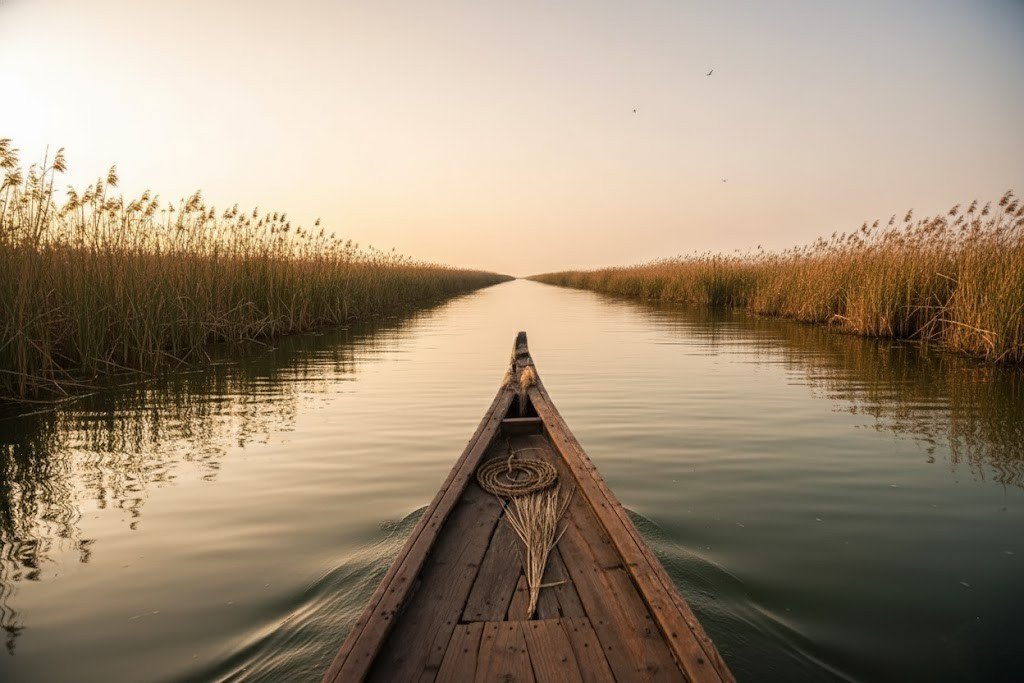
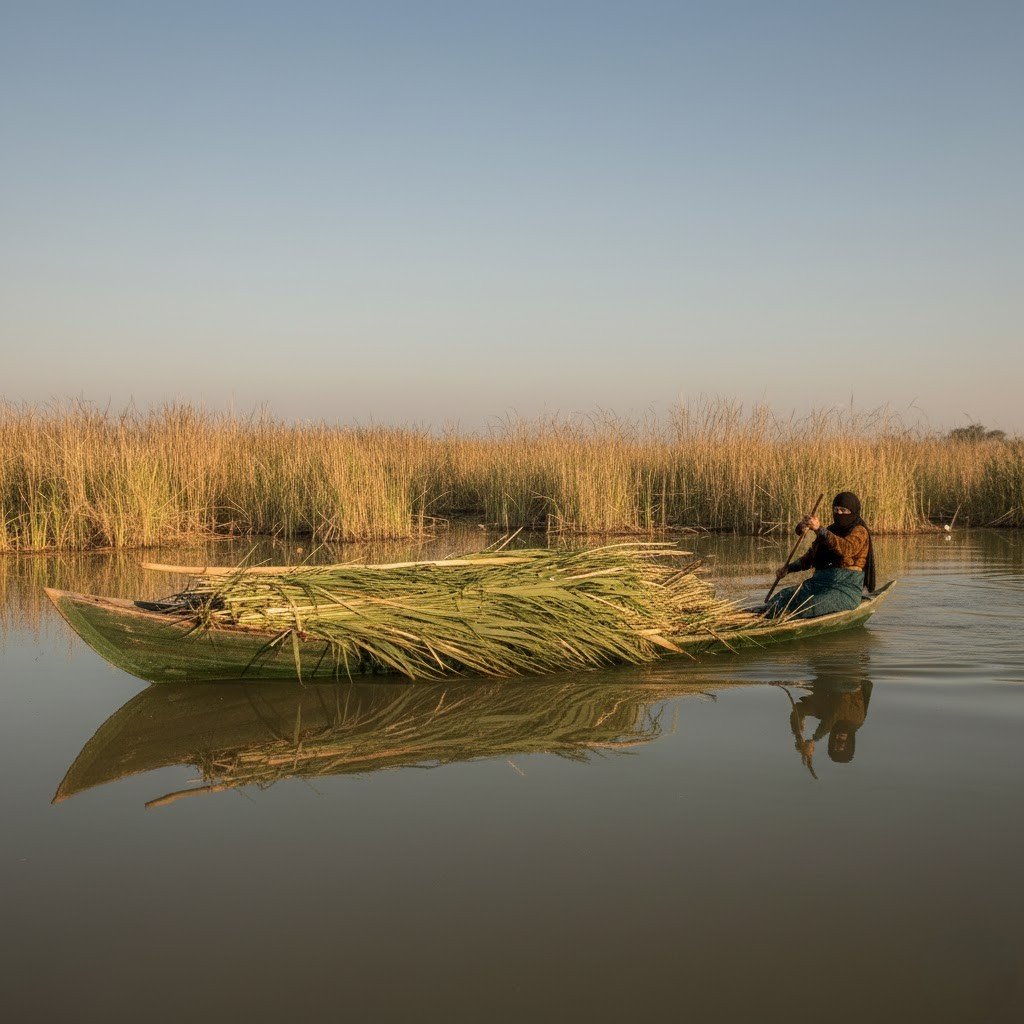
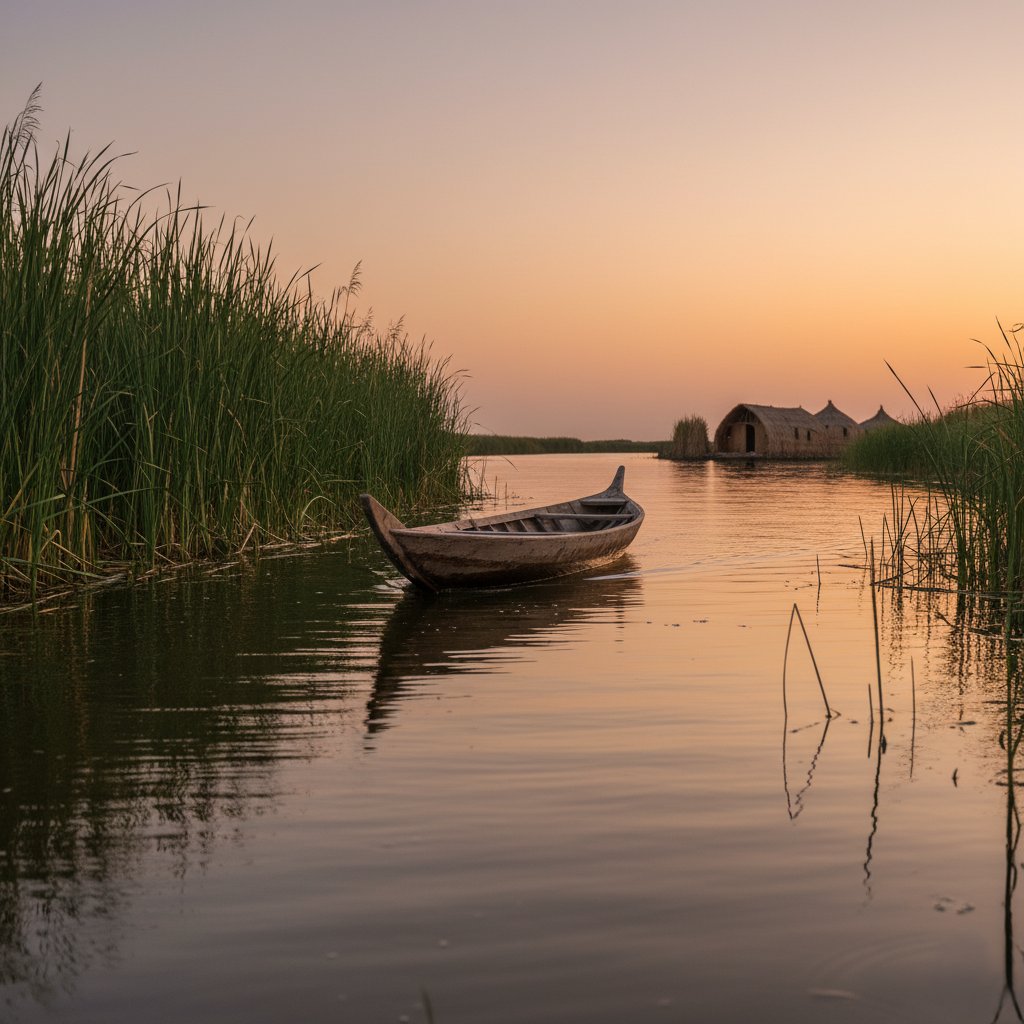
From Nasiriyah, a shared taxi (about 5,000 IQD) or a private car takes you to the Chibayish quay, where you will transfer to the traditional Mashoof - a boat made of reeds - to sail through the water channels towards the floating villages.
From Basra
If you are coming from Basra, many local tour operators offer comprehensive trips that include hotel pickup in air-conditioned cars, water transport, and meals. These packages are ideal for international visitors looking for a seamless and comfortable experience.
Staying in Nasiriyah
Independent travelers prefer to stay in Nasiriyah (90 minutes from the Marshlands) to set off at dawn towards the floating villages before temperatures rise and winds pick up.
Entry Requirements and Visas
Iraq launched a tourist e-visa system on March 1, 2025, costing 165 USD, valid for 60 days, and accepted at Baghdad, Basra, and Najaf airports and major land crossings for over 200 nationalities. Very Important: Keep a printed copy of your visa QR code, as border checkpoints require it.
You do not need an additional permit to visit the Marshlands. The requirement for a telephone sponsor at the Dhi Qar checkpoint was abolished in 2024, but officers may ask for your contact. Carry the name of your tour guide, their phone number, and booking confirmation to avoid any delay.
Best Time to Visit
Peak Season: November - March
The optimal period to visit the Iraqi Marshlands is from November to March, when the weather is moderate and pleasant (daytime temperatures between 18-24°C, with cool evenings). These months are ideal for water touring and photography without suffering from extreme heat.
Migratory Bird Season
If you are a birdwatching enthusiast, the period from October to April is best. During these months, the Marshlands host dense flocks of migratory birds, including pelicans, marbled teal, Iraq babbler, and Basra reed warbler. The marshes turn into a natural aerial corridor teeming with life.
Avoid Summer
From May to September, temperatures regularly exceed 45°C, and drought may make some channels unnavigable. Specialized trips are organized only during this period.
Expected Costs
Self-Trip Budget
If you are planning an independent trip:
- Shared taxi from Baghdad to Nasiriyah: 25,000 IQD
- Shared taxi from Nasiriyah to Chibayish: 5,000 IQD
- Local minibuses: 3,000-8,000 IQD
Boat Rental
Renting a private boat with a captain costs on average 20-25 USD per hour. Organized day tours (9 hours) usually including car, guide, lunch, and boat cost about 30 USD per person.
Local Homestay Experiences
A homestay experience with Marsh Arab families (half day for two people) costs about 30 USD, while a full overnight stay with meals, tea parties, and watching buffalo milking costs about 75 USD.
Comprehensive Tour Packages
- Basra 2-day trip (boat, cultural evening, 4-star hotel): 499 USD
- Iraqi Guide Eco-tour 3 days with overnight in Reed House: 550 USD
- Mesopotamia 11-day trip (from Basra to Kurdistan): 2,100 USD
- "Marshlands and Beyond" 10-day trip: 2,200 USD
What to Bring
Clothing and Essentials
- Warm layers for chilly dawn boat trips.
- Light and breathable clothing for warm days.
- Long sleeves useful for modesty in villages.
- Closed shoes for walking on reeds.
- Sunglasses and sunscreen for protection.
- Insect repellent (DEET or Picaridin).
- Waterproof bag to protect phone and passport from splashes.
Photography Gear
Photographers wishing to capture wildlife should carry:
- Telephoto lens ≥300 mm
- Monopod or tripod for boats
- Extra batteries
- Weather-proof covers
- Dry bags to protect cameras and drones from humidity
Health and Safety
Health Tips
- Follow CDC guidelines: Keep your vaccinations up to date.
- Avoid swimming or wading to reduce the risk of schistosomiasis.
- Treat all drinking water or drink bottled water only.
- Use insect repellent and sun protection regularly.
Environmental Warnings
Drought resulting from climate change and upstream dams has raised salinity levels; lab tests showed nickel and zinc levels exceeding WHO limits. Do not drink directly from marsh water, and protect wounds when handling reeds.
Bring a personal water filter and ask your host about the location of safe wells.
Checking Navigation Depth
Ongoing infrastructure projects (10 small dams and reservoirs under construction) may temporarily divert channels. Check navigation depth with the boat captain every morning.
Suggested Itineraries
One Day Trip: Nasiriyah-Chibayish Tour
A 9-hour tour including:
- Dawn departure from Nasiriyah
- Sailing through marsh channels
- Lunch on a traditional floating reed house
- Visiting a Marsh Arab family
- Watching buffalo and birds
- Return at sunset
Cost: About 30 USD per person with guide, transport, and boat.
Two Day Trip: Basra Cultural Experience
Day 1:
- Tour in traditional Basra markets
- Sunset boat trip in Shatt al-Arab
- Traditional Mesopotamian dinner/show
- Overnight in 4-star hotel
Day 2:
- Breakfast in a traditional reed house
- Tour in floating villages
- Watching traditional Mashoof making
- Return to Basra
Cost: From 499 USD (all inclusive)
Three Day Trip: Comprehensive Heritage Tour
Day 1:
Day 2:
- Dawn departure towards the Marshes
- Full day in the Marshes with stay in a reed house
- Participating in preparing traditional Masgouf
- Evening with the host family
Day 3:
- Watching buffalo milking in the morning
- Tour in neighboring villages
- Return to Baghdad via historical cities
Cost: About 550 USD (with local guide)
Accommodation Options
Homestays with Local Families
Experience sleeping on woven reed beds, cooking Masgouf with the family, and watching buffalo milking - this is an unforgettable authentic experience. Hosts usually include meals and traditional folklore performances.
Features:
- Real cultural experience
- Integration with daily life of Marsh Arabs
- Learning traditional crafts
- Fresh local food
Eco-Lodge "Marsh House"
Located in Chibayish, offering:
- Solar-powered rooms
- Bird watching balconies
- Organized kayaking tours directly from the facility
- Specialized nature guides
Nasiriyah Hotels
If you prefer modern comfort, Nasiriyah hotels offer:
- Hot shower and Wi-Fi
- Proximity to restaurants and ATMs
- Convenient starting point for dawn trips
Mixed Packages
Some tours combine ovenights in reed houses and 4-star hotels in Baghdad/Nasiriyah to get the best of both worlds.
Cultural Heritage and Marsh Arabs
Traditional Reed Houses (Mudhif)
One of the most iconic symbols in the Marshes is the Mudhif - the traditional guesthouse made entirely of reeds. These magnificent structures are an engineering miracle and a testament to the ingenuity of the Marsh Arabs. The Mudhif is built using a complex system of arches and pillars, all made from locally harvested reeds.
The design of the Mudhif has unchanged for thousands of years, and is a strong symbol of Ma'dan cultural heritage. The Mudhif is more than just a building; it is the heart of the community - a place where guests are welcomed, disputes are resolved, and celebrations are held.
Legendary Hospitality
Hospitality is a cornerstone of Marsh Arab culture. Visitors are welcomed with open arms, and offered traditional tea and local food. Visiting a Marsh Arab family home is not just a culinary experience; it is an opportunity to connect with locals and learn about their culture and traditions.
Local Foods
Local food is simple but delicious, made entirely from fresh locally sourced ingredients. Among the most famous dishes:
- Masgouf: Traditional grilled fish
- Timman: Rice with meat and vegetables
- Fresh Bread: Baked in reed tannour
Traditional Activities
- Fishing by traditional methods
- Boat making (Mashoof) from reeds
- Buffalo herding and watching milking
- Basket weaving and reed handicrafts
Biodiversity and Wildlife
Migratory Birds
Iraqi Marshlands are a vital stopover for migratory birds on their long journeys. During migration season, you can see:
- White Pelicans
- Marbled Teal
- Iraq Babbler
- Basra Reed Warbler
- Herons
- Gulls
Mammals
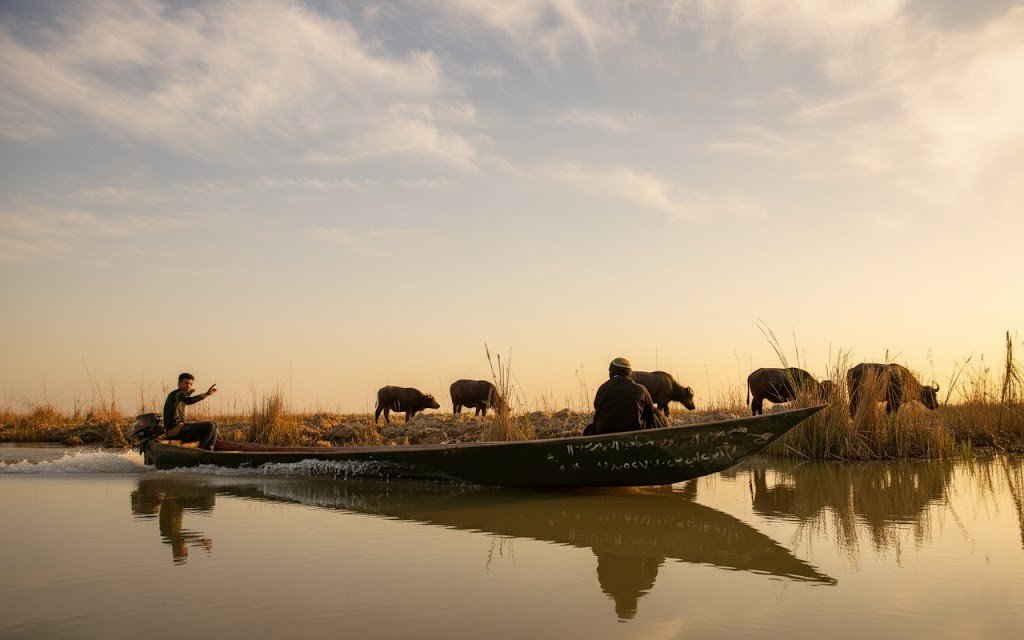
Water Buffalo is an integral part of Marsh Arab life. These animals provide milk, meat, and hides, and are also used for transport. The relationship between Marsh Arabs and their buffalo is close, and animals are treated like family members.
Fish and Reptiles
The Marshes are home to a diverse range of fish which are a main food source, in addition to reptiles and amphibians that thrive in this unique ecosystem.
Story of Destruction and Rebirth
The Draining Era (1990s)
In the nineties, Saddam Hussein's regime launched a large-scale campaign to drain the marshes, partly to punish the Marsh Arabs for opposing his rule. Draining the marshes was an ecological and humanitarian disaster. Vibrant ecosystems turned into arid desert, and hundreds of thousands of Marsh Arabs were forced to flee their homes.
Restoration (2003 - Present)
After the fall of Saddam's regime in 2003, a massive effort was launched to restore the marshes. Dams and canals built to drain the marshes were breached, and water began flowing back into the region.
Restoring the marshes was a remarkable success. Ecosystems began to recover, and Marsh Arabs started returning to their ancestral homes. The story of the marshes is a powerful testament to the resilience of nature and the human spirit.
UNESCO Status and Current Situation
The Southern Iraqi Marshes were inscribed on the UNESCO World Heritage List in 2016. The 2024 conservation status report prioritizes hydrological monitoring, mitigating oil and gas risks, and regulated eco-tourism.
Restoration programs led by Tour du Valat and Iraqi ministries have re-flooded about 40% of the historical wetlands, with a goal of restoring 75% by 2035 through nature-based solutions and community jobs.
The Dhi Qar plan for 2025 uses new rains, oil revenues, and marsh offices to stabilize water levels; recent rains have already brought buffalo herds back to open water.
Cultural Etiquette
Modest Dress
Marsh Arabs are conservative people, so visitors should:
- Wear modest clothing (covering shoulders and knees)
- Women: Prefer long sleeves and long skirts or loose trousers
- Men: Avoid shorts in villages
Respecting Local Customs
- Ask permission before taking photos of people
- Remove your shoes when entering a reed house
- Accept hospitality when offered (tea, food)
- Use the right hand for eating and shaking hands
- Be respectful in religious and cultural places
Responsible Tourism
- Leave no trash behind
- Do not disturb wildlife
- Do not damage reeds or plants
- Support local economy by buying handicrafts
Conclusion
The Iraqi Marshlands are not just a tourist destination; they are a journey through time to the cradle of human civilization. From traditional reed houses to water buffalo, and from migratory birds to the legendary hospitality of the Marsh Arabs, every moment in this earthly paradise is an unforgettable experience.
Whether you are looking for an environmental adventure, a cultural journey, or a spiritual connection to the Garden of Eden, the Iraqi Marshlands wait for you with open arms. Plan your visit between November and March, pack your gear, and get ready to discover one of the most unique and magical destinations in the Middle East.
Are you ready to explore the Earthly Garden of Eden? Book your trip today and be part of the story of preserving this unique human heritage.