Between official advisories and reality on the ground, here is what travelers need to know about safety, flights, regional differences, and local etiquette in Iraq.
Is Iraq safe to visit? A travel guide for 2026
Between official travel advisories and everyday reality on the ground, here is what travelers need to know about safety in Iraq.
Overview
When you search for travel to Iraq, you encounter two contrasting pictures. Western government advisories often place Iraq under their strictest warning category. At the same time, thousands of international visitors who arrived between 2024 and 2026 report warm welcomes, calm journeys, and genuine hospitality.
The security situation in Iraq is not uniform. The Kurdistan Region, the holy cities, and central areas of Baghdad welcome steady visitor traffic. In 2024, 892,000 international visitors entered Iraq, an increase of 25% over the previous year. Baghdad was also named the Arab Tourism Capital for 2026, reflecting ongoing municipal improvements.
This guide outlines security conditions across each region, current flight rules, and practical advice for staying safe.
Flight updates and regional security (May 2026)
Security note: Following temporary airspace closures in March 2026 caused by regional friction, Iraqi airspace reopened, and scheduled commercial passenger flights resumed operations.
Aviation status: Commercial flights at Baghdad and Erbil airports operate on regular schedules. Regional tensions in the wider Middle East still present occasional risks of rerouting or short-notice disruptions.
Government advisories: Several Western governments, including the United States, the United Kingdom, Canada, and Australia, continue to recommend against non-essential travel to parts or all of Iraq. When a country issues a high-level warning, standard travel insurance policies often exclude coverage. Arrange specialized travel insurance before departing.
Flight planning advice: If you travel by air, monitor your flight status regularly and register your travel itinerary with your national embassy. Keep a contingency overland route in mind, such as the Ibrahim Al-Khalil border crossing between the Kurdistan Region and Turkey, in case regional airspace closes unexpectedly.
Perception versus reality
Official government advisories
United States (Level 4, Do Not Travel):
- Lifted mandatory departure orders for embassy personnel in July 2026
- Warnings cite risk of civil unrest, kidnapping, and terrorism
- Source: U.S. Department of State
United Kingdom:
- Lowered its risk assessment in January 2026
- Advises against all travel to most of federal Iraq, but allows essential travel for the Kurdistan Region
- Source: UK Foreign, Commonwealth & Development Office
Canada and European nations:
- Most European governments and Canada advise against all non-essential travel to the country
Iraqi government updates
Iraqi Ministry of Foreign Affairs:
- Welcomed the British advisory update in January 2026
- Noted measurable security improvements nationwide
- Encouraged other governments to reassess their travel advice
Iraqi Ministry of Interior:
- Introduced the nationwide 911 emergency response system in January 2026
- Operates in five languages across all 18 governorates
- Logged 86,000 calls and handled 4,400 emergency dispatches during a single 24-hour test period in February 2026
Firsthand traveler accounts (2024 to 2026)
Reddit traveler (2024):
"I spent three weeks traveling through Iraq, and I felt welcome everywhere. People regularly offered me tea, directions, and lifts without asking for anything in return."
American independent traveler (2024):
"As a solo female traveler, dressing modestly was essential. Local families and women in markets were respectful, curious, and glad to talk."
Travel videographer (2024):
"I arrived nervous at Baghdad International Airport, but those worries faded quickly once I met local hosts. The biggest challenge on a daily basis was finding room for all the food offered to me."
British-Arab traveler in an interview with Al-Araby UK:
"The hospitality was remarkable. Taxi drivers occasionally refused payment from a guest, and fruit vendors routinely added extra pieces to my bag as gifts."
Safety by region
Kurdistan Region (Erbil, Sulaymaniyah, Duhok)
Safety level: Very high
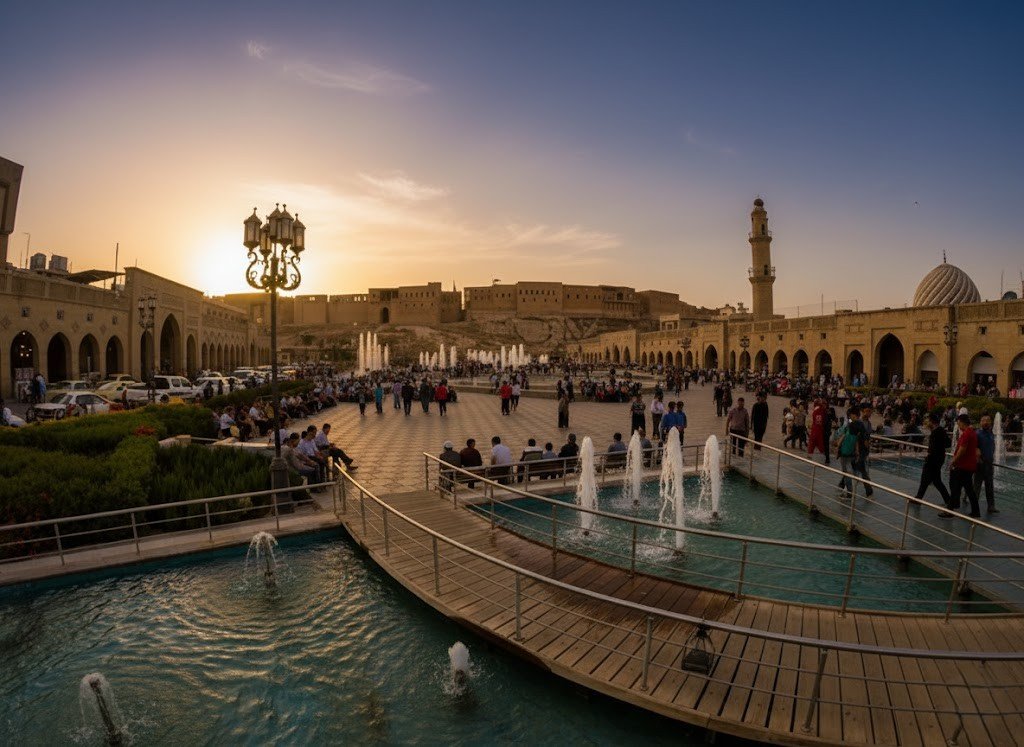
The Kurdistan Region functions under the Kurdistan Regional Government, with its own border controls and Peshmerga security forces. It is widely recognized as one of the calmest territories in the Middle East.
- Over 450,000 international visitors arrived in Iraqi Kurdistan in 2024, accounting for roughly half of the country's foreign tourism.
- Roadways, hotels, and tourist services are well developed, and English is widely spoken in urban centers.
- Solo travelers, couples, and tour groups move freely between Erbil, Sulaymaniyah, and Duhok without police escorts.
- Popular activities include exploring the Erbil Citadel, walking city centers at night, hiking through mountain valleys, and patronizing lively cafes.
- Photography is permitted in public spaces, though photographing checkpoints and military facilities remains strictly prohibited.
- Recommended stay: 3 to 7 days.
Baghdad
Safety level: Moderate, requires local awareness
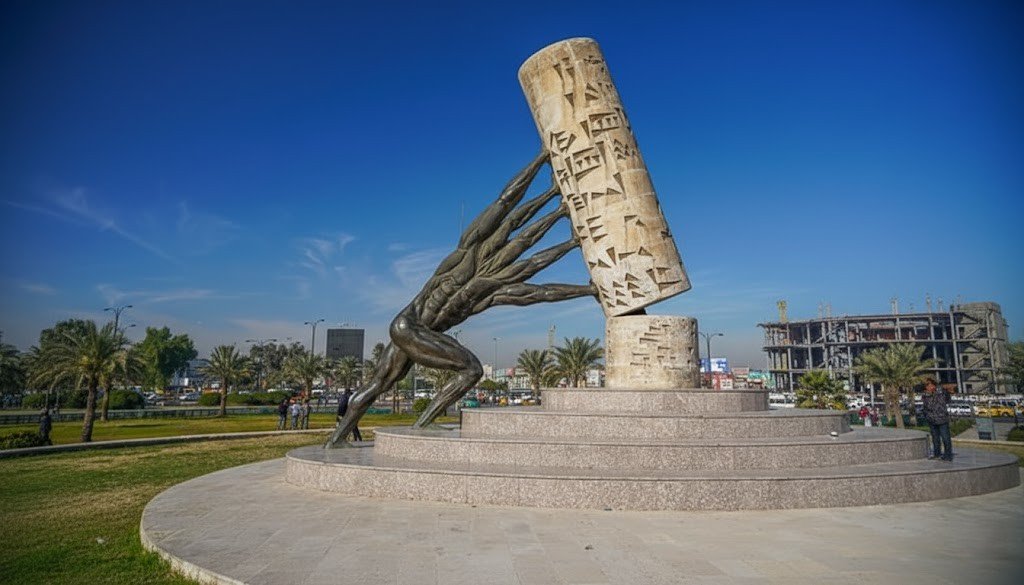
As the Arab Tourism Capital for 2026, Baghdad has seen noticeable security improvements and urban renewal.
- Around 180,000 international travelers visited Baghdad in 2024.
- Security checkpoints are common across main bridges, major squares, and hotel perimeters. Keep your passport on you at all times.
- First-time visitors should hire a licensed local guide to handle logistics and checkpoint clearances smoothly.
- Recommended accommodation hubs include the Karrada district and the international hotel zone.
- Book rides through the Careem app or arrange vetted hotel taxis rather than hailing random street cabs.
- Avoid walking alone late at night and avoid outlying areas such as Sadr City, Abu Ghraib, Al-Dura, and remote industrial districts.
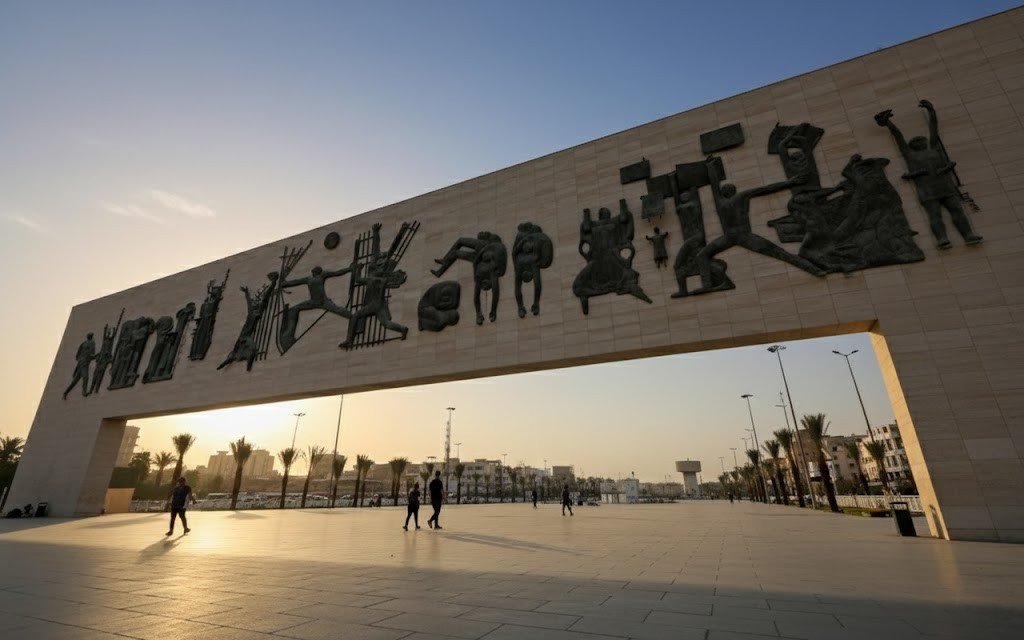
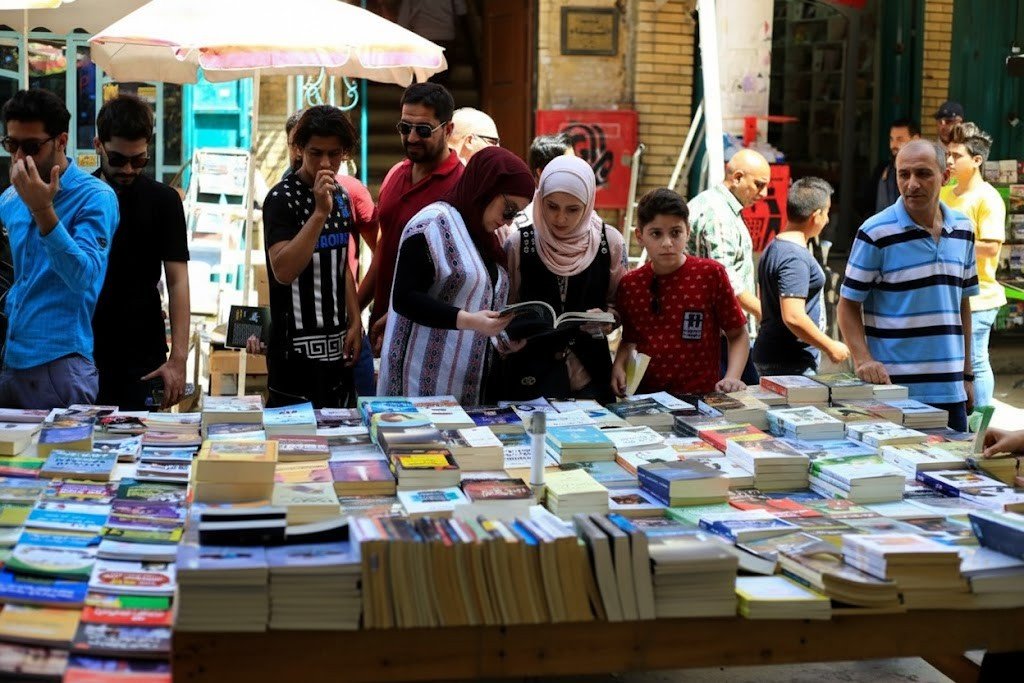
- Safe destinations in the city center include the National Museum of Iraq, Al-Mutanabbi Street book market, the Al-Shaheed Monument, Baghdad Zoo, the Tigris River Corniche, and Abu Hanifa Mosque.
- Private guide rates run between $80 and $150 per day.
- Recommended stay: 2 to 4 days.
Holy cities (Karbala, Najaf)
Safety level: High
Najaf and Karbala host millions of religious visitors each year, including roughly 220,000 international visitors in 2024.
- The shrine districts maintain tight perimeter controls, including bag checks, metal detectors, and pedestrian-only buffer zones.
- The Arba'een pilgrimage brings tens of millions of participants together under organized municipal protection. To avoid overwhelming crowds and limited room availability, plan your trip outside major religious holidays.
- Modest dress is strictly required. Women must wear an abaya and headscarf, while men should wear long trousers and shirts with sleeves.
- Shoes must be removed and checked into storage booths before entering shrine courtyards.
- Photography inside the inner shrines is generally restricted.
- Recommended stay: 1 to 2 days per city.
Basra
Safety level: Moderate
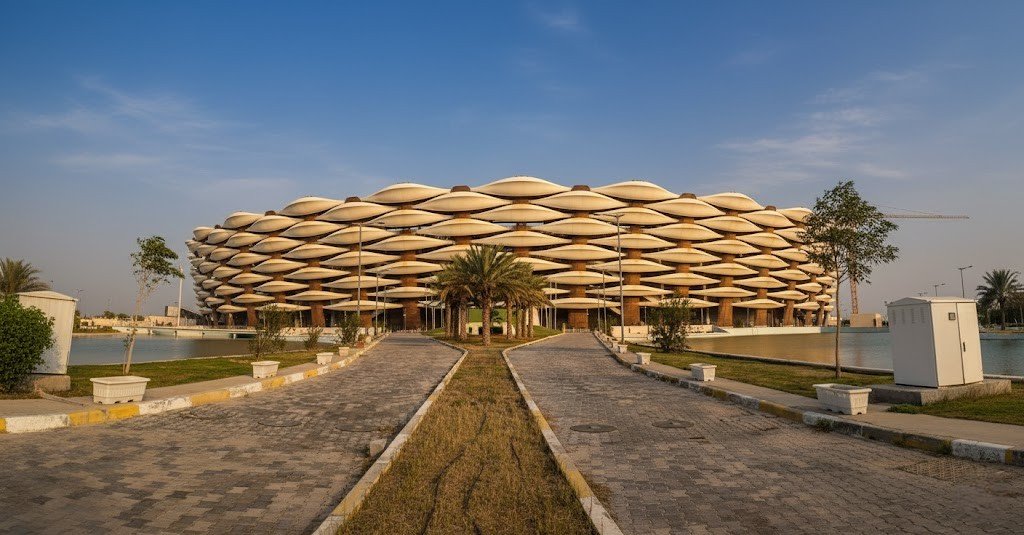
Basra is the primary commercial hub of the south and the departure point for exploring the Mesopotamian Marshes.
- Approximately 42,000 foreign travelers visited Basra in 2024.
- Advanced private healthcare is limited compared to Erbil or Baghdad. Comprehensive medical evacuation insurance is essential.
- Arrange transport through your hotel or hire an experienced driver familiar with the road to the marshlands.
- Summer temperatures frequently climb between 40°C and 50°C (104°F to 122°F). Plan visits for the cooler months between November and March.
- Dress more conservatively than in Kurdistan, and avoid political discussions.
- Recommended stay: 1 to 3 days.
Mosul
Safety level: Developing, tour guide recommended
Mosul is rebuilding its urban fabric after years of conflict. Reconstruction of the Old City and the Al-Nuri Mosque complex has made steady progress.
- Much of the Old City remains under active reconstruction.
- Independent travel is not recommended. Visit with a licensed expert guide as part of an organized day tour.
- Recommended stay: Single-day visit or excursion from Erbil.
Iraqi hospitality as everyday protection
Iraqi hospitality, or diyafa, goes beyond casual friendliness. It is an established cultural principle that provides visitors with an informal layer of community care.
How hospitality supports travelers
- If you take a wrong turn or look confused, shopkeepers and police officers will frequently step in to give directions or walk you to your destination.
- In the southern marshes, the traditional reed mudhif continues to function as a community reception hall where visitors receive food and shelter.
- An Iraqi proverb notes that a guest holds a protected status.
- When locals offer tea or bottled water, accepting gracefully creates goodwill and signals that you appreciate local customs.
Security and emergency infrastructure
Unified emergency system 911
- Launch: January 2026
- Coverage: All 18 governorates
- Languages: Arabic, English, Kurdish, Turkmen, and Syriac
- Capacity: Handled 86,000 calls and 4,400 incidents during 24 hours of testing in February 2026
Emergency numbers:
- Unified emergency: 911
- Police: 104
- Ambulance: 115 or 122
- Fire department: 115
Tourist police
Kurdistan Region:
- Dedicated units in Erbil, Sulaymaniyah, and Duhok
- English-speaking officers
- 24-hour hotline: +964 750 444 5555
Baghdad:
- Tourist assistance units stationed at major cultural landmarks, including the National Museum, Al-Mutanabbi Street, and the Zoo
Karbala and Najaf:
- Multilingual support teams providing assistance in Arabic, English, Urdu, and Farsi during major pilgrimage seasons
Health infrastructure
Baghdad:
- Major facilities, including Fatima Al-Zahra Hospital and Imam Ali Hospital, added over 220 hospital beds in August 2026 to improve critical care capacity
Erbil:
- Has modern private clinics and established medical evacuation facilities
Basra:
- Specialized acute care is limited, making medical evacuation insurance essential
Health requirements and vaccinations
Consult a travel physician or clinic at least six weeks before your trip.
Vaccinations (CDC guidance)
Routine immunizations:
- MMR (Measles, Mumps, Rubella)
- Tdap (Tetanus, Diphtheria, Pertussis)
- Polio
Recommended travel vaccinations:
- Hepatitis A
- Hepatitis B
- Typhoid
Optional:
- Cholera for specific high-risk travel contexts
COVID-19:
- Proof of vaccination and negative PCR test results are no longer required for entry into Iraq
Yellow fever:
- Vaccination certificate required only when arriving from an endemic transmission area
Practical safety tips
Transportation
Careem ride-hailing:
- Operates reliably in Baghdad, Erbil, Basra, and Mosul
- Features driver ratings, GPS tracking, and cash or card payments
- Typical short ride in Erbil costs between $2 and $8
Taxis:
- Use official airport taxi desks or hotel-arranged transport
- If taking a standard street taxi, agree on the fare before stepping into the vehicle
Intercity buses:
- Modern commercial coaches run between Erbil and Baghdad for roughly $10 to $20 per seat
Hiring a car with a driver:
- Recommended for multi-city travel across central and southern Iraq
- Rates range from $80 to $150 per day, including fuel and driver
- Local drivers manage checkpoints and route navigation smoothly
Accommodation
Choose hotels with dedicated access security and front-desk registration.
Erbil:
- Erbil Rotana, Divan Erbil, and Tangram Hotel provide central locations and standard international security measures
Baghdad:
- Baghdad Hotel and Al-Rasheed Hotel offer central lodging with controlled access perimeters
Basra:
- Basra International Hotel provides reliable security and business amenities
Communication and internet
SIM cards:
- Zain, Asiacell, and Korek operate kiosks at international airports
- Tourist data bundles of 10 to 20 GB cost between $10 and $20 for 30 days
Connectivity:
- 4G mobile networks cover all major cities and transit corridors
- 5G is available in parts of Erbil and Baghdad
- Standard hotel WiFi speeds range from 10 to 30 Mbps
VPN:
- Using a reliable virtual private network adds security on public networks
Dress code
Men:
- Kurdistan: Casual Western clothing, including jeans and t-shirts, is standard
- Baghdad and the south: Long trousers and collared or sleeved shirts are best
- Religious sites: Long trousers and covered shoulders are mandatory
Women:
- Kurdistan: Jeans and shirts with shoulder coverage are common
- Baghdad and the south: Loose-fitting clothing covering shoulders, chest, and knees
- Religious sites: A full-length abaya and headscarf are required and are provided at shrine entrances
General advice: Pack lightweight, breathable fabrics to manage intense heat during warmer months
Photography and social media
Permitted subjects:
- Historical sites, archaeological ruins, markets, city streets, and food
- Always ask permission before photographing individuals, especially women and families
Restricted subjects:
- Checkpoints, police officers, military personnel, ministerial buildings, and airport security areas
- Interior shrine sanctuaries where signs prohibit cameras
Best practices:
- Obey posted signs and security instructions promptly
- Avoid posting real-time location tags on social media while traveling
Money and cash management
ATMs:
- Widely available in Erbil with support for Visa and Mastercard
- Present in major Baghdad hotels and select bank branches
- Scarce in smaller towns and rural governorates
Cash usage:
- Everyday transactions rely heavily on cash
- Bring clean, undamaged US dollar banknotes printed after 2013, alongside Iraqi Dinars
- Divide funds between a money belt and your hotel room safe
Currency exchange:
- Use licensed exchange bureaus in commercial districts
- The standard baseline rate is approximately 1,310 IQD per USD
- Avoid unofficial street exchangers
Daily budgets:
- Budget travel: $30 to $50 per day
- Mid-range travel: $70 to $120 per day
- Comfortable private travel: $150 to $250 per day
Common scams and how to avoid them
Violent crime and street scams targeting tourists are uncommon in Iraq. However, travelers should watch for everyday overcharging:
- Taxi overcharging: Drivers near transit hubs may claim their meter is broken or quote inflated rates. Use Careem or arrange airport transfers via your hotel. A fair fare from Baghdad International Airport to central districts is $15 to $25.
- Currency short-changing: Count your cash carefully at the counter of licensed exchange offices before departing.
- Informal guides: If someone offers unprompted guide services at a historic site, establish their credentials and agree on the total price in writing beforehand.
Most Iraqis take hospitality seriously, and many travelers find that local hosts insist on paying for their tea or meals.
Tourism statistics
- 892,000 international visitors entered Iraq in 2024, a 25% year-on-year increase
- Kurdistan Region: 450,000 visitors (50% of total)
- Holy cities (Karbala and Najaf): 220,000 visitors (25%)
- Baghdad: 180,000 visitors (20%)
- Basra: 42,000 visitors (5%)
Leading country origins:
- Iran: 350,000
- Turkey: 120,000
- Jordan: 80,000
- UAE: 65,000
- Pakistan and India: 45,000
- European countries: 30,000
- United States and Canada: 12,000
Summary
Security in Iraq varies significantly by province:
- Kurdistan Region: Very safe for independent travel, with modern services and stable governance.
- Holy cities (Najaf and Karbala): Well-protected pilgrimage centers that require modest dress and cultural consideration.
- Baghdad: Fully accessible with sensible precautions, reputable hotel accommodation, and a local guide for first-time visitors.
- Southern Iraq: Best explored with arranged transport and experienced drivers.
- Areas to avoid: Western Anbar province and regions immediately bordering Syria.
With advance planning, respect for local customs, and reliable local contacts, traveling to Iraq in 2026 offers a rewarding cultural experience.
❓Frequently Asked Questions
Here are answers to frequently asked questions about the content above
Yes. Kurdistan (Erbil, Sulaymaniyah, and Duhok) has an established security record and welcomes hundreds of thousands of international visitors each year. It is straightforward for independent travelers to explore without a guide.
While Baghdad has become much calmer, first-time visitors benefit greatly from hiring a trusted local guide. A guide helps navigate checkpoints, handles translation, and knows which neighborhoods are best visited during the day.
Photography is welcome at public markets, monuments, and historical ruins. Never photograph checkpoints, police stations, military personnel, or government compounds. Always ask people for permission before taking their picture, especially women.
As of May 2026, Iraqi airspace is open and regular commercial flights are running into Baghdad and Erbil. Because regional conditions can shift quickly, keep in touch with your airline and check your travel insurance terms before flying.
Domestic flights connect Baghdad and Erbil quickly. Modern scheduled buses run regular intercity routes, while hiring an experienced driver is the most convenient way to visit historical ruins and navigate checkpoints comfortably.