Al-Ukhaidir Fortress stands 50 kilometers southwest of Karbala as one of the best-preserved early Islamic desert castles in the Middle East. Built in the 8th century by an Abbasid prince, its towering limestone walls, defensive towers, grand iwan, and residential quarters offer visitors an unfiltered look at early Islamic architectural engineering. This visitor guide covers its history, architectural layout, driving routes across the desert, and practical planning tips.
Al-Ukhaidir Fortress (Arabic: حصن الأخيضر, Hisn al-Ukhaydir) rises out of the desert plateau roughly 50 kilometers southwest of Karbala and nearly 190 kilometers southwest of Baghdad. Built around 775 CE (158 AH) during the early Abbasid Caliphate, the fortress represents a key milestone in Islamic military and palatial architecture, as documented by Wikipedia. The site stands in the open desert near the edge of the Western Desert, preserved in large part by the dry climate and its isolated position away from major urban centers.
Historical analysis led by British archaeologist K.A.C. Creswell and records outlined by Wikipedia Arabic attribute the construction of the palace to Isa ibn Musa. Isa was a nephew of the first Abbasid caliph, As-Saffah, and cousin to Caliph Al-Mansur. After serving as governor of Kufa for fifteen years and securing key military victories for the dynasty, Isa was pushed out of the line of caliphal succession, as detailed by Isa ibn Musa's biography. He retired to his private estate at Al-Ukhaidir, where he lived until his death in 784 CE. British explorer and scholar Gertrude Bell surveyed and mapped the complex extensively in 1909, publishing the first comprehensive architectural study of the site in 1914, according to Gertrude Bell's records. The fortress joined Iraq's UNESCO World Heritage Tentative List in 2000.
What does Al-Ukhaidir Fortress look like to visitors?
From the outside, Al-Ukhaidir looks like an imposing military fortress. A high curtain wall measuring 175 meters by 169 meters encloses the entire compound, rising to a height of approximately 17 meters, according to Wikipedia. The outer perimeter features 48 semicircular buttress towers, including rounded corner bastions and fortified gates with machicolations and arrow slits designed to repel attackers. Builders used local limestone rubble bound with hard gypsum plaster (juss), layered with courses of baked brick.
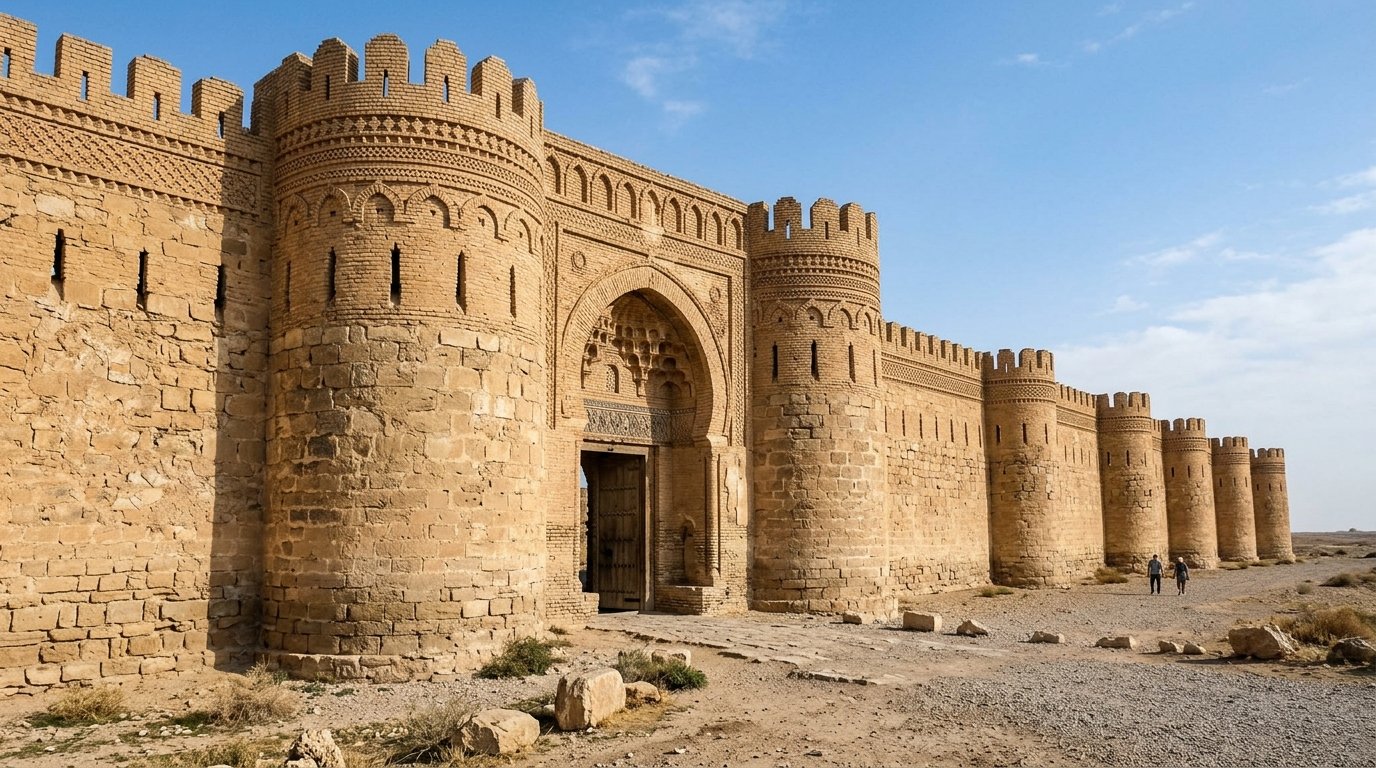
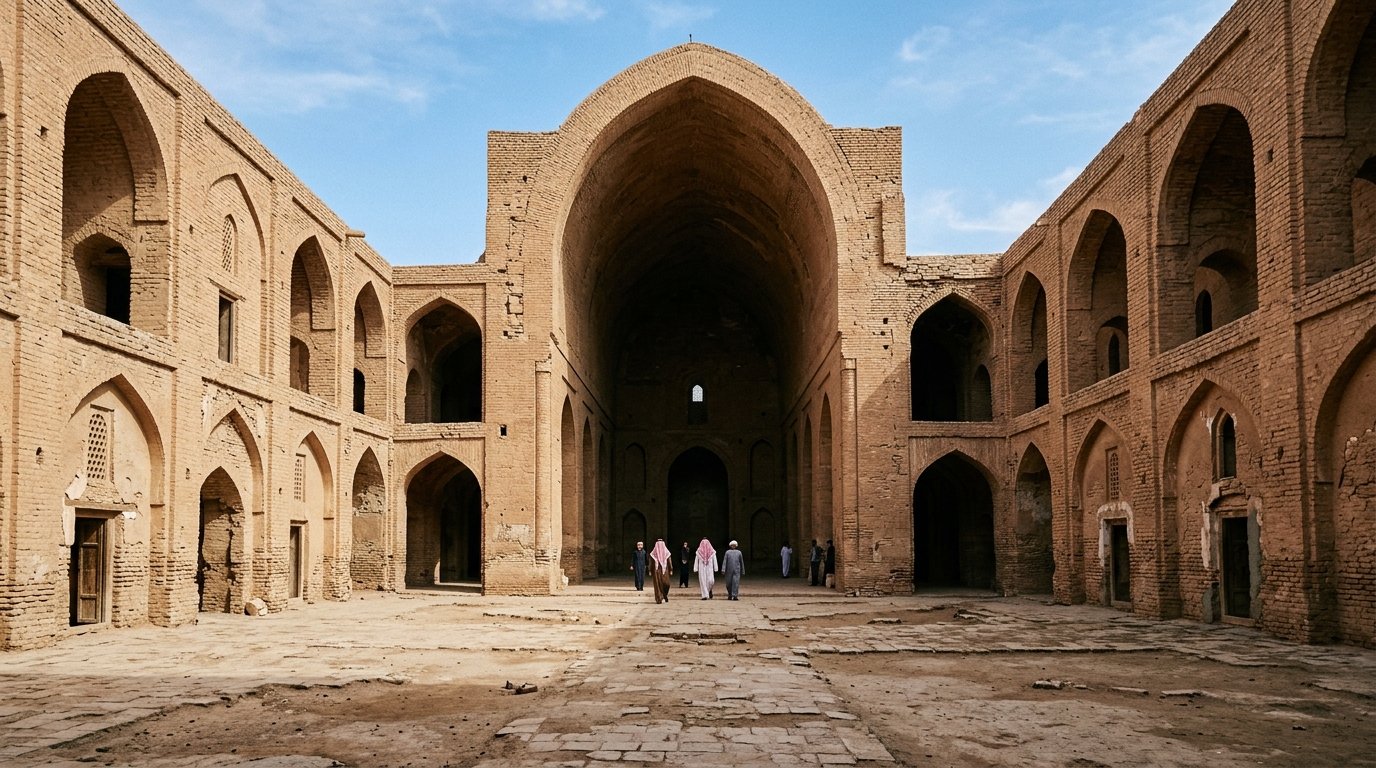
Inside the massive outer walls sits the three-story central palace complex, which measures 112 meters by 83 meters. The layout follows a strict geometric plan that combines Late Antique Sasanian engineering with early Islamic structural planning. Walking through the monumental northern gatehouse, visitors enter a vaulted entrance vestibule that leads to the Grand Courtyard (al-Rahba al-Kubra).
The main architectural elements of the interior include:
- The Grand Iwan and audience hall: Rising on the south side of the main courtyard, this deep vaulted hall served as the formal reception chamber for the prince. Its soaring parabolic vault draws direct inspiration from earlier Mesopotamian monuments such as Ctesiphon (Taq Kasra).
- The residential apartments (Bayts): Four self-contained family residential units sit within the palace walls. Each unit contains its own central courtyard, sleeping rooms, and private living chambers, creating distinct private zones within the fortress.
- The integrated palace mosque: Located in the northwestern sector of the inner palace, the mosque retains its rectangular open courtyard and prayer hall. It features two semicircular prayer niches (mihrabs) set directly into the southern qibla wall, confirming that the religious structure was built as an original part of the complex rather than added later.
- Vaulting and structural arches: Al-Ukhaidir contains some of the earliest surviving examples of Islamic pointed arches, transverse barrel vaults, groin vaults, and squinches. These masonry transitions allowed builders to construct wide domed ceilings over square rooms.
- Underground cellars (Sardabs): Deep subterranean chambers beneath the courtyard provided refuge and cool storage during scorching desert summers.
When is the best time to visit?
The desert around Karbala experiences extreme seasonal shifts. The best time to visit Al-Ukhaidir Fortress is between late October and April. During these autumn, winter, and early spring months, daytime temperatures generally hover between 18°C and 26°C (64°F to 79°F), making it comfortable to explore the unshaded courtyards and upper ramparts on foot.
Summer months from May through September bring intense heat, with midday temperatures regularly climbing above 45°C (113°F). If you travel during late spring or summer, arrive at the gates early in the morning around 8:00 AM to finish exploring before peak afternoon heat. Clear winter mornings and late afternoons also provide optimal natural lighting for photography along the textured stone facades.
How do I get to Al-Ukhaidir Fortress?
Al-Ukhaidir sits in the open desert plateau of Ayn al-Tamr district, accessed primarily by private vehicle, chartered taxi, or an organized guided tour.
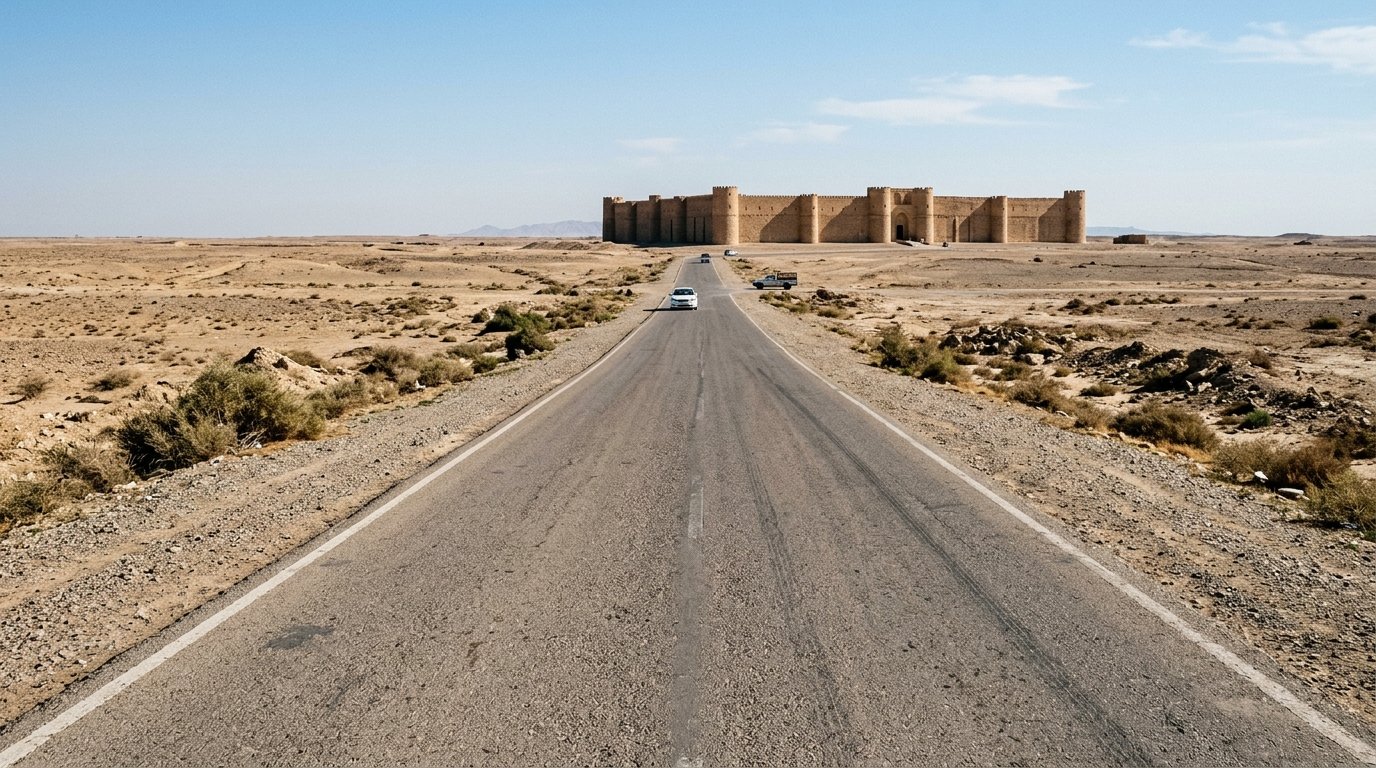
- From Karbala (approx. 50 km / 45–60 minutes): Take Highway 22 southwest out of Karbala heading toward Ayn al-Tamr (Shithatha). The paved two-lane road crosses desert terrain directly toward the site. A marked turnoff branches south from the main road directly to the fortress entrance gate, as indicated in Wikivoyage's Karbala guide.
- From Baghdad (approx. 190 km / 2.5–3.5 hours): Drive south via Highway 1 to Karbala, bypass the dense city center along the western ring roads, and follow Highway 22 southwest to the fortress.
- From Najaf (approx. 90 km / 1.5–2 hours): Drive northwest along Route 9 toward Karbala, then connect onto the Ayn al-Tamr road heading southwest across the desert.
Expect security checkpoints along the highway between Karbala and the desert district. Foreign visitors should carry original passports and valid Iraqi visas. Iraqi drivers usually know the route well, but confirm in advance that your driver has sufficient fuel for the return trip, as fuel stations are sparse along the desert stretch.
Where to stay near Al-Ukhaidir
There are no hotels, guesthouses, or overnight facilities directly at Al-Ukhaidir Fortress. Visitors should base themselves in Karbala, which offers a broad range of hotels, or in Najaf, located roughly 90 kilometers away.
- Central Karbala: Hotels around the city center and along the Al-Husseiniya corridor range from full-service international properties (such as The Baron Hotel and Karbala Rayhaan by Rotana) to mid-range local hotels catering to pilgrims and tourists.
- Najaf option: Staying in Najaf works well if you plan to combine Al-Ukhaidir with visits to the historic sites of Babylon and the grand monuments of Kufa.
Nearby sights and day-trip extensions
Visiting Al-Ukhaidir takes approximately 2 to 3 hours. Travelers can easily combine the fortress with other notable historical and natural sites in Karbala Governorate:
- Al-Aqaiser Church (Al-Uqaidhir): Located roughly 15 kilometers northwest of Al-Ukhaidir near Ayn al-Tamr, this ruined mudbrick complex dates to the 5th or 6th century CE and ranks among the oldest surviving Eastern Christian church sites in the region.
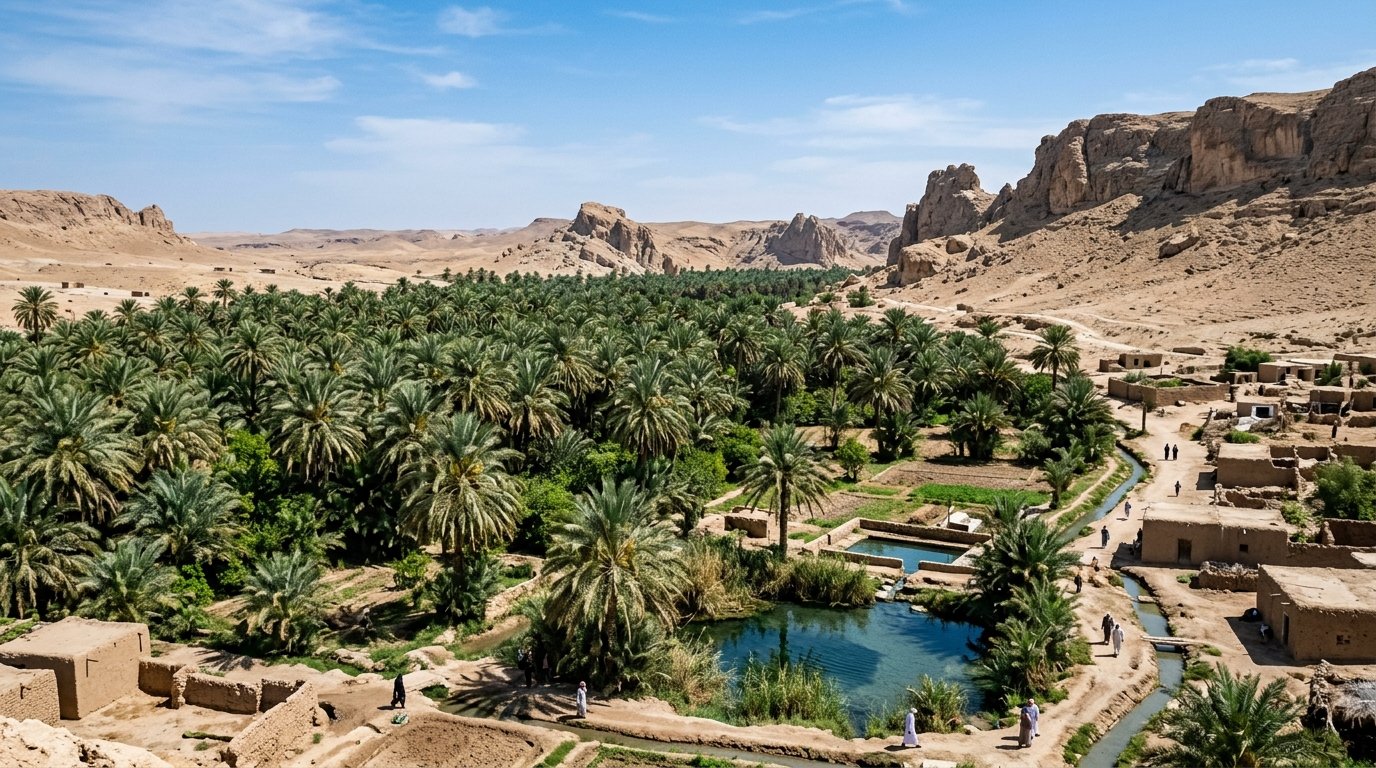
- Ayn al-Tamr Oasis (Shithatha): Situated about 25 kilometers west of the fortress, this historic desert oasis contains dense date palm groves and natural freshwater sulfur springs used for irrigation and bathing since antiquity.
- The Tar Caves (Kahf al-Tar): Positioned roughly 30 kilometers southwest of Karbala along the escarpment leading toward the fortress, this network of hundreds of human-carved rock chambers served as prehistoric shelters and Hellenistic-era burial tombs.
- Lake Razzaza (Bahr al-Milh): A vast shallow saline reservoir located north of the road between Karbala and Ayn al-Tamr, offering panoramic views across the desert wetlands.
Practical visitor tips and safety
- Site caretaker and admission: A local government caretaker manages the entrance gate. While standard admission policies vary, visitors should carry small cash in Iraqi Dinars (IQD) for tickets or customary gratuities. The caretaker holds keys to locked interior corridors and upper staircase towers and can guide you through the layout.
- Footwear and safety on site: The fortress contains many unlit passages, uneven stone floors, open drop-offs on the roof parapets, and unbarricaded stairwells. Wear sturdy walking shoes with good grip and carry a small flashlight or smartphone torch to navigate dark vaulted corridors safely.
- Water and provisions: There are no active cafes, convenience shops, or food stands at the ruins. Bring plenty of bottled water, sunscreen, a wide-brimmed hat, and snacks for the trip from Karbala.
- Photography: Standard personal cameras and smartphones are welcome throughout the complex. Drone photography requires explicit prior authorization from Iraqi security and antiquities authorities and is strictly prohibited without official permits.
- Respecting the site: Do not climb on crumbling wall crests or carve graffiti onto historic masonry. Al-Ukhaidir has stood for over twelve centuries, and preserving its brickwork depends on respectful visitor conduct.
Sources
- Wikipedia, "Al-Ukhaidir Fortress", https://en.wikipedia.org/wiki/Al-Ukhaidir_Fortress, accessed May 2026.
- Wikipedia (Arabic), "حصن الأخيضر" (Al-Ukhaidir Fortress), https://ar.wikipedia.org/wiki/%D8%AD%D8%B5%D9%86_%D8%A7%D9%84%D8%A3%D8%AE%D9%8A%D8%B6%D8%B1, accessed May 2026.
- Wikipedia, "Isa ibn Musa", https://en.wikipedia.org/wiki/Isa_ibn_Musa, accessed May 2026.
- Wikivoyage, "Karbala", https://en.wikivoyage.org/wiki/Karbala, accessed May 2026.
- Wikipedia, "Gertrude Bell", https://en.wikipedia.org/wiki/Gertrude_Bell, accessed May 2026.
❓Frequently Asked Questions
Here are answers to frequently asked questions about the content above
Al-Ukhaidir Fortress is located in the desert plateau of Ayn al-Tamr district in Karbala Governorate, approximately 50 kilometers southwest of Karbala and 190 kilometers southwest of Baghdad.
The fortress was built around 775 CE (158 AH) by Abbasid prince Isa ibn Musa, nephew of Caliph As-Saffah and former governor of Kufa, after he stepped aside from the caliphal succession.
Most visitors spend between 2 and 3 hours exploring the outer curtain walls, the grand audience iwan, the residential courtyards, the early palace mosque, and the rooftop ramparts.
The optimal period to visit is from late October through April, when daytime temperatures are mild and comfortable for walking across unshaded desert courtyards.
No. Al-Ukhaidir Fortress is an isolated archaeological site with no shops, restaurants, or running water amenities. Visitors must bring plenty of drinking water, sun protection, and cash from Karbala.
Yes. The site is a standard 45-to-60-minute drive from Karbala along Highway 22, making it an easy half-day excursion from Karbala or a full-day trip when traveling from Baghdad.