Alqosh is an ancient stone-built town on the northern rim of the Nineveh Plains, known for the cliffside Rabban Hormizd Monastery, the restored Tomb of Prophet Nahum, and centuries of living Syriac heritage.
Alqosh is an ancient stone-built town set against the rugged limestone cliffs of Mount Alqosh on the northern rim of the Nineveh Plains. Situated roughly 45 kilometers north of Mosul and 50 kilometers southeast of Duhok, the town has been continuously inhabited for thousands of years. It remains one of the primary cultural heartlands of Iraq's Assyrian and Chaldean Christian communities. Everyday life here is conducted in Suret, a living northeastern Neo-Aramaic dialect derived from the ancient languages of Mesopotamia.
Unlike modern urban centers in the region, Alqosh retains its historical vernacular architecture. Narrow limestone alleys wind beneath stone arches, leading past courtyard houses, century-old churches, and restored shrines. The surrounding mountain cliffs house ancient rock-cut monastic hermitages that overlook the agricultural fields below.
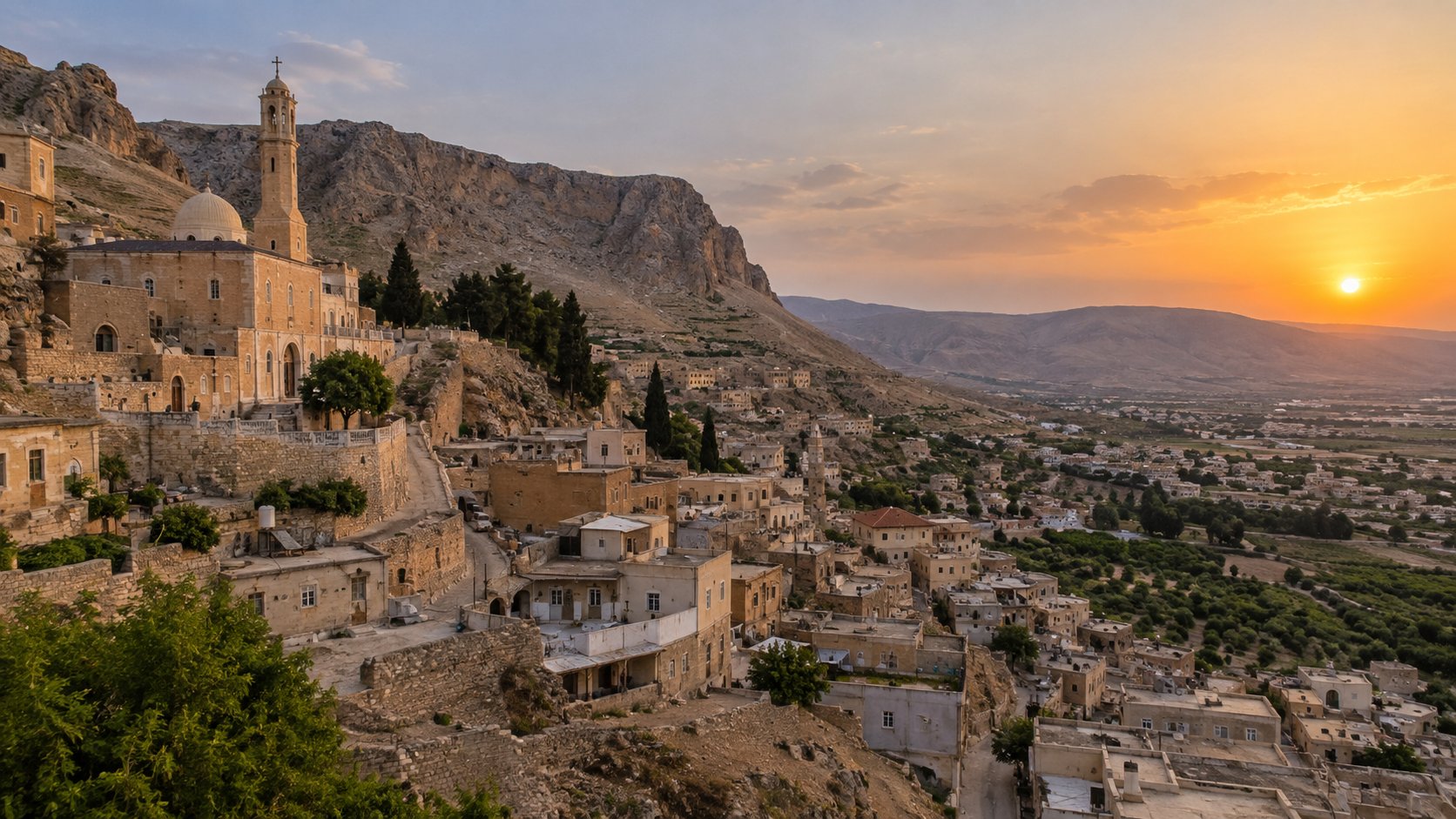
History and living heritage
Human settlement around Alqosh dates back to the Assyrian Empire. During the Iron Age, the fertile plain formed part of the regional kingdom of Qumāne before its integration into central Assyria, as documented in historical surveys recorded by Wikipedia's entry on Alqosh. Local traditions link the town's name to ancient roots meaning "God is my bow" or "the strong god."
Christianity established deep roots in Alqosh during the early centuries AD. Over the medieval and Ottoman periods, the town developed into a center for Syriac scholarship, calligraphy, and manuscript production. Monks and scribes from local families, notably the Homo family during the 18th and 19th centuries, transcribed, illuminated, and preserved extensive libraries of theological and philosophical texts, as highlighted by Mesopotamia Heritage.
Alqosh also served as the seat of the Church of the East patriarchs of the Eliya line between the 16th and 18th centuries. In 1553, Yohannan Sulaqa, abbot of the local monastery, entered communion with Rome, establishing the patriarchal succession of what became the Chaldean Catholic Church. Today, the town remains an active Chaldean parish network with an active diaspora maintaining strong ties to their ancestral homes.
The restored old quarter and folklore museum
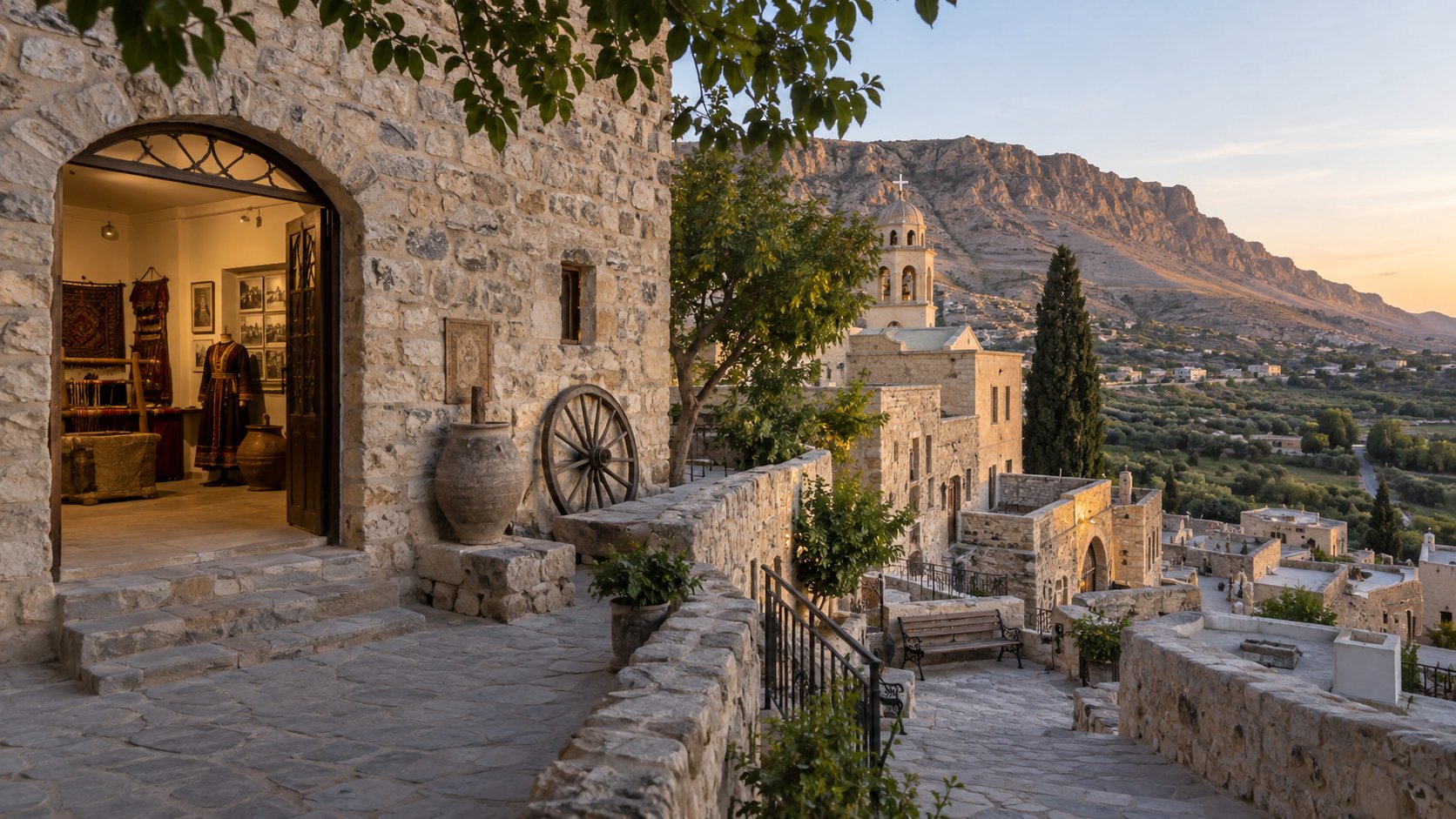
The historic core of Alqosh climbs gently up the foothills of Mount Alqosh. In 2018, a community-driven conservation campaign funded by local residents and diaspora communities in North America and Australia initiated extensive preservation work across the old village, as reported by Ard Al-Hani.
Walking through the old quarters reveals:
- Traditional limestone facades built with local golden quarry stone and lime mortar.
- Arched passageways designed to offer shade during high summer and wind breaks during winter.
- Carved stone lintels and decorative iron window lattices preserving 19th-century regional craftsmanship.
- The Alqosh Folklore Museum, which houses collections of traditional regional dress, agricultural implements, hand tools, household artifacts, and archival photographs documenting daily life across the Nineveh Plains over the past two centuries.
The tomb and synagogue of Prophet Nahum
At the northern edge of the old town stands the Shrine and Synagogue of Prophet Nahum, located at coordinates 36°44'18.0"N, 43°05'46.1"E, as recorded by Mesopotamia Heritage's architectural study. In biblical tradition, Nahum is the seventh of the twelve Minor Prophets, whose prophetic text opens with an oracle concerning the destruction of Nineveh.
For centuries, the shrine served as a major pilgrimage site for Iraqi Jewish communities, who traveled from Baghdad, Mosul, and Erbil to mark the festival of Shavuot. Historical accounts by 19th-century travelers, including Austen Henry Layard and George Percy Badger, described the veneration of the central draped tomb and the adjacent courtyard tomb of Nahum's sister, Sara.
When the Jewish community departed Iraq in the late 1940s, the keys were entrusted to local Chaldean neighbors, who guarded the complex for decades. Following serious structural deterioration, a major stabilization and restoration effort was conducted between 2018 and 2021 by the Alliance for the Restoration of Cultural Heritage (ARCH) and Czech conservation firm GEMA ART International. Engineers reinforced the foundations, rebuilt collapsed vaulting, insulated the roof, and preserved ancient Hebrew inscriptions on the stone pillars. Today, visitors can enter the peaceful restored courtyard and prayer hall.
Parish churches of the old town
Within the network of alleys lie two historic parish churches that anchor the spiritual life of the town:
Mar Mikha Church
Named after Saint Micah, a 4th-century disciple of Mar Awgin who introduced Syrian coenobitic monasticism to the region, this church sits at the center of the old town, according to Mesopotamia Heritage. The current stone sanctuary, rebuilt between 1876 and 1881, features a single nave terminated by a Royal Gate sculpted from gray-green Mosul marble. Inscriptions in Syriac at the base of the gate pillars mark the historical burial jars of Mar Mikha and relics associated with Prophet Nahum. In the adjacent courtyard stands the Mar Mikha parish school, completed in 1923.
Mar Giwargis Church
Situated near Mar Mikha, the Church of Saint George is the primary congregational church of Alqosh. Its whitewashed interior and stone bell tower overlook the central square, hosting regular Sunday liturgies and major holiday processions, notably the Palm Sunday and Easter walks that wind through the town streets.
Cliffside monasteries of Alqosh
Beyond the residential perimeter, two major monastic complexes define the religious geography of Alqosh:
Rabban Hormizd Monastery
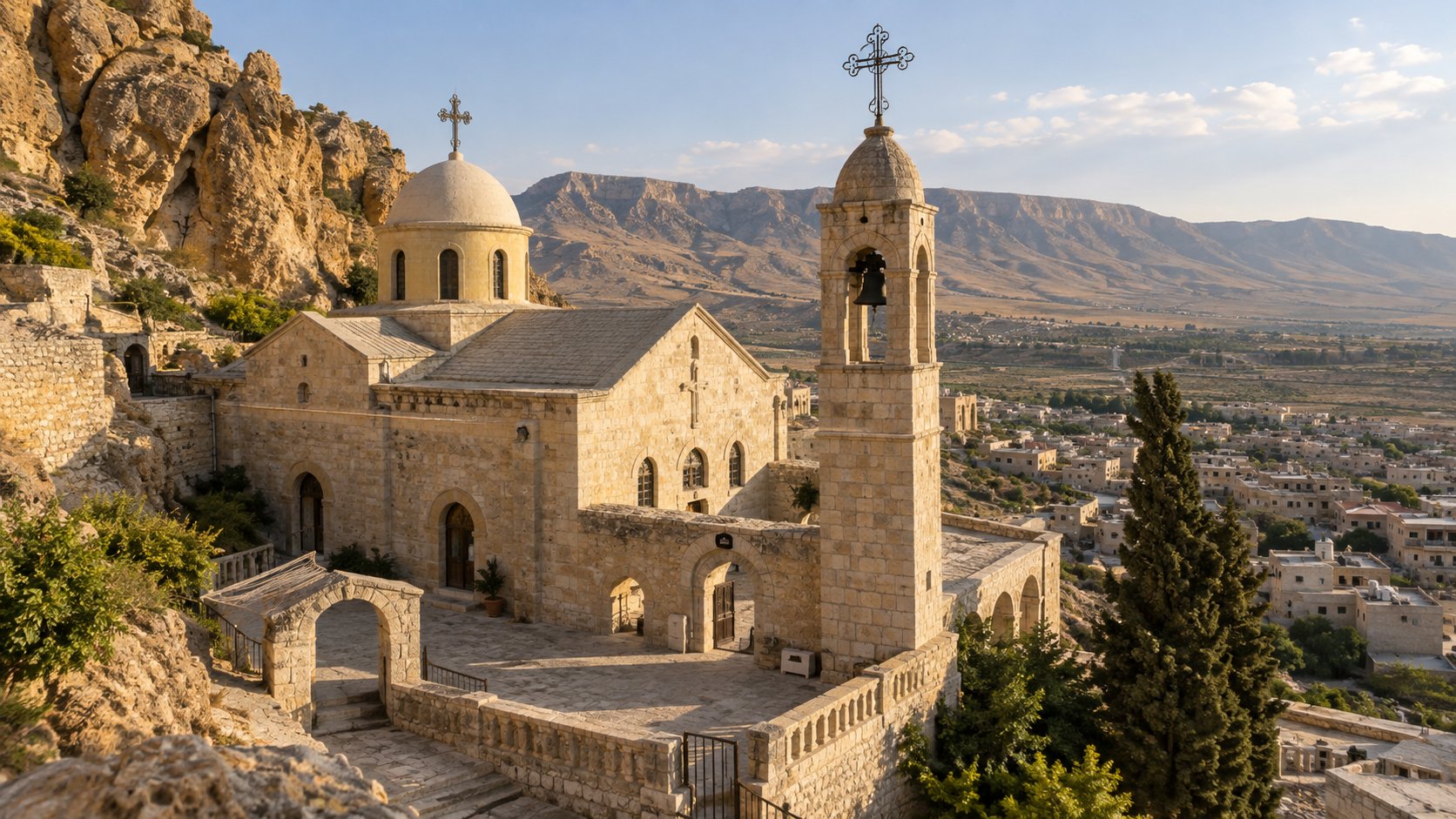
Carved directly into the limestone rock face of Mount Alqosh at an elevation of 815 meters, Rabban Hormizd Monastery sits two kilometers northeast of town. Founded around 640 AD by the Persian monk Rabban Hormizd, the site began as a network of natural hermit caves, detailed by Mesopotamia Heritage.
Key features include:
- More than forty rock-hewn hermit cells cut into the cliffside above the main terrace.
- The original cave church containing the founder's tomb chamber and early stone carvings.
- The patriarchal burial vault, which contains nine tombs of the Eliya line patriarchs who led the Church of the East between 1497 and 1804.
- Sweeping views across the agricultural expanse of the Nineveh Plains.
Visitors can reach the upper complex via a paved winding mountain road that ends at a parking platform, followed by a short stone flight of steps leading into the vaulted stone corridors.
Monastery of Our Lady of the Seeds (Deir Sayyidat al-Zuru')
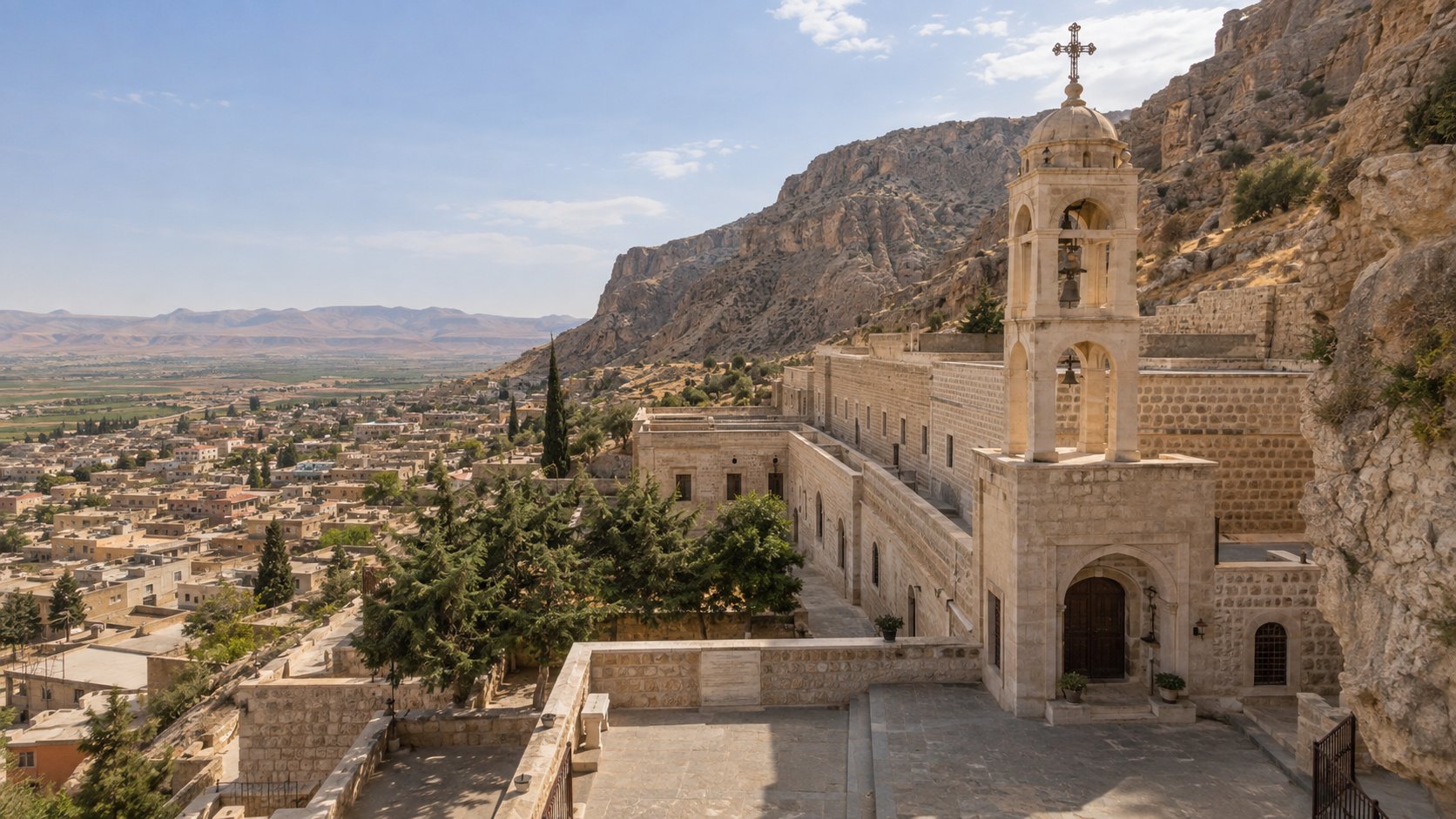
Located on the gentler slopes at the base of the mountain, this monastery was founded in 1858 by Chaldean Patriarch Joseph VI Audo, as detailed in Visit Iraq's northern heritage documentation. Built to provide a more accessible residence for the monastic brotherhood and protect hundreds of rare Syriac manuscripts from mountain dampness and raids, the compound includes a large walled courtyard, administrative quarters, a printing archive, and an active community chapel.
Mount Alqosh and hiking trails
The limestone mountain ridge rising immediately behind Alqosh, known locally as Turad-Alqush, reaches heights of over 1,000 meters. For hikers and outdoor enthusiasts, walking trails lead from the upper town into the rocky ravines.
Along the ridge, several caves have traditional Suret names, such as Kafa Smoqa (the Red Cave), Guppad-Maya (the Water Cave), and Guppa Mgurgma (the Thundering Cave), as noted in regional topographic surveys compiled by Kurdish History. The higher paths offer expansive vantage points across the northern Iraqi plains toward the Tigris river basin.
Practical travel details
Getting there and routes
- From Duhok: Alqosh is located approximately 50 kilometers southeast of Duhok. The drive takes about 45 to 50 minutes along the main highway via Faida and the Alqosh turnoff.
- From Erbil: The journey covers roughly 130 kilometers and takes 2 to 2.5 hours heading northwest via Shekhan and Baadre.
- From Mosul: Alqosh is 45 kilometers north of Mosul via the Tel Kaif road, taking about 45 minutes by car.
Checkpoints and access
Alqosh sits near the administrative boundary between the Kurdistan Region of Iraq (KRG) and Federal Nineveh Governorate.
- Travelers arriving from Duhok or Erbil generally pass through KRG security checkpoints. A standard passport and valid entry stamp or e-visa are required.
- If continuing south from Alqosh toward Mosul or southern Nineveh Plains towns like Qaraqosh, travelers cross into Federal Iraqi jurisdiction, which requires a valid Federal Iraq visa.
- Hiring a private driver with local route familiarity is the easiest and most reliable way to navigate checkpoints.
Best time to visit
- Spring (March to May): The most pleasant season, featuring green hillsides, blooming wildflowers, and comfortable daytime temperatures between 18°C and 25°C.
- Autumn (September to November): Excellent weather with clear skies and mild temperatures.
- Summer (June to August): Extremely hot and dry, with midday temperatures regularly exceeding 40°C. If visiting in summer, plan outdoor walking and monastery visits for early morning hours before 10:00 AM.
Visiting etiquette
- Modest dress covering shoulders and knees is expected when entering active churches, the Nahum shrine, and monasteries.
- Ask permission before taking photographs of church services, resident monks, or local families.
- The Tomb of Nahum and town churches are generally open during daytime hours, though caretakers may occasionally close doors during lunch hours or private services.
Sources
- Mesopotamia Heritage — "The Tomb of Prophet Nahum" https://www.mesopotamiaheritage.org/en/monuments/la-tombe-du-prophete-nahoum/ Accessed May 2026
- Mesopotamia Heritage — "The Church of Mar Mikha in Alqosh" https://www.mesopotamiaheritage.org/en/monuments/leglise-mar-miha-dalqosh/ Accessed May 2026
- Mesopotamia Heritage — "Rabban Hormizd Monastery" https://www.mesopotamiaheritage.org/en/monuments/le-monastere-de-rabban-hormizd/ Accessed May 2026
- GEMA ART International — "Prophet Nahum Shrine, Iraq" https://www.gemaart.com/en/salvation-of-the-prophet-nahum-shrine-iraq/ Accessed May 2026
- Ard Al-Hani — "Alqosh: The Eternal Assyrian Gem of the Nineveh Plains" https://ardalhani.com/destinations/alqosh Accessed May 2026
- Kurdish History — "Alqosh: An Ancient Town of the Nineveh Plains" https://www.kurdish-history.com/post/alqosh Accessed May 2026
- Wikipedia — "Alqosh" https://en.wikipedia.org/wiki/Alqosh Accessed May 2026
- Visit Iraq — "Christian Heritage in Northern Iraq: A Guide to Alqosh, Mar Mattai, and the Nineveh Plains" https://visit-iraq.com/en/blog/christian-heritage-in-northern-iraq-a-guide-to-alqosh-mar-mattai-and-the-nineveh Accessed May 2026
❓Frequently Asked Questions
Here are answers to frequently asked questions about the content above
Alqosh is located in the Tel Kaif District of the Nineveh Governorate in northern Iraq. It sits at the foot of Mount Alqosh, approximately 45 kilometers north of Mosul and 50 kilometers southeast of Duhok.
The top attractions in Alqosh include the cliffside 7th-century Rabban Hormizd Monastery, the restored Tomb and Synagogue of Prophet Nahum, the Monastery of Our Lady of the Seeds, the historic Mar Mikha Church, and the restored stone old quarter with its Folklore Museum.
Yes, following a full structural restoration completed in 2021 by ARCH International and GEMA ART, the Tomb of Prophet Nahum is open to visitors and pilgrims of all backgrounds.
Rabban Hormizd Monastery sits two kilometers northeast of town up on the mountain ridge. You can drive up a paved winding road to the upper parking platform, then take a short stone staircase into the cliffside complex.
The primary language spoken in Alqosh is Suret, a northeastern Neo-Aramaic dialect derived from ancient Aramaic. Arabic and Kurdish are also widely understood.
Travelers arriving from Duhok or Erbil pass through regional checkpoints where a valid passport and entry visa are checked. If continuing south toward Mosul or central Iraq, a Federal Iraqi visa is required.