Northern Iraq holds some of the oldest Christian communities and monastic complexes in the world. This guide covers key historical landmarks across the Nineveh Plains, including Mar Mattai Monastery, the cliffside sanctuary of Rabban Hormizd, and the historic town of Alqosh, with practical notes on travel routes, checkpoints, and site etiquette.
The living heritage of the Nineveh Plains
Christianity in northern Iraq dates back to the first century AD, when apostolic figures according to local tradition introduced the faith to Upper Mesopotamia. The Nineveh Plains, an agricultural basin lying immediately north and east of Mosul in the Nineveh Governorate, remain the historical homeland of Iraq's Syriac, Chaldean, and Assyrian Christian communities, as documented by Wikipedia's Nineveh Plains overview.
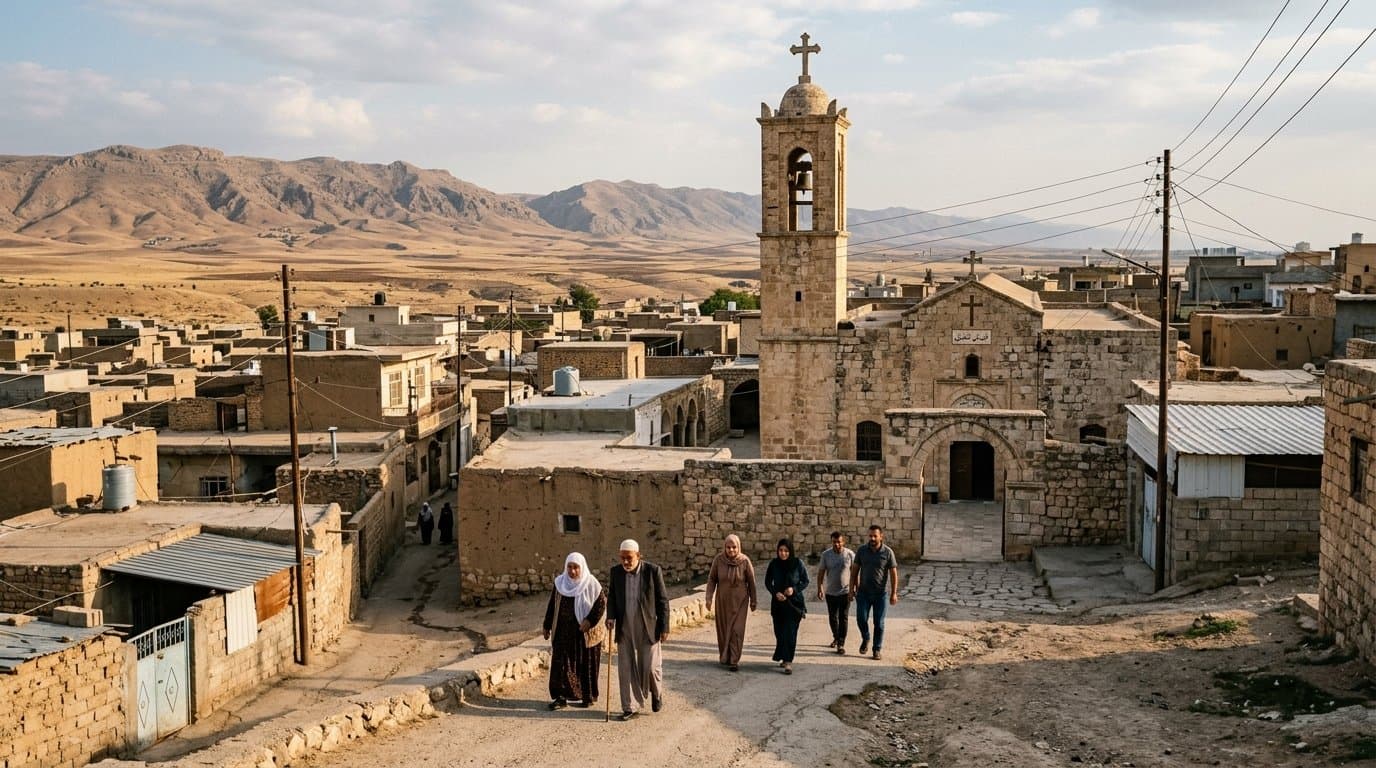
Many local residents speak dialects of Suret, a modern form of Northeastern Neo-Aramaic rooted in the classical language of the ancient Near East. Over centuries, these communities built fortified mountain monasteries, village parish churches, and libraries filled with illuminated manuscripts. Today, several of these active pilgrimage destinations welcome independent travelers and organized tours who want to learn about Mesopotamian history firsthand.
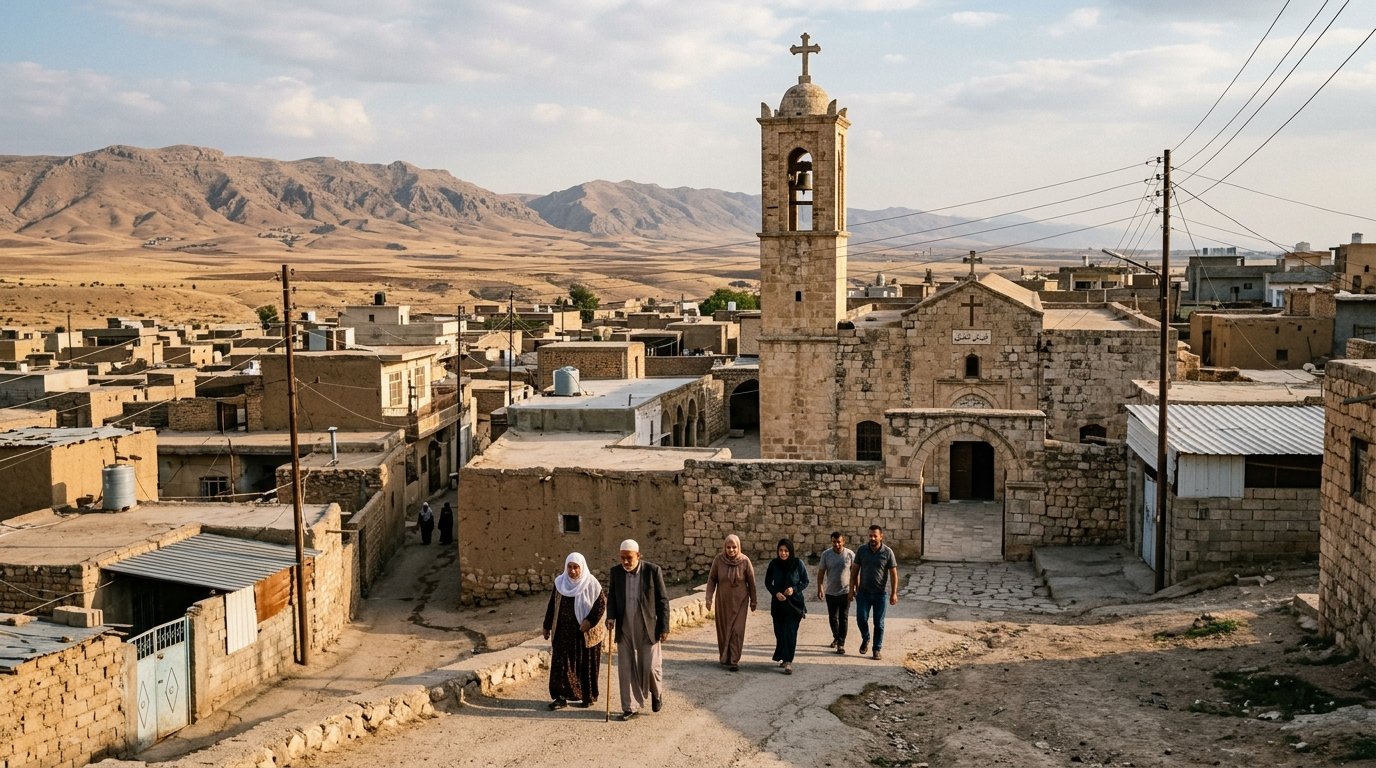
Mar Mattai Monastery on Mount Alfaf
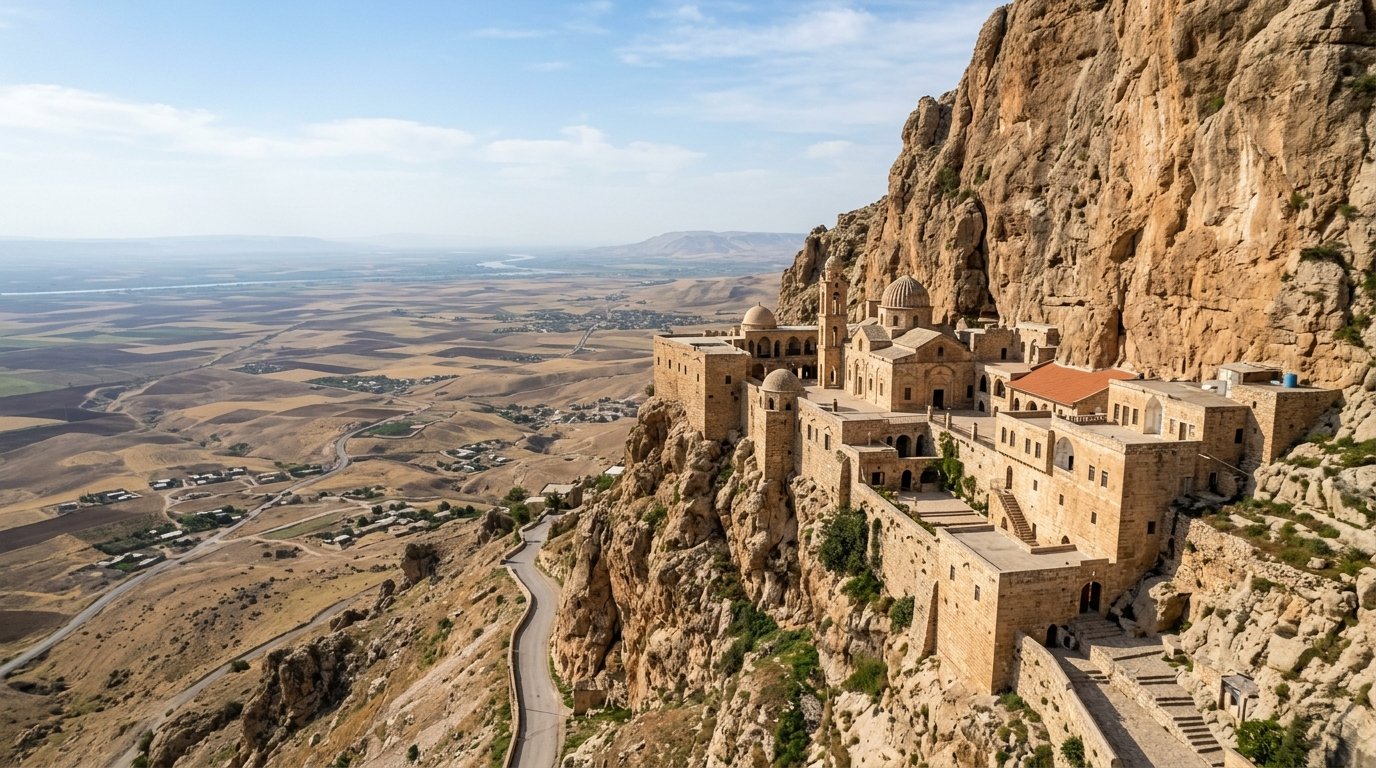
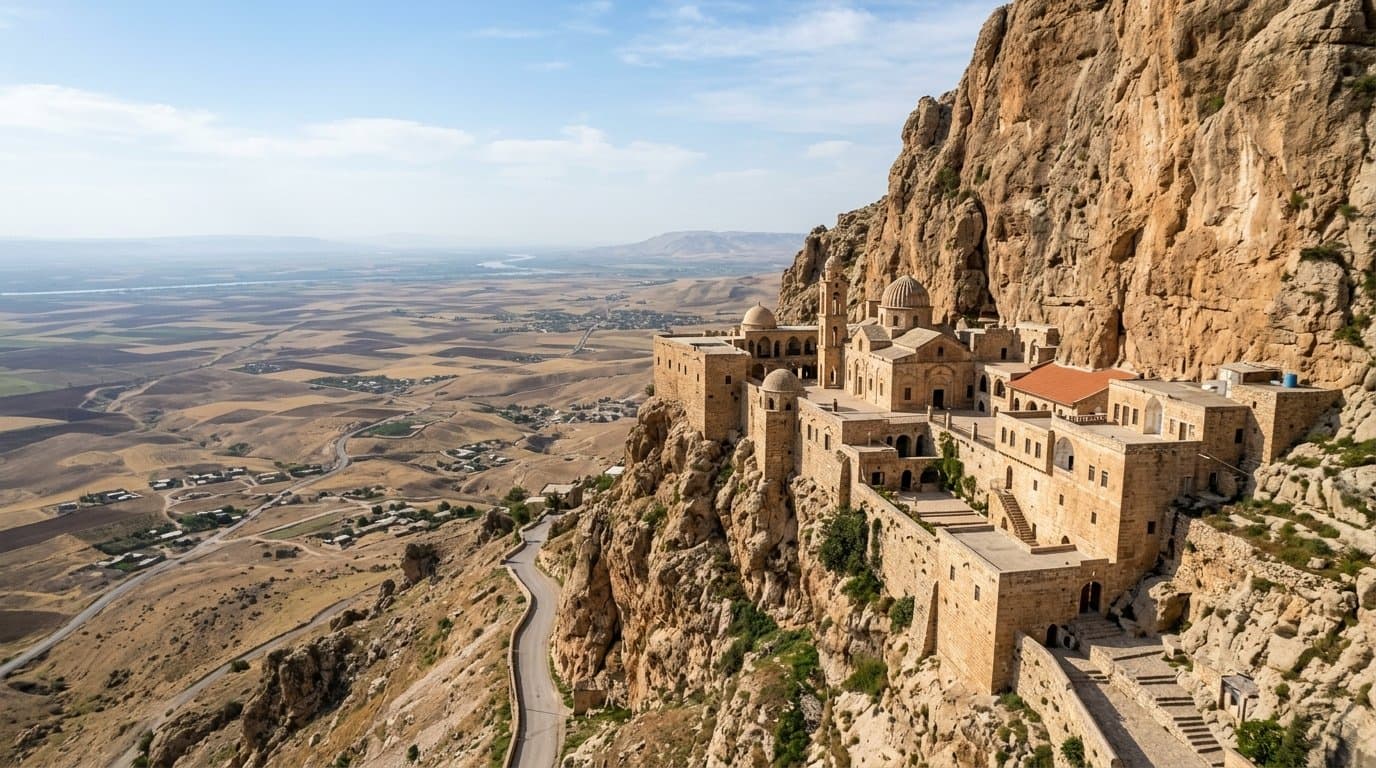
Founded in 363 AD, Mar Mattai Monastery is one of the oldest operating Christian monastic settlements in the world. The monastery sits perched on the south face of Mount Alfaf, also called Mount Maqlub, approximately 20 kilometers northeast of Mosul, as noted in the Wikipedia entry for Mor Mattai Monastery.
According to Syriac Orthodox church tradition, a hermit monk named Mor Mattai fled Roman persecution in Amid under Emperor Julian the Apostate. He established a hermitage among the natural limestone caves of Mount Alfaf with twenty-five companions. The complex expanded after Mattai healed Sarah, the sister of Prince Behnam, leading to their conversion and the subsequent construction of a larger stone sanctuary by their father, King Sinharib.
Mar Mattai Monastery remains an active archbishopric of the Syriac Orthodox Church, overseen by Mor Timothius Mousa Alshamany. When you arrive via the winding mountain road, several key areas are accessible to visitors:
- The Main Church of St. Matthew. This stone hall houses the tomb of Mor Mattai beneath the altar, along with burial vaults of historic maphrians and church leaders who administered eastern dioceses during the medieval era.
- The ancient manuscript library. While major fires and historic raids reduced the collection, the library still preserves more than 200 rare Syriac manuscripts, including a New Testament manuscript copied in 1222 AD, as recorded by Kurdistan Trips in their Mar Mattai guide.
- Hermit caves and cliff terraces. The limestone cliffs surrounding the main compound contain dozens of carved rock cells where monks lived in solitude. The upper terraces look directly south over the vast expanse of the Nineveh Plains toward the Tigris basin.
Every year on September 18, local families and international pilgrims gather at the site to celebrate the feast day of Mar Mattai.
Alqosh and the cliffside monastery of Rabban Hormizd
Alqosh is an ancient Assyrian town situated 45 kilometers north of Mosul at the foot of the Nineveh mountains. The town has been continuously inhabited for thousands of years and is a center of the Chaldean Catholic Church, according to Wikipedia's records on Alqosh.
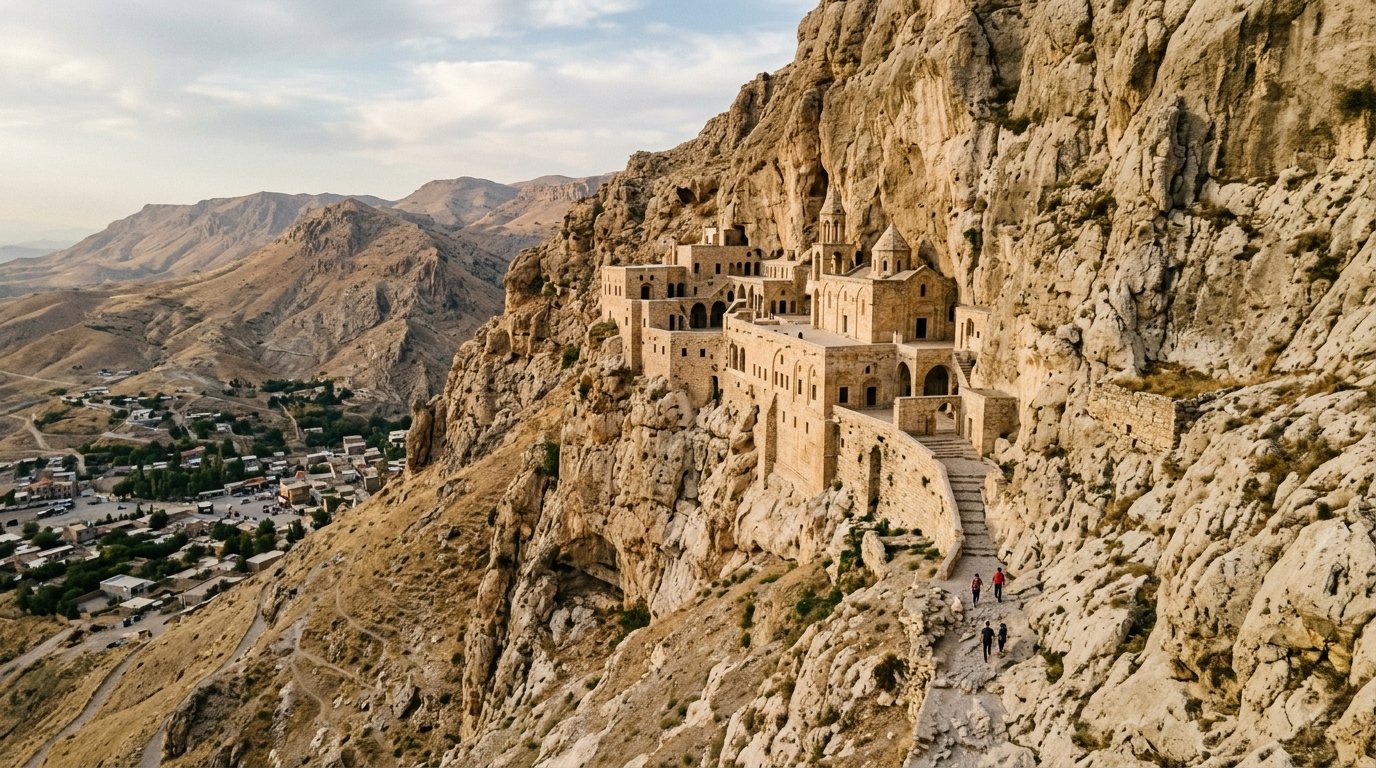
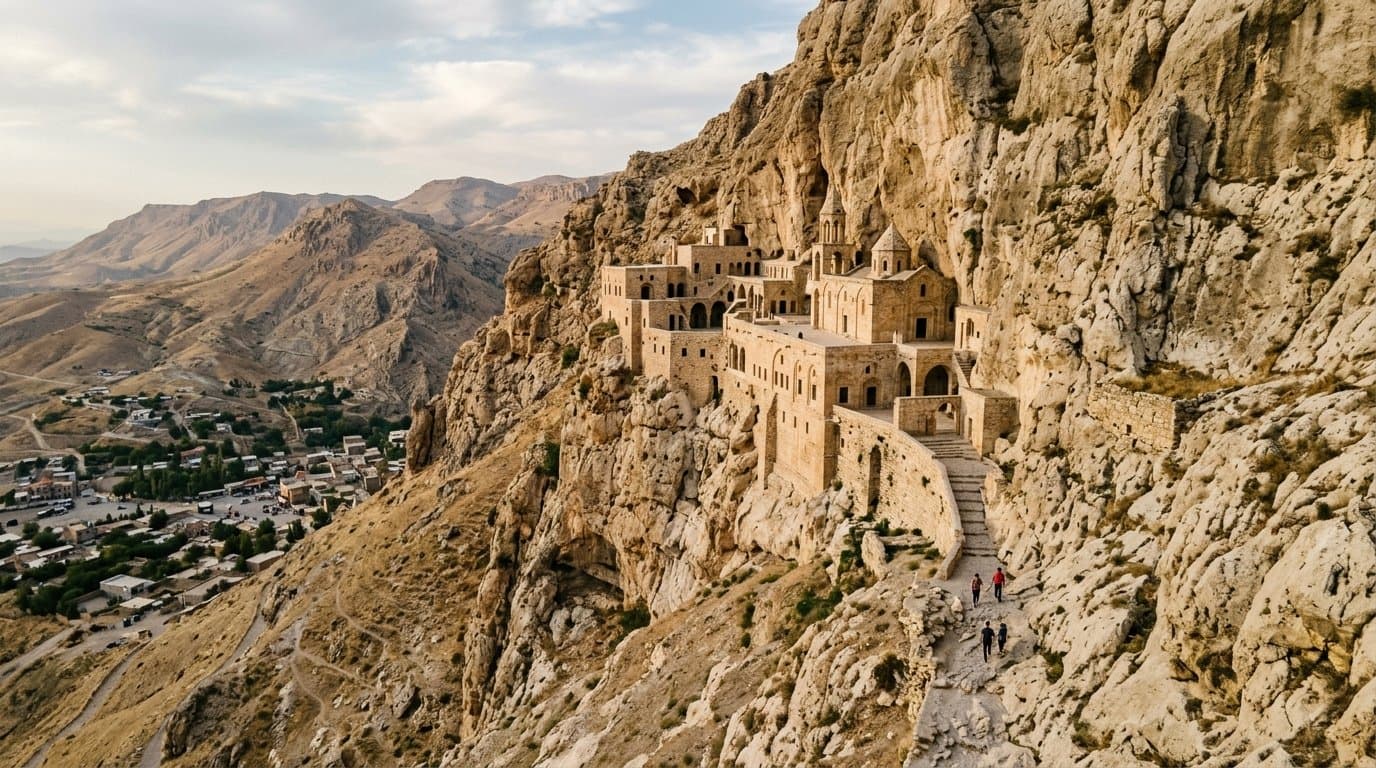
Two kilometers northeast of the town center, carved directly into a sheer rock face 815 meters above sea level, sits Rabban Hormizd Monastery. As documented by the heritage organization Mesopotamia Heritage, the sanctuary was founded around 640 AD by Rabban Hormizd, a monk from Beth Lapat who lived as a hermit in the surrounding caves.
Rabban Hormizd Monastery played a central role in the history of Eastern Christianity. Between the late 15th and 18th centuries, the monastery served as the official seat of patriarchs of the Church of the East. In 1553, the monastery abbot Yohannan Sulaqa traveled to Rome and was confirmed by Pope Julius III, leading to the creation of the Chaldean Catholic Church. Nine patriarchal tombs dating between 1497 and 1804 remain visible inside the rock corridor leading to the founder's original cell, details corroborated by Ard Al-Hani's travel guide to Rabban Hormizd.
Visitors can walk up the stone staircase from the parking area to explore the 7th-century church, the tomb of Rabban Hormizd, and over forty hermit cells cut into the cliffs. In the valley below the mountain sits Notre-Dame des Semences, also called the Monastery of Our Lady of the Seeds, built in 1859 to provide a more accessible residential convent and seminary for the monastic order, as noted by Adventures of Nicole.
The Tomb of the Prophet Nahum in Alqosh
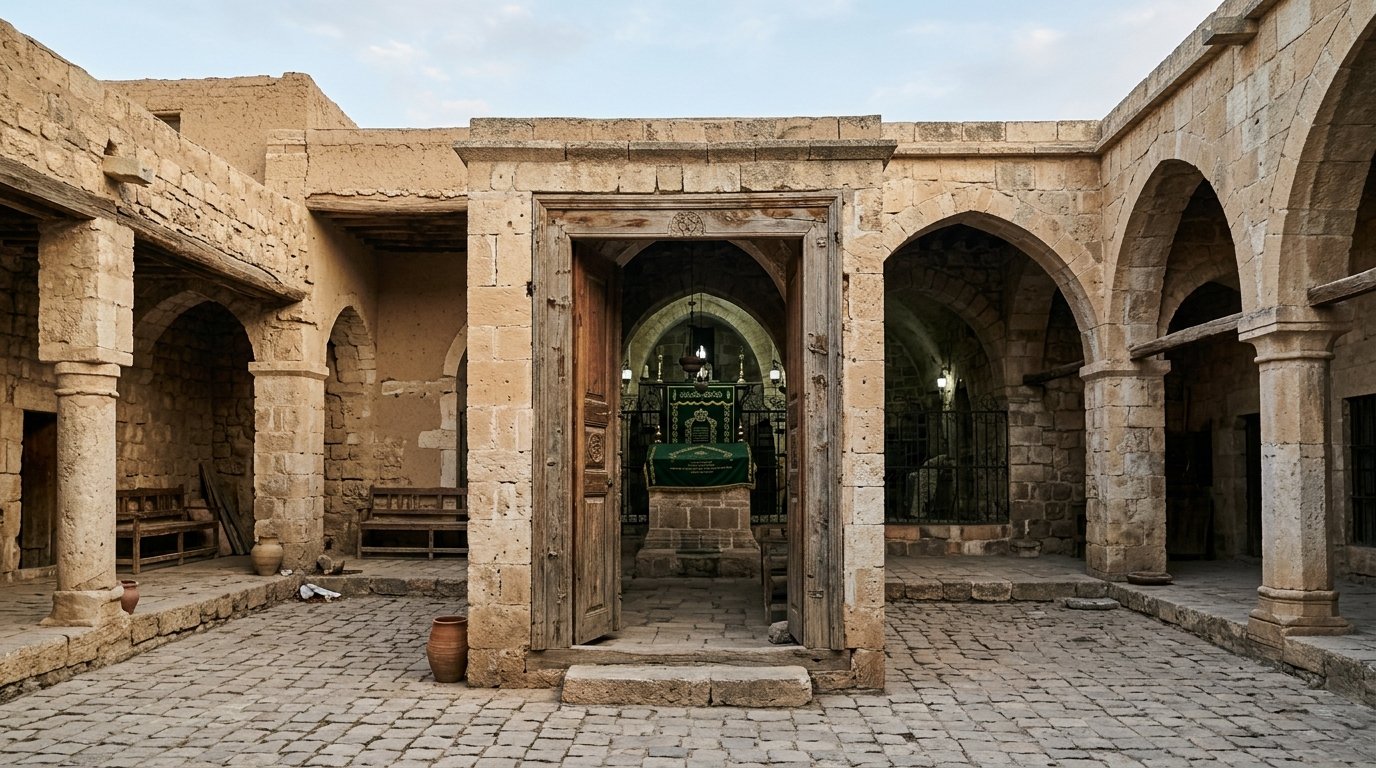
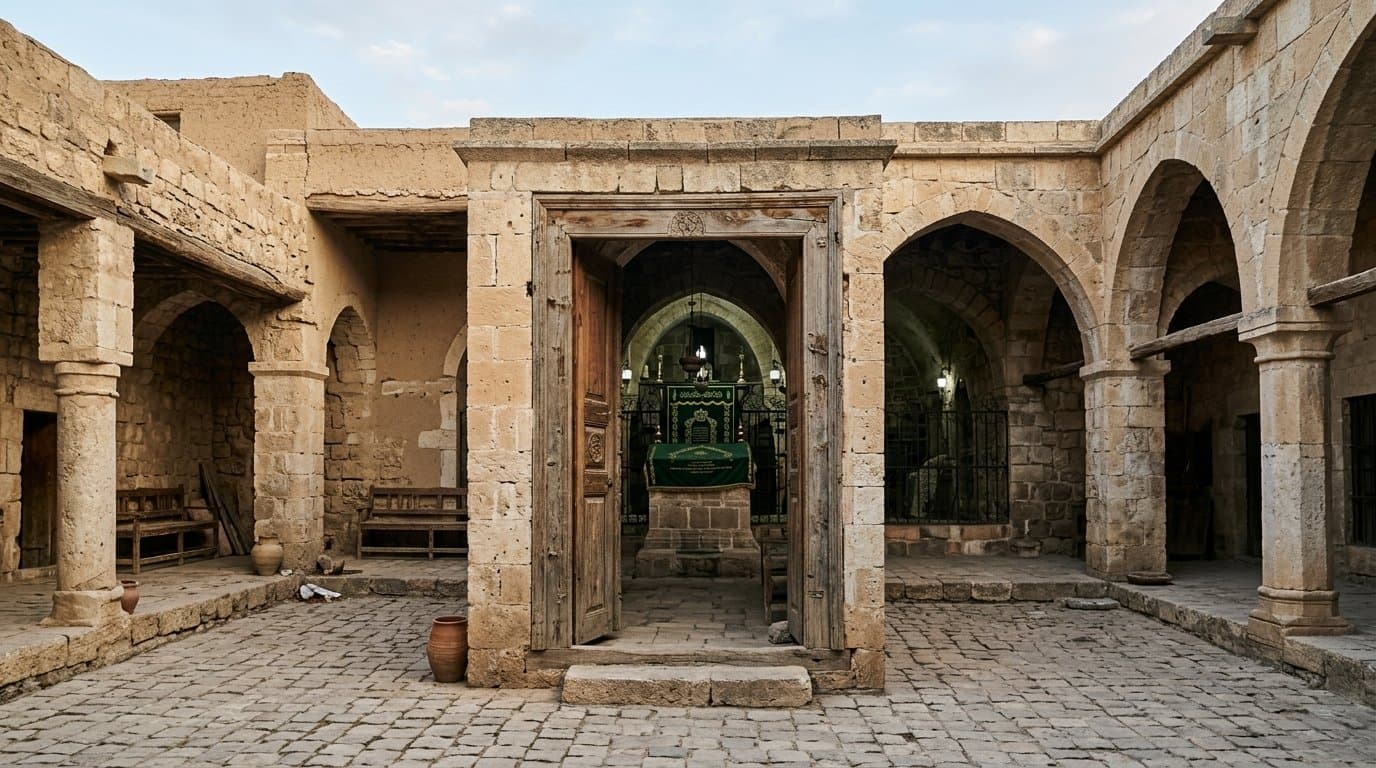
Within the old quarter of Alqosh stands the historic Shrine and Synagogue of Nahum, honoring the Old Testament minor prophet whose biblical book opens with an oracle concerning Nineveh. According to local historical accounts described on Wikipedia's Tomb of Nahum page, the site served as an annual pilgrimage destination for Iraqi Jewish communities during Shavuot for centuries.
Following the departure of Iraq's Jewish population in the late 1940s, local Chaldean Catholic families in Alqosh protected the keys and maintained the building. After years of structural decay, international heritage organizations including ARCH International and conservation specialists completed a full structural stabilization and restoration of the stone synagogue and tomb between 2018 and 2020. Today, travelers can visit the restored courtyard, prayer hall, and central tomb marker with permission from the local caretakers.
Other Christian landmarks in the Nineveh Plains
Beyond Mar Mattai and Alqosh, the wider Nineveh Plains contain several other important towns and historic monuments:
- Qaraqosh (Bakhdida / Al-Hamdaniya). Located 32 kilometers southeast of Mosul, Qaraqosh is the largest Christian city in Iraq, as detailed in Wikipedia's entry on Bakhdida. Its central landmark is the Great Church of the Immaculate Conception, known locally as Al-Tahira. Extensively rebuilt and restored following heavy damage between 2014 and 2016, the cathedral hosted Pope Francis during his historic papal visit to Iraq in March 2021.
- Mar Behnam Monastery (Khidr Ilyas). Situated near Bakhdida, this 4th-century Syriac Catholic monastery features stone carvings, decorative Aramaic inscriptions, and 13th-century Uighur-Mongol Christian pilgrim inscriptions, as documented by Wikipedia's Mar Behnam Monastery guide. The tomb complex underwent extensive reconstruction work completed in late 2018.
- Karamles and Bartella. These ancient towns between Erbil and Mosul contain historic churches, including Mar Addai in Karamles and Mart Shmoni in Bartella, where local parishes hold services in Syriac and Arabic.
Planning your visit: routes, checkpoints, and practical advice
Visiting the monasteries and historic towns of northern Iraq requires advance planning, particularly regarding transport and security checkpoints:
- Base of travel. Most travelers visit Alqosh and Mar Mattai as day trips from Erbil or Dohuk in the Kurdistan Region of Iraq, or combine them with a broader itinerary including Mosul.
- Checkpoints and entry rules. The Nineveh Plains lie at the administrative intersection of the Kurdistan Regional Government (KRG) and Federal Iraqi security zones. Alqosh is typically accessed through KRG-administered checkpoints from Dohuk or Erbil. However, travel south toward Bakhdida, Mar Behnam, or Mosul crosses into Federal Iraqi jurisdiction, which requires a valid Federal Iraq visa or e-visa rather than a KRG-only entry stamp.
- Transport. Public transit between isolated monastic sites does not operate on fixed schedules. Hiring a private driver with local route experience from Erbil, Dohuk, or Mosul is the most reliable way to navigate checkpoints and rural roads.
- Timing and climate. Spring from March to May brings mild temperatures and green hills across northern Nineveh. Autumn from September to November is equally pleasant. Summers from June to August are dry and hot, with daytime temperatures often exceeding 40 degrees Celsius.
- Etiquette and dress. When entering active churches and monasteries, dress modestly by covering shoulders and knees. Photography is generally permitted in courtyards, but ask permission before photographing church interiors, monks, or local residents during prayer.
Sources
-
Wikipedia — "Mor Mattai Monastery"
https://en.wikipedia.org/wiki/Mor_Mattai_Monastery
Accessed April 2025 -
Mesopotamia Heritage — "Rabban Hormizd Monastery"
https://www.mesopotamiaheritage.org/en/monuments/le-monastere-de-rabban-hormizd/
Accessed April 2025 -
Wikipedia — "Alqosh"
https://en.wikipedia.org/wiki/Alqosh
Accessed April 2025 -
Wikipedia — "Nahum" (Tomb of Nahum)
https://en.wikipedia.org/wiki/Tomb_of_Nahum
Accessed April 2025 -
Wikipedia — "Nineveh Plains"
https://en.wikipedia.org/wiki/Nineveh_Plains
Accessed April 2025 -
Wikipedia — "Mar Behnam Monastery"
https://en.wikipedia.org/wiki/Mar_Behnam_Monastery
Accessed April 2025 -
Wikipedia — "Qaraqosh" (Bakhdida)
https://en.wikipedia.org/wiki/Bakhdida
Accessed April 2025 -
Kurdistan Trips — "Explore Mar Mattai Monastery"
https://kurdistantrips.com/mar-mattai-monastery
Accessed April 2025 -
Ard Al-Hani — "Rabban Hormizd Monastery: The Mountain-Carved Crown of Iraqi Christianity"
https://ardalhani.com/destinations/rabban-hormizd-monastery
Accessed April 2025 -
Adventures of Nicole — "Rabban Hormizd Monastery in Alqosh"
https://adventuresoflilnicki.com/rabban-hormizd-monastery-alqosh-iraqi-kurdistan/
Accessed April 2025
Gallery
❓Frequently Asked Questions
Here are answers to frequently asked questions about the content above
Yes. Both Mar Mattai and Rabban Hormizd welcome independent travelers, pilgrims, and guided tour groups. Visitors should dress modestly and respect active prayer hours.
Traveling solely to Alqosh from Erbil or Dohuk typically passes through Kurdish-controlled checkpoints. However, visiting Qaraqosh, Mar Behnam, or Mosul crosses into Federal Iraqi jurisdiction, which requires a standard Federal Iraq visa or e-visa.
Mar Mattai Monastery was established in 363 AD by Mor Mattai the Hermit, making it one of the oldest operating Christian monasteries in the world.
Yes. Following an international restoration project completed between 2018 and 2020, the historic synagogue and tomb compound in Alqosh is stabilized and open to visitors.
Hiring a private car with a local driver from Erbil, Dohuk, or Mosul is the most practical way to reach these sites, as public transport between remote monasteries is limited.
Most local residents speak Suret (Northeastern Neo-Aramaic), alongside Arabic and Kurdish. Classical Syriac is used for liturgical texts and church hymns.