Explore the Ezekiel shrine at Al-Kifl, Ezra’s tomb at Al-Uzair, and the meaning of Mandaean baptism—with guidance for respectful visits.
Jewish and multifaith heritage in Southern Iraq
Southern Iraq's river towns hold sites connected to Jewish, Muslim and Mandaean history. They are not interchangeable attractions, and some are not open to casual visitors. Learn what each place means, ask before photographing people, and confirm access before travelling.
This guide covers the shrine associated with Ezekiel at Al-Kifl, the shrine traditionally identified as Ezra's tomb at Al-Uzair, and Mandaean river baptism. The first two are shrines. Baptism is a living religious practice, not a spectacle for visitors.
Al-Kifl and the shrine of Ezekiel
Al-Kifl lies south of Baghdad, between Hillah and Najaf. Its historic complex includes the shrine associated with the prophet Ezekiel, a mosque, a minaret and former khans, or caravanserais. The site is also known by its Islamic name, Dhu al-Kifl. The link between Ezekiel and the tomb belongs to religious tradition; it is not a confirmed historical identification.
Archnet's architectural record says the site began as a Jewish pilgrimage place. It describes a transfer of guardianship to the Ilkhanid ruler Uljaytu in 1316, followed by the construction of a mosque and minaret. A Jewish benefactor restored the shrine in the early nineteenth century, according to the record. Archnet's account describes the brick shrine, its muqarnas dome and the surrounding complex.
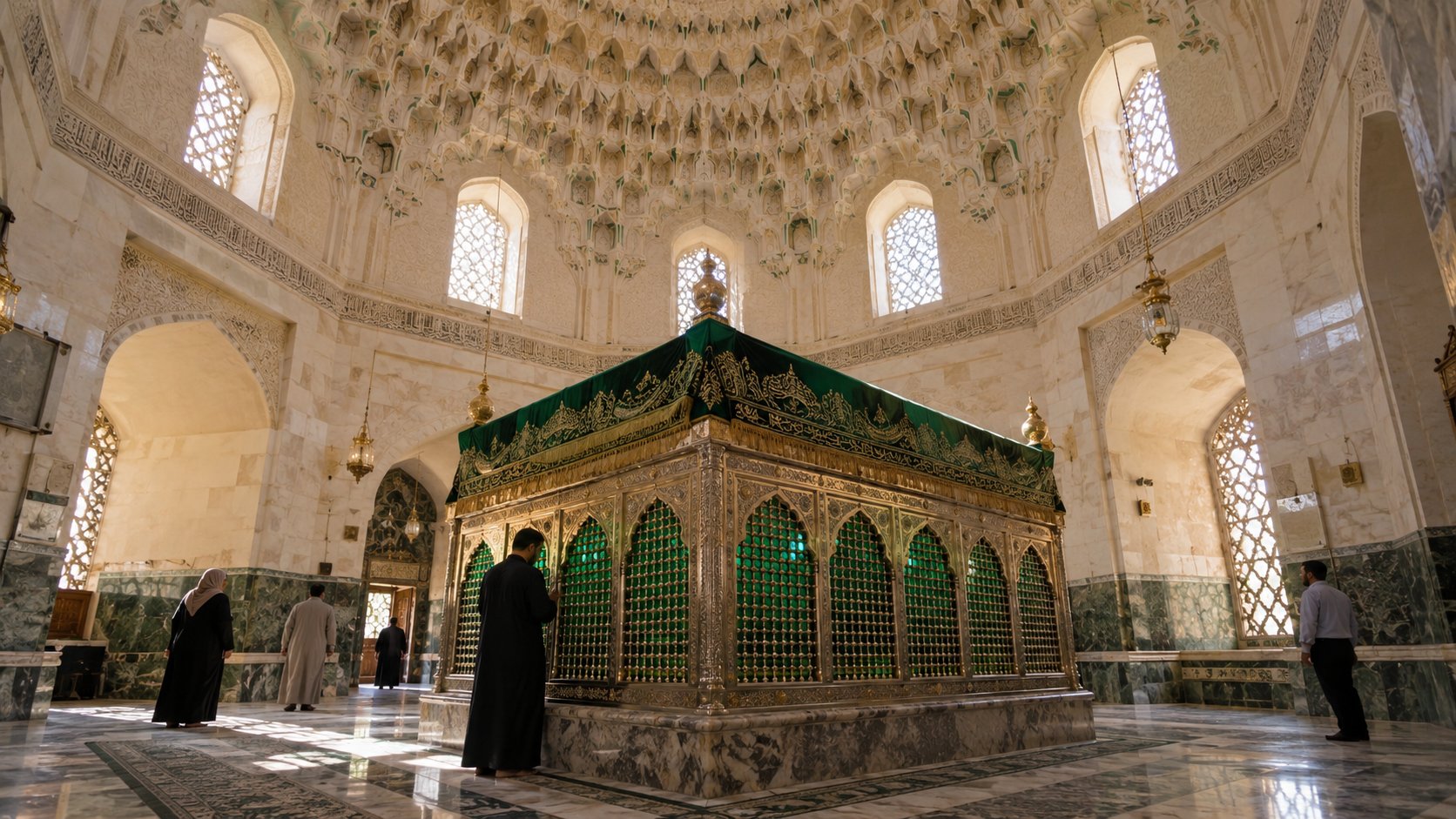
The tomb chamber's dome has layered muqarnas, a form of ornamental vaulting. Archnet notes that four windows light the chamber. Follow site staff's instructions, dress modestly and keep your voice low. Do not assume every room is open to visitors.
Ezra's tomb at Al-Uzair
Al-Uzair is a settlement beside the Tigris in Maysan Governorate. A shrine there is traditionally identified as the tomb of Ezra, or Uzair. It is described as both a Jewish shrine and a Shi'a Muslim mosque. This is a local religious identification, not a confirmed burial place. The site record places it on the river's western bank and notes its associations with both faiths.
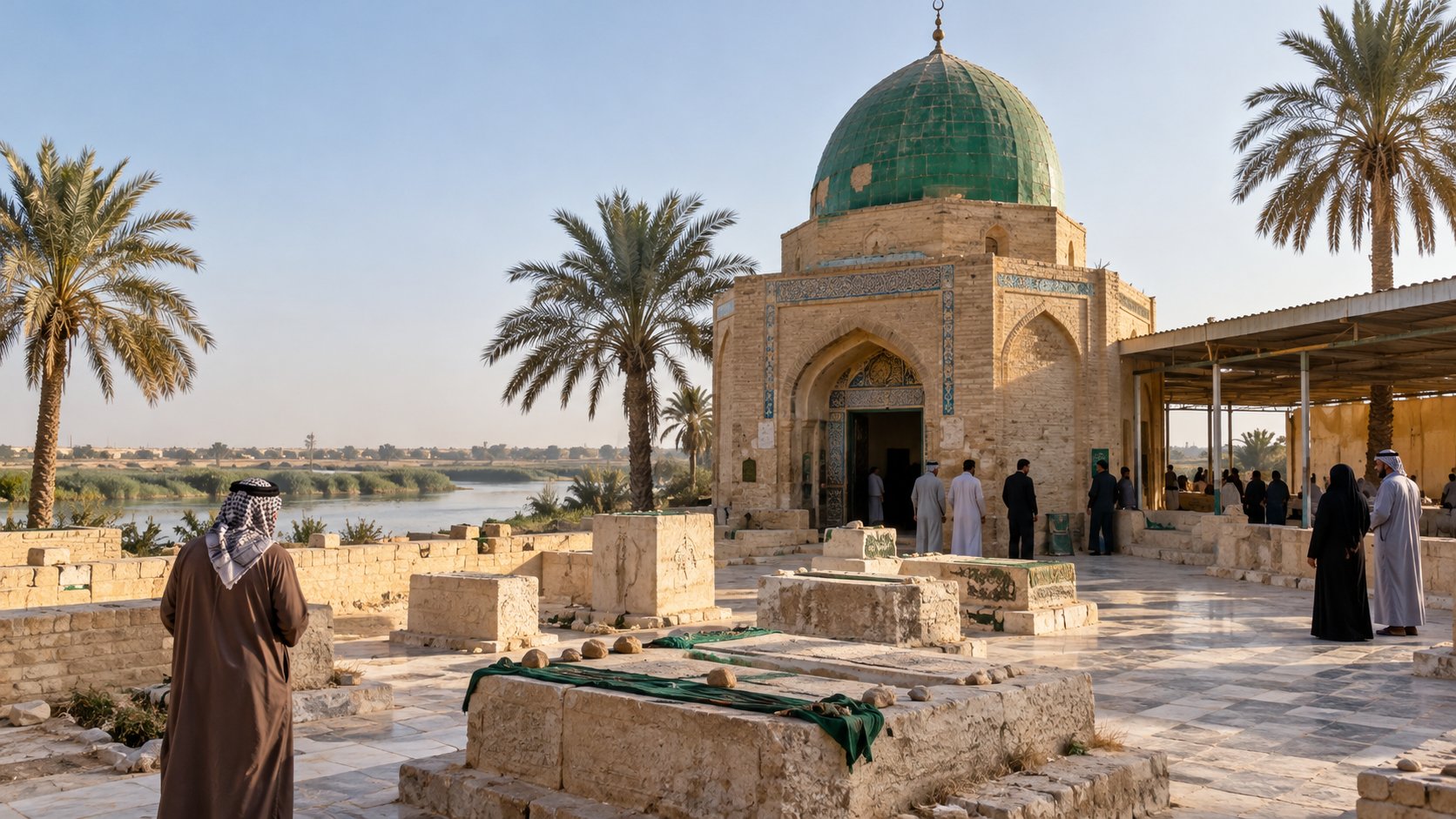
Ask before taking photographs, especially near prayer or graves. Al-Uzair is outside the main visitor circuit, so arrange transport and confirm access with a trusted local contact. Do not rely on old travel descriptions for current conditions.
Mandaean baptism and the rivers of the south
Mandaeans are a small religious community with a long history in southern Iraq and Iran. Rivers have a central place in Mandaean religious life. The University of Exeter's project, The Worlds of Mandaean Priests, describes the community's historic ties to the waterways of southern Iraq and Khuzestan. It also notes the dispersal of Iraqi Mandaeans after 2003. Read the Exeter project overview.
Baptism is a repeated Mandaean ritual. A report by The World describes Mandaeans gathering for river baptism and explains its importance to participants. The report follows a community in the United States, not a visitor site in Iraq, but it offers context for the practice. The World: “These Iraqi immigrants revere John the Baptist, but they're not Christians”.
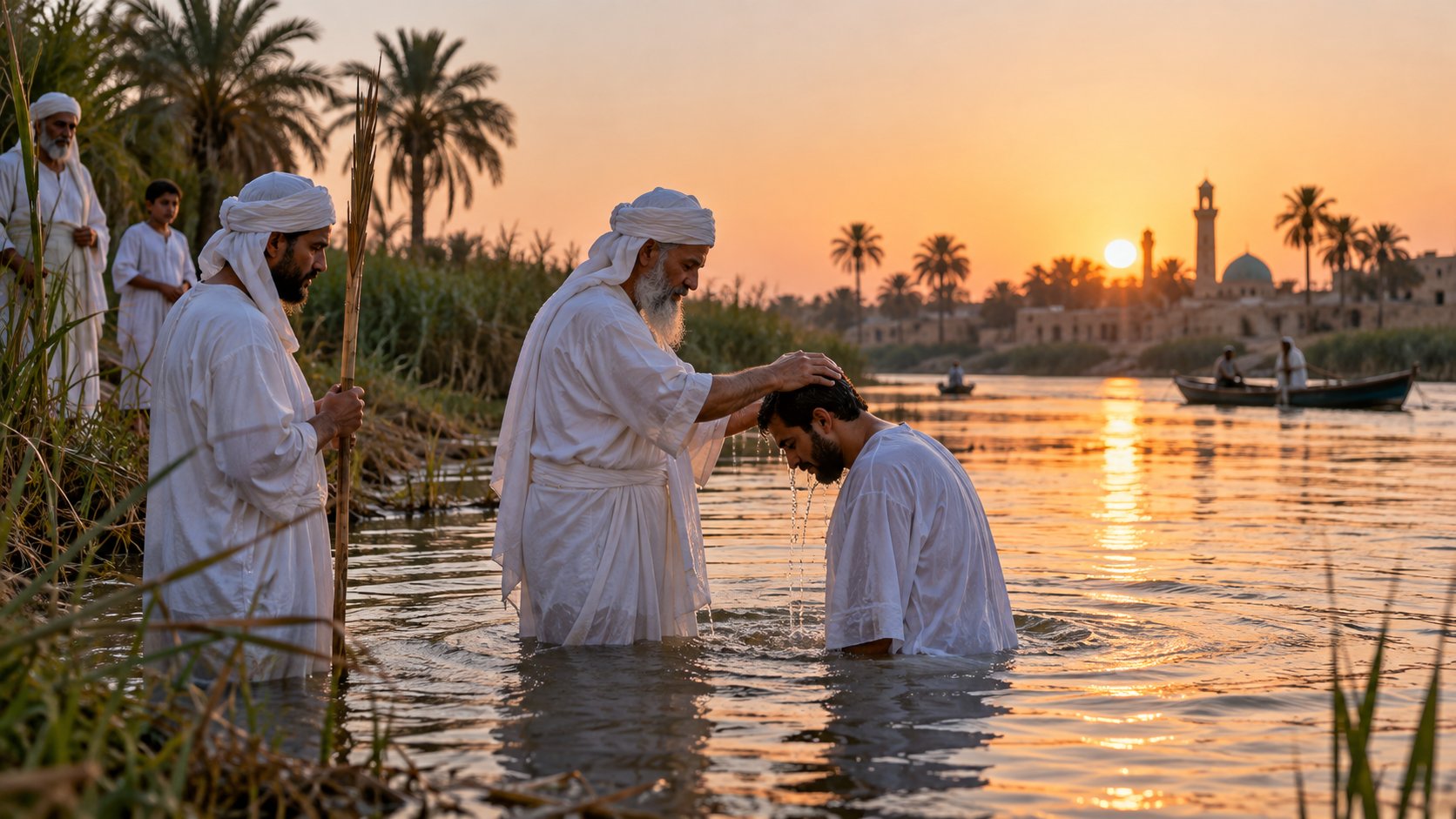
Do not seek out a baptism to watch. Mandaean communities may hold ceremonies at waterways, but locations and access depend on the community and local conditions. Attend only if Mandaeans or their representatives invite you. Follow their guidance, ask before recording, and respect a refusal.
Planning a respectful visit
Al-Kifl and Al-Uzair are shrines with active religious meaning. Mandaean baptism is a community ritual. Contact local guides or community representatives before making plans. Check security and access requirements shortly before travel. The sources cited here describe heritage and religious context, not current access or safety.
Wear modest clothing and ask before photographing people, interiors or ceremonies. Do not touch tombs, ritual objects or offerings unless invited. Treat each visit as a chance to learn, not as a photo opportunity.
FAQs
Sources
- Archnet, “Darih Dhi al-Kifl,” https://www.archnet.org/sites/3843 (accessed June 4, 2025).
- Wikipedia, “Ezra's Tomb,” https://en.wikipedia.org/wiki/Ezra%27s_Tomb (accessed June 4, 2025).
- University of Exeter, The Worlds of Mandaean Priests, “The Mandaeans,” https://mandaeanpriests.exeter.ac.uk/the-mandaeans (accessed June 4, 2025).
- The World from PRX, Matthew Bell, “These Iraqi immigrants revere John the Baptist, but they're not Christians,” https://theworld.org/stories/2016/10/05/these-iraqi-immigrants-worship-john-baptist-theyre-not-christians (accessed June 4, 2025).
❓Frequently Asked Questions
Here are answers to frequently asked questions about the content above
It is in Al-Kifl, south of Baghdad, in a historic complex that also includes a mosque, minaret and former caravanserais.
No. Archnet describes it as a former Jewish pilgrimage place that later became part of a Muslim religious complex. The site is associated with Ezekiel, also called Dhu al-Kifl in Islamic tradition.
The shrine traditionally identified with Ezra is in Al-Uzair, in Maysan Governorate, beside the Tigris River.
Do not attend unless Mandaeans or their representatives invite you. Baptism is a religious ritual, not a public tourist performance.
Rivers have a central role in Mandaean religious life, including repeated baptism. The community has longstanding ties to the rivers of southern Iraq and Iran.
Confirm current security conditions, local access rules and permission with a trusted local contact. Ask before taking photographs, and follow site staff or community guidance.