When the midday heat cools across Baghdad, Abu Nuwas Street fills with families, river breezes, and the aroma of wood-fired carp. From open-air tea stalls pouring cardamom chai to riverside park walkways and bronze monuments, the Tigris corniche remains the social heart of the capital after dark.
Why Abu Nuwas is the center of Baghdad evening life
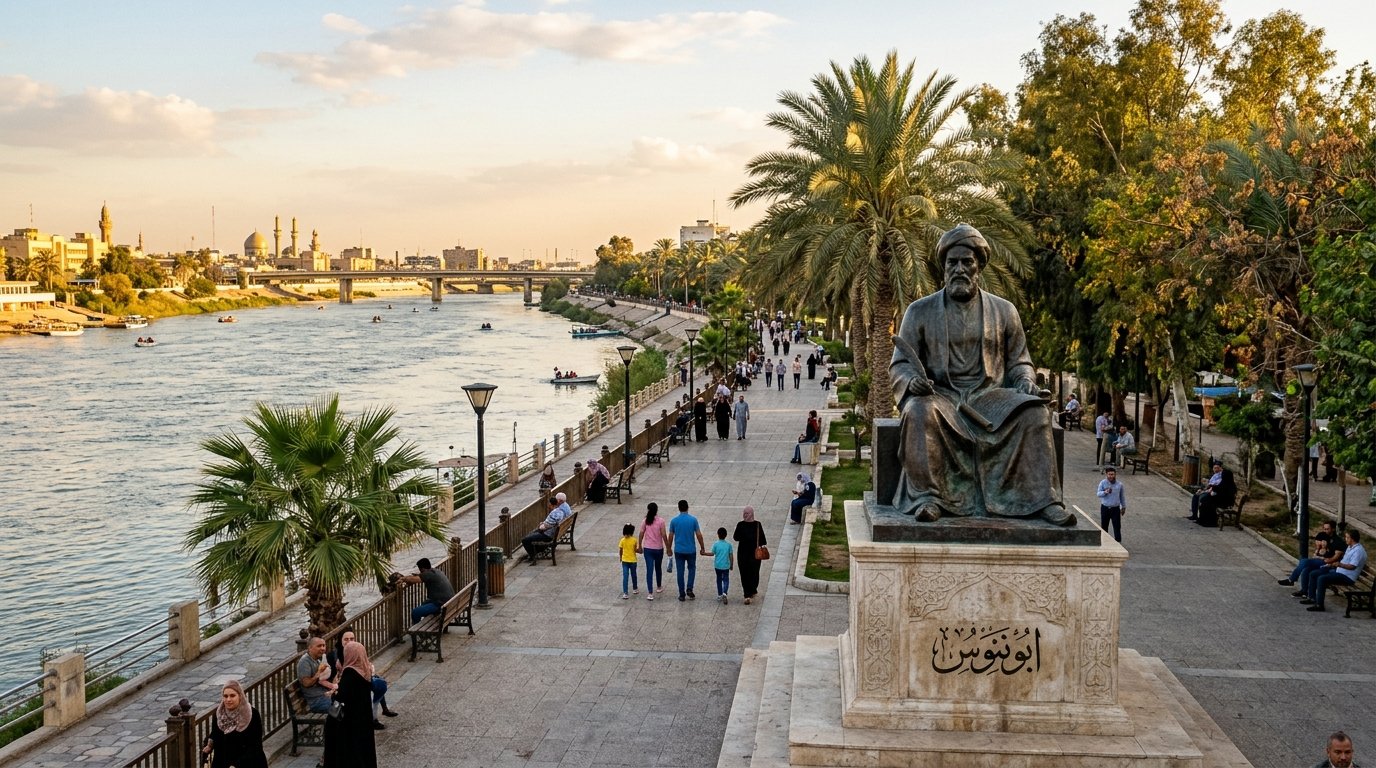
Baghdad shifts its public life to the eastern riverbank of the Tigris as soon as the sun drops behind the palm trees on the Karkh side of the city. Strolling along Abu Nuwas Street in the Rusafa district is a time-honored routine for Baghdadi families, students, writers, and travelers looking to escape indoor heat. The promenade runs along a broad bend of the Tigris River, stretching from the central city bridges down toward the residential districts of Karrada and Jadriya, as documented in urban reports by Shafaq News.
Between sunset and midnight, the riverfront transforms into a continuous social corridor. Families unpack folding chairs along the green lawns, children ride rented bicycles down paved paths, and groups of friends gather around low tables beside the water. Nightlife along the corniche focuses on open-air dining, quiet conversation, and shared pots of tea rather than loud commercial entertainment, according to the Open Travel Guide Nightlife Guide. River breezes off the Tigris lower the ambient temperature by several degrees, making the corniche one of the most pleasant outdoor gathering places in the capital during warm months.
The ritual of riverfront tea stalls and cardamom chai
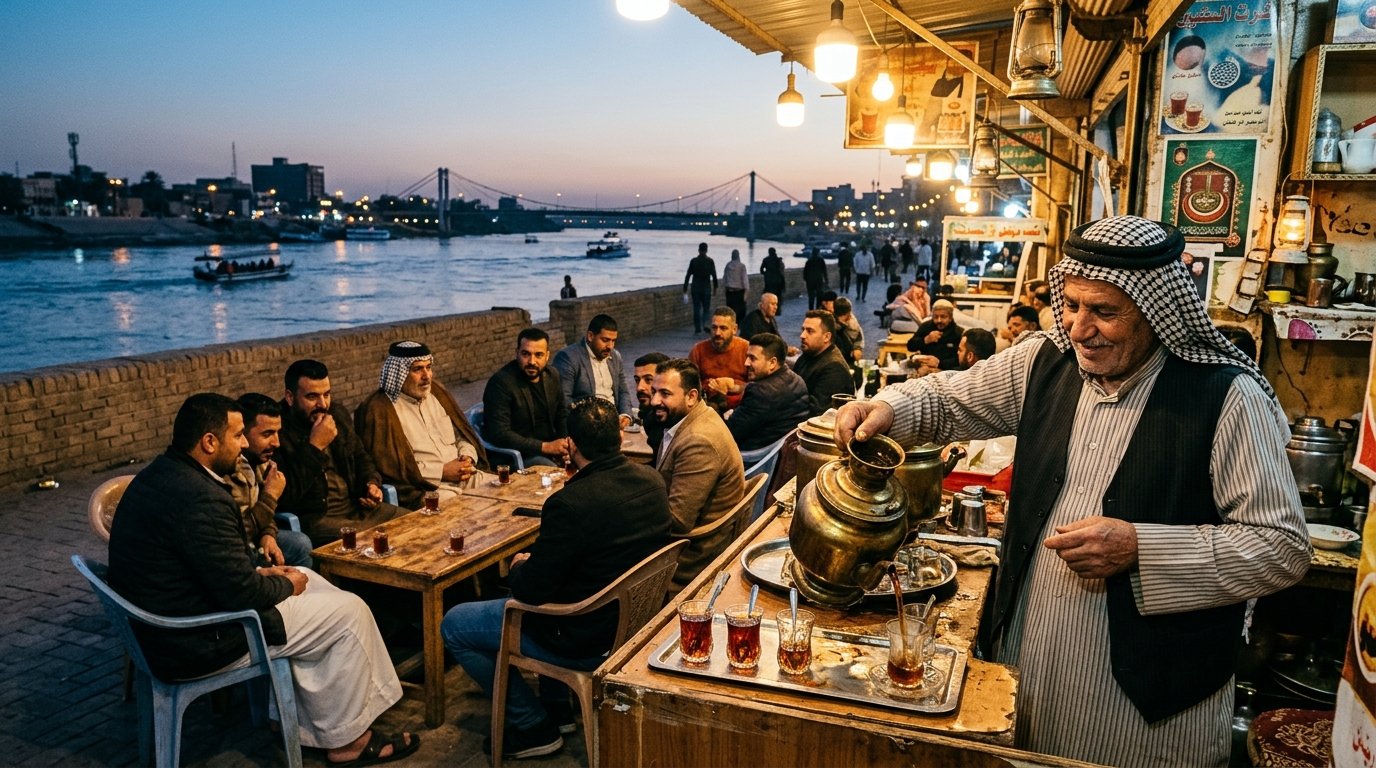
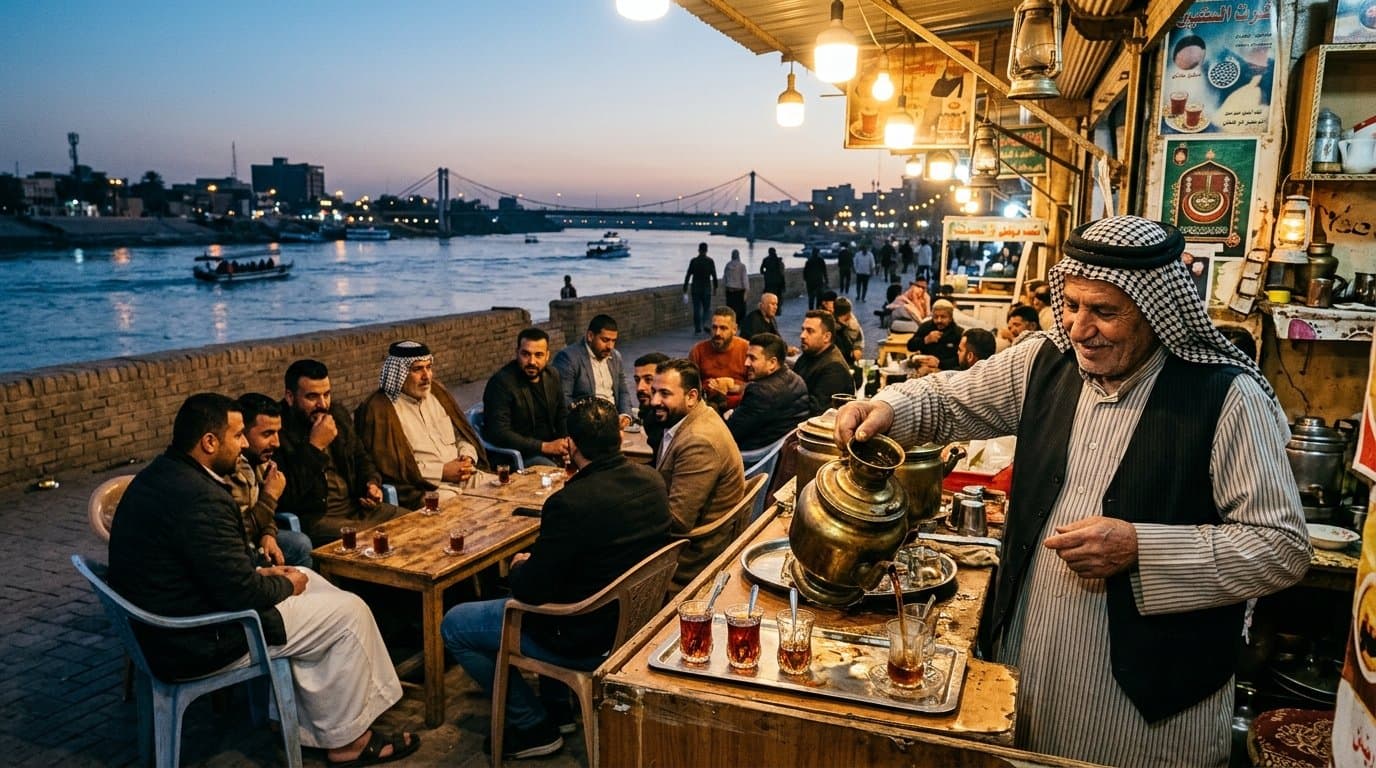
Tea is the focal point of social life along Abu Nuwas. Every few dozen meters along the promenade and within the riverside park, independent tea vendors set up outdoor chai stations. These stalls center around large stainless steel or brass samovars heated by gas burners or glowing charcoal braziers.
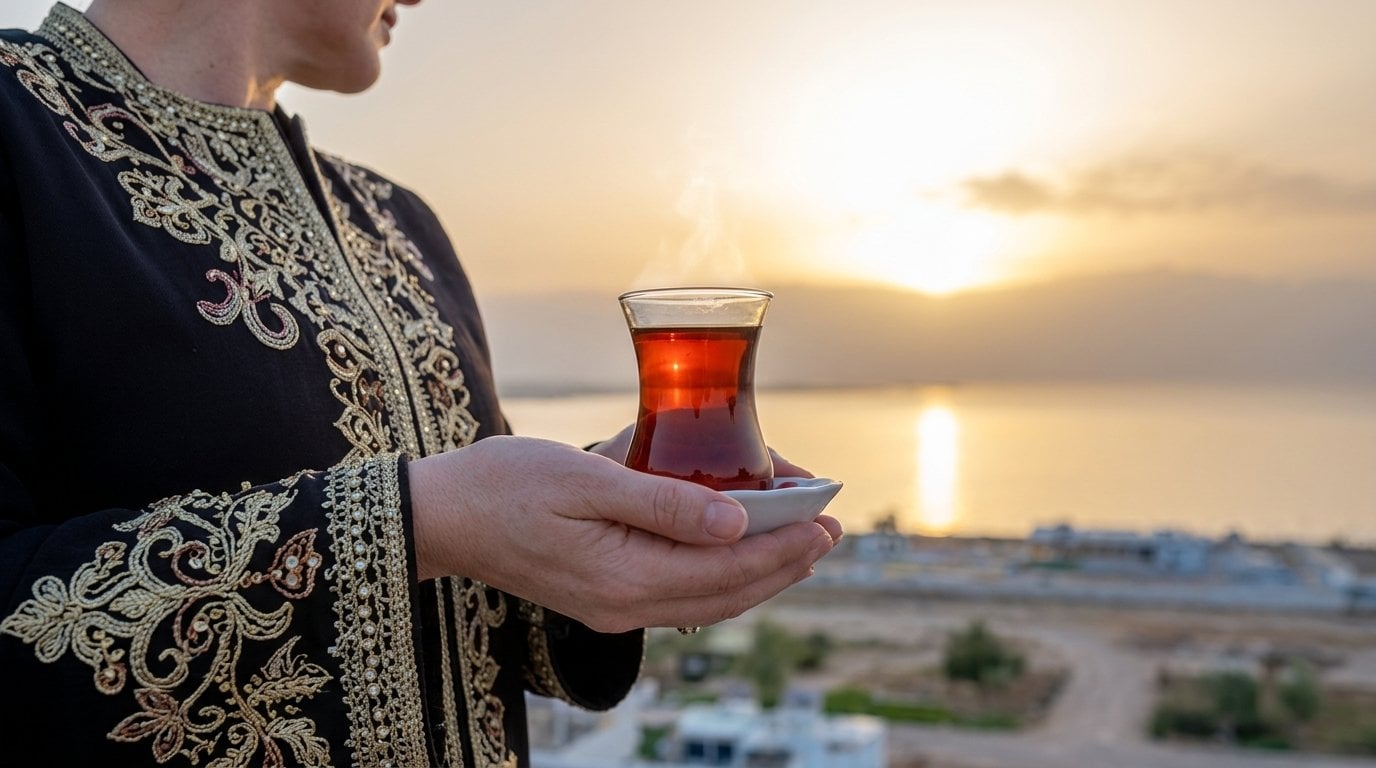
Iraqi tea, known locally as chai, is brewed strong and dark from loose black tea leaves, heavily infused with cracked green cardamom pods. Vendors pour the steaming liquid into traditional hourglass-shaped glasses called istikans, which sit in small glass or ceramic saucers. Tea sellers sweeten the drink generously unless a customer specifically requests light sugar or unsweetened tea, as highlighted in the HelloSIM Food and Drink Guide.
Sitting on a low plastic stool right at the water's edge with an istikan of hot cardamom tea costs around 500 to 1,000 Iraqi Dinars. Vendors often carry metal racks loaded with tea glasses directly to families seated on park benches or picnic blankets on the grass. The ritual encourages visitors to sit, talk, and watch boats move across the dark river water, as noted in the Visit Iraq Food Tour Guide.
Masgouf on the Tigris: wood fires and riverside dining
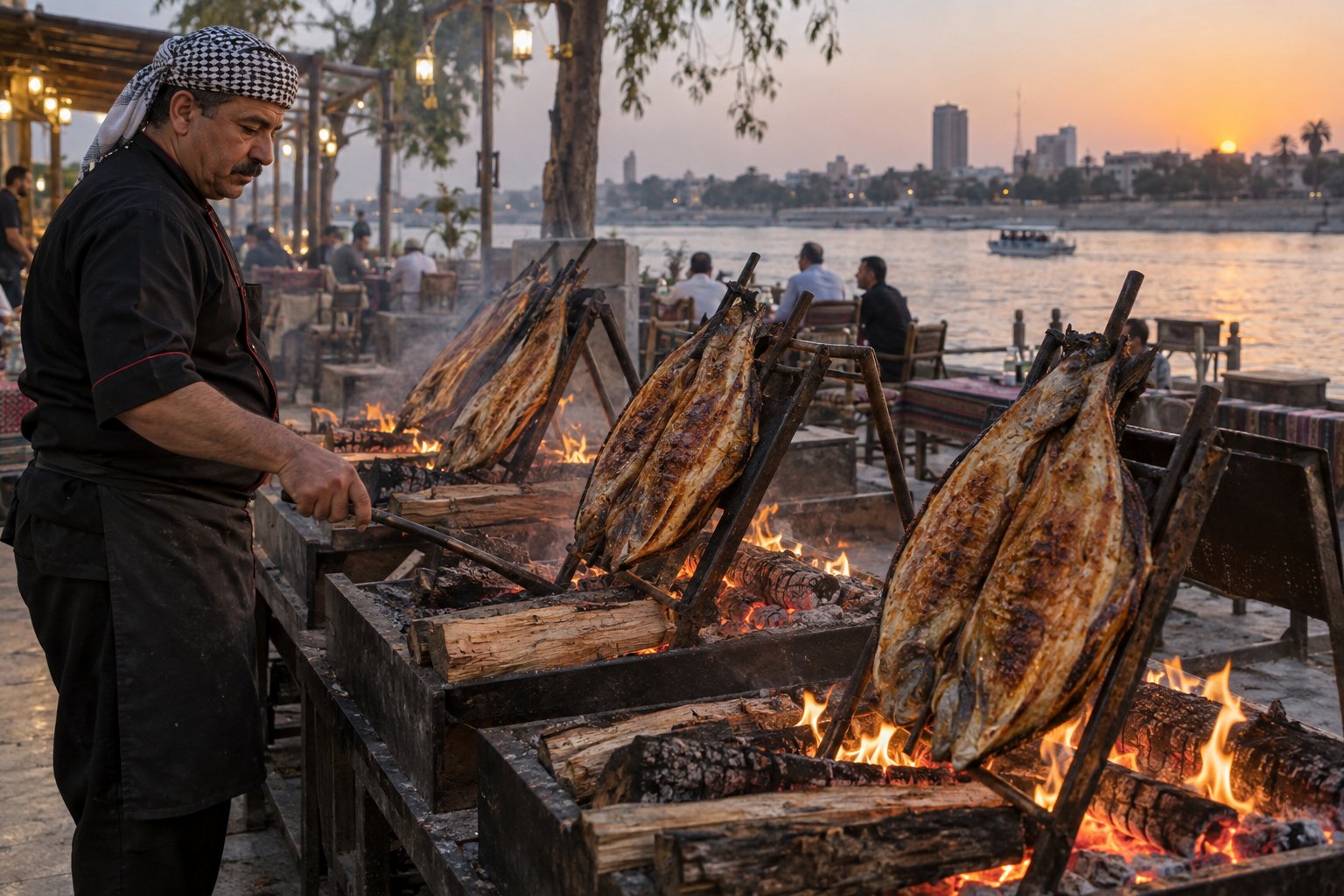
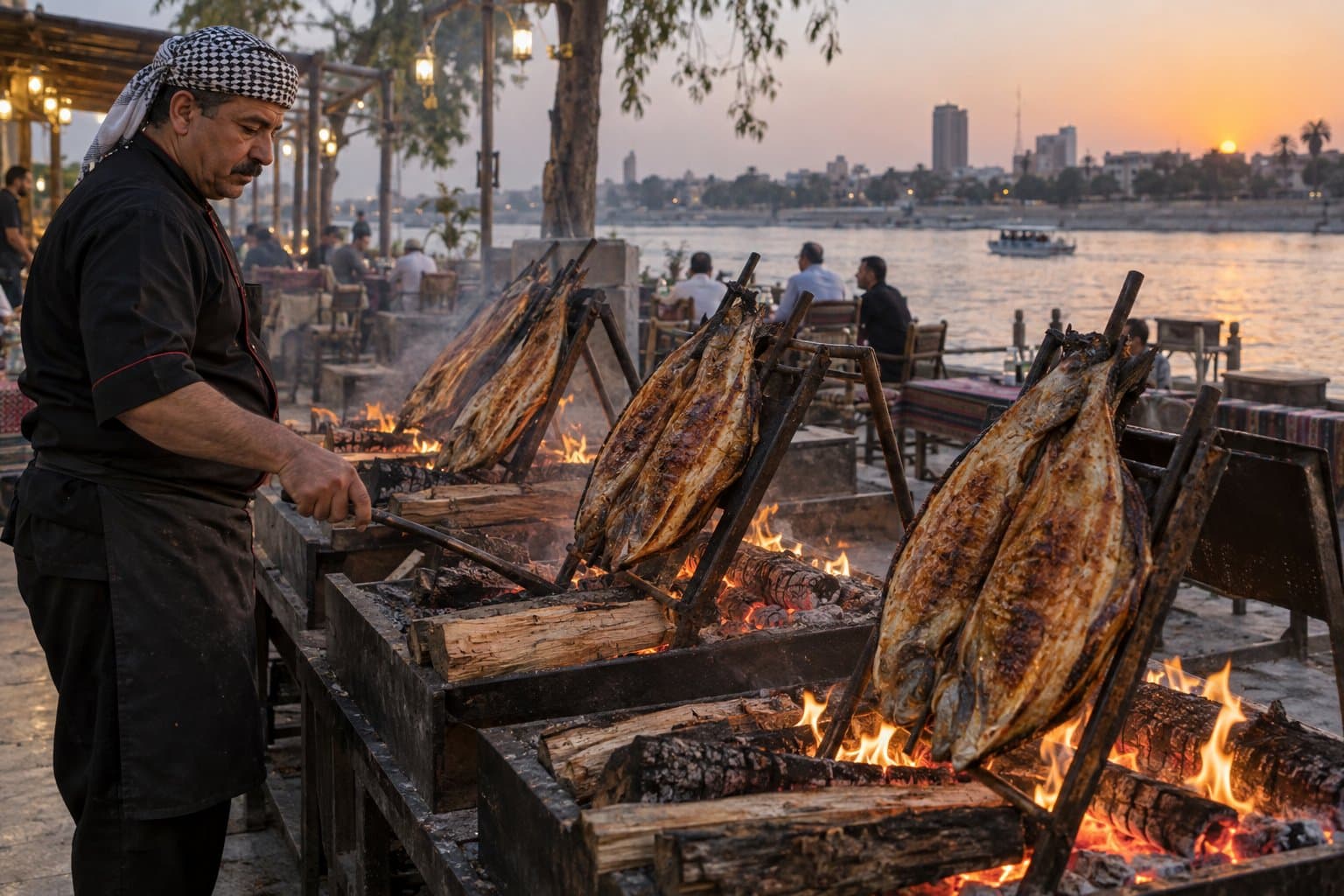
Beyond the tea stalls, Abu Nuwas Street is known for Iraq's national dish, masgouf. A stretch of open-air restaurants lines the riverside embankment, where wood smoke drifts into the evening air and displays of live freshwater carp swim in tiled holding basins, according to the Visit Iraq Masgouf Guide.
The preparation of masgouf is an ancient culinary method:
- Chefs select live Tigris river carp, typically bunni or shaboot, and butterfly the fish down the spine while leaving the scales intact.
- The fish is lightly salted and seasoned with ground dried sumac and a mild spice rub.
- Cooks spear the butterflied fish with wooden pegs and place them upright in a circle around an open pit of burning fruitwood embers, allowing the fish to slow-roast gently in radiant heat rather than over direct flames.
- Before serving, the fish is placed briefly skin-down directly on the coals to crisp the base.
Restaurants serve masgouf on large metal platters alongside freshly baked, diamond-shaped samoon bread hot from clay tandoor ovens. Traditional accompaniments include amba, a tangy pickled mango and fenugreek sauce brought to Baghdad through historic trade routes, alongside pickled vegetables, fresh parsley, raw onions, and lemon wedges, as detailed in the Open Travel Guide Food Tour Guide. Eating masgouf by the river is a leisurely, multi-hour experience that forms the core of many family celebrations.
Bronze monuments and cultural heritage along the corniche
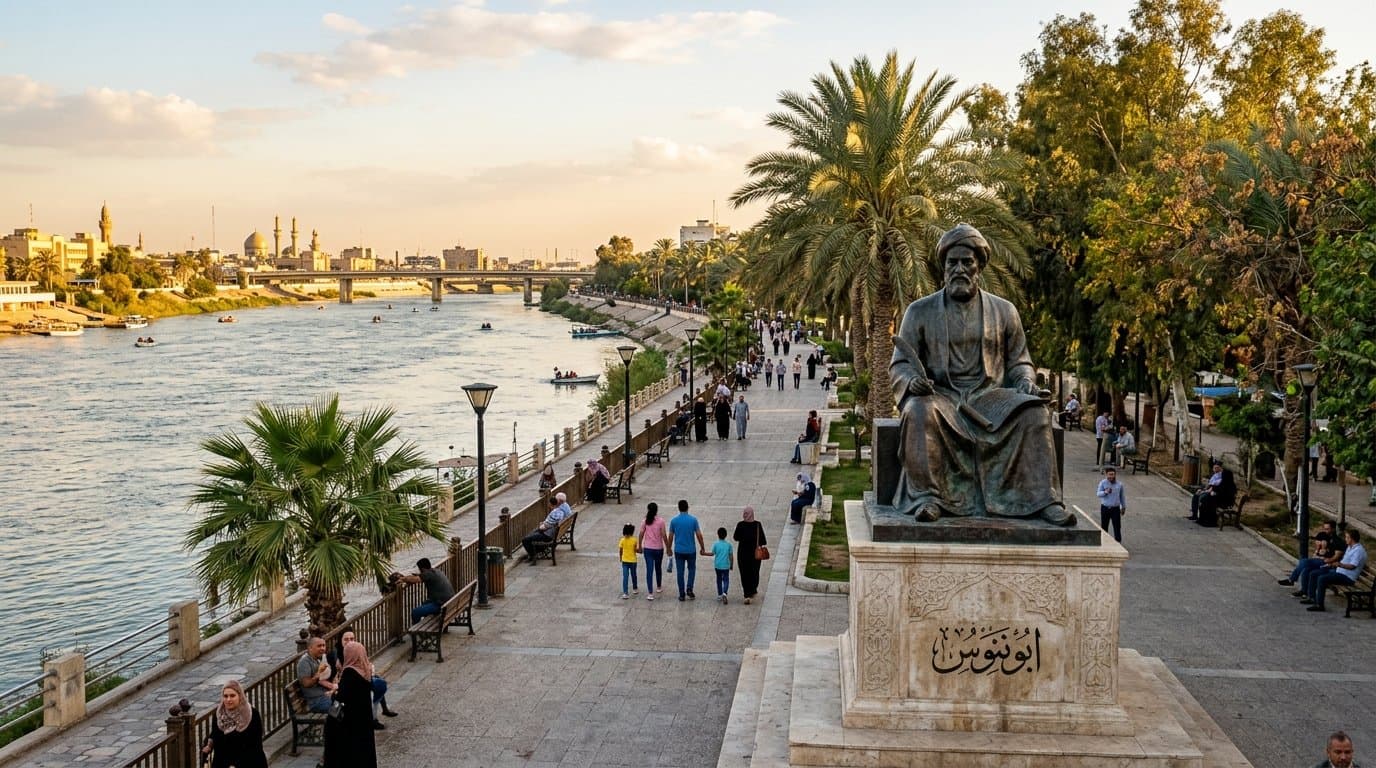
Abu Nuwas Street carries deep cultural meaning for Iraqis. The avenue takes its name from Al-Hasan Ibn Hani Al-Hakami, known as Abu Nuwas, the 8th-century classical poet of the Abbasid Golden Age who celebrated Baghdadi life and wine in his verses. A large bronze statue honoring the poet stands along the avenue, recently restored as part of city heritage conservation efforts reported by Shafaq News.
Further along the promenade stands the bronze sculpture of Scheherazade and King Shahryar, created by Iraqi sculptor Mohammed Ghani Hikmat. The statue depicts Scheherazade telling tales to Shahryar under the night sky, celebrating the storytelling tradition of One Thousand and One Nights. The monument is a natural gathering point where local photographers and families pause during their evening walks, as highlighted in urban design documentation by Diar Consult.
Park walkways and municipal revitalization
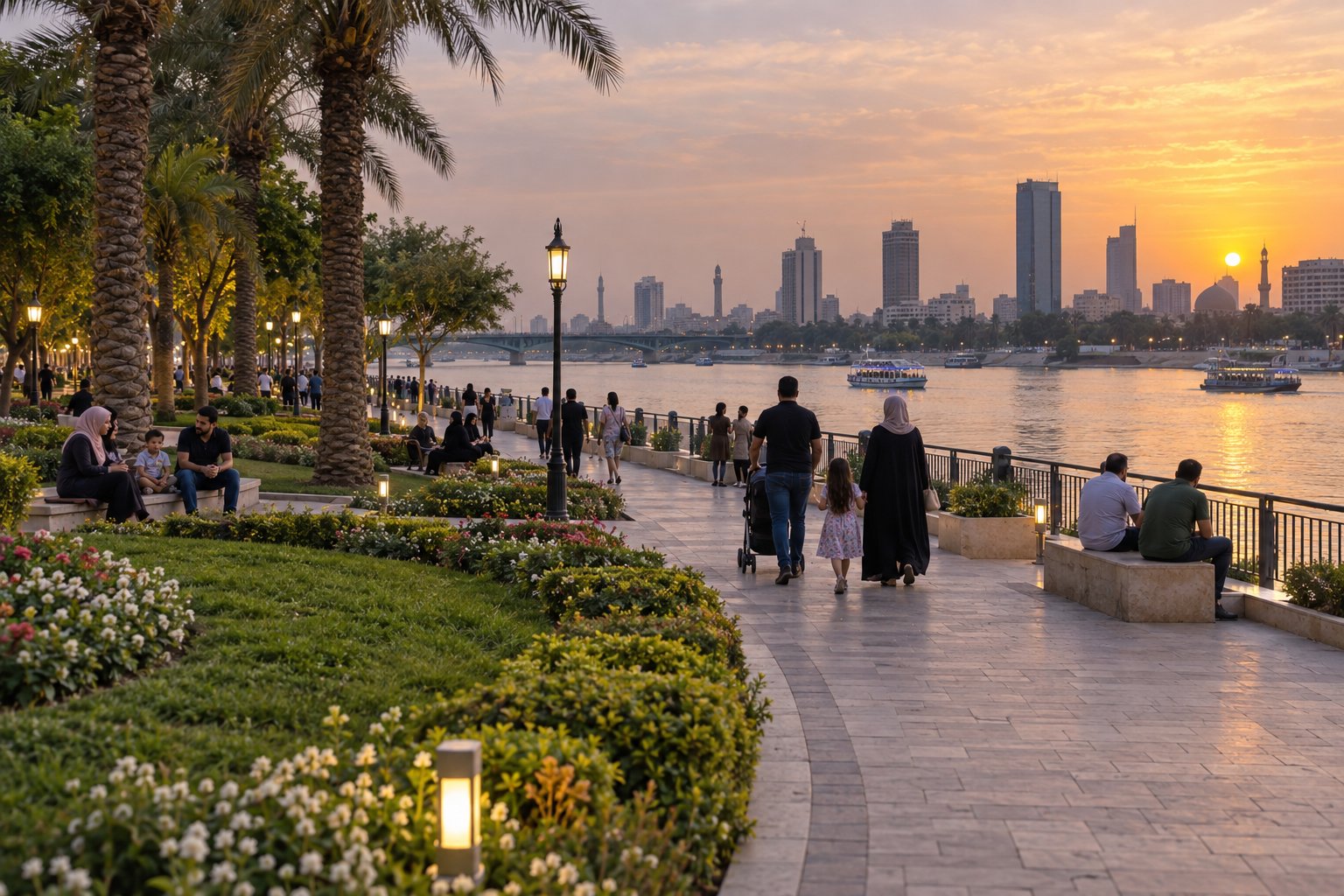
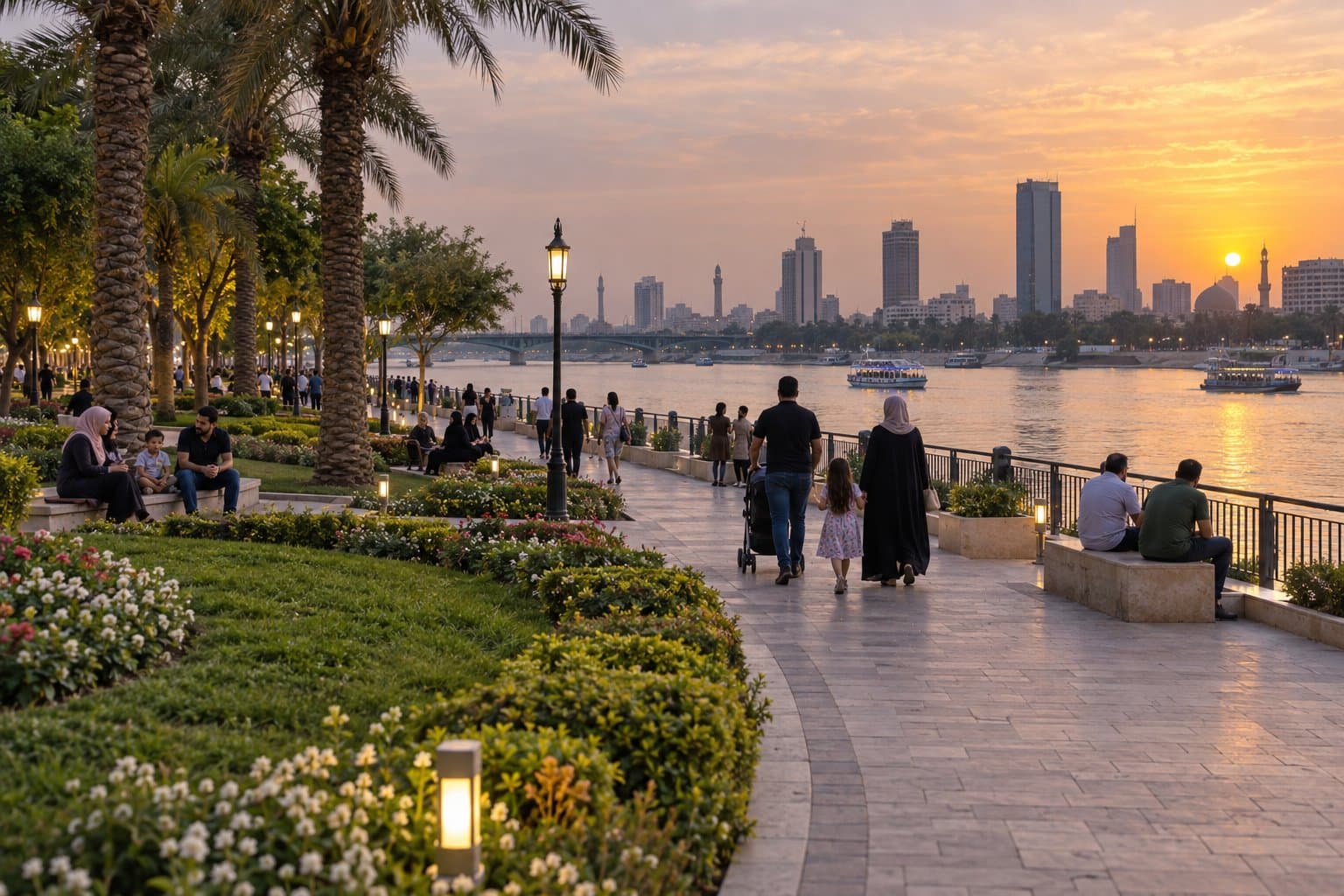
In recent years, the Baghdad Municipality has invested in rehabilitating the public spaces of Abu Nuwas under the "Baghdad is More Beautiful" initiative. According to project records from the Baghdad Municipality and Shafaq News, the city redeveloped a 1-kilometer corniche stretch and 17 acres of green park space, adding paved pedestrian paths, solar lighting, dedicated play areas for children, and improved parking facilities.
Infrastructure upgrades have also addressed connectivity. In late 2025, Prime Minister Mohammed Shia Al-Sudani inaugurated the first phase of the Abu Nuwas expansion project, opening a two-kilometer parallel road beneath the Suspended Bridge to ease traffic access between Al-Karrada Martyrs Park and central Baghdad, as reported by Iraqi News.
During evening hours, informal street vendors add to the park atmosphere, selling boiled chickpeas in spiced broth (lablabi), roasted fava beans (baqila), roasted corn on the cob, and helium balloons for children. The combination of green parkland, river views, and open public space makes Abu Nuwas one of the few broad, walkable public zones in central Baghdad.
Practical advice for an evening visit
To get the most out of an evening walk along Abu Nuwas, keep these practical points in mind:
- Best hours: The promenade is quiet during the afternoon heat and comes alive between 7:30 PM and midnight. Peak social hours run from 9:00 PM to 11:30 PM, particularly on Thursday and Friday nights when local families start their weekend, as outlined by the Open Travel Guide Nightlife Guide.
- Transportation: Taxis and app-based ride services such as Careem operate across Baghdad. Ask the driver to drop you off near Abu Nuwas Park or by the masgouf restaurant cluster opposite Karrada.
- Cash currency: Tea stalls and street food vendors operate exclusively in cash. Carry small denominations of Iraqi Dinars (IQD 1,000, 5,000, and 10,000 notes) because small vendors cannot break large bills, according to the Visit Iraq Food Tour Guide.
- Dress code: Abu Nuwas is a family-oriented public setting. Modest casual attire is appropriate for both men and women. Light, breathable fabrics work best during the hotter months from May through October.
- Dining reservations: Casual tea stalls require no advance notice, but if you plan to eat masgouf with a large group during peak weekend hours, arrive by 8:00 PM to select your fish and secure a riverside table.
Sources
- Shafaq News — Once revived, now neglected: Baghdad's Abu Nuwas Street struggles again — https://shafaq.com/en/Report/Once-revived-now-neglected-Baghdad-s-Abu-Nuwas-Street-struggles-again — Accessed April 2025
- Iraqi News — Prime Minister Al-Sudani inaugurates first phase of Abu Nuwas Street expansion — https://www.iraqinews.com/iraq/al-sudani-inaugurates-abu-nuwas-street-expansion/ — Accessed April 2025
- Visit Iraq — Baghdad Evening Food Tour: Authentic Flavors of the Capital — https://visit-iraq.com/en/adventures/baghdad-food-tour-evening — Accessed April 2025
- Open Travel Guide — Iraq Nightlife Guide 2026: Bars & Clubs — https://opentravelguide.com/iraq/nightlife/ — Accessed April 2025
- Open Travel Guide — Iraq Food Tours 2026: Culinary Experiences — https://opentravelguide.com/iraq/food-tours/ — Accessed April 2025
- HelloSIM — Iraqi Food and Drink Guide — https://hellosim.net/resources/blog/iraq-food — Accessed April 2025
- Visit Iraq — What is the best time to eat Masgouf in Baghdad? — https://visit-iraq.com/en/faq/best-time-for-masgouf-in-baghdad — Accessed April 2025
- Diar Consult — Darabeen Abu Nuwas Riverside Master Plan — https://diarconsult.com/darabeen-abu-nuwas/ — Accessed April 2025
Gallery
❓Frequently Asked Questions
Here are answers to frequently asked questions about the content above
The ideal time to visit is after sunset, between 8:00 PM and midnight, when temperatures drop and the promenade fills with families, open-air tea stalls, and active masgouf restaurants.
Tea vendors brew dark black tea infused with cracked green cardamom over hot samovars or charcoal embers. It is served sweet in small hourglass-shaped glasses called istikans.
Masgouf is Iraq's national fish dish, made from river carp that is split open along the back, seasoned with salt and sumac, and roasted upright next to burning fruitwood coals before being served with samoon bread and amba sauce.
The corniche features the bronze statue of the 8th-century classical poet Abu Nuwas as well as the Scheherazade and King Shahryar monument sculpted by Iraqi artist Mohammed Ghani Hikmat.
Yes. The renovated Abu Nuwas Park includes pedestrian walkways, green lawns, children's play areas, and food vendors selling snacks such as boiled chickpeas and roasted corn, making it a favorite family destination.
No. Most tea stalls, street food carts, and riverside restaurants operate entirely on cash. Visitors should carry small denominations of Iraqi Dinars (IQD) for payments.