Amna Suraka in Sulaymaniyah is a former intelligence headquarters and detention complex turned human rights memorial and museum.
Between 1979 and 1991, Amna Suraka served as the northern regional headquarters of the Directorate of General Security (Da’irat al-Amn al-Amma), the domestic intelligence service operated under Saddam Hussein's government. Located in central Sulaymaniyah in the Kurdistan Region of Iraq, this red-brick administrative and detention center earned the Kurdish moniker Amna Suraka, meaning "Red Security." Today, the preserved complex operates as a human rights museum and memorial dedicated to the victims of Ba'athist repression and genocidal campaigns against the Kurdish population.
Amna Suraka documents the interrogation practices, indefinite detention, and wartime resistance that marked northern Iraq in the late twentieth century. Rather than an updated commemorative space, the facility retains the physical damage from its past, from shrapnel-scarred concrete walls and watchtowers to narrow cell blocks left largely intact since Kurdish Peshmerga fighters took the complex during the March 1991 uprising.
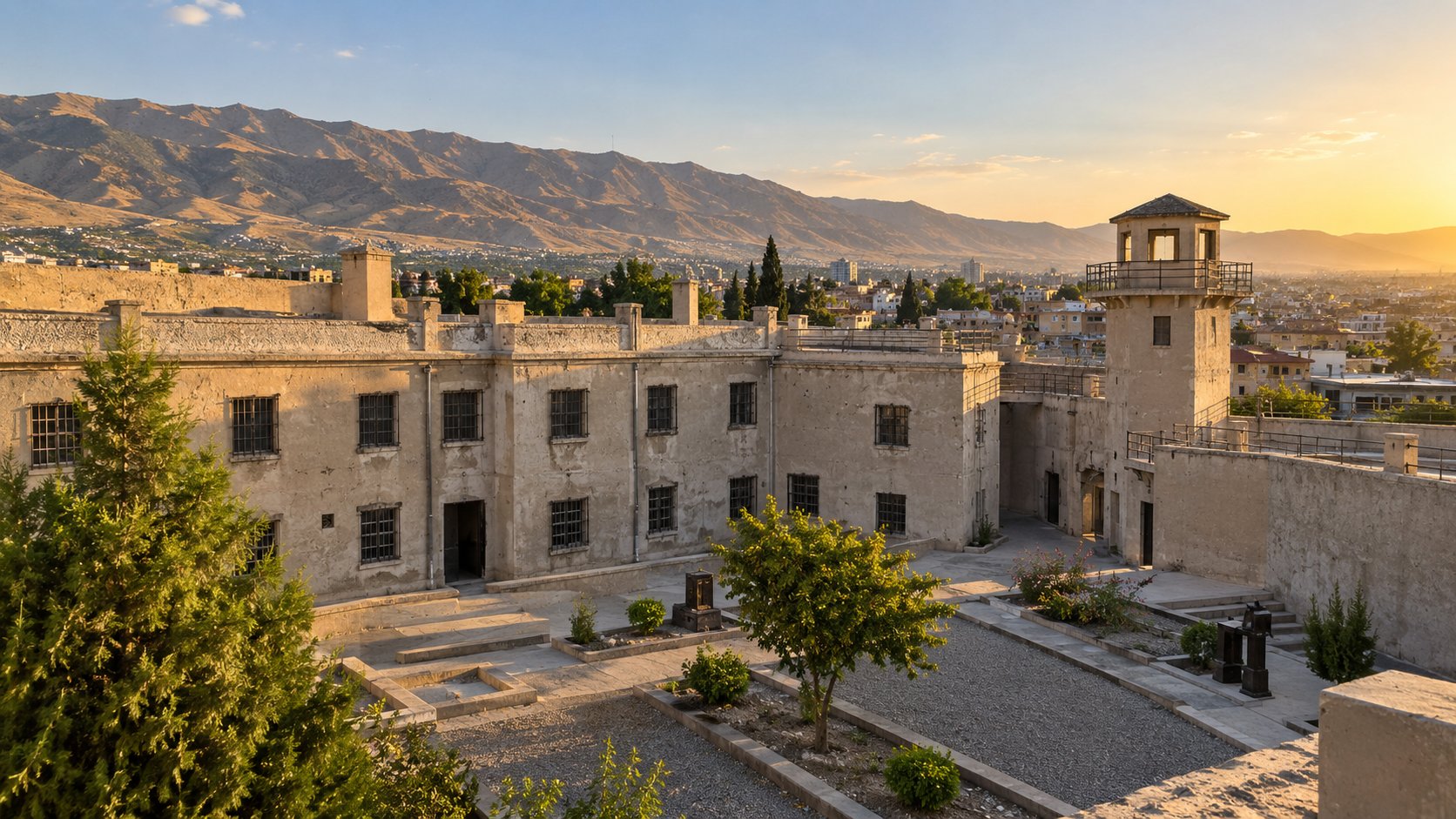
Historical Background: Prison and Fortress of the Amn
The compound was built to enforce central administrative control and suppress political opposition across northern Iraq. Under the Iraqi Ministry of Interior's General Security directorate, the site served as an interrogation station and holding facility for political organizers, student activists, suspected Kurdish nationalists, and civilians accused of anti-regime activity. Detainees held in the underground cellblocks faced prolonged solitary confinement, systematic interrogation, torture, and forced disappearances documented by Human Rights Watch.
During the March 1991 Kurdish uprising (Raperîn), the fortress served as the regime's final stronghold in Sulaymaniyah. Security personnel and military detachments held the concrete buildings during two days of heavy fighting. A direct assault by Kurdish fighters breached the perimeter, freeing surviving prisoners and ending Ba'athist control in the city. Exterior brickwork across the complex still shows machine-gun fire and blast damage from the siege. In 2003, the site opened to the public as a permanent memorial and documentation center.
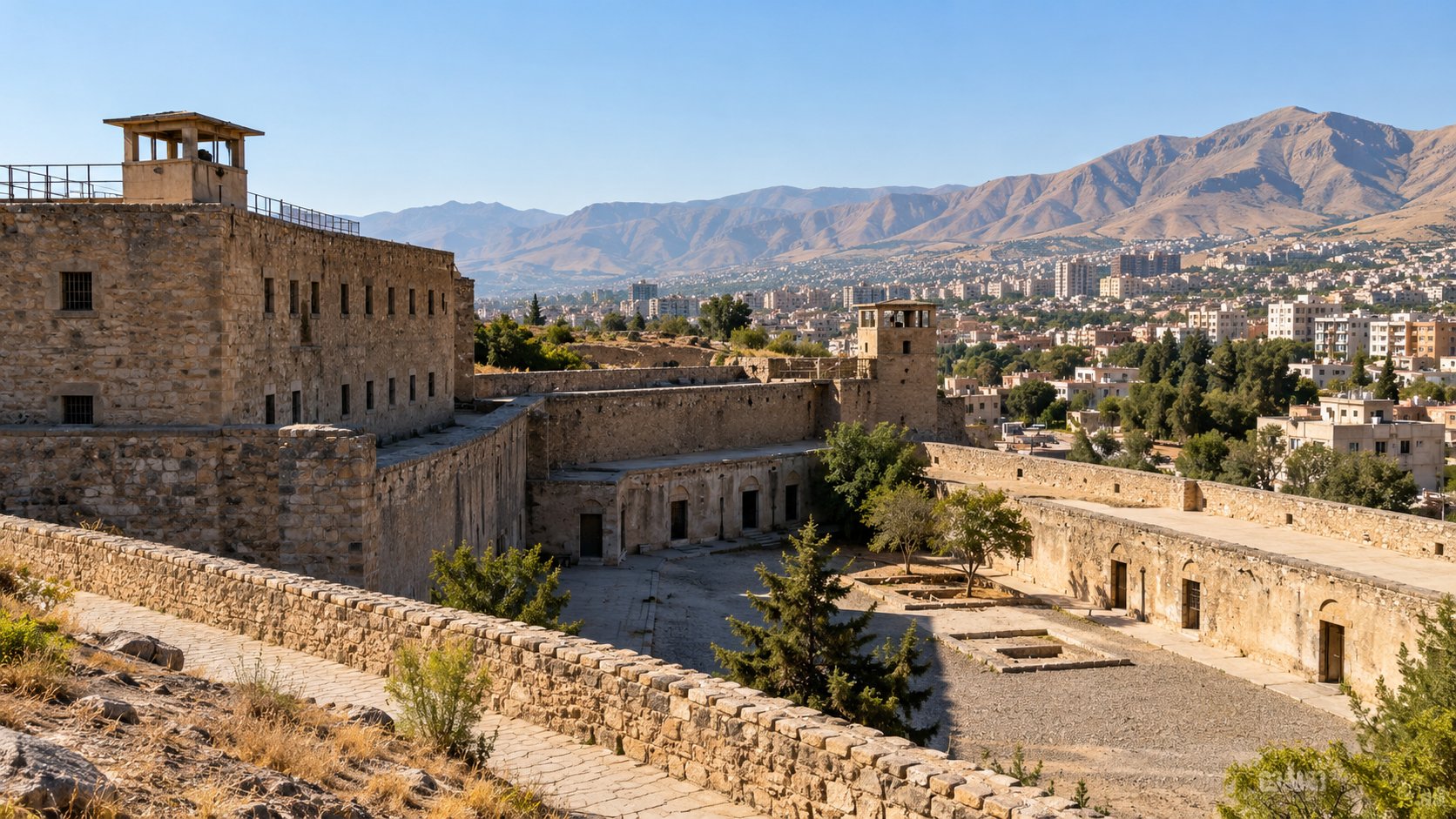
Memorial Galleries and Exhibitions
The museum grounds include several interconnected wings, open courtyards, and former cellblocks. Each section covers a specific period of regional conflict, state violence, and local history:
- The Hall of Mirrors: This darkened corridor is lined with 182,000 mirror shards. Each shard represents one person killed or disappeared during the 1988 Anfal campaign. Across the ceiling, 4,500 small lights represent the Kurdish villages destroyed or depopulated during the campaign.
- The Interrogation and Cell Blocks: Visitors walk through corridors flanked by solitary confinement stalls and group cells. Mannequins and period fixtures illustrate interrogation methods, coercive questioning, and physical abuse documented by survivors and investigators.
- The Anfal Documentation Exhibition: This gallery presents archival records of forced deportations, transit camps such as Topzawa and Nugra Salman, and forensic findings from mass graves in central and southern Iraq. Photographs, recovered clothing, and personal belongings show the human toll of the operations.
- Contemporary Galleries and Exterior Armaments: Newer sections commemorate Peshmerga fighters killed during the conflict with ISIS. In the central courtyards, captured Soviet-era Iraqi military vehicles—including T-55 tanks, armored personnel carriers, and artillery—remain parked where security forces once kept them.
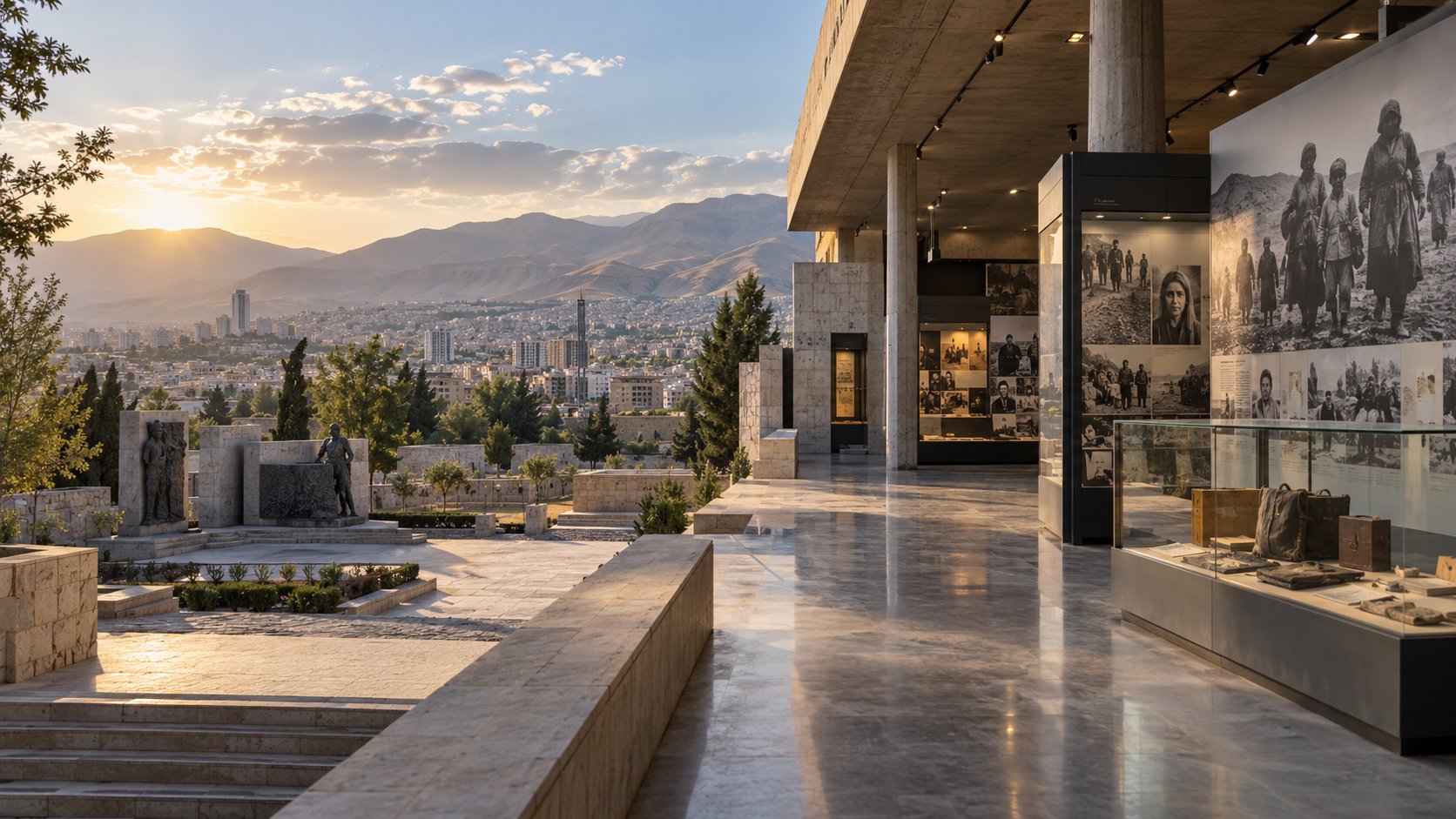
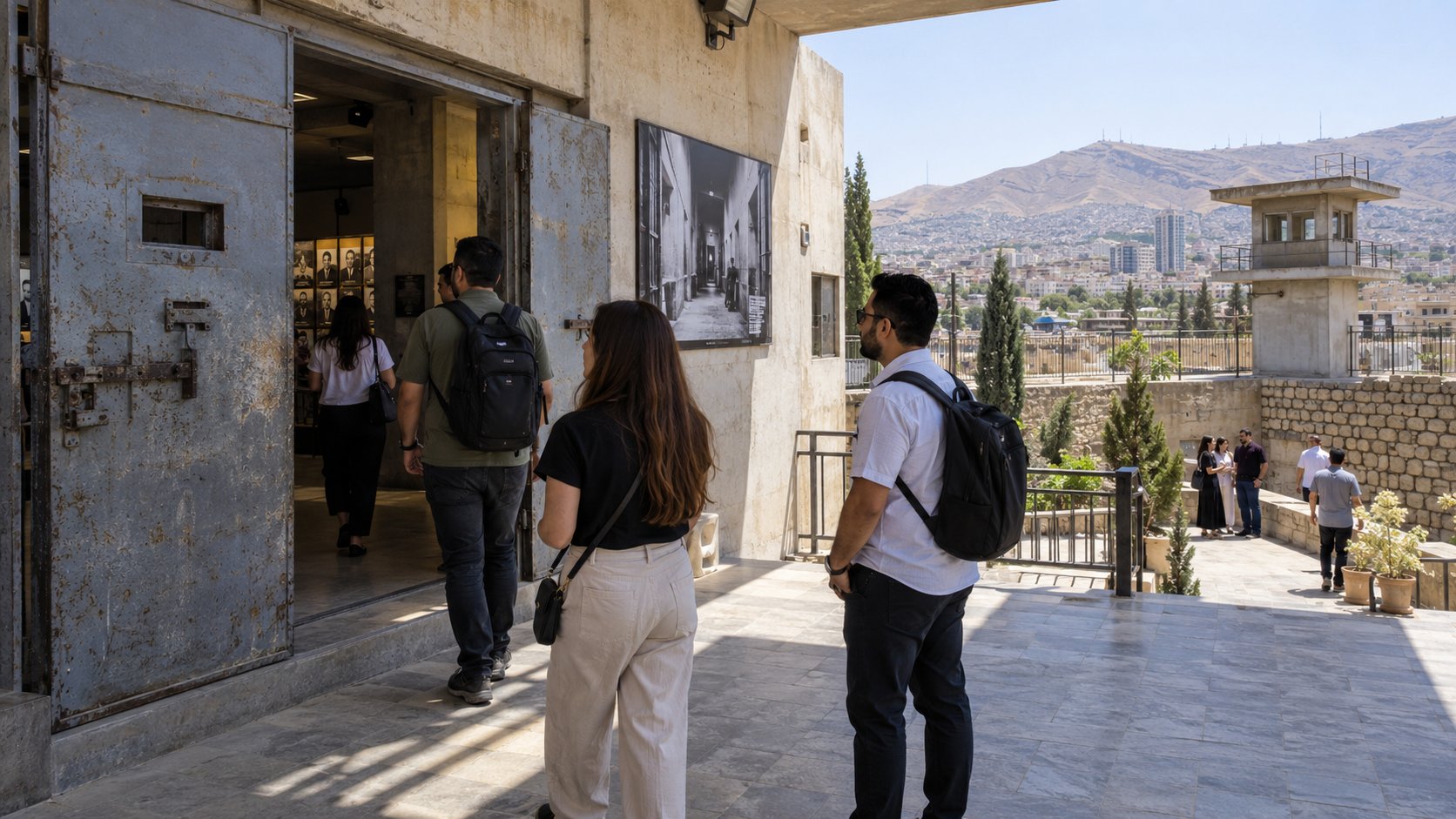
Visiting Arrangements and Practical Advice
Amna Suraka sits in central Sulaymaniyah, roughly two kilometers west of the Grand Bazaar, and is reached easily by taxi. Visitors should note several practical details:
- Admission: Entry to Amna Suraka is free. Visitors can leave donations at reception to support site maintenance.
- Opening Hours: The museum generally opens six days a week, typically from 8:30 AM to 12:00 PM and from 2:00 PM to 4:30 PM. It is closed on Fridays and public holidays. Hours may change during Ramadan.
- Visitor Sensibility: The exhibits include explicit depictions of torture and wartime violence. The site is somber and physically stark; it is not suited for young children. Photography is permitted in the courtyards and open exhibition spaces, though visitors should remain quiet in the memorial halls and former detention areas.
- Languages: Informational plaques are written in Kurdish, Arabic, and English. Hiring an English-speaking local guide in Sulaymaniyah provides fuller context on survivor accounts and the site's layout.
Sources
- Wikipedia, "Amna Suraka", accessed May 2024.
- Human Rights Watch, "Endless Torment: The 1991 Uprising in Iraq And Its Aftermath", June 1992, accessed May 2024.
- Human Rights Watch, "Genocide in Iraq: The Anfal Campaign Against the Kurds", July 1993, accessed May 2024.
- Wikivoyage, "Sulaymaniyah Travel Guide: Amna Suraka Museum", accessed May 2024.
- Wikipedia, "Sulaymaniyah: Sites and Museums", accessed May 2024.
❓Frequently Asked Questions
Here are answers to frequently asked questions about the content above
Amna Suraka is situated in a central residential and administrative district of Sulaymaniyah, about two kilometers west of the Grand Bazaar and readily accessible by short taxi rides from any central hotel.
General admission to Amna Suraka is free, though voluntary donations can be offered to help support ongoing facility maintenance and educational documentation.
The museum generally opens six days a week, running morning sessions from roughly 8:30 AM to 12:00 PM and afternoon sessions from 2:00 PM to 4:30 PM, typically closing on Fridays and major public holidays.
The 182,000 mirror shards lining the hall commemorate the estimated 182,000 Kurds who perished or disappeared during the 1988 Anfal campaign, while 4,500 ceiling backlights represent the destroyed Kurdish villages.
Due to realistic mannequins depicting torture methods, authentic solitary cells, and explicit forensic documentation of genocide, the museum is intense and not recommended for young children.
Photography is generally permitted for personal use across the courtyards, military vehicle park, and general exhibition halls, though visitors are asked to remain respectful and avoid disruptive flash photography inside memorial halls.