Eridu, the oldest city in human history and the cradle of Sumerian civilization, is where kingship was said to have first descended from heaven. It was the spiritual center of the god Enki and houses the remains of one of the earliest ziggurats in Mesopotamia.
Eridu, known today as Tell Abu Shahrain, is considered the oldest city in Mesopotamia and perhaps the entire world [1]. According to the Sumerian King List, Eridu is the place where "kingship first descended from heaven," making it the foundational center of Mesopotamian civilization [2]. Located in the far south of Iraq, it was once a port overlooking the Persian Gulf before the waters receded and the region turned into desert.
What is Eridu Like for Visitors?
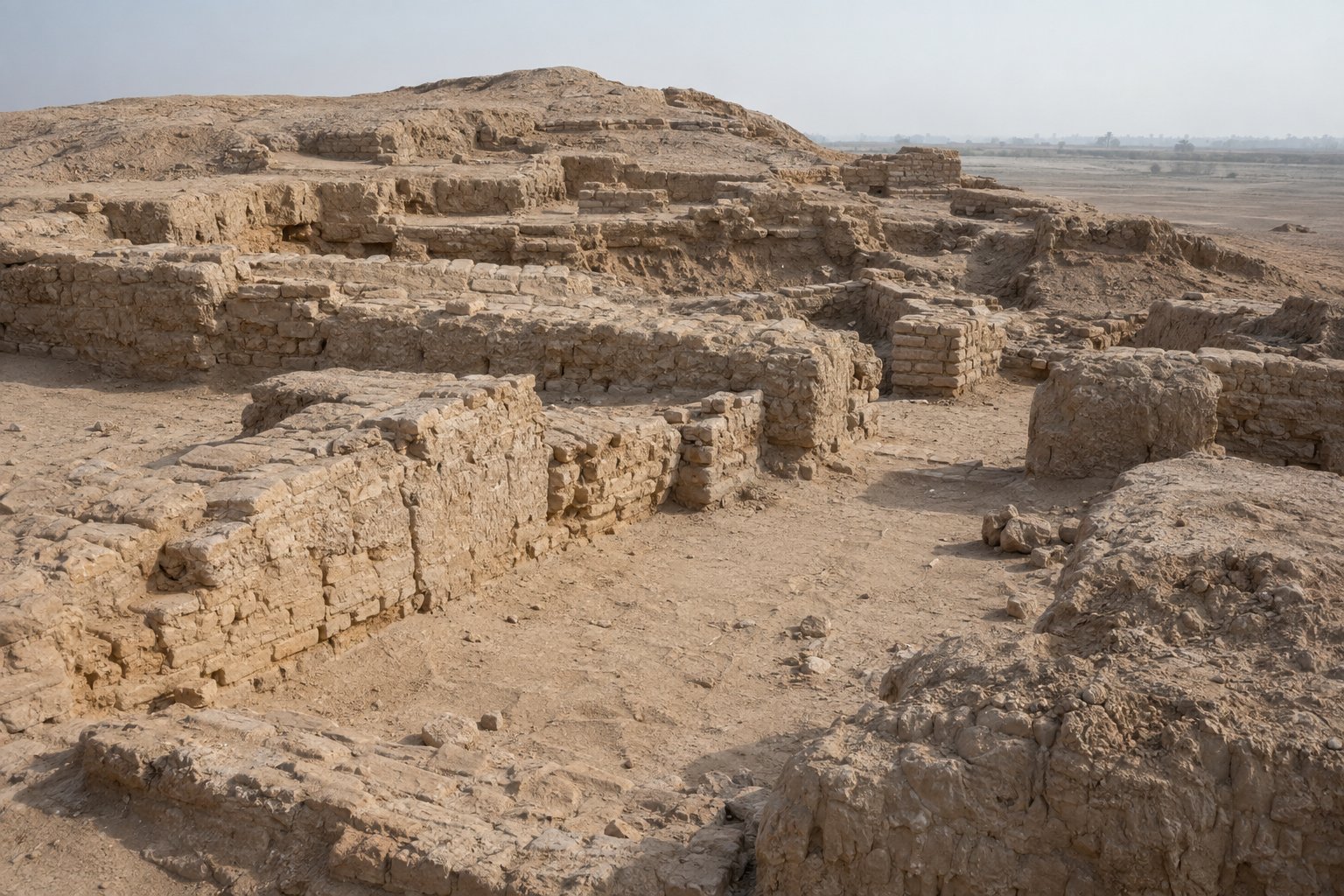
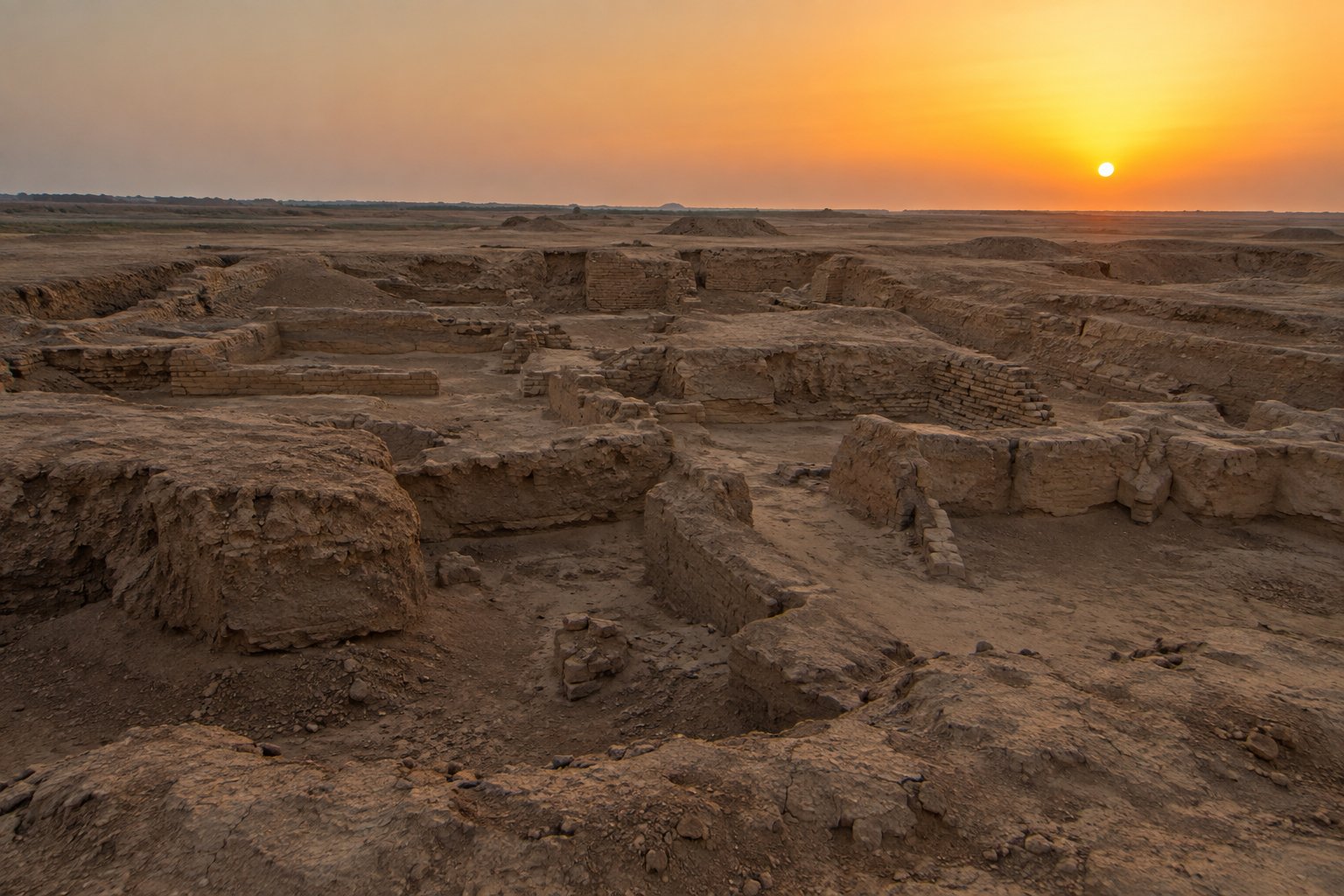
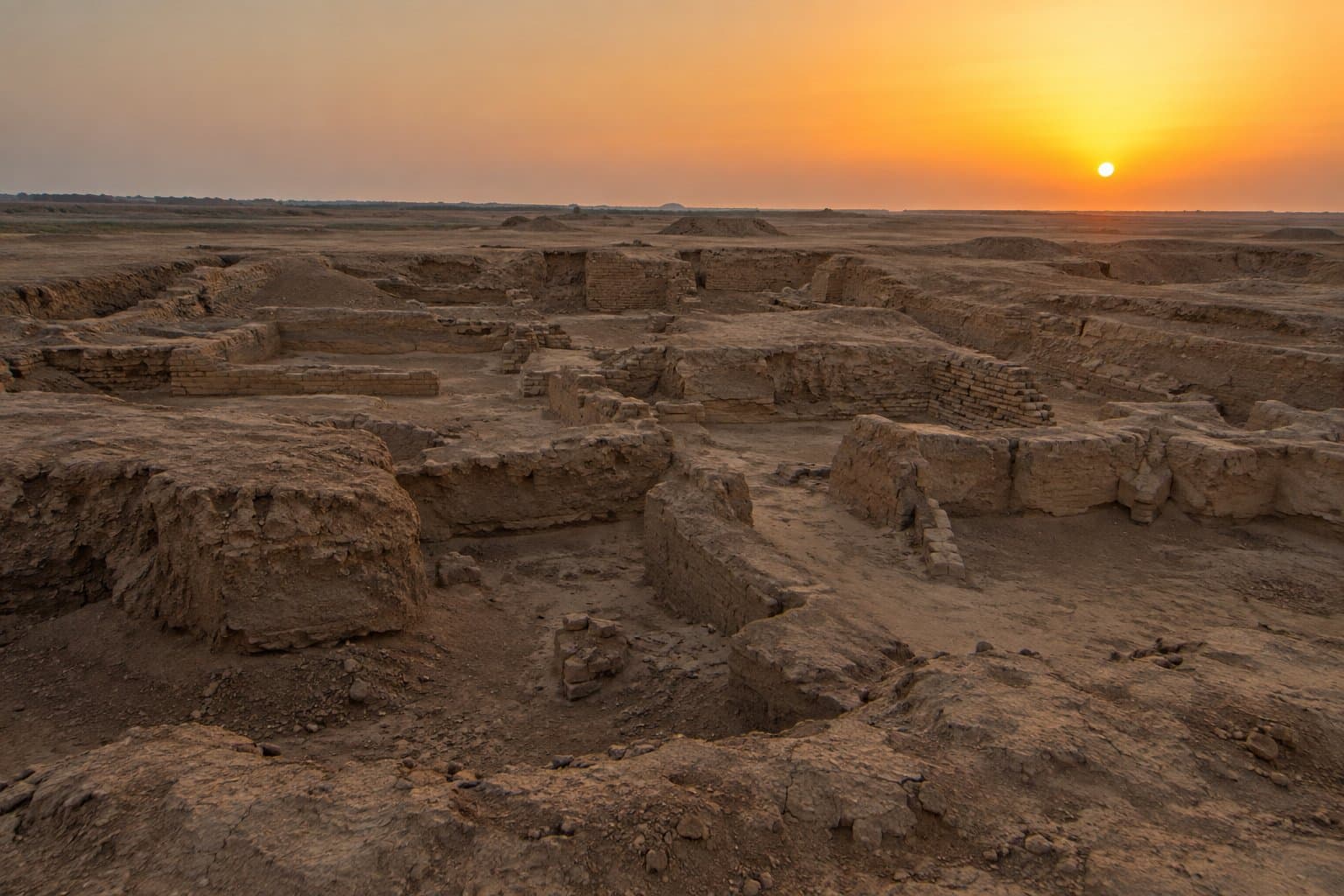
Eridu emerges from the heart of the desert as an imposing archaeological mound that tells a story of thousands of years [3]. The site today is very quiet and isolated, giving the visitor a unique feeling of returning to the dawn of history. The most prominent landmark is the remains of the Ziggurat of Enki, built by King Ur-Nammu, in addition to archaeological mounds hiding 17 layers of temples built on top of each other throughout the ages [4].
When is the Best Time to Visit?
The best time to visit Eridu is during the winter and spring seasons (from November to March) [5]. During this period, temperatures are moderate and ideal for walking in the open site. It is recommended to avoid the summer season due to extreme heat that can exceed 50 degrees Celsius in this desert region.
How Do I Get to Eridu?
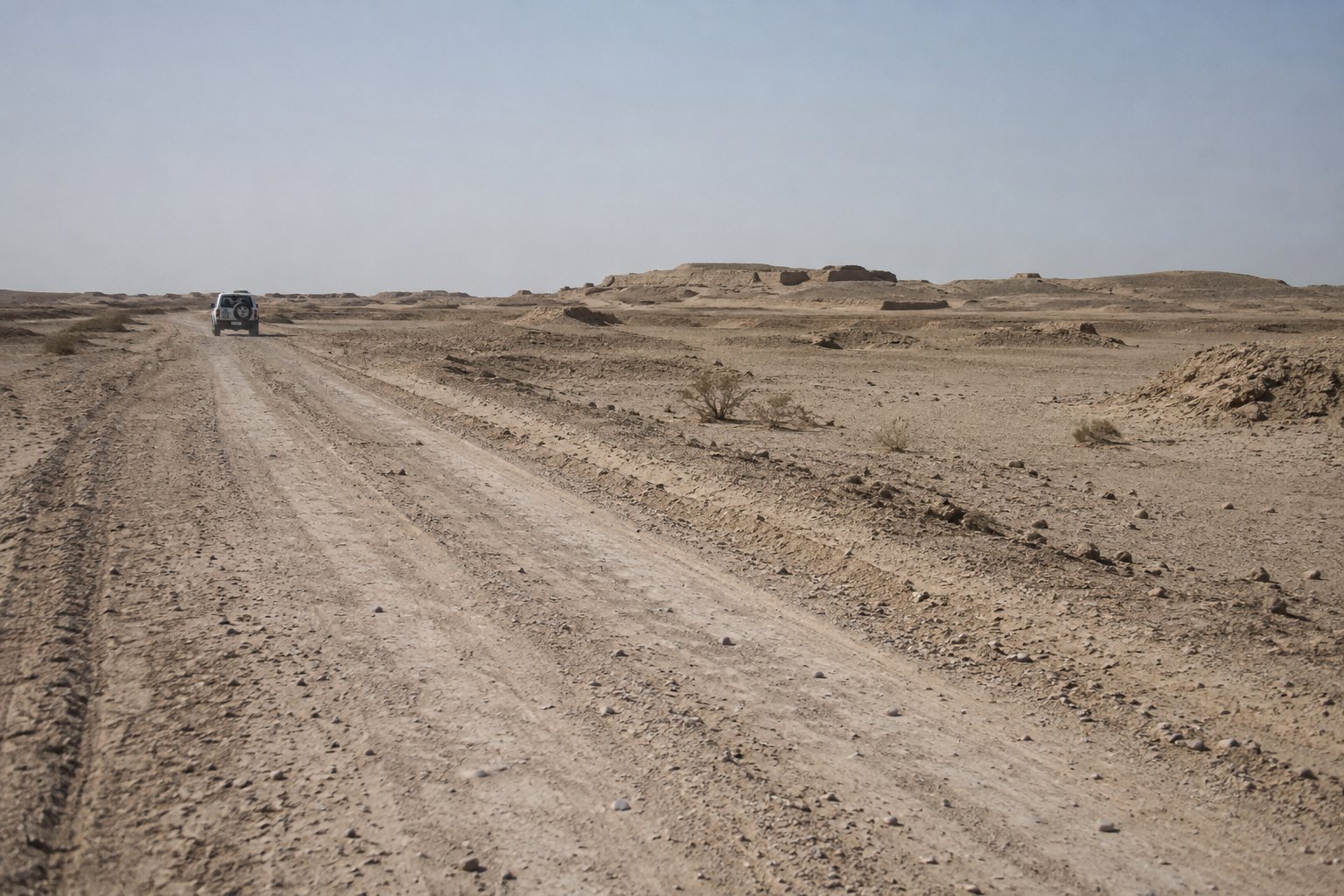
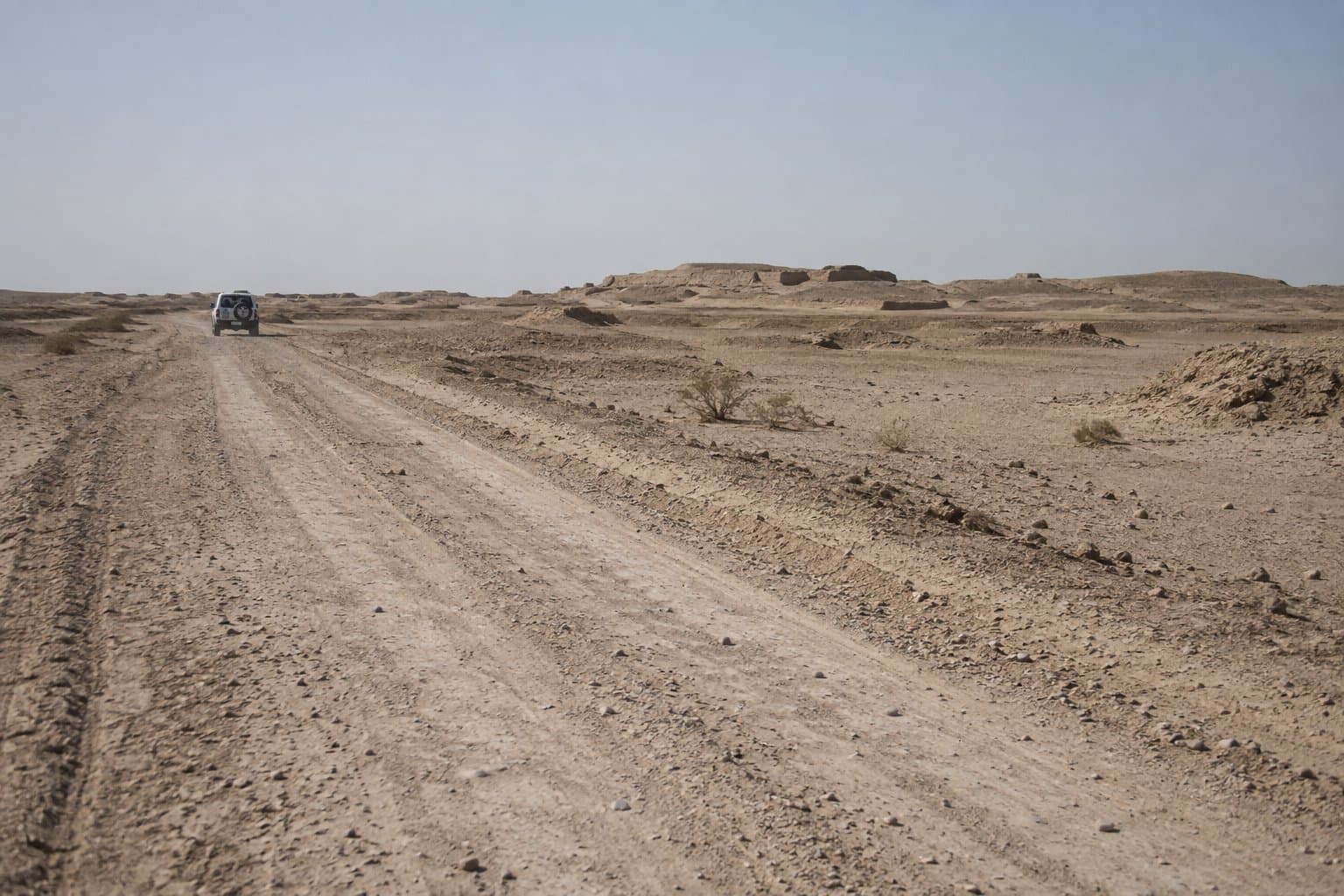
Eridu is located about 40 kilometers west of the city of Nasiriyah and 12 kilometers southwest of the city of Ur [1]. To reach it, you must first head to the city of Nasiriyah, and from there you can hire a private car or join an organized tour. The road passes through stunning desert areas that require a 4WD vehicle or a car prepared for unpaved roads in some parts.
What are the Main Landmarks and Activities?
- Ziggurat of Enki: The remains of the imposing religious monument dedicated to the god of water and wisdom [2].
- E-Abzu Temple: The site believed to connect the earth with the sacred underground fresh waters [4].
- Ancient City Walls: Remains of the wall that surrounded the first urban settlement in history.
- Stargazing: Due to the site's distance from light pollution, it is a great place to observe the night sky if the visit is coordinated with nearby camping.
Security and Practical Tips
- Prior Coordination: It is always preferred to coordinate with the Dhi Qar Antiquities Inspectorate or hire an expert local guide [3].
- Water Supply: The site is completely isolated and has no tourist services or shops, so be sure to bring enough water and food.
- Clothing: Wear comfortable shoes for walking in the sand and a sun hat.
- Respect the Site: The site is listed on the UNESCO World Heritage List [1], so it is strictly forbidden to take any pottery fragments or disturb the antiquities.
Sources
- Wikipedia - Eridu — https://en.wikipedia.org/wiki/Eridu
- World History Encyclopedia - Eridu — https://www.worldhistory.org/eridu/
- UNESCO World Heritage - The Ahwar of Southern Iraq — https://whc.unesco.org/en/list/1481/
- Ancient Origins - The Eridu Genesis — https://www.ancient-origins.net/human-origins-folklore/eridu-genesis-0015024
- Iraq Museum - Archaeological Sites in Dhi Qar — http://www.iraqmuseum.org/
- Nasiriyah News Network - Eridu Antiquities — https://nasiriyah.org/
Gallery
❓Frequently Asked Questions
Here are answers to frequently asked questions about the content above
According to the Sumerians themselves in the 'Sumerian King List', Eridu is the first city established in history, and archaeological excavations confirm that settlement there dates back to approximately 5400 BCE.
It is located in Dhi Qar Governorate in southern Iraq, very close to the city of Nasiriyah and the archaeological site of Ur.
It was the main center for the worship of 'Enki', the god of fresh water, wisdom, and intelligence in Sumerian mythology.
Yes, visiting archaeological sites in Iraq usually requires an entry ticket obtained from the site itself or through the Antiquities Inspectorate. It is best to check for updated procedures when planning your visit.
Yes, the area is safe and receives regular tourists, but it is always recommended to move with a local guide to facilitate procedures and reach the site accurately.
Yes, geological and historical studies indicate that Eridu was a port on the Persian Gulf or an area very close to the water outlets (the marshes) thousands of years ago.