A turquoise-domed shrine on the Tigris in Maysan, revered by Muslim and Jewish visitors and linked to the history of Jewish life in southern Iraq.
Ezra's Tomb in Al-Uzair
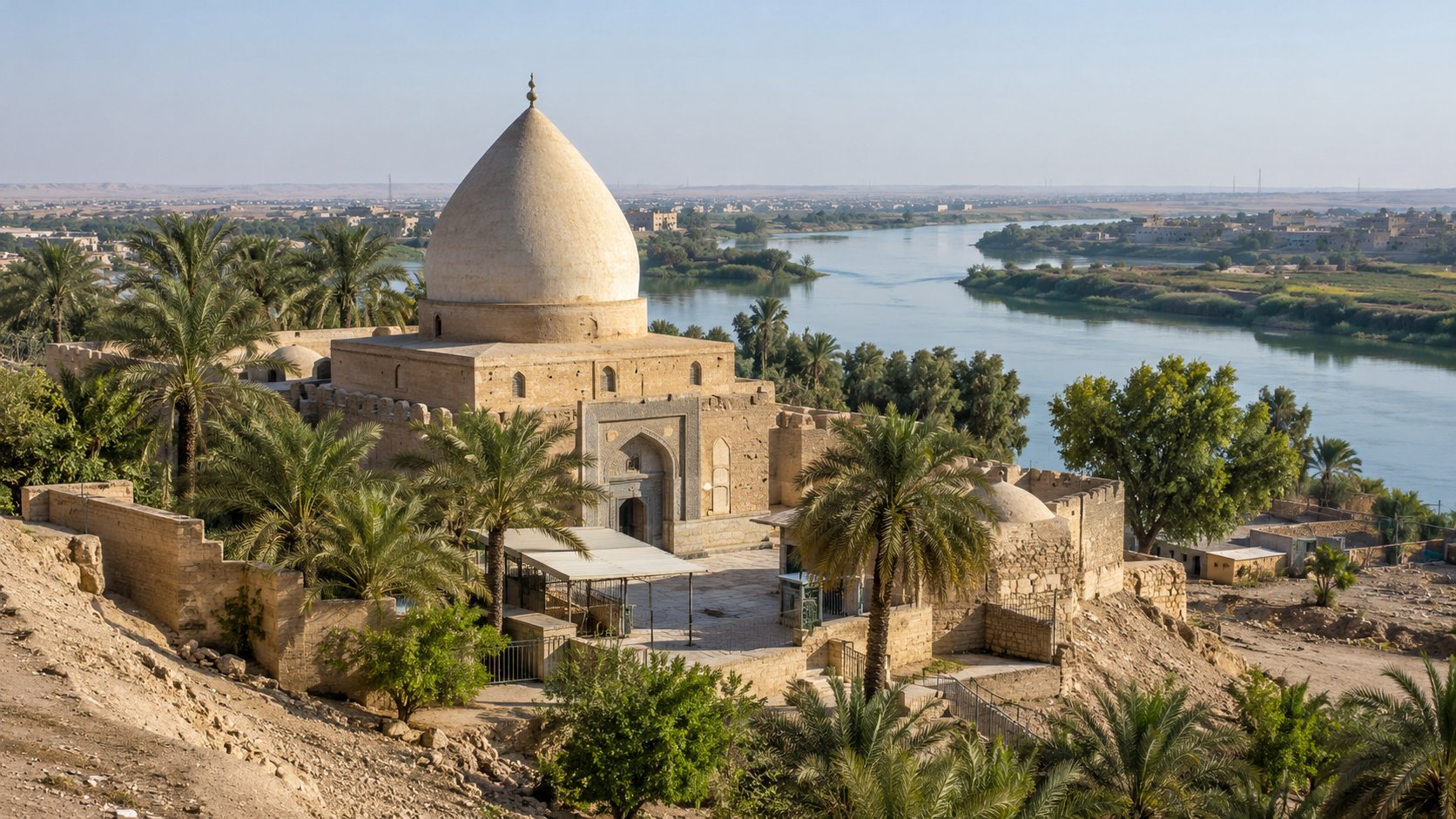
Ezra's Tomb stands on the western bank of the Tigris in Al-Uzair, Maysan Governorate. Its turquoise dome is visible from the river. Jewish and Muslim visitors have come here to honor Ezra, known in Arabic as Uzair. The shrine remains a place of worship.
A shrine shared across traditions
Jewish tradition remembers Ezra as a priest and scribe who taught the Torah after the Babylonian exile. The Hebrew Bible does not say where he died or was buried. The historian Josephus placed his burial in Jerusalem, while medieval accounts describe a separate tradition locating his tomb by the Tigris. The Al-Uzair shrine is a traditional burial site, not a confirmed grave. Diarna's account describes these competing traditions.
Medieval Jewish and Muslim travelers wrote about the shrine. Diarna cites Benjamin of Tudela and other travelers who described separate Jewish and Muslim prayer spaces there. Jewish visitors made pilgrimages for festivals such as Shavuot and Hanukkah. Shi'a Muslim pilgrims continued to visit after most Iraqi Jews left the country in 1951–52. Jewish Iraq Heritage also documents the site's Jewish history.
The dome and the Tigris
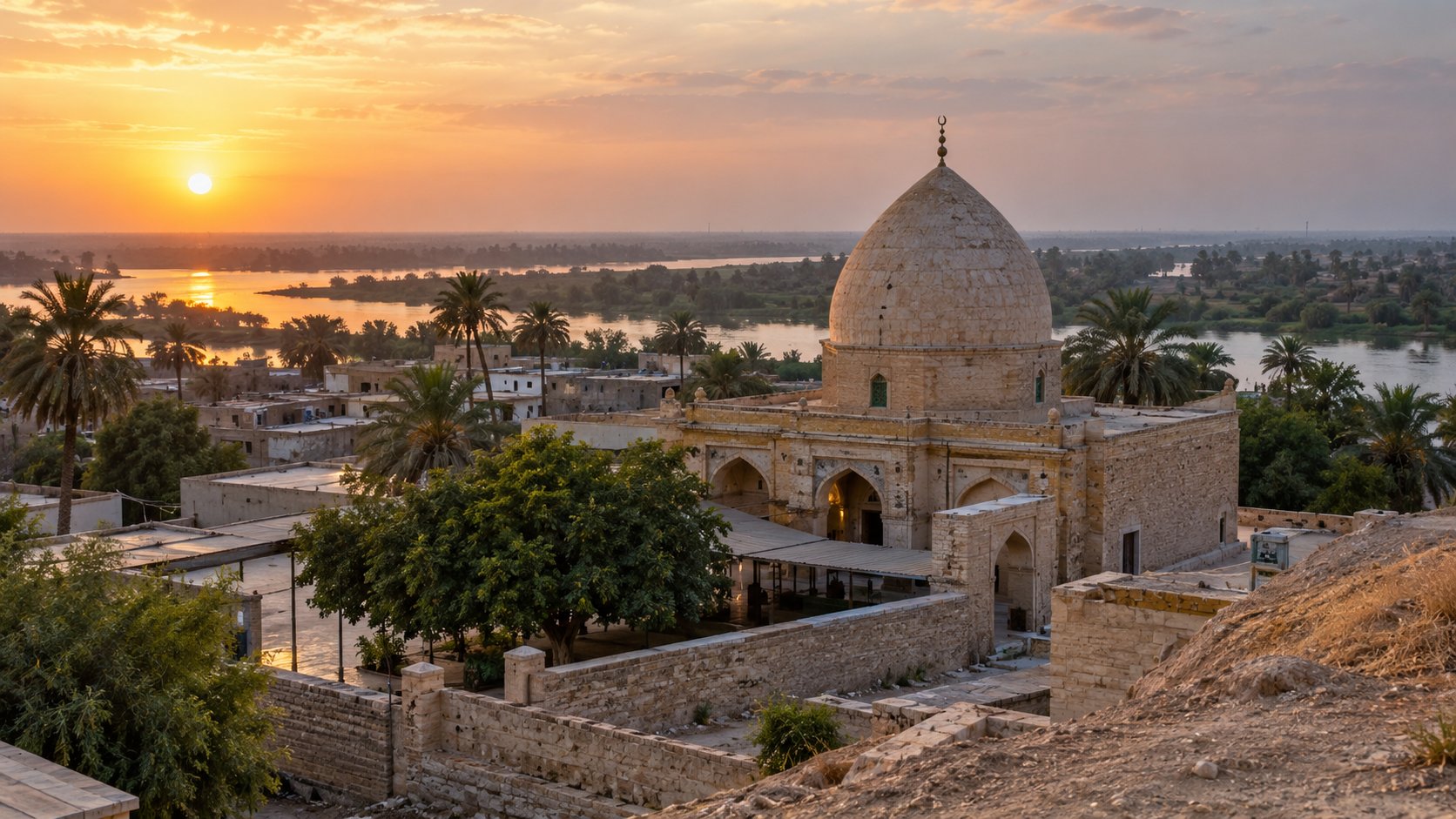
Descriptions of the complex mention an enclosing wall, a domed mausoleum and a former synagogue alongside Muslim prayer space. The dome has blue glazed tiles, and Hebrew writing has been recorded inside. Accounts describe different phases of the complex's history. Diarna also notes that the Tigris has shifted course, so the present building may not be the structure medieval travelers saw.
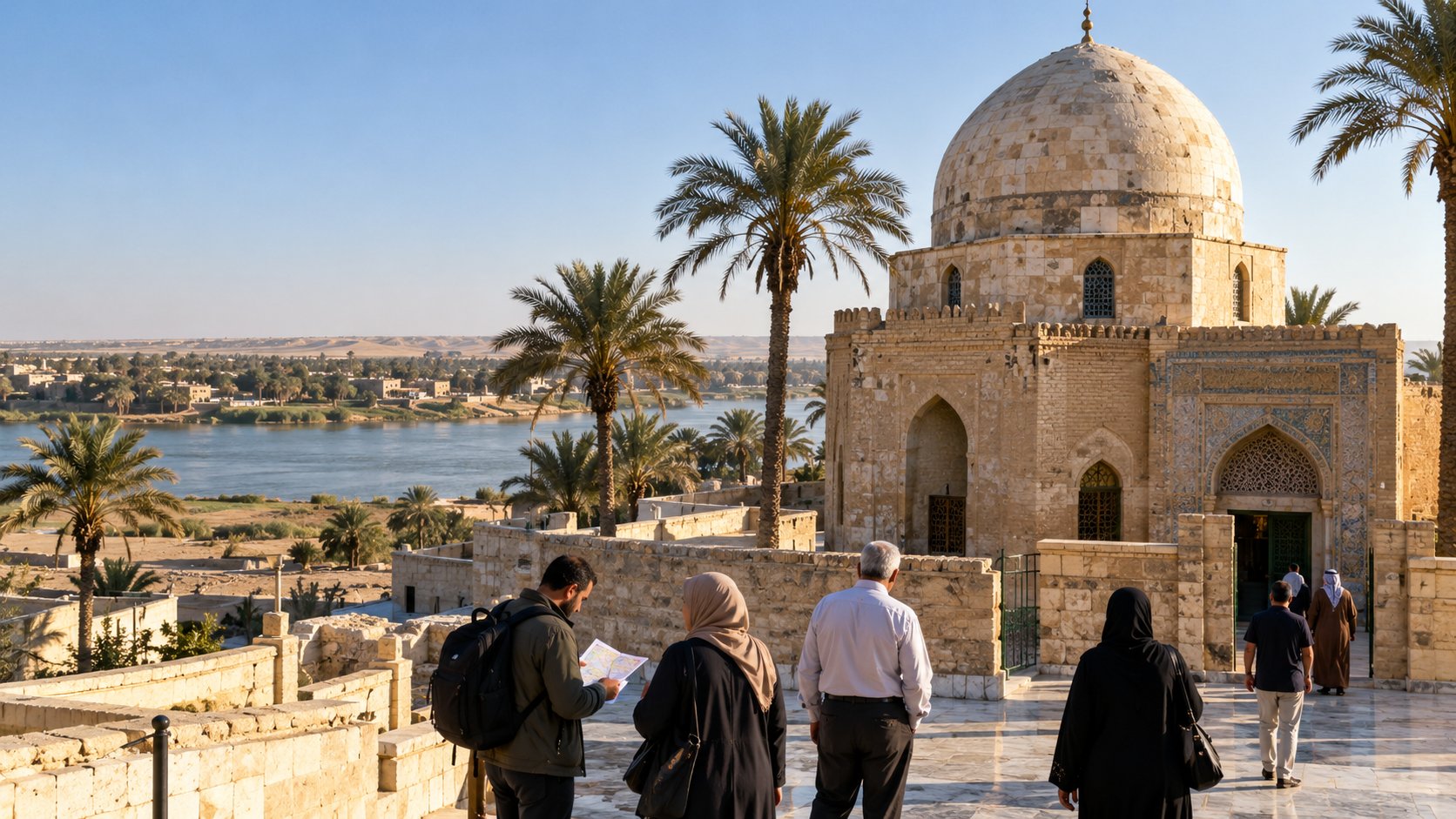
The shrine stands beside the river among palms. Visitors should treat it as an active religious site. Dress modestly, ask before taking photographs and follow local guidance about access and prayer areas.
Planning a visit
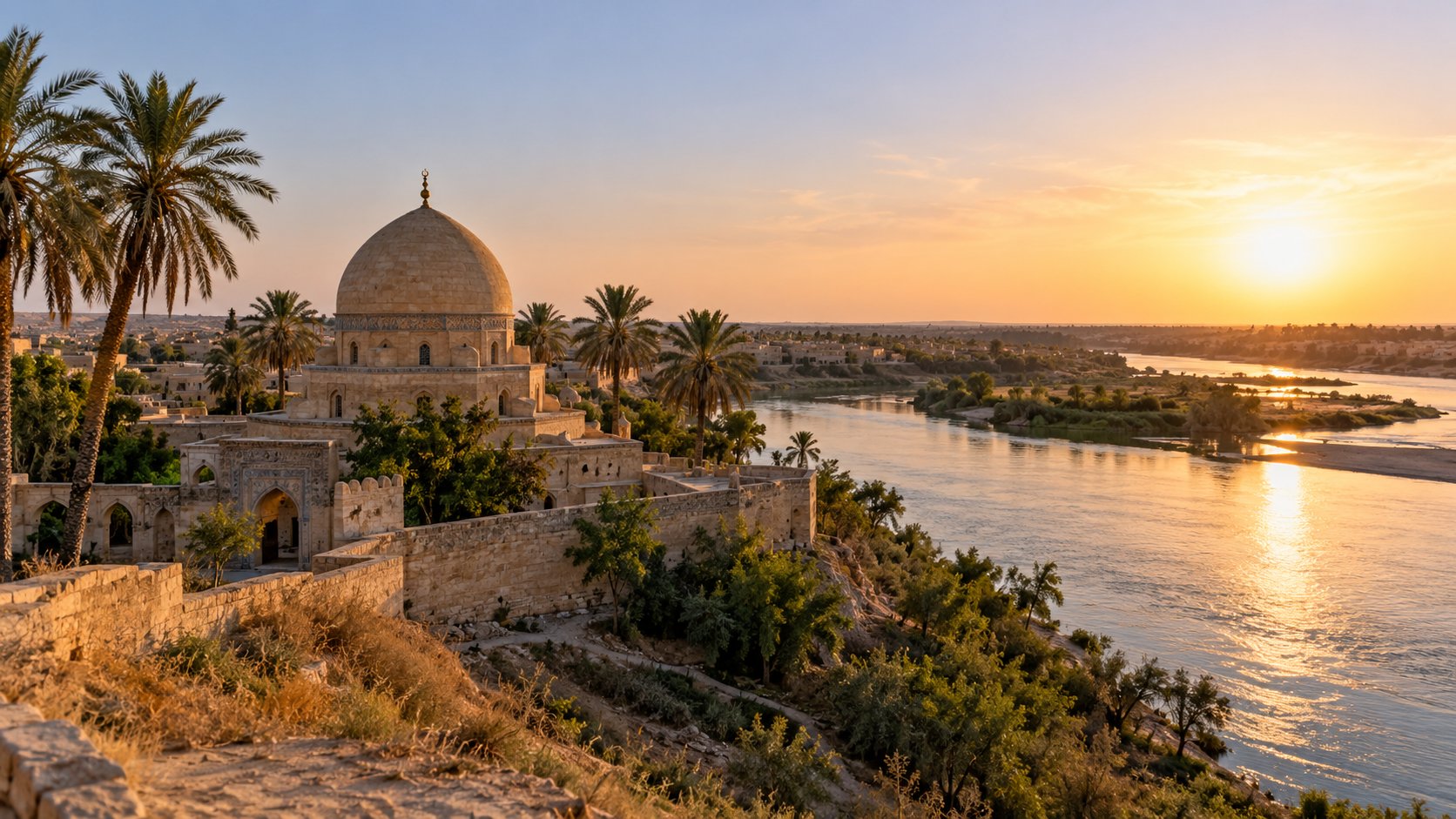
Al-Uzair is in Qalat Saleh district, Maysan Governorate, in southeastern Iraq. Published sources place the shrine on the Tigris's western bank, but do not provide reliable current details about opening hours, transport, facilities or access. Confirm local arrangements before travelling.
Check your government's current Iraq travel advice before making plans. The UK Foreign, Commonwealth & Development Office advises against all but essential travel to the remainder of Maysan and against all travel within five kilometres of parts of the province's border with Iran. Advice can change and may affect travel insurance and consular support. Read the FCDO's Iraq advice.
A place of memory
Ezra's Tomb links the history of Jewish life in southern Iraq with the region's continuing religious life. The burial tradition remains unconfirmed, but the site's history and surviving traces of Jewish worship make it an important place of memory for more than one community.
Frequently asked questions
Sources
- Diarna: Tomb of Ezra, Al-Uzayr, Iraq. http://archive.diarna.org/site/detail/public/910/.
- GOV.UK, Foreign, Commonwealth & Development Office: Iraq travel advice. https://www.gov.uk/foreign-travel-advice/iraq.
- Jewish Iraq Heritage: Ezra's Tomb. https://iraqdiplomaticdoor.com/heritage/sites/ezra-tomb/.
❓Frequently Asked Questions
Here are answers to frequently asked questions about the content above
It is in Al-Uzair, in Qalat Saleh district of Maysan Governorate, on the western bank of the Tigris in southeastern Iraq.
The site is traditionally identified as Ezra's tomb, but the burial place is unconfirmed. The Hebrew Bible does not record where Ezra died, and historical traditions have also placed his burial in Jerusalem.
Yes. The shrine has a history of Jewish pilgrimage and remains a place of devotion for Shi'a Muslims in southern Iraq.
Published descriptions mention a blue-tiled dome, a mausoleum and historic Jewish features, including Hebrew inscriptions. Access to particular spaces may vary, so follow local guidance.
Reliable current details about opening hours, transport and facilities are not available in the sources consulted. Confirm arrangements with local contacts before travelling.
Safety conditions can change. Check current official travel advice before planning a visit. The UK FCDO advises against all but essential travel to most of Maysan and against all travel near parts of its Iran border.