The second-largest museum in Iraq, housing irreplaceable Assyrian, Hatra, and Islamic artifacts, undergoing major international restoration with reopening targeted for 2026.
Mosul Museum
The Mosul Cultural Museum stands on the western bank of the Tigris River in northern Iraq as one of the country's most significant cultural institutions, second in size only to the National Museum of Iraq in Baghdad. Established in 1952, the museum documents the multi-millennial history of northern Mesopotamia, with holdings from prehistoric settlements, the Neo-Assyrian Empire, the desert kingdom of Hatra, and medieval Islamic dynasties. Following years of instability and severe destruction during the Daesh (ISIS) occupation of Mosul between 2014 and 2017, the museum is undergoing an internationally coordinated restoration led by Iraqi authorities alongside global cultural organizations.
Historical Origins and Architectural Vision
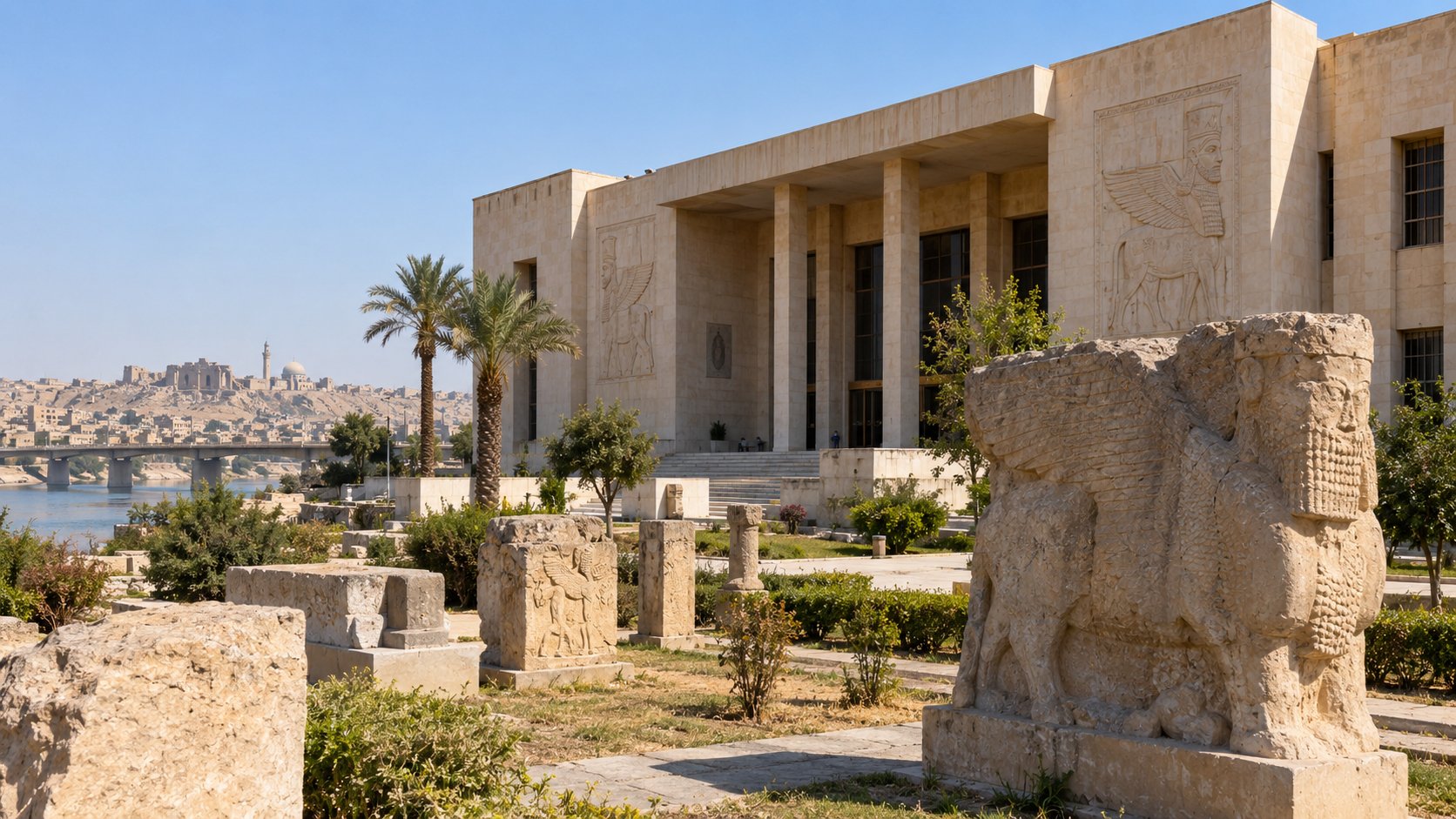
The museum opened in 1952 in Mosul’s historic Royal Hall to display finds from regional archaeological excavations. As excavations across Nineveh, Nimrud, and Hatra yielded more material, Iraqi heritage authorities commissioned architect Mohamed Makiya in the 1960s to design a dedicated home for the collection.
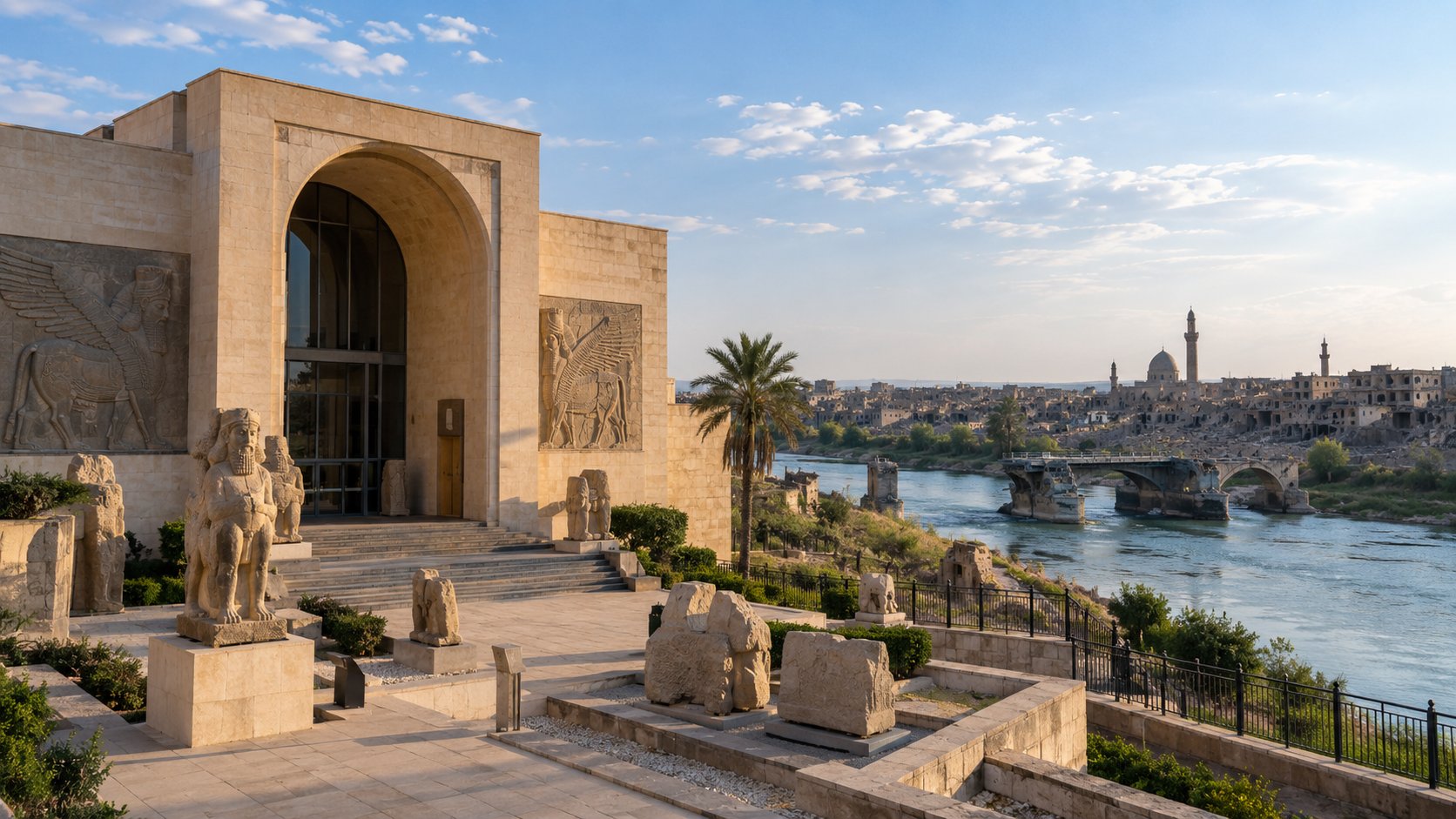
Makiya completed the modernist building in the 1970s, combining regional forms with open-plan galleries, internal courtyards, and filtered natural lighting. Situated west of the Tigris adjacent to Al Shuhadaa Park, the building organized its displays into four chronological sections:
- Prehistoric Gallery: Early northern Mesopotamian agricultural settlements, ceramic styles, and Neolithic tools.
- Assyrian Gallery: Monumental royal art, stone reliefs, and cuneiform inscriptions from imperial capitals including Nimrud (Kalhu), Nineveh, Khorsabad (Dur-Sharrukin), and Balawat.
- Hatra Gallery: Limestone sculptures, deities, and architectural fragments from the Greco-Roman-Parthian trading city of Hatra.
- Islamic Gallery: Carved wooden furnishings from regional shrines, metalwork, ceramics, and medieval manuscripts reflecting Mosul’s role along trade routes.
In 2003, the museum closed to protect its collections from the turmoil following the US-led invasion. Heritage officials moved most smaller antiquities to Baghdad's National Museum for safekeeping, though monumental stone sculptures remained in place in Mosul.
Destruction and Recovery Efforts
In June 2014, Daesh militants occupied Mosul and systematically targeted the museum's holdings. In February 2015, the group released video footage of fighters destroying artifacts in the Assyrian and Hatra galleries using sledgehammers, power tools, and explosives. Militants looted portable artifacts, set fire to more than 28,000 rare books and manuscripts in the research library, and detonated an explosive in the Assyrian Gallery that tore an opening through the floor into the basement.
Key damaged or destroyed works included:
- The Throne Base of King Ashurnasirpal II: A 9th-century BC stone dais from the Northwest Palace at Nimrud, covered with royal cuneiform texts.
- Colossal Lamassu Guardians: Human-headed winged bulls that once flanked Assyrian palace gates.
- The Monumental Lion of Nimrud: A large guardian sculpture shattered into hundreds of stone fragments.
- The Banquet Stele: An inscribed stone slab recording the inaugural feast of Ashurnasirpal II’s palace at Nimrud.
- Hatra Sculptures: Life-sized limestone statues depicting rulers, priests, and deities in blended Hellenistic, Parthian, and local Arabian styles.
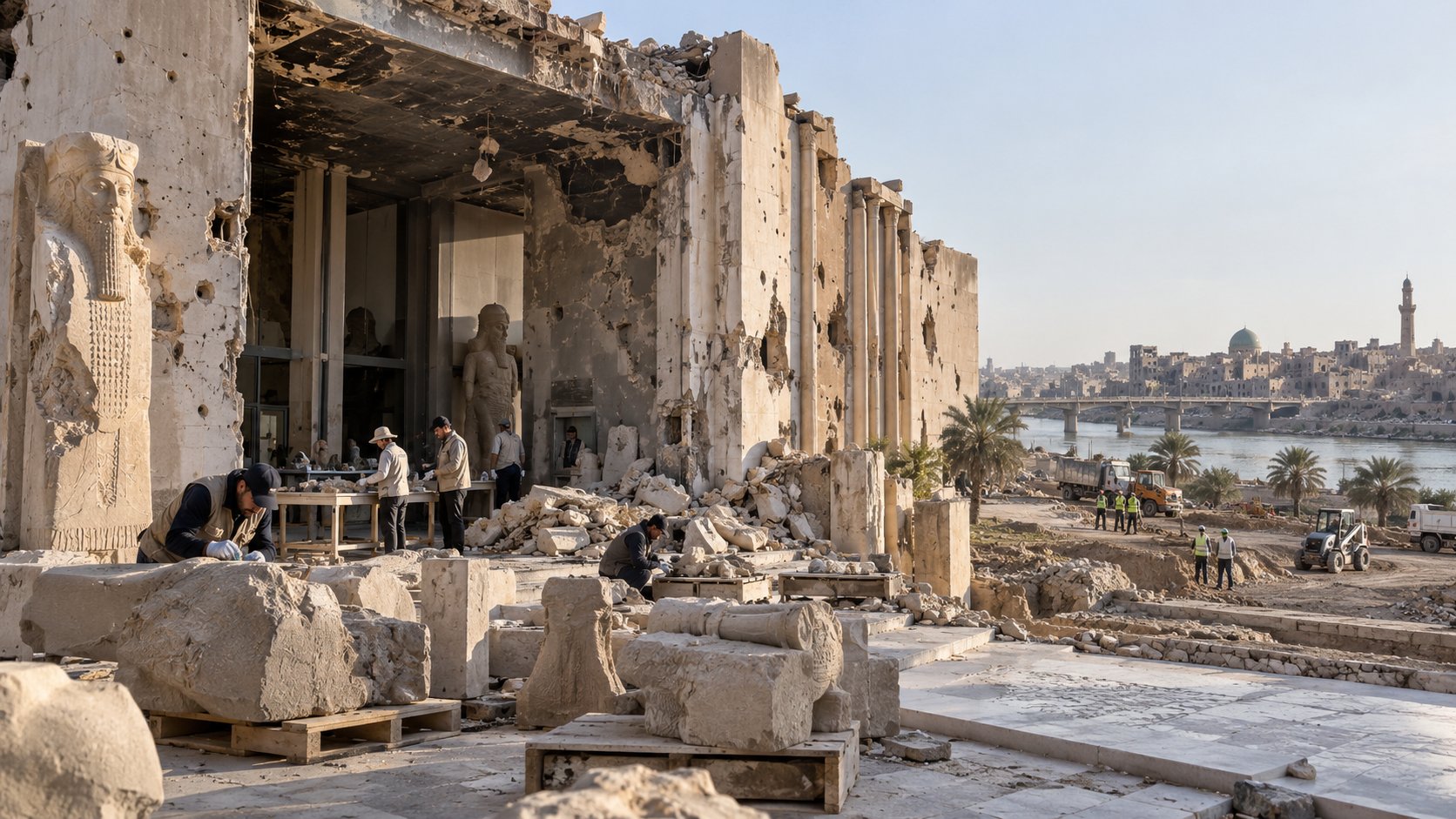
After Iraqi forces liberated Mosul in July 2017, the State Board of Antiquities and Heritage (SBAH) documented the damage and launched international appeals to stabilize the building and rescue the fragments.
International Restoration Project
In 2018, an international partnership formed to restore the building and conserve surviving pieces. Led by the State Board of Antiquities and Heritage (SBAH) under the Iraqi Ministry of Culture, Tourism and Antiquities, the project is funded primarily by the International Alliance for the Protection of Heritage in Conflict Areas (ALIPH) and implemented with three key partners:
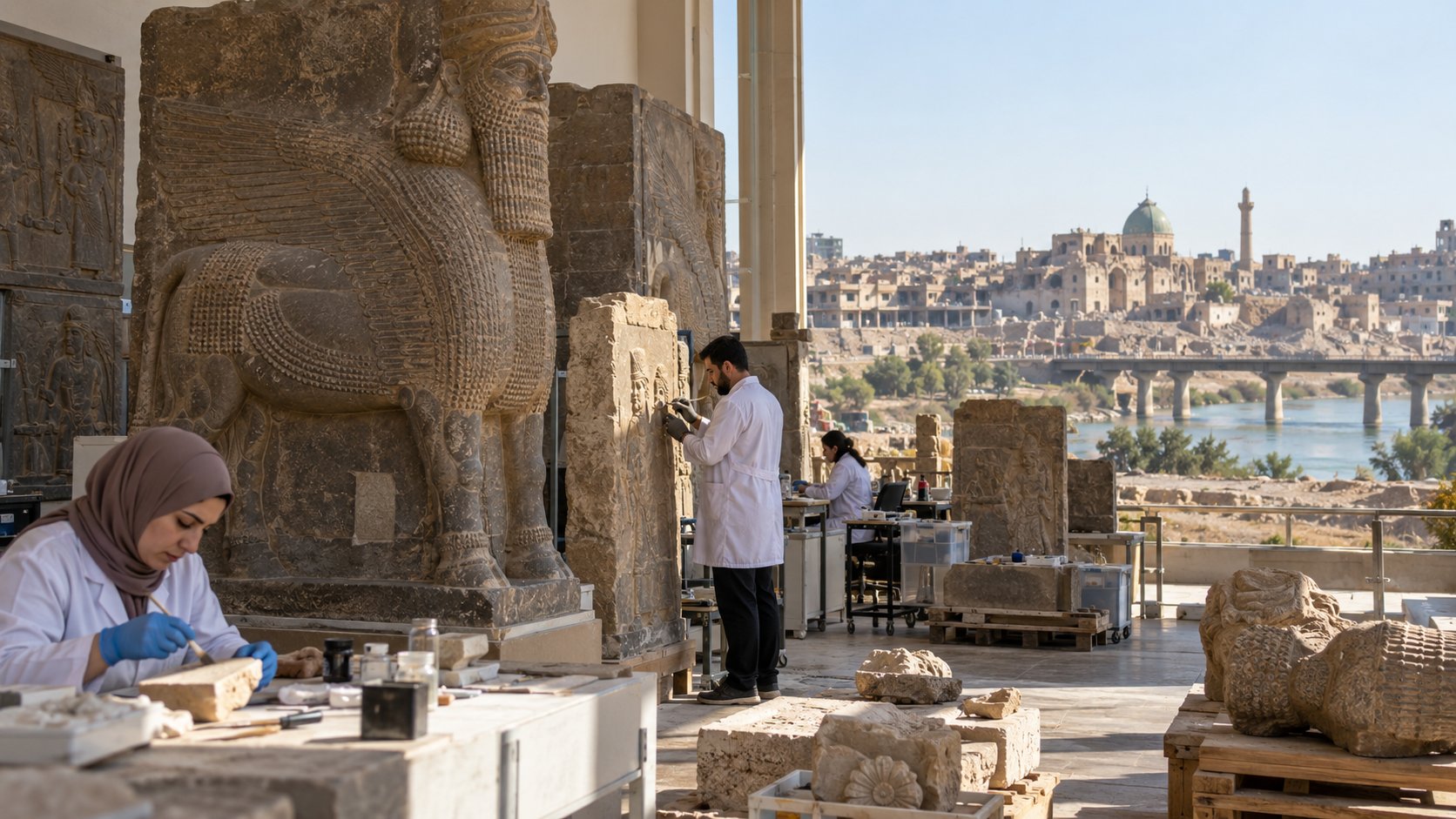
- Musée du Louvre: Directing stone and metal conservation in on-site labs, training Iraqi restorers, and reassembling thousands of fragments from the Banquet Stele, the throne base of Ashurnasirpal II, and the Nimrud lion.
- World Monuments Fund (WMF): Directing structural stabilization and architectural repairs to Mohamed Makiya’s building with conservation architects Donald Insall Associates.
- Smithsonian Institution: Supporting capacity building, storage security, museum administration, and future interpretive plans.
The architectural plan preserves Mohamed Makiya’s original design while upgrading structural stability, climate systems, and accessibility. The team chose to leave the footprint of the blast crater in the Assyrian Gallery structurally reinforced but clearly visible to visitors as an architectural record of the museum's history. Landscape architect Dr. Jala Makhzoumi designed restored public gardens linking the museum grounds with Mosul's riverfront green spaces.
Current Reopening Status and Visitor Access
As of 2026, the main exhibition galleries of the Mosul Cultural Museum remain closed to regular walk-in visitors while architectural rehabilitation, climate installations, and conservation work finish.
Visitor and access details:
- Projected Reopening: Full public reopening is targeted for 2026 under the joint schedule set by SBAH, ALIPH, and conservation partners.
- Interim Exhibitions: Temporary displays and community programs, such as the trilingual exhibition The Mosul Cultural Museum: From Destruction to Rehabilitation hosted in the restored Royal Hall, have shared conservation progress with residents and official delegations.
- Digital Access: The French Ministry of Culture and partner institutions provide a virtual tour and digital exhibition with 3D photogrammetric models of surviving works, architectural plans, and archival photographs.
- Visiting Mosul: Travelers can view Makiya’s modernist exterior from Al Shuhadaa Park along the western riverfront and visit nearby Old City landmarks, including the rebuilt Al-Nuri Mosque complex and historic churches. Entering the active conservation workshops inside the museum requires formal academic or institutional permission from the State Board of Antiquities and Heritage in Baghdad or the Ninawa Antiquities Inspectorate.
Sources
- Musée du Louvre Press Room: Rehabilitation plans for Iraq’s Daesh-damaged Mosul Cultural Museum to mark memory of devastating attack and its central role in rebuilding community (Accessed: May 2024 / Updated records 2026)
- Ministère de la Culture (France): An Ambitious International Rehabilitation Project - Mosul Cultural Museum (Accessed: April 2026)
- Ministère de la Culture (France): Restoring the Works of Art - Mosul Cultural Museum (Accessed: April 2026)
- Ministère de la Culture (France): Restoring the Building - Mosul Cultural Museum (Accessed: April 2026)
- World Monuments Fund (WMF): Mosul Cultural Museum Rehabilitation Project Announcement (Accessed: April 2026)
- Good News Good Vibes: Mosul Cultural Museum Rises Again, Healing Wounds of War (Accessed: April 2026)
❓Frequently Asked Questions
Here are answers to frequently asked questions about the content above
The main exhibition halls of the Mosul Cultural Museum remain closed to regular walk-in tourists while structural rehabilitation and artifact reconstruction continue, with the official full public reopening targeted for 2026.
The modernist museum building was designed in the 1960s and completed in the 1970s by renowned Iraqi architect Mohamed Makiya, featuring open-plan galleries, inner courtyards, and filtered natural lighting.
Key damaged masterpieces include the 9th-century BC throne base of King Ashurnasirpal II, the colossal stone lion from Nimrud, two portal lamassu sculptures, the Banquet Stele, numerous Hatra statues, and over 28,000 burned historical manuscripts.
The restoration is led by the Iraqi State Board of Antiquities and Heritage (SBAH) and funded by ALIPH, in active partnership with the Musée du Louvre, the World Monuments Fund, and the Smithsonian Institution.
No. The consortium determined that the floor crater left by the bomb detonation in the central Assyrian Gallery will be structurally reinforced while keeping its footprint visible as a permanent historical memorial.
Yes. The French Ministry of Culture, the Louvre, and partner institutions host an official trilingual online platform featuring 3D artifact models, historical archives, and virtual walkthroughs of the museum.