Nippur was the sacred heart of ancient Mesopotamia, where kings sought divine legitimacy at the Ekur temple of Enlil. Today, the expansive desert mounds of Tell Nuffar feature the towering ziggurat ruins, deep excavation trenches, and thousands of years of layered history.
Rising above the flat alluvial plains of southern Iraq, the ruins of Nippur mark one of the most significant sacred landscapes of the ancient world. Known locally as Tell Nuffar, this sprawling archaeological complex was never a political capital or the seat of a conquering dynasty. Instead, for more than four thousand years, Nippur held unmatched spiritual authority across Mesopotamia as the holy city of Enlil, the supreme deity of the Sumerian pantheon according to the Institute for the Study of Ancient Cultures.
Mesopotamian kings from distant city-states traveled here to seek legitimacy, dedicating grand monuments, rebuilding sanctuaries, and leaving votive offerings. From the early dynasties of Sumer through the Akkadian, Babylonian, Kassite, and Assyrian empires, control over Nippur symbolized divine sanction to rule the known world, as documented by Archaeolist. Today, travelers exploring the site encounter massive mudbrick ruins, the prominent outline of the ancient ziggurat capped by later fortifications, and extensive fields of archaeological trenches that yielded tens of thousands of invaluable cuneiform tablets.
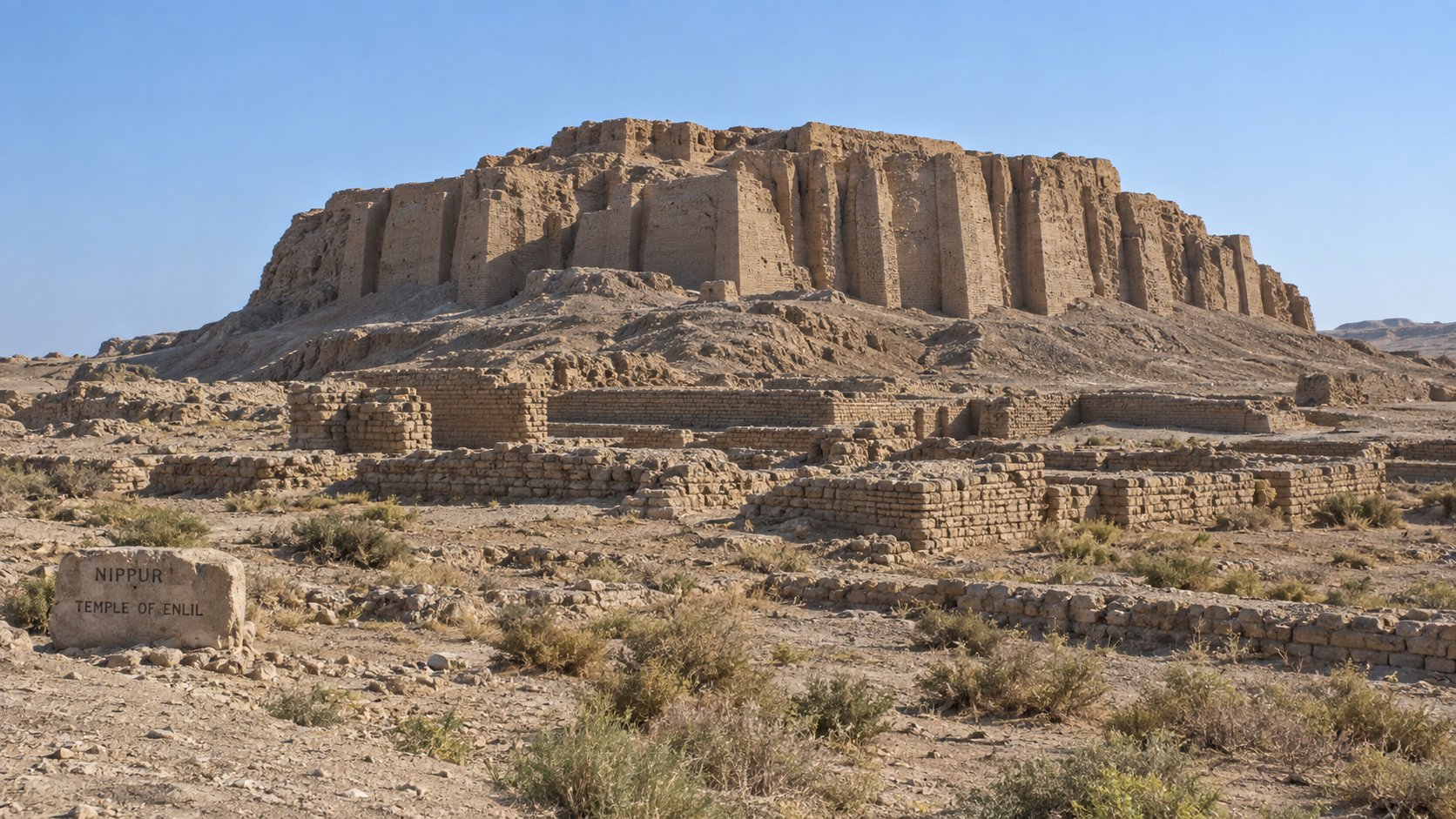
What Visitors Experience at Nippur
Nippur covers an area of roughly 150 hectares, forming an undulating terrain of ancient ruin mounds that rise up to 20 meters above the surrounding desert floor, according to Wikipedia's archaeological records. The site is divided into an eastern and a western mound by the dry riverbed of the ancient Shatt al-Nil canal, an early channel of the Euphrates River that once brought water and commerce to the heart of the settlement, as detailed by the Penn Museum.
The visual center of the site is the Temple of Enlil, known historically as the Ekur, or "Mountain House." Dominating this precinct are the remains of the Great Ziggurat, originally constructed in layered mudbrick by King Ur-Nammu during the Third Dynasty of Ur around 2100 BCE and faced with kiln-fired bricks set in natural bitumen, as outlined on Archaeolist. Over subsequent millennia, the ziggurat platform was altered and reused. During the Parthian period, the structure was converted into a fortified acropolis, and in the late nineteenth century, American excavators built an expedition house of fired brick atop the mound. This structure still crowns the summit today, giving the ziggurat a distinctive fortress-like profile visible across the flat landscape from miles away.
Walking across the site reveals the sheer depth of Mesopotamian history. The ground across Tablet Hill and the domestic quarters is scattered with dense carpets of ceramic pottery fragments, vitrified kiln slag, and mudbrick wall lines exposed by winds and rain, as observed in field reports from the Little Traveler's Notebook. Deep stratigraphic pits reveal superimposed architectural levels that span from the prehistoric Ubaid period through Early Dynastic temples, Kassite administrative complexes, and early Islamic residential quarters, as documented by the University of Chicago OCHRE Project.
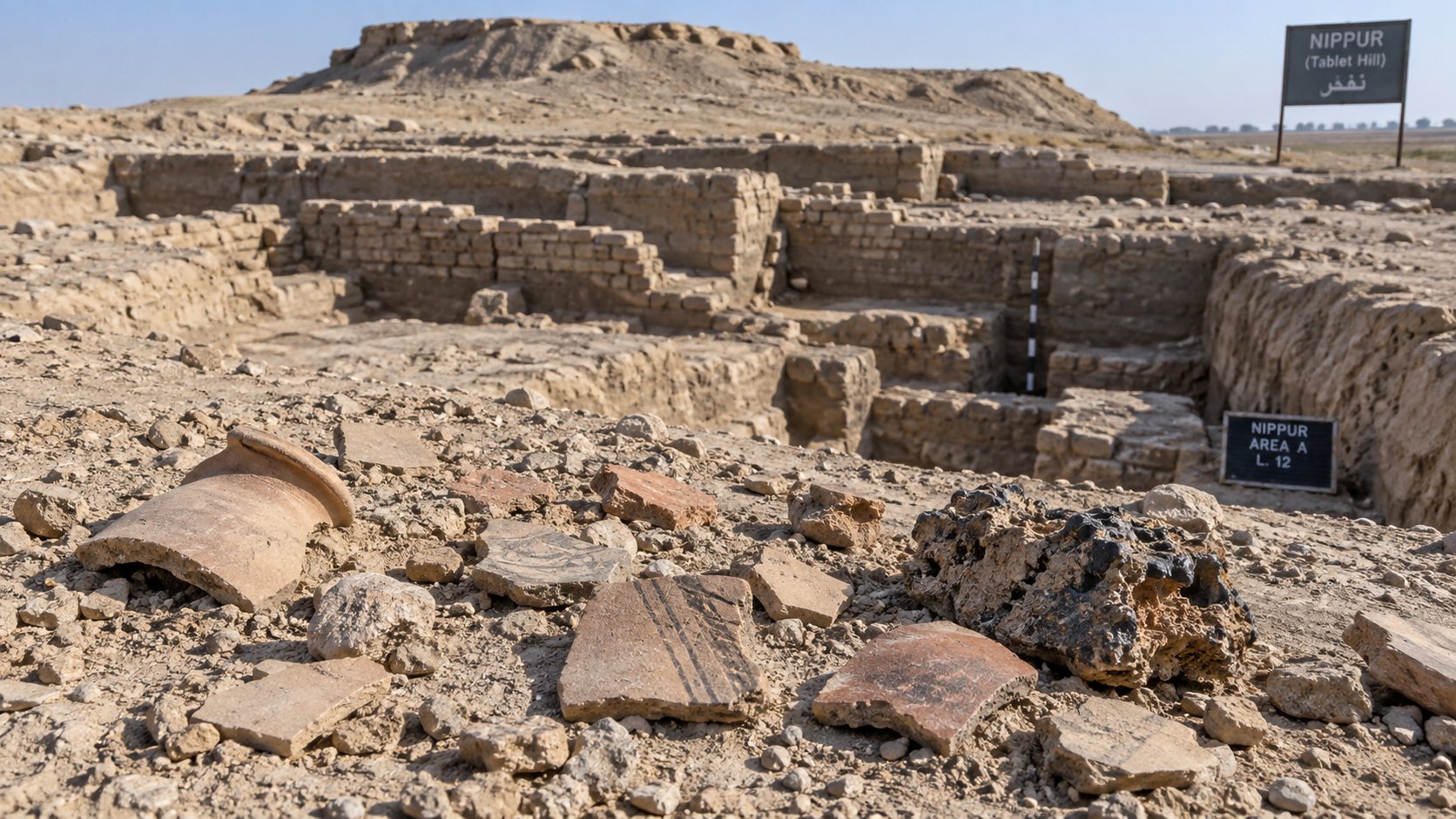
The Historical and Religious Role of Nippur
In ancient Sumerian theology, Nippur was regarded as the navel of the universe and the meeting place between the heavens and the earth, as recorded in records archived by Harvard University. The city was dedicated to Enlil, the god of storms, air, and cosmic order, who was believed to decree the fates of humanity from his sanctuary inside the Ekur.
Unlike rival centers such as Ur or Babylon, Nippur rarely held secular political power. Instead, military victors and empire builders understood that true legitimacy required Enlil's blessing. Early Sumerian monarchs including Enmebaragesi of Kish and Lugalzagesi of Uruk made pilgrimages to dedicate precious stone vessels at the temple, a tradition later continued by Akkadian rulers Sargon and Naram-Sin, as well as Babylonian and Kassite kings, according to Wikipedia's historical overview.
Nippur was also the intellectual and scribal capital of southern Mesopotamia. Excavations on Tablet Hill uncovered tens of thousands of clay tablets inscribed with cuneiform text, preserving the world's richest collection of Sumerian literary works, hymns, school exercises, lexical lists, and legal codes. Among these discoveries was the famous Sumerian Creation Myth and Flood Story, as well as an ancient agricultural calendar containing technical farming and irrigation instructions handed down by a father to his son, as noted in the Arabic Wikipedia entry on Nuffar. Archaeologists also unearthed a detailed clay map of Nippur dating to the Kassite period, which accurately depicts the city's walls, gates, canals, and temple districts.
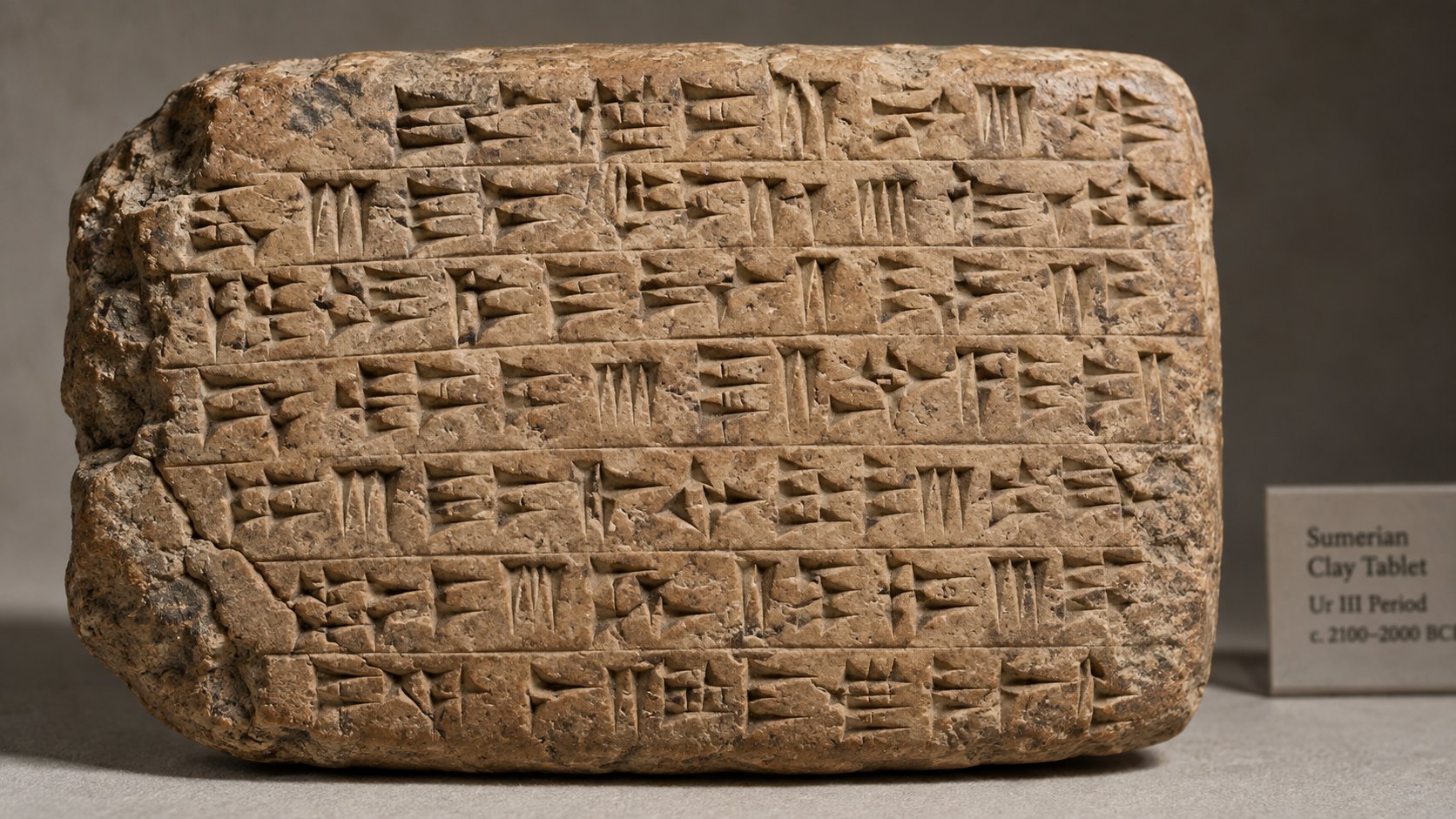
Archaeological Rediscovery and Recent Fieldwork
Systematic excavations at Nippur began in 1889 under the auspices of the University of Pennsylvania, marking the first major American archaeological expedition to Mesopotamia, according to Harvard University's excavation records. Led by pioneers including John Henry Haynes and Hermann Hilprecht, the team uncovered vast temple foundations and recovered enormous archival collections.
In 1948, the Oriental Institute of the University of Chicago (now the Institute for the Study of Ancient Cultures) initiated long-term excavations that continued across nineteen field seasons through 1990, shedding new light on the Temple of Inanna, the Temple of the healing goddess Gula, and residential neighborhoods, as detailed by the ISAC Nippur Expedition.
Following a hiatus of nearly three decades, scientific fieldwork officially resumed at Nippur in April 2019 under the direction of the University of Chicago and the Iraqi State Board of Antiquities and Heritage, as reported by the University of Chicago OCHRE Project. Current research incorporates digital mapping, drone photography, and targeted excavations on the Western Mound, investigating Parthian administrative structures, early first-millennium BCE houses, and southern city wall fortifications.
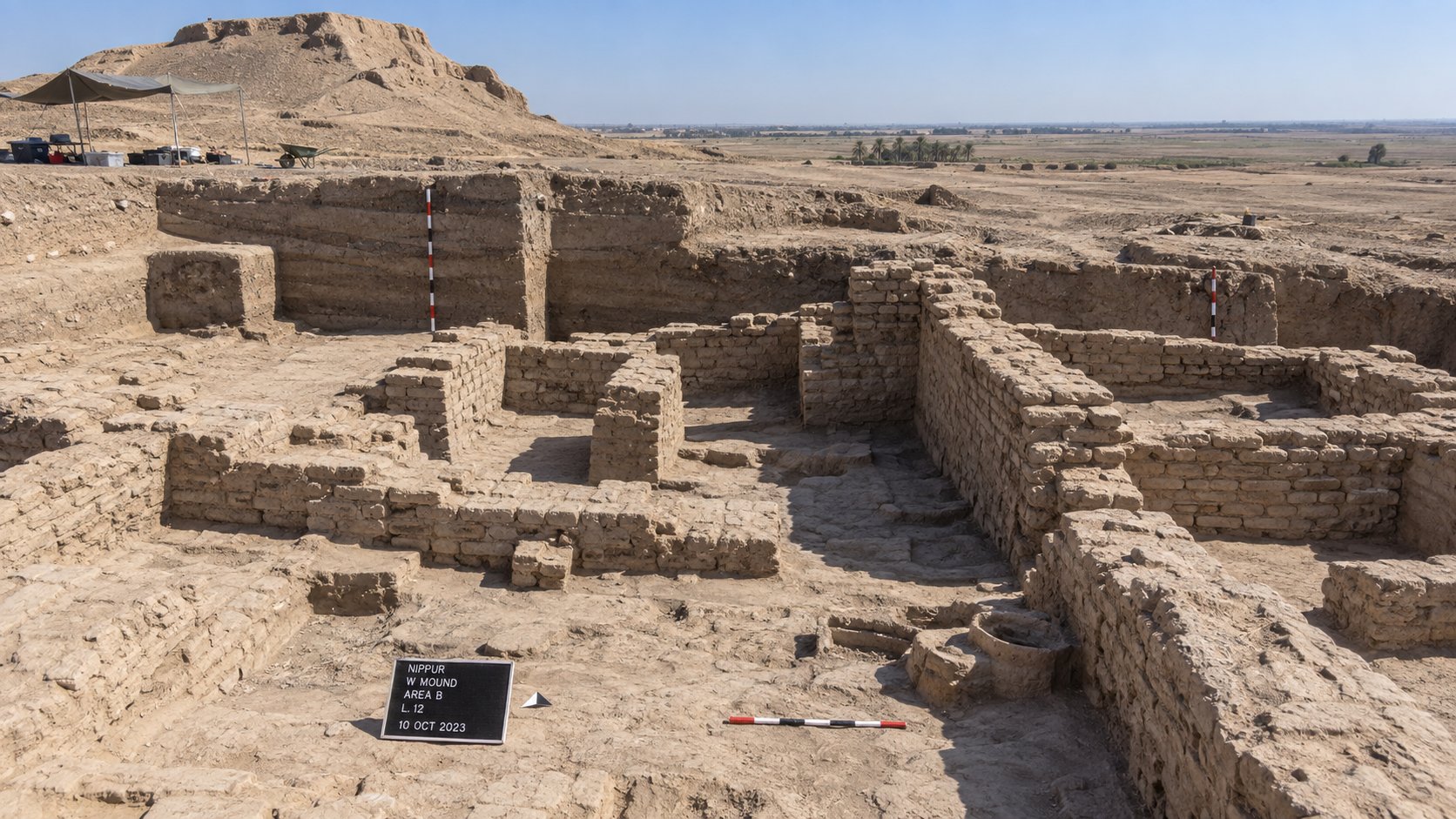
Best Time to Visit Nippur
Nippur experiences an arid desert climate characterized by scorching summers and mild winters, as detailed in the climate analysis by TravelDojo.
- Autumn (October to November): Temperatures are comfortable, with daily averages ranging between 20°C and 34°C. Clear skies and mild breezes make this an optimal season for walking through open archaeological mounds.
- Winter (December to February): Cool and pleasant, with daytime highs around 17°C to 20°C and chilly nights dipping toward 5°C to 7°C. Light rainfall occurs occasionally, which can make unpaved desert tracks muddy.
- Spring (March to April): Mild to warm conditions, with daytime temperatures between 24°C and 31°C, offering excellent daylight hours for extensive exploration.
- Summer (May to September): Summer is intensely hot, with temperatures routinely exceeding 42°C to 45°C during the day and minimal shade available on site. Visiting during these months is physically demanding and generally discouraged.
How to Get to Nippur
The ruins of Nippur are located in the Afak District of Al-Qādisiyyah Governorate in south-central Iraq.
- From Diwaniyah: Diwaniyah is the closest major city, located about 30 kilometers southwest of the site. The drive takes approximately 40 to 50 minutes. From central Diwaniyah, follow the paved regional highway eastward to the town of Afak, then turn north onto the local road that leads roughly 7 to 8 kilometers directly to the Tell Nuffar archaeological complex, as mapped by the Iraq Guide.
- From Najaf: Najaf is located approximately 115 kilometers west of Nippur. Private taxis or hired drivers can make the journey in about two hours via Diwaniyah.
- From Hillah and Babylon: Travelers based near Hillah and Babylon can reach Nippur by driving south toward Diwaniyah along the main highway, a distance of approximately 100 kilometers that takes about an hour and a half by car.
- From Baghdad: Baghdad is situated roughly 175 to 200 kilometers north of the site. A direct road trip takes about three to three and a half hours, making Nippur accessible either as an ambitious day trip or as a stop en route to southern cities like Nasiriyah.
Shared taxis and minibuses connect major urban garages in Baghdad, Hillah, and Najaf with Diwaniyah, as outlined in general transport guides by Against the Compass and the Adventures of Nicole. From Diwaniyah, you can hire a private local taxi from the Afak garage to take you to the ruins and wait for your return journey.
Practical Visitor Tips and On-Site Advice
- Site Entry and Formalities: Nippur is an active cultural heritage property managed by the Iraqi State Board of Antiquities and Heritage. Standard archaeological site entry tickets across Federal Iraq are typically 25,000 IQD per foreign visitor, as noted by Against the Compass. A local antiquities guard is stationed near the entrance to check tickets and guide visitors toward the main trails, as described by the Little Traveler's Notebook.
- Footwear and Walking Conditions: The archaeological area consists of loose soil, gravel, and thousands of exposed pottery sherds. Wear sturdy, closed-toe walking shoes or hiking boots with good traction to navigate the steep ascents up the ziggurat mound.
- Sun Protection and Supplies: There are no tourist shops, cafes, or water stands on the mound. Bring plenty of drinking water, a wide-brimmed sun hat, sunglasses, and high-SPF sunscreen.
- Checkpoints and Identification: Foreign travelers must carry their original passport with a valid Iraqi visa or e-visa at all times, as security checkpoints operate along roads in Al-Qadisiyyah Governorate, as highlighted by Against the Compass.
- Site Preservation: Nippur is an irreplaceable ancient treasure. Do not remove or disturb pottery sherds, bricks, or surface artifacts, and stay on established footpaths to protect delicate mudbrick features from erosion.
Sources
- Institute for the Study of Ancient Cultures (ISAC), University of Chicago — Nippur Expedition (Accessed May 25, 2026)
- University of Chicago OCHRE — Nippur Project: Resumption of Work (Accessed May 25, 2026)
- University of Chicago Archaeology — Nippur Expedition Overview (Accessed May 25, 2026)
- Penn Museum Expedition Magazine — Nippur 1972-1973 by McGuire Gibson (Accessed May 25, 2026)
- Harvard University / The Shelby White and Leon Levy Program — Nippur Digitized: The University of Pennsylvania Excavations at Nippur 1889-1900 (Accessed May 25, 2026)
- Wikipedia — Nippur (Accessed May 25, 2026)
- Wikipedia Arabic — Nuffar (نفر) (Accessed May 25, 2026)
- Iraq Guide — Nippur Ruins (آثار نيبور نفر) (Accessed May 25, 2026)
- Archaeolist — Nippur Site Profile (Accessed May 25, 2026)
- Archiqoo — Nippur Archaeological Site (Accessed May 25, 2026)
- TravelDojo — Nippur Archaeological Site Guide and Climate (Accessed May 25, 2026)
- Little Traveler's Notebook — A Tourist in Iraq, Part 3: Sumerian City of Nippur (Accessed May 25, 2026)
- Against the Compass — A Guide to Traveling in Iraq in 2026 (Accessed May 25, 2026)
- Adventures of Nicole — Iraq Travel Guide: Everything You Need to Know to Visit in 2026 (Accessed May 25, 2026)
❓Frequently Asked Questions
Here are answers to frequently asked questions about the content above
Nippur was the supreme religious capital of ancient Sumer and Babylonia. Dedicated to Enlil, the chief deity of the Mesopotamian pantheon, it was the sacred center where rulers from across Mesopotamia sought divine legitimacy and dedicated lavish temples.
Nippur is situated in the Afak District of Al-Qadisiyyah Governorate in southern Iraq. It lies approximately 7 to 8 kilometers north of the town of Afak, about 30 kilometers northeast of Diwaniyah, and roughly 175 kilometers south of Baghdad.
Visitors can explore the massive Tell Nuffar mounds, the ruins of the Great Ziggurat and Ekur Temple of Enlil, the nineteenth-century American excavation house crowning the ziggurat summit, deep stratigraphic trenches, and the ancient dry bed of the Shatt al-Nil canal.
The best time to visit is during the cooler months from October to April, when daytime temperatures are pleasant for outdoor walking. Summer months from June to August bring extreme desert heat exceeding 42°C and should be avoided.
Travelers typically reach Nippur by car or private taxi from Diwaniyah in about 45 minutes, from Najaf in about two hours, or from Hillah and Babylon in about 90 minutes. Drivers travel to the town of Afak before heading north along local access roads to the site entrance.
Visitors should bring ample drinking water, sun protection, sturdy closed-toe walking shoes for uneven desert trails, and their original passport with a valid Iraqi visa for road checkpoints. There are no commercial tourist facilities on the archaeological mound.