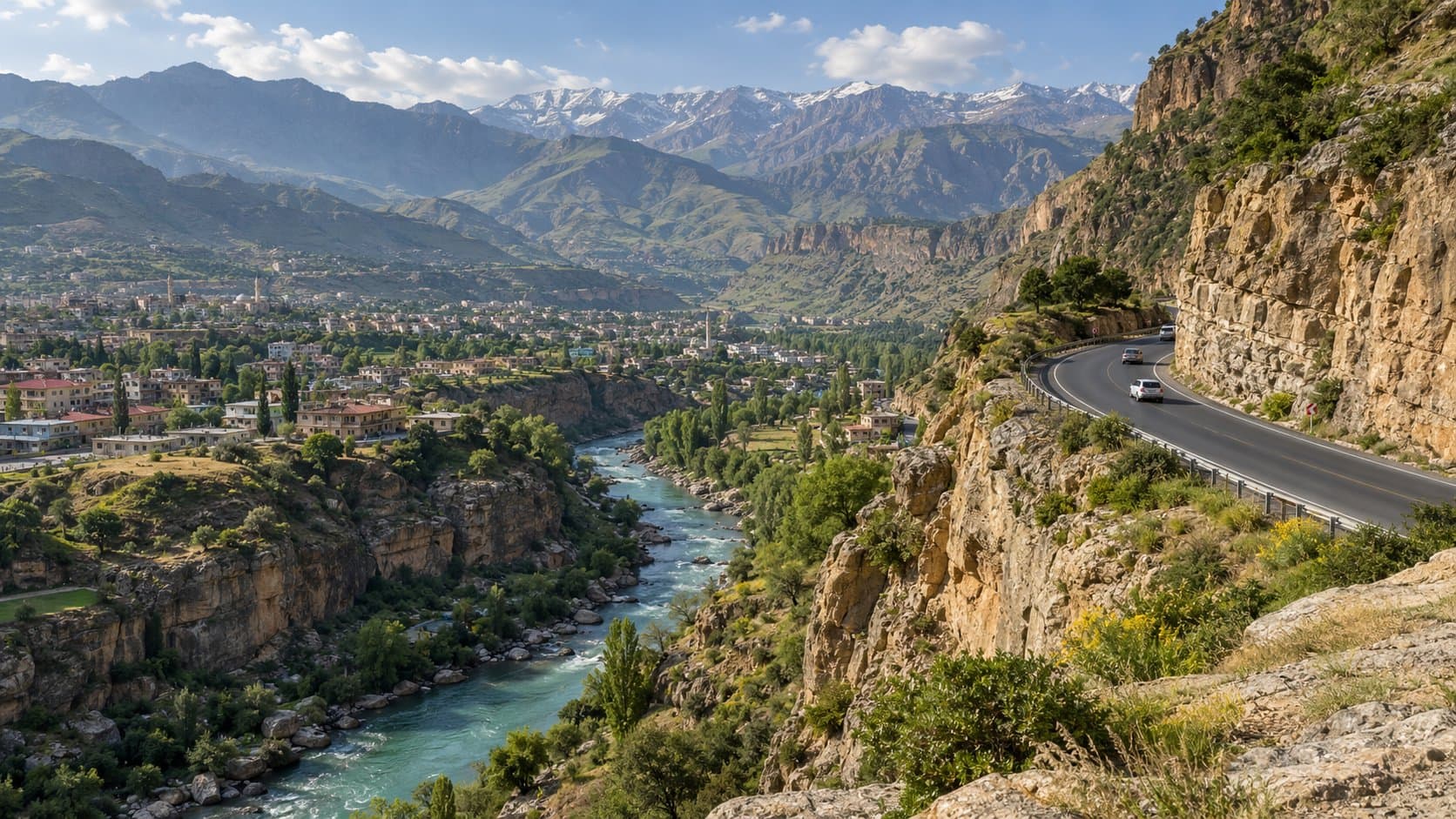
Hamilton Road scenic drive through Rawanduz and Soran
Overview
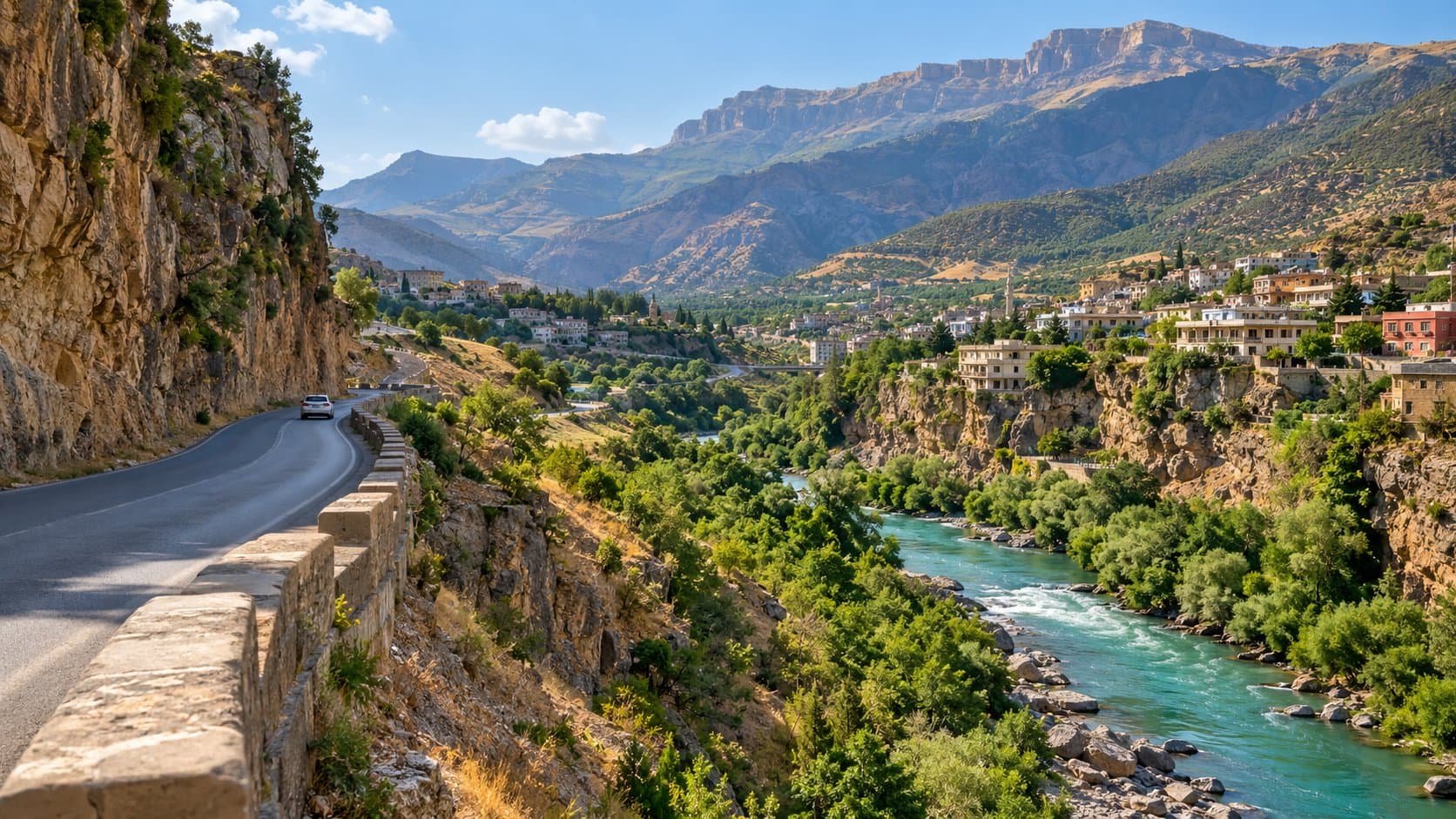
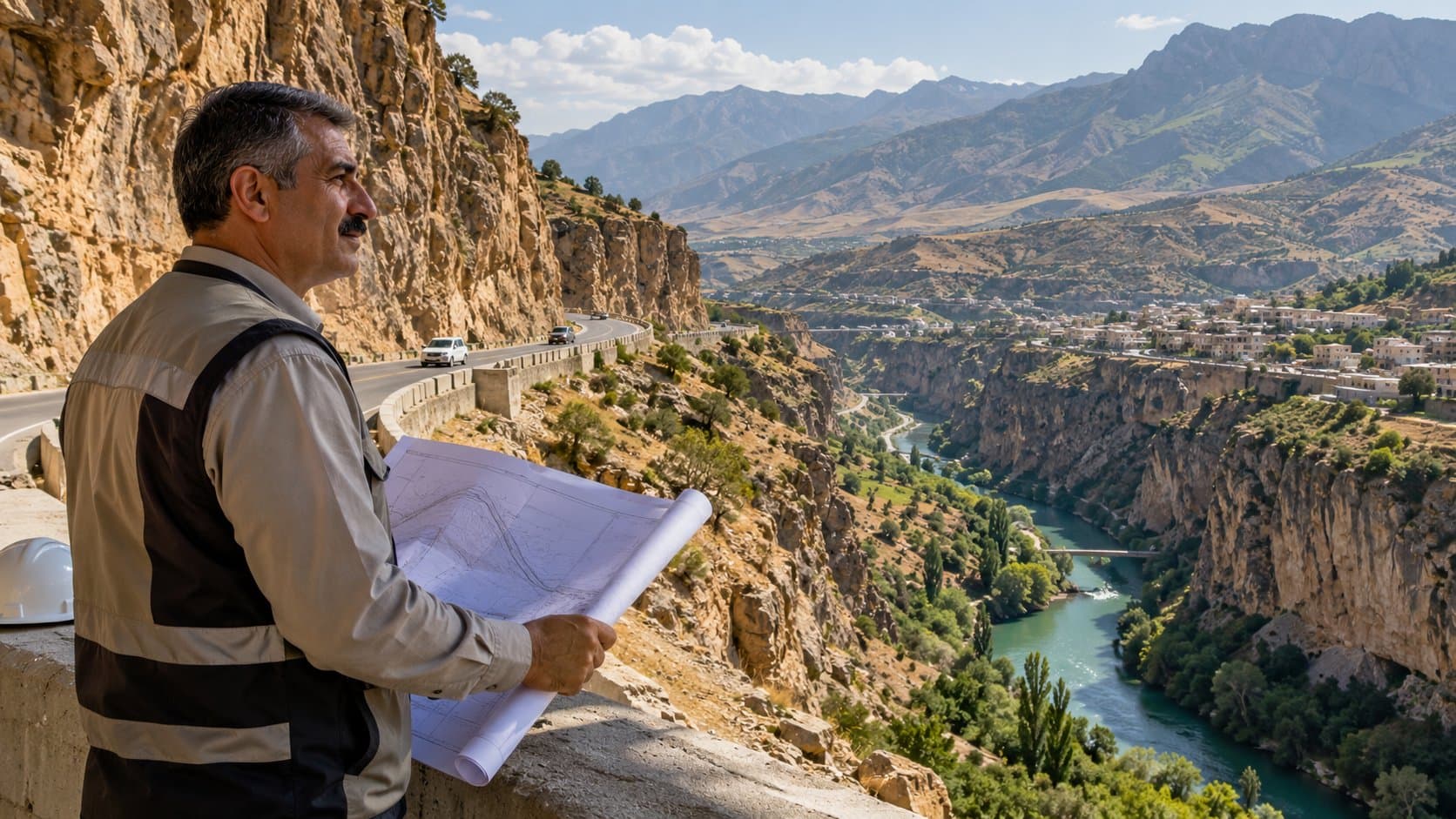
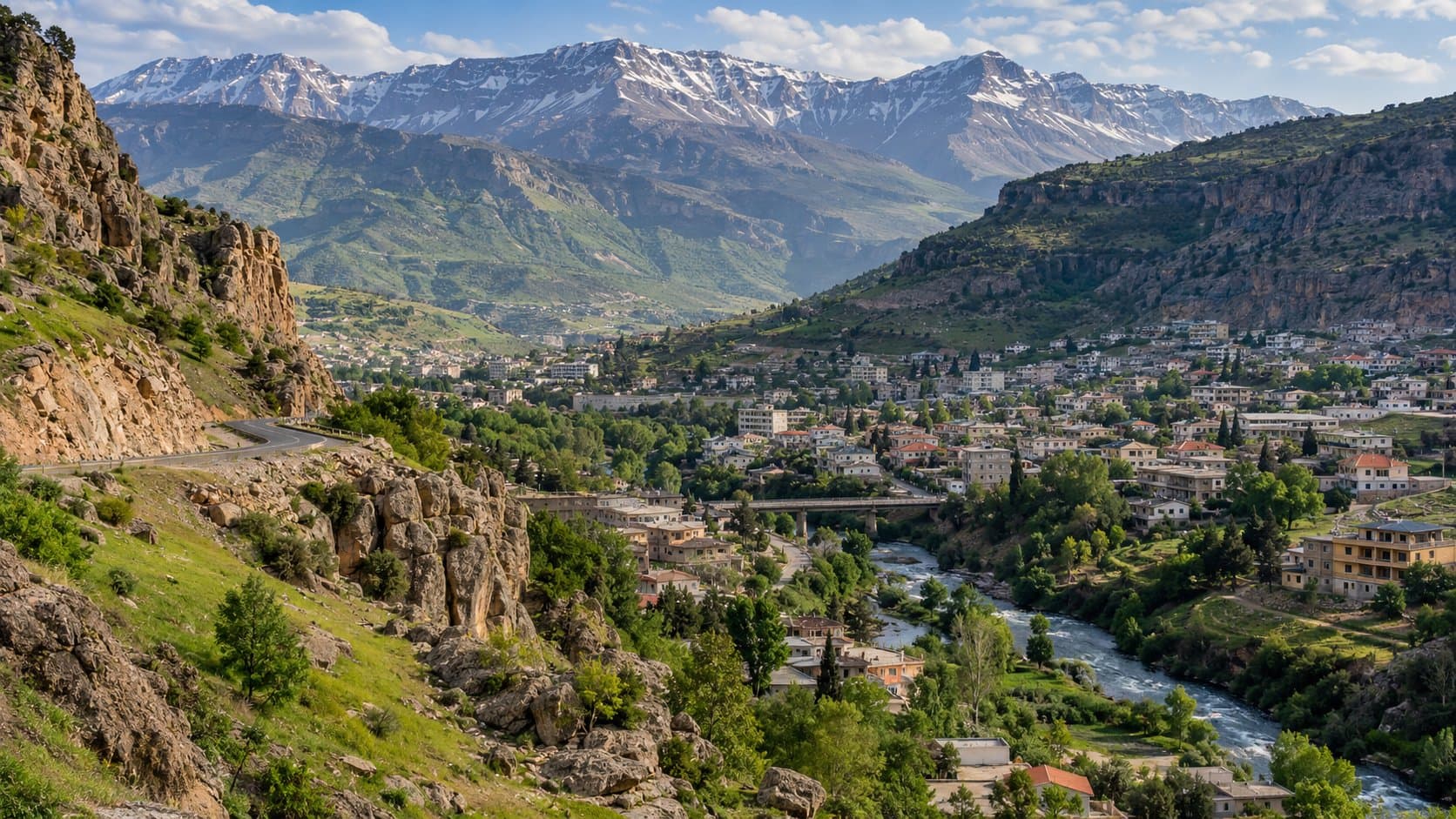
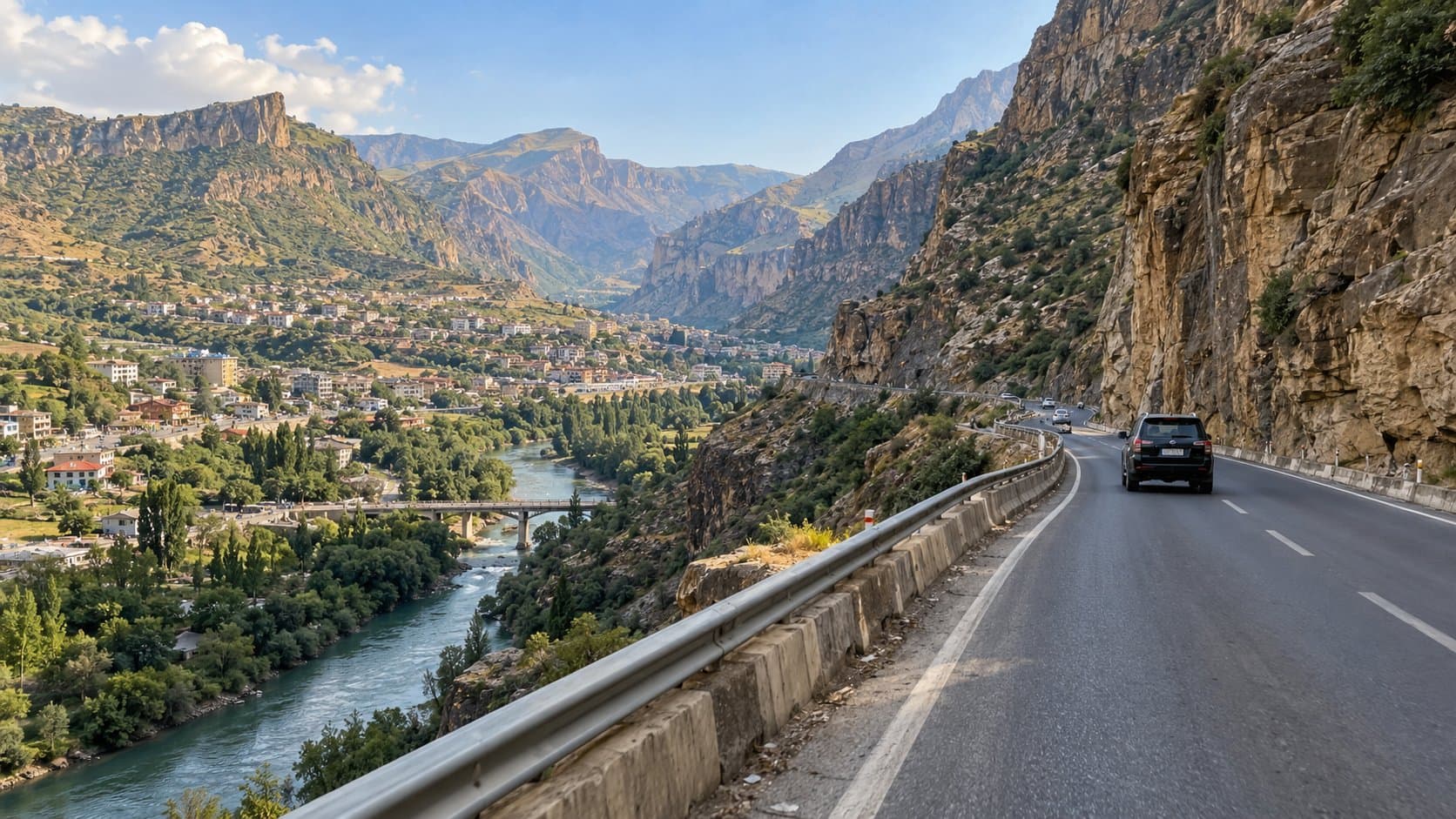
The Hamilton Road is one of the most remarkable mountain routes in the Middle East. Stretching roughly 185 kilometers from Erbil northeast across the Zagros Mountains to the border crossing at Haji Omaran, this road cuts through sheer limestone canyons, river gorges, and alpine valleys. At the heart of the journey sit Rawanduz and Soran, two towns framed by limestone precipices, waterfalls, and an ambitious feat of twentieth-century civil engineering. Driving the route pairs highway history with canyon overlooks, mountain passes, and lively valley towns. {{image}} ## The Engineer Behind the Canyon Highway Between 1928 and 1932, New Zealand civil engineer Archibald Milne Hamilton directed construction of a strategic highway for the British administration in Iraq. His mandate was to carve a road from the plains of Erbil through the Zagros mountains to the Persian border, replacing pack-mule trails with a route fit for motor vehicles and trade. Hamilton documented the project in his memoir, [*Road Through Kurdistan*](https://books.google.com/books/about/Road_Through_Kurdistan.html?id=bfNajoa3BtIC). The terrain and political climate presented constant hurdles. To clear paths along sheer canyon walls, Hamilton assembled a multinational workforce of Kurds, Arabs, Persians, Assyrians, and Armenians. Equipped with pneumatic drills, steamrollers, dynamite, and modular steel bridges transported by rail, sea, and animal pack, crews cut ledges directly into vertical rock faces. They dealt with malaria, venomous snakes, summer heat, and winter blizzards. In the narrows of Gali Ali Bag, workers hung from ropes above the torrent to drill blast holes. The completed highway connected isolated mountain communities to major regional markets. Hamilton later adapted the engineering lessons learned on the project to develop the Callender-Hamilton bridge, a modular steel truss system deployed worldwide. {{image}} ## Key Stops Along the Route The drive from Erbil to Rawanduz and Soran shifts quickly from undulating farmland into limestone gorges. Several landmarks line the highway: ### 1. Khanzad Castle (Banaman) Located about 25 kilometers northeast of Erbil, [Khanzad Castle](https://www.bbc.com/travel/article/20230119-the-hamilton-road-a-highway-to-a-kurdish-paradise) stands on a rocky hill beside the road. Built of local stone and mortar, this two-story fortress dates to the 16th-century Soran Emirate and is associated with Mir Khanzad, a regional Kurdish ruler. It makes a convenient stop before the climb into higher terrain. ### 2. Spilk Pass and Khalifan Beyond Shaqlawa, a town known for fruit orchards and hillside apiaries, the road winds up over Spilk Pass. Once a remote choke point for travellers, Spilk delivers wide views across the plains before the highway descends toward Khalifan and enters the gorge country. ### 3. Gali Ali Bag Waterfall and Gorge Gali Ali Bag forms the dramatic approach to the Rawanduz canyon network. High rock walls enclose the river, and a 12-meter waterfall drops into a pool near the main road junction. The waterfall appears on Iraq's 5,000-dinar banknote. Travelers can stop at roadside viewpoints or step down to riverside tea stalls near the base of the falls. Traces of Hamilton's original road, carved as half-tunnels into the limestone overhang, sit visible above modern concrete spans. ### 4. Rawanduz Canyon (Kharand) Perched on a high plateau, Rawanduz overlooks deep fissures often referred to locally as the Kharand. From viewpoints around town and the nearby Pank resort area, vertical rock cliffs drop hundreds of meters to the valley floor below. Walking paths trace sections of the cliff edge, with vistas toward Mount Korek and Mount Zozik. ### 5. Bekhal Waterfall Along the mountain road linking Rawanduz and Soran, Bekhal gushes from openings in the fractured limestone cliff face. Cold spring water tumbles over rock ledges shaded by walnut and willow trees. Local teahouses have built shaded wooden platforms directly over the flowing runoff, where drivers stop for sweet tea, cold drinks, and grilled skewers. ### 6. Soran and the Upper Valley Soran, historically known as Diana, lies in a wide basin surrounded by mountain peaks. As the primary commercial and administrative hub of the area, Soran offers fuel stations, mechanics, markets, and hotels. Continuing northeast on the Hamilton Road past Soran leads toward Choman and Haji Omaran, tracing mountain streams with views of Mount Halgurd, Iraq's highest accessible summit at 3,607 meters. {{image}} ## Road Conditions and Driving Tips Modern asphalt has made the Hamilton Road far easier than it was in Hamilton's day, but mountain driving here still demands care: - **Pavement Quality:** The highway from Erbil through Shaqlawa to Khalifan is largely divided dual carriageway in good repair. Between Khalifan, Gali Ali Bag, and Rawanduz, the route narrows to a two-lane mountain highway with sharp bends, heavy truck traffic, and occasional rough patches or roadworks. - **Vehicle Selection:** A standard front-wheel-drive sedan easily handles the paved highway between Erbil, Rawanduz, and Soran in dry months. High-clearance vehicles or four-wheel drives are helpful only if venturing onto unpaved tracks around canyon rims or toward mountain villages near Choman. - **Seasonality:** Spring (late March through May) brings running streams, green hillsides, and mild daytime temperatures. Summer is hot on the plains but cooler in the canyons, drawing local weekend crowds; water flows decrease by August. Winter brings snow, freezing rain, and ice to Spilk Pass and the upper reaches near Haji Omaran. - **Checkpoints:** Drivers pass through regular Asayish checkpoints throughout the Soran district. Keep original passports, valid visas or entry stamps, and rental car paperwork within reach, and pull up with cabin lights on after dark. {{image}} ## Route Itineraries: Day Trip or Overnight You can drive the canyon section as a full day trip from Erbil or turn it into a relaxed two-day loop: ### Option A: Day Trip from Erbil (8–10 Hours) - **08:00 – Depart Erbil:** Drive northeast along Route 3 toward Shaqlawa. - **08:45 – Khanzad Castle:** Walk up to the stone fort for photos of the plain. - **10:15 – Spilk Pass to Gali Ali Bag:** Cross the pass, descend to Gali Ali Bag waterfall, and stop for tea along the river. - **12:00 – Rawanduz Canyon:** Drive up into Rawanduz and visit viewpoints along the Kharand rim. - **13:30 – Lunch at Bekhal:** Head 15 minutes down to Bekhal for grilled trout or kebabs beside the springs. - **15:30 – Soran and Return:** Pass through Soran's market center before following the highway back to Erbil. ### Option B: Two-Day Mountain Circuit - **Day 1:** Drive from Erbil to Gali Ali Bag, Bekhal, and Rawanduz. Spend the afternoon exploring the canyon rim or taking the Mount Korek cable car, then stay overnight in Rawanduz or Soran. - **Day 2:** Follow the upper Hamilton Road northeast past Choman toward Mount Halgurd. Explore alpine villages and mountain streams before driving back to Erbil by late afternoon. ```json { "faqs": [ { "id": "faq-1", "question": "What is the history behind the Hamilton Road?", "answer": "The Hamilton Road was engineered between 1928 and 1932 by New Zealand engineer Archibald Milne Hamilton for the British administration. Built by a diverse workforce through sheer mountain canyons, it created the first modern road link between Erbil and the Iranian border." }, { "id": "faq-2", "question": "How long does it take to drive from Erbil to Rawanduz?", "answer": "The direct drive from Erbil to Rawanduz covers approximately 110 to 125 kilometers and typically takes 2 to 2.5 hours without stops, depending on traffic, roadwork, and checkpoint delays." }, { "id": "faq-3", "question": "Do I need a 4x4 vehicle to drive the Hamilton Road?", "answer": "No, a standard passenger sedan can comfortably navigate the main paved highway between Erbil, Rawanduz, and Soran. A four-wheel-drive vehicle is only necessary for rough dirt tracks leading to high mountain trailheads or remote ridge lookouts." }, { "id": "faq-4", "question": "What are the main attractions to visit around Rawanduz and Soran?", "answer": "Primary attractions include the Gali Ali Bag Waterfall, the Bekhal Spring Waterfall, the deep Rawanduz Canyon (Kharand) viewpoints, 16th-century Khanzad Castle, and the Mount Korek cable car." }, { "id": "faq-5", "question": "What is the best time of year to take this road trip?", "answer": "Spring from April to May is the best time, offering lush green landscapes, full waterfall flows, and mild weather. Autumn from September to October is also pleasant, while winter brings sub-zero temperatures and snow at higher elevations." }, { "id": "faq-6", "question": "What documents are required at security checkpoints along the route?", "answer": "Travelers must present original passports along with an official Iraqi or Kurdistan Region visa (or electronic visa entry slip). Vehicle registration and rental agreements should also be kept readily accessible." } ] } ``` ## Sources - **BBC Travel**: *The Hamilton Road: A highway to a Kurdish paradise*, by Simon Urwin. Published January 20, 2023. Accessed March 30, 2026. [https://www.bbc.com/travel/article/20230119-the-hamilton-road-a-highway-to-a-kurdish-paradise](https://www.bbc.com/travel/article/20230119-the-hamilton-road-a-highway-to-a-kurdish-paradise) - **Iraq Tourism Guide**: *Rawanduz Guide: Gorge, Waterfalls and Hamilton Road*. Accessed March 30, 2026. [https://www.iraqtourism.org/rawanduz/](https://www.iraqtourism.org/rawanduz/) - **Visit Kurdistan**: *Rawanduz Travel Guide | Gorges, Waterfalls & Tips*. Accessed March 30, 2026. [https://visitkurdistan.com/rawanduz/](https://visitkurdistan.com/rawanduz/) - **Hamilton, Archibald Milne**: *Road Through Kurdistan: The Narrative of an Engineer in Iraq*, Faber & Faber, 1937. Accessed via Google Books March 30, 2026. [https://books.google.com/books/about/Road_Through_Kurdistan.html?id=bfNajoa3BtIC](https://books.google.com/books/about/Road_Through_Kurdistan.html?id=bfNajoa3BtIC)