October and November offer balanced weather for traveling across central and southern Iraq. As summer temperatures drop to daytime highs between 20°C and 33°C, travelers can explore the Mesopotamian Marshes by boat, walk through the archaeological complex of Babylon, and visit desert monuments like Hatra and Ur.
Why is autumn the peak season for traveling in Iraq?
Autumn brings a break from extreme summer heat across central and southern Iraq. Between June and August, temperatures in Baghdad, Hillah, and Basra frequently exceed 45°C and regularly reach 50°C, making midday visits to unshaded archaeological sites dangerous. By October, average daytime highs drop to around 33°C in Baghdad and 36°C in Basra, with evening lows falling to 17°C, according to the Iraq Tourism Guide.
November brings cooler conditions, with daytime temperatures averaging 23°C in Baghdad and 26°C in Basra, and night temperatures around 9°C to 10°C, as documented by Things to Do in Iraq. Rainfall remains low during early autumn, with Baghdad recording about 3 mm of precipitation in October and roughly 20 mm to 21 mm in November. Clear skies provide long daylight hours for outdoor visits without the dust haze common in late spring and summer, notes Ali Babylon Tours.
How do autumn conditions shape visits to the Mesopotamian Marshes?
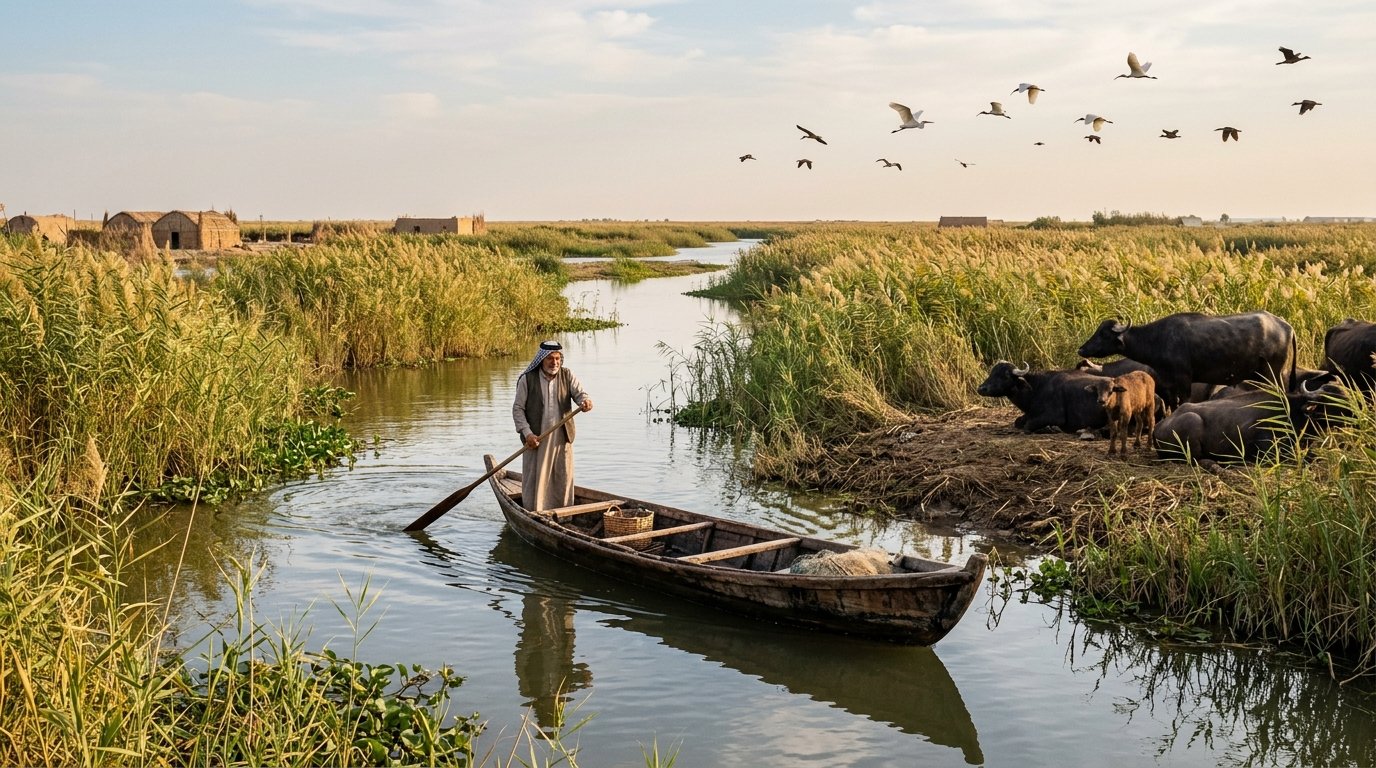
Autumn brings milder weather to the Mesopotamian Marshes near Chibayish. Located in Dhi Qar and Maysan governorates between the lower stretches of the Tigris and Euphrates rivers, the Ahwar of Southern Iraq is a UNESCO World Heritage site known for its wetland ecosystem and Marsh Arab culture, as detailed in the Southern Iraq Discovery Tour.
During October and November, water temperatures cool and summer humidity subsides, allowing for full-day boat trips through the Central and Hammar marshes, according to HelloSIM's Iraq Guide. Travelers hire local wooden mashoof boats or motorized skiffs in Chibayish to navigate narrow channels bordered by tall reeds. This period also marks the arrival of thousands of migratory waterbirds along the Eurasian-African flyway, including flamingos, pelicans, and herons, as noted by the Iraq Tourism Guide. Visitors can see water buffalo herds swimming between reed islands, visit traditional reed guesthouses (mudhif) built without nails or timber framing, and share freshly caught masgouf carp cooked over wood fires with local families.
What should you expect when visiting Babylon and Borsippa in autumn?
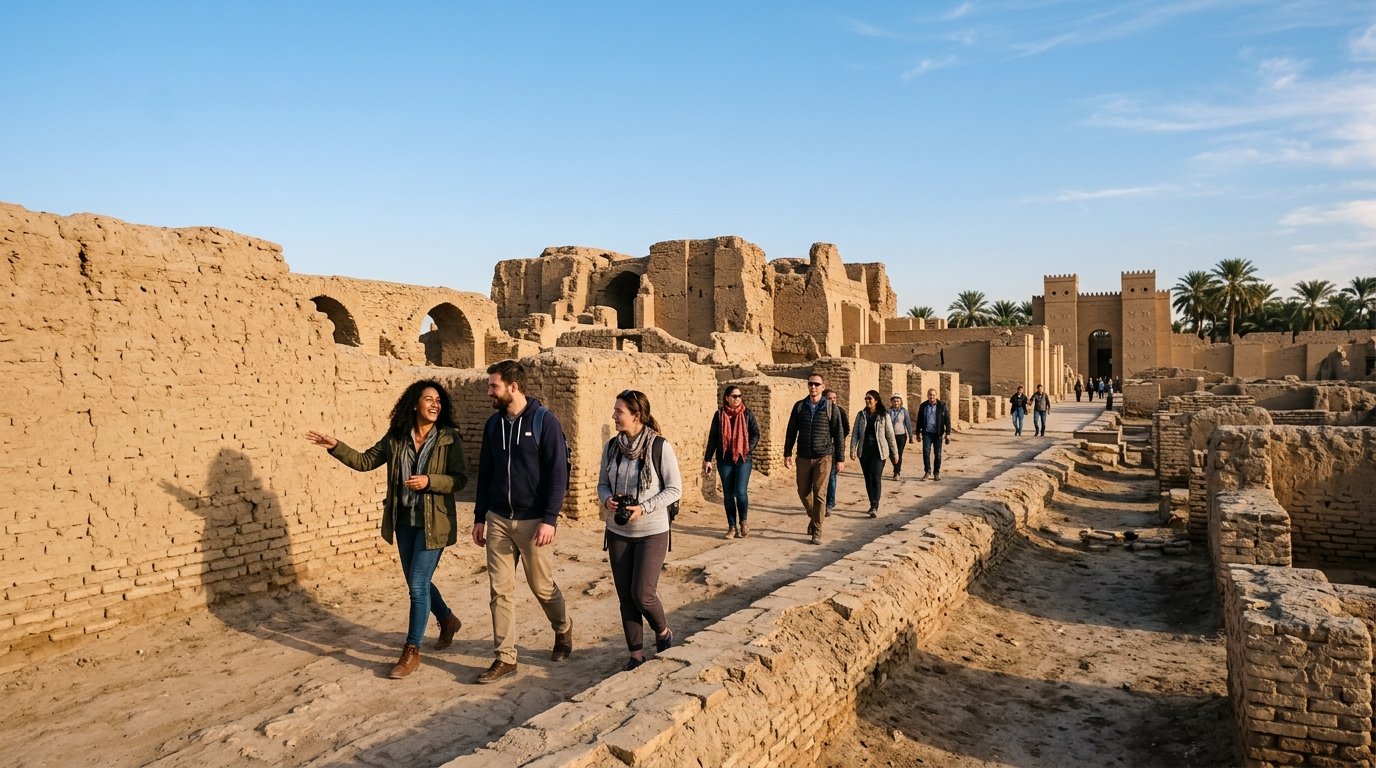
Visiting the ancient city of Babylon near Hillah, located approximately 85 kilometers south of Baghdad, requires several hours on foot across open ground with little natural shade. In summer, the exposed brick walkways absorb intense heat, making site visits difficult. In October and November, daytime temperatures between 23°C and 30°C make walking the large site manageable, explains Ali Babylon Tours.
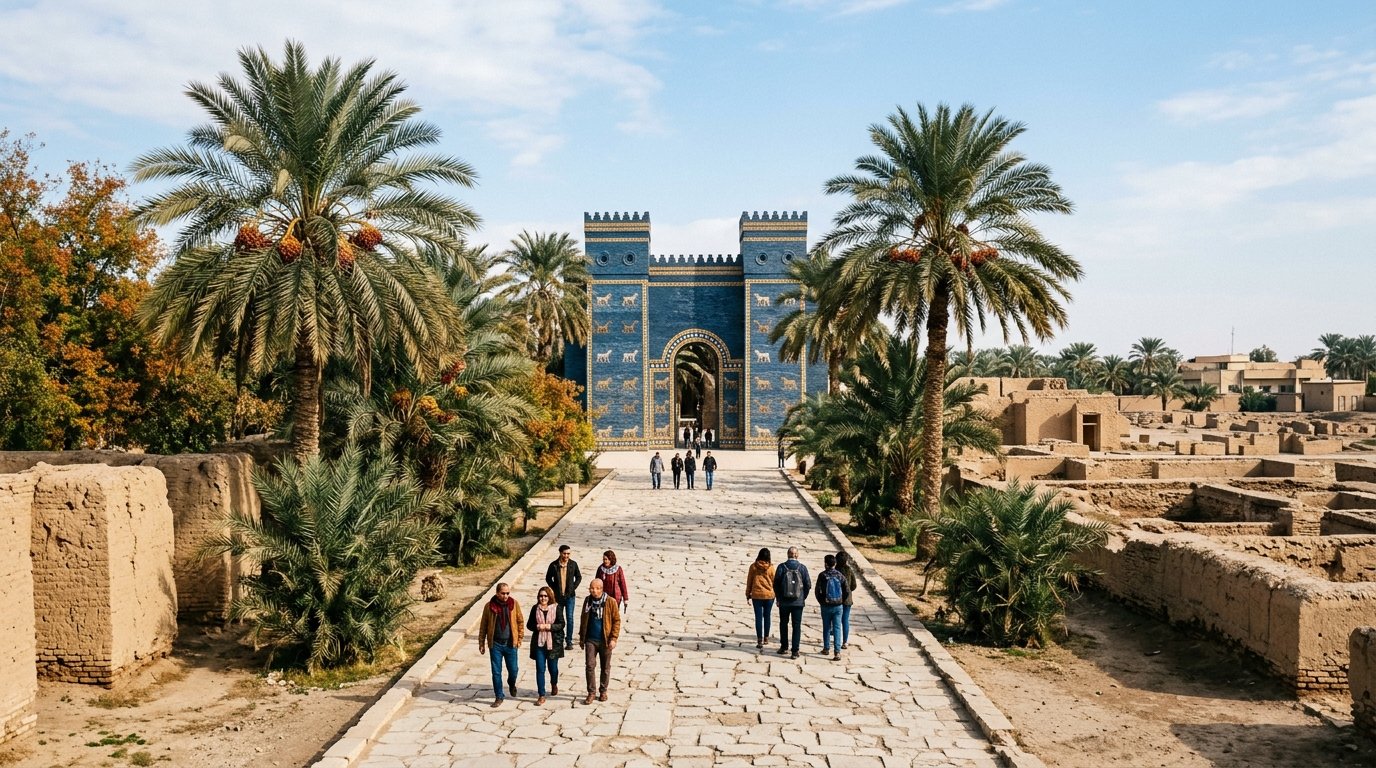
At Babylon, visitors can see the reconstructed Ishtar Gate, walk along the Processional Way paved with limestone and breccia slabs, and visit the Southern Palace complex of King Nebuchadnezzar II. The site includes the basalt sculpture known as the Lion of Babylon, temple foundations, and a Hellenistic theatre dating to the reign of Alexander the Great. Overlooking the ruins sits Saddam Hussein's former palace, which offers views of the excavations and surrounding date palm groves along the Euphrates river corridor. Roughly 20 kilometers southwest of Hillah lies Borsippa (Birs Nimrud), an archaeological site with the ruined ziggurat of the god Nabu, often linked to the Tower of Babel story, which pairs easily with Babylon on day trips.
How should you plan trips to desert ruins like Hatra, Ur, and Uruk?
Iraq's desert ruins sit in exposed environments where autumn temperatures make site visits manageable without extreme heat.
To the south near Nasiriyah, the Ziggurat of Ur is one of the best-preserved Mesopotamian stepped temples. Built during the 21st century BCE by King Ur-Nammu of the Third Dynasty of Ur, the mud-brick and fired-brick monument sits in the southern desert next to the excavated residential quarter that contains the traditional House of Abraham, as outlined in the Iraq Travel Guide 2026. Nearby in the Muthanna desert, the ancient city of Uruk (Warka) has layered Sumerian brickwork, clay cone mosaics, and early administrative quarters where cuneiform writing developed.
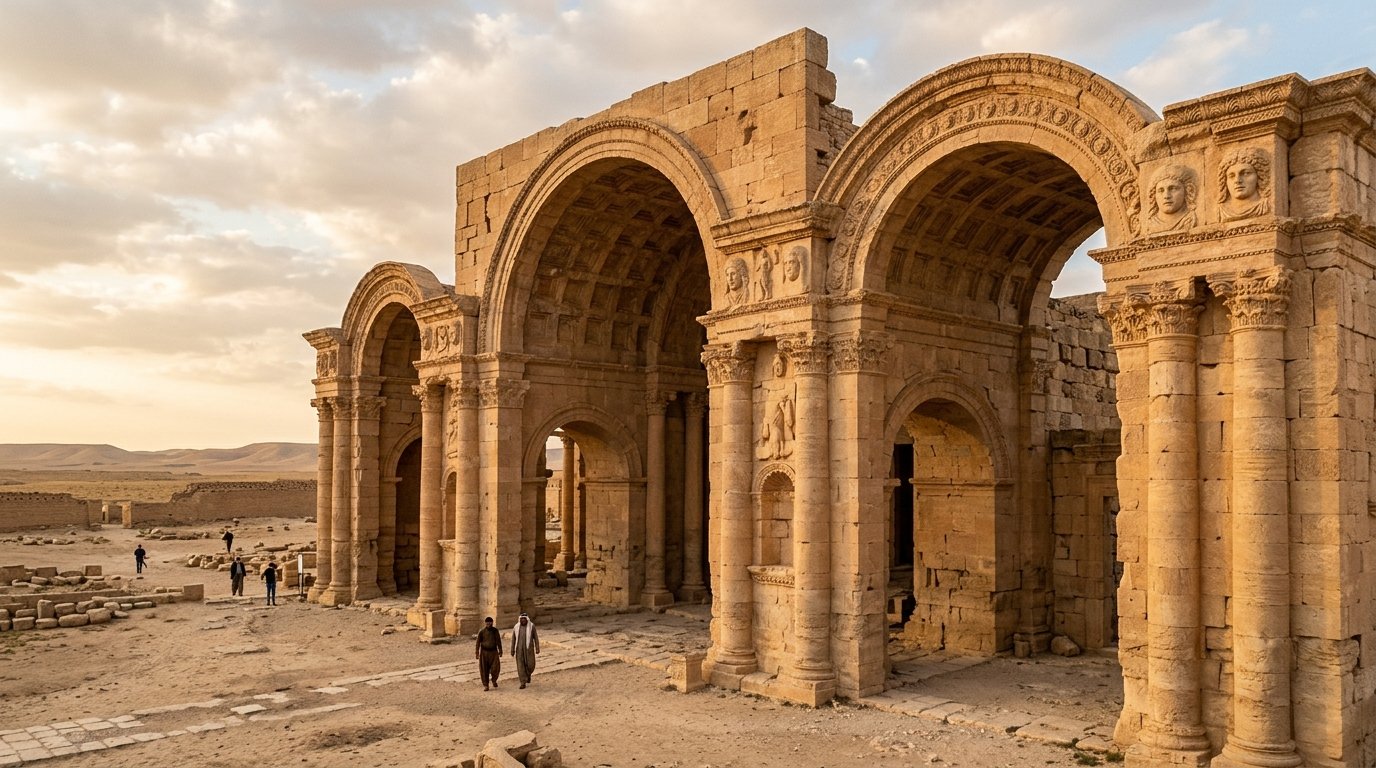
In Nineveh governorate, approximately two hours southwest of Mosul, sits Hatra, a UNESCO World Heritage site and fortified caravan city built by the Parthian Empire in the 2nd century BCE, according to the Complete Iraq Tour. Hatra combines Hellenistic, Roman, and eastern architectural traditions, with stone vaulted halls (iwans), carved relief faces of deities, and defensive walls that resisted Roman sieges under emperors Trajan and Septimius Severus. Visiting Hatra in October and November avoids intense desert heat and winter mud, allowing travelers to explore the temples of Shamash comfortably.
What practical logistics and entry rules apply for autumn travel?
Traveling through Iraq during the October-November peak season requires clear logistical preparation regarding visas, transportation, and local etiquette.
Visa and entry requirements
Foreign visitors traveling to federal Iraq must obtain an electronic visa (eVisa) prior to arrival. The Iraqi government suspended its previous visa-on-arrival program in March 2025, as explained by Ali Babylon Tours' eVisa Guide. Citizens of approximately 37 countries, including the United States, Canada, the United Kingdom, European Union member states, Australia, Japan, and South Korea, are eligible to apply through the official federal portal at evisa.iq. An Ordinary tourist eVisa costs 206,000 IQD (approximately $160 USD) plus a 5.5% international card fee, with standard processing times ranging from 24 to 72 hours, notes Things to Do in Iraq Entry Guide. This federal eVisa covers all of Iraq, including Baghdad, the southern historical sites, and the Kurdistan Region.
Transportation and security checkpoints
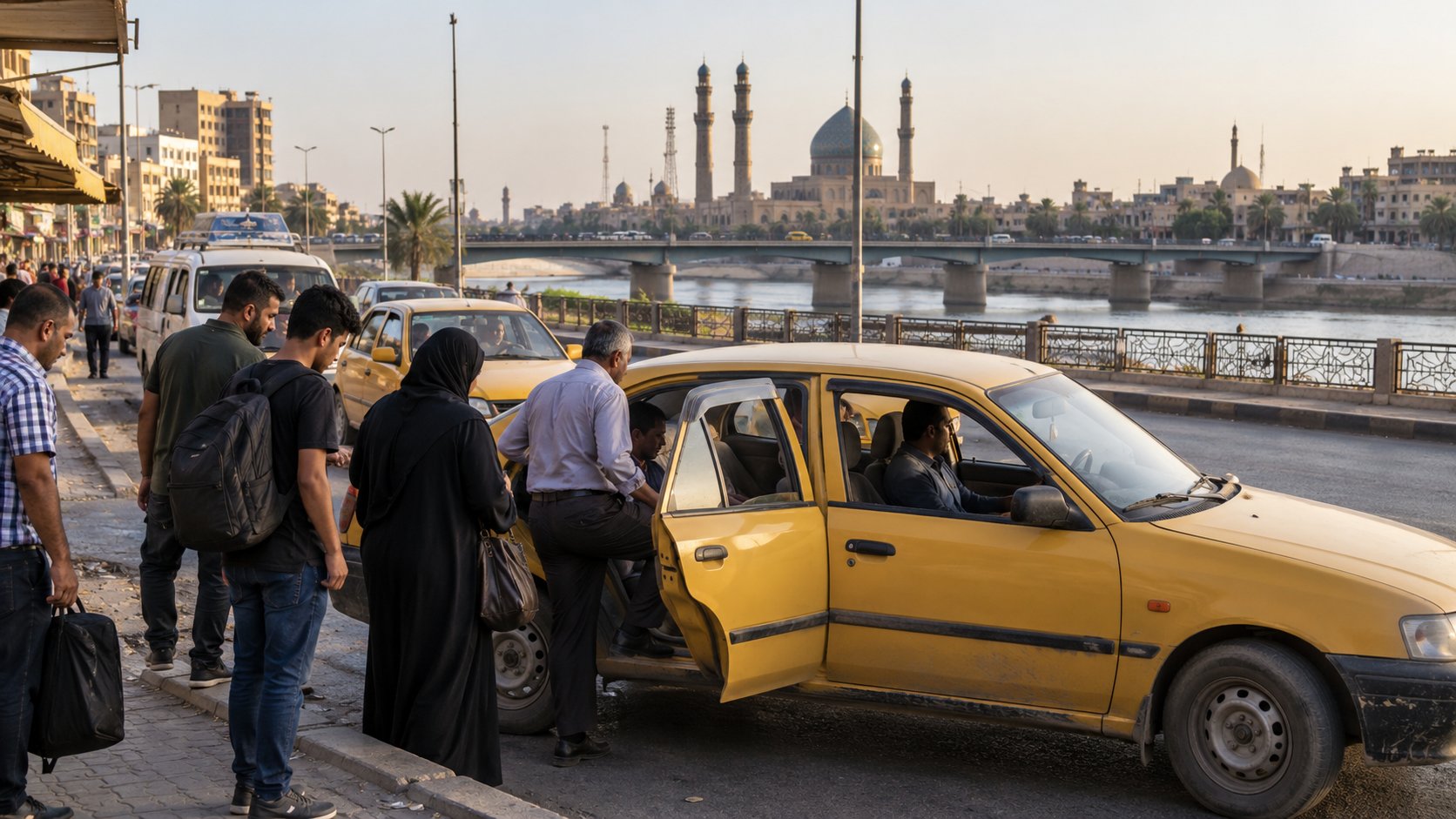
Travel between major cities and archaeological sites in federal Iraq is best handled with a licensed local driver or guide in a private vehicle, as documented in the Iraq Safety Guide. Highways between Baghdad, Babylon, Najaf, Nasiriyah, and Mosul feature routine military and federal police checkpoints. Having a local driver ensures efficient document verification, route navigation, and clearance through provincial security stops. Domestic flights on carriers like Iraqi Airways connect Baghdad with Erbil and Basra for travelers looking to cover long distances quickly.
Money, packing, and cultural etiquette
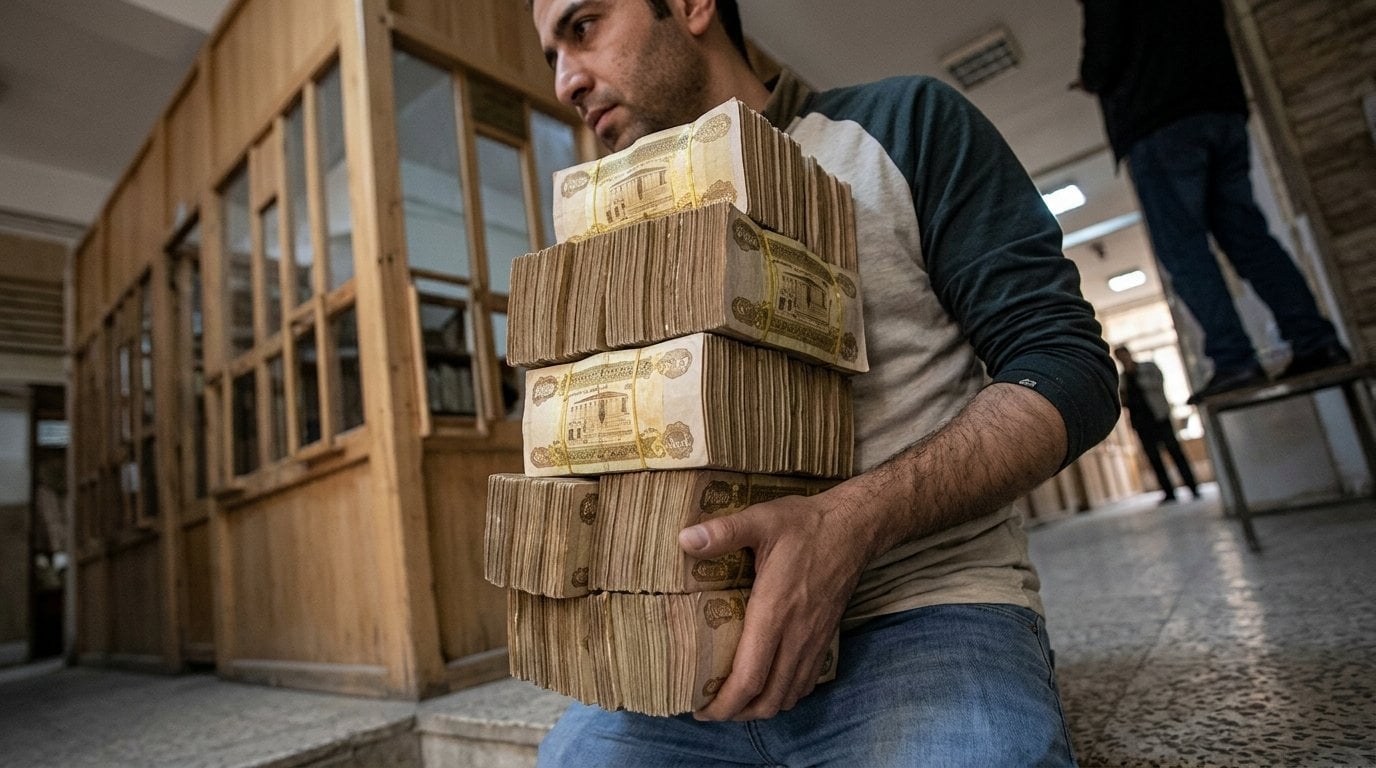
Cash remains the dominant form of payment across Iraq. International credit cards are rarely accepted outside large international hotels in Baghdad and Erbil, and local ATMs are often unreliable for foreign debit cards, according to the Iraq Travel Guide 2026. Travelers should carry crisp, undamaged US Dollars or Euros to exchange for Iraqi Dinars (IQD) at local exchange shops. For packing during October and November, bring lightweight, breathable cotton shirts and trousers for daytime excursions, along with a medium fleece or light jacket for cool desert and marsh evenings. Modest dress covering shoulders and knees is standard in public spaces, and women will need a headscarf when visiting religious holy cities like Karbala and Najaf.
Sources
- Ali Babylon Tours - Best Time to Visit Iraq: Month-by-Month Guide, published by Ali Babylon Tours, accessed March 2026.
- Iraq Tourism Guide - Best Time to Visit Iraq: A Month-by-Month Guide for 2026, published by Iraq Tourism Guide, accessed March 2026.
- Things to Do in Iraq - Best Time to Visit Iraq: Climate Guide & Best Times to Travel, published by Things to Do in Iraq, accessed March 2026.
- HelloSIM - Best Time to Visit Iraq: A Month-by-Month Guide, published by HelloSIM, accessed March 2026.
- Ali Babylon Tours - Southern Iraq Tour (7 Days), published by Ali Babylon Tours, accessed March 2026.
- Ali Babylon Tours - Baghdad & Babylon Tour (5 Days), published by Ali Babylon Tours, accessed March 2026.
- Ali Babylon Tours - The Complete Iraq Tour (10-12 Days), published by Ali Babylon Tours, accessed March 2026.
- Ali Babylon Tours - Iraq Travel Guide 2026: Everything You Need for Traveling in Iraq, published by Ali Babylon Tours, accessed March 2026.
- Ali Babylon Tours - Iraq eVisa 2026: How to Apply, Cost & Avoid Rejection, published by Ali Babylon Tours, accessed March 2026.
- Ali Babylon Tours - Is Iraq Safe to Travel? A Local Guide's Honest Answer, published by Ali Babylon Tours, accessed March 2026.
- Things to Do in Iraq - Iraq Visa & Entry Requirements (2026), published by Things to Do in Iraq, accessed March 2026.
❓Frequently Asked Questions
Here are answers to frequently asked questions about the content above
In October, daytime highs in Baghdad and southern Iraq typically range between 30°C and 34°C, cooling to around 15°C to 17°C at night. By November, daytime temperatures drop to 20°C to 24°C, with evening temperatures between 9°C and 11°C.
Autumn brings mild daytime temperatures and lower humidity to the southern wetlands around Chibayish, making boat excursions through reed channels comfortable. It also coincides with the arrival of migratory birds along the Eurasian flyway.
Babylon is located near Hillah, approximately 85 kilometers south of Baghdad. The drive takes roughly 1.5 hours by private car or taxi along the main southern highway, passing through standard provincial security checkpoints.
No. Iraq suspended visa on arrival in March 2025. Eligible travelers from 37 countries must apply for an electronic visa (eVisa) in advance through the official evisa.iq portal before traveling to Iraq.
Pack breathable cotton trousers and long-sleeve shirts for daytime site visits, sturdy walking shoes for rocky ruins, sun protection, and a warm fleece or light jacket for cool desert mornings and evenings.
Visiting Hatra in Nineveh governorate is best arranged through a local guide with a private vehicle. A licensed guide coordinates checkpoint paperwork, navigates desert roads, and checks regional security access.