A practical guide to shared taxis in Iraq, including Baghdad garages, fares, departures, road etiquette and safety checks.
Taking shared taxis in Iraq
What to know before you go
Shared taxis offer intercity travel without hiring a private car. They usually leave when the seats are filled, so departure times are flexible and fares are lower per passenger. Routes, departure points and fares can change. Treat online prices as estimates and confirm details at the garage on the day.
Security comes first. The UK Foreign, Commonwealth & Development Office warns of terrorism, kidnapping and security incidents across Iraq, and advises travellers to plan secure transport and follow current local information. Check your own government’s travel advice before setting out. If the advice or conditions make a journey unsafe, do not take it.
Al-Nahda or Al-Alawi?
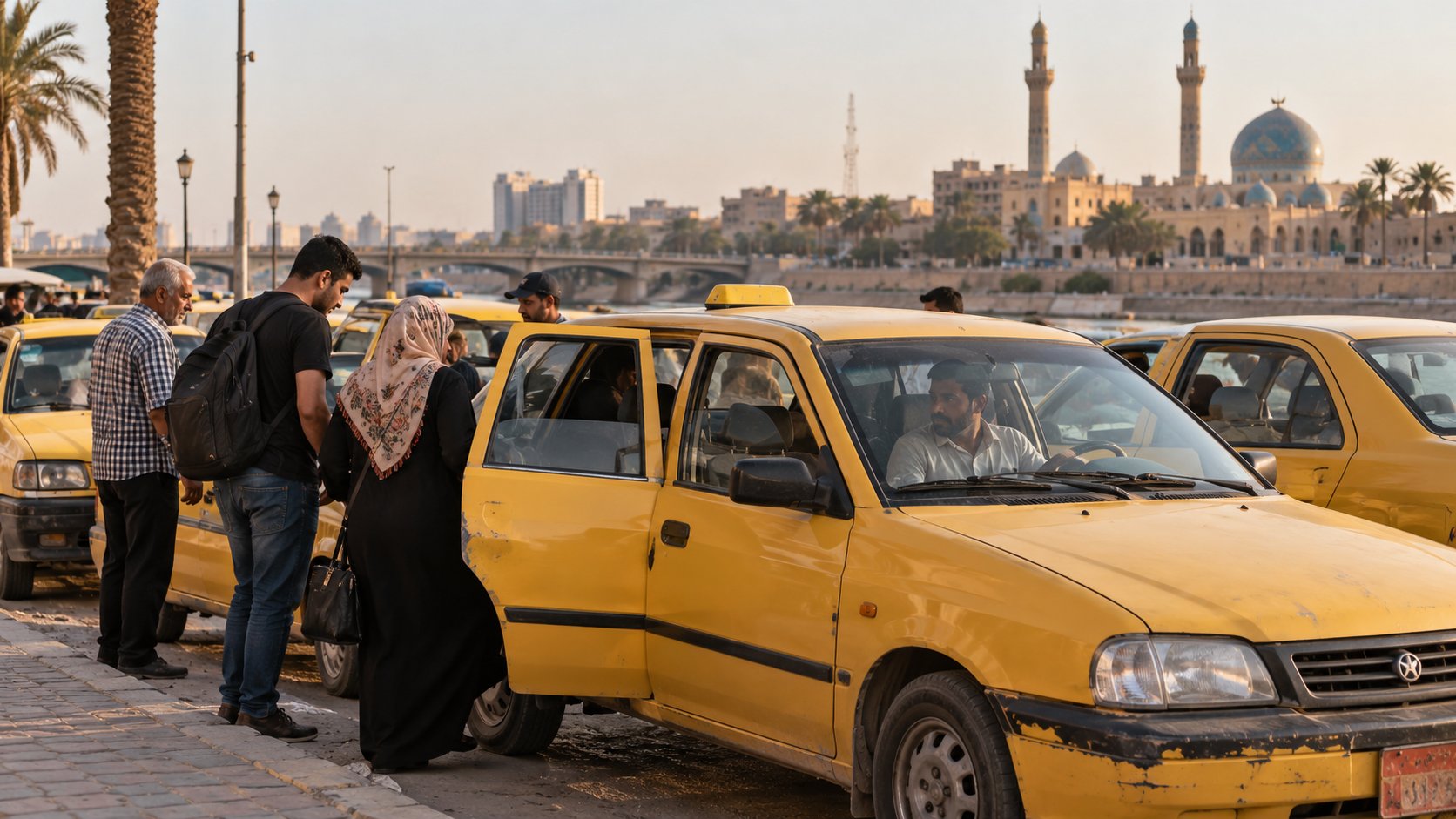
Baghdad’s transport garages are busy departure areas, not formal terminals with a single information desk or reliable online timetable. The Baghdad guide on Wikivoyage identifies Al-Alawi as a bus terminal beside the central railway station. This does not confirm which operator or vehicle serves a destination today. Ask a local contact, your accommodation or a trusted driver which garage to use, then check again before you leave.
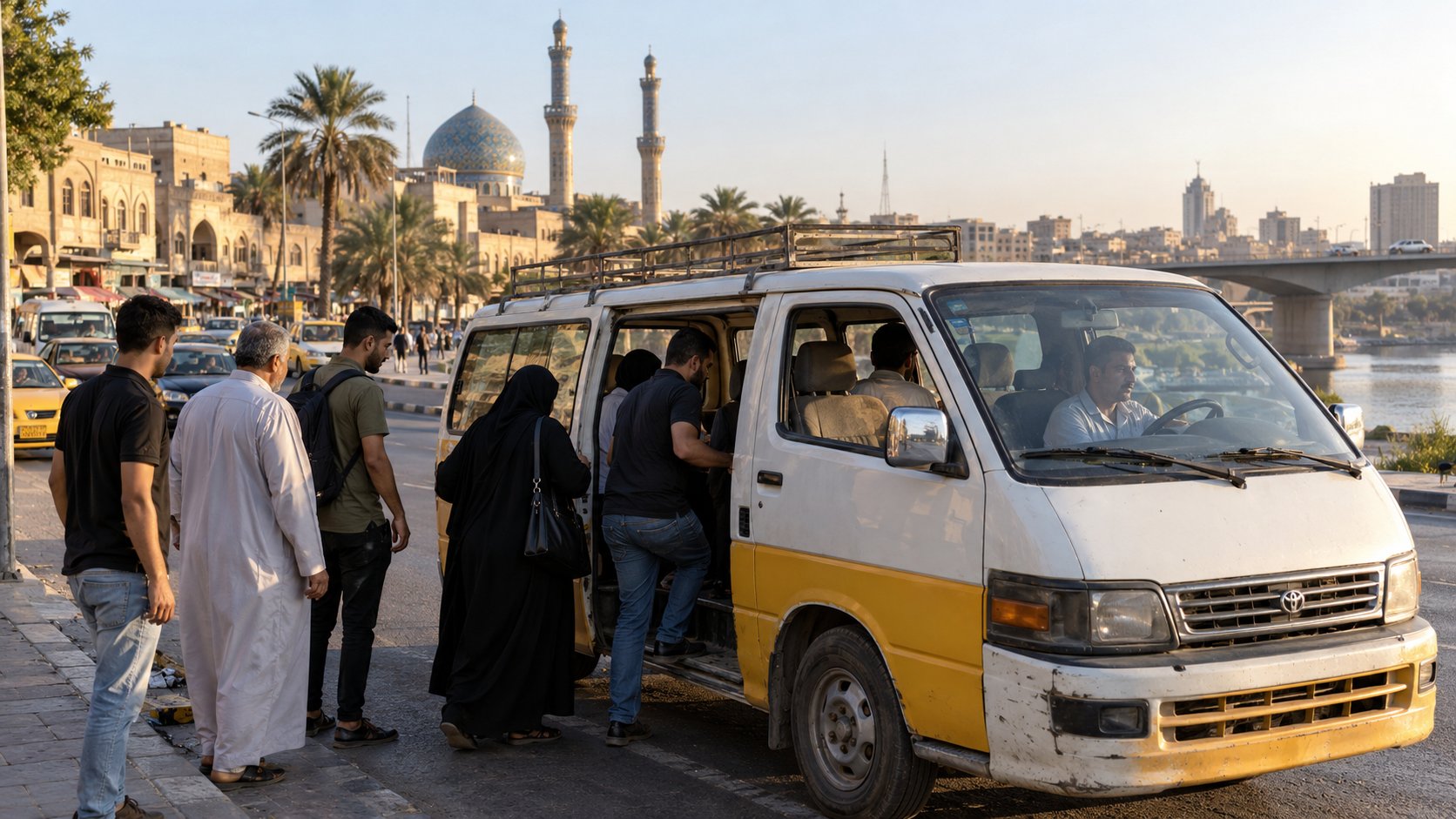
Al-Nahda and Al-Alawi are names travellers may hear when asking about ground transport in Baghdad. Do not assume that every city route leaves from either one, or that the same garage serves the return trip. Tell a taxi driver your destination city and ask specifically for the shared-car departure point, not simply “the bus station.” Write the destination in Arabic if you can, and show it to drivers or garage staff.
Garages can be noisy and crowded. Allow time to find the right vehicle, and confirm its destination before loading your bags. If staff direct you to another stand or garage, confirm the location and fare before continuing.
How fares and departures work
There is no dependable nationwide fare table for shared taxis. Prices vary by route, vehicle, demand and fuel costs. Before agreeing, ask the driver or dispatcher for the fare per person and the number of seats. Check whether luggage costs extra, whether the driver will wait for more passengers, and whether the price covers one seat or the whole car.
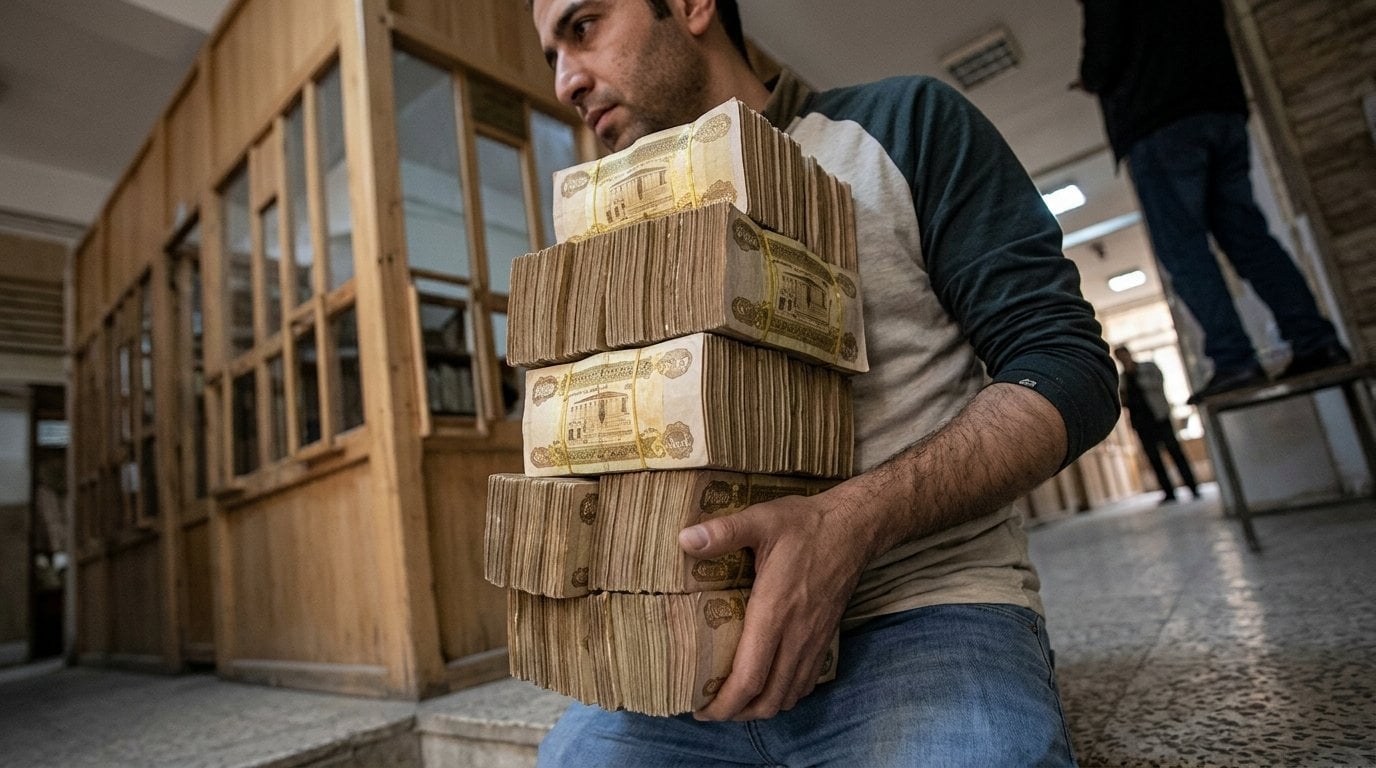
Carry small Iraqi dinar notes. Confirm the fare in dinars before boarding, and keep enough cash for the ride and onward travel. If the price is unclear, repeat it or use a calculator. Make sure it is the per-passenger fare, not the price for the whole car.
Most shared cars do not depart on a fixed clock timetable. They may leave once the driver has enough passengers, or after a short wait. Ask how long the wait is likely to be. If you have a flight, appointment or connection, leave a generous buffer or choose a private transfer arranged through a trusted source.
A straightforward way to take a shared taxi
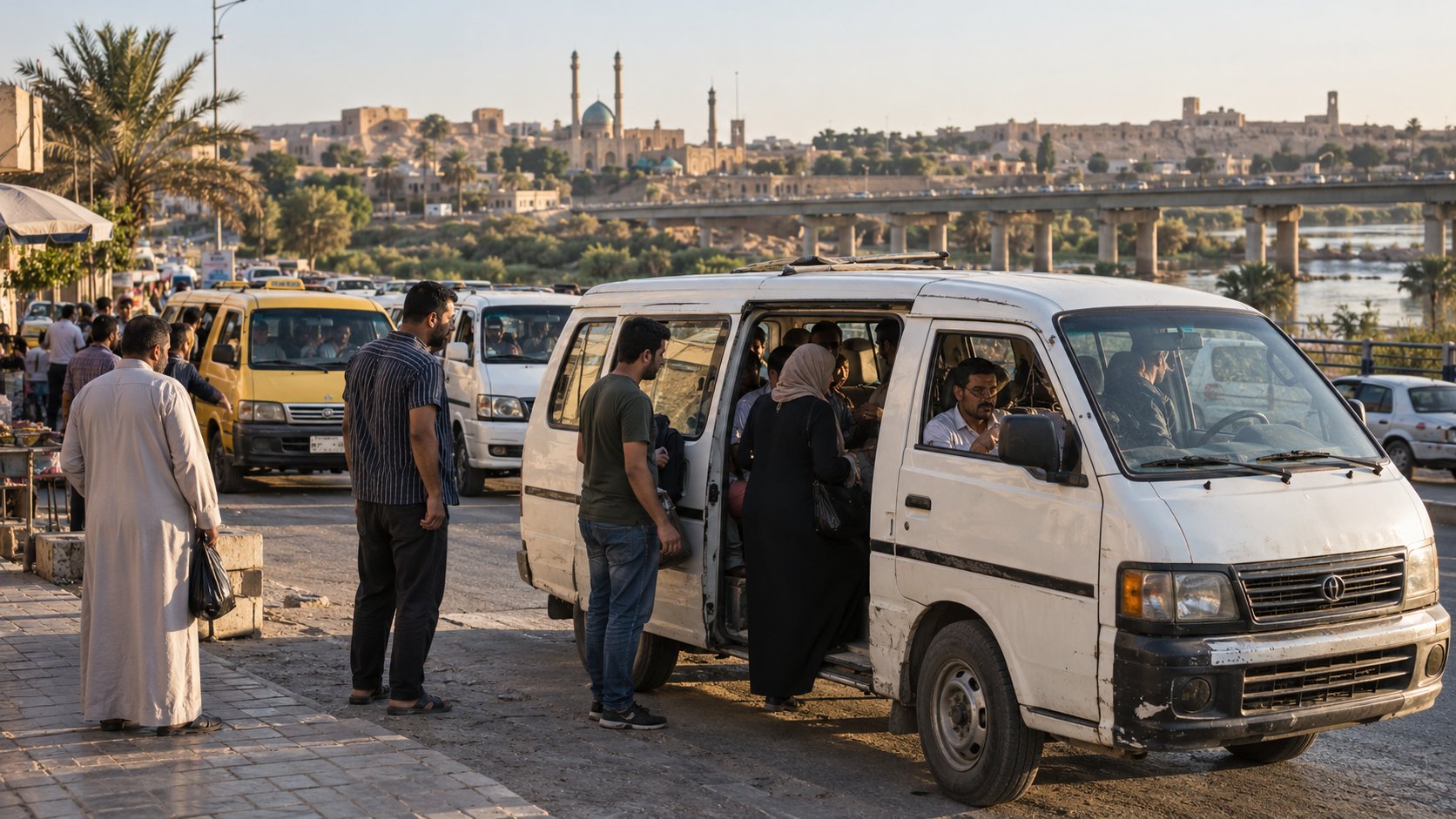
- Check the route first. Ask your host or a trusted local contact which garage and departure point currently serve your destination. Check travel advice and road conditions on the same day.
- Go to the garage in daylight where possible. Keep your phone charged and share your plan with someone you trust. Follow local security instructions and avoid filming checkpoints or security personnel.
- Ask several people if needed. Show the destination in writing. Confirm that the car is going to your city, rather than merely passing nearby.
- Agree on the fare and wait. Confirm the per-person amount, luggage cost and whether the driver is waiting for a full car. Pay attention to whether the price changes if you need to leave sooner.
- Secure your belongings. Keep valuables and travel documents with you, not loose in the boot. Check your bags are loaded into the vehicle you are boarding.
At Al-Alawi, Wikivoyage notes that buses use stands both north and south of the Allawi skyway. That detail can help you orient yourself, but it is not a guide to shared-taxi stands. Ask on arrival and do not follow a stranger to a vehicle until you have checked its destination and price.
On the road
Keep negotiations calm and direct. A brief greeting and a clear question work well in a crowded garage. Dress in a way that respects local norms, keep your voice moderate, and ask before photographing people or their vehicles.
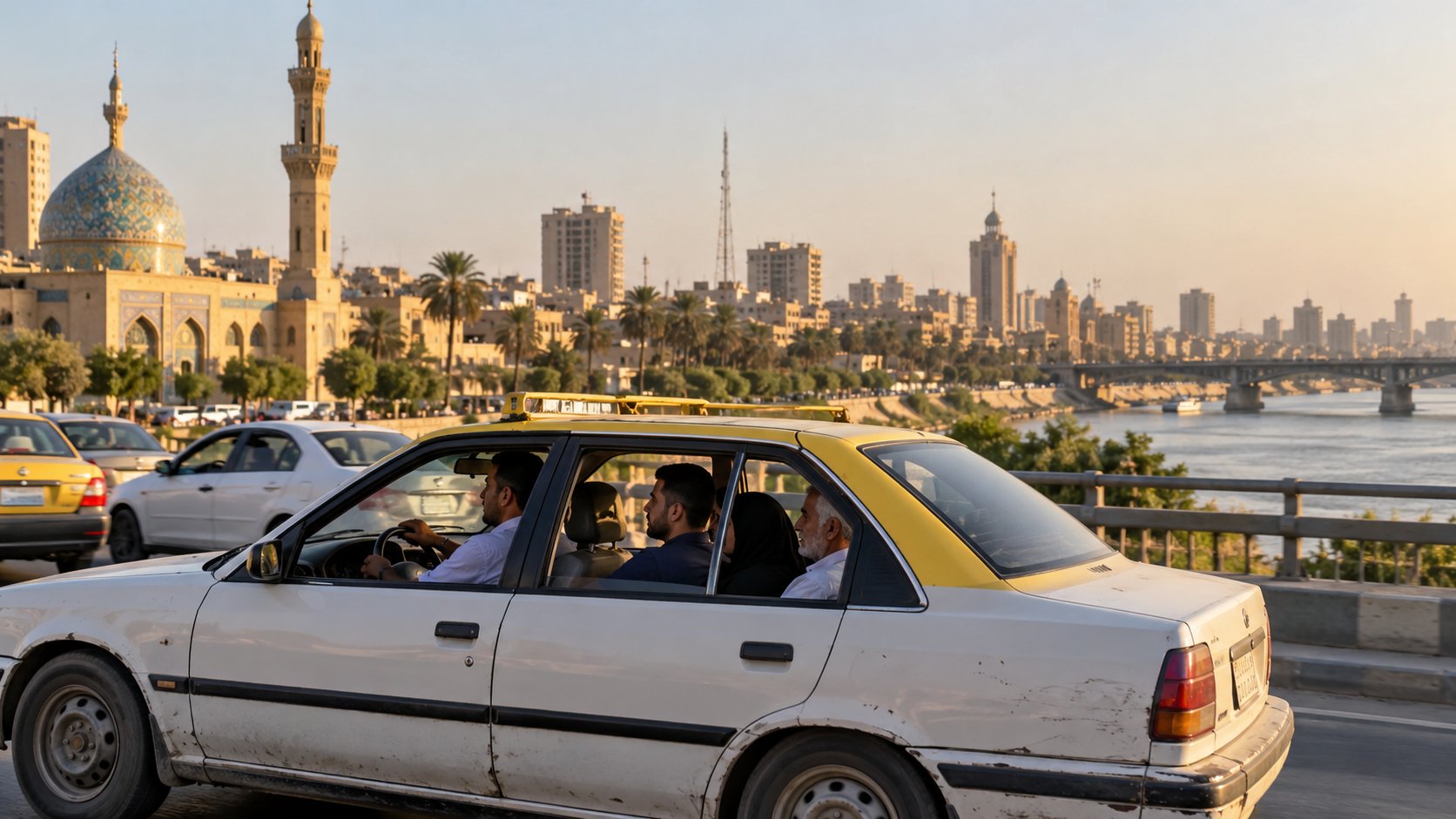
A shared taxi may fill all available seats. Ask before taking a seat if you have large luggage, and do not assume the driver can make an unscheduled stop. Keep your belt fastened whenever the car has a working seat belt. If the vehicle, driver or route makes you uncomfortable, decline the ride and find another option. You do not owe anyone an explanation.
Traffic and journey times can vary. Wikivoyage’s Baghdad guide describes the city’s bus network as extensive but chaotic, with limited route information in English, and warns travellers to stay alert while moving around the city. Build extra time into your plans and avoid promising someone a precise arrival time.
Plan the return trip separately
Do not assume that the car will drop you at the exact departure garage for your onward journey, or that the return service uses the same stand. Ask where the driver will drop you and how to reach your next destination. Before leaving your accommodation, get current advice about the return garage and its hours.
Keep your essentials together: phone, charger, cash, identification and the destination written in Arabic. The UK travel advice says travellers should carry photographic identification and cooperate with official checks. Keep your passport or other required ID accessible, but secure it from loss or theft.
Verify the destination, fare and departure point each time. Local information and current security conditions matter more than an old timetable.
FAQs
Sources
- Wikivoyage, “Baghdad”, https://en.wikivoyage.org/wiki/Baghdad. Accessed October 11, 2026.
- UK Foreign, Commonwealth & Development Office, “Safety and security - Iraq travel advice”, https://www.gov.uk/foreign-travel-advice/iraq/safety-and-security. Accessed October 11, 2026.
- Wikivoyage, “Iraq”, https://en.wikivoyage.org/wiki/Iraq. Accessed October 11, 2026.
❓Frequently Asked Questions
Here are answers to frequently asked questions about the content above
Departure points can vary by destination and operator. Ask a trusted local contact for the current garage, and confirm the city and vehicle at the stand. Al-Alawi is listed as a bus terminal, but that does not confirm that a particular shared taxi leaves there.
Often they wait for passengers before leaving. Ask the driver or dispatcher how long the wait may be, and allow extra time for connections.
There is no dependable nationwide fare in this guide. Ask for the price per person, confirm the amount in Iraqi dinars, and check whether luggage or a faster departure costs extra.
Show the destination in writing, ask the driver to confirm it, and check the fare and drop-off point before loading your bags.
Safety depends on the location and current conditions. Check your government’s travel advice, ask trusted local contacts about the route, and do not travel if the security situation makes the journey unsafe.
Carry Iraqi dinar cash, a charged phone, your required identification and the destination written in Arabic. Keep documents and valuables with you rather than in the boot.