Practical food checks, Arabic phrases, and backup plans for vegetarian, vegan, and celiac travelers in Iraq.
Traveling Iraq with dietary restrictions
A platter of stuffed vegetables looks safe at a glance. Then you find minced beef mixed into the rice and lamb ribs lining the bottom of the cooking pot. When ordering food in Iraq with dietary limits, asking "does this have meat?" rarely gets you the full story. You need to know what went into the pot from the start.
Vegetarian, vegan, and celiac travelers face distinct hurdles. This guide outlines specific questions to ask, practical Arabic phrases to show restaurant staff, and how to build a reliable backup plan. It does not certify any restaurant or dish as safe.
Start with your actual restriction
Explain what you cannot eat before discussing menu items.
- Vegetarian: Specify no meat, chicken, fish, bone broth, meat stock, or animal fat. Clarify whether you eat eggs, milk, or yogurt, as dairy is common in local cooking.
- Vegan: Name dairy, yogurt, cheese, butter, ghee, eggs, and honey specifically. In translation, general terms for vegetarianism often imply eating dairy, eggs, or even poultry.
- Celiac disease: You must avoid gluten and prevent cross-contact on cooking surfaces and serving ware. A vegan dish often contains wheat vermicelli or bread, while a plain meat skewer might be naturally gluten-free until placed directly on flatbread.
Celiac disease is an autoimmune condition, not a preference or a temporary wheat allergy. NIDDK explains that people with celiac disease need a lifelong gluten-free diet, including protection from gluten transferred during cooking and serving. If you also manage an IgE-mediated food allergy, carry your prescribed auto-injector, bring an allergy card, and stick to your clinician's emergency plan.
Read the preparation, not the dish name
Menu names never tell the whole story. How a kitchen actually prepares a dish determines whether you can eat it. Two classic Iraqi dishes show why.
Dolma: Ask about the entire pot
Iraqi dolma is stuffed onions, baby eggplants, zucchini, peppers, and grape or chard leaves. Amina Al-Saigh's Iraqi dolma recipe at Hungry Paprikas mixes minced beef into the rice filling and stacks lamb ribs underneath the vegetables during simmering.
Ask whether the cook mixed minced meat into the stuffing, placed meat beneath the pot, or used bone broth in the cooking liquid. Picking meat off a finished plate will not remove animal fats soaked into the rice. For vegan travelers, check the cooking fat as well. For celiac travelers, check spice blends, tomato concentrates, and cooking surfaces, even when the stuffing uses plain rice.
Asking for a dedicated vegetable-only batch before cooking works far better than trying to pick around ingredients at the table.
Fasolia: Bean stews often rely on meat broth
Fasolia yabsa is a traditional Iraqi white bean stew simmered in tomato sauce. Al-Saigh's fasolia recipe uses lamb or veal shanks, with meat broth providing the foundation of the sauce. The recipe notes that a vegetarian version requires omitting the meat and substituting vegetable broth or water.
In a restaurant, ask whether the beans simmered with meat or meat bones. Plucking meat chunks out of an existing pot leaves the animal broth intact. If the kitchen cannot prepare beans separately with plain oil and water, skip the stew.
Traditional fasolia is almost always served over rice with toasted vermicelli (sh'eriya). For celiac travelers, vermicelli is wheat pasta. Never assume plain-looking rice at an Iraqi restaurant is free of wheat noodles.
Build a meal from ingredients you can check
Treat these items as starting points for a conversation, not guaranteed safe orders.
| Food item | Vegetarian and vegan considerations | Celiac considerations |
|---|---|---|
| Plain rice (timman) | Ask if cooked in meat stock, butter, or ghee. | Check for toasted wheat vermicelli, bouillon cubes, and shared serving spoons. |
| Beans or lentils (fasolia, adas) | Confirm the kitchen used no meat chunks, chicken stock, or animal fat. | Check for flour thickeners, commercial stock powders, and contaminated ladles. |
| Cooked vegetables or potatoes | Request vegetable oil rather than animal fat or butter. | Watch out for flour coatings, shared frying oil, and meat gravies. |
| Hummus and falafel | Verify no yogurt garnish or animal fat in the mix. | Falafel often includes wheat flour or shares a fryer with breaded items. Hummus is often served with bread directly touching the dip. |
| Eggs or fresh dairy (laban, cheese) | Viable protein for vegetarians who eat dairy or eggs, unsuitable for vegans. | Verify cooking butter or pans are free of wheat crumbs. |
| Whole fruit and raw vegetables | Safe, accessible plant-based fuel across markets. | Wash thoroughly and keep away from shared bread baskets and counter crumbs. |
NIDDK lists plain rice, potatoes, fruits, and vegetables among naturally gluten-free foods. The agency also warns that sauces, spice blends, and cross-contact in the kitchen can render otherwise safe foods unsafe. A raw ingredient being gluten-free does not guarantee the prepared meal is safe.
For celiac travelers, ask about the kitchen
Saying "no bread" rarely suffices in an Iraqi kitchen. Fresh bread (khubz tanoor or samoon) is a dietary staple and a serving tool. Restaurants routinely place grilled meats directly onto flatbread to catch drippings, cover rice platters with bread to keep them warm, and fry snacks in shared oil.
Wheat, barley, and rye contain gluten. Bulgur (burghul) and semolina (smeed) are wheat derivatives and common in regional soups and kibbeh doughs.
Ask these five questions before ordering:
- Does the rice contain vermicelli noodles, bulgur, or flour thickeners?
- What ingredients make up the stock, marinade, and spice mix?
- Does the deep fryer share oil with falafel, breaded meats, or dough pastries?
- Can the kitchen prepare your meal in a washed pan using clean utensils away from flour dust?
- Will the plate be served completely free of bread, with no flatbread placed underneath or on top?
If the staff cannot answer with confidence, fall back on your own supplies. NIDDK recommends calling ahead, explaining celiac disease, and asking about both ingredients and preparation. The guidance urges skipping any dish when ingredients or preparation methods remain uncertain.
Check packaged foods with care. Coeliac UK's food-label guidance outlines standard allergen declarations for British and European goods. In Iraqi grocery markets, items arrive from Turkey, Iran, Jordan, the Gulf states, and Europe, each carrying different labeling standards. Read the actual ingredient list in Arabic or Turkish, look for certified gluten-free logos, and avoid loose grain bins in spice souks where flour dust circulates freely.
Arabic phrases to save on your phone
These are practical Arabic prompts, not certified medical translations. Show the Arabic text to the person preparing the meal. The pronunciation guides are approximate. Ask an Arabic-speaking host or guide to review a medical card before you depend on it. In Iraqi Kurdistan, arrange a Kurdish version too if that is the kitchen's working language.
| English | Arabic | Approximate pronunciation |
|---|---|---|
| I do not eat meat, chicken, or fish. | لا آكل اللحم ولا الدجاج ولا السمك. | La akul al-lahm wa la ad-dajaj wa la as-samak. |
| I do not eat any animal products, including milk, eggs, and honey. | لا آكل أي منتجات حيوانية، بما فيها الحليب والبيض والعسل. | La akul ayya muntajat hayawaniyya, bima fiha al-halib wal-bayd wal-asal. |
| Does this contain meat broth or chicken broth? | هل يحتوي هذا على مرق اللحم أو مرق الدجاج؟ | Hal yahtawi hadha ala maraq al-lahm aw maraq ad-dajaj? |
| Please use vegetable oil, without butter or ghee. | من فضلك، استخدم زيتًا نباتيًا، بدون زبدة أو سمن. | Min fadlak, istakhdim zaytan nabatiyyan, bidun zubda aw samn. |
| I have celiac disease. I cannot eat gluten. | لديّ الداء البطني، السيلياك. لا أستطيع تناول الغلوتين. | Ladayya ad-da al-batni, as-silyak. La astati tanawul al-ghlutin. |
| Does this contain wheat, barley, rye, bulgur, or flour? | هل يحتوي هذا على القمح أو الشعير أو الجاودار أو البرغل أو الطحين؟ | Hal yahtawi hadha ala al-qamh aw ash-shair aw al-jawdar aw al-burghul aw at-tahin? |
| Please use a clean pan and clean utensils, away from bread and flour. | من فضلك، استخدم مقلاة نظيفة وأدوات نظيفة، بعيدًا عن الخبز والطحين. | Min fadlak, istakhdim miqlatan nazifa wa adawat nazifa, baidan an al-khubz wat-tahin. |
| Thank you, but I cannot eat this. | شكرًا، لكن لا أستطيع أكل هذا. | Shukran, lakin la astati akl hadha. |
For a celiac card, add this fuller explanation:
حتى الكميات الصغيرة من الغلوتين تضرّ بصحتي. يجب ألا يلامس طعامي الخبز أو الطحين أو الأدوات الملوثة بهما. إذا لم تتمكنوا من تحضيره بهذه الطريقة، يرجى إخباري.
Even small amounts of gluten harm my health. My food must not touch bread, flour, or utensils contaminated with them. If you cannot prepare it this way, please tell me.
A card starts the conversation. It cannot guarantee that a busy kitchen understands or controls cross-contact.
Make the backup plan before you get hungry
Send your dietary requirements to your accommodation, driver, or tour organizer well before you travel. Vague assurances like "everything is available" are common; ask specific questions about breakfast options, separate pans, and available produce instead.
Carry high-calorie, shelf-stable foods that you trust. Nuts, dried fruit, certified gluten-free seed bars, nut butter pouches, and instant grain porridge packets can save your day during long road trips between cities or when transit delays leave you far from vetted food. For celiac travelers, bring enough certified snacks to replace multiple main meals if restaurant options prove unsafe.
If you balance both vegan and gluten-free diets, book apartment rentals or guesthouses with private kitchenettes whenever possible. Preparing your own breakfast and dinner gives you total control over cross-contact, leaving lunch as the only meal to navigate outside. When using shared guest kitchens, wash all pots, cutting boards, and cutlery thoroughly before using them.
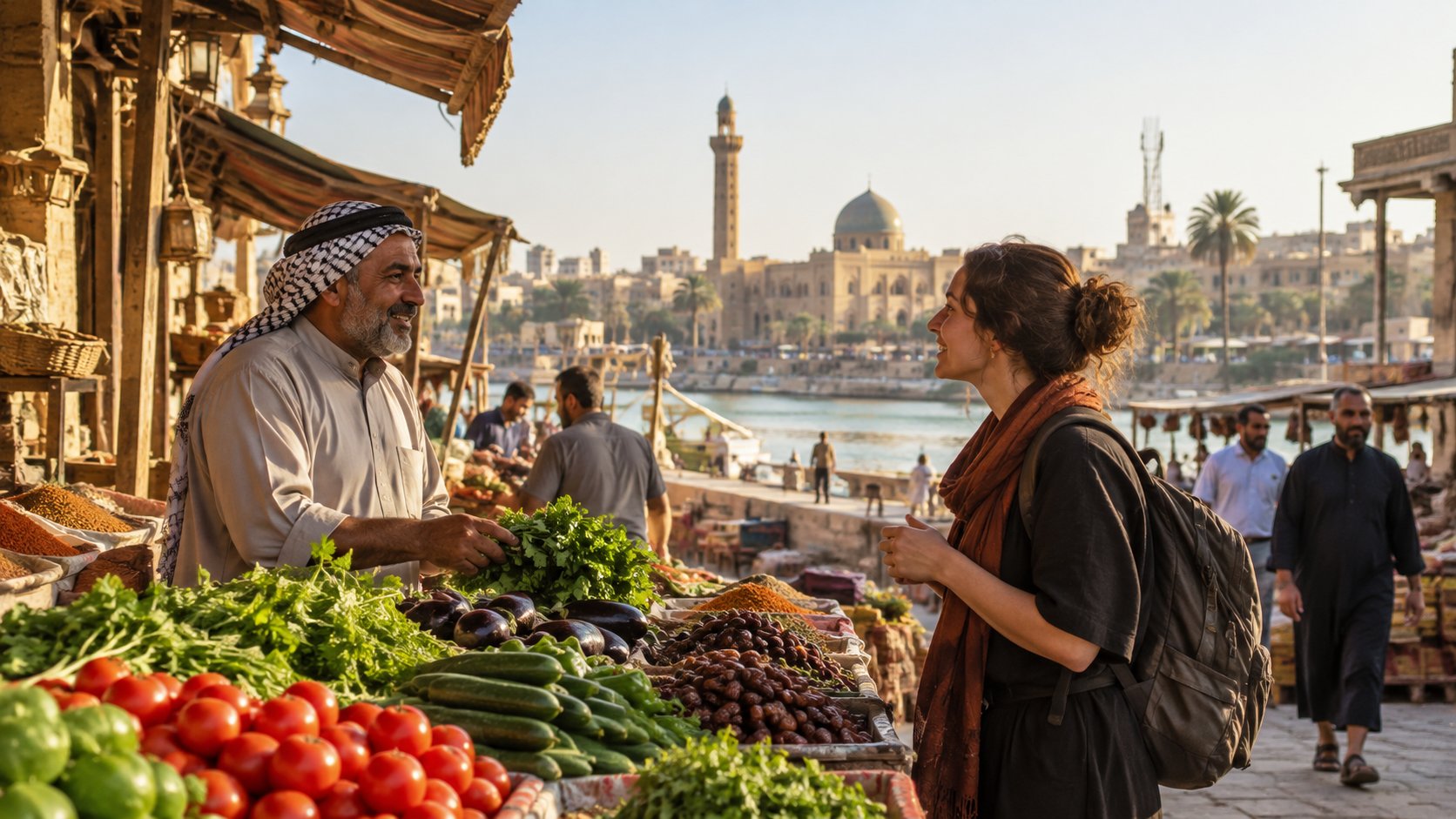
Iraqi hospitality is generous and food-centered. If a local family invites you to their home, communicate your diet early, before groceries are bought and cooking begins. Offer to bring a side dish or suggest an easy vegetable and rice combination the host can cook in a clean pot. If a dish arrives that you cannot verify, politely decline with a smile and a warm thank-you. Protecting your health is never an insult, but refusing food quietly and graciously preserves the warmth of the visit.
Frequently asked questions
Sources
- Hungry Paprikas, Amina Al-Saigh. "Iraqi Dolma (Middle Eastern Stuffed Vegetables)." https://www.hungrypaprikas.com/iraqi-dolma/ . Accessed October 25, 2026.
- Hungry Paprikas, Amina Al-Saigh. "Fasolia Yabsa (Iraqi White Bean Stew)." https://www.hungrypaprikas.com/fasolia/ . Accessed October 25, 2026.
- National Institute of Diabetes and Digestive and Kidney Diseases, NIH. "Eating, Diet, & Nutrition for Celiac Disease." https://www.niddk.nih.gov/health-information/digestive-diseases/celiac-disease/eating-diet-nutrition . Accessed October 25, 2026.
- Coeliac UK. "How to Read Gluten Free Food Labels." https://www.coeliac.org.uk/information-and-support/living-gluten-free/the-gluten-free-diet/food-shopping/food-labels/ . Accessed October 25, 2026.
❓Frequently Asked Questions
Here are answers to frequently asked questions about the content above
Only after verifying the pot. Traditional Iraqi dolma typically mixes minced meat into the rice filling and simmers over lamb ribs. Request an all-vegetable batch made in a clean pot, and confirm the cooking oil contains no butter or animal fat.
Rarely by default. Traditional fasolia yabsa simmers dried white beans in rich meat broth with lamb or veal cuts. Removing meat from a bowl does not remove the broth. Ask if the kitchen can stew beans in vegetable oil and water separately.
Plain cooked rice is naturally gluten-free, but Iraqi restaurant rice frequently includes toasted wheat vermicelli (sh'eriya) or bouillon cubes containing gluten. Always confirm the rice is free of vermicelli and prepared in a clean pot with oil and water.
Show the phrase هل يحتوي هذا على مرق اللحم أو مرق الدجاج؟ ('Does this contain meat broth or chicken broth?'). Show it directly to the cook or kitchen supervisor, not just the front-of-house server.
It should name celiac disease, state clearly that even minute traces of gluten cause illness, and forbid contact with bread, flour, or shared utensils. In Iraq, where bread often lines serving platters, emphasize that food must never touch flatbread.
Politely decline the meal and eat verified supplies you packed. Always travel with calorie-dense, shelf-stable snacks, book lodging with kitchen access when managing strict restrictions, and never compromise your health out of politeness.