From the sun-baked mudbrick ruins of Babylon and Uruk to the ziggurats of Ur and Aqar Quf, Iraq holds some of humanity's earliest surviving monuments. Visiting these ancient landscapes requires practical preparation, respect for fragile earthen architecture, licensed local guides, and strict compliance with national heritage preservation laws.
Visiting Iraq's Archaeological Sites Responsibly: Guides, Site Rules, Photography, and Protecting Fragile Remains
Excerpt: From the sun-baked mudbrick ruins of Babylon and Uruk to the ziggurats of Ur and Aqar Quf, Iraq holds some of humanity's earliest surviving monuments. Visiting these ancient landscapes requires practical preparation, respect for fragile earthen architecture, licensed local guides, and strict compliance with national heritage preservation laws.
Meta Description: How to visit Iraq's archaeological sites responsibly. Practical rules on licensed guides, SBAH site regulations, mudbrick conservation, drone bans, and photography etiquette.
The Mesopotamian landscape: why Iraq's heritage is exceptionally fragile
Iraq contains roughly 150,000 documented archaeological tells and ruins, spanning the Sumerian, Akkadian, Babylonian, Assyrian, Parthian, and Islamic periods. Key UNESCO World Heritage Sites include Hatra, Ashur (Qal'at Sherqat), Samarra Archaeological City, Erbil Citadel, Babylon, and the Ahwar of Southern Iraq (which pairs the marshlands with the Sumerian cities of Ur, Uruk, and Eridu).
Unlike Greek marble or Roman limestone, ancient Mesopotamian architecture was constructed almost entirely from alluvial silt, straw, bitumen, and sun-dried mudbrick (liben). Unbaked mudbrick is vulnerable to environmental stress: rain, rising groundwater salts, wind erosion, and foot traffic. Stepping off marked paths onto unbaked brick walls or layered earthen mounds breaks apart micro-structures that rested intact underground for four thousand years, turning them to dust in a few seasons.
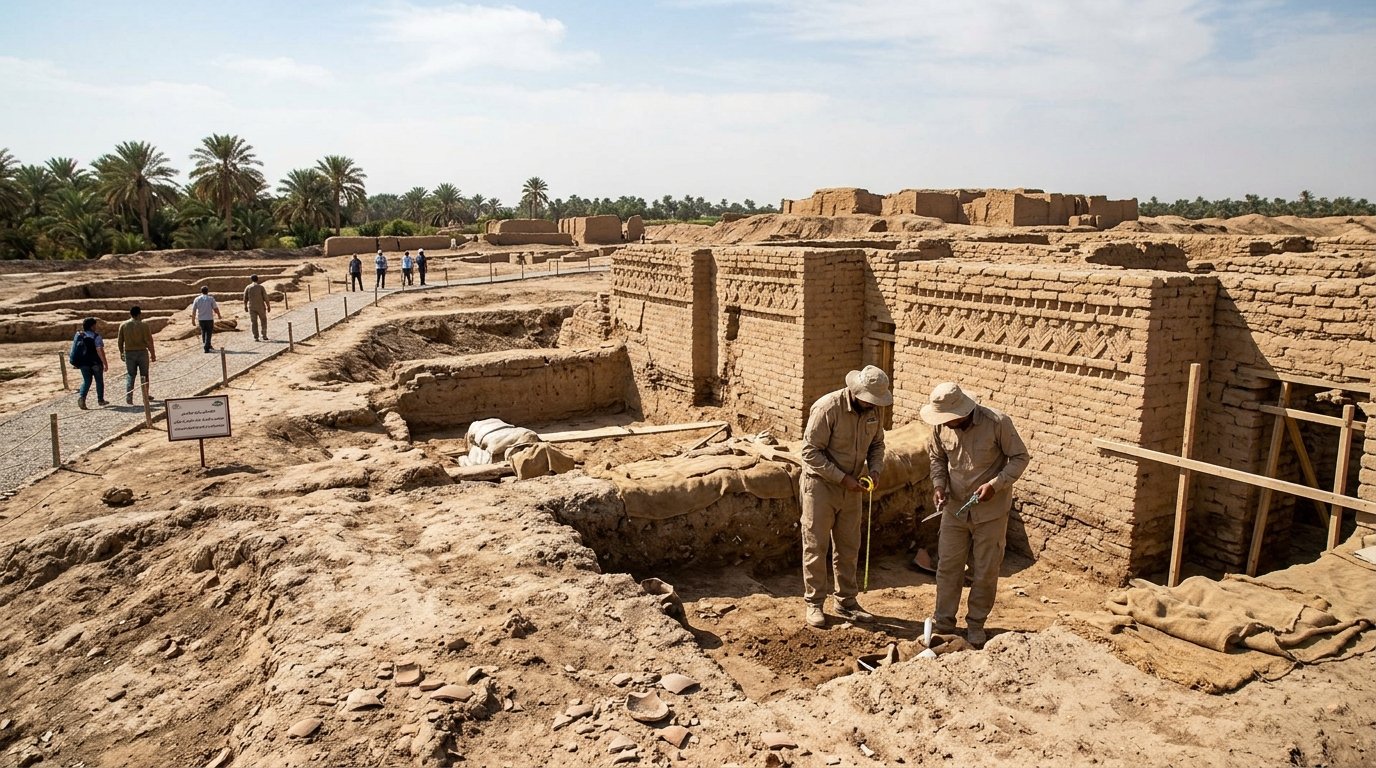
Site conservation across federal Iraq is directed by the State Board of Antiquities and Heritage (SBAH), a directorate of the Ministry of Culture, Tourism, and Antiquities. Modern conservation initiatives—including partnerships with the World Monuments Fund at Babylon and the British Museum at Girsu—focus on minimal intervention, salt-mitigation drainage, and structural stabilization. For travelers, responsible behavior is not just courtesy; it is essential to preventing irreversible physical loss.
Legal framework: Antiquities and Heritage Law No. 55 of 2002
All archaeological sites, mounds, monuments, and historical artifacts across federal Iraq are protected under Antiquities and Heritage Law No. 55 of 2002. The statute carries severe criminal penalties for unauthorized excavation, vandalism, or illicit export of heritage materials.
Key legal provisions travelers must know:
- Absolute ban on collecting artifacts: Removing or transporting antiquities, pottery shards, inscribed brick pieces, ancient coins, or geological samples from archaeological sites is strictly prohibited. Pocketing even a broken surface sherd from a desert mound is a serious criminal offense punishable by lengthy prison sentences.
- Surface finds stay where they lie: At sites like Uruk, Kish, or Nippur, tens of thousands of ceramic sherds sit exposed across the desert floor. You may look at a fragment where it rests, but you must leave it in place. Never collect surface material as a personal souvenir.
- Airport customs controls: Baghdad International Airport, Basra International Airport, and land borders operate specialized antiquities inspection units. Luggage scanners detect antique ceramics, carved stone, and aged bricks. Attempting to leave the country with genuine antiquities results in immediate detention and prosecution.
- Reporting exposed finds: If recent wind or rain uncovers an intact tablet, relief, or buried wall, note the GPS coordinates or photograph the spot, then alert your guide or the site warden.
Navigating sites: licensed guides, guards, and site protocols
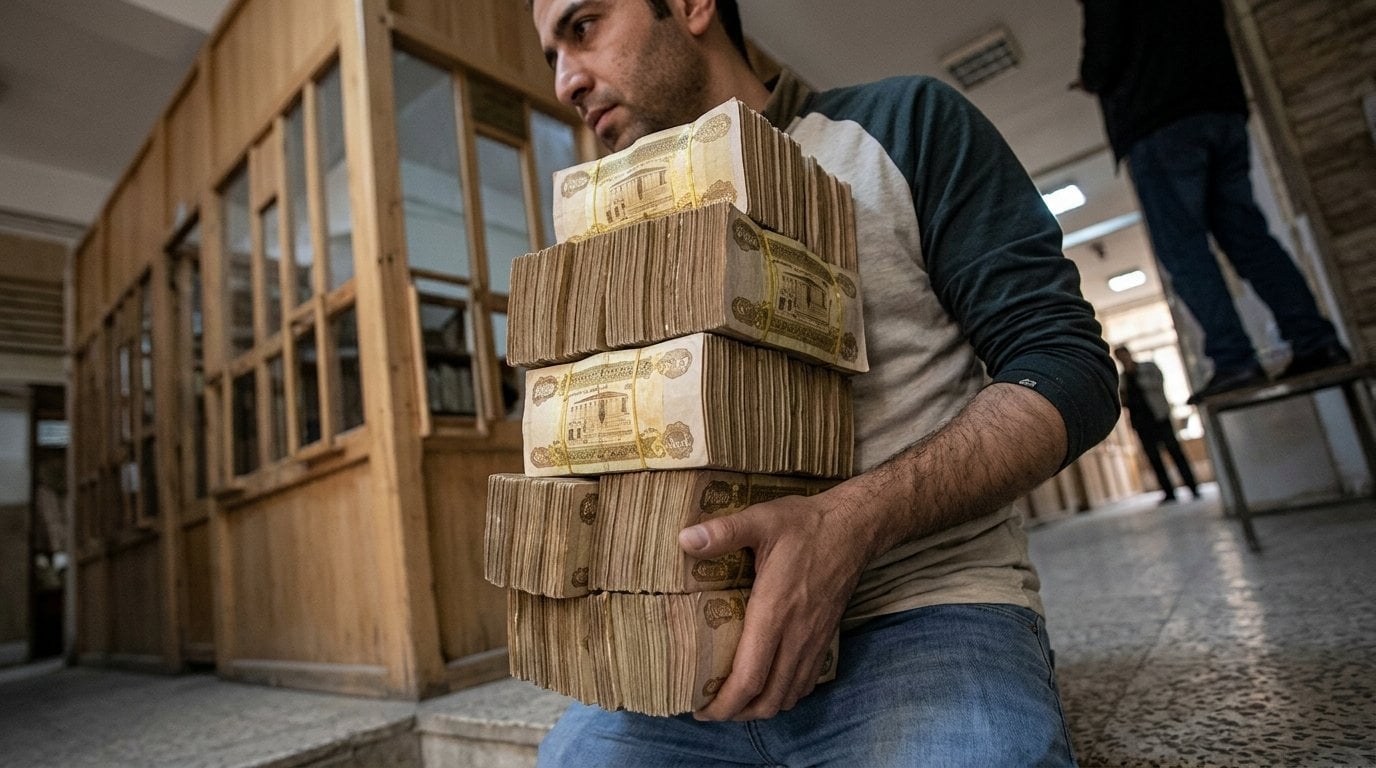
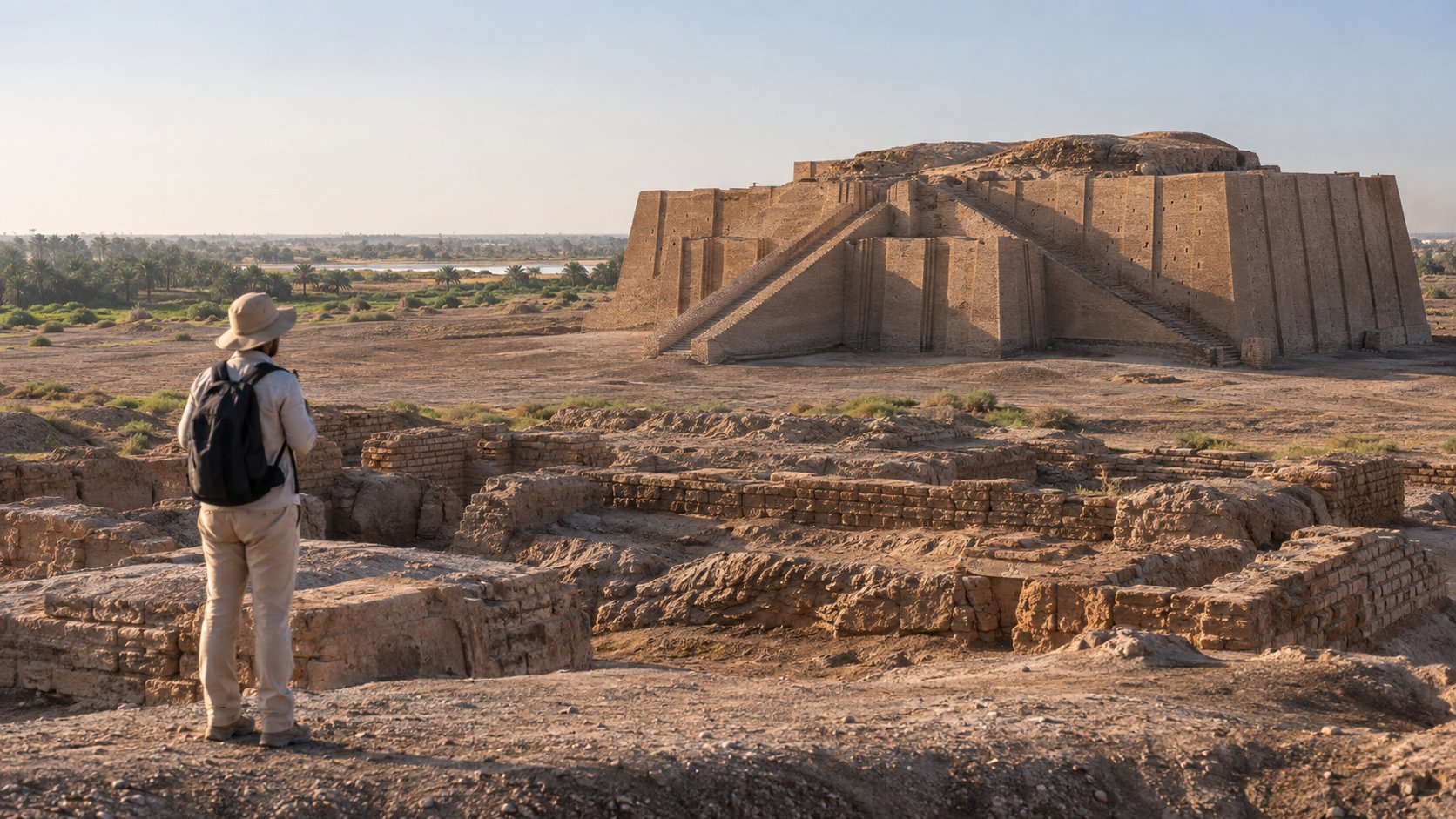
Visiting archaeological sites in Iraq differs fundamentally from touring managed European open-air museums. Flagship destinations like Babylon and the Great Ziggurat of Ur have formal ticket offices (foreign visitor tickets are 25,000 IQD in cash), defined access roads, and permanent staff. In contrast, remote settlements such as Uruk, Borsippa, Eridu, and Hatra require advance planning and local coordination.
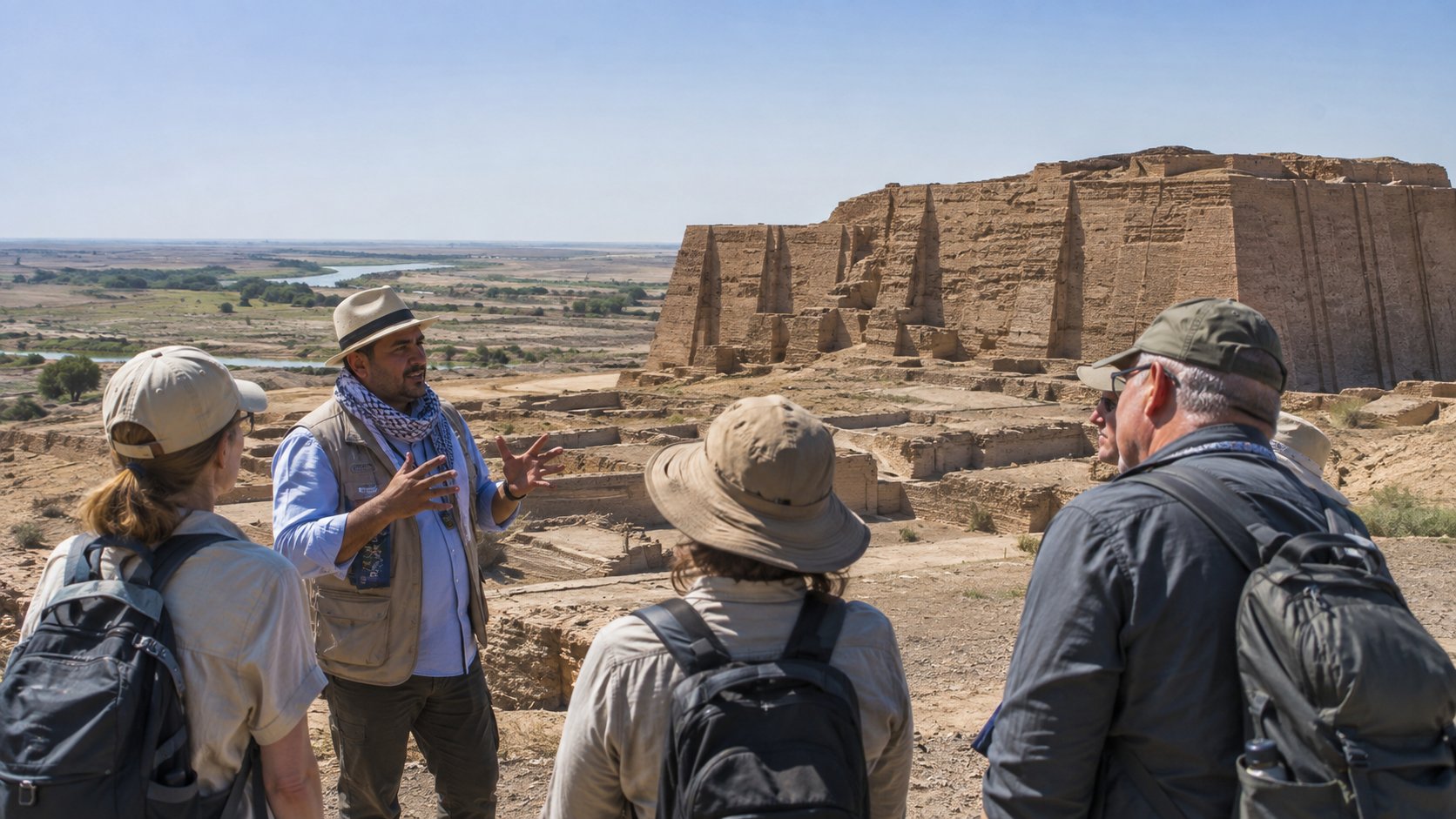
Why hiring a licensed local guide matters
- Navigating security checkpoints: Traveling between governorates and approaching rural heritage zones requires passing federal police and army checkpoints. A licensed Iraqi guide or experienced local driver handles document checks, answers route questions, and prevents delays.
- Coordinating with site guardians (Ghafir): Remote sites rarely feature ticket kiosks. They are secured by government-appointed site wardens (ghafirs), often drawn from local families who have guarded the mounds for generations. A local guide contacts the ghafir to unlock perimeter gates, identify safe walking routes, and pay entry fees.
- Interpreting complex ruins: Signage in English is minimal or nonexistent at most ruins. A knowledgeable guide helps distinguish between original fourth-millennium BCE foundations, Hellenistic or Islamic phases, and modern twentieth-century brick reconstructions (such as the 1980s work across Babylon).
- Supporting local heritage communities: Working with local guides, drivers, and site guardians channels tourism spending directly into rural communities adjacent to the ruins. When nearby residents see tangible economic benefits from visitors, community-level site protection against looting and encroachment grows stronger.
Protecting fragile mudbrick and monumental masonry
Mesopotamian architecture cannot endure standard tourist wear and tear. Follow these physical conservation rules at every site:
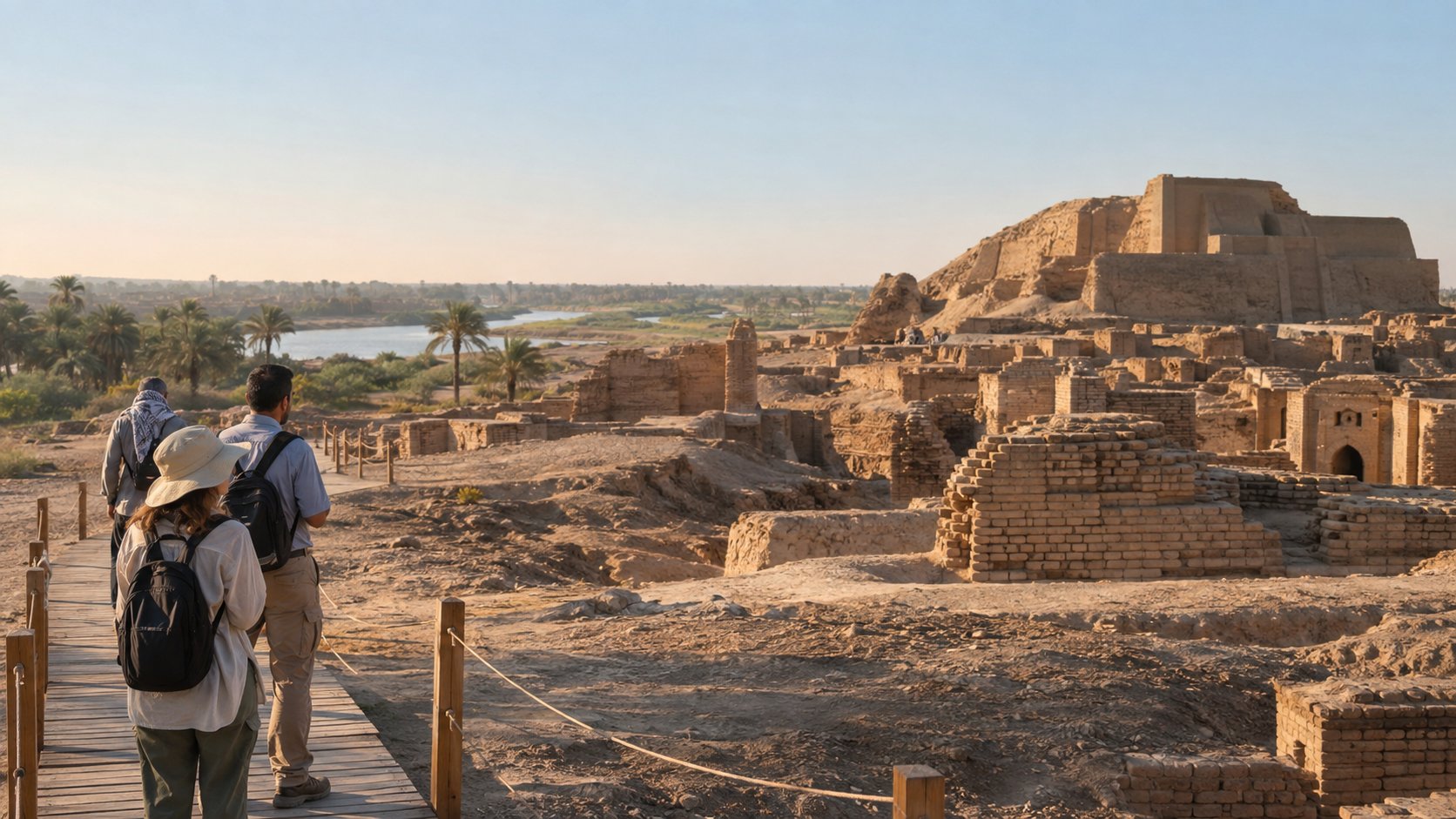
- Stay on marked pathways and wooden boardwalks: At Babylon and Ur, authorities have installed raised boardwalks and packed gravel routes to keep visitors off unstable ground. Never leave marked paths to walk over exposed mudbrick foundations, temple walls, or open excavation cuts.
- Never climb unpaved walls or unrestored ruins: While visitors may walk up the modern restored brick staircase to the lower terrace of the Great Ziggurat of Ur, climbing unrestored ziggurats such as Aqar Quf (Dur-Kurigalzu) or Borsippa is forbidden. Scrambling up earthen slopes breaks mud mortar and triggers slope collapse.
- Do not touch inscriptions or glazed surfaces: Touching cuneiform bricks, carved gypsum reliefs, or decorative facades leaves skin oils and moisture that accelerate salt crystallization and surface decay. Do not touch original brickwork, such as the surviving lower courses of the Ishtar Gate or the basalt Lion of Babylon.
- Choose appropriate footwear: Wear flat, rubber-soled walking shoes. Avoid lugged heavy boots with sharp treads or hard heels that puncture dry earthen surfaces and disturb archaeological layers.
- Keep gear off ancient masonry: Never use ancient walls, altars, or inscribed blocks as seats, camera shelves, or pack rests. Set gear only on cleared ground or designated benches.
- Pack out all waste: Desert sites have no trash collection services. Carry a waste bag in your daypack and pack out water bottles, food wrappers, and wet wipes. Dispose of them at your hotel or municipal bins in town.
Photography, drone regulations, and sensitive infrastructure
Archaeological photography in Iraq requires strict adherence to legal and security boundaries:
- Total ban on consumer drones: Drones (UAVs) of any size are prohibited for travelers throughout Iraq without high-level written permits from the Ministry of Interior, the Ministry of Defense, and civil aviation authorities. Bringing an undeclared drone into Iraq results in immediate confiscation at customs, lengthy security interrogations, and potential criminal detention. Leave drones at home.
- Tripods and professional gear: Handheld cameras and smartphones for personal travel photography are welcome. However, setting up heavy tripods, external microphones, or multi-light rigs can lead site guards to suspect unauthorized commercial filming, which requires formal media credentials from the Ministry of Culture. If carrying a tripod, have your guide verify permission before deploying it.
- Avoiding military and security installations: Archaeological sites and rural access roads frequently sit close to security checkpoints, military facilities, and communications towers. Never aim cameras toward security personnel, patrol vehicles, watchtowers, or checkpoint barricades. Check with your guide before taking wide landscape photos if government installations sit on the horizon.
- Respecting active archaeological digs: If you visit an active excavation—such as ongoing work at Girsu, Nineveh, or Uruk—always ask permission before taking photographs of active trenches, exposed objects, or field workers.
Sources
- UNESCO World Heritage Centre — Babylon World Heritage Listing and Protection Framework — Accessed March 14, 2026.
- Iraqi Republic Ministry of Culture, Tourism, and Antiquities — Antiquities and Heritage Law No. 55 of 2002 Overview — Accessed March 14, 2026.
- Iraq Tourism Guide — Archaeological Sites in Iraq: Ancient Mesopotamia Guide — Accessed March 14, 2026.
- UNESCO World Heritage Centre — The Ahwar of Southern Iraq: Refuge of Biodiversity and the Relict Landscape of the Mesopotamian Cities — Accessed March 14, 2026.
- World Monuments Fund — Future of Babylon Conservation Project — Accessed March 14, 2026.
- British Museum — The Iraq Emergency Heritage Management Training Scheme and Excavations at Girsu — Accessed March 14, 2026.
❓Frequently Asked Questions
Here are answers to frequently asked questions about the content above
No. Under Iraqi Antiquities and Heritage Law No. 55 of 2002, removing any pottery shard, brick fragment, or archaeological object from a site is strictly illegal and punishable by severe prison sentences. Airport customs actively scan luggage for artifacts.
No. Civilian drones are strictly prohibited throughout Iraq without formal multi-ministerial permits. Attempting to bring or fly an unauthorized drone will result in confiscation, detention, and rigorous security questioning.
While major sites like Babylon and Ur have public ticket offices, hiring a licensed local guide is strongly recommended to navigate inter-governorate security checkpoints, coordinate entry with rural site guardians (ghafirs), and avoid damaging vulnerable unexcavated terrain.
Mesopotamian mudbrick is made from sun-dried clay, silt, and straw rather than fired stone or mortar. Footsteps, climbing, and tactile pressure cause brittle earthen edges to fracture and accelerate weathering from wind and rain.
Visitors may ascend the modern restored brick central staircase leading to the first terrace of the Ziggurat of Ur. However, climbing off-path onto the unrestored earthen flanks or upper sections is strictly forbidden to protect the structure.
Standard entry for international visitors at major staffed archaeological sites such as Babylon and Ur is typically 25,000 Iraqi Dinars (IQD) per person, payable in cash at the local ticket office.