Bab al-Wastani is the only surviving medieval Abbasid city gate in Baghdad. Located in the Rusafa district, this 12th-century fortification features a massive cylindrical brick bastion, moat bridges, and carved stone reliefs.
Baghdad once had a thick ring of defensive walls, brick ramparts, and fortified gates. Today, only one medieval gateway remains from that eastern circuit: Bab al-Wastani. Built in the 12th century during the late Abbasid Caliphate, the gate stands in Baghdad's Rusafa district on the east bank of the Tigris River. Historically known as Bab al-Dhafariyya and Bab Khorasan, it preserves a heavy round bastion tower, arched brick bridges, moat embankments, and carved stone reliefs.
Drivers on the elevated Muhammad al-Qassim Highway can see the round brick tower rising above the surrounding rooftops. At ground level, the gate reveals an Abbasid defensive layout built to blunt cavalry charges and withstand siege engines while handling daily traffic into the capital.
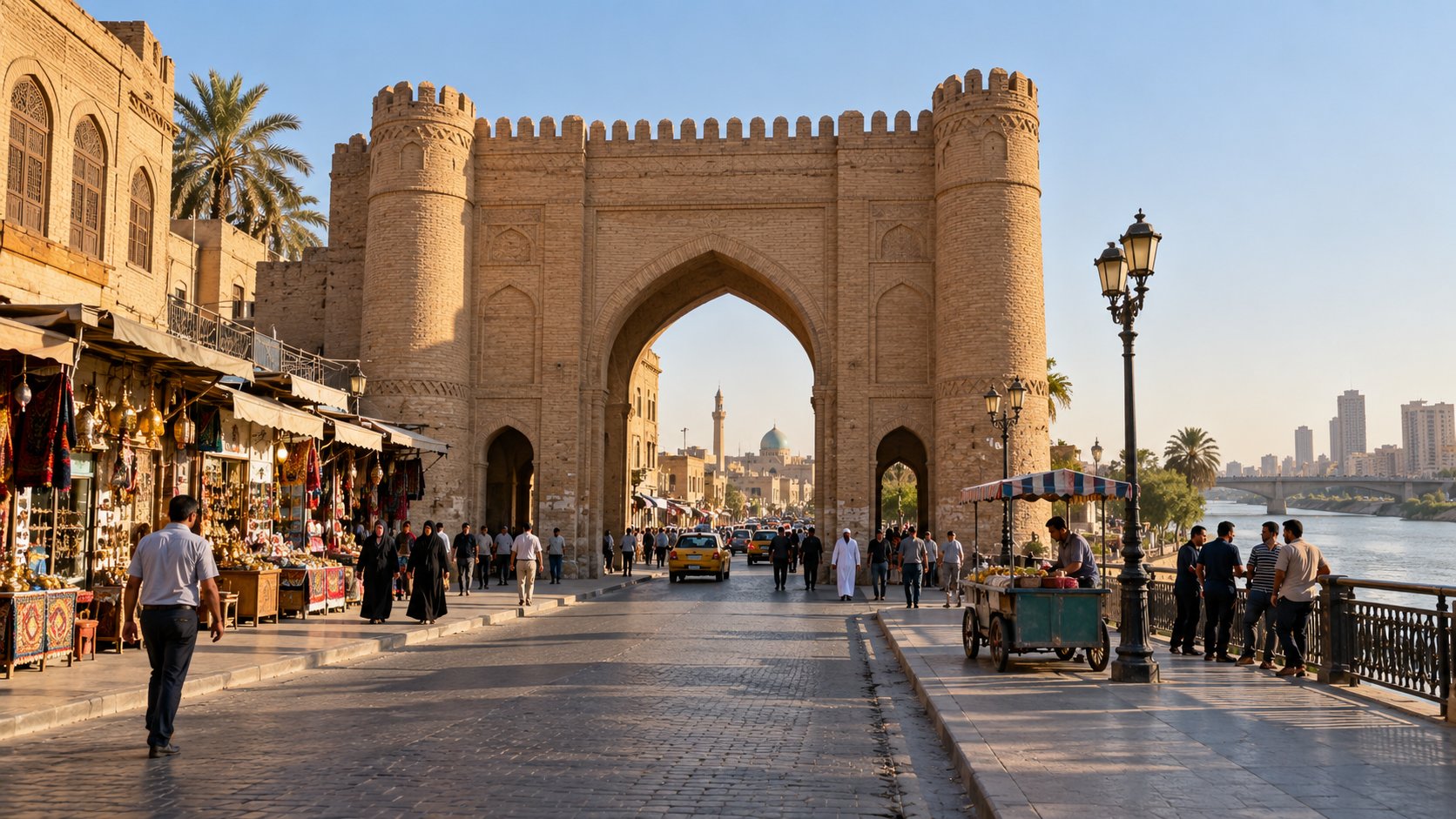
Origins and the Abbasid defensive wall
In the early Abbasid period, Baghdad grew outward from Caliph al-Mansur's Round City, founded in 762 CE on the west bank of the Tigris. By the late 11th century, the political and commercial center of the capital had shifted across the river to Rusafa on the east bank. Bedouin raids, regional unrest, and foreign armies made the undefended eastern suburbs vulnerable, prompting the caliphs to build a dedicated wall around Rusafa.
Caliph al-Mustazhir, who ruled from 1094 to 1118 CE, planned a comprehensive wall around Rusafa with a deep moat and fortified gates. Construction moved forward under his successor, Caliph al-Mustarshid, around 1121 CE, as documented by ICESCO Islamic World Heritage. Caliph al-Nasir li-Din Allah, ruling from 1180 to 1225 CE, later upgraded and decorated the gates with monumental inscriptions and stone carvings.
Historical accounts summarized in Wikipedia's record of the Gates of Baghdad describe four main gates along the eastern circuit:
- Bab al-Mu'adham. The North Gate stood near Adhamiyah and was pulled down in the early 20th century to widen city streets.
- Bab al-Sharqi. The East Gate marked the southern end of al-Rashid Street, served as a church after 1917, and was demolished in 1937.
- Bab al-Talsim. The Talisman Gate carried carved dragon reliefs and was destroyed in March 1917 when retreating Ottoman troops detonated munitions stored inside to deny them to British forces.
- Bab al-Wastani. The Middle Gate stood between the northern and southern portals along the eastern wall. It survived every siege and demolition wave, leaving it as the only standing medieval gate in Baghdad.
Military architecture, towers, and the moat system
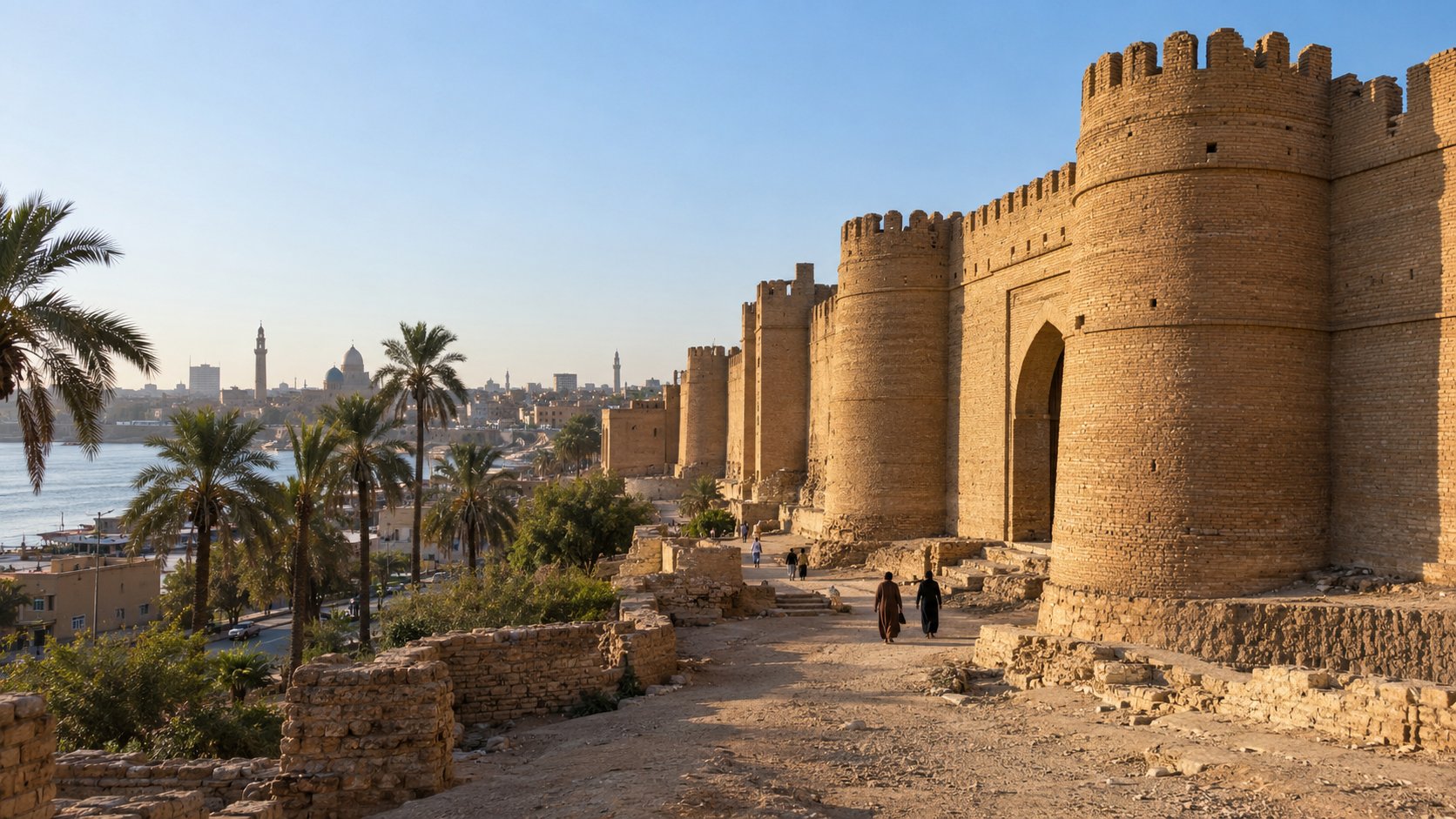
Abbasid builders designed Bab al-Wastani to handle battering rams, sappers, and heavy projectile fire. Dense, yellowish baked brick set in thick gypsum mortar, locally known as juss, formed the core of the walls. The mortar gave the brickwork enough elasticity to absorb impacts without crumbling.
A massive cylindrical bastion anchors the complex. Architectural measurements in Wikipedia's entry on Bab al-Wastani record that the tower stands 14.5 meters tall with a circumference of roughly 56 meters at ground level.
Key defensive elements include:
- Bent-axis entrance. The portal uses a curved military entrance rather than a straight corridor. Attackers forcing the outer door had to turn at a sharp right angle inside the bastion before reaching the inner gate. This dogleg layout broke the momentum of charging horses and prevented battering rams from striking the inner doors directly.
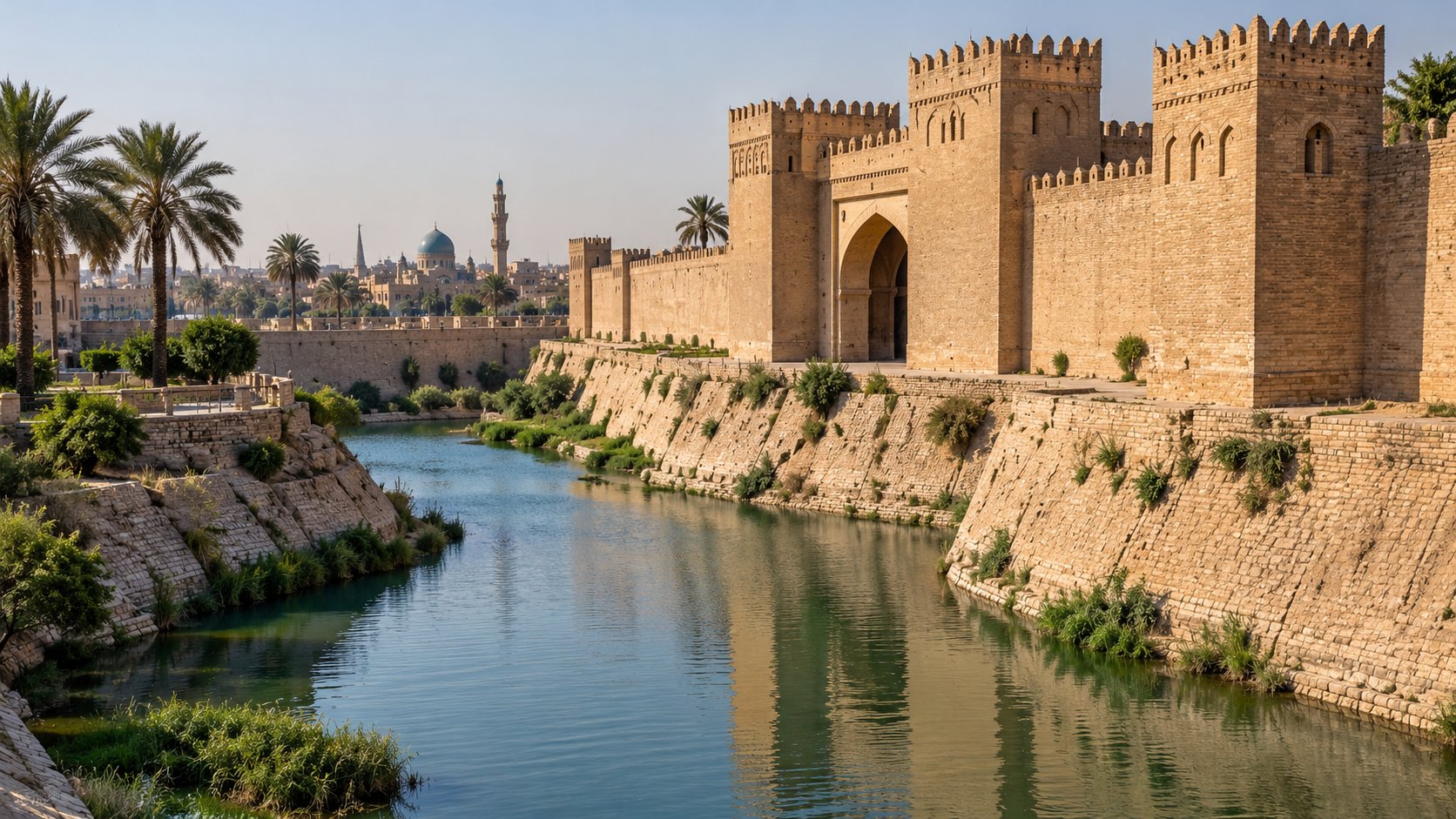
- Moat and arched bridges. A deep defensive ditch, known as a khandaq, ran outside the walls and drew water from nearby canals. Bab al-Wastani retains two brick bridge spans across the trench. The northwest arched bridge led to an entry portal three meters wide, while a second, higher bridge on the southwest linked the gate to the outer rampart.
- Octagonal interior chamber. Inside the round tower sits an octagonal guardroom topped by a brick dome. Defenders stationed here could fire through narrow arrow slits and drop stones or projectiles through floor openings onto attackers below.
- Carved brickwork and lion reliefs. Late Abbasid craftsmen embellished the defensive masonry. The northern facade carries decorative brick bands with eight-pointed stars, arabesque geometric patterns, and floral carvings. Stone reliefs of confronted lions, an ancient Mesopotamian and Abbasid royal symbol, flank the main portal arch.
From medieval fortress to arms museum
Bab al-Wastani survived centuries of warfare after the fall of the Abbasids. When Hulagu Khan's Mongol army sacked Baghdad in 1258, the gate held up despite widespread destruction across Rusafa. Centuries later, during the Ottoman-Safavid wars, Ottoman forces used the tower as an eastern defensive position. Sultan Murad IV reinforced its brickwork after taking the city in 1638.
In 1869, the Ottoman governor Midhat Pasha ordered Baghdad's deteriorating city walls dismantled to make room for city growth and improve air circulation. Workers knocked down miles of perimeter walls and salvaged the bricks for new municipal buildings, but Bab al-Wastani and its tower remained standing.
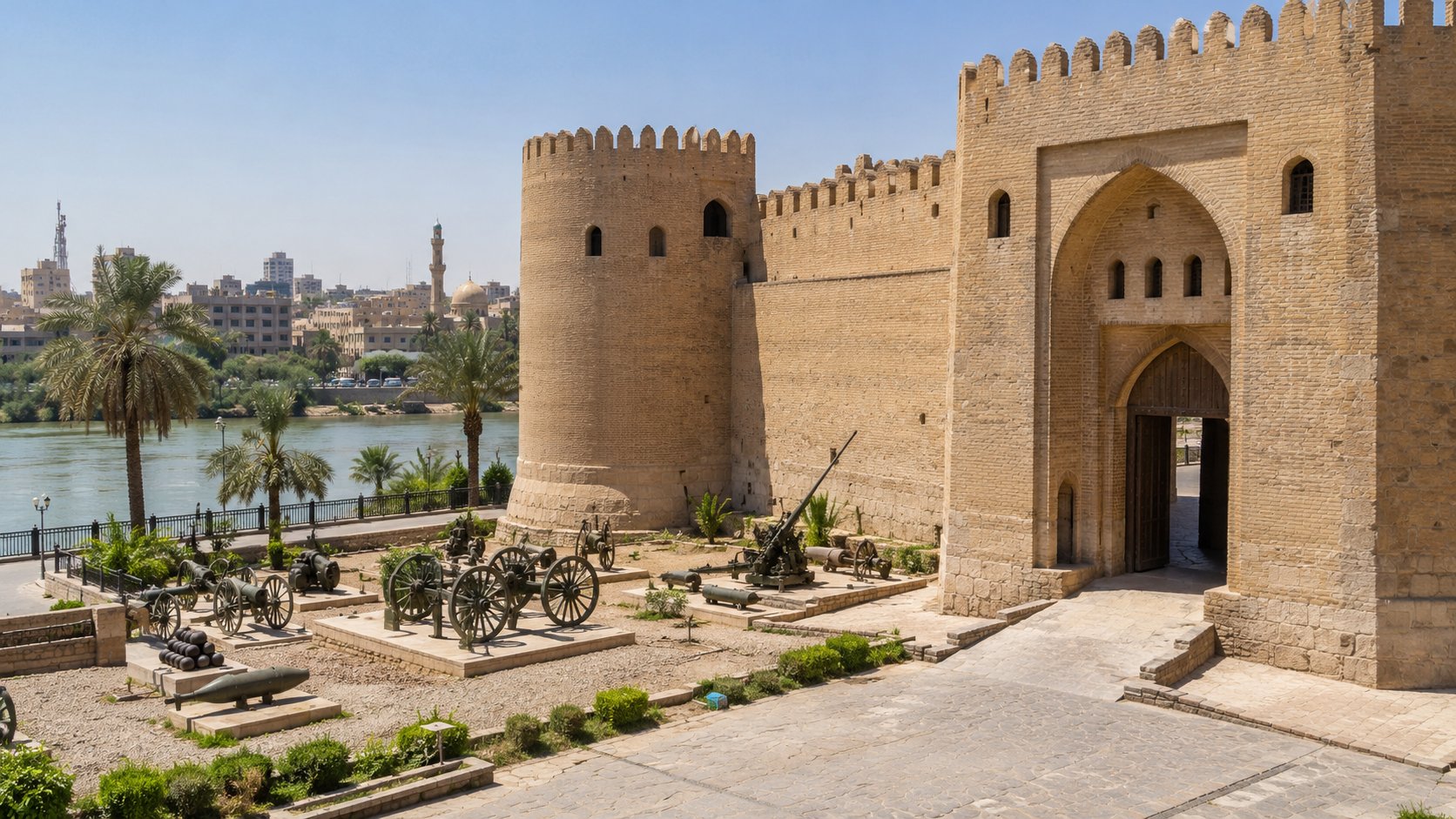
In the 20th century, the Iraqi Directorate of Antiquities restored the site. Excavation teams cleared debris from the moat, repaired damaged brickwork, and reinforced the bridge arches. For several decades, the domed interior chamber housed the Iraqi Arms Museum, known as al-Mathaf al-Harbi, displaying swords, mail coats, shields, and early bronze cannons before the collection moved to national museum vaults.
Visiting Bab al-Wastani today
Bab al-Wastani is located in Rusafa at geographic coordinates 33.351802, 44.404063, as detailed in the visitor guide on Real Journey Travels. The gate sits directly behind the Mausoleum of Shihab al-Din Umar al-Suhrawardi, the 12th-century Sufi scholar, and borders the historic al-Wardiyya cemetery.
Getting there and practical tips
- Transport. A taxi from central Baghdad, including Karrada or Mutanabbi Street, takes 15 to 25 minutes depending on traffic. Tell the driver Bab al-Wastani near the Sheikh Umar mosque. Ride-hailing apps like Careem work reliably across the city.
- Access and tickets. The exterior gate stands in an open street setting with no tickets or admission booths. Visitors can walk around the tower base, view the moat bed, and inspect the brick bridge arches directly from street level. Interior access remains locked unless arranged through the State Board of Antiquities and Heritage.
- Dress and etiquette. The gate borders active religious shrines and the historic al-Wardiyya cemetery. Dress conservatively with shoulders and legs covered. Keep noise down and avoid pointing cameras at funeral processions or visitors praying at nearby tombs.
- Photography. Morning light brings out the crisp shadows on the northern brick reliefs and lion carvings. For a wide perspective showing medieval brick against the backdrop of modern highway traffic, step onto the pedestrian sidewalks near the Muhammad al-Qassim overpass.
Sources
- Wikipedia: Bab al-Wastani. https://en.wikipedia.org/wiki/Bab_al-Wastani (Accessed May 2024).
- Wikipedia: Gates of Baghdad. https://en.wikipedia.org/wiki/Gates_of_Baghdad (Accessed May 2024).
- ICESCO Islamic World Heritage: Al Bab Al-Wastani. https://iwh.icesco.org/al-bab-al-wastani/ (Accessed May 2024).
- Real Journey Travels: Bab Baghdad Al-Wastany: Baghdad’s Last Surviving Medieval Gate. https://www.realjourneytravels.com/places/bab-baghdad-al-wastany/ (Accessed May 2024).
❓Frequently Asked Questions
Here are answers to frequently asked questions about the content above
Bab al-Wastani is the only surviving medieval city gate of Baghdad. Built during the 12th century under the Abbasid Caliphate, it preserves original brick fortifications, a cylindrical defensive tower, moat bridges, and a bent-axis entrance that protected eastern Baghdad's Rusafa district.
The fortifications of eastern Baghdad were planned under Caliph al-Mustazhir and constructed under Caliph al-Mustarshid around 1121 CE. Caliph al-Nasir li-Din Allah later strengthened the gate and added ornamental inscriptions around 1220 CE.
The monument is located in the Rusafa district on the eastern side of the Tigris River, near the Sheikh Umar neighborhood. It sits behind the Mausoleum of Umar al-Suhrawardi, alongside the Muhammad al-Qassim Highway.
The gate has a 14.5-meter cylindrical brick bastion tower, arched brick bridges over an ancient moat, an octagonal domed guardroom, and a bent-axis entry that forced attackers into an exposed right-angle turn. The exterior preserves carved brick star patterns and stone lion reliefs.
Other gates were destroyed by conflict or urban modernization. Bab al-Talsim was blown up by retreating Ottoman troops in 1917, while Bab al-Mu'adham and Bab al-Sharqi were demolished in the early 20th century for roadway expansion. Bab al-Wastani was preserved and restored by antiquities authorities.
Yes, tourists can visit the exterior free of charge. The gate stands in an accessible urban space in Rusafa. Modest clothing is recommended due to the adjacent shrines and cemetery grounds.