A revered sanctuary in Al-Kifl, traditionally identified as the tomb of Ezekiel, with a historic mosque, minaret and nearby covered souk.
Ezekiel's Shrine in Al-Kifl
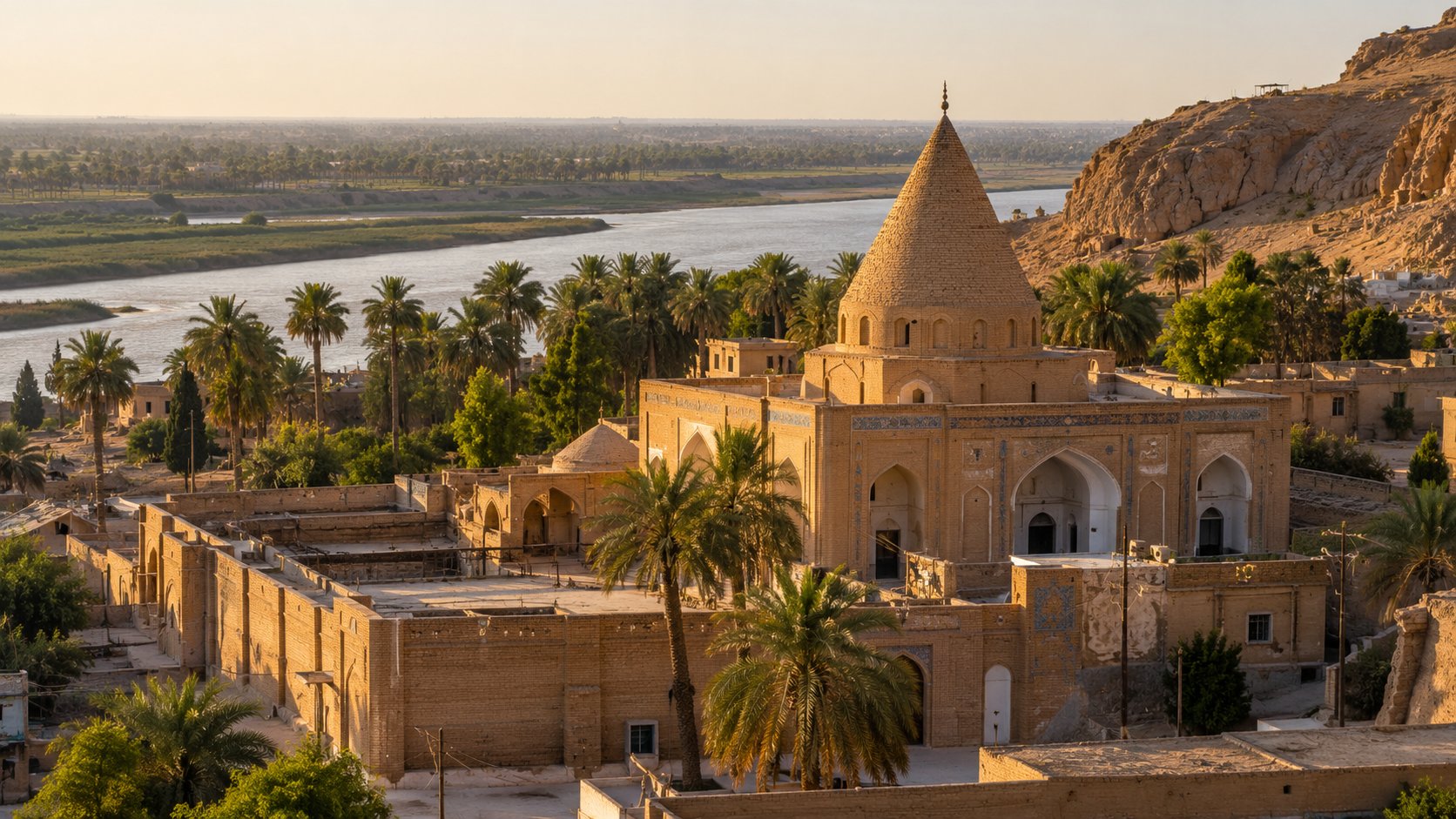
Al-Kifl lies on the Euphrates between al-Hillah and Najaf. Its best-known landmark is a shrine traditionally identified as the tomb of the prophet Ezekiel, revered in Jewish tradition and associated in Islam with Dhu al-Kifl. The shrine stands within al-Nukhailah Mosque. (UNESCO World Heritage Centre; Al-Kifl overview)
A shared pilgrimage site
For centuries, Jewish and Muslim visitors came to Al-Kifl to honor the prophet. The town was an important pilgrimage destination for Iraqi Jews. Historical accounts describe festivals and visits from across the region. The identification of the tomb as Ezekiel's is a religious tradition, not a claim established by modern archaeology. (Al-Kifl overview)
The shrine's central feature is a conical dome above the tomb, set on an octagonal base. Nearby are tombs associated with figures from the biblical tradition, including Baruch. The complex is now part of a mosque and remains a place of Muslim worship.
The mosque and minaret
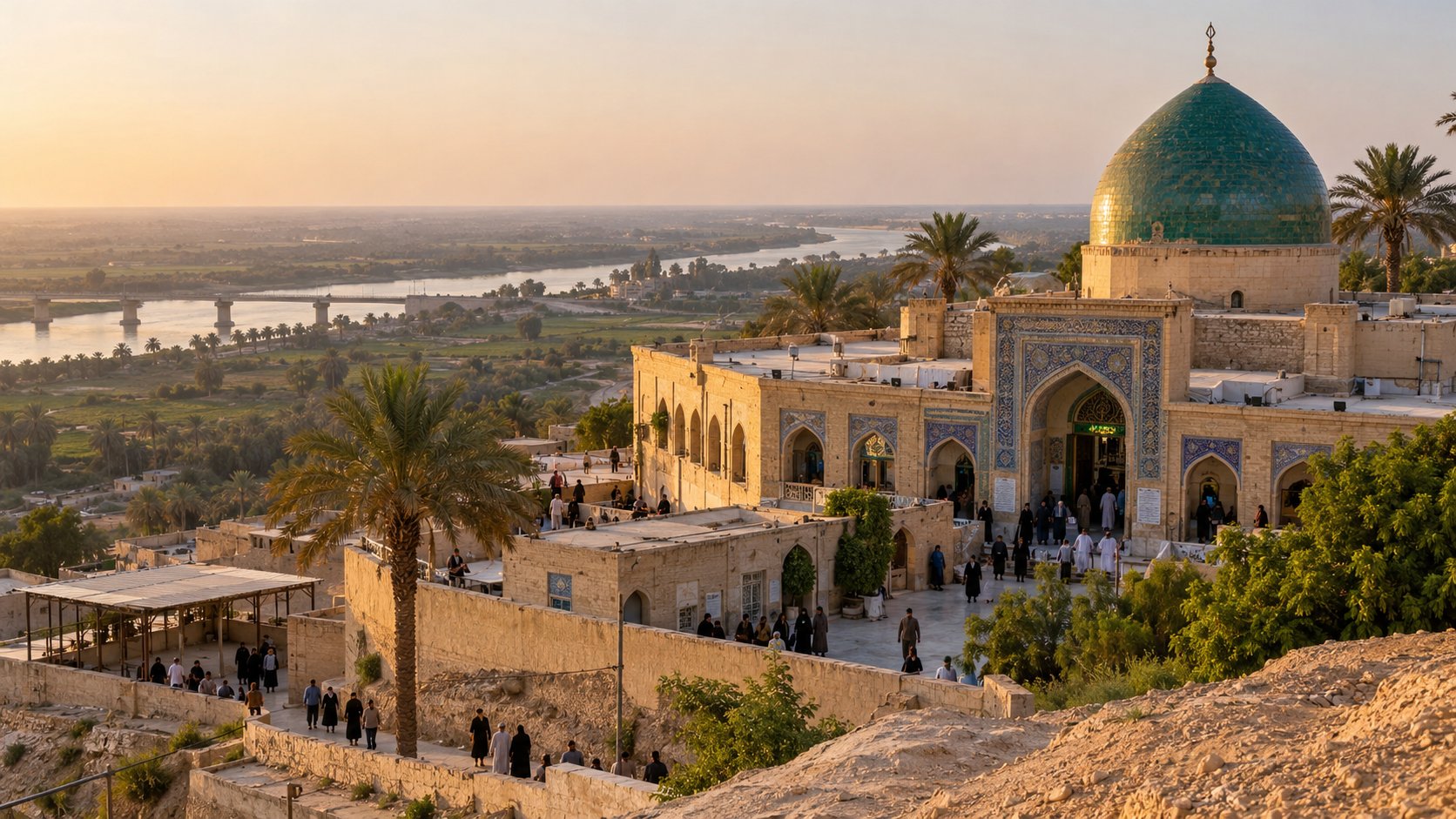
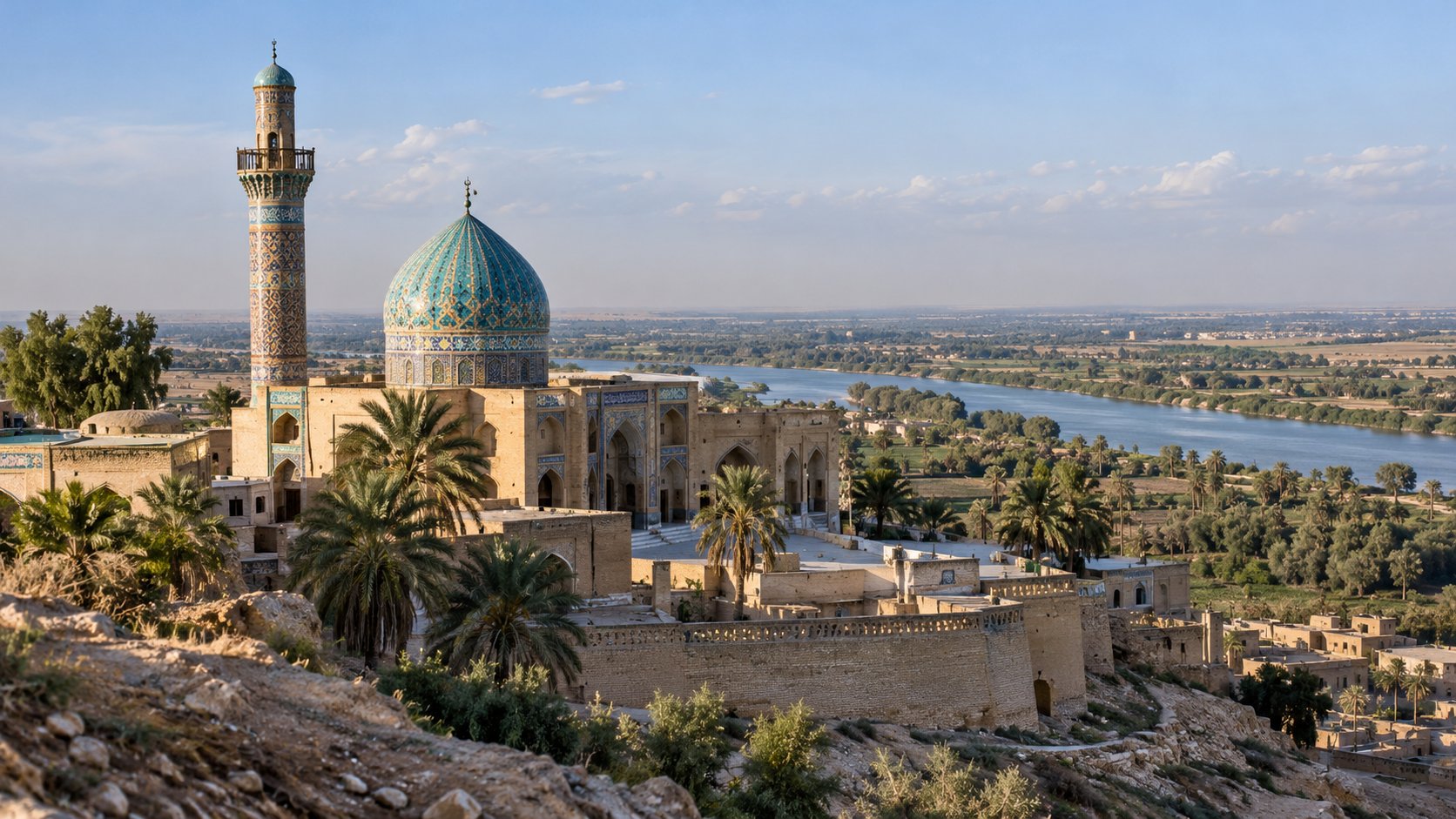
Al-Nukhailah Mosque and its historic minaret are commonly dated to 1316, during the Ilkhanid period. The minaret marks the old town, which also has remnants of caravanserais once used by travelers and traders. Some historic buildings have been altered or lost during later redevelopment. (Al-Kifl overview; Archnet, Dhu’l Kifl Shrine)
Restoration work has raised questions about how to preserve the complex's Jewish heritage while supporting its active Muslim religious use. Visitors should treat it as a functioning sacred site, not only a historic monument.
Souk Daniel
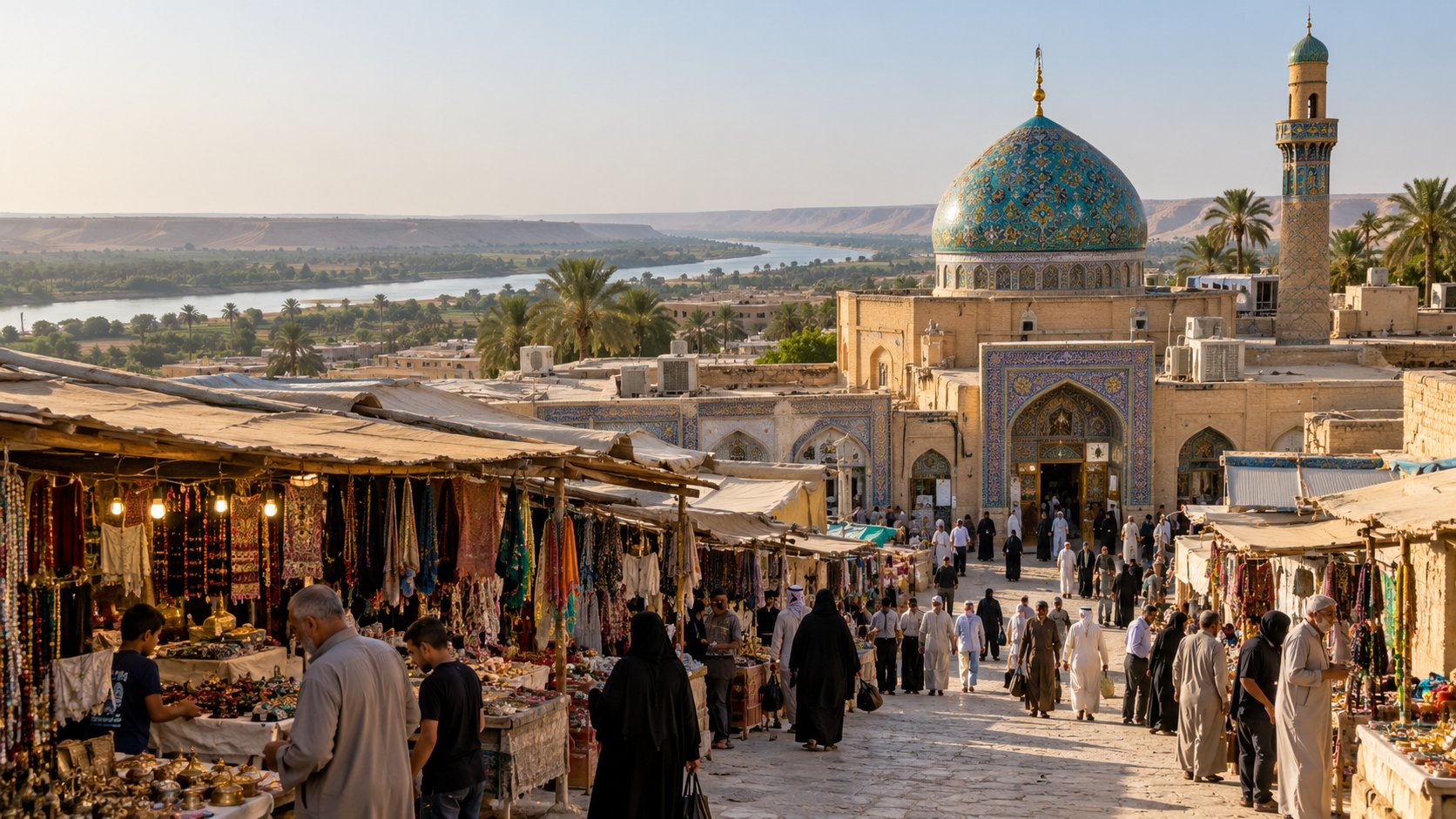
Near the shrine, Souk Daniel is a covered market with rows of shops beneath a long roof. It lies in Al-Kifl's historic commercial quarter. (Al-Kifl overview)
Ask before photographing people or shop interiors. At the shrine, dress modestly and follow caretakers' instructions. Worshippers may be present, and opening arrangements can change, so check access locally before you travel. Al-Kifl is in Babylon Governorate, within reach of al-Hillah. Check current road and security conditions before setting out.
Visiting with respect
The shrine brings together a long Jewish pilgrimage history and present-day Muslim worship. Its dome and minaret sit within a wider old town that includes Souk Daniel and remnants of caravanserais. Allow time to see both the sanctuary and the town around it.
FAQs
Sources
- UNESCO World Heritage Centre, “The Site of Thilkifl,” https://whc.unesco.org/en/tentativelists/5805/ (accessed 2026-01-18).
- Wikipedia, “Al-Kifl,” https://en.wikipedia.org/wiki/Al-Kifl (accessed 2026-01-18).
- Archnet, “Dhu’l Kifl Shrine,” https://archnet.org/sites/3948 (accessed 2026-01-18).
❓Frequently Asked Questions
Here are answers to frequently asked questions about the content above
It is in Al-Kifl, in Iraq's Babylon Governorate, on the Euphrates between al-Hillah and Najaf.
The tomb is traditionally identified as that of the prophet Ezekiel. In Islamic tradition, he is associated with Dhu al-Kifl.
No. The identification is a longstanding religious tradition, and archaeological evidence does not establish the tomb's identity.
The complex includes the traditional tomb, a conical dome and a historic minaret commonly dated to 1316.
Visitors can explore Souk Daniel, Al-Kifl's covered market, and remnants of historic caravanserais in the old town.
The shrine is an active place of worship. Dress modestly, follow caretakers' instructions, ask before taking photographs, and check local access and travel conditions.