A Syriac Christian monastery near Mosul, known for its martyr shrine, medieval stone carvings and inscriptions in several languages.
Mar Behnam Monastery
Mar Behnam Monastery, also known as the Monastery of Mar Behnam and Mart Sarah, stands near Khidir village in Iraq’s Nineveh Plains, about 35 kilometres southeast of Mosul. It is known for its martyr shrine and medieval stone carvings. Islamic State damaged the complex during its occupation from 2014 to 2016.
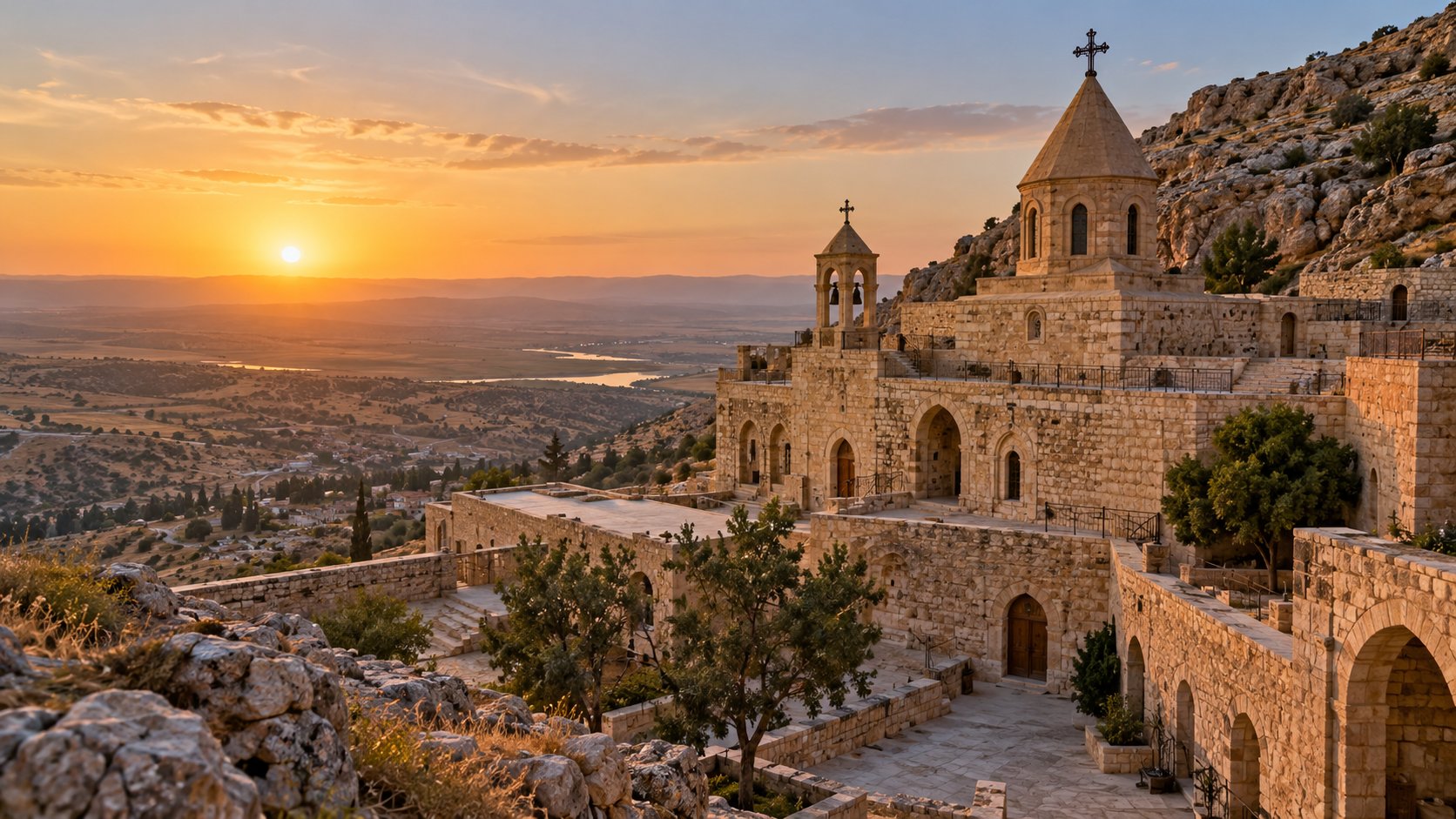
A legend rooted in the Nineveh Plains
The monastery’s tradition says that Behnam, a prince, and his sister Sarah converted to Christianity in the fourth century after the monk Mar Mattai healed Sarah. Their father, King Sennacherib, ordered their deaths. The story places their martyrdom at the site and links the monastery to the wider Christian history of the region.
This is religious tradition, not verified evidence of a fourth-century foundation. The story was recorded centuries later, and scholars have questioned its details. Mesopotamia Heritage cites historian Jean-Maurice Fiey’s doubts, including the link to the much earlier Assyrian king Sennacherib. The fourth-century date is best described as the monastery’s traditional origin.
The shrine also drew Muslim and Yazidi visitors. Mesopotamia Heritage records women from these communities seeking blessings related to fertility and abundance.
Carved stone and layered history
The monastery’s best-known carving shows Mar Behnam on horseback, defeating the devil. A relief of Mart Sarah stood nearby. Mesopotamia Heritage dates the main composition to the fifteenth century or earlier. Inscriptions show that the wider complex underwent major rebuilding and decoration between 1164 and 1295. Some name donors and artists.
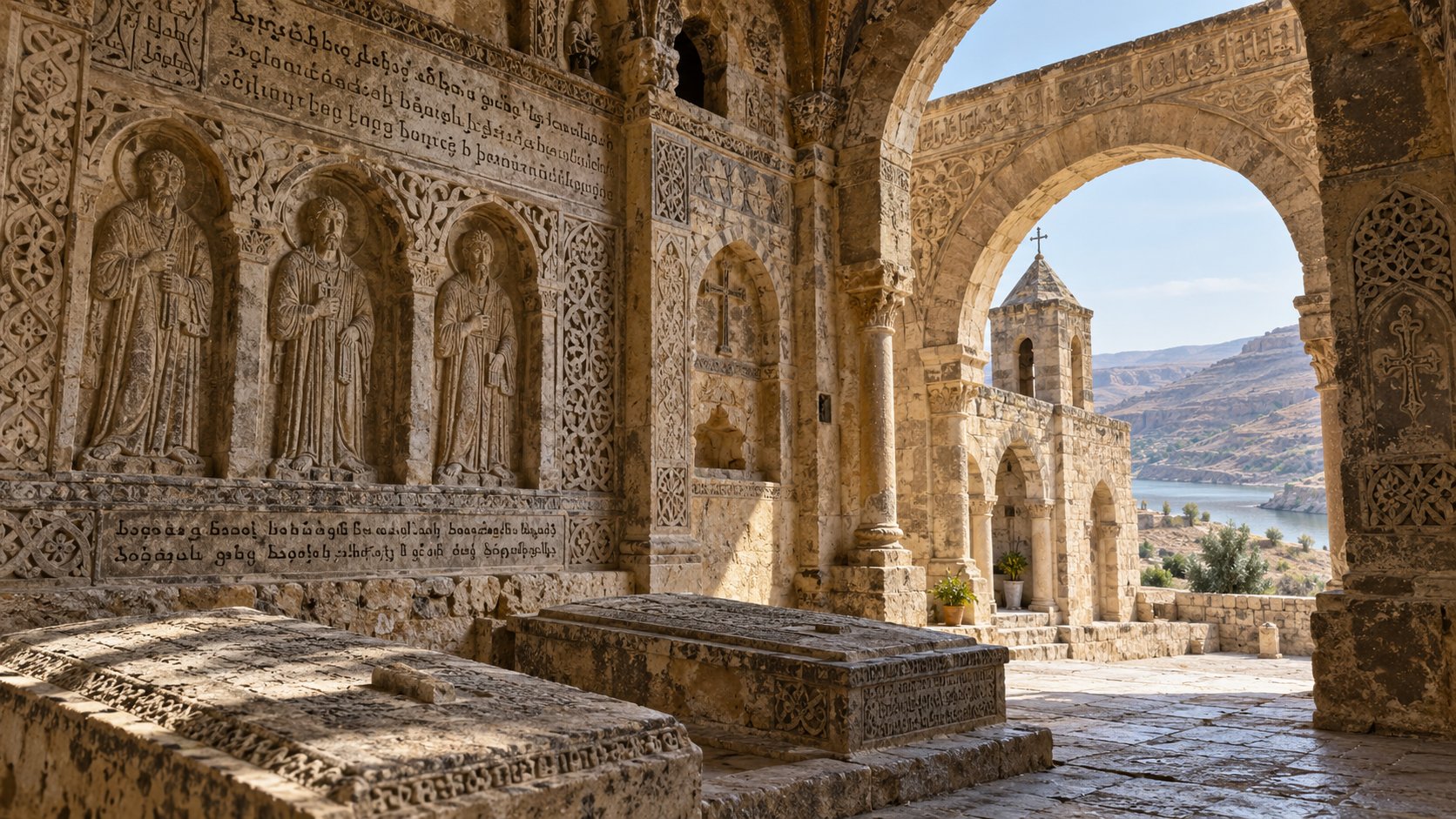
Christopher Jones, writing for Hyperallergic, describes the saint’s reliefs alongside arches, niches and arabesque patterns. Inscriptions appear in Syriac, Arabic and Armenian. An Old Uyghur inscription above the saints’ graves invokes Khidr Elias and a Mongol Ilkhan ruler.
Mesopotamia Heritage records that the monastery became Syriac Catholic in 1839. Later restoration and alteration took place in 1901, the 1930s and 1986.
Destruction and repair
Islamic State fighters occupied the monastery from 2014 until 2016. They damaged reliefs and other carved features, then blew up the separate martyr shrine in March 2015. Jones’s 2015 report documents the shrine’s destruction and the loss of its distinctive inscriptions and architecture.
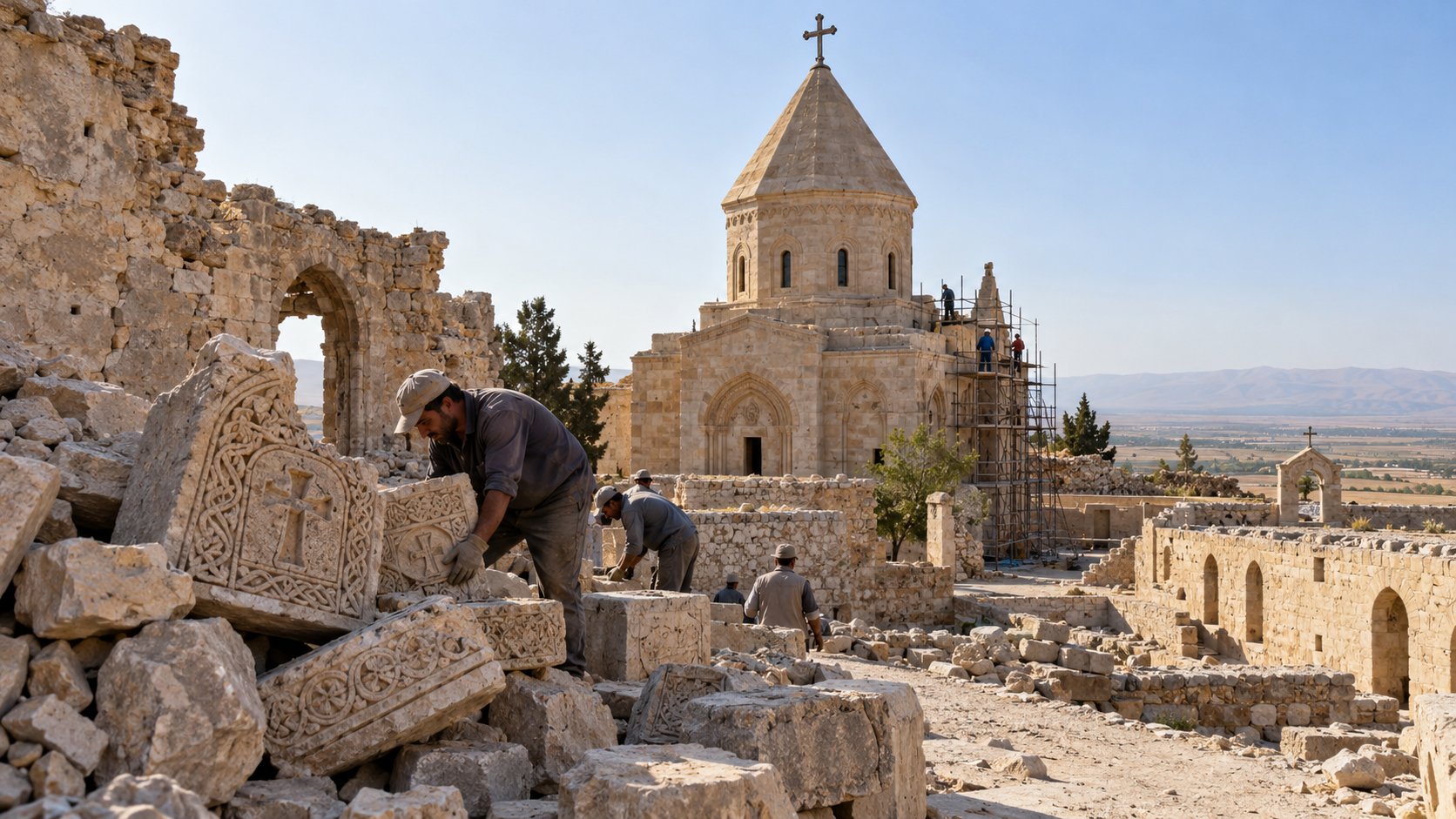
After the area’s liberation, teams sorted the rubble and recovered carved fragments for reuse, according to Mesopotamia Heritage. Restoration began in 2017, and the reconstructed mausoleum was completed in 2019. The shrine is rebuilt, but damage to carvings elsewhere in the complex remains.
Visiting with care
Mar Behnam Monastery lies near Khidir village, southeast of Mosul. Its history includes Syriac Christian art, inscriptions in several languages and devotion across local religious communities. Some carvings were damaged, and the martyr shrine is a reconstruction.
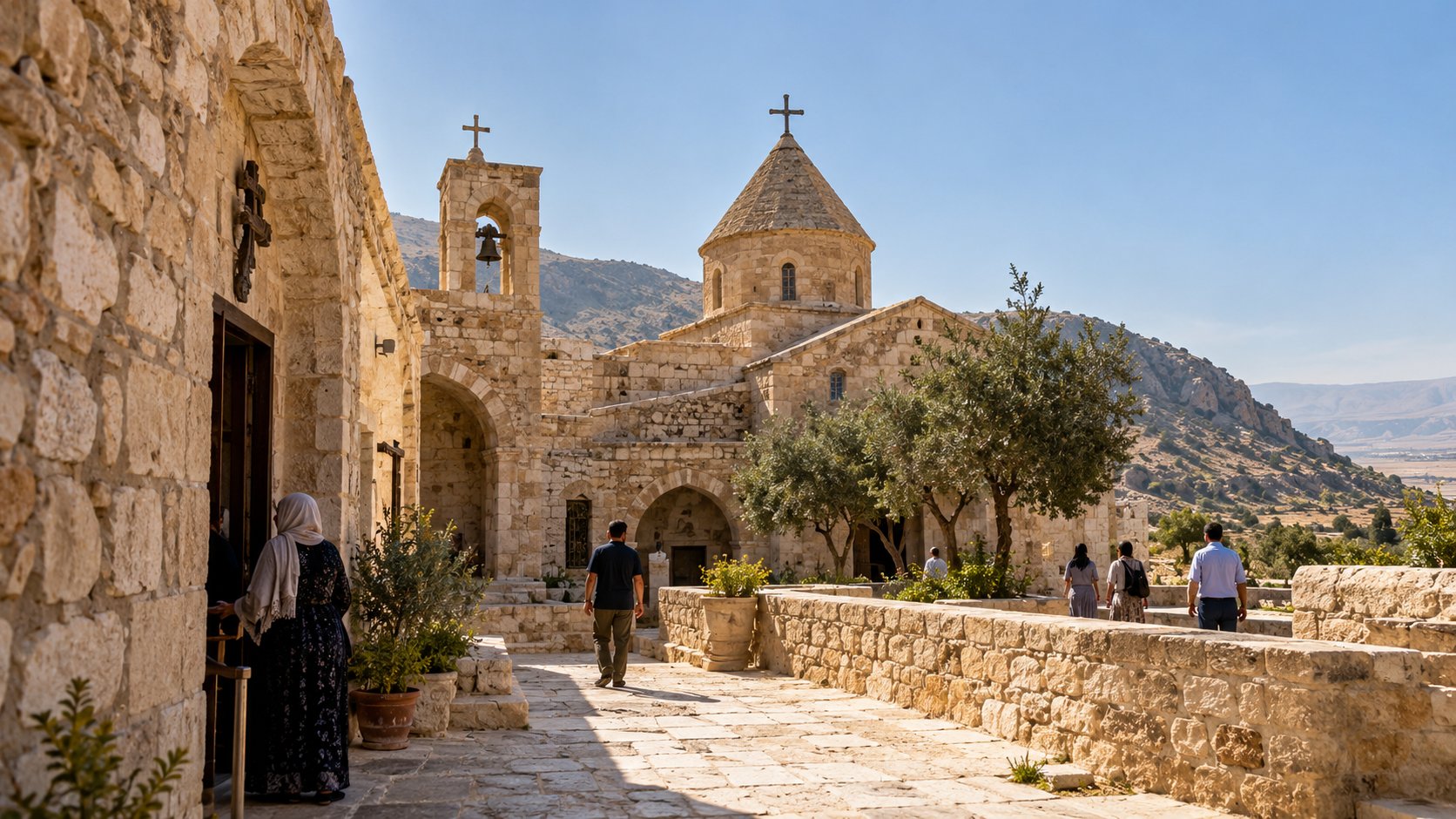
Before planning a visit, check current local conditions and whether access is permitted. Conditions can change, and the sources cited here do not provide current visitor or transport guidance. Respect worshippers and the site’s custodians, and follow any instructions on arrival.
[
  {"id":"faq-1","question":"Where is Mar Behnam Monastery?","answer":"It is near Khidir village in the Nineveh Plains, about 35 kilometres southeast of Mosul."},
  {"id":"faq-2","question":"Who were Mar Behnam and Mart Sarah?","answer":"Christian tradition says they were siblings martyred after converting to Christianity. This account is not verified as a historical record."},
  {"id":"faq-3","question":"What is the monastery known for?","answer":"It is known for its martyr shrine, medieval stone reliefs and inscriptions in Syriac, Arabic, Armenian and Old Uyghur."},
  {"id":"faq-4","question":"When was the monastery founded?","answer":"Tradition places its origins in the fourth century, but scholars question the story and the date is not confirmed."},
  {"id":"faq-5","question":"What happened to the monastery during Islamic State’s occupation?","answer":"Islamic State damaged carvings and destroyed the separate martyr shrine in March 2015. The shrine was later rebuilt."},
  {"id":"faq-6","question":"Can visitors go to Mar Behnam Monastery?","answer":"Check current local conditions and access permissions before travelling. Conditions can change."}
]
Sources
- Mesopotamia Heritage, “Mar Behnām and Sārah’s convent”. Accessed 12 January 2025.
- Hyperallergic, Christopher Jones, “Another Treasure Lost in Iraq: The Story of Mar Behnam Monastery”. Accessed 12 January 2025.