Directly below the Erbil Citadel, Qaysari Bazaar is a centuries-old covered market known for its gold souk, spice lanes, Kurdish textiles, and historic tea houses.
Qaysari Bazaar in Erbil
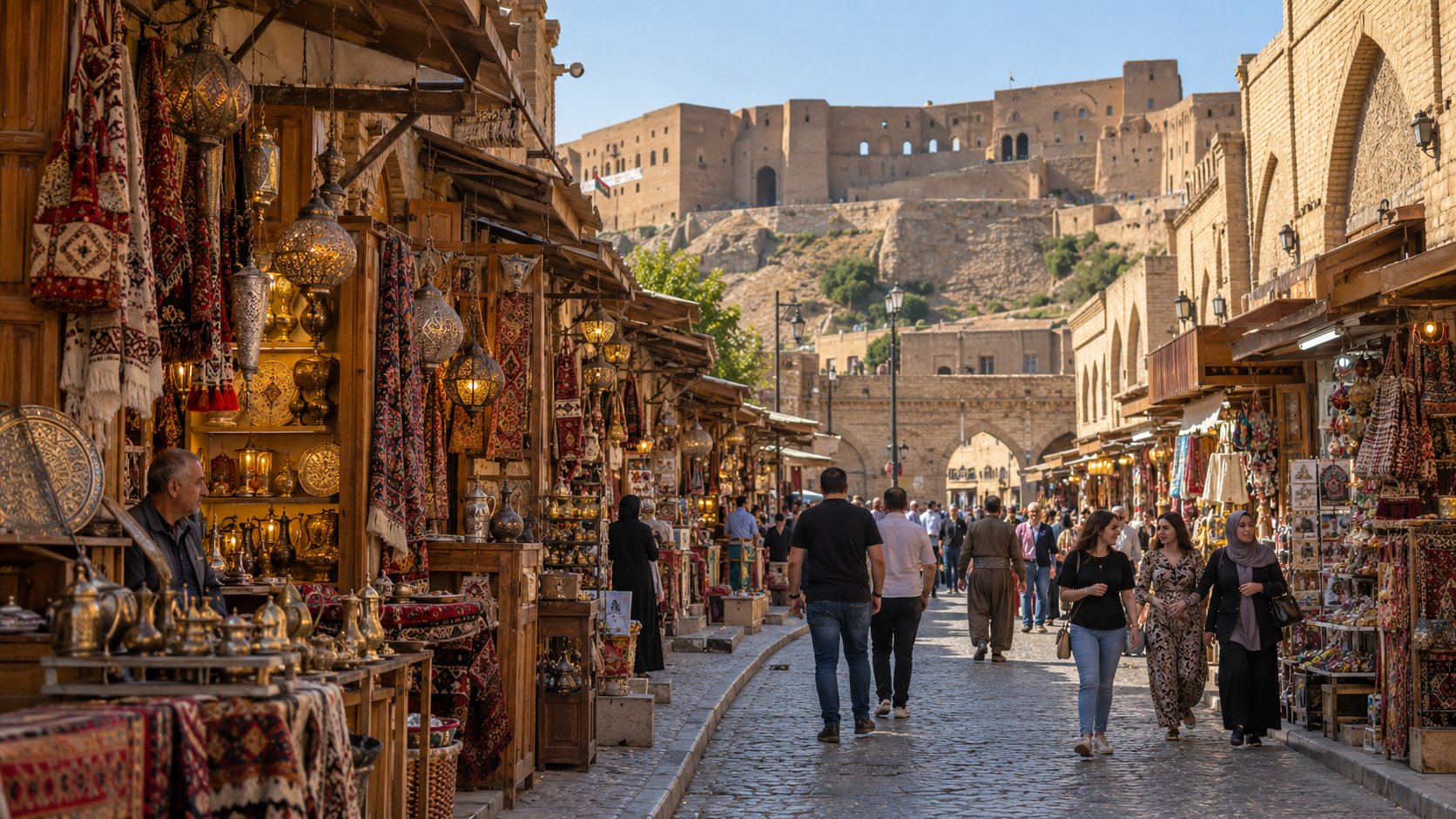
Directly below the southern ramparts of the Erbil Citadel sits Qaysari Bazaar (Bazaari Qaysari), one of the oldest operating covered markets in the Middle East. While many travelers view the bazaar merely as an afterthought when descending the citadel mound, Qaysari is a standalone commercial center with deep roots in northern Iraq's trade history. Originating during the era of Sultan Muzaffar al-Din Gökböri in the late 12th century and rebuilt across subsequent periods, this market remains the economic core of Erbil.
Inside, vaulted brick corridors run past spice vendors, gold merchants, textile workshops, and tea counters packed with regulars.
Historical Setting and Architecture
Qaysari Bazaar sits directly across Shar Garden Square from the grand entrance of the Citadel. The bazaar follows the layout of traditional Ottoman-era and medieval Islamic covered markets. Thick brick arches, vaulted ceilings, and high clerestory openings provide thermal mass, keeping the interior alleyways cooler during hot northern Iraqi summers and sheltered during winter rain.
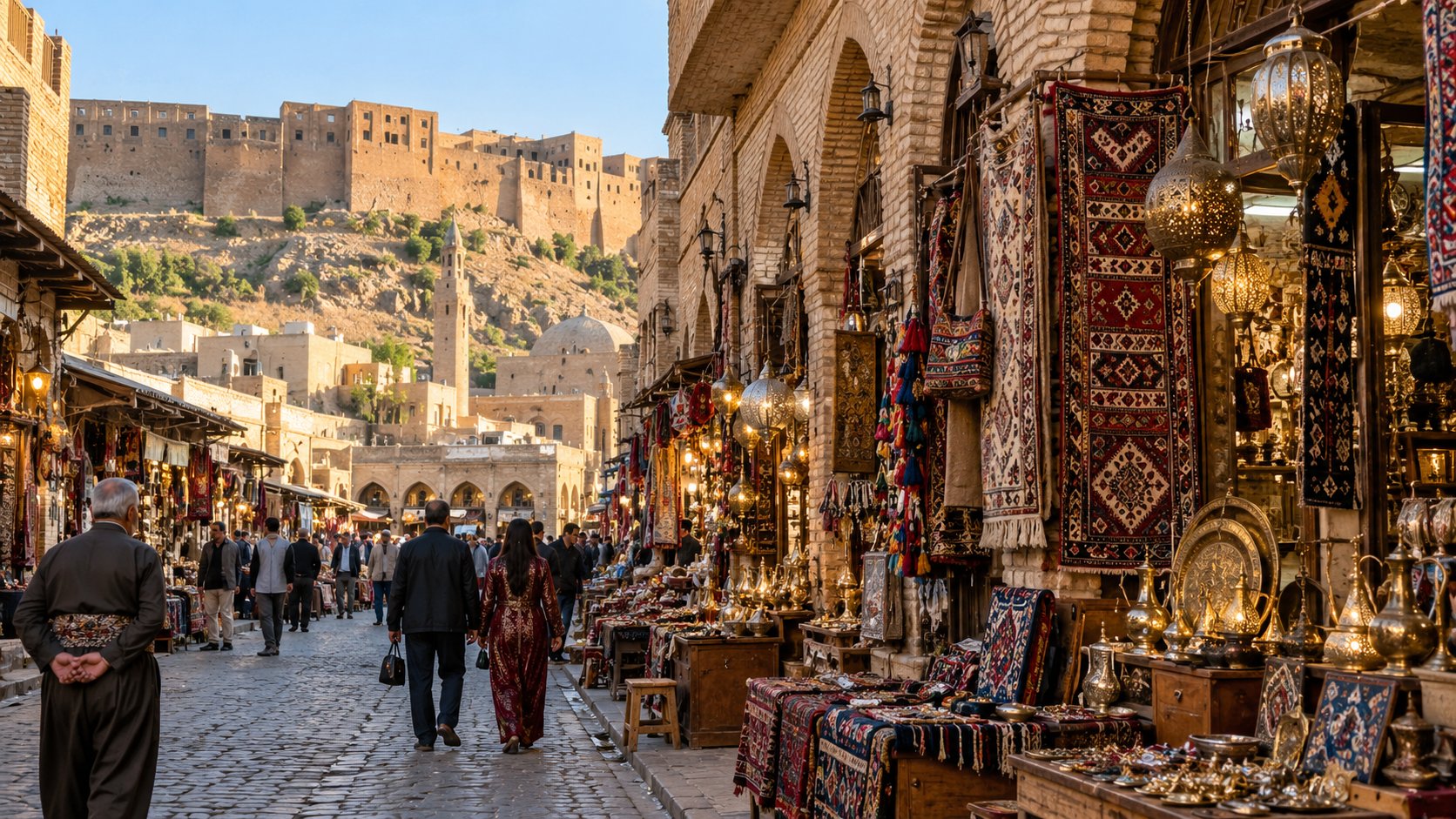
Interconnected alleyways are organized by trade. As documented by KurdOff's Qaysari Bazaar Guide, the market was historically structured around craft guilds. Walking through Qaysari takes you across distinct merchant quarters, where generational families continue to run workshops from the same storefronts held by their grandfathers.
Navigating the Quarters: What to See and Buy
Each alleyway in Qaysari Bazaar specializes in a specific category of goods:
The Gold Souk
The gold quarter is the most prominent section of Qaysari Bazaar. Kurdistan's gold shops feature illuminated display cases packed with 21-karat and 22-karat bridal jewelry, filigree necklaces, and ceremonial belts. Unlike fixed-price retail shops, transactions are calculated based on daily global market weight plus a crafting fee (syagha). The gold alley is particularly busy on Thursday afternoons as local families prepare for weekend weddings.
Spices, Herbs, and Mountain Honey
The spice lanes feature open bins of sumac, bright turmeric, saffron threads, dried mint, wild thyme (za'atar), and dried lime (noomi Basra). Erbil's proximity to regional mountain ranges also makes Qaysari a primary market for raw Zagros mountain honey, wild nuts, dried figs, and manna (locally known as gaz or mann al-sama), a traditional sweet made from tamarisk tree sap.
Kurdish Textiles and Traditional Attire
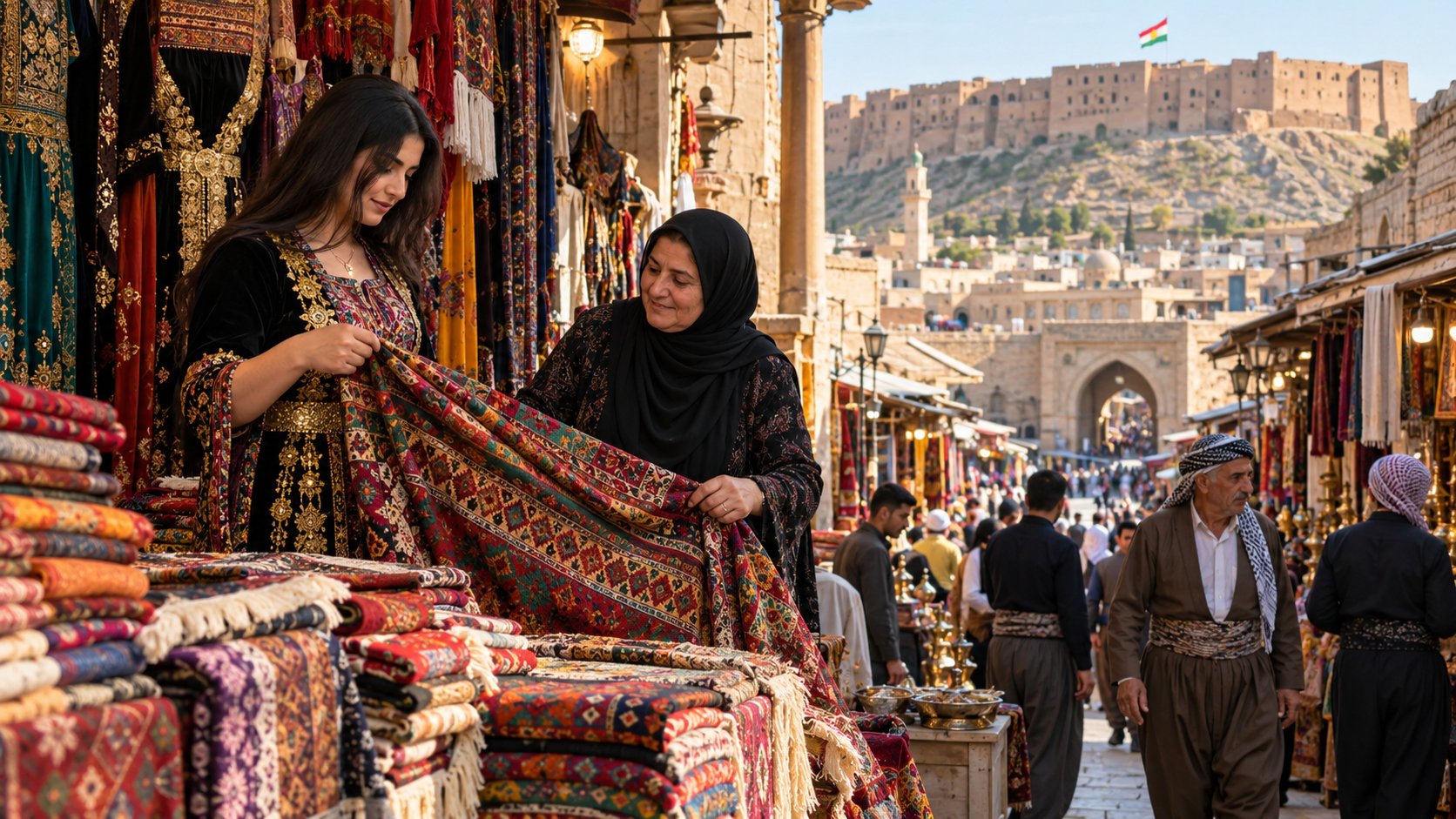
A dedicated quarter of the bazaar sells traditional Kurdish clothing. Rows of chiffon and silk fabrics with metallic sequins are tailored into women's traditional dresses (kras), alongside bolts of sturdy wool used for men's two-piece suits (rank u chogha). Craft stalls also sell klash—handwoven, raw-cotton slip-on shoes with compressed cloth soles crafted in the mountainous Hawraman region.
Tea House Culture: Historic Gathering Spots
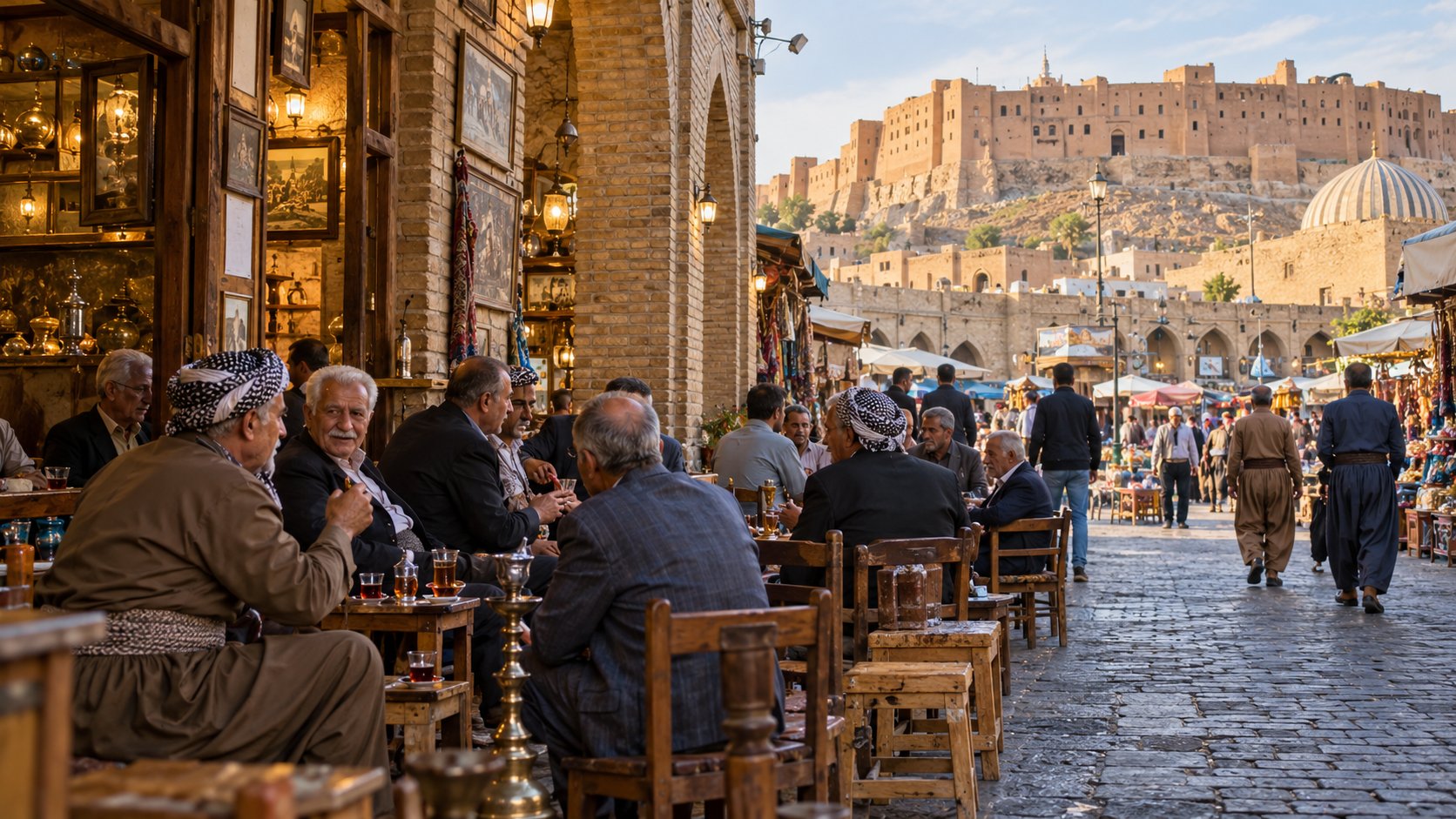
A visit to Qaysari Bazaar usually centers around a stop at one of its historic tea rooms. Rather than quick transit stops, these establishments function as informal neighborhood meeting points where merchants, retirees, and visitors sit together.
Inside the market alleys stands Mam Khalil's Tea House (Chaikhanai Mam Khalil), which has brewed sweetened black tea continuously since 1952. Highlighted as a local cultural institution by Kurdistan 24's Market Heritage Features, the compact room has walls covered from floor to ceiling with framed photographs of Iraqi and Kurdish political figures, poets, musicians, and regular patrons. Just outside the bazaar's northern perimeter, facing the citadel, sits Machko Tea House, another long-running tea house set against the citadel slope. Both serve strong, concentrated chai in small glass istikan cups with sugar cubes on the saucer.
Practical Visitor Details
Planning a walk through Qaysari Bazaar is straightforward:
- Opening Hours: Most stalls operate Saturday through Thursday from roughly 8:00 AM to 8:00 PM. On Fridays, the main weekly rest day in Iraqi Kurdistan, interior shops are closed, though some tea houses and outdoor perimeter stalls open by late afternoon.
- Best Times to Visit: Early mornings (8:30 AM to 11:00 AM) are quieter and well-suited for photography and observing produce deliveries. Late afternoons (4:00 PM to 7:00 PM) are the busiest hours as local residents arrive for evening shopping.
- Payment and Currency: Cash is required across almost all of Qaysari Bazaar. Carry Iraqi Dinars (IQD) in smaller banknotes for tea, street snacks, and spices. Gold dealers and antique carpet merchants often accept US Dollars (USD), but regular daily purchases require dinars. Credit cards are rarely accepted.
- Bargaining: Courteous haggling is standard for textiles, carpets, and souvenirs. Spices, groceries, and tea have fixed prices, while gold is priced strictly by weight and craftsmanship rates, as noted in What's On in Erbil's Visitor Guide.
- Etiquette & Photography: Vendors are generally hospitable. Always ask permission before photographing individual stall owners, artisans, or families, particularly in the textile and clothing sections.
Sources
- What's On in Erbil: "Qaysari Bazaar Erbil — Visitor Guide & Shopping 2026", https://whatsoninerbil.com/qaysari-bazaar (Accessed May 2024 / Updated 2026).
- KurdOff: "Qaysari Bazaar, Erbil: visitor guide, route and best time", https://kurdoff.com/travel/attractions/qaysari-bazaar (Accessed 2026).
- Kurdistan 24: "Qaysari, Erbil's oldest local market", https://www.kurdistan24.net/en/story/385688 (Accessed 2024).
❓Frequently Asked Questions
Here are answers to frequently asked questions about the content above
Qaysari Bazaar is located in central Erbil immediately south of the Erbil Citadel, fronting the main pedestrian fountains of Shar Garden Square.
The bazaar is generally open Saturday through Thursday from roughly 8:00 AM to 8:00 PM. Most specialty shops and covered alleys are closed on Fridays.
Popular purchases include 21-karat gold jewelry, authentic Kurdish spices such as sumac and za'atar, regional mountain honey, traditional klash shoes, and Kurdish textiles.
Cash in Iraqi Dinars (IQD) is the primary method of payment for most stalls, tea houses, and spice merchants. US Dollars are accepted by high-value gold and carpet merchants, but credit cards are rarely accepted.
Mam Khalil's Tea House is a legendary teahouse operating inside the bazaar since 1952, renowned for its slow-brewed Kurdish tea and walls lined with historical photographs of Erbil's prominent figures.
Yes, polite bargaining is normal for artisanal crafts, souvenirs, and carpets. However, spices, everyday food produce, and tea have fixed prices, while gold is priced strictly by weight.