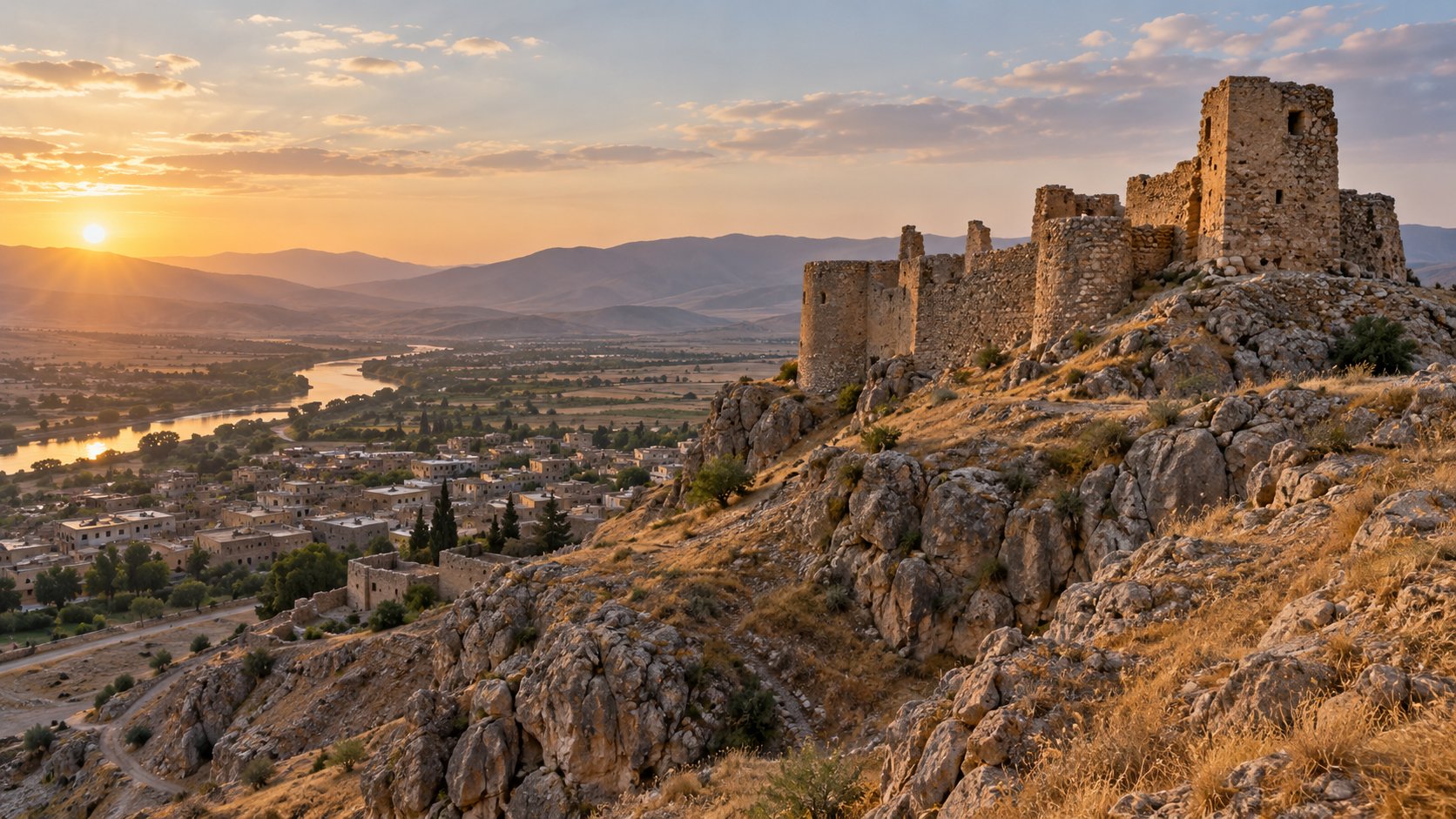
Perched on an earthen mound overlooking Kalar and the Sirwan River, Sherwana Castle is a restored 19th-century fortified Kurdish estate and regional museum.
Sherwana Castle in Kalar
Perched on an earthen mound overlooking the town of Kalar and the Sirwan (Diyala) River basin, Sherwana Castle (Kurdish: Qellay Şêrwane) is a nineteenth-century aristocratic estate in Iraqi Kurdistan. Built in 1866 as the fortified administrative seat of Mohamed Pasha Jaff—a paramount leader of the Jaff tribe—the castle combines defensive architecture with residential quarters. Following decades of weathering, conflict damage, and a powerful regional earthquake in 2017, the landmark stands restored and open to travelers as a regional museum.
Historical Origins and the Jaff Dynasty
Sherwana Castle emerged during a transformative period of Ottoman provincial administration. In the mid-nineteenth century, Mohamed Pasha Jaff consolidated his authority in the fertile Shahrizor and Garmian lowlands. In 1868, the Ottoman provincial administration in Baghdad formally confirmed his official role.
The Jaff tribe maintained seasonal pastoral routes and trade connections stretching between Khanaqin and Penjwen. To protect these routes against rival groups—notably the Hamavand—and establish a permanent base, Mohamed Pasha Jaff built the castle on a knoll above the Sirwan River. Sherwana operated as a fortified residence where tribal leaders negotiated agreements, mediated land disputes, and handled regional affairs.
During the First World War and the British mandate in Mesopotamia, many regional strongholds fell into ruin or were demolished. Sherwana Castle survived intact because Jaff leadership maintained cooperative relations with British authorities. This alignment preserved the estate into the modern era as a surviving example of autonomous Kurdish tribal architecture, documented by Kurdish History and Wikipedia.
Architecture and Layout
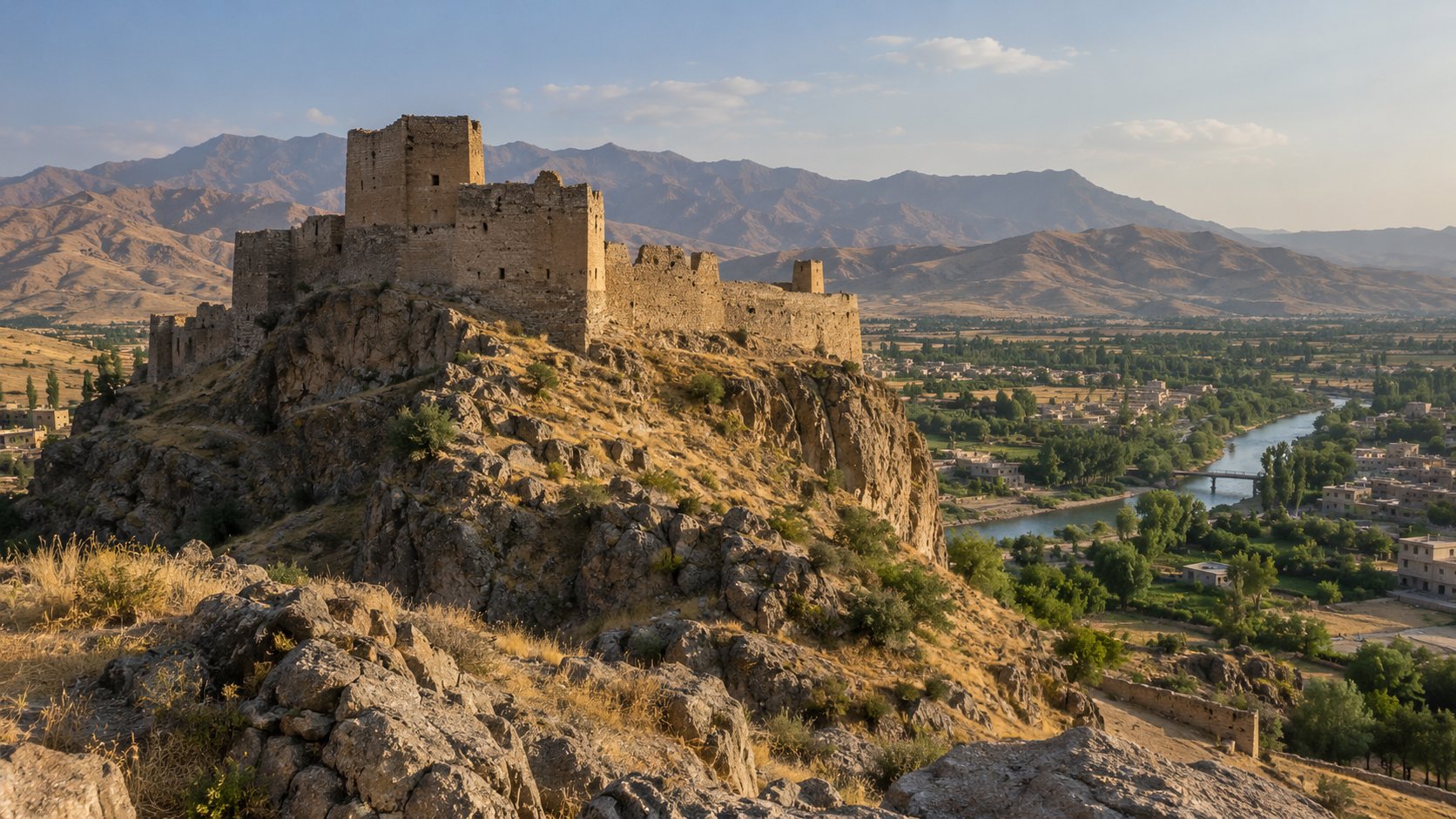
Sherwana Castle covers roughly 400 square meters across two floors above a raised basement. Local builders relied on regional materials: sun-dried and fired brick, limestone, river cobbles, gypsum mortar, and plaster, using timber beams for joists, window frames, and doorways.
The complex combines vernacular Kurdish defensive design with decorative elements common across late Ottoman and Persian border regions, as recorded by Castlopedia:
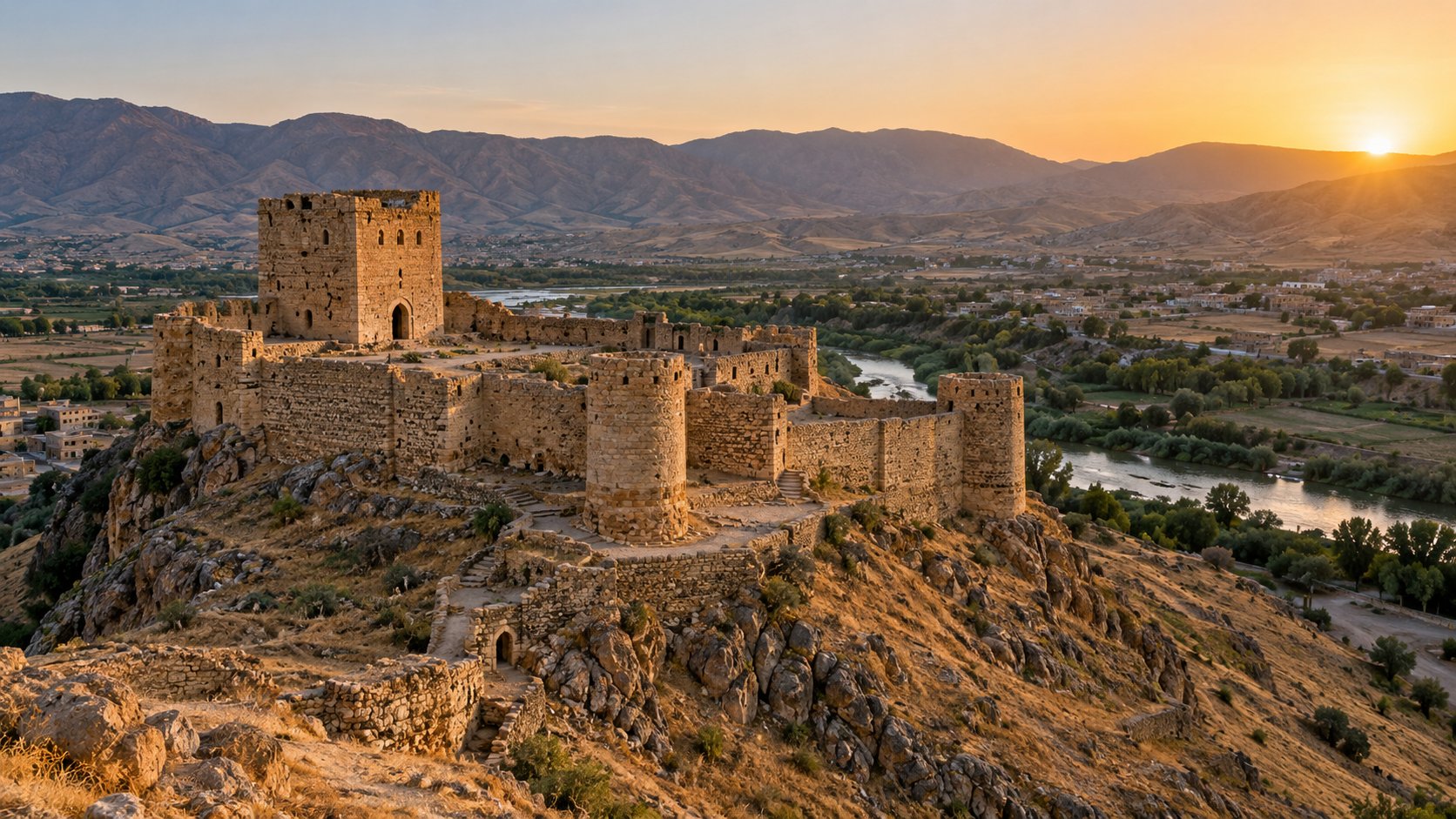
- Plan and Towers: A symmetrical rectangular footprint anchored by four round corner bastions. The upper tiers contain narrow embrasures designed as rifle positions for guards.
- Roofline and Cupola: The roofline centers on a tiered brick cupola flanked by hexagonal dormer windows. Decorative brick cresting runs along the parapets, echoing Persian architectural styles of the era.
- Interior Living Spaces: The interior includes three long halls arranged around an octagonal central chamber. Whitewashed walls feature recessed arched niches (taqcheh) once used to hold porcelain, teaware, and personal belongings. Upper rooms held private family quarters, administrative offices, and grain and supply storerooms.
Preservation Condition and Earthquake Recovery
Sherwana Castle has required recurring conservation work over recent decades. Shelling vibrations in the 1990s and heavy rains in 2014 caused deep fissures in exterior brickwork.
The most severe damage occurred on November 12, 2017, when a magnitude 7.3 earthquake struck near the Iran-Iraq border. The shock damaged about 35% of the structure, collapsing the central roof cupola and tearing open sections of the parapets and corner bastions.
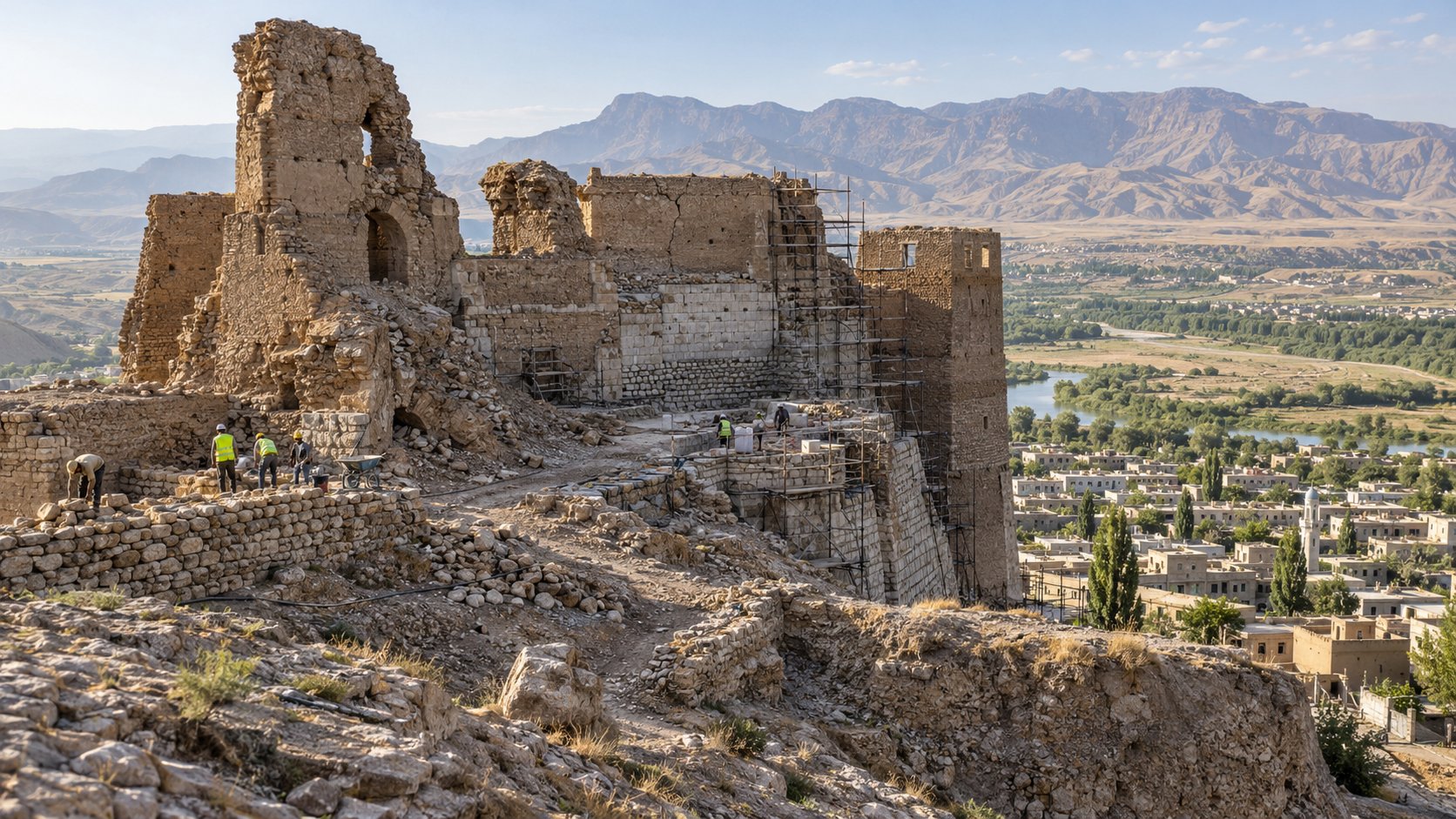
Following the disaster, the Directorate of Antiquities in Garmian organized structural stabilization and multi-phase repairs, working with international heritage specialists and Dutch conservation funding. Masons secured the foundations, rebuilt the collapsed cupola with traditional lime-and-gypsum mortars, and replastered the interior halls.
Verified Visitor Access and Travel Logistics
Sherwana Castle functions as Kalar's municipal museum, displaying local ethnographic tools, historical photographs, and regional archaeological finds.
- Location: Northern edge of Kalar, Garmian Administration, Sulaymaniyah Governorate, Kurdistan Region of Iraq.
- Getting There: Kalar is 140 kilometers south of Sulaymaniyah (about 2.5 hours by car via the Darbandikhan highway) and 180 kilometers southeast of Kirkuk. Shared taxis and minibuses run daily between Sulaymaniyah's southern garage and Kalar.
- Opening Hours: Open daily from 08:30 to 16:30. Friday hours can shift around midday prayer times.
- Visitor Experience: Visitors can tour the ground-floor galleries, walk through the central reception rooms, climb to the rooftop terrace, and look out over Kalar and the river plains. Non-commercial photography is allowed throughout the site.
- Travel Tips: Summer temperatures in Garmian routinely exceed 40°C (104°F). Plan visits between November and April for milder weather while walking the outdoor paths and exterior stone steps.
Sources
- Wikipedia: "Sherwana Castle" — https://en.wikipedia.org/wiki/Sherwana_Castle (Accessed: March 2026)
- Castlopedia: "Sherwana Castle: 19th-century Kurdish fortress in Iraq" — https://www.castlopedia.com/castle/sherwana-castle/9391 (Accessed: March 2026)
- Kurdish History: "Sherwana Castle: A Kurdish Princely Seat" — https://www.kurdish-history.com/post/sherwana-castle (Accessed: March 2026)
❓Frequently Asked Questions
Here are answers to frequently asked questions about the content above
Sherwana Castle (Qellay Şêrwane) is a 19th-century fortified princely residence located in Kalar, Iraqi Kurdistan, built by Mohamed Pasha Jaff as the administrative headquarters of the Jaff tribe.
The castle was constructed in 1866 under the direction of Mohamed Pasha Jaff, a prominent tribal leader recognized within the regional Ottoman provincial hierarchy.
The castle features Kurdish defensive brick-and-stone masonry, four corner bastion towers with rifle embrasures, an octagonal central hall, and Persian-influenced wavy roof parapets and cupolas.
The November 2017 magnitude 7.3 earthquake damaged roughly 35% of the structure, causing the upper central cupola to collapse and creating severe fractures across its load-bearing brick walls.
Yes. Restoration began in 2018 under local antiquities authorities with assistance from international conservation partners, stabilizing the masonry and rebuilding the collapsed cupola using traditional building techniques.
Yes. Sherwana Castle is open to the public as a museum displaying Jaff tribal history and regional artifacts, typically operating during daytime hours throughout the week.