Un voyage complet au cœur des traditions authentiques de l'hospitalité irakienne, des rituels du thé et du café à l'étiquette à table et aux cadeaux. Tout ce que vous devez savoir en tant qu'invité en Irak.
Comprendre L'hospitalité irakienne : ce à quoi s'attendre en tant qu'invité
De l'étranger au frère : un voyage au cœur des traditions irakiennes authentiques
Introduction
Lorsque vous franchissez le seuil d'une maison irakienne pour la première fois, vous n'entrez pas seulement dans une demeure : vous pénétrez dans une tradition millénaire. Cela va bien au-delà de la simple hospitalité pour devenir un art, un devoir religieux et une identité nationale. L'hospitalité irakienne n'est pas un service rendu, c'est un honneur célébré, où l'étranger devient un membre de la famille le temps d'une tasse de thé.
Il ne s'agit pas ici de l'hospitalité froide des hôtels. C'est un art humain raffiné, fondé sur les valeurs islamiques, les anciennes coutumes bédouines et la générosité qui caractérise la Mésopotamie depuis l'aube de la civilisation. En 2024, 892 000 touristes internationaux ont visité l'Irak, et l'hospitalité irakienne a été l'expérience la plus citée dans leurs témoignages.
Dans ce guide, vous apprendrez tout ce que vous devez savoir sur l'hospitalité irakienne : des rituels du thé et du café à l'étiquette à table, en passant par la manière d'accepter la générosité sans offenser l'hôte, ainsi que les variations régionales à travers l'Irak.
Préparez-vous à une expérience qui pourrait changer votre vision du monde.
Racines historiques : de Babylone à nos jours
Les origines de la Diyafa (hospitalité)
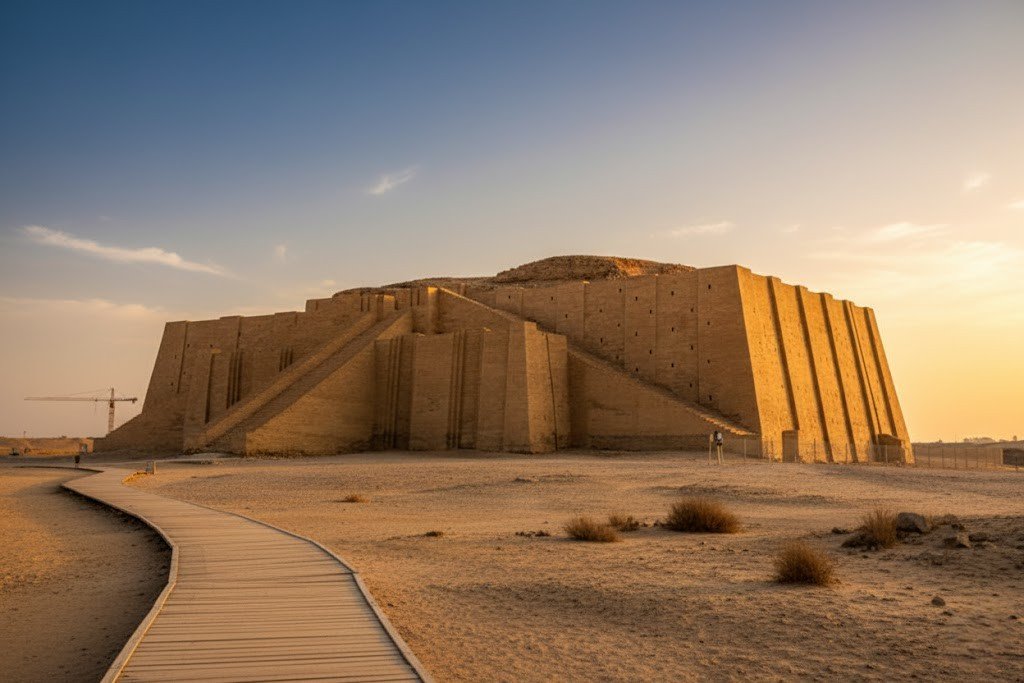
L'hospitalité irakienne a des racines profondes qui remontent à des millénaires :
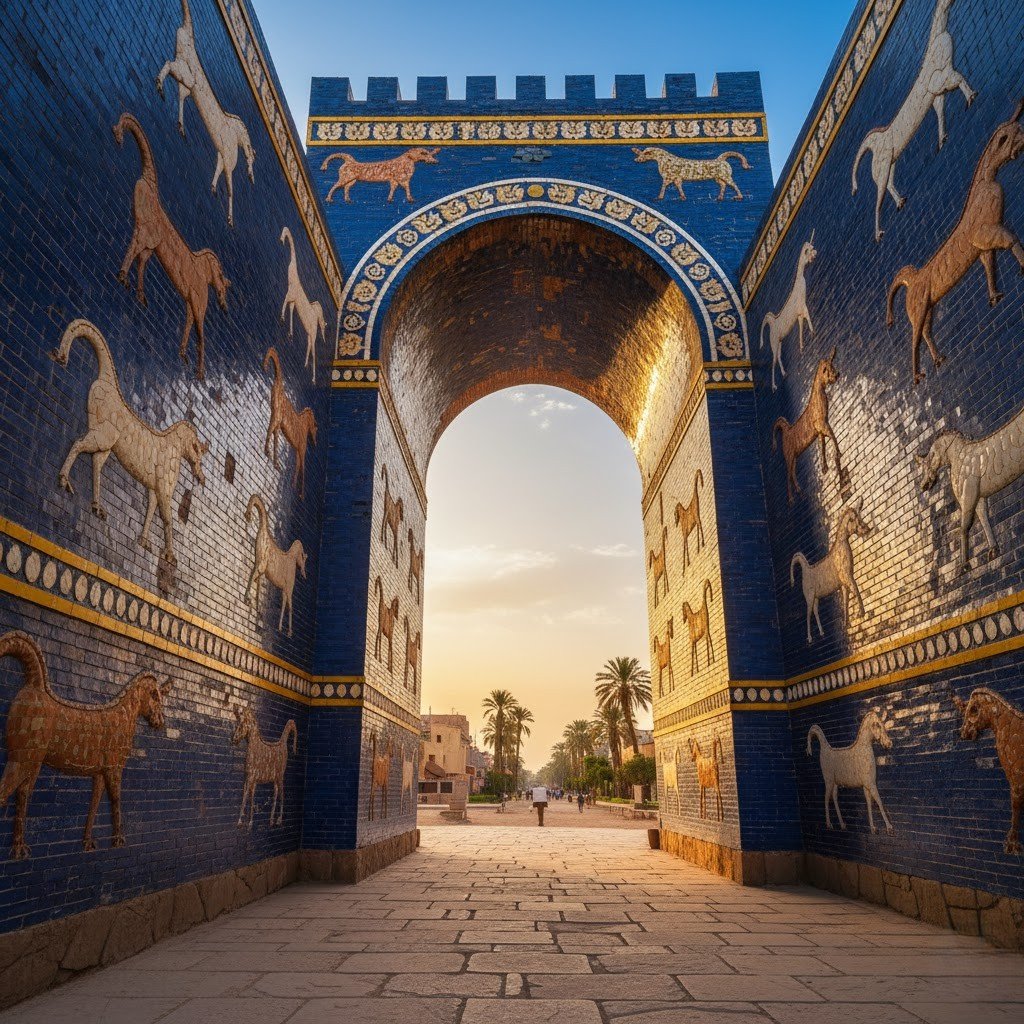
L'ère babylonienne :
- Les banquets royaux (tākultu) étaient un devoir royal et civil.
- La générosité était un signe de puissance et d'honneur en Mésopotamie.
Traditions bédouines :
- Dans le désert, l'accueil d'un invité était une question de survie.
- Partager ses ressources avec le voyageur = honneur et protection.
- C'est devenu une loi d'honneur : héberger un invité, c'est le protéger et subvenir à tous ses besoins.
Renforcement islamique :
- Le Coran et la Sunna ont souligné les droits de l'invité.
- Hadith du Prophète Muhammad ﷺ : "Que celui qui croit en Dieu et au Jour dernier honore son invité."
- La règle des trois jours : les enseignements islamiques recommandent d'héberger les invités pendant trois jours.
UNESCO 2019 : En 2019, l'UNESCO a inscrit la "fourniture de services et d'hospitalité pendant la visite de l'Arba'een" au patrimoine culturel immatériel de l'humanité. Cette reconnaissance internationale confirme que l'hospitalité irakienne est un "élément définissant l'identité culturelle irakienne".
Proverbes irakiens : la sagesse des ancêtres
L'hospitalité irakienne n'est pas faite de règles écrites, mais d'une sagesse gravée dans des proverbes populaires transmis de génération en génération :
Le proverbe le plus célèbre :
"L'invité, quand il arrive est un prince, quand il s'assoit est un prisonnier, et quand il repart est un poète."
L'interprétation :
- Prince à l'arrivée : accueilli avec l'honneur dû aux rois.
- Prisonnier à table : "retenu" avec amour par une générosité sans fin.
- Poète au départ : il repart contraint de raconter la gentillesse dont il a fait l'objet.
Autres proverbes :
"Ce qui est dans le cœur de l'invité, l'hôte peut le lire." "L'hôte sait anticiper les besoins de son invité."
"L'invité apporte la subsistance à son hôte." "L'invité apporte la bénédiction." - Cette croyance explique pourquoi même les familles les plus pauvres offrent le meilleur d'elles-mêmes.
"L'invité est l'invité de Dieu." "L'accueil est un acte sacré."
Symboles de l'hospitalité : le Mudhif irakien
Le Mudhif est la maison d'hôtes traditionnelle en Irak, particulièrement dans le sud et les marais. Ce bâtiment construit entièrement en roseaux est le symbole architectural de l'hospitalité irakienne.
Caractéristiques du Mudhif :
- Toujours ouvert : pas de portes que l'on peut verrouiller.
- Espace communautaire : appartient à la tribu ou au village, pas à un individu.
- Terre neutre : lieu où les conflits peuvent être résolus.
- Ouvert à tous : on ne peut refuser personne.
- Beauté architecturale : hauts plafonds voûtés, construction complexe en roseaux.
Dans les marais du sud, le Mudhif traditionnel (Mudhif de roseaux) existe toujours, accueillant les visiteurs internationaux et les initiant à des traditions séculaires.
Témoignages de voyageurs : histoires vécues
"Ma note de restaurant a été payée par des inconnus"
"À Bassora, une famille au restaurant a insisté pour payer notre note lorsqu'elle a appris que nous étions des touristes. Ils ont dit : 'Vous êtes nos invités en Irak'. C'est arrivé plusieurs fois pendant notre semaine là-bas." — Reddit r/travel, janvier 2025
"Le chauffeur de taxi a refusé le paiement et est devenu un ami"
"Un chauffeur de taxi à Erbil a passé 3 heures à me montrer la ville, a refusé que je le paie et m'a invité à dîner avec sa famille. Sa femme a préparé une table incroyable. Cela s'est répété souvent pendant notre voyage." — Forum Lonely Planet, septembre 2024
Rituels de l'hospitalité : une symphonie de traditions
1. L'accueil à la porte
Le protocole :
- Accueil chaleureux à la porte avec un sourire sincère.
- Le salut physique :
- D'homme à homme : poignée de main droite, parfois accompagnée d'une accolade.
- De femme à femme : poignée de main, parfois accompagnée de baisers sur les joues.
- Entre sexes opposés : suivez l'initiative de la femme - salut verbal uniquement si elle n'initie pas la poignée de main.
- Salutations verbales :
- "As-salamu alaykum" (La paix soit sur vous)
- Réponse : "Wa alaykumu as-salam"
- "Ahlan wa sahlan" (Bienvenue)
Enlever ses chaussures :
- Toujours enlever ses chaussures à l'entrée.
- Les chaussettes doivent être propres.
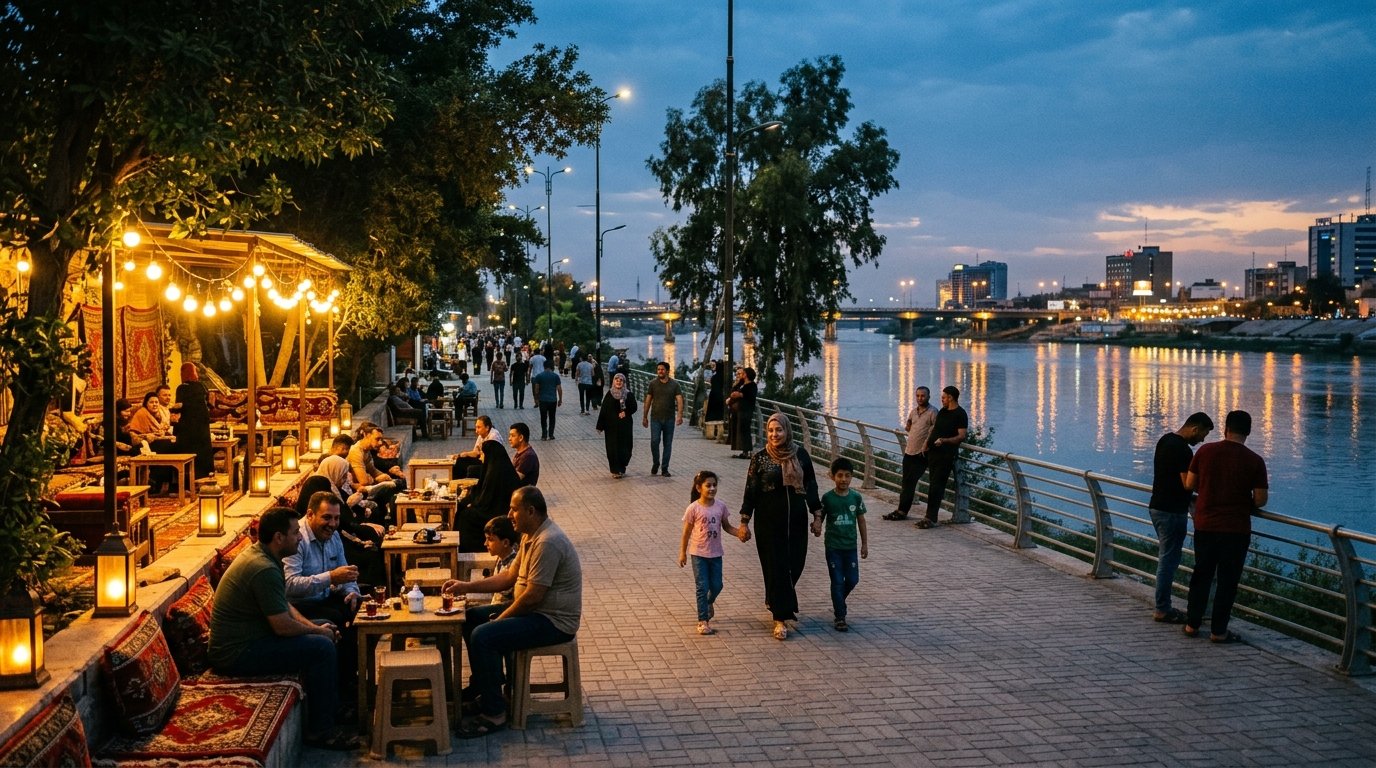
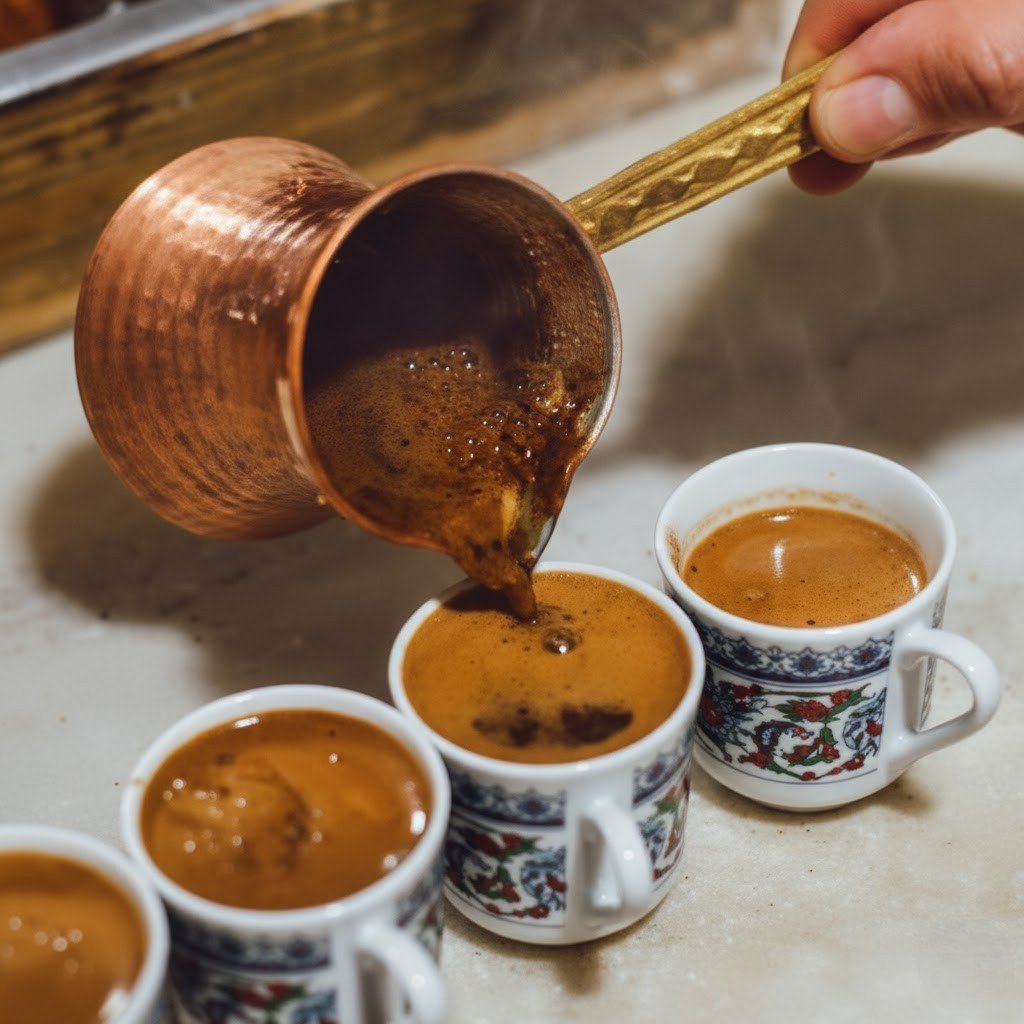
2. La cérémonie du thé : le cœur battant de l'accueil
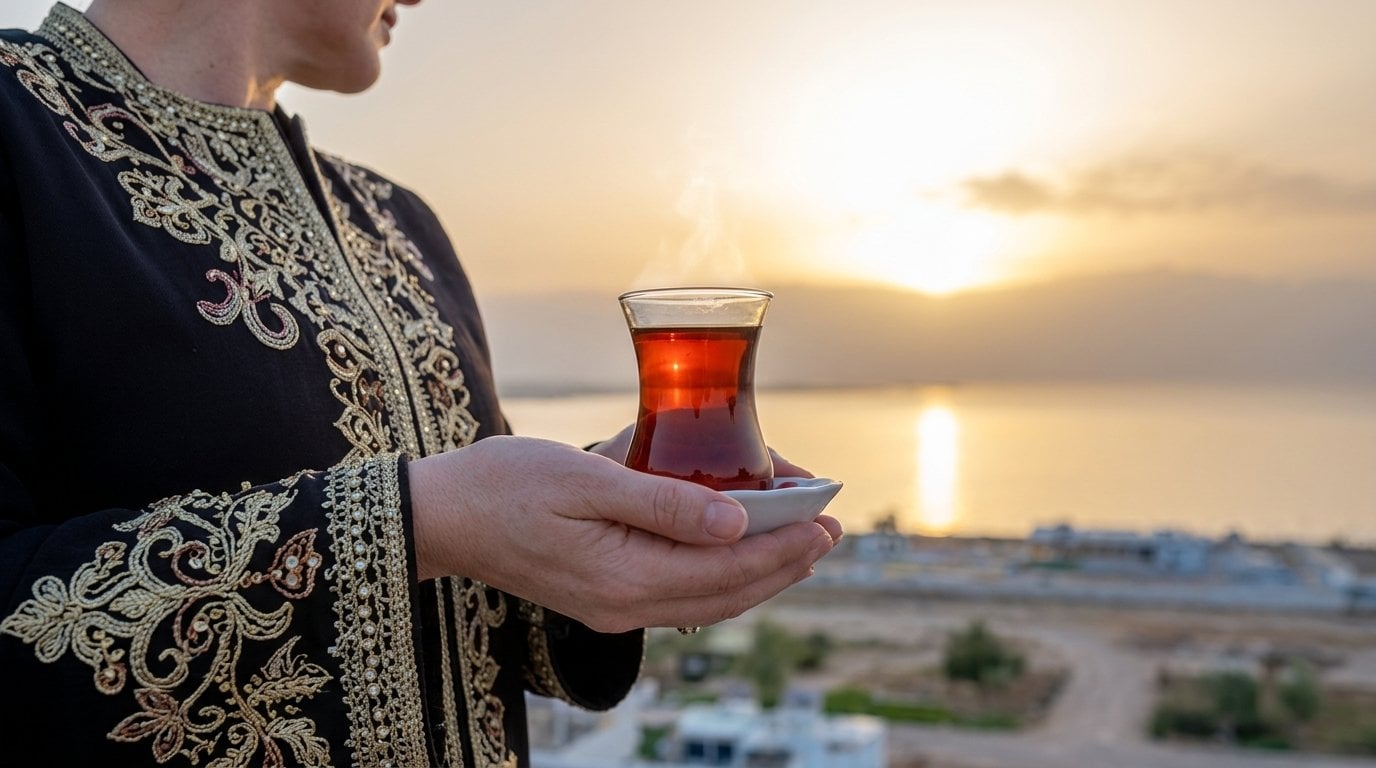
Le thé irakien (Chai) :
- Thé noir fort et sombre.
- Servi dans de petits verres en forme de tulipe (Istikan).
- Très sucré par défaut (vous pouvez demander moins de sucre).
Le protocole :
- Le premier refus est attendu : par politesse, on décline poliment la première offre.
- L'insistance de l'hôte : l'hôte insistera une deuxième et une troisième fois.
- Accepter à la troisième fois.
- Plusieurs tournées : attendez-vous à boire 3 à 5 verres.
Le café arabe (Gahwa) : Lorsqu'on sert le café arabe à la cardamome, il y a une tradition célèbre :
- Première tasse : l'hospitalité (Al-Diyafa)
- Deuxième tasse : le plaisir (Al-Kayf)
- Troisième tasse : la protection (Al-Sayf)
Comment refuser poliment :
- Ne dites pas "non" directement.
- Agitez légèrement la tasse d'un côté à l'autre pour indiquer que vous avez fini.
3. Étiquette à table : les règles d'or
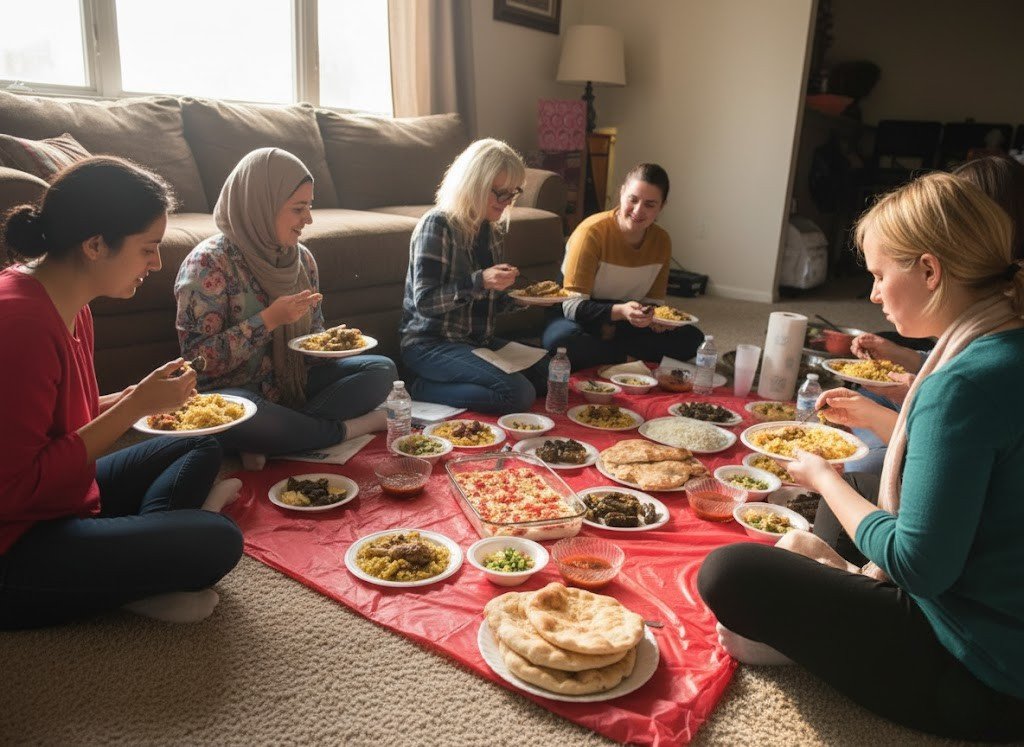
Utilisation de la main
Règle d'or : la main droite uniquement.
- Mangez toujours avec la main droite. La main gauche est considérée comme impure pour manger (tradition islamique).
Le repas
- Attendre la bénédiction : attendez que l'hôte dise "Bismillah" (Au nom de Dieu).
- Le pain d'abord : le pain (Khubz ou Samoon) est partagé en premier. Ne posez jamais le pain à l'envers.
- L'appétit de l'hôte : les hôtes rempliront votre assiette ! Laissez toujours un petit peu de nourriture à la fin pour signifier que vous êtes rassasié, sinon ils continueront de vous servir.
4. Protocole de départ
- Les visites irakiennes durent généralement au moins 3 heures. Ne vous précipitez pas.
- Remerciez chaleureusement en disant par exemple "Allah yideem al-ni'ma" (Que Dieu maintienne cette bénédiction).
Traditions des cadeaux
Cadeaux appropriés (2025) :
- Douceurs : Baklava ou autres pâtisseries.
- Dattes : de qualité supérieure.
- Chocolats internationaux : Lindt, Godiva, etc.
- Café de spécialité.
- Cadeaux pour les enfants.
À éviter :
- ❌ Alcool (interdit en Islam).
- ❌ Produits à base de porc.
- ❌ Cadeaux trop onéreux (crée une gêne ou une obligation).
Diversité régionale
- Bagdad : mélange de traditions urbaines et de modernité.
- Bassora : traditions du Sud très fortes et formelles.
- Kurdistan : hospitalité kurde chaleureuse avec une touche moderne et occidentale.
- Les Marais : la forme la plus ancienne de l'hospitalité dans le Mudhif.
L'Arba'een : l'hospitalité à l'échelle épique
L'Arba'een est le plus grand rassemblement religieux annuel au monde. Le long du chemin vers Kerbala, les Irakiens offrent gratuitement nourriture, logement et soins à des millions de pèlerins. C'est l'hospitalité irakienne dans sa forme la plus sublime, reconnue par l'UNESCO.
Sources
- UNESCO : La fourniture de services et d'hospitalité pendant la visite de l'Arba'een — https://ich.unesco.org/en/RL/provision-of-services-and-hospitality-during-the-arba-in-visitation-01474
- Témoignages de voyageurs sur l'hospitalité irakienne 2024-2025.
- Guide culturel de l'Irak : Traditions et Étiquette.
❓Frequently Asked Questions
Here are answers to frequently asked questions about the content above
Oui, il est d'usage d'apporter un petit présent comme des pâtisseries, des chocolats de qualité ou des dattes. Évitez l'alcool ou les produits à base de porc.
Il est poli de refuser la première fois, mais il est d'usage d'accepter après que l'hôte a insisté. Goûter au moins un peu de chaque plat est un signe de respect.
Une tenue modeste est recommandée. Pour les hommes, un pantalon long et une chemise. Pour les femmes, des vêtements amples couvrant les épaules et les genoux.
Oui, en Irak comme dans beaucoup de pays musulmans, la main droite est réservée à la nourriture. Essayez de n'utiliser que votre main droite à table.
Les visites sociales en Irak sont longues et peuvent durer 3 heures ou plus. Ne prévoyez pas de partir immédiatement après le repas.
'As-salamu alaykum' pour dire bonjour et 'Shukran' pour dire merci sont les bases essentielles qui seront très appréciées par vos hôtes.