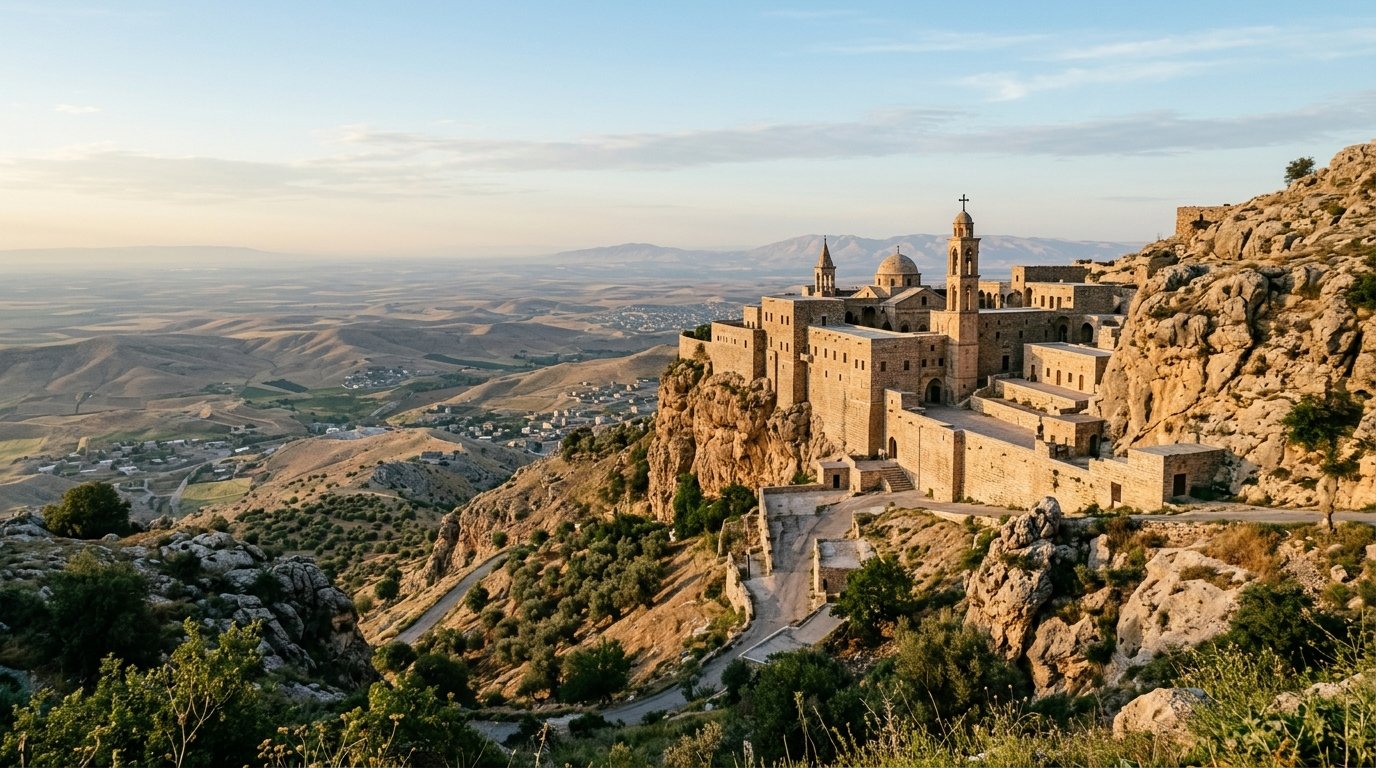
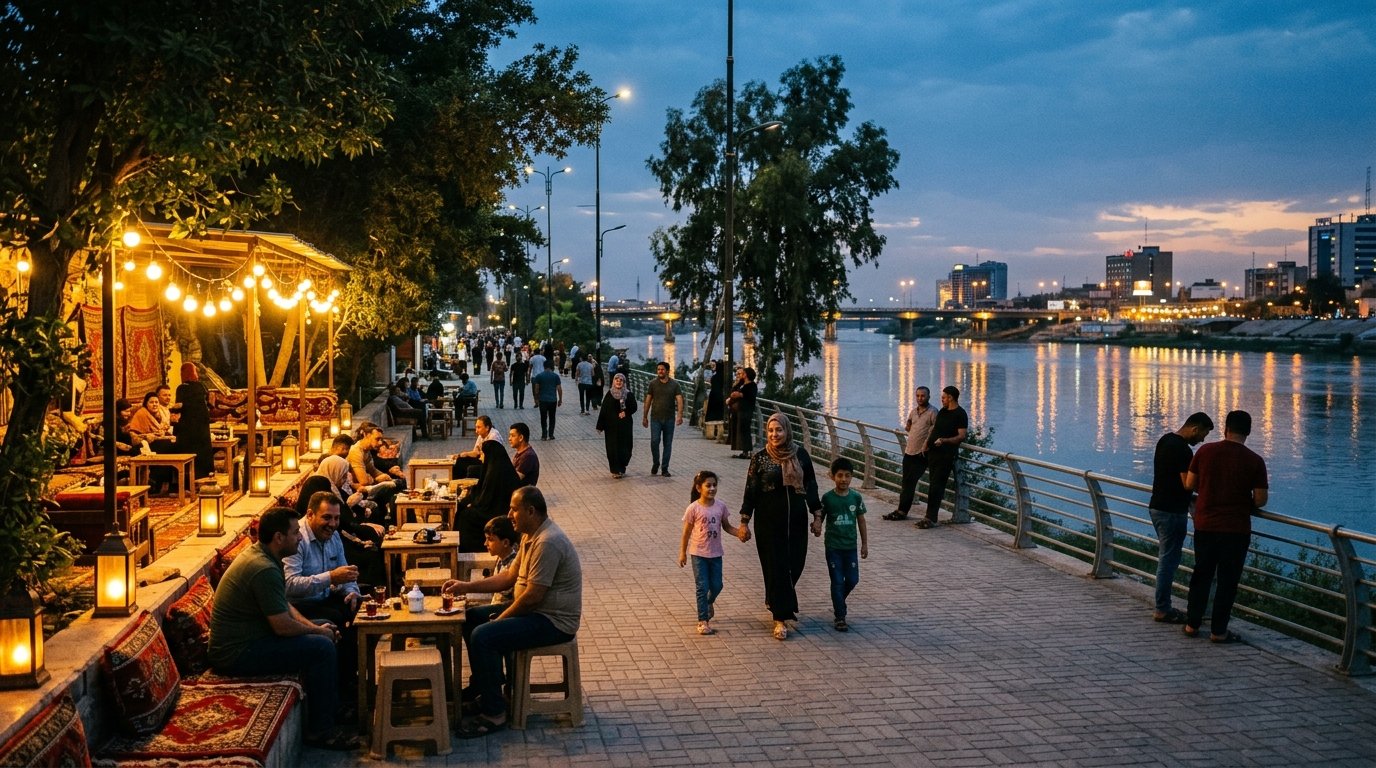
A comprehensive journey into authentic Iraqi hospitality traditions, from tea and coffee rituals to dining etiquette and gift-giving. Everything you need to know as a guest in Iraq.
Understanding Iraqi Hospitality: What to Expect as a Guest
From Stranger to Brother: A Journey into the Heart of Authentic Iraqi Traditions
Introduction
When you step into an Iraqi home for the first time, you are not just entering a house - you are entering a tradition that is thousands of years old, a tradition that goes beyond mere hospitality to become an art form, a religious duty, and a national identity. Iraqi hospitality is not a service to be provided; it is an honor to be celebrated, where a stranger turns into a family member over a single cup of tea.
This is not cold hotel hospitality. This is refined human art, built on Islamic values, ancient Bedouin customs, and the generosity that has characterized Mesopotamia since the dawn of civilization. In 2024, 892,000 international tourists visited Iraq, and Iraqi hospitality was the most mentioned experience in their reviews.
In this guide, you will learn everything you need to know about Iraqi hospitality: from tea and coffee traditions, to dining etiquette, to how to accept generosity without offending the host, to regional differences in Iraq.
Prepare for an experience that might change your view of the world.
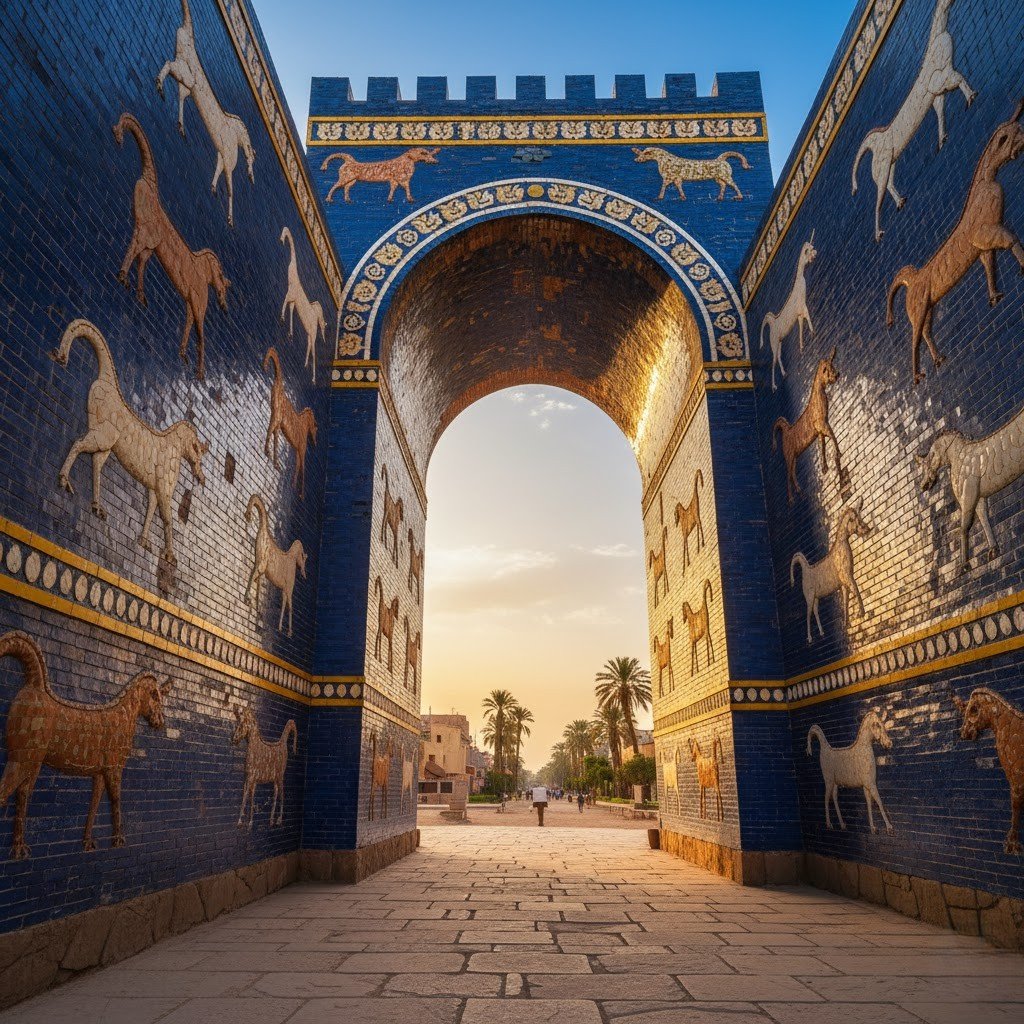
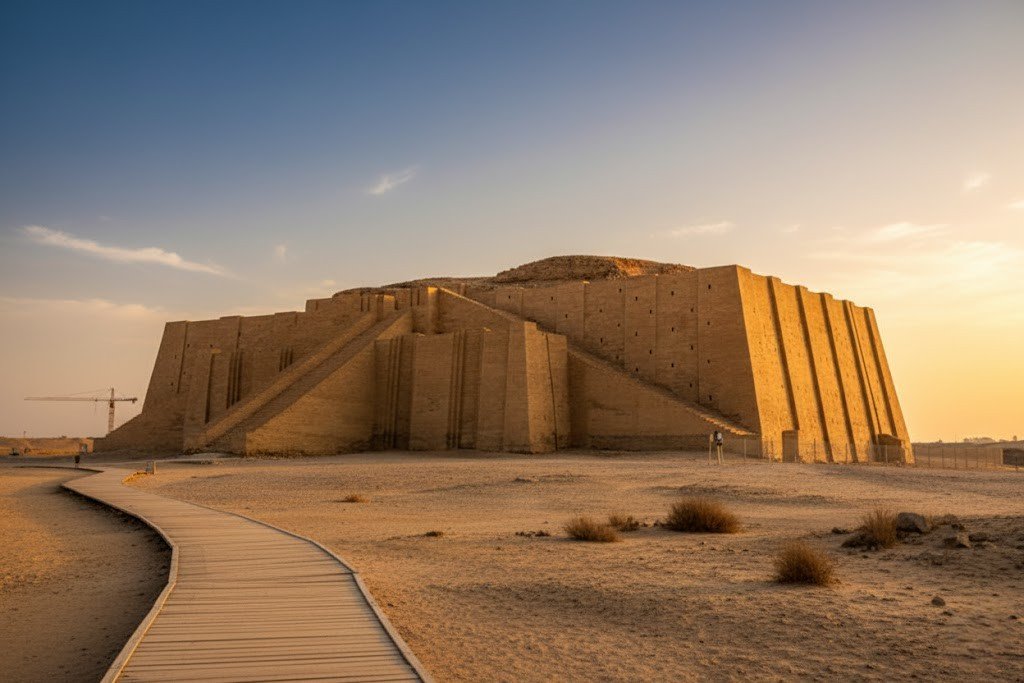
Historical Roots: From Babylon to Today
Origins of Iraqi Hospitality
Iraqi hospitality has deep roots stretching back thousands of years:
Babylonian Era:
- Royal banquets (tākultu) were a royal and civic duty.
- Generosity was a sign of power and honor in Mesopotamia.
Bedouin Traditions:
- In the desert, receiving a guest was a matter of survival.
- Sharing resources with a traveler = honor and protection.
- This became a law of honor: hosting a guest = protecting them and providing for their needs.
Islamic Reinforcement:
- The Quran and Sunnah emphasized the rights of the guest.
- The Prophet Muhammad (peace be upon him) said: "Whoever believes in Allah and the Last Day, let him honor his guest."
- The Three-Day Rule: Islamic teachings recommend hosting guests for three days.
UNESCO 2019:
- In 2019, UNESCO listed "Provision of services and hospitality during the Arba'een visitation" as Intangible Cultural Heritage of Humanity. This international recognition confirms that Iraqi hospitality is a "defining element of Iraqi cultural identity."
Iraqi Proverbs: Ancestral Wisdom
Iraqi hospitality is not written rules - it is wisdom carved in popular proverbs passed down through generations:
The Most Famous Proverb:
"The guest is a prince when he arrives, a prisoner when he sits, and a poet when he leaves."
Interpretation:
- Prince upon arrival: Received with the honor of kings.
- Prisoner upon sitting: "Detained" with love through endless generosity.
- Poet upon departure: Leaves compelled to tell the story of the kindness he received.
Other Proverbs:
"What is in the guest's heart, the host reads."
"The guest brings provision to his host." This belief explains why even poor families offer their best.
"The guest is the guest of God." The deep religious meaning of hospitality.
Symbols of Hospitality: The Iraqi Mudhif
The Mudhif is the traditional guesthouse in Iraq, especially in southern Iraq and the Marshes. This structure made entirely of reeds is the architectural symbol of Iraqi hospitality.
Characteristics of the Mudhif:
- Always open: No doors to lock.
- Community space: Belonging to the tribe or village, not a single individual.
- Neutral ground: A place where disputes can be resolved.
- Open to all: No one can be refused.
- Architectural beauty: Soaring arched roofs, intricate reed construction.
In the southern marshes, the traditional Mudhif (Reed Mudhif) still stands today, welcoming international visitors and introducing them to centuries-old traditions.
Traveler Testimonials: Real Stories from the Heart
"My restaurant bill was paid by strangers"
"In Basra, a family at a restaurant insisted on paying our bill when they learned we were tourists. They said, 'You are our guests in Iraq.' This happened several times during our week there." — Reddit r/travel, January 2025
"A taxi driver refused payment and became a friend"
"A taxi driver in Erbil spent 3 hours showing me the city, refused payment, and invited me to his family dinner. His wife prepared an incredible feast. This happened repeatedly during our trip." — Lonely Planet forum, September 2024
"From lost to family in hours"
"I got lost in Baghdad, and stopped an elderly man to ask for directions. Within minutes, I was sitting in his home, surrounded by three generations of his family, eating homemade Dolma and drinking tea. His grandson translated while he told me stories of Iraq before the wars. When I tried to leave after two hours, the grandmother appeared with a food package for my journey. I was a complete stranger, yet treated like a beloved relative." — British Journalist, Najaf 2024
"Generosity that makes you cry"
"I spent three months documenting daily life in Baghdad. Every family I photographed insisted on me staying for a meal. One family, living in a modest apartment, offered me a feast that must have cost them a week's salary. When I objected, the father said something that stayed with me: 'You honor us by accepting. How can we show you the heart of Iraq if we do not open our homes?'" — French Photographer, Baghdad 2024
Hospitality Rituals: A Symphony of Traditions
1. Welcoming at the Door
Protocol:
- Warm welcome at the door with a genuine smile.
- Physical Greeting:
- Men to Men: Handshake with the right hand, shoulder hug may be added.
- Women to Women: Handshake, cheek kisses may be added.
- Mixed Gender: Follow the woman's lead - verbal greeting only if she doesn't initiate a handshake.
- Verbal Welcome:
- "As-salamu alaykum" (Peace be upon you)
- Response: "Wa alaykumu as-salam" (And upon you be peace)
- "Ahlan wa sahlan" (Welcome)
- "Beitak" (Your home)
Removing Shoes:
- Always remove your shoes at the entrance.
- The host may provide indoor slippers.
- Socks should be clean/new.
2. The Tea Ceremony: The Beating Heart of Hospitality
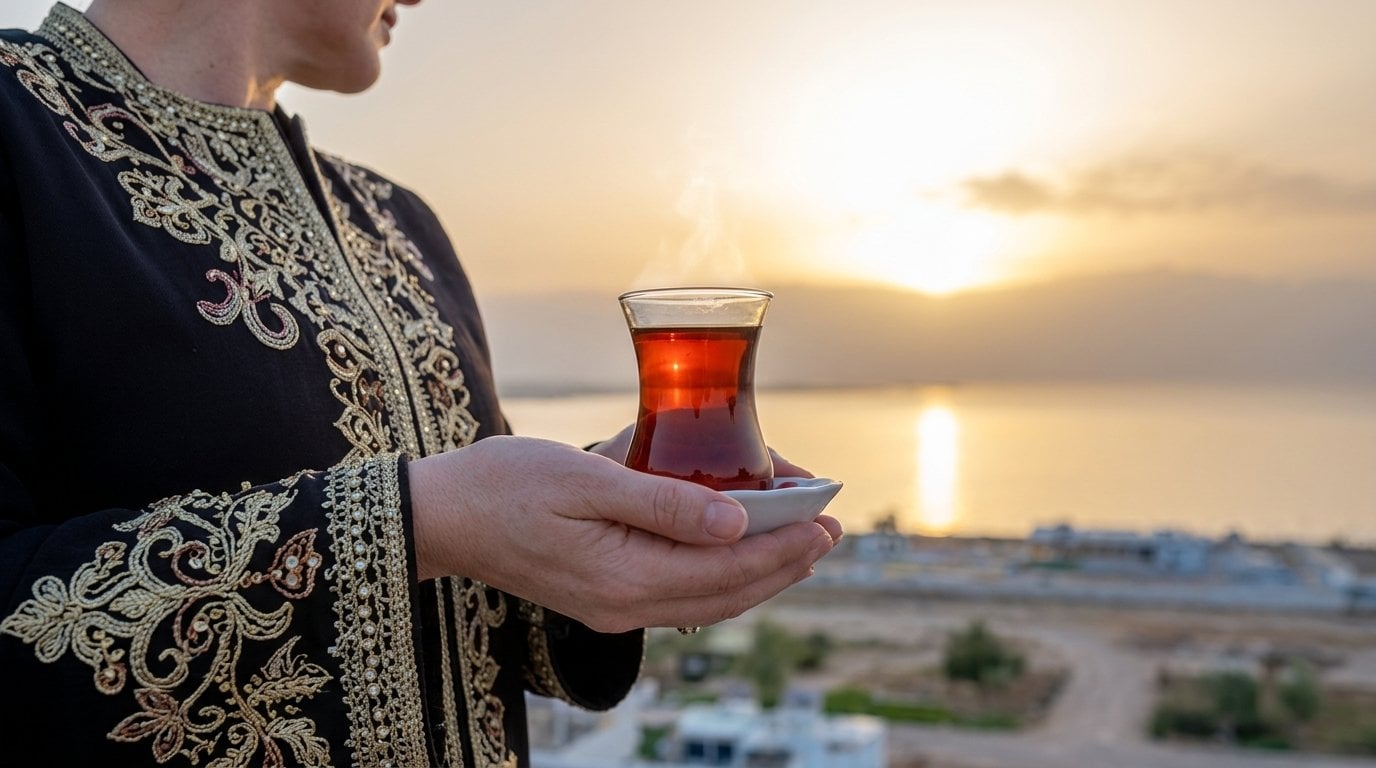
Iraqi Tea (Chai):
Preparation:
- Strong, dark black tea.
- Served in small glass cups (Istikan).
- Sugar generously (you can ask for less).
Protocol:
- First refusal expected: When offered tea, politeness requires a polite refusal first.
- Insistence from the host: The host will insist a second and third time.
- Acceptance on the third time: Accept after 2-3 offers.
- Multiple rounds: Expect 3-5 rounds of tea.
- Polite refusal: Use the phrase "Taslam idak iktafayt" (Bless your hands, I've had enough).
Arabic Coffee (Gahwa):
The Triple Tradition: When Arabic coffee (prepared with cardamom) is served, there is a famous tradition:
- First Cup: Al-Diyafa (Hospitality)
- Second Cup: Al-Kayf (Pleasure/Enjoyment)
- Third Cup: Al-Sayf (Protection)
How to Refuse:
- Do not say "no" directly.
- Shake the cup gently from side to side to indicate "no more".
- Or place your hand over the cup.
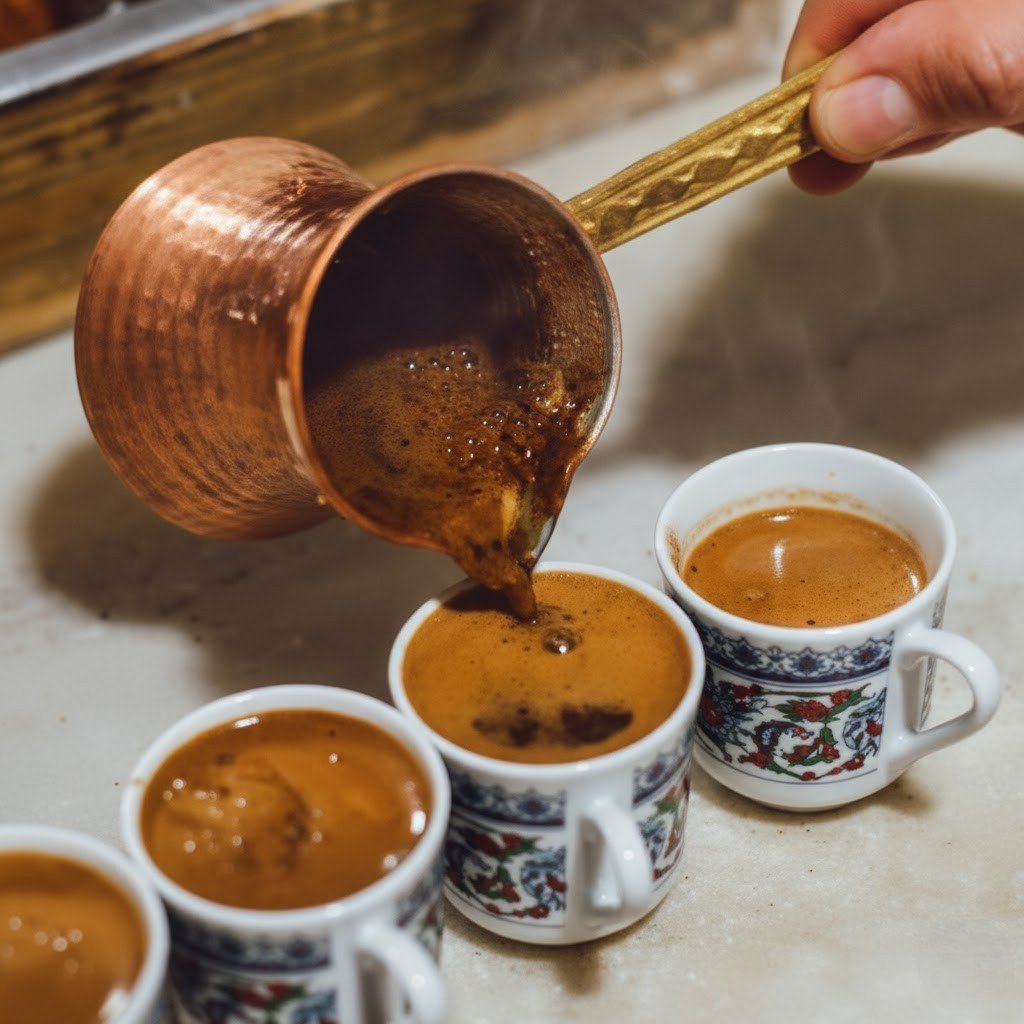
Kurdish Region: In Erbil and Sulaymaniyah, Turkish coffee is common:
- Served in small cups.
- Refills expected unless you place the spoon across the cup to indicate finishing.
3. Dining Etiquette: Unforgettable Rules
Use of Hands
Golden Rule: Right Hand Only
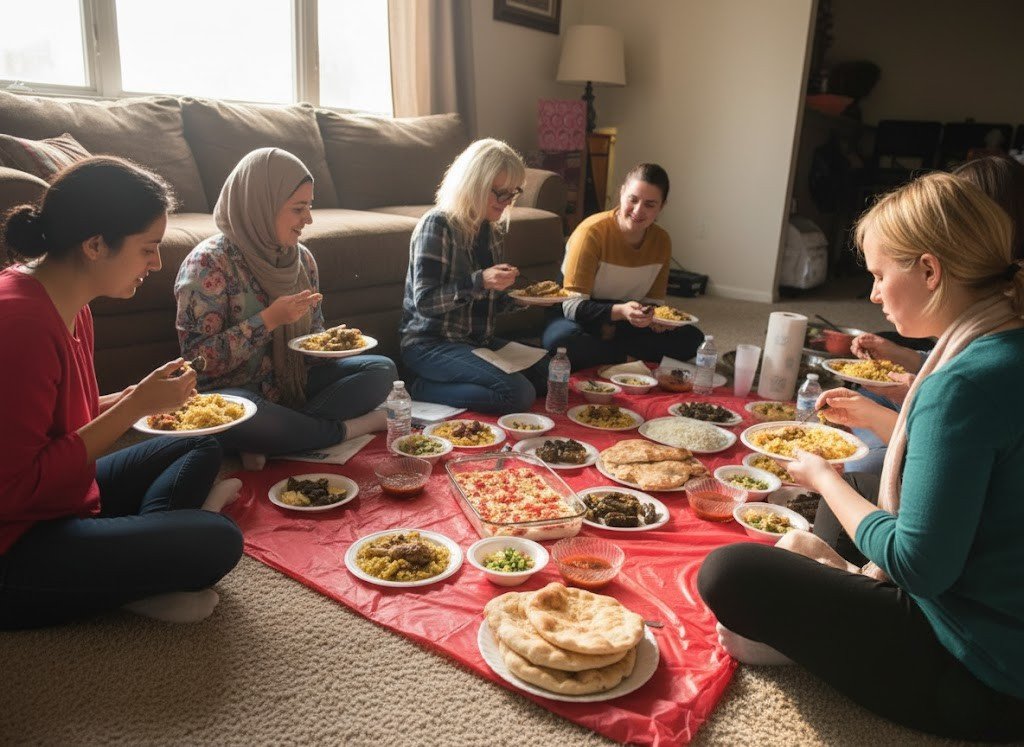
- Always eat with your right hand.
- The left hand is considered unclean for eating (Islamic tradition).
- Hosts will notice and respect this.
Starting the Meal
- Wait for the Blessing: Wait for "Bismillah" from the host or the elder.
- Bread First: Bread (Tannour bread or Samoon) is shared first.
- Respect Bread: Never place bread upside down (sign of disrespect).
Accepting Food
Biggest Challenge: Hosts will fill your plate!
How to handle:
- Accept at least a small portion to honor the host.
- Do not empty your plate completely (implies you are still hungry, and they will refill it).
- Leave a little food (sign of satiety).
- Praise the food: Use the phrase "Yislam idkum" (Bless your hands).
Dietary Considerations:
- Halal by default in all homes.
- If you have dietary restrictions, ask quietly and cautiously.
- Vegetarians: Inform host in advance (most dishes contain meat).
4. Departure Protocol
Signaling Departure:
- Use the phrase "Asta'dhin" (I ask permission to leave).
- The host will often insist on serving more tea.
- Compromise: Accept a small sip before leaving to honor the host.
Farewell Phrases:
- Gratitude: Express your thanks for the hospitality.
- Blessing: Offer a prayer for the house: "Allah yideem al-ni'ma" (May God perpetuate the blessing).
- Handshakes: Final handshakes at the door.
- Priority for Elders: Elders leave last.
Important Note: Iraqi visits usually last at least 3+ hours. Do not rush - this is part of the experience.
Gift Giving Traditions
Appropriate Gifts (2025)
Traditional Options:
- Sweets: Baklava or other pastries.
- Dates: Premium dates.
- International Chocolate: Lindt, Godiva, Belgian chocolate.
- Premium Coffee: Arabic coffee or fine international coffee.
- Flowers: Acceptable in urban environments (for women).
Modern Recommended Gifts (2024-2025):
- International Chocolate (Universally loved, easy to share).
- Premium Coffee (Growing coffee culture).
- International Snacks (From your country - cultural exchange).
- Gifts for Children (If the family has kids: educational toys, international candy).
- Perfumes (International brands - gender-appropriate choice).
Items to Avoid:
- ❌ Alcohol (Forbidden in Islam).
- ❌ Pork products.
- ❌ Very expensive gifts (Creates obligation).
- ❌ Religious items (Unless you are sure).
- ❌ Used items.
- ❌ Black wrapping (Avoid black; use warm colors).
Price Guide:
- Sweet spot: 15-40 USD.
- Too cheap: Under 10 USD (may seem dismissive).
- Too expensive: Over 50 USD (creates discomfort).
Presentation Protocol
How to Present:
- Present the gift immediately upon arrival.
- Offer it with the right hand or both hands.
- Humble presentation ("A small gift").
- Do not expect it to be opened immediately (Hosts often open gifts later).
Quantity:
- Bring enough to share (Families can be large).
- Chocolate: Large box, not small.
- If bringing food: Generous portions.
Regional Diversity: Hospitality with Different Flavors
Baghdad (Mixed Urban Hospitality)
Characteristics:
- Mixed style: Traditional + Modern.
- Digital communication (WhatsApp invitations).
- Restaurant hospitality is common.
- English is more widespread.
Typical Experience:
- Cafe meetings replace some home visits.
- Shared meals in restaurants.
- Structured timing more acceptable.
- Modern gift preferences (Chocolate, international brands).
Famous Heritage Cafes:
- Shabandar Café (Al-Shabandar).
- Zahawi Café (Al-Zahawi).
- Focus on tea service and literary conversations.
Basra (Strong Southern Tradition)
Characteristics:
- Strong traditional commitment.
- Family-centric gatherings.
- Longer visit expectations.
- More formal protocols.
Typical Experience:
- Multi-hour, complex meals.
- Introduction to extended family members.
- Traditional dress more appreciated.
- Arabic language more important (Limited English).
Gulf Influences:
- More cardamom in Arabic coffee.
- Local dishes: River fish (Masgouf).
- Greetings may involve three cheek taps.
Kurdistan Region (Kurdish Modernity)
Characteristics:
- International influence from expat community.
- High English proficiency.
- Developed tourism infrastructure.
- Western amenities with Kurdish traditions.
Typical Experience:
- Hotel hospitality very professional.
- Prominent cafe culture.
- Home invitations still common but planned.
- More flexible modern etiquette.
- Turkish Coffee is common.
Key Cities:
- Erbil (Erbil): Capital of the region, very modern.
- Sulaymaniyah (Sulaymaniyah): More liberal, vibrant cultural scene.
- Duhok (Duhok): Mountainous, rural hospitality.
Mosul/Nineveh (Cultural Diversity)
Characteristics:
- Diversity: Assyrian and Christian family traditions.
- Sweets First: Christian families might serve sweets before drinks.
- Mixed gender seating more common.
Current Situation (2025):
- Still under reconstruction.
- Visit only with organized tours.
Southern Marshes (Ancient Traditions)
Characteristics:
- Traditional seating: Guest sits on reed mat (Bariya).
- Local foods: Date molasses or grilled fish.
- Eco-tourism: Hospitality linked to sustainable tourism initiatives.
- Mudhif: Traditional reed guesthouse.
UNESCO Recognition: University of Kerbala identified Marsh hospitality traditions as a key driver for sustainable tourism.
Arba'een: Hospitality on an Epic Scale
Arba'een is the world's largest annual religious gathering, where millions of pilgrims walk to Karbala. Along the entire route, Iraqi families and organizations set up thousands of tents (Mawakib).
Free Services:
- Hot meals.
- Sleeping places.
- Medical care.
- Massage for tired feet.
- Child care.
Volunteers:
- Work around the clock.
- Driven by a strong sense of faith and national duty.
- Cook massive amounts of food.
- Bake bread and pour tea for an endless stream of strangers.
- Their faces beam with happiness.
UNESCO Recognition 2019: UNESCO listed "Provision of services and hospitality during the Arba'een visitation" as Intangible Cultural Heritage. This is Iraqi hospitality in its most epic form - a "supernova of generosity" where the entire community moves to welcome the world.
Modern Etiquette (2024-2025)
WhatsApp Digital Culture
Invitation Norms:
- Voice messages common (More personal than text).
- Location sharing for meeting points.
- Photos shared before/after visits.
- Chat groups with family members.
Accepted Practices:
- Confirming attendance via messages.
- Sharing dietary restrictions.
- Asking about appropriate dress.
- Asking for directions.
Respecting Social Media
Photography:
- Always ask permission before photographing family members (especially women).
- Ask permission before photographing inside the home.
- Generally acceptable: Landscape shots from windows, your plate of food.
Posting on Social Media:
-
Do:
- Ask explicit permission before posting.
- Tag only if asked.
- Blur faces if there is any doubt.
- Share positive experiences.
- Thank hosts publicly (if they agree).
-
Don't:
- Do not post real-time location (Security risk).
- Do not geo-tag private homes.
- Do not post photos of women without clear permission.
Practical Lessons: Tips for Visitors
1. Accepting an Invitation
Initial Response:
- Express gratitude immediately.
- Confirm timing and location.
- Ask if you can bring anything (Usually refused).
- Inquire about dress code if unsure.
Timing:
- Arriving 10-15 minutes late (Culturally acceptable).
- Early = Potentially awkward (They are still preparing).
- Very late = Disrespectful (Unless you communicate).
2. Dress Code
General Principles:
- Modesty is appreciated in all settings.
- Conservative = Respectful.
- Quality over luxury.
Men:
- Casual Home Visit: Long trousers (Jeans acceptable), collared shirt or smart t-shirt.
- Formal/Religious Family: Dress trousers, button-down shirt, dress shoes.
Women:
- Casual Home Visit: Long trousers or skirt below the knee, modest top (shoulders covered), loose scarf available (optional but appreciated).
- Formal/Religious Family: Full-length loose trousers or skirt, long-sleeved top, scarf (highly recommended).
Regional Differences:
- Erbil: More relaxed, Western styles more acceptable.
- Baghdad: Mixed, conservative choice safer.
- Basra/South: More traditional, modesty important.
- Rural: Most conservative, full coverage recommended.
3. How to Reciprocate
During the Visit:
- Praise the home and food sincerely.
- Show interest in family photos/decorations.
- Share about your country and culture.
- Accept food and drink (At least taste everything).
- Be patient (Visits are long).
After the Visit:
- Send a thank you message via WhatsApp.
- Share some photos (with permission).
- If possible, stay in touch.
Reciprocation: If you have a chance to host your Iraqi friends, do so with the same warmth. This shows you understood and appreciate their traditions.
Conclusion: From Stranger to Brother
Iraqi hospitality is not just a tradition - it is a transformative experience that breaks down barriers between people. The shared meal, the endless cups of tea, the long conversations - all are ingredients in the recipe of trust and friendship.
Travelers consistently say:
"I left the Iraqi home feeling not like a guest, but like a son, like a brother, like a family member."
This emotional impact is transformative. It challenges preconceived notions and replaces them with a human reality of warmth, kindness, and a shared desire for connection.
Iraqi hospitality is:
- A living embodiment of the idea that a stranger is simply a family member you haven't met yet.
- Proof that shared humanity is stronger than any borders.
- A reminder that the world's greatest riches are not material, but human.
When you are a guest in Iraq, you are not just visiting a country - you are entering the heart of a people who see their identity in their generosity, and a blessing from God in their guest.
Welcome to your home. Welcome to Iraq.