Celebrate Eid al-Fitr in Iraq: discover ancient kleicha baking rituals, family hospitality customs, and essential travel tips for holiday closures.
Eid al-Fitr in Iraq: Traditions, Kleicha, and Travel Guide
Marking the end of Ramadan on the first day of Shawwal, Eid al-Fitr is celebrated across Iraq with deep hospitality, family gatherings, and distinctive baking traditions. Known locally as the "Sweet Eid," the three-day national holiday alters daily life across the country, from Mosul and Erbil down to Baghdad, Karbala, and Basra.
For travelers, Eid al-Fitr provides a direct look into Iraqi domestic life and community celebrations. At the same time, the holiday brings closures of government offices and banks, altered market hours, and packed public spaces. Understanding how the holiday unfolds helps visitors plan routes and daily schedules effectively.
The Kleicha Baking Ritual
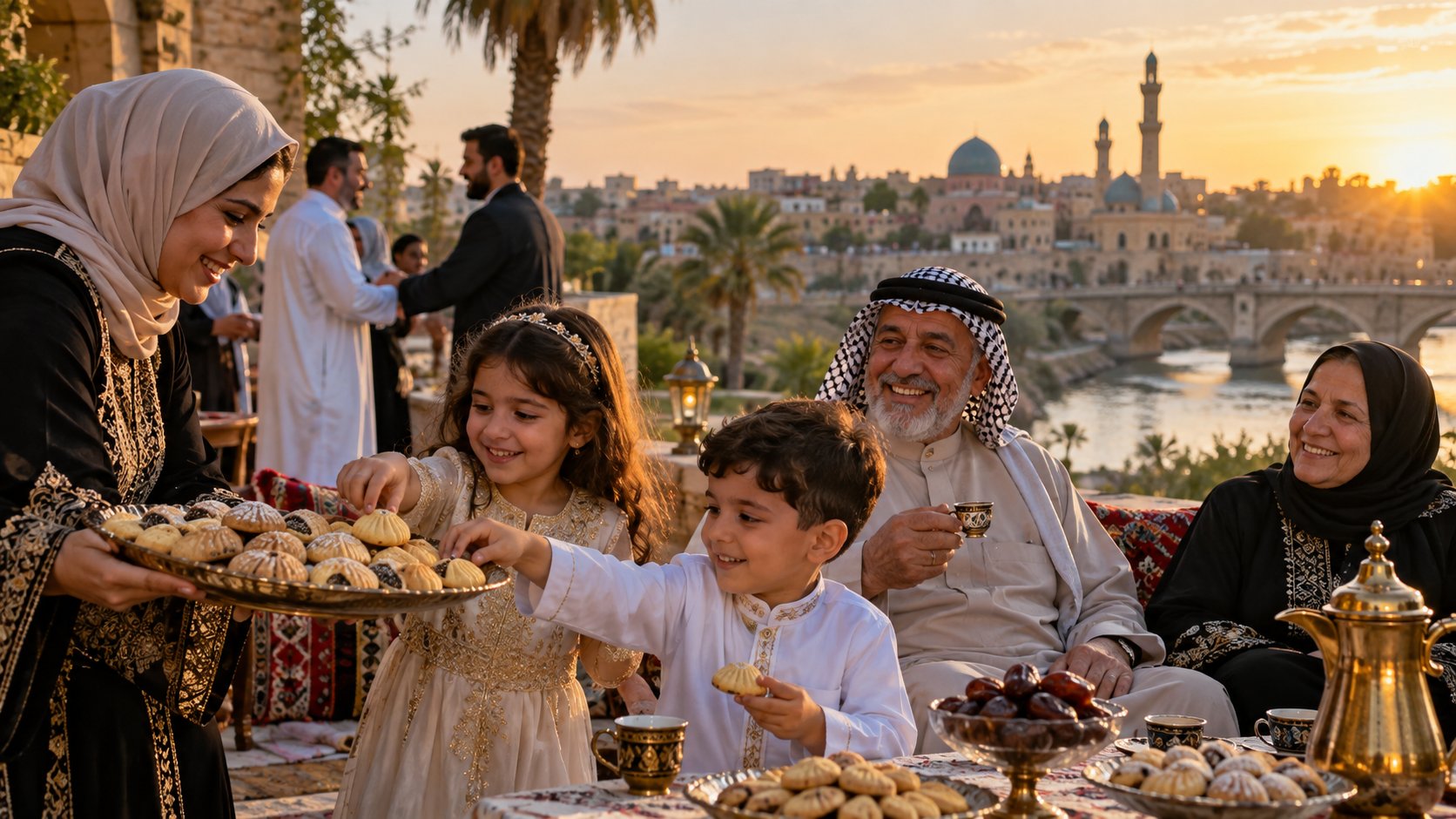
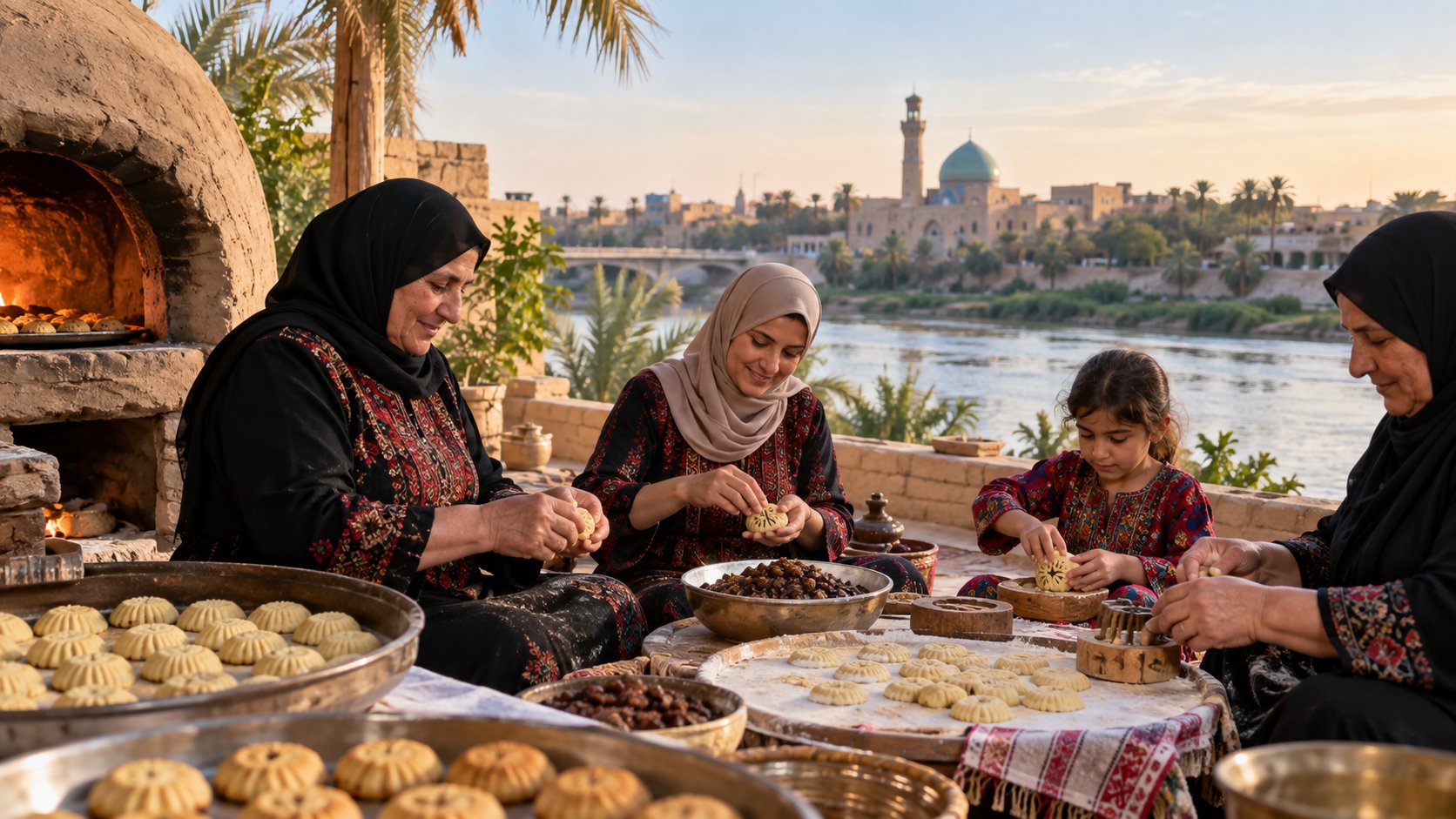
No culinary tradition defines Iraqi Eid more than baking kleicha. Regarded as Iraq's national pastry, kleicha links to ancient Mesopotamian traditions of baking festive ritual cakes to mark renewal and seasonal feasts. Across religious and ethnic backgrounds, families bake large batches at home before Eid to serve to every visiting guest alongside hot black tea.
In the final days of Ramadan, home kitchens turn into assembly lines. Generations of family members and neighbors gather to knead yeasted dough spiced with cardamom, mahleb, and nigella seeds.
Iraqi kleicha includes several standard varieties:
- Kleichat Tamur (Date Rolls or Discs): Filled with mashed Iraqi dates cooked in clarified butter (dihin hor) and cardamom, rolled and sliced or pressed into carved wooden molds.
- Kleichat Joz (Walnut Crescents): Packed with chopped walnuts, sugar, and ground cardamom, hand-pinched along the seam into decorative rims.
- Kleichat Narjeel (Coconut Pockets): Filled with sweetened desiccated coconut scented with cardamom.
- Khfefiyyat (Light Flatbreads): Thin, mildly sweet discs glazed with egg wash and sprinkled with sesame seeds.
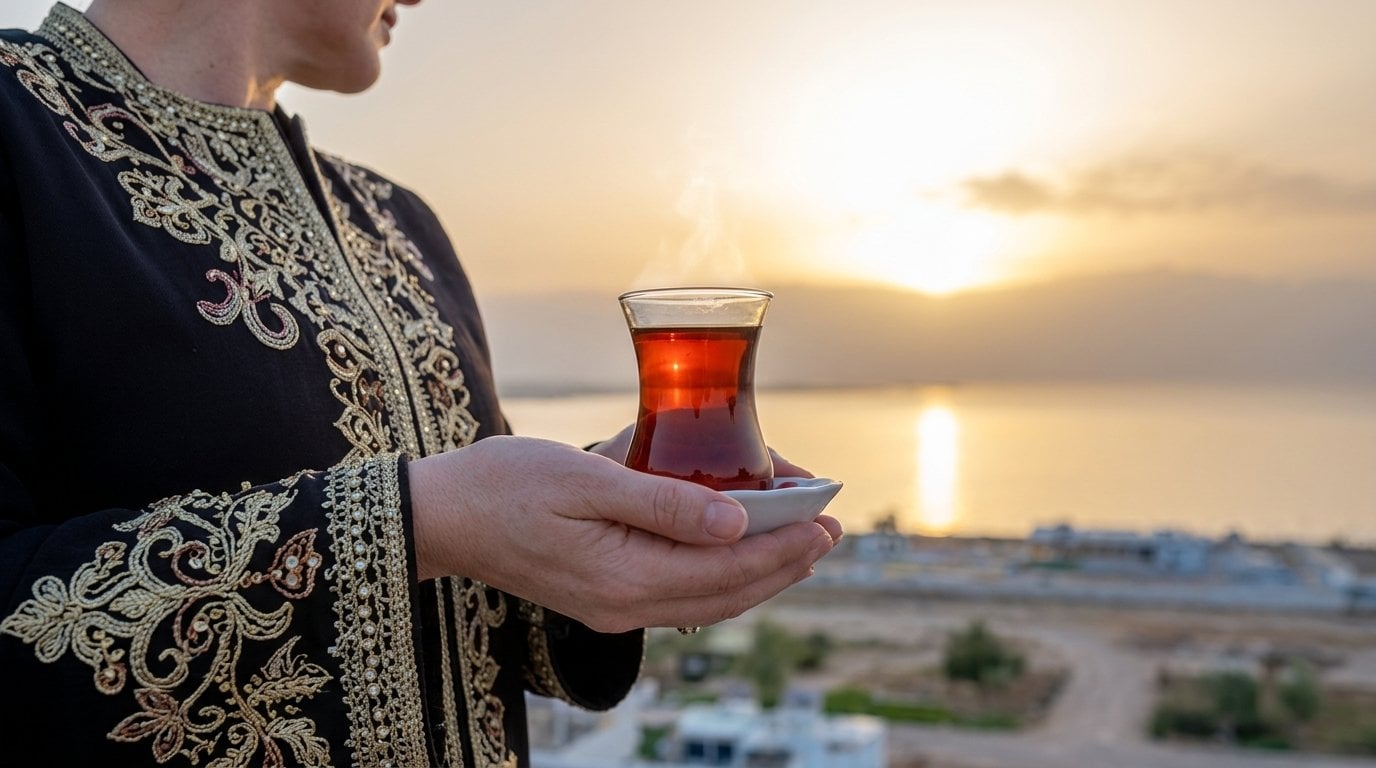
Baking sheets go into domestic ovens or to local communal bakeries, filling neighborhood streets with the scent of butter, cardamom, and toasted dates. When guests enter an Iraqi home during Eid, hosts present a platter of fresh kleicha with a glass of strong, cardamom-scented tea (istikan chai).
Morning Prayers, Cemetery Visits, and Family Hospitality
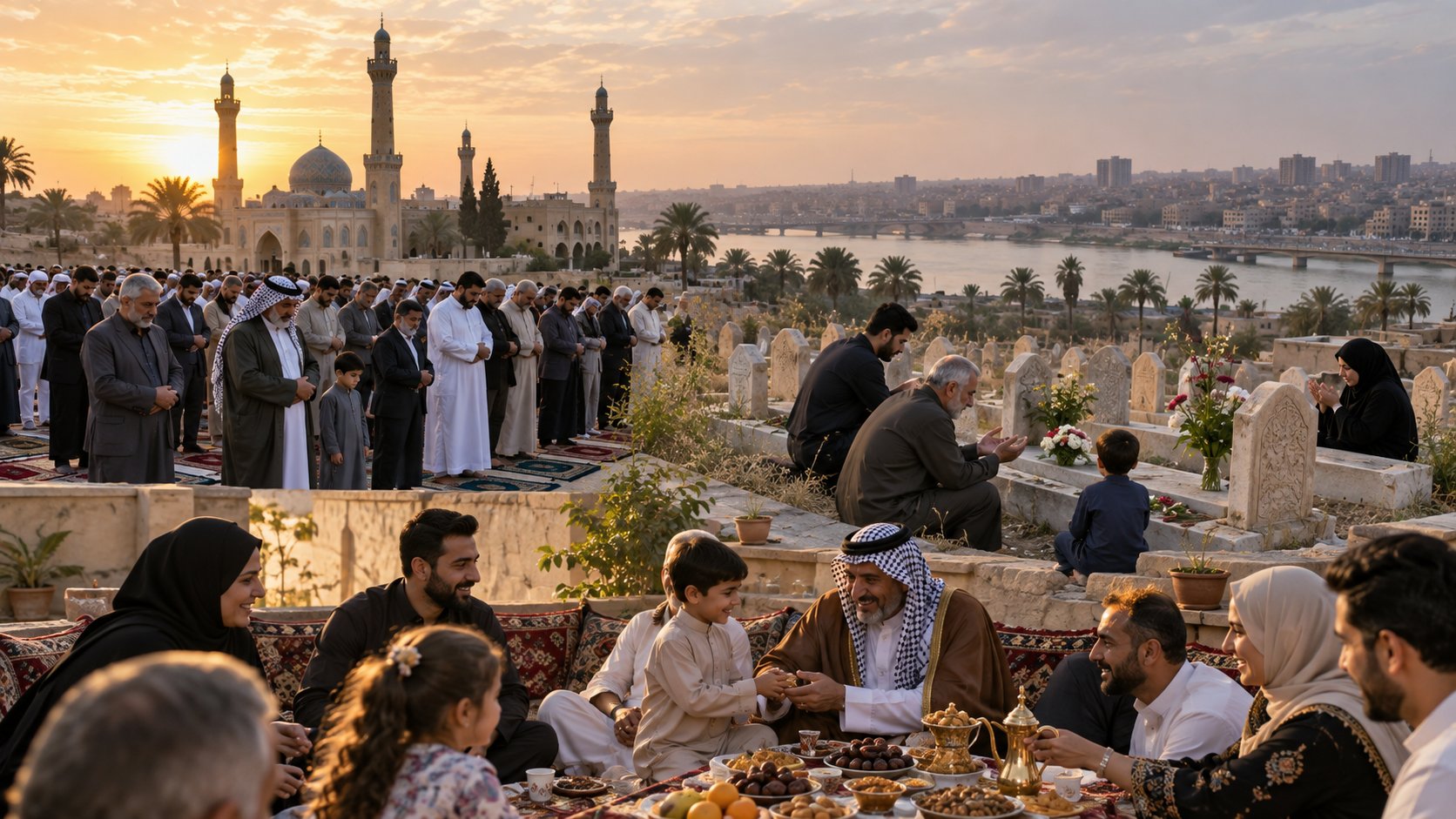
The first day of Eid begins shortly after dawn. Mosque minarets across Iraqi cities broadcast the Eid Takbirat. Worshippers dress in new clothes and gather at local mosques and major landmarks—such as Abu Hanifa Mosque in Adhamiya, Al-Kazimiyya Mosque in Kadhimiya, and the Grand Mosque of Kufa—for morning communal prayers.
After prayers, many families follow a long-standing custom of visiting cemeteries. Relatives bring fresh myrtle branches, palm fronds, rose water, and plates of kleicha to family graves to pay respect to deceased relatives and recite verses from the Quran before returning home.
The rest of the day centers on family visits (ziyarat al-eid):
- Visiting Elders: Families start at the home of the senior patriarch or matriarch to exchange greetings (Eid Mubarak and Ayyakum min Awadah) and share breakfast.
- Eidiya: Elders give children crisp bank notes and sweets known as Eidiya, which children spend at neighborhood stalls, fairs, and toy shops.
- Holiday Meals: Spread tables feature classics from Iraqi cuisine, starting with qaimar (clotted water buffalo cream) with date syrup (dibs) and hot samoon bread in the morning, followed in the afternoon by quzi (slow-cooked lamb over seasoned rice) or large trays of dolma.
Evening Gatherings and Public Celebrations
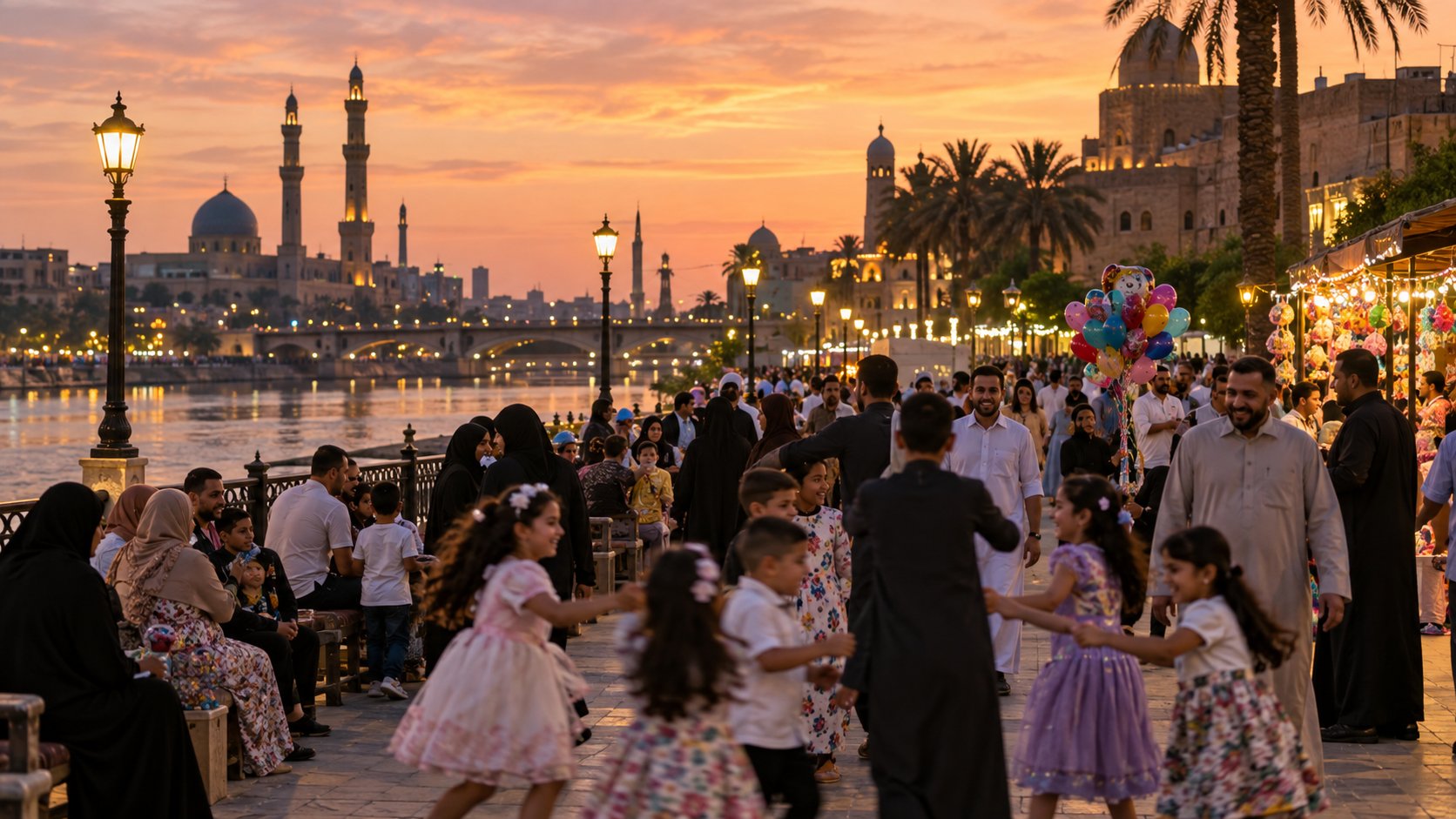
Daytime on the first day belongs largely to private family circles. By late afternoon and evening, public spaces fill up. Families head out in holiday clothes to parks, riverside promenades, and entertainment centers.
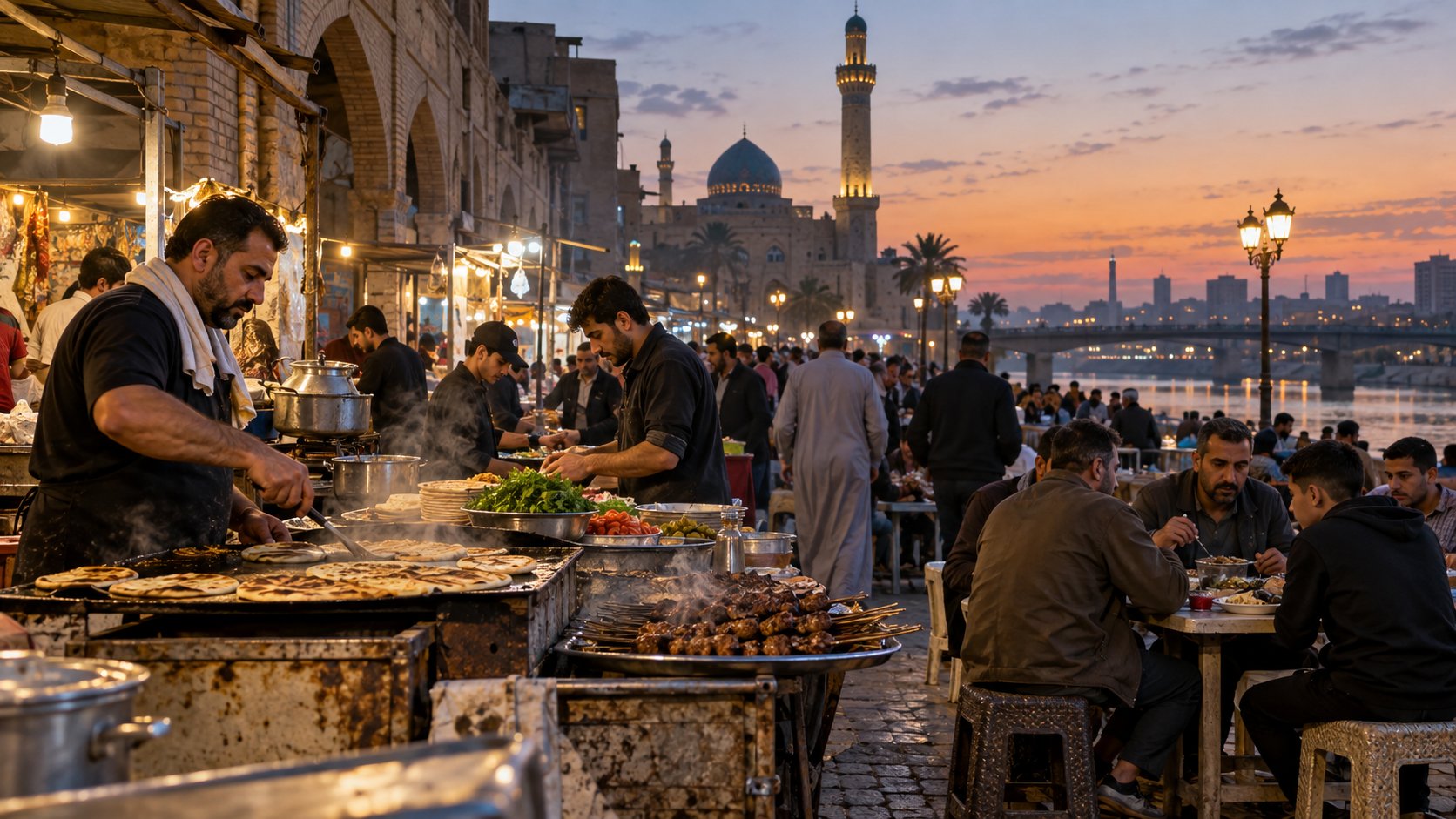
In Baghdad, crowds gather along Abu Nuwas Street on the Tigris, in Zawra Park, and along Mutanabbi Street, riding river boats, dining on wood-grilled masgouf, and visiting confectioners for baklava and halawat daheen. In the Kurdistan Region, families picnic in mountain parks around Erbil, Sulaymaniyah, and Duhok. Fairground rides, candy stalls, and vendors selling pickled turnip (turshi) line city thoroughfares throughout the evenings.
Traveler Logistics: Closures, Transport, and Crowds
Traveling in Iraq during Eid al-Fitr requires practical planning around official schedules and public movements. As set out in Iraq's official calendar of public holidays in Iraq, Eid al-Fitr is an official three-day national holiday.
1. Banks and Government Offices
Government ministries, embassies, visa offices, and commercial banks close for all three days, and sometimes on adjacent days if the holiday borders a weekend. Currency exchange shops (sirafa) run limited hours or close entirely on day one. Travelers should withdraw or exchange adequate Iraqi dinars in cash ahead of the holiday.
2. Markets and Restaurants
Historic souqs, craft bazaars, and trade shops stay closed on the first day of Eid while shopkeepers spend time with family. Small grocery shops open intermittently. By the second and third days, restaurants, cafes, bakeries, and modern shopping malls operate normally, often staying open late into the night.
3. Intercity Transport and Checkpoints
Intercity shared taxis (garajat) and private drivers operate during Eid, though departures can be sparse on the morning of the first day while drivers attend prayers and family meals. Security checkpoints at city perimeters and historic sectors remain active, with occasional traffic diversions around busy shrines and central parks. Arranging private transport in advance avoids delays.
4. Holy Shrine Cities
Major pilgrimage cities like Karbala, Najaf, Kadhimiya, and Samarra receive heavy influxes of domestic and regional visitors during Eid. Book hotels near shrine perimeters weeks ahead, and allow extra time for pedestrian security gates and baggage inspections.
Sources
- Wikipedia: Eid al-Fitr, https://en.wikipedia.org/wiki/Eid_al-Fitr, accessed April 2025.
- Wikipedia: Kleicha, https://en.wikipedia.org/wiki/Kleicha, accessed April 2025.
- Wikipedia: Culture of Iraq, https://en.wikipedia.org/wiki/Culture_of_Iraq, accessed April 2025.
- Wikipedia: Iraqi Cuisine, https://en.wikipedia.org/wiki/Iraqi_cuisine, accessed April 2025.
- Wikipedia: Public Holidays in Iraq, https://en.wikipedia.org/wiki/Public_holidays_in_Iraq, accessed April 2025.
- Wikipedia: Baghdad, https://en.wikipedia.org/wiki/Baghdad, accessed April 2025.
❓Frequently Asked Questions
Here are answers to frequently asked questions about the content above
Kleicha is the traditional national pastry baked across Iraq for Eid al-Fitr, featuring spiced yeasted dough scented with cardamom and filled with mashed dates, chopped walnuts, or coconut.
Official public holiday closures for Eid al-Fitr in Iraq officially last for three consecutive days, during which government ministries, embassies, and commercial banks remain closed.
Most restaurants and traditional markets remain closed on the first morning of Eid for family gatherings, but cafes, amusement parks, and eateries reopen enthusiastically from the first evening and stay busy throughout the holiday.
Common traditional holiday greetings across Iraq include 'Eid Mubarak' (Blessed Eid) and the cherished regional phrase 'Ayyakum min Awadah' (May you live to witness many returns of this holiday).
Yes, intercity travel remains open, but shared taxi terminals experience altered schedules on the first day and high traveler demand, making advance booking of private transfers strongly advisable.
Eidiya is the beloved tradition of elders gifting crisp banknotes and confectioneries to children and young relatives following the morning Eid prayer and family visits.