A practical 2026 travel guide to Mosul, Iraq, covering Old City restoration, checkpoints and visas, safety precautions, open landmarks, and Moslawi food.
Mosul is Iraq's second-largest city and one of the oldest continuously inhabited urban centers in the Middle East. For years, international headlines covered the city only through the lens of conflict and destruction. Today, travelers can visit Mosul independently or with local guides, walk through the historic quarters, and see landmark reconstruction projects firsthand.
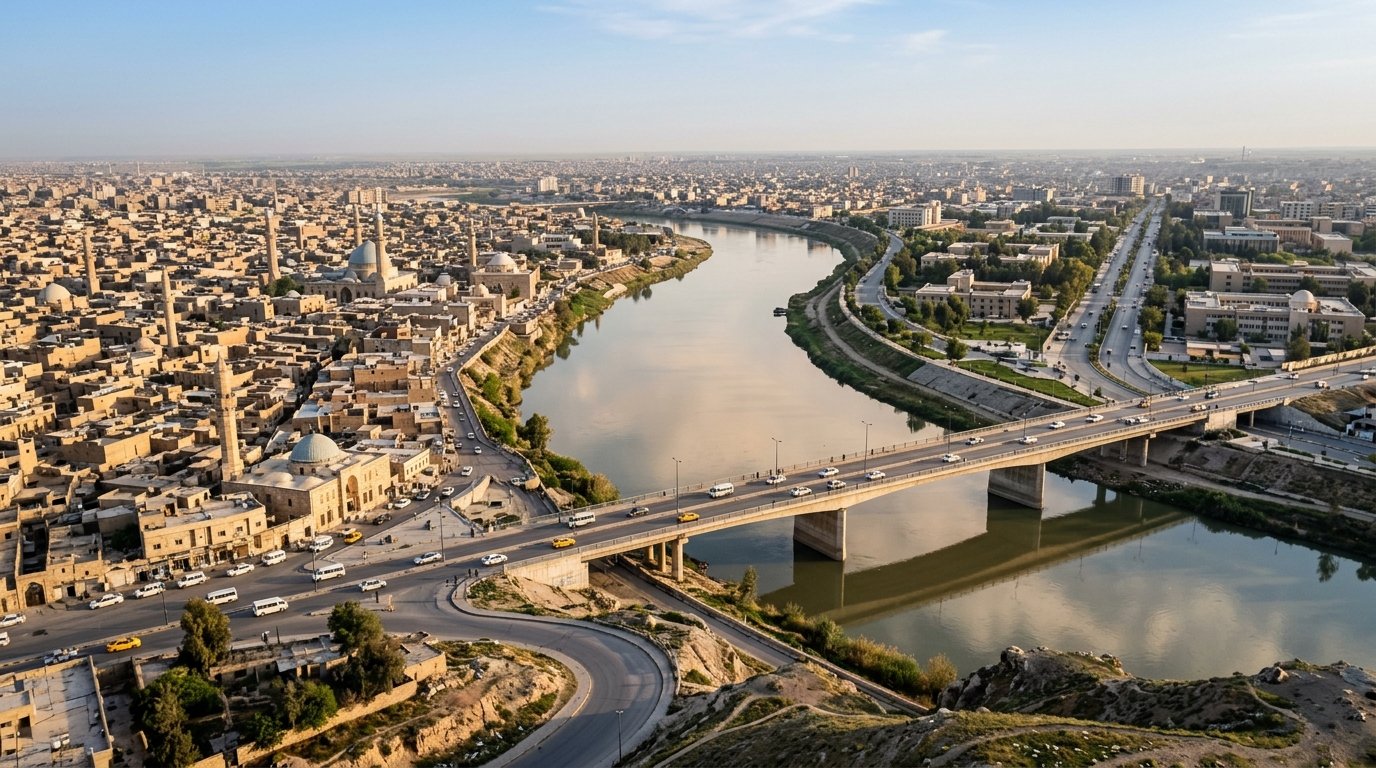
The city is split into two halves by the Tigris River. The Left Bank on the east side is modern, busy, and filled with universities, restaurants, and shopping districts that rebuilt quickly. The Right Bank on the west side contains the historic Old City, where narrow alleys, Ottoman-era courtyards, churches, and historic mosques stand alongside ongoing restoration efforts.
Visa and entry requirements
To visit Mosul, you need a valid Federal Iraq visa. The electronic visa, or eVisa, and the visa on arrival issued at Baghdad International Airport, Basra, or federal border crossings grant full access to Nineveh Governorate.
If you arrive via Erbil International Airport in the Kurdistan Region of Iraq, your entry stamp depends on your visa type. An Iraqi Kurdistan regional visa does not permit travel past federal checkpoints into Mosul. If you entered Iraq through Erbil on a Federal Iraq eVisa, ensure the border officers stamped your passport with federal validity before heading toward Mosul.
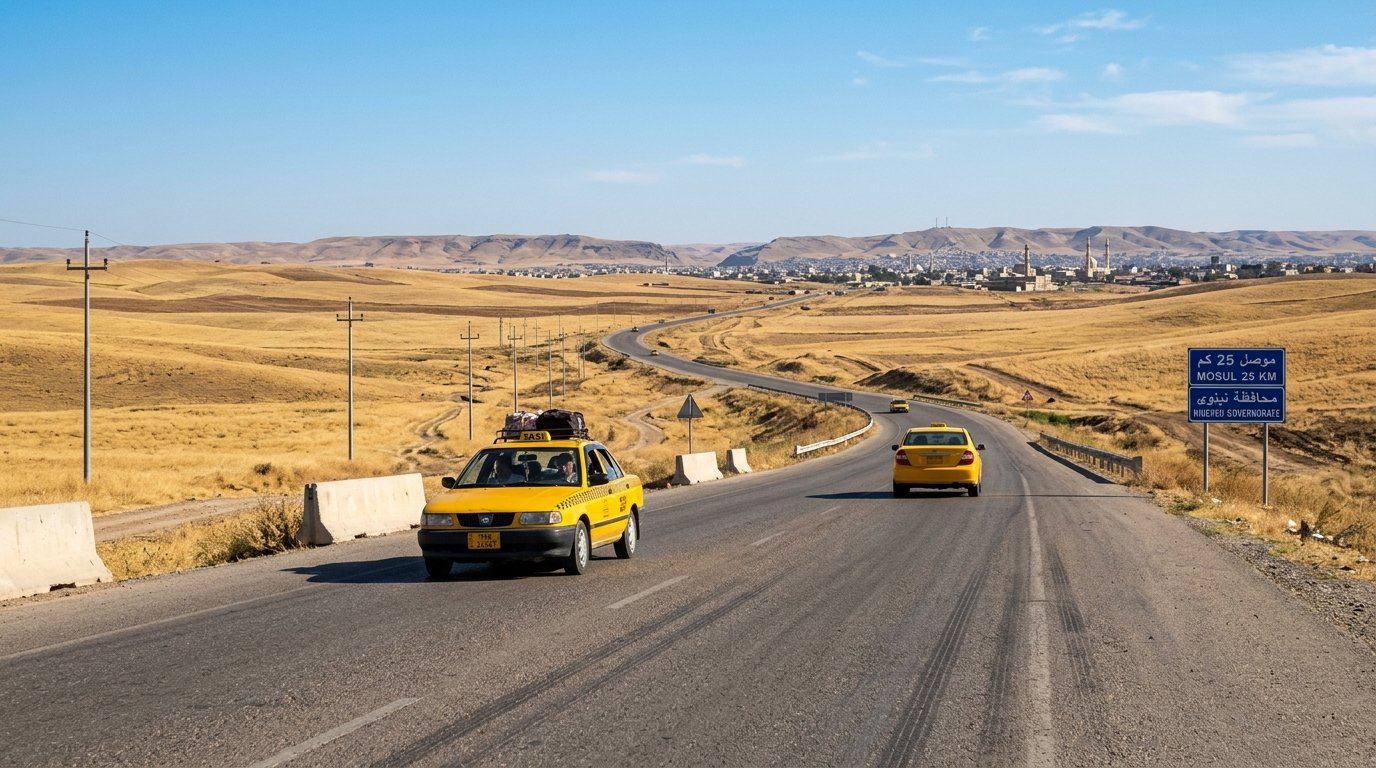
The road between Erbil and Mosul takes about 90 minutes by car. You will cross the Khazer checkpoint, where federal Iraqi soldiers and security officers check passports, visas, and vehicle paperwork. Keep your passport and printed visa confirmation accessible on the seat next to you. Foreign visitors routinely pass through this checkpoint, but inspections can take anywhere from five minutes to half an hour depending on line lengths and shifts.
Traveling from Baghdad to Mosul takes five to six hours by private taxi or VIP coach along Highway 1 through Tikrit and Baiji. Domestic flights also connect Baghdad to nearby northern hubs.
Safety and ground reality
Mosul is secure under Iraqi Federal Police, the Iraqi Army, and local traffic authorities. You can walk through both the eastern districts and the main quarters of the Old City during daylight and evening hours without an armed escort.
However, safety in Mosul requires specific practical precautions:
- Stick to cleared and active streets. The Iraqi government, UN agencies, and specialized demining teams cleared unexploded ordnance from all public thoroughfares, markets, and restored residential sectors. Never step into unrestored, collapsed basements, cordoned-off ruins, or derelict plots marked with warning spray paint.
- Carry your passport at all times. Checkpoints operate at city entrances, bridge crossings, and key intersections. Security officers will ask for your identity document and may record your details in a logbook.
- Be respectful with photography. Avoid photographing military checkpoints, police stations, armed personnel, and government administrative buildings. Street photography in markets and near historic monuments is welcome, though you should ask vendors and residents before taking close-up portraits.
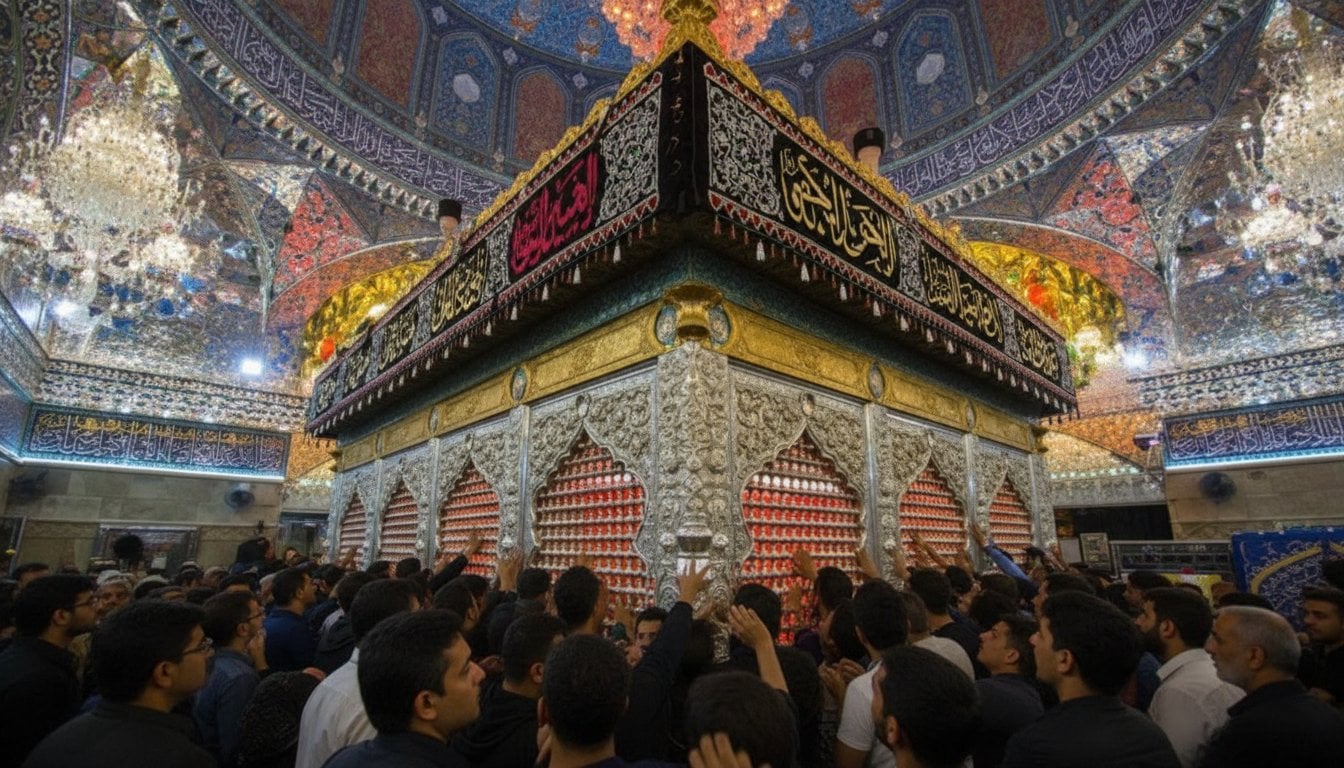
- Dress conservatively. Both men and women should wear clothing that covers shoulders and knees. Women do not need to cover their hair in public streets or markets, but carrying a light scarf is necessary for visiting active mosques and traditional shrines.
What is open in the Old City
The Old City on the west bank suffered heavy damage during the 2017 liberation battles, but systematic restoration through UNESCO's Revive the Spirit of Mosul initiative and local grass-roots organizations has returned life to the historic core.
Al-Nuri Mosque complex and the Al-Hadba minaret
The 12th-century Great Mosque of Al-Nuri and its leaning cylindrical minaret, Al-Hadba, form the visual symbol of Mosul. Following meticulous stabilization and archaeological excavations beneath the prayer hall, the complex has undergone extensive reconstruction using recovered historic stones and traditional lime mortar. Visitors can view the restored courtyard, prayer hall, and the re-erected minaret from the surrounding plaza along Al-Farouq Street.
Al-Tahera Syriac Catholic Church
Located in the heart of the Christian quarter of the Old City, the Church of the Immaculate Conception, known as Al-Tahera, dates back to the late 19th century. Restored through international conservation partnerships, the church has high alabaster arches, carved marble reliefs, and an open central courtyard. It is an active center of worship and cultural gathering for the local community.
Convent of Our Lady of the Hour, Al-Saa'a Church
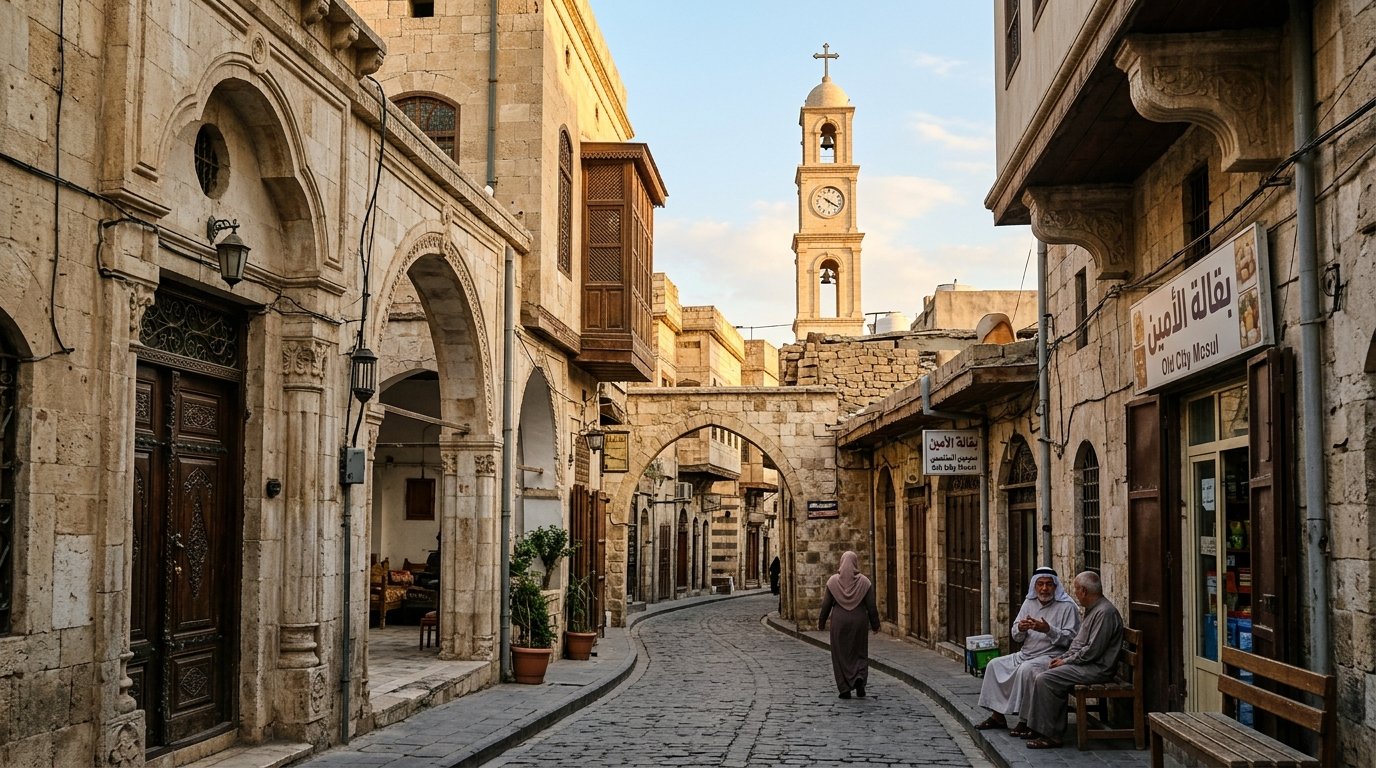
Known locally as the Clock Church, this Dominican convent was built in the 1870s and is famous for its four-faced clock tower donated by Empress Eugénie of France. The bell tower and church interior have been fully repaired, with new bells installed to replace those lost during the conflict. The surrounding cloister houses community workshops and cultural exhibitions.
Baytna Foundation and heritage houses
Several traditional Moslawi courtyard homes have reopened as living cultural spaces. The Baytna Foundation on Al-Najafi Street operates a cultural hub with an archive of historical photographs, a small museum of Mosul artifacts, a traditional teahouse, and regular art exhibitions. Restored private houses like Bayt Al-Tatanji display distinctive Moslawi marble, called Hellan stone, detailed wall reliefs, and sunken basement living quarters designed for summer cooling.
Historic souqs and Al-Najafi Street
The market streets around Bab Al-Saray are active from early morning until sunset. Coppersmiths, spice merchants, carpenters, and textile sellers occupy restored stone arcades. Al-Najafi Street, historically famous as Mosul's book market, has rebuilt its storefronts, where stationers and booksellers trade local history volumes and literature.
Sites on the East Bank and ancient Nineveh
East Mosul is home to ancient archaeological mounds and lively modern avenues.
Ruins of Nineveh and Nergal Gate
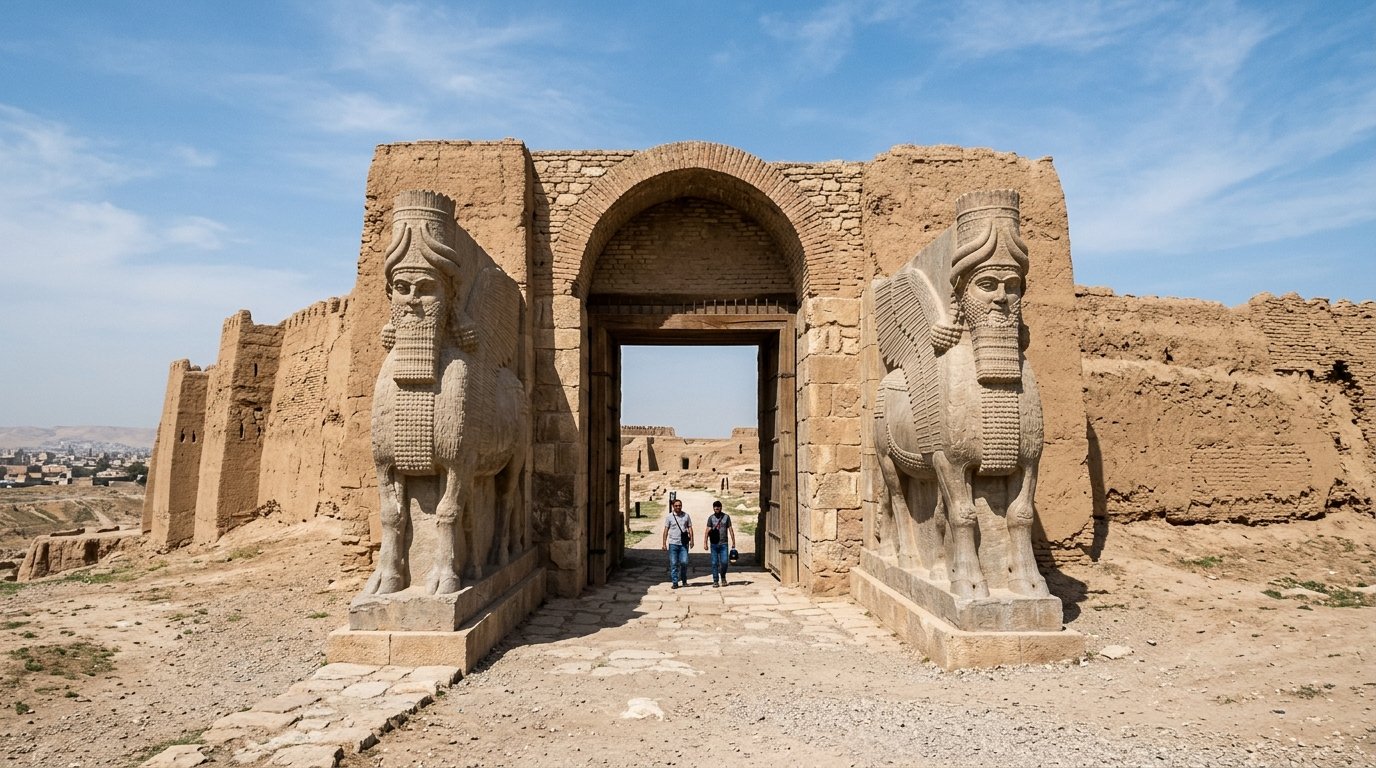
Across the river lies Nineveh, the ancient capital of the Neo-Assyrian Empire under Sennacherib and Ashurbanipal. Portions of the massive mud-brick and stone city walls remain visible along the main roads. The Nergal Gate, flanked by reconstructed stone ramparts, marks one of the historic northern entryways to the ancient metropolis.
Tell Kuyunjik and the Prophet Jonah hill
Tell Kuyunjik was the primary palace mound of ancient Nineveh, where excavations in the 19th century uncovered the library of Ashurbanipal. Nearby sits the hill of Nabi Yunus, the traditional site of the Prophet Jonah, where archaeological work under the destroyed shrine revealed an unexcavated Assyrian palace belonging to King Esarhaddon. The site offers wide views across the modern city skyline.
Mosul Cultural Museum
Located near the riverfront, the Mosul Cultural Museum is Iraq's second-largest archaeological museum. After suffering severe looting and damage, the building has undergone structural restoration and modernization with help from the Musée du Louvre, the Smithsonian Institution, and the ALIPH foundation. The museum displays excavated antiquities from Nineveh, Nimrud, and Hatra.
What to eat: Moslawi cuisine
Mosul has a distinct culinary tradition characterized by subtle spices, dried fruits, and complex grain dishes.
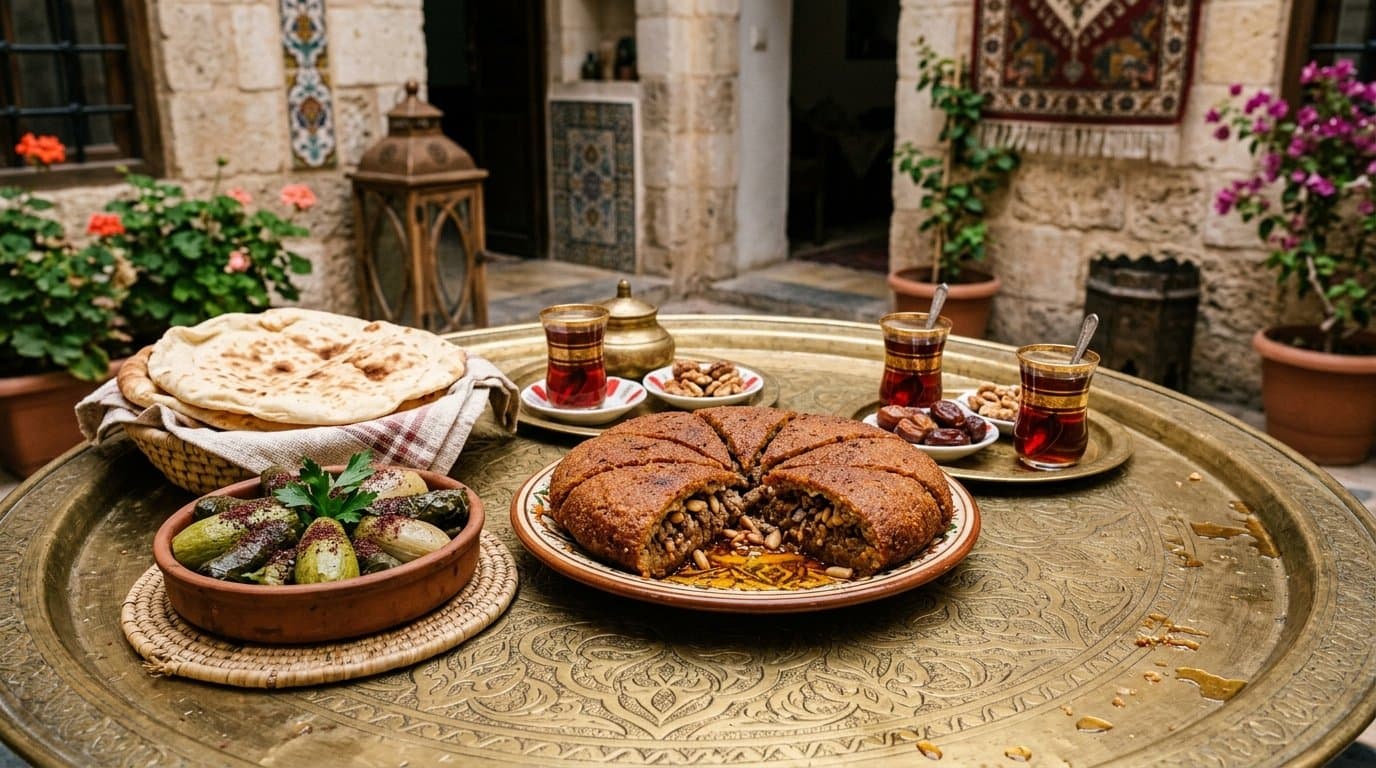
- Kubba Moslawiya. The signature dish of the city is a large, flat, paper-thin disc of bulgur dough stuffed with minced lamb, onions, raisins, and toasted almonds, then boiled or fried. Street vendors and sit-down restaurants across the Old City serve it with fresh parsley and pickled turnips.
- Arooq bread. A savory baked flatbread layered with minced meat, tomato, chopped herbs, and spices, baked against the inner clay walls of a traditional tandoor oven.
- Sharbat Hajji Zaki. Located near Bab Al-Saray, Hajji Zaki has operated since the early 20th century. The shop specializes in Sharbat Zabeeb, a deep purple, tart drink made from concentrated mountain raisins, served ice cold with mint.
- Qaymer and Kahi. For breakfast, head to local dairy shops for thick water buffalo clotted cream, known as Qaymer, served with warm, flaky puff pastry, called Kahi, and date syrup or honeycomb.
- Masgouf. Fresh carp caught from the Tigris, split down the spine, seasoned with salt, pepper, and tamarind, and slow-roasted upright on wood-fired skewers along the river corniche.
Practical travel tips
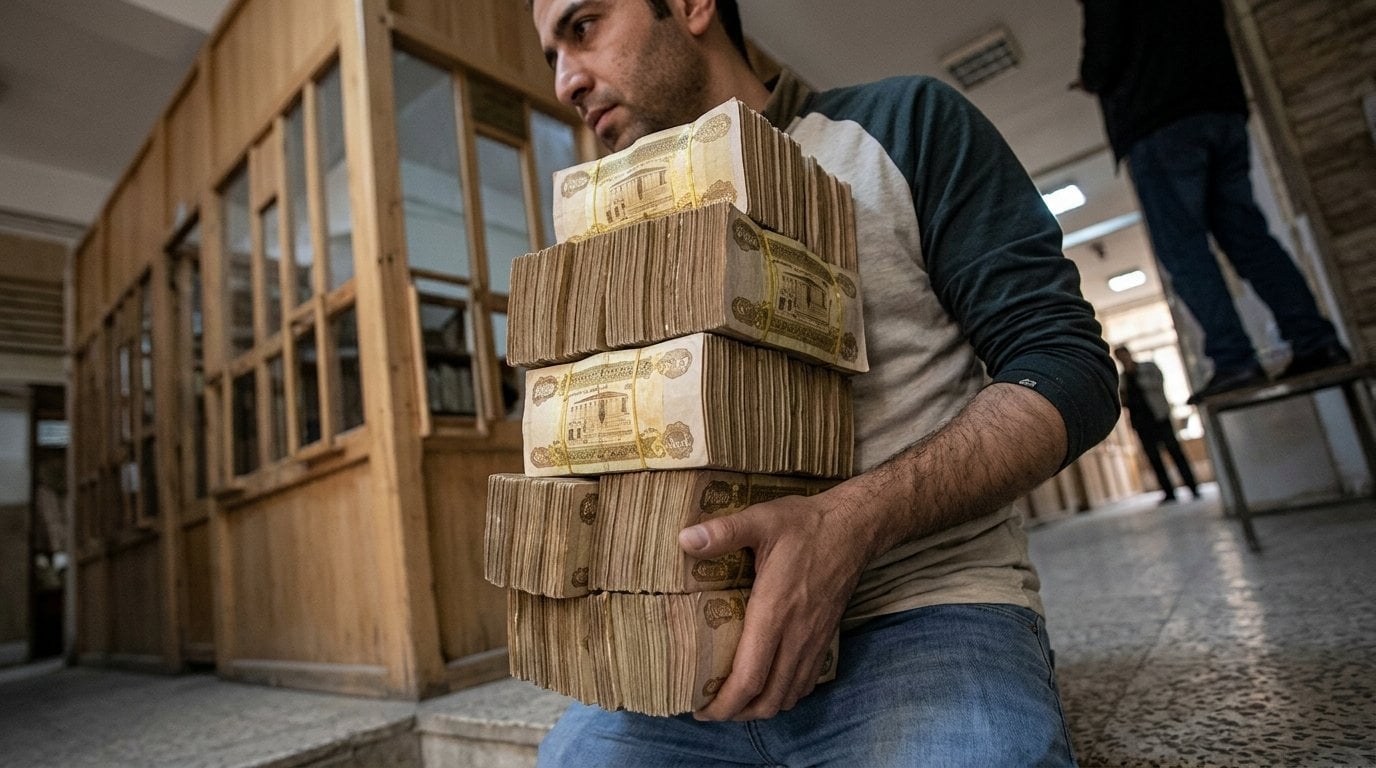
- Currency. All transactions use Iraqi Dinars, or IQD. ATMs accepting foreign cards are available in commercial banks on the East Bank, including the Al-Zuhour district, but cash is required for markets, taxis, and Old City street vendors. Carry clean, uncreased US Dollar bills if you plan to exchange money at local exchange offices.
- Accommodation. Most hotels that cater to visitors are located on the modern East Bank. Options range from mid-scale business hotels along University Street to international-standard properties near the river.
- Getting around. Yellow city taxis are abundant and cheap. A short ride across town typically costs between 3,000 and 6,000 IQD. For the Old City, exploring on foot is essential because cars cannot navigate the narrow alleyways.
- Best time to visit. Spring, from March to May, and autumn, from October to November, offer pleasant daytime temperatures between 20°C and 28°C. Summers are hot, frequently exceeding 45°C, while winters can be damp and chilly.
Gallery