Iraq is one of the most rewarding destinations for photographers, but strict drone bans, military checkpoints, and religious customs require careful etiquette and clear permissions.
Photography and Drone Rules in Iraq: Checkpoints, Etiquette, and Permissions
Iraq is one of the most rewarding destinations in the Middle East for photographers. The country offers layered archaeological ruins, bustling souks, and historic Islamic architecture. However, operating a camera in Iraq requires navigating complex security dynamics, religious customs, and strict legal boundaries.
A casual snapshot at the wrong intersection can lead to hours of questioning by security services. Bringing a drone into the country can result in immediate confiscation at customs or arrest under anti-terrorism laws. Knowing what you can film, where you must put the camera away, and how to approach local residents ensures a smooth journey across both Federal Iraq and the Kurdistan Region.
The drone ban: why civilian drones are prohibited
Civilian drones are completely banned across the entire territory of Iraq. The Iraq Civil Aviation Authority (ICAA) maintains no registration process, no civilian licensing system, and no recreational permit pathway.
This strict stance stems from security history. Between 2014 and 2017, insurgent groups weaponized commercial quadcopters during conflicts in northern and western Iraq. Ongoing regional security threats from armed militias continue to keep Iraqi airspace heavily restricted.
Importing a drone as a tourist is impossible:
- Customs confiscation: Luggage scanners at Baghdad International Airport, Basra International Airport, and Erbil International Airport detect and seize drones on arrival.
- Severe legal exposure: In June 2024, Iraq's Supreme Judicial Council issued directives instructing courts to prosecute unauthorized drone operations under national anti-terrorism statutes, as detailed by Iraq Tourism Guide.
- Kurdistan Region rules: The Kurdistan Regional Government (KRG) follows the federal civilian ban. In March 2026, the KRG Department of Media and Information issued strict directives prohibiting anyone, including social media users, from filming or posting footage of drone strikes, intercepted debris, or military movements.
Leave every drone, regardless of size or weight, at home. Attempting to bring one into the country will disrupt your trip before you exit customs.
Checkpoints and security infrastructure: where not to film
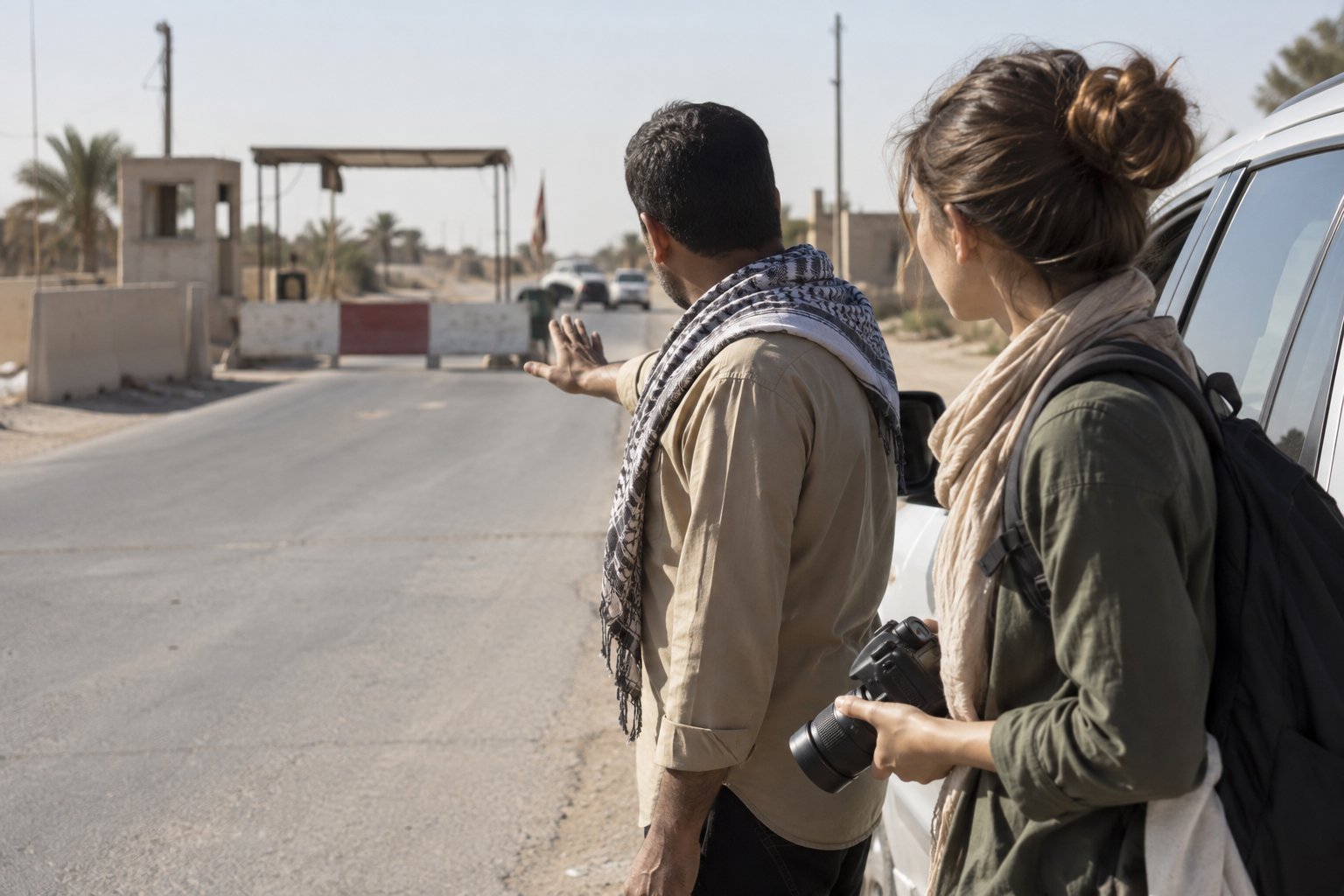
Iraq operates a dense network of security checkpoints. As explained in the Iraq Checkpoints Guide, you will pass dozens of control points on any major highway, operated by the Iraqi Army, Federal Police, local police, the Popular Mobilization Forces (PMF), or Kurdish Peshmerga and Asayish.
Photographing or filming security installations is strictly prohibited. The rule applies across the entire country with zero exceptions:
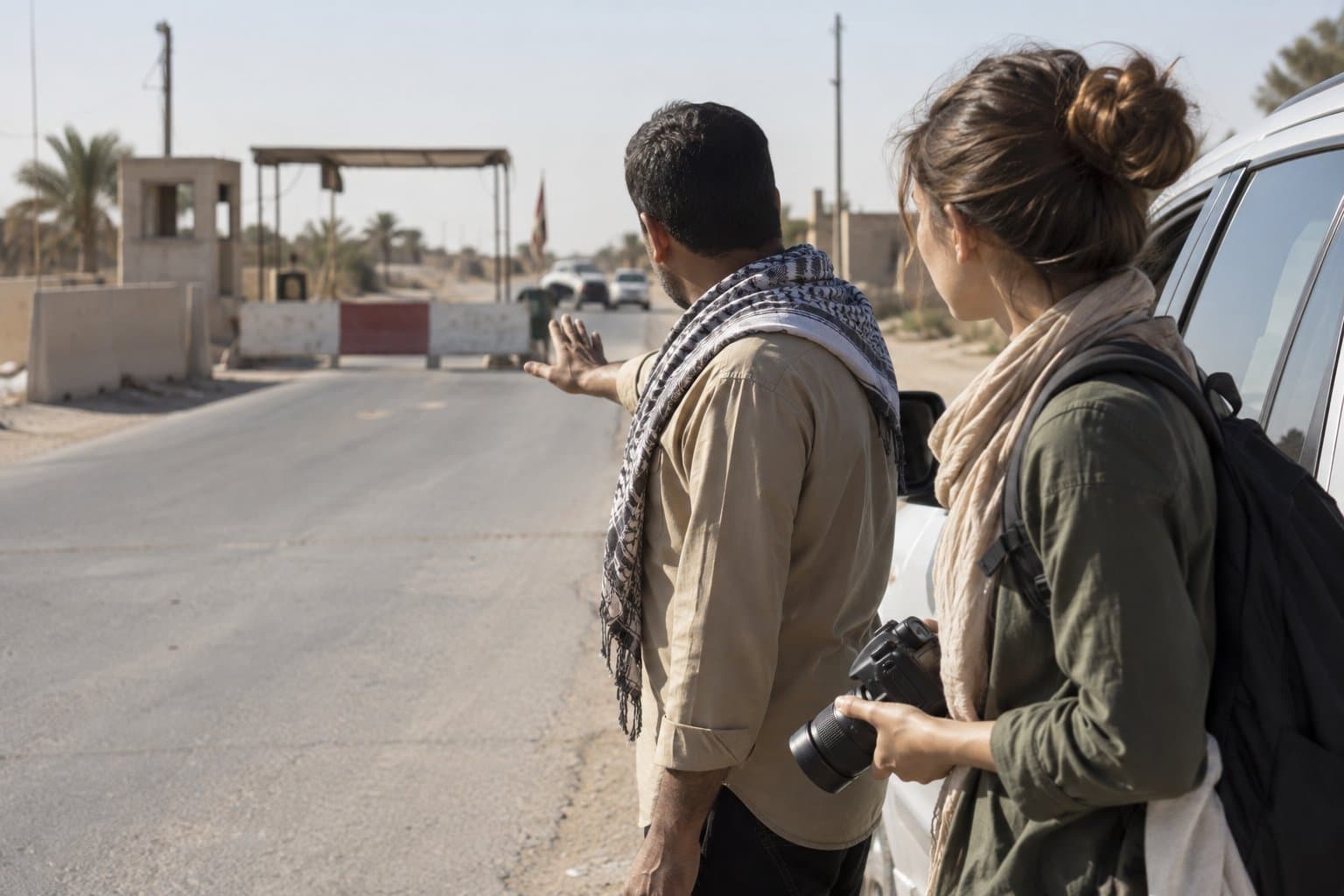
- Military checkpoints: Never photograph concrete chicanes, guard posts, watchtowers, military vehicles, or soldiers. Keep your camera and phone inside your bag or on your lap when approaching a checkpoint.
- Government buildings and embassies: All ministry compounds, municipal offices, court buildings, and diplomatic facilities in Baghdad's International Zone (Green Zone) and provincial capitals are off-limits.
- Strategic infrastructure: Do not photograph bridges, communication towers, dams, oil fields, refineries, power plants, or border crossings.
- Airports and approaches: Terminal exteriors, runway perimeters, and airport access checkpoints strictly forbid photography.
If security officers notice you pointing a lens at a checkpoint or government site, they will pull your vehicle over. Personnel will inspect your phone or memory card, delete the photos, and question your driver or guide. Cooperate immediately, apologize calmly, and delete the images in front of the officer. Never argue or attempt to hide media files.
Visiting holy shrines in Najaf, Karbala, Kadhimiya, and Samarra
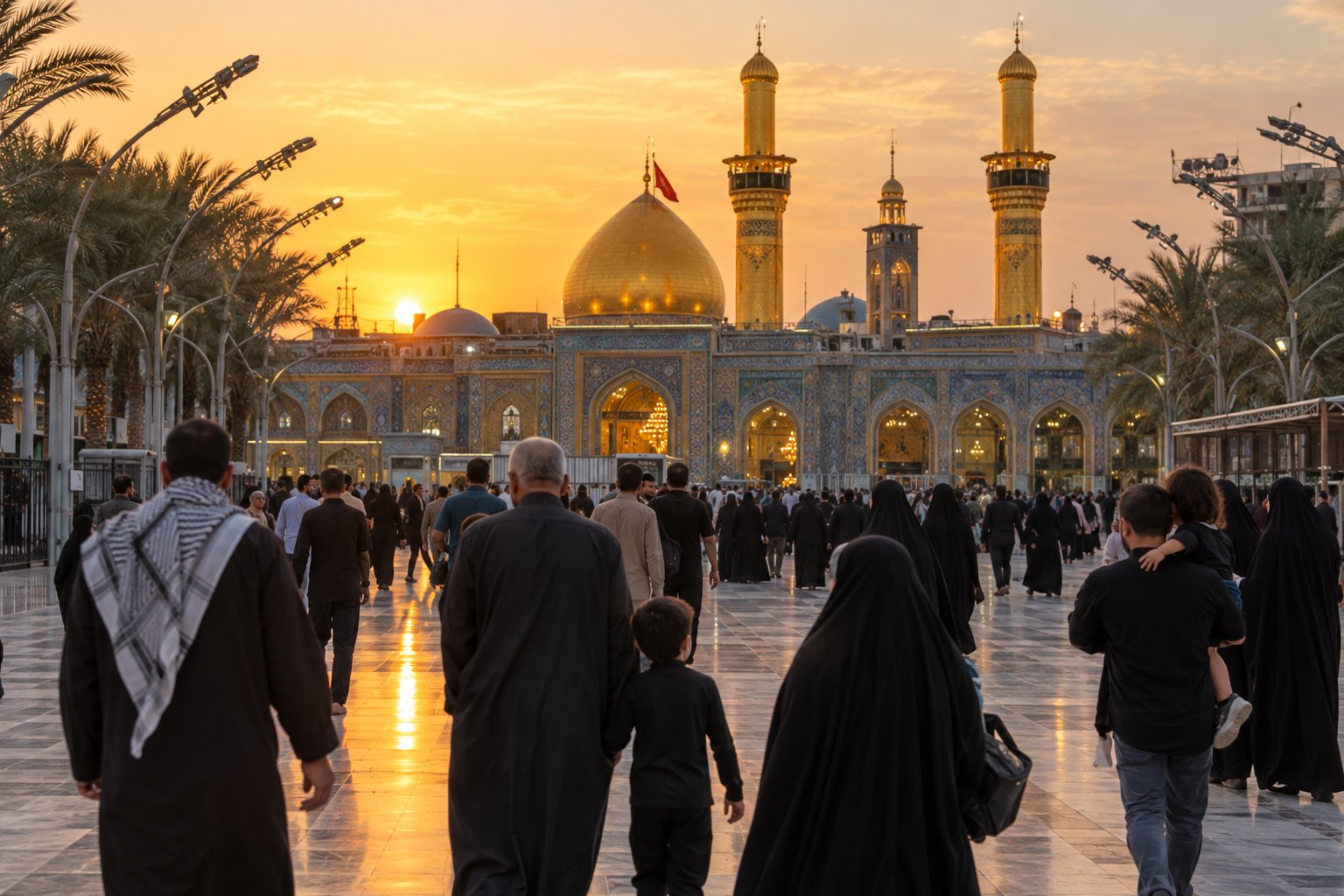
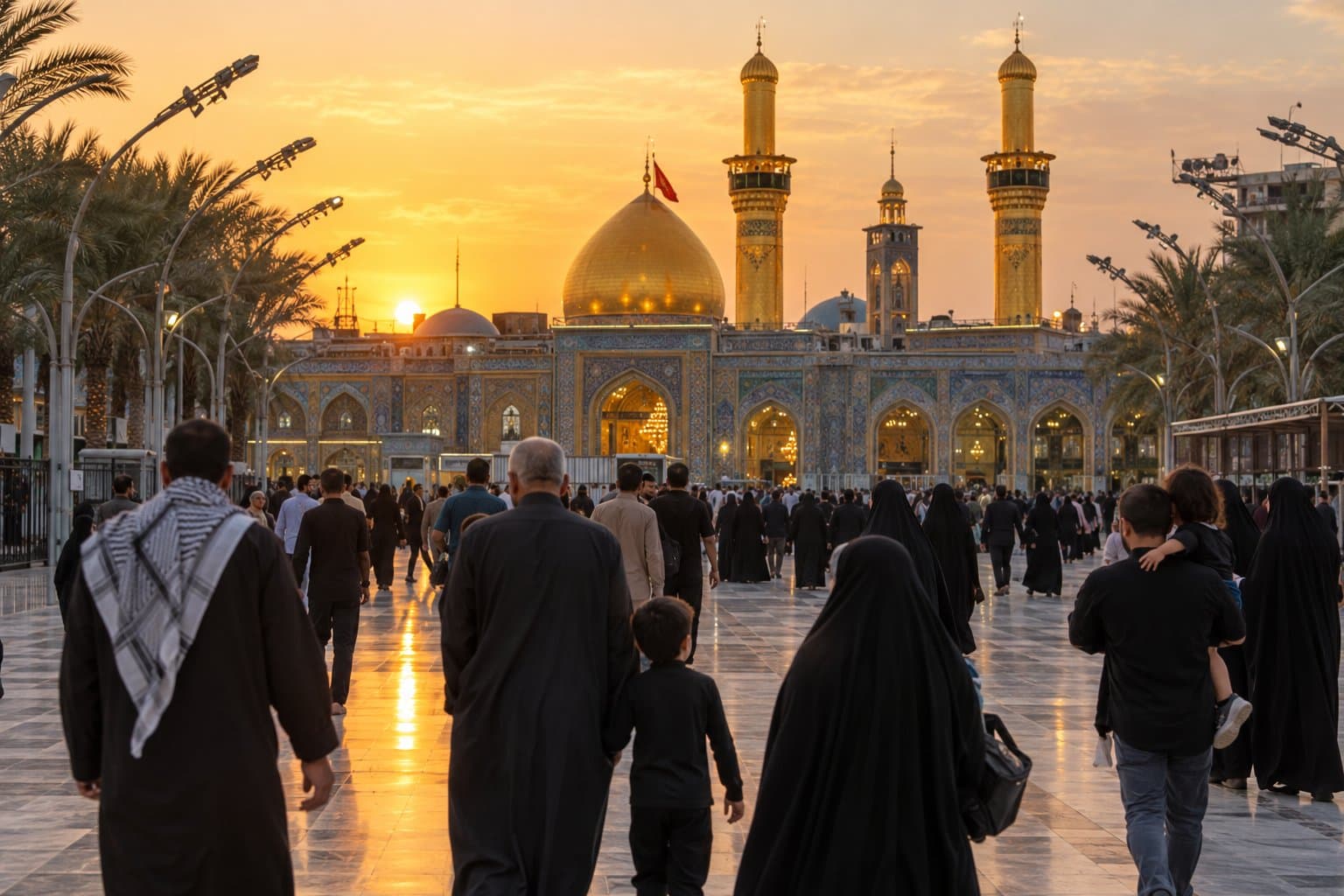
The holy shrine cities of Karbala, Najaf, Kadhimiya in Baghdad, and Samarra receive millions of pilgrims each year. Visiting the shrines of Imam Ali, Imam Hussein, and Al-Abbas offers striking visual scenes, but photography inside religious complexes follows strict regulations.
According to travel reports on Karbala and Najaf, shrine administration authorities enforce the following rules:
- Professional camera bodies: DSLRs, mirrorless cameras with interchangeable lenses, external microphones, gimbals, and tripods are not permitted inside the shrine gates. You must deposit them in free security cloakrooms (kishwan or amanat lockers) outside the perimeter before passing through metal detectors.
- Smartphone photography: Mobile phones are generally allowed inside the large outer courtyards (sahn). Visitors can take respectful photos and short videos of the tilework and golden domes.
- Inner prayer halls (haram): Photography inside the innermost shrine rooms surrounding the tomb enclosures (zarih) is frequently prohibited or heavily restricted. Security attendants holding green feather dusters monitor the crowds and will instruct you to put your phone away.
- Pilgrim sensitivity: Never point cameras directly at people weeping, praying, or participating in intense mourning rituals during Arbaeen and Ashura. Treat the sacred environment as an active place of worship rather than a spectacle.
- Dress requirements: Women must wear a full black abaya and head-covering chador before approaching shrine security checkpoints. Men must wear long trousers and shirts with sleeves.
Street photography etiquette and asking permission
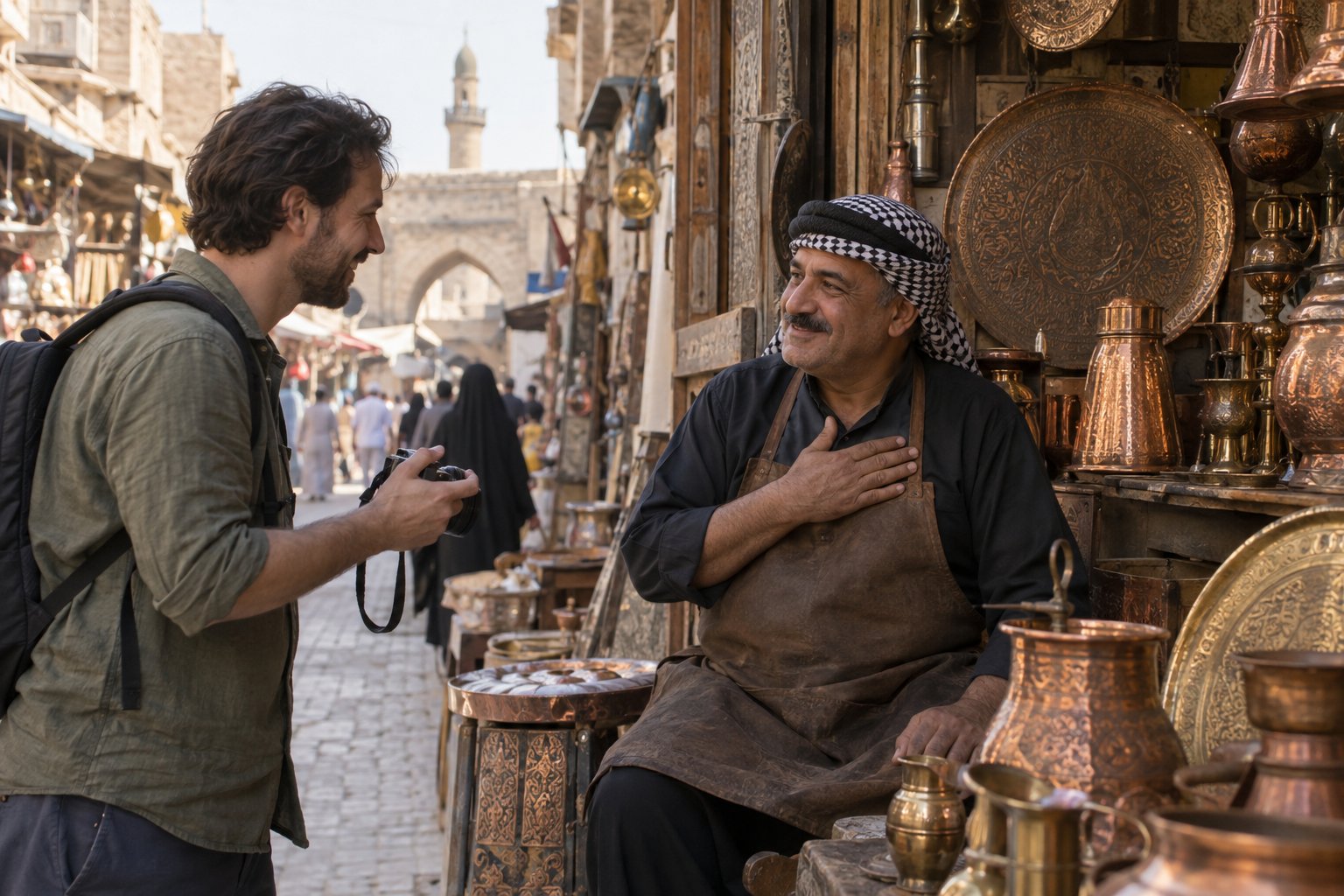
Away from security zones and religious sanctuaries, street photography in Iraq is remarkably welcoming. Iraqis are famous for their hospitality, and many market vendors, shopkeepers, and artisans will gladly welcome your interest.
To photograph people respectfully, follow these cultural guidelines:
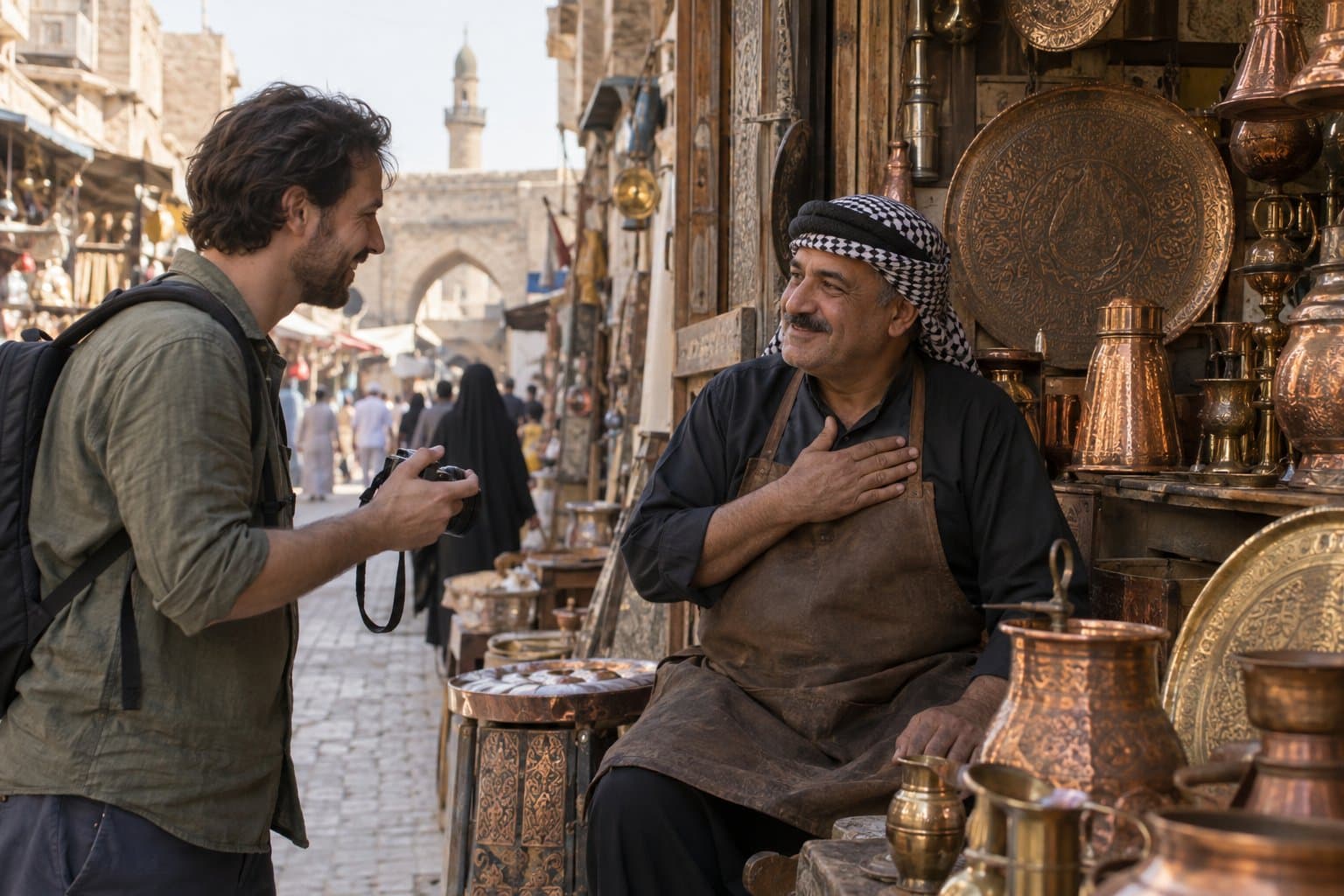
- Always ask before shooting portraits: Make eye contact and ask for permission before raising your camera. The standard phrase in Iraqi Arabic is "Mumkin soura?" (May I take a picture?). A warm smile accompanied by a hand placed gently over your heart goes a long way.
- Photographing women and families: Conservative social norms apply across most Iraqi governorates. Always ask permission before photographing women. In traditional settings, direct your request to the father, husband, or brother. If anyone declines, lower your camera immediately without hesitation.
- Marketplaces and souks: Historic bazaars like Baghdad's Al-Mutanabbi Street, the Shorja market, the Grand Bazaar of Erbil, and the rebuilt alleys of Old Mosul are open to street photography. Many merchants will invite you for a small glass of sweet tea (istikan) before or after you take their photo.
- Thank your subjects: Learn a few polite phrases to show appreciation. Use "Shukran" (Thank you) or the classic Iraqi expression "Mamnoon" (I am grateful).
Archaeological sites and historical monuments
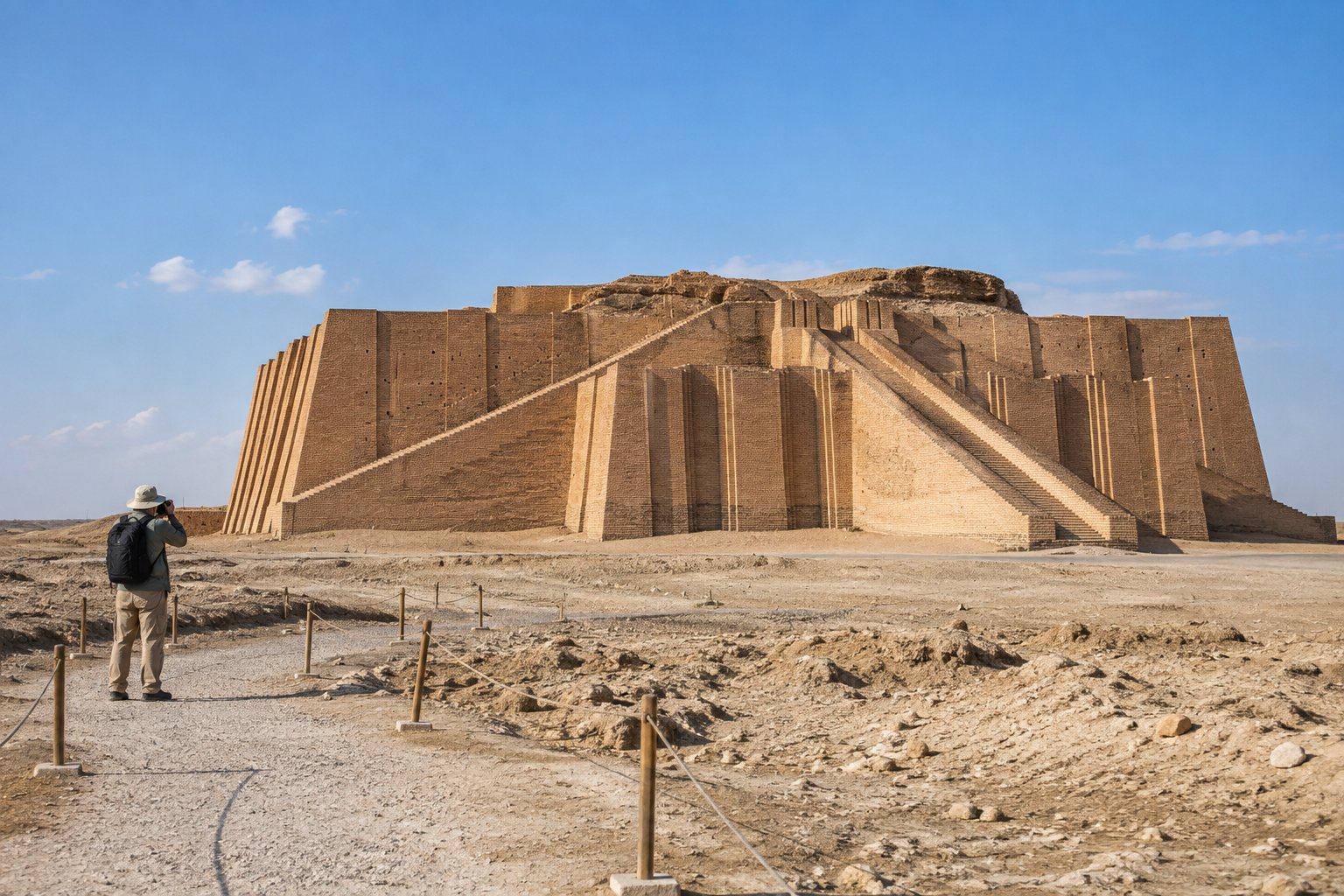
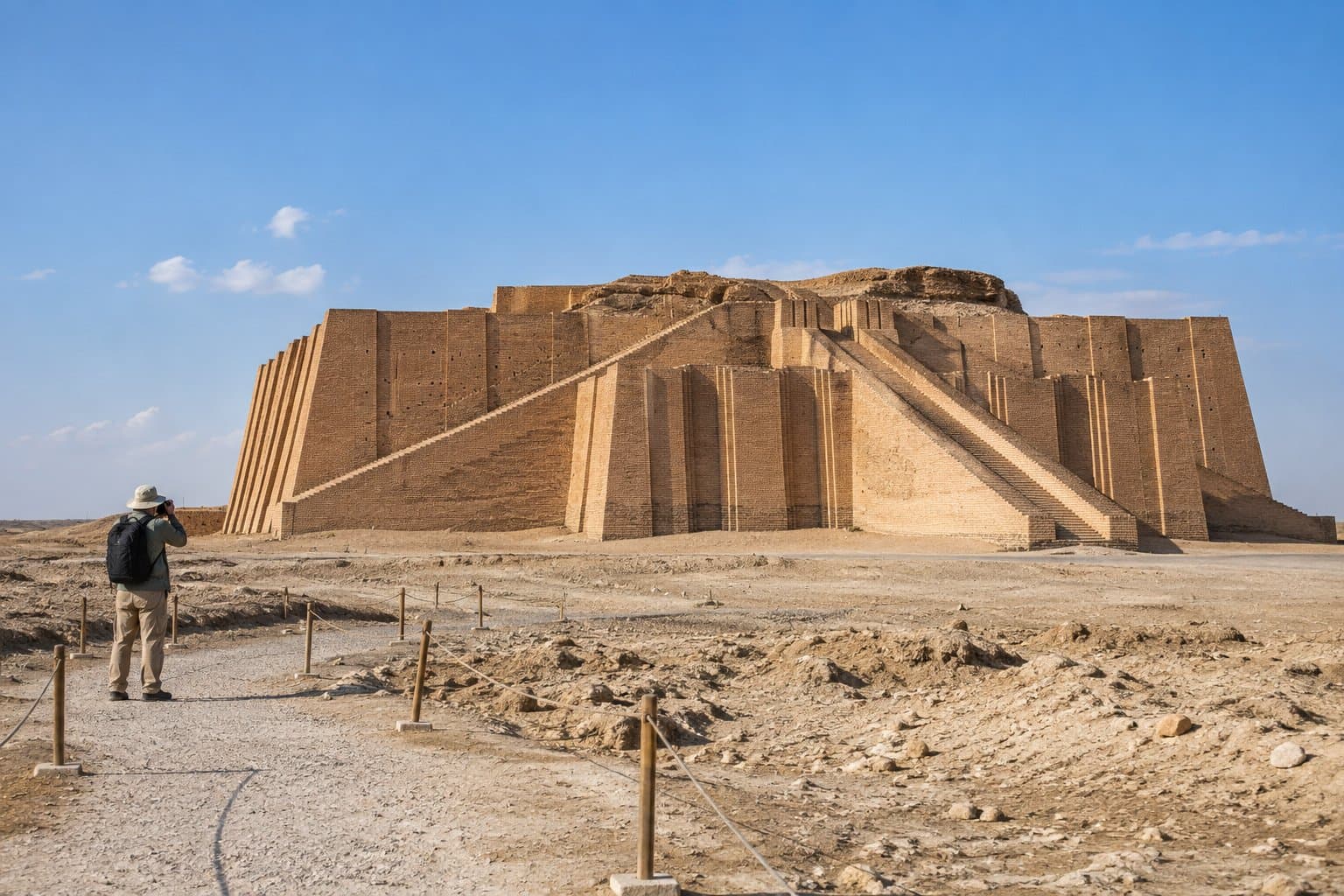
Iraq's ancient Mesopotamian sites, including Babylon, the Ziggurat of Ur, Hatra, Ctesiphon, and the Iraq Museum in Baghdad, are open to tourist photography, as documented by travel guides on Against the Compass.
Keep these practical rules in mind when exploring historical landmarks:
- Handheld cameras and phones: Regular consumer cameras and phones are permitted at all ticketed heritage sites. Standard visitor tickets cover non-commercial photography.
- Tripods and professional gear: Carrying heavy tripods, studio lights, or commercial filming gear into ancient ruins or the National Museum can trigger security inspections. Commercial filming requires formal accreditation and permits from the State Board of Antiquities and Heritage (SBAH).
- Respect the artifacts: Under Antiquities Law No. 55 of 2002, removing, moving, or pocketing any ancient fragment, pottery sherd, or brick from an archaeological site is a severe criminal offense. Never rest heavy camera equipment against ancient mudbrick walls.
Practical advice for camera gear and bag handling
How you pack and carry your equipment determines how much attention you attract on the road:
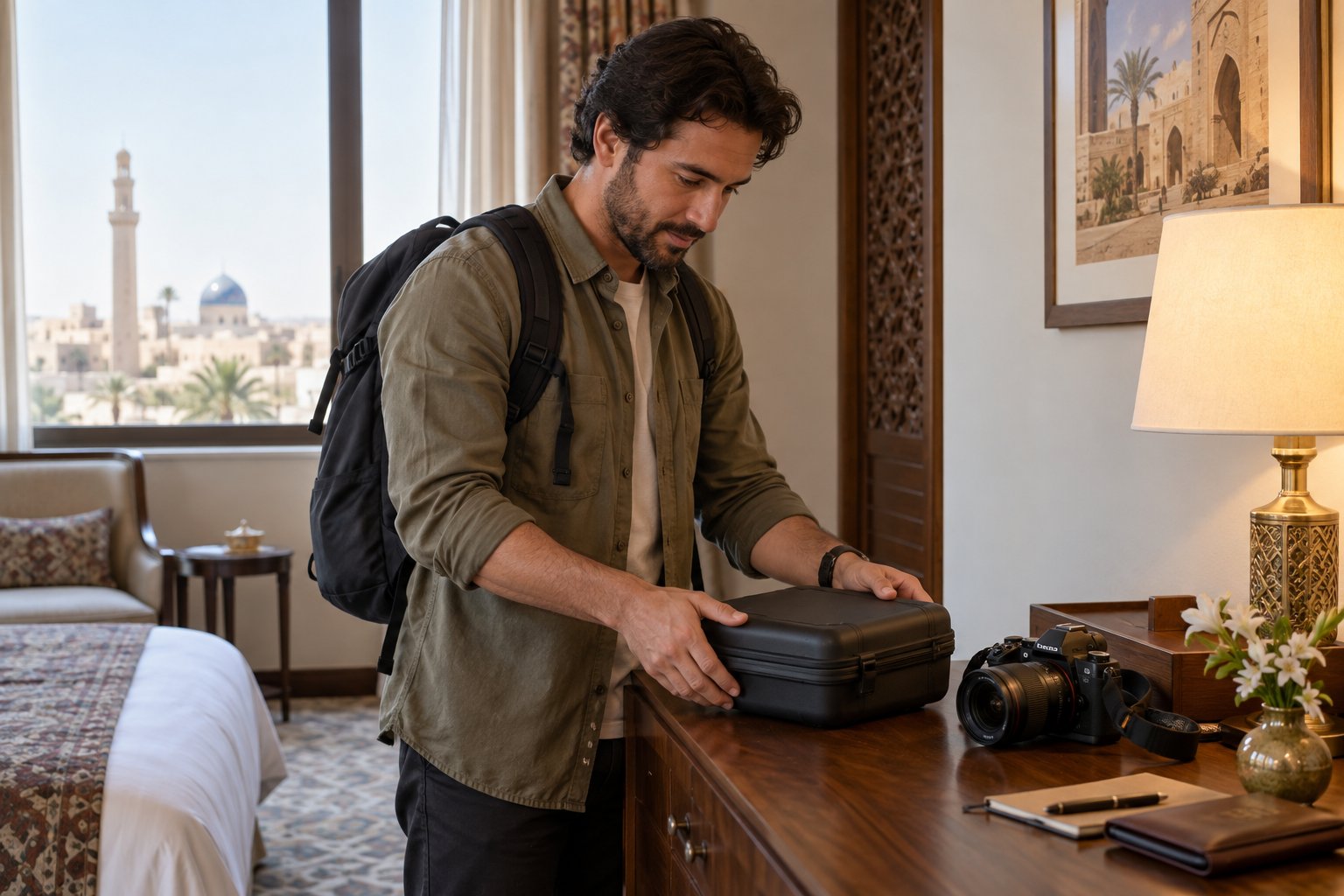
- Choose discreet bags: Carry your gear in a standard tourist daypack or casual shoulder bag. Avoid tactical backpacks, camouflage patterns, and heavy military-style pouches that look like press or combat equipment.
- Use compact lenses: Long telephoto lenses and oversized zoom barrels draw unwanted attention at road stops and market squares. Prime lenses (35mm or 50mm) or compact all-in-one zoom lenses allow you to blend into crowds naturally.
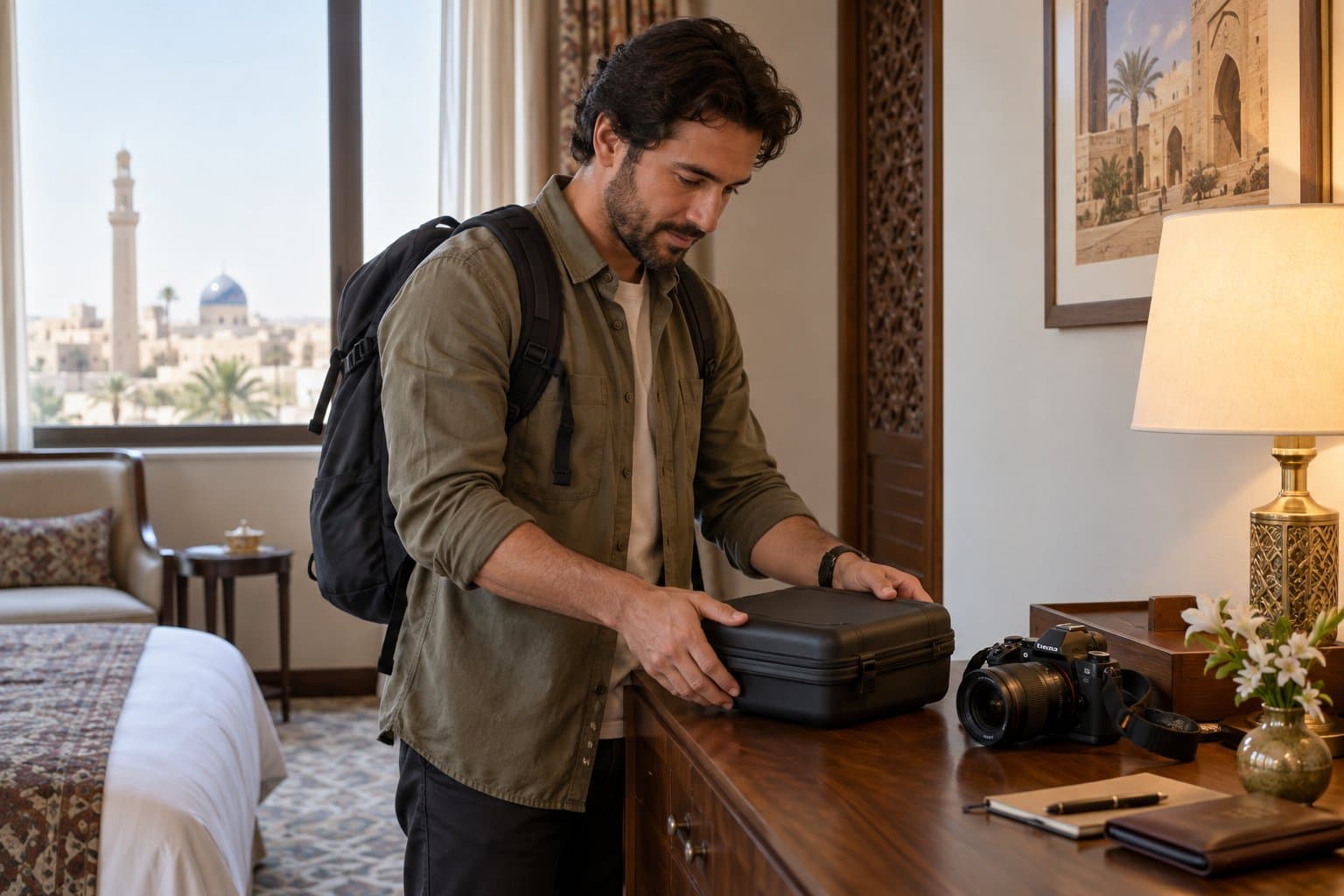
- Back up your memory cards daily: Carry multiple SD cards and back up your daily shots to a secure hard drive or cloud storage each evening at your hotel. If a security official insists on formatting a memory card at a checkpoint, you will only lose that single day's work.
- Keep your passport and visa accessible: When stopping at checkpoints between provinces, security officers want to verify your tourist status. Present your passport and printed visa promptly. A verified tourist itinerary reassures officers that your equipment is for holiday memories.
Sources
- Dronesgator, Drone Laws in Iraq: Total Civilian Ban, Penalties, and What Tourists Need to Know, https://dronesgator.com/drone-laws-in-iraq, accessed March 2026.
- Iraq Tourism Guide, Iraq Laws for Tourists: Rules, Customs & Emergencies, https://www.iraqtourism.org/iraq-laws-for-tourists/, accessed March 2026.
- Iraq Tourism Guide, Iraq Checkpoints: What to Expect and How to Behave, https://www.iraqtourism.org/iraq-checkpoints/, accessed March 2026.
- WhirledAway, Visiting Iraq's Holy Shrine cities: Karbala and Najaf, https://whirled-away.com/visit-karbala-najaf/, accessed March 2026.
- Against the Compass, A guide to traveling in Iraq in 2026, https://againstthecompass.com/en/travel-iraq-federal/, accessed March 2026.
Gallery
❓Frequently Asked Questions
Here are answers to frequently asked questions about the content above
No. Civilian drones are completely banned throughout Federal Iraq and the Kurdistan Region. Customs officials will confiscate any drone found in your luggage at the airport, and flying an unauthorized drone can lead to criminal charges under anti-terrorism laws.
No. Photographing or filming checkpoints, military personnel, police vehicles, watchtowers, and barriers is strictly illegal. Keep cameras and smartphones stored inside your bag whenever your vehicle approaches a control point.
No. Professional cameras with interchangeable lenses, tripods, and gimbals are not allowed inside the holy shrines. You must leave them at free security cloakrooms (amanat lockers) outside the gates. Mobile phone photography is usually permitted in the outer courtyards.
You can ask 'Mumkin soura?' (May I take a photo?). If the person agrees, thank them after taking the picture with 'Shukran' or the traditional Iraqi phrase 'Mamnoon'.
The officer will stop you, inspect your device, and require you to delete the images in front of them. Cooperate calmly, apologize for the misunderstanding, and delete the requested files immediately without arguing.
Handheld photography with phones and compact cameras is welcomed with standard admission. Using large professional tripods or commercial lighting rigs may require special filming authorization from the State Board of Antiquities and Heritage.