Ramadan in Iraq brings a major shift in daily schedules, turning daytime streets quiet while markets, cafes, and suhoor gatherings come alive late into the night. This guide outlines expected 2027 dates, legal fasting rules, regional variations, and essential etiquette for visitors.
Expected dates for Ramadan 2027 in Iraq
Astronomical calculations indicate that Ramadan 1448 AH will begin on Monday, February 8, 2027, and conclude on Tuesday, March 9, 2027, with Eid al-Fitr expected on Wednesday, March 10, 2027, according to astronomical projections published by Hilal Vision and regional reporting by Khaberni.
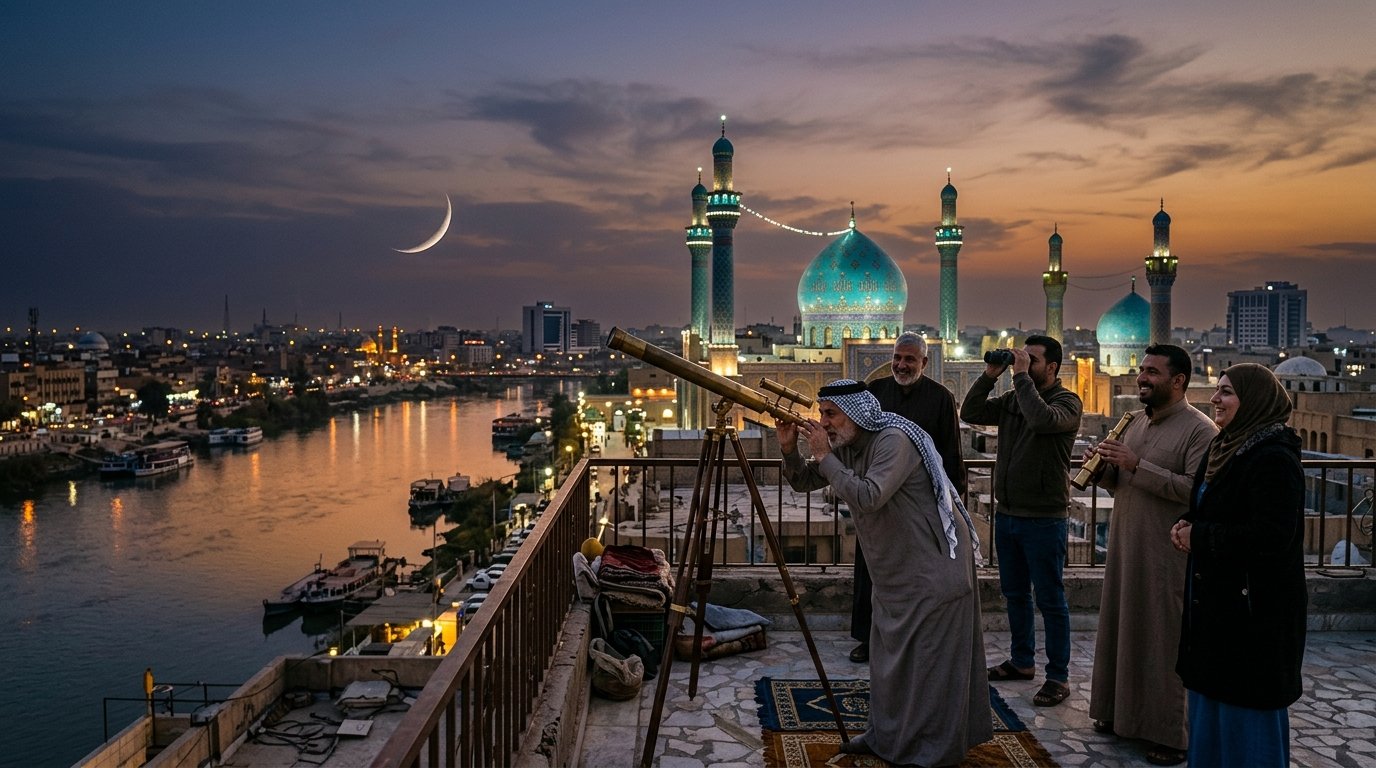
In Iraq, the official start of the holy month is declared after religious crescent-sighting committees convene at sunset on the 29th of Sha'ban, corresponding to Sunday, February 7, 2027. Iraq has two main religious bodies that oversee the calendar: the Sunni Endowment Office (Diwan al-Waqf al-Sunni) and the Supreme Religious Authority in Najaf. Depending on local optical conditions and the sighting methodologies used by each authority, the start day can align on Monday, February 8, 2027, or fall on Tuesday, February 9, 2027, for different communities.
Daytime fasting rules and legal restrictions
Iraq enforces statutory regulations regarding public conduct during fasting hours. Under administrative directives backed by the Iraqi Penal Code, consuming food, drinking liquids, chewing gum, or smoking in public spaces during daylight is strictly prohibited in Federal Iraq, as noted in travel advisories by the UK Foreign, Commonwealth & Development Office.
These daytime restrictions apply from dawn (Fajr prayer) until sunset (Maghrib prayer). Travelers who are not fasting must observe the following practical boundaries:
- Private consumption only. Non-fasting visitors should eat snacks, drink water, and take oral medications inside private hotel rooms, enclosed vehicles out of plain view, or designated private areas.
- Commercial food closures. Street-level restaurants, juice stands, snack kiosks, and cafes close their dining rooms during the day.
- Licensed hotel dining. Four- and five-star international hotels in Baghdad, Basra, and Najaf operate curtained or screened dining rooms for registered guests and travelers.
- Nationwide alcohol ban. Liquor stores, bars, and public venues selling alcohol close completely across Federal Iraq throughout the entire month of Ramadan.
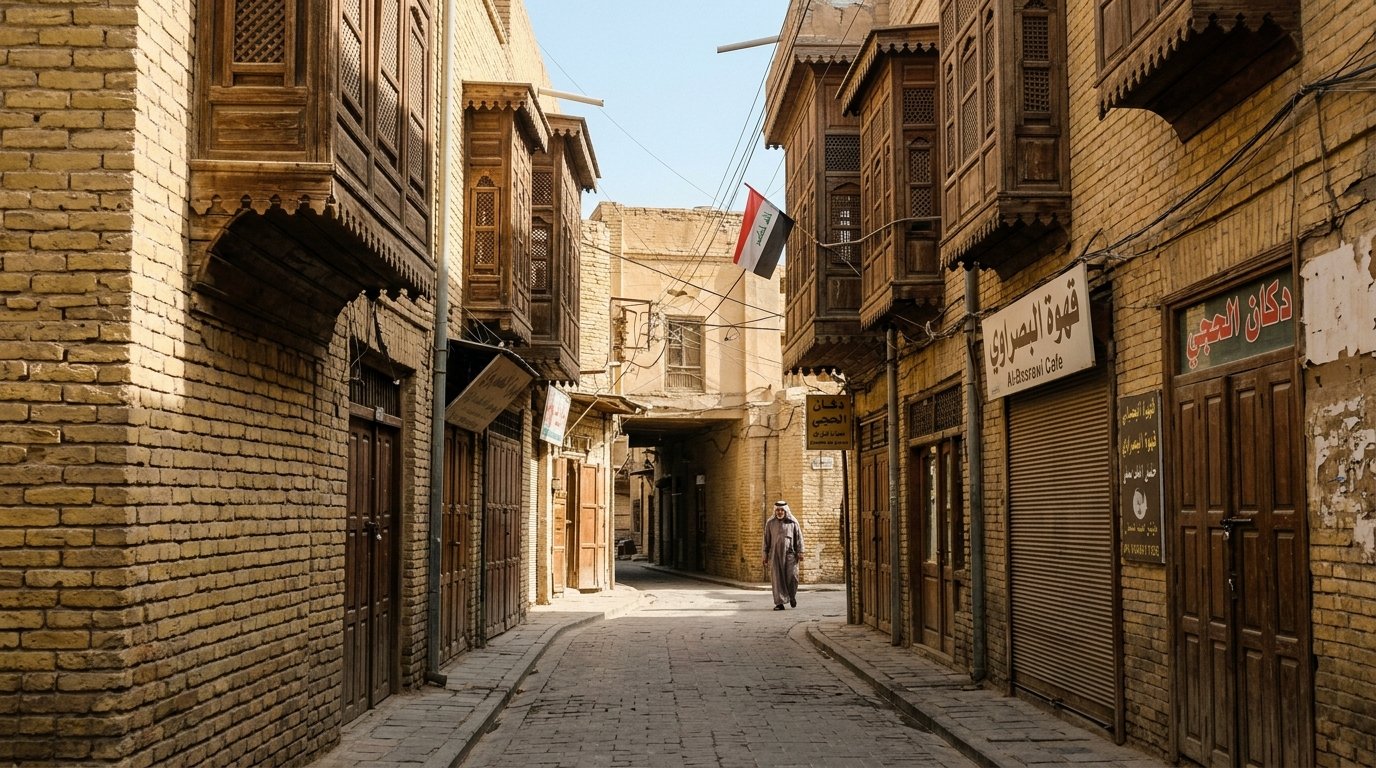
Regional differences between Federal Iraq and Kurdistan
The atmosphere and daily enforcement of fasting rules differ across geographic regions:
Federal Iraq (Baghdad, central, and southern governorates)
In central and southern cities like Baghdad, Basra, Hillah, and Nasiriyah, daylight fasting rules are strictly followed in public areas. Holy pilgrimage cities like Najaf and Karbala adhere to even tighter religious standards. In these cities, conservative dress is mandatory, with women wearing loose full-length black abayas and head coverings, and public daytime eating is completely absent from city streets.
Kurdistan Region of Iraq (Erbil, Sulaymaniyah, Duhok)
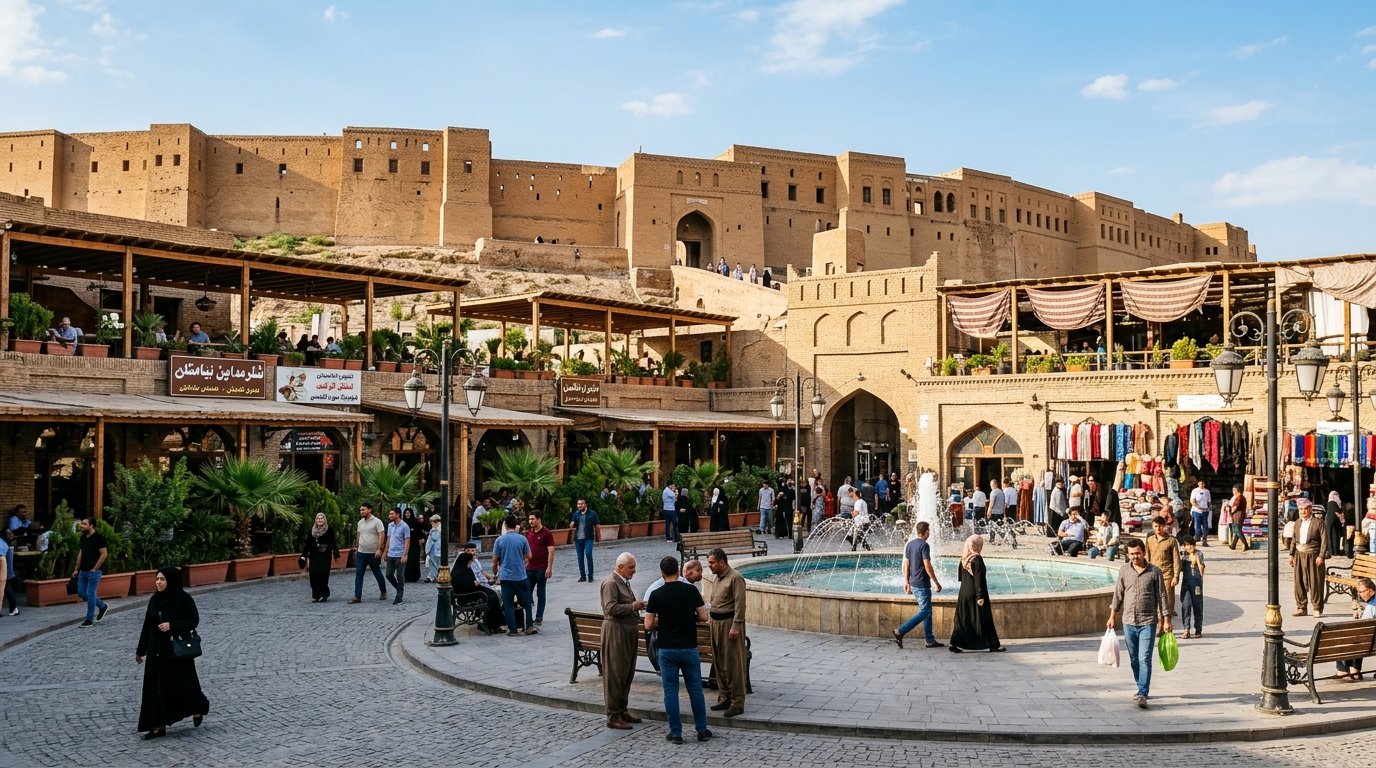
The autonomous Kurdistan Region follows a more relaxed administrative approach. While public courtesy toward fasting residents remains standard, several food outlets operate during the day. In Christian-majority areas such as Ankawa in Erbil, as well as selected food courts in modern shopping malls, restaurants and cafes remain open to diners with tinted windows or discreet partitions.
Evening dining and iftar traditions
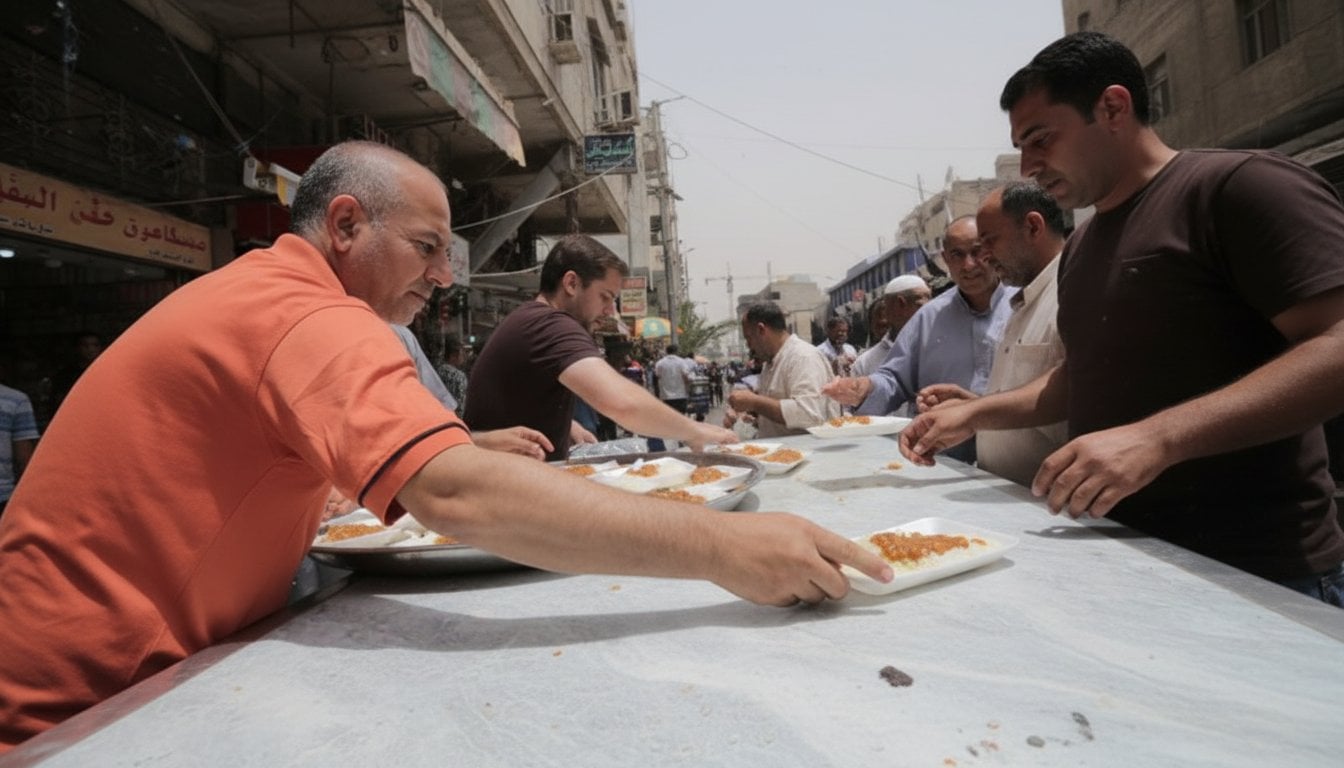
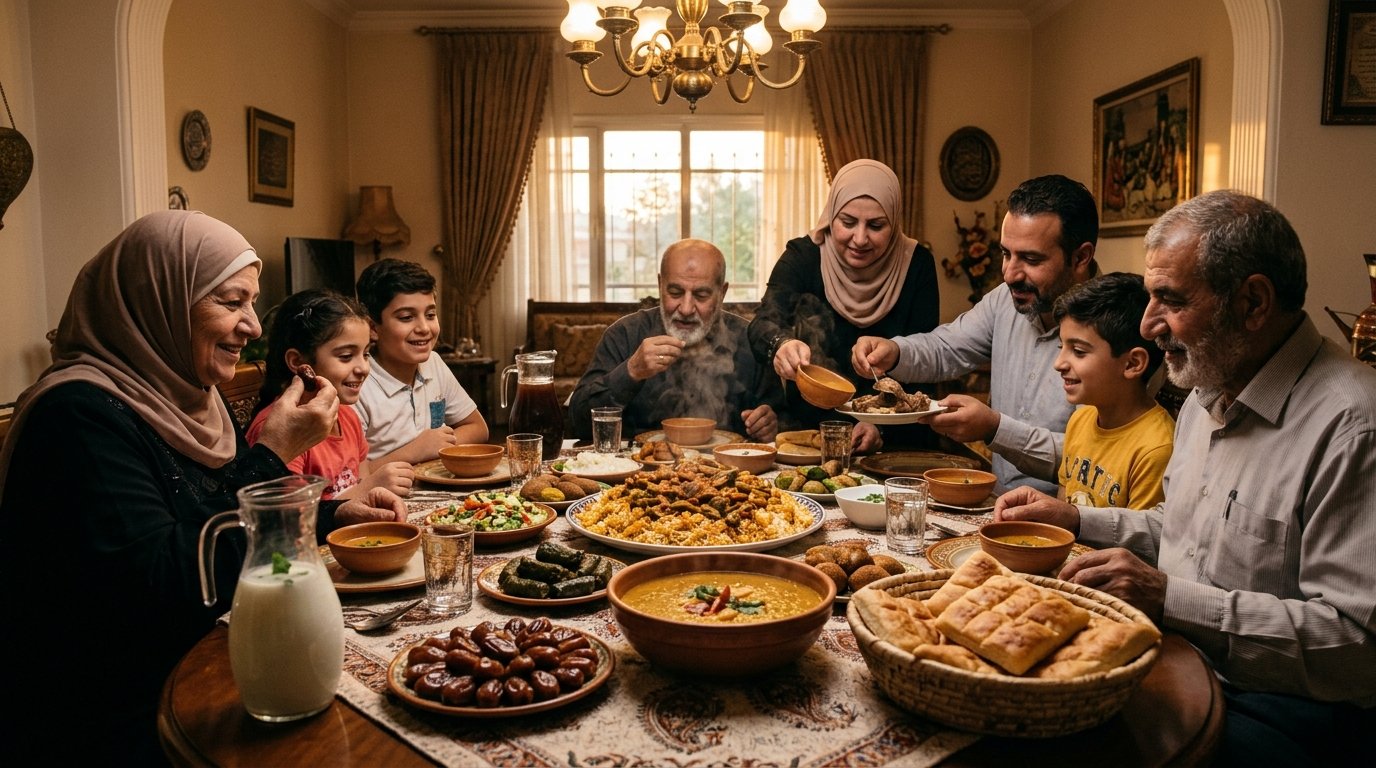
At sunset, the traditional firing of the iftar cannon and the call to prayer signal the end of the daily fast. Families gather to break their fast with soft Iraqi dates, water, and warm bowls of lentil soup (Shorbat Adas), followed by diluted yogurt (laban) and fresh samoon bread, detailed in documented Iraqi culinary traditions.
Main courses follow shortly after, often centering on slow-cooked dishes such as:
- Margat bamia. Okra stew cooked with tender lamb cubes, garlic, and rich tomato sauce, served over aromatic amber rice (Timman Anbar).
- Fasolia yabsa. White kidney bean stew with lamb and tomato broth.
- Masgouf. Whole carp split lengthwise, seasoned with tamarind and salt, and roasted vertically beside open wood fires along the Tigris River in Baghdad.
Between 8:30 PM and 10:00 PM, residents finish family meals and head out to public squares, souks, and illuminated riverfronts.
Suhoor street life, Mahibis tournaments, and the Musaharati
From late evening until dawn, Iraqi cities shift into an active nocturnal schedule. Markets, teahouses, and parks stay open past midnight, accommodating visitors and locals until the pre-dawn suhoor meal, as documented in historical accounts of suhur customs.
The game of Mahibis
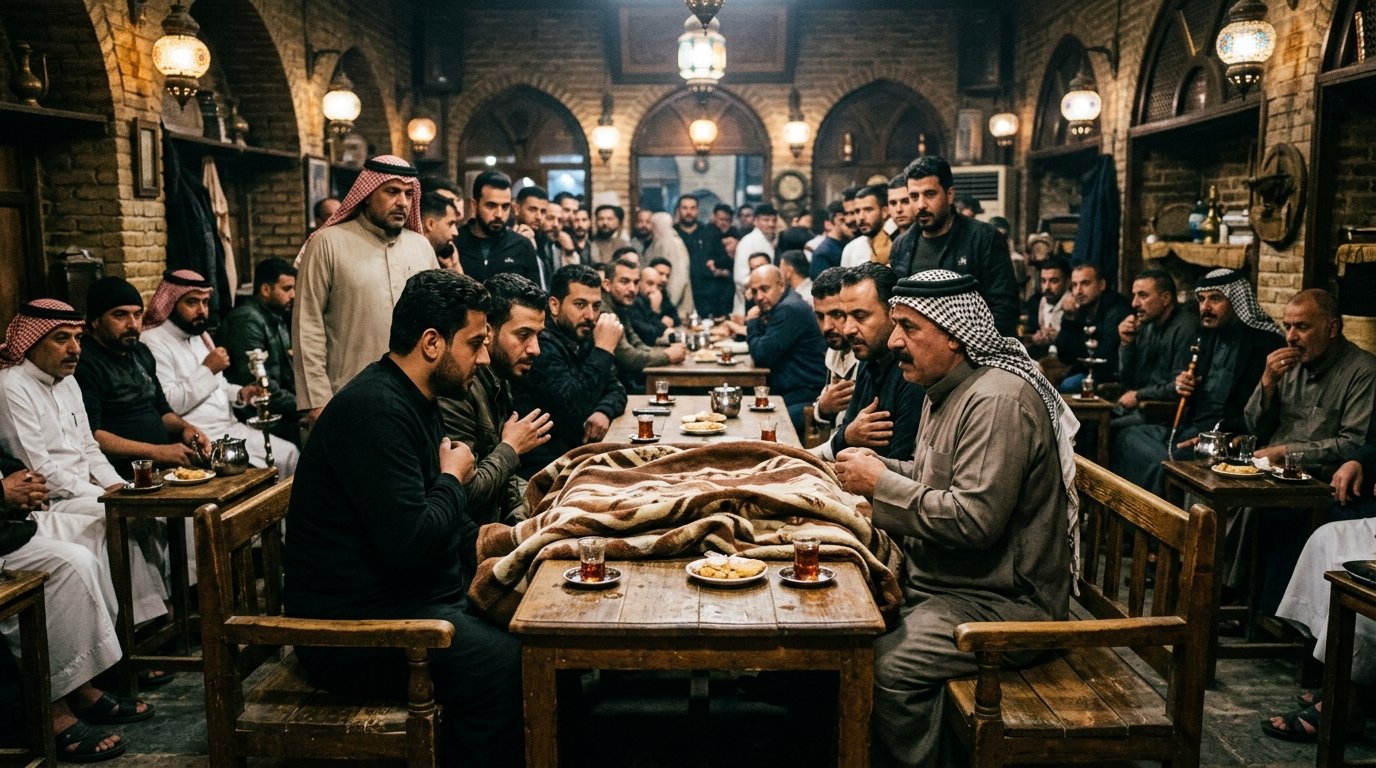
Mahibis (or Mheibes) is a traditional ring-hiding game played between rival neighborhoods and governorates, described in detail on Wikipedia's Mheibes record. Two teams of dozens of players sit facing each other. One team covers its hands beneath a large blanket, secretly passing a silver ring (mihbes) to a single player. The opposing team captain, known as the Areef, studies the posture, pulse, sweat, and micro-expressions of each opponent, calling out eliminations until finding the ring. Tournaments draw large crowds to public halls and cafes in Baghdad districts like Kadhimiya, Adhamiya, and Karrada.
The Musaharati (Abu Tabool)
In historic residential quarters, the Musaharati, locally known as Abu Tabool, walks through narrow alleyways between 2:30 AM and 4:00 AM. Beating a handheld drum and reciting traditional chants, he wakes families to prepare their pre-dawn suhoor before the call to Fajr prayer.
Suhoor dining and sweets
Late-night dining stalls serve hearty pre-dawn food:
- Qaymar and kahi. Thick water buffalo clotted cream paired with warm flaky pastry and date syrup or honey.
- Grilled kebabs. Fresh minced lamb skewers served with grilled tomatoes and hot flatbread.
- Traditional sweets. Confectioneries sell fresh zlabia (crisp fried spirals soaked in syrup), baqlawa, and Daheen (a dense date-caramel and ghee sweet specialty from Najaf).
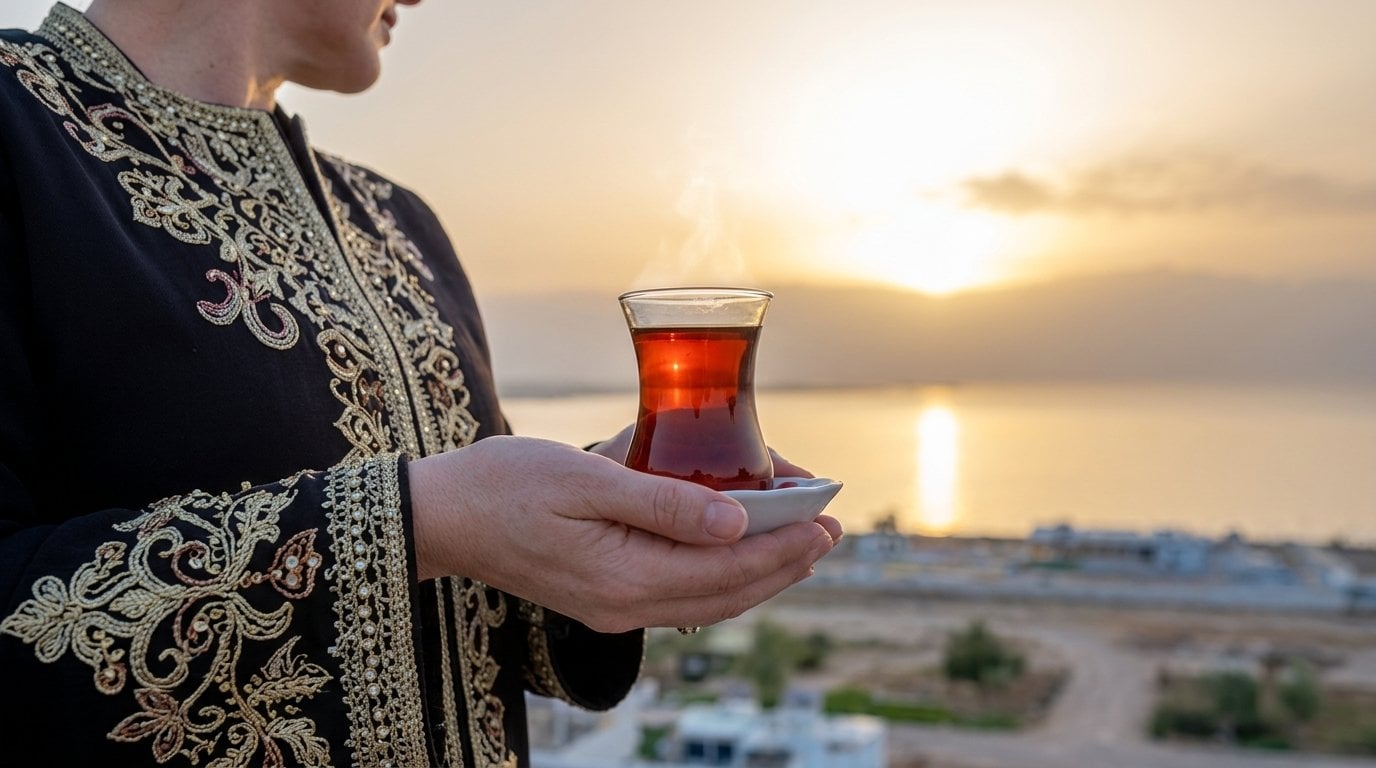
- Ramadan drinks. Stalls pour glasses of iced Sharbat Zabib (spiced dark raisin juice from Mosul) and tamarind juice alongside cups of strong cardamom black tea (Chai).
Practical tips and traveler etiquette
Navigating Iraq during Ramadan requires adjusting your itinerary to the local rhythm:
- Adjust for shorter business hours. Government ministries, banks, consulates, and historical museums operate on shortened daytime schedules, often opening at 9:00 AM and closing by 1:30 PM, as reflected in the Iraqi public holiday and official working guidelines. Plan museum visits and paperwork early in the day.
- Avoid pre-sunset transit. Road traffic across Baghdad and other major cities peaks heavily 30 to 60 minutes before sunset as drivers rush home for iftar. Arrange to be at your destination before this traffic surge.
- Dress modestly. Keep shoulders, upper arms, and knees covered in all public spaces. In religious centers and shrine cities, women must wear full-length abayas and headscarves.
- Learn basic greetings. Greet locals with "Ramadan Mubarak" (Blessed Ramadan) or "Ramadan Kareem" (Generous Ramadan).
- Accept hospitality. If an Iraqi host or shopkeeper invites you to share dates, tea, or an iftar meal after sunset, accepting the gesture is considered polite and welcomed.
Sources
- When Does Ramadan 2027 Start? Crescent Moon Forecast for 1448 AH - Hilal Vision. Accessed September 2026.
- Date of Ramadan 2027 and the First Day of Eid al-Fitr Astronomically - Khaberni. Accessed September 2026.
- Iraq Travel Advice: Local Laws and Customs - UK Foreign, Commonwealth & Development Office (FCDO). Accessed September 2026.
- Mheibes - Wikipedia. Accessed September 2026.
- Suhur - Wikipedia. Accessed September 2026.
- Iraqi Cuisine - Wikipedia. Accessed September 2026.
- Public Holidays in Iraq - Wikipedia. Accessed September 2026.
- Culture of Iraq - Wikipedia. Accessed September 2026.
❓Frequently Asked Questions
Here are answers to frequently asked questions about the content above
Ramadan 2027 in Iraq is projected to begin on Monday, February 8, 2027, and end on Tuesday, March 9, 2027, with Eid al-Fitr expected on Wednesday, March 10, 2027. Official start dates are confirmed by Sunni and Shia crescent-sighting committees on the evening of February 7, 2027.
Eating, drinking, or smoking publicly during daytime hours is prohibited across Federal Iraq. Non-fasting travelers should consume food, water, and medication inside private hotel rooms or screened hotel dining facilities.
Standard street restaurants and cafes remain closed until sunset. Only licensed dining rooms in four- and five-star hotels and select airport terminals serve meals to non-fasting guests behind discreet curtains or screens.
The Kurdistan Region allows greater dining flexibility during Ramadan than Federal Iraq. While public courtesy is expected, several cafes and restaurants in non-Muslim neighborhoods like Ankawa in Erbil and inside modern shopping malls stay open during the day.
Mahibis is a traditional team bluffing game played during Ramadan nights. One team conceals a ring in a member's closed hand under a blanket, and the opposing captain attempts to locate it by analyzing players' expressions and body language.
The best time for museum visits and historical sites is early morning, between 8:30 AM and 12:30 PM. Travelers should avoid road travel in the hour before sunset due to heavy pre-iftar traffic congestion.