Every Friday morning, Baghdad gathers along the historic stone pavement of Al-Mutanabbi Street for its weekly book market. From dawn sidewalk stalls to hot cardamom tea at Shabandar Cafe, here is what to experience in the city's literary core.
What happens on Al-Mutanabbi Street on Friday mornings?
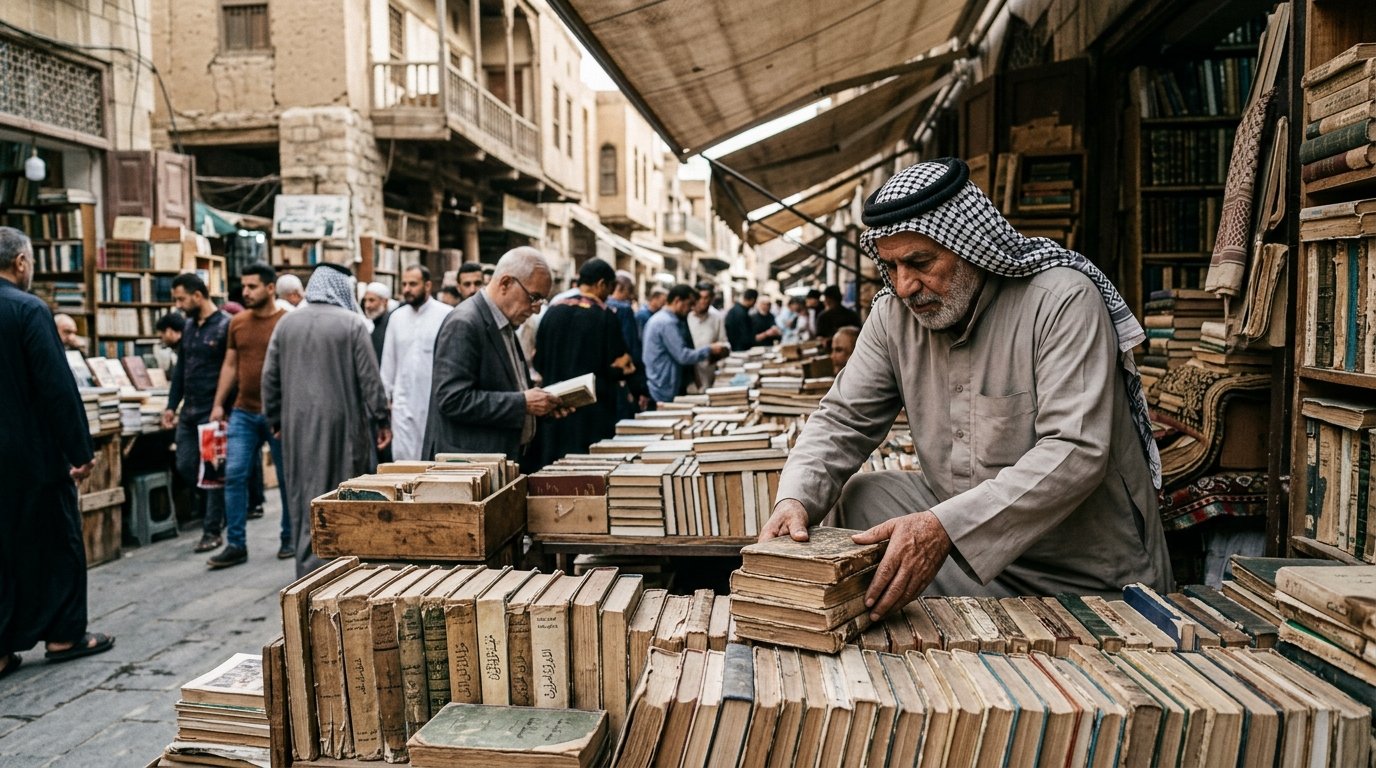
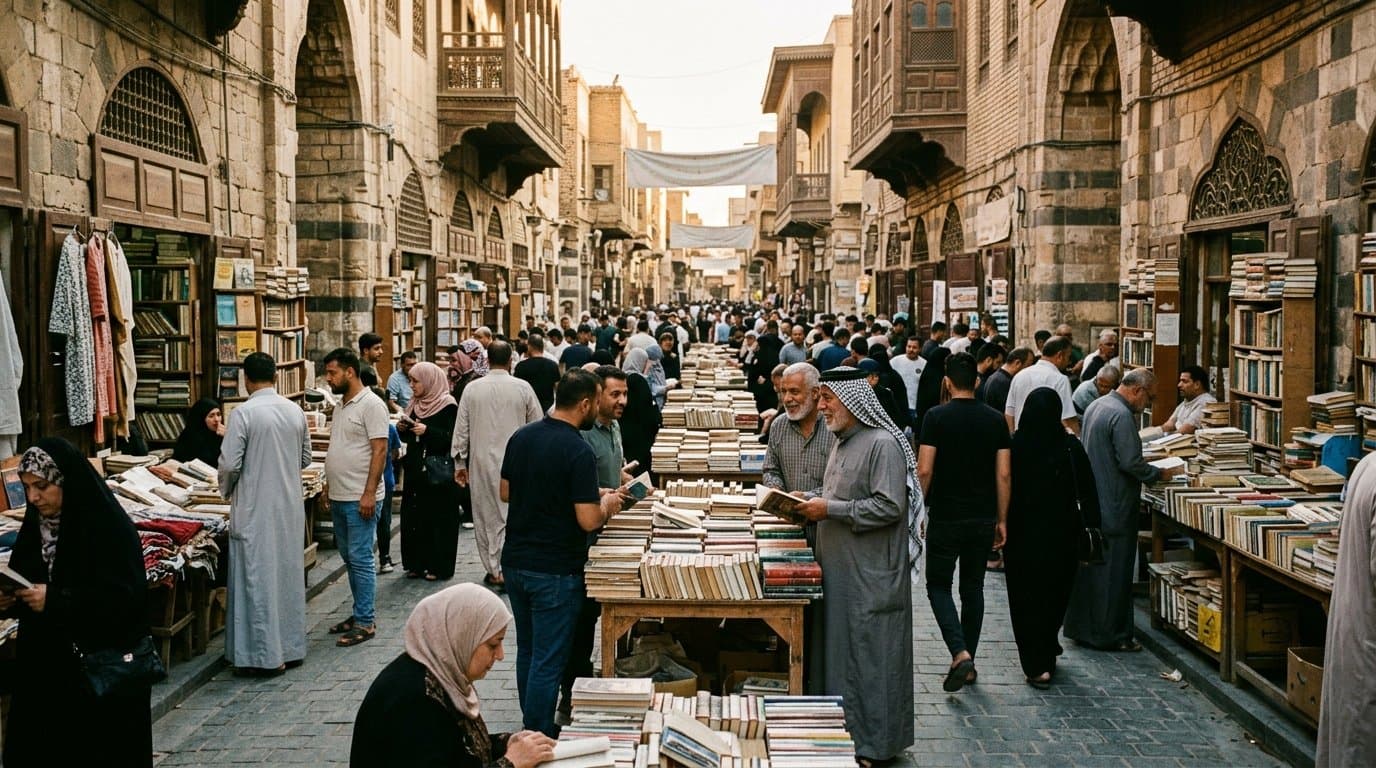
Friday morning is the weekly cultural peak of Baghdad. While much of the city slows down for the weekend, Al-Mutanabbi Street fills from dawn with booksellers, writers, university students, and collectors setting up along a stone-paved pedestrian boulevard near the Tigris River.
The market has deep roots in the city's intellectual history, tracing back to the book markets of the Abbasid era. In 1932, King Faisal I formally named the street after the celebrated 10th-century poet Abu al-Tayyib al-Mutanabbi, according to historical archives documented on Bayt Al Fann. For generations across the Arab world, Baghdad held a distinct literary reputation summarized in a classic regional adage: "Cairo writes, Beirut publishes, and Baghdad reads."
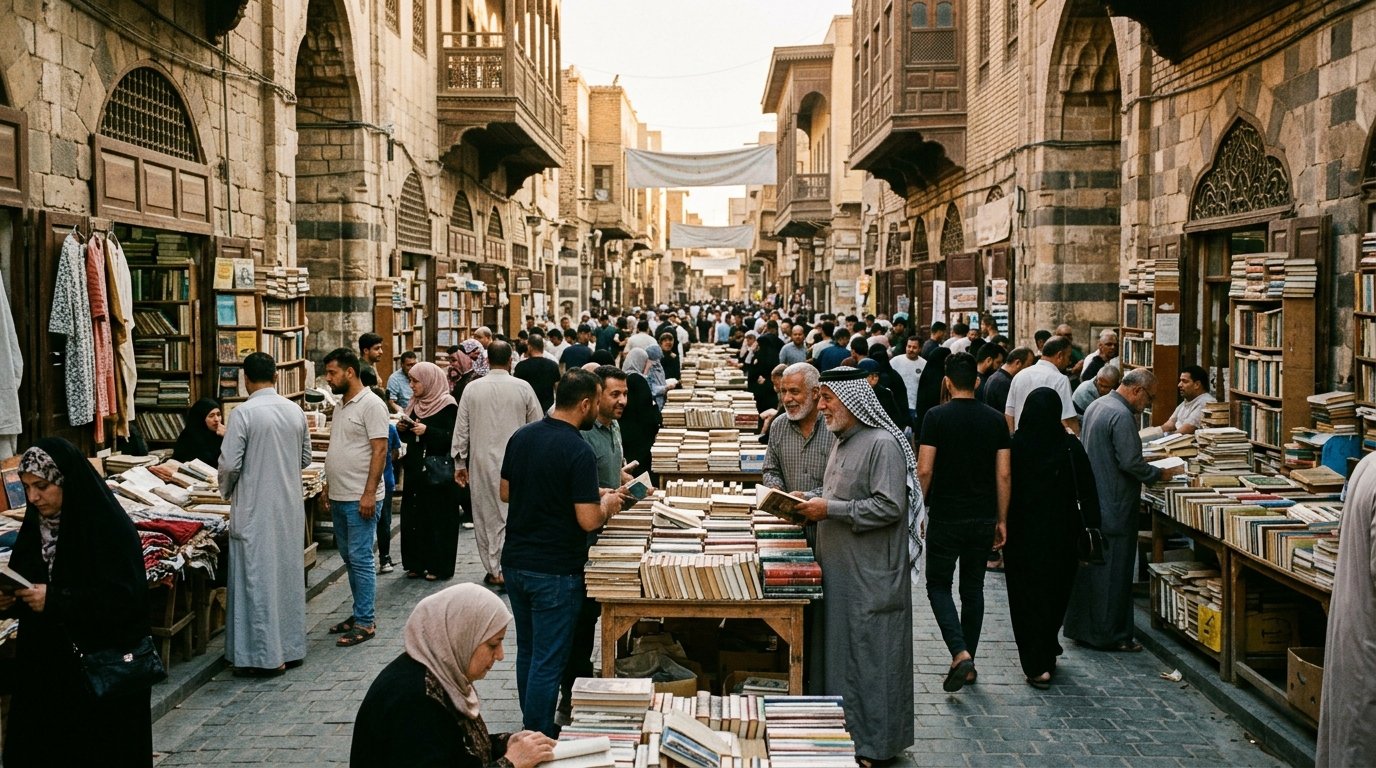
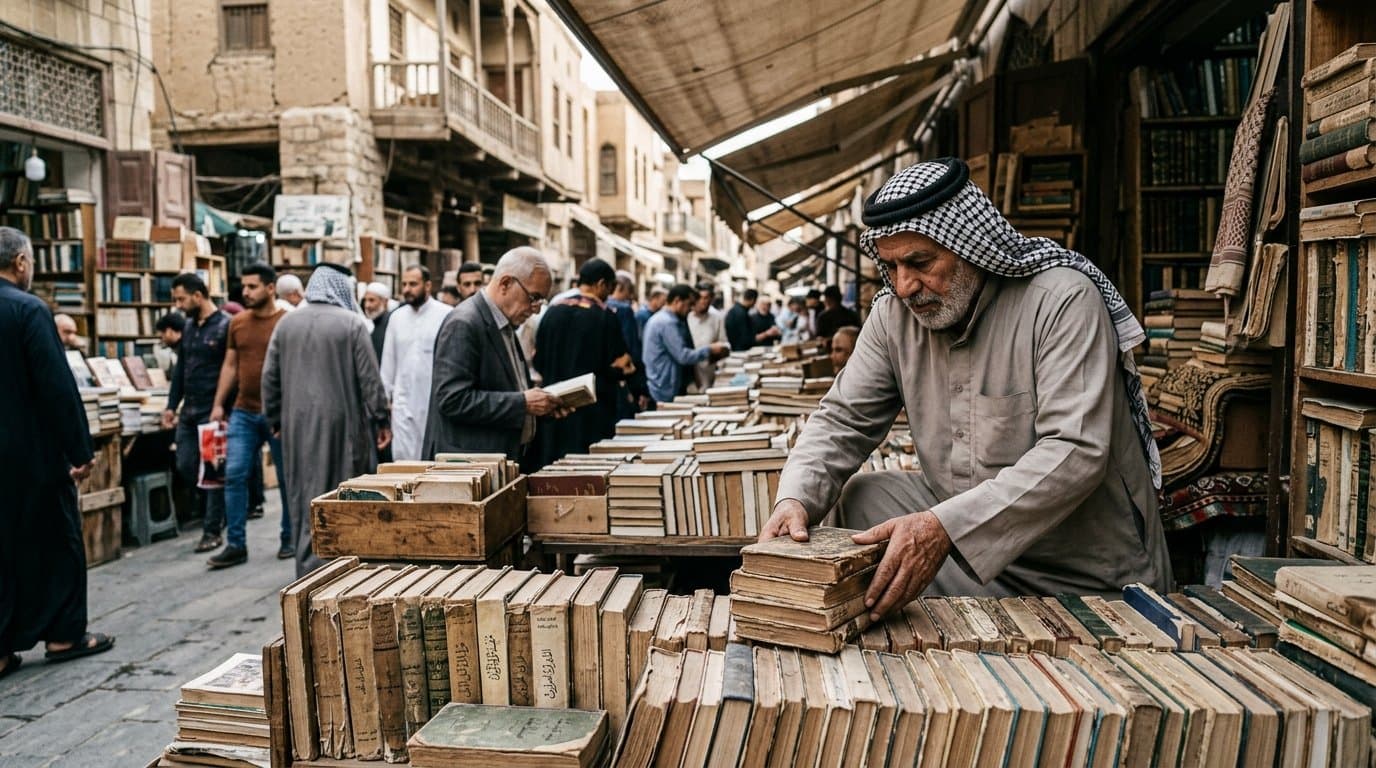
On Fridays, that reputation takes physical form. Vendors spread carpets, set up metal folding tables, and stack cardboard cartons directly on the pavement. The kilometer-long thoroughfare turns into an open-air library and debate hall where visitors browse thousands of volumes, discuss literature, and greet friends over morning tea.
How does the open-air book market work?
The book market operates with an informal, self-regulated rhythm that begins around 7:00 AM. Sellers claim spots along the sidewalks and shop fronts, unrolling tarpaulins stacked high with Arabic literature, historical texts, translated international classics, university textbooks, and art monographs.
A well-known Baghdadi saying captures the trust embedded in the market: "The reader does not steal, and the thief does not read." Booksellers often leave covered stacks unattended overnight without incident, as noted by Bayt Al Fann.
Browsing here is hands-on. You will find works by prominent Iraqi sociologist Ali al-Wardi, regional history by Hanna Batatu, classical poetry collections, and volumes of philosophy that were strictly banned under previous political regimes, as reported by Wikipedia. Many books contain handwritten notes, personal stamps, and dedication pages from private family libraries sold over the decades.
Prices are modest, typically starting at a few thousand Iraqi Dinars for paperbacks. While bargaining is common, interactions remain polite and conversational. Sellers readily talk about authors, recommend obscure editions, and share the provenance of rare prints.
What is the history and atmosphere of Shabandar Cafe?
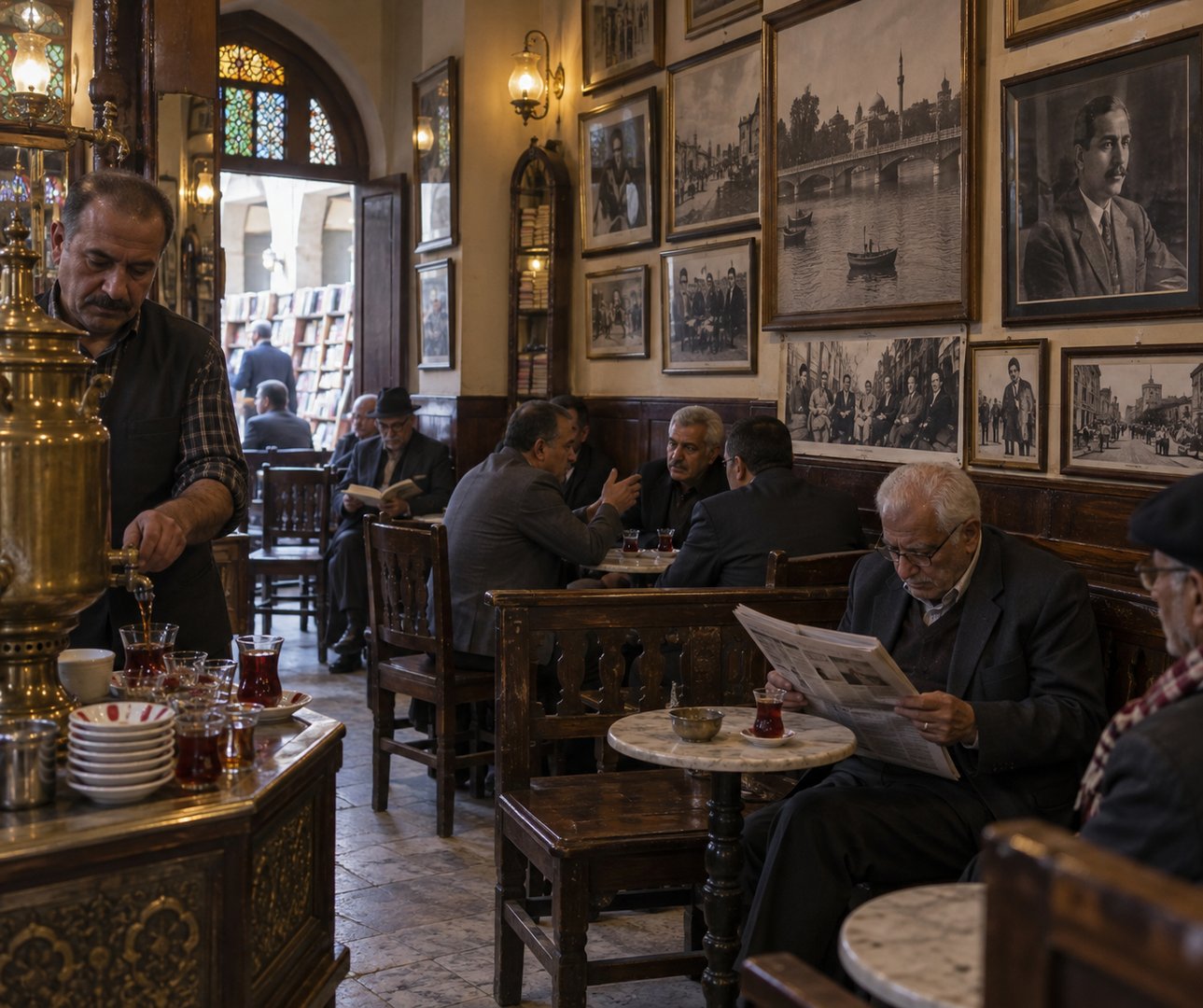
At the western end of the street near the Ottoman Qushla stands Shabandar Cafe, known in Arabic as Maqha al-Shabandar. Established in 1917 inside a former printing house that produced newspapers in the early 20th century, the cafe has served as Baghdad's central literary salon for more than a century.
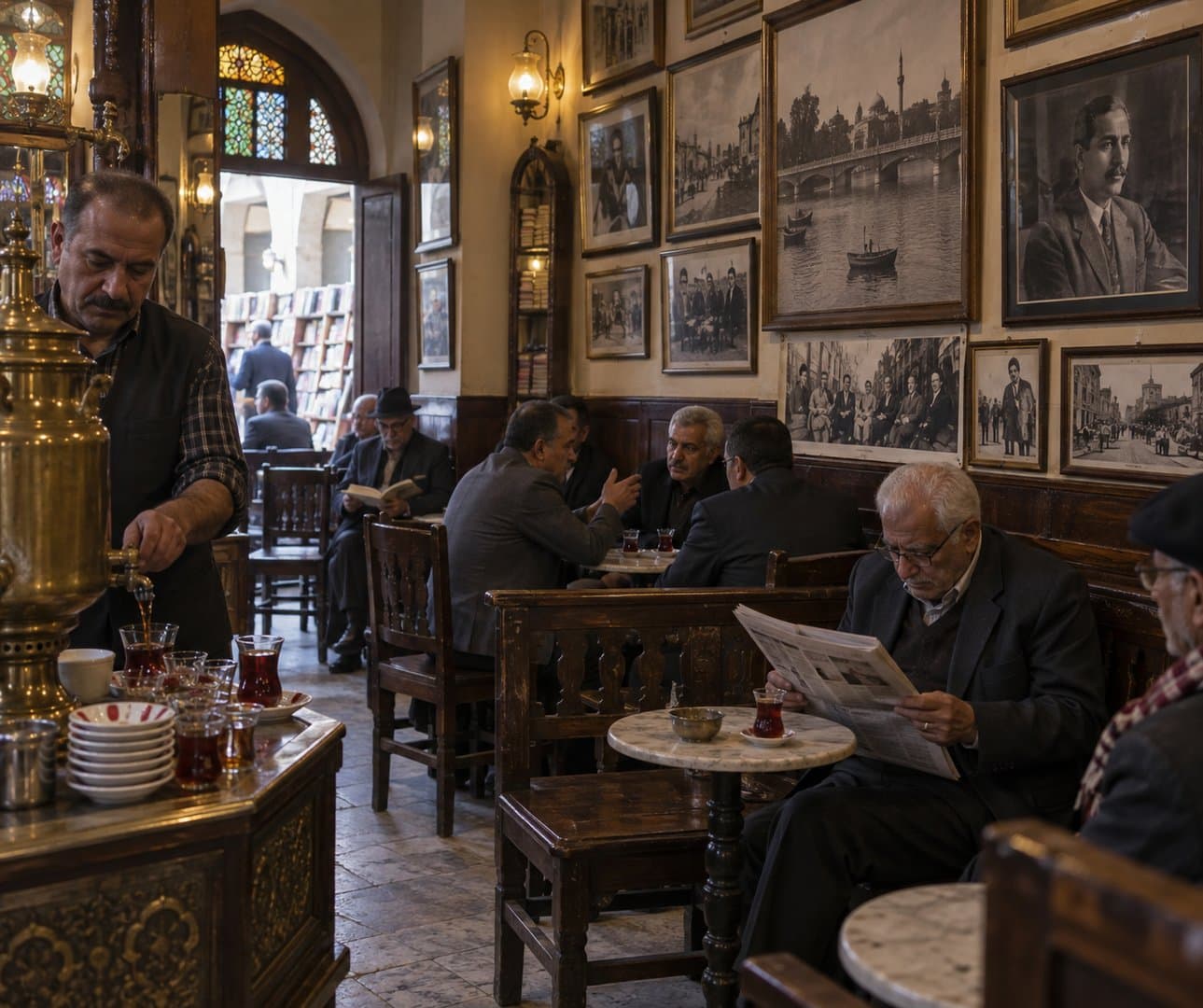
Unlike typical coffeehouses in the region, Shabandar maintains a strict house rule: no board games like dominoes or backgammon, and no blaring televisions. The space is dedicated entirely to reading, conversation, and debate, as described in firsthand accounts published on Indrosphere.
The interior features worn wooden benches, high brick ceilings, antique brass samovars, and walls lined with framed archival photographs. These images chronicle Iraqi political and social figures from the late Ottoman period and the Hashemite monarchy to mid-century poets and artists.
The cafe also carries the weight of modern Baghdad's hardships. On March 5, 2007, a car bomb devastated Al-Mutanabbi Street, killing over thirty people and destroying the cafe. The long-time proprietor, Haj Mohammed al-Khashali, lost four sons and a grandson in the blast, as detailed by Al Jazeera. Al-Khashali rebuilt the cafe with community support, adding portraits of his sons to the wall and earning it the local title "The Martyrs' Cafe." Al-Khashali managed the teahouse until his death in January 2025, leaving behind a landmark recognized across Iraq for quiet resilience.
What are the traditional tea rituals at the cafe?
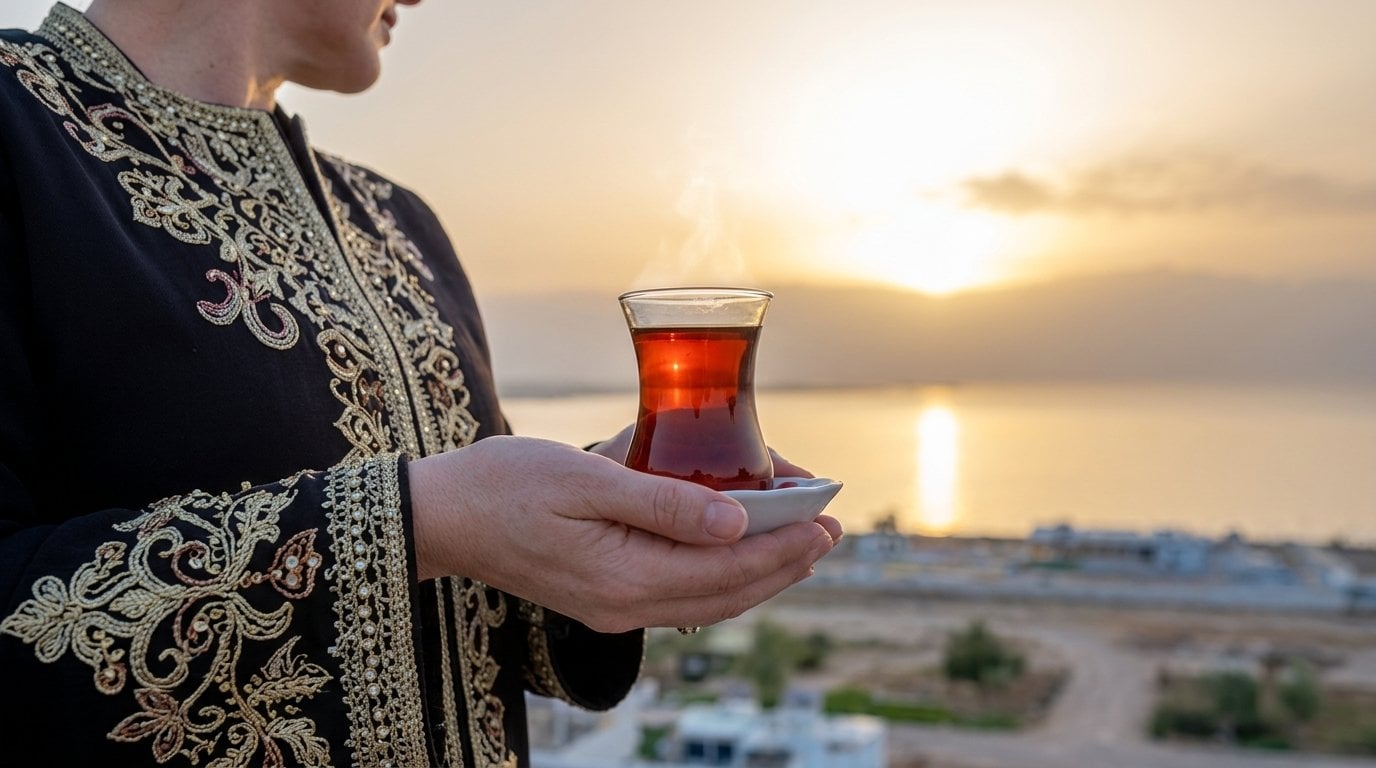
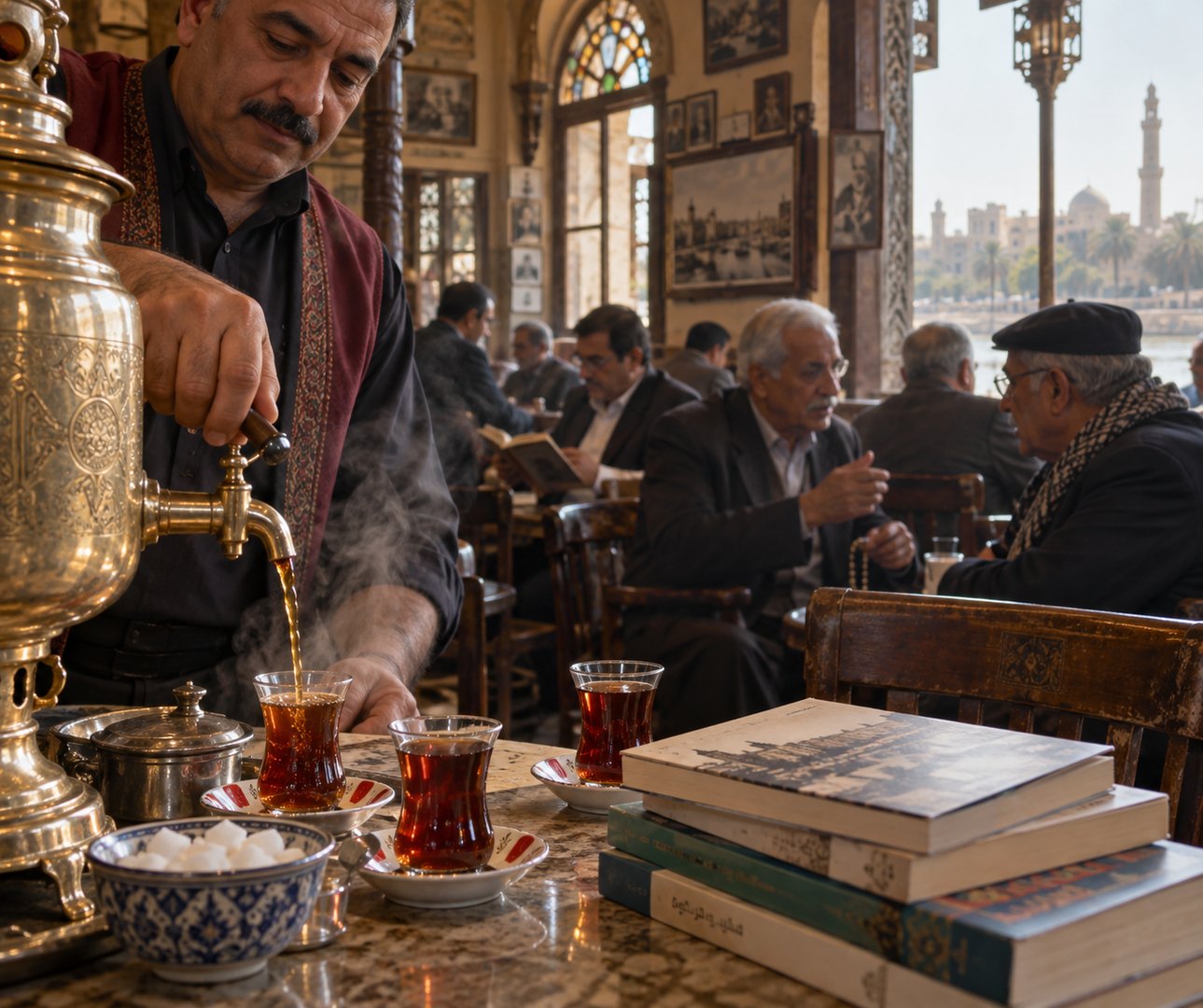
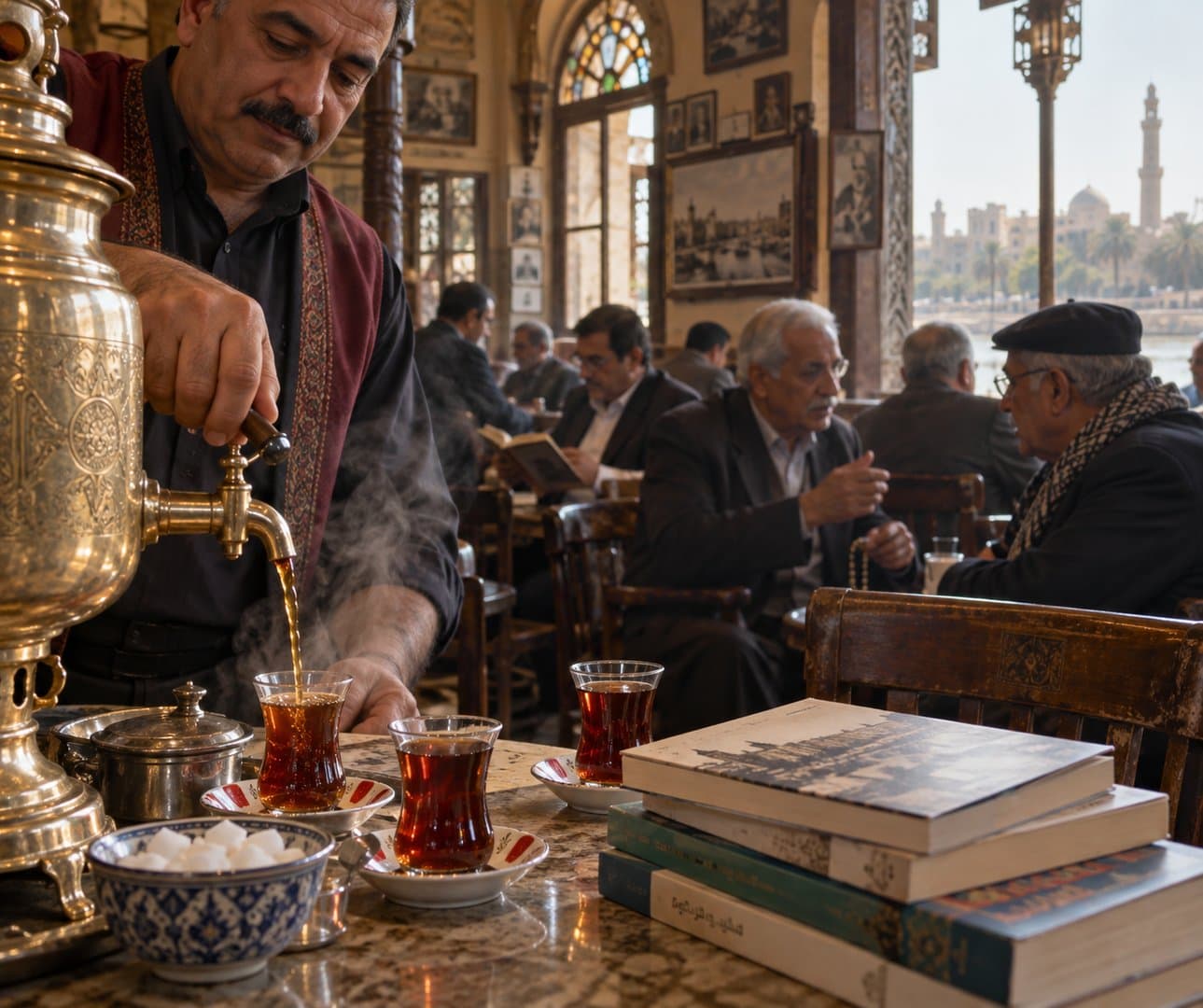
Visiting Shabandar Cafe centers on the ritual of Iraqi tea, brewed continuously throughout the morning in tall samovars. Orders are shouted across the room and delivered on metal trays by servers carrying small, curved glasses called istikanat (singular: istikana).
Patrons generally choose between two traditional Baghdadi hot drinks:
- Chai bil Hail: Strong black tea brewed over indirect heat and infused with crushed green cardamom pods. It arrives dark and steaming, served with a small glass saucer, a spoon, and generous sugar.
- Chai Noomi Basra: A sour, dark amber herbal brew made by simmering dried black limes from southern Iraq, sometimes called Baghdadi lemon tea. It has a sharp, tangy taste and is often sweetened to balance the tart citrus flavor.
Drinking tea here is an unhurried affair. Customers linger on the wooden benches for an hour or more, reading newly purchased books, discussing the morning news, or smoking water pipes (shisha) while the hum of conversation fills the room.
What other cultural sights surround Al-Mutanabbi Street?
Al-Mutanabbi Street connects several historic landmarks that make up the heritage core of old Baghdad:
- The Qushla: Located directly beside Shabandar Cafe, this 19th-century Ottoman military barracks was built under Ottoman governor Midhat Pasha, as noted in the Al-Mutanabbi Street historical summary on Wikipedia. Its central garden features a 22-meter clock tower. On Fridays, the Qushla courtyards host open-air art exhibitions, calligraphy stands, and poetry recitals.
- The Al-Mutanabbi Statue: At the eastern terminus of the street, a bronze statue of poet Abu al-Tayyib al-Mutanabbi stands on a stone pedestal overlooking the Tigris River. Sculpted in 1977 by Iraqi artist Mohammed Ghani Hikmat, it marks the riverside promenade where visitors watch wooden boats and passenger ferries cross the water.
- Souk al-Sarai: Branching off near the entrance to the Qushla, this narrow roofed alley dates back centuries and specializes in stationery, custom notebooks, paper supplies, and traditional bookbinding services.
- The Baghdadi Cultural Center: Housed in a restored historic riverside building with arched brick colonnades, the center holds cultural events, heritage talks, and historical displays on Friday mornings.
Practical tips for planning your Friday visit
To make the most of a Friday morning visit to Al-Mutanabbi Street, keep several practical considerations in mind:
- Timing: Arrive between 8:30 AM and 9:00 AM when the stalls are fully set up and the morning light is mild. Crowds peak between 10:00 AM and 12:30 PM before thinning out around midday Friday prayers.
- Navigation: Start your walk at the ornate arch entrance off Al-Rashid Street and walk downhill toward the Tigris River, ending at the Al-Mutanabbi statue and the riverfront steps, as outlined in the visitor guide on Stay In Iraq.
- Payments: Bring cash in Iraqi Dinars. Street vendors and small tea stalls do not accept bank cards. Small denominations (1,000, 5,000, and 10,000 IQD notes) are useful for book purchases and refreshments.
- Photography: Taking photos of book stalls, architecture, and public street scenes is widely accepted. It is polite to ask permission before taking close-up portraits of seated customers in cafes or individual booksellers.
- Dress and Comfort: Wear comfortable walking shoes suitable for stone pavements and cobblestones. Dress modestly in line with local social norms, opting for light, breathable fabrics during warmer months.
Sources
- Wikipedia — Mutanabbi Street (Accessed May 18, 2025)
- Wikipedia — Shabandar Café (Accessed May 18, 2025)
- Al Jazeera — Mutanabbi Street slowly re-emerges, 20 years on from Iraq war (Accessed May 18, 2025)
- Bayt Al Fann — The 'Book Market of Baghdad' - Al-Mutanabbi Street (Accessed May 18, 2025)
- Stay In Iraq — Mutanabbi Street Baghdad Guide for Visitors (Accessed May 18, 2025)
- Indrosphere — Shahbandar Café & the Soul of Baghdad (Accessed May 18, 2025)
- TakeYourBackpack — Al-Mutanabbi Street Book Market Attraction Guide (Iraq) (Accessed May 18, 2025)
Gallery
❓Frequently Asked Questions
Here are answers to frequently asked questions about the content above
Friday morning between 8:30 AM and 11:30 AM is the best time to visit. This is when the open-air book market is most active, vendors are fully set up, and nearby cultural spaces like the Qushla courtyard are open to the public.
Al-Mutanabbi Street is located in the historic Rusafa district of old Baghdad. It begins at the junction with Al-Rashid Street and extends roughly one kilometer down to the banks of the Tigris River.
Shabandar Cafe strictly bans board games such as dominoes and backgammon, as well as television sets, to preserve an environment focused on intellectual discussion, poetry, reading, and conversation.
The cafe serves strong black tea infused with cardamom (chai bil hail) in traditional curved glass istikana cups, as well as a tart Baghdadi dried black lime tea known as chai noomi basra.
While the majority of titles on the street are in Arabic, several vendors carry second-hand English novels, academic texts, art histories, and translated classics.
Directly adjacent to Al-Mutanabbi Street are the 19th-century Ottoman Qushla barracks and clock tower, the Baghdadi Cultural Center, the stationery market of Souk al-Sarai, and the bronze Al-Mutanabbi statue on the Tigris riverbank.