Master the art of shopping in Iraqi souqs with practical advice on buying hand-hammered copperware, Kurdish carpets, and regional spices, alongside essential cash handling and bargaining etiquette.
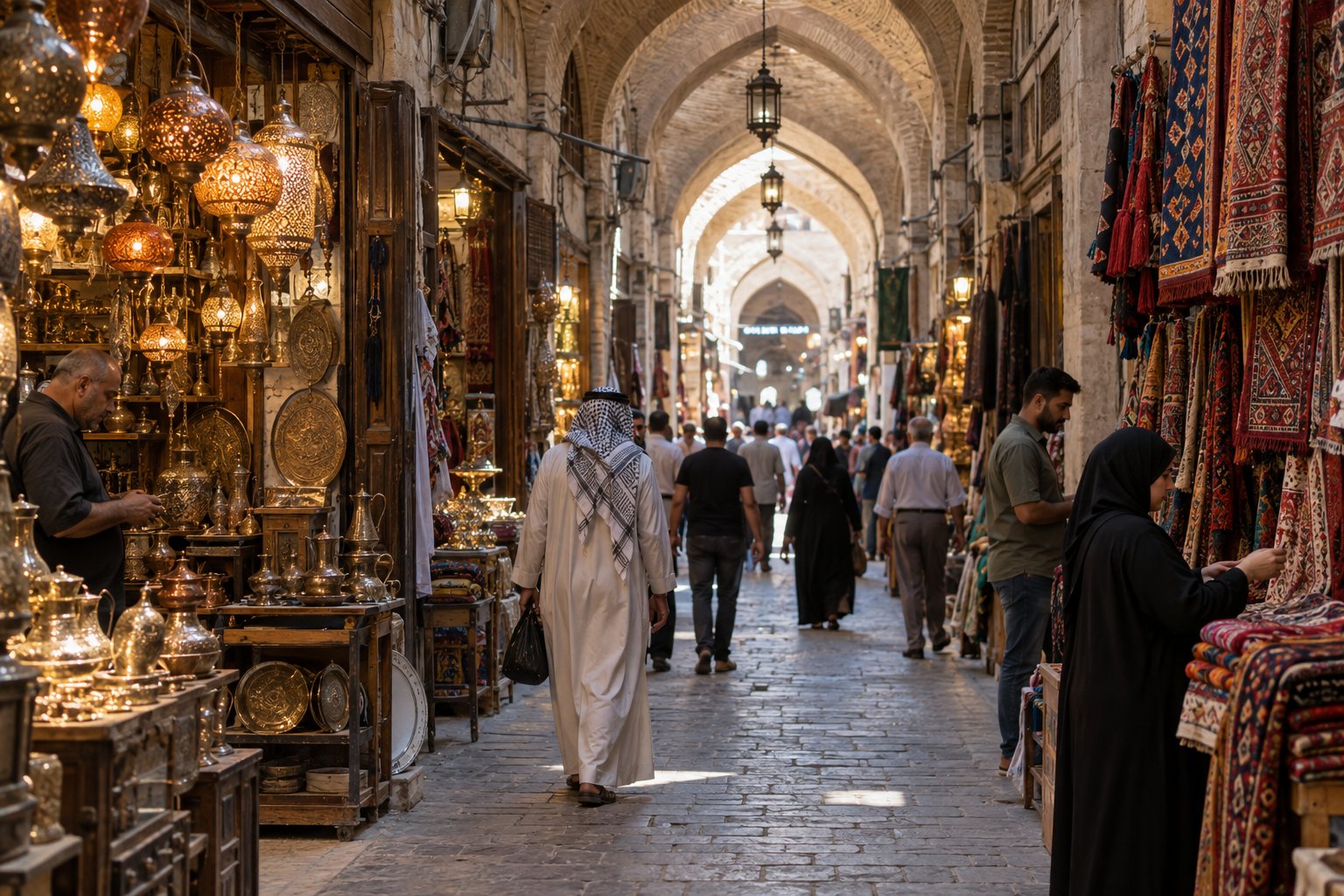
Traditional souqs across Iraq are centers of daily commerce, artisanal production, and neighborhood life. From historic lanes in Baghdad to stone arcades in Erbil and Sulaymaniyah, these covered markets supply local households with everything from kitchenware and raw spices to ceremonial jewelry and handwoven textiles.
Navigating these markets requires an understanding of local trading traditions. Payment systems remain cash-focused, bargaining follows clear social courtesies, and distinct regional markets specialize in specific crafts. This guide details what goods to buy, where to find them, how to handle money, and how to negotiate respectfully.
Signature crafts and specialties to seek out
Iraqi artisans have maintained specialized guild traditions for centuries. When shopping in major souqs, several craft categories and regional foods stand out for their quality and cultural roots.
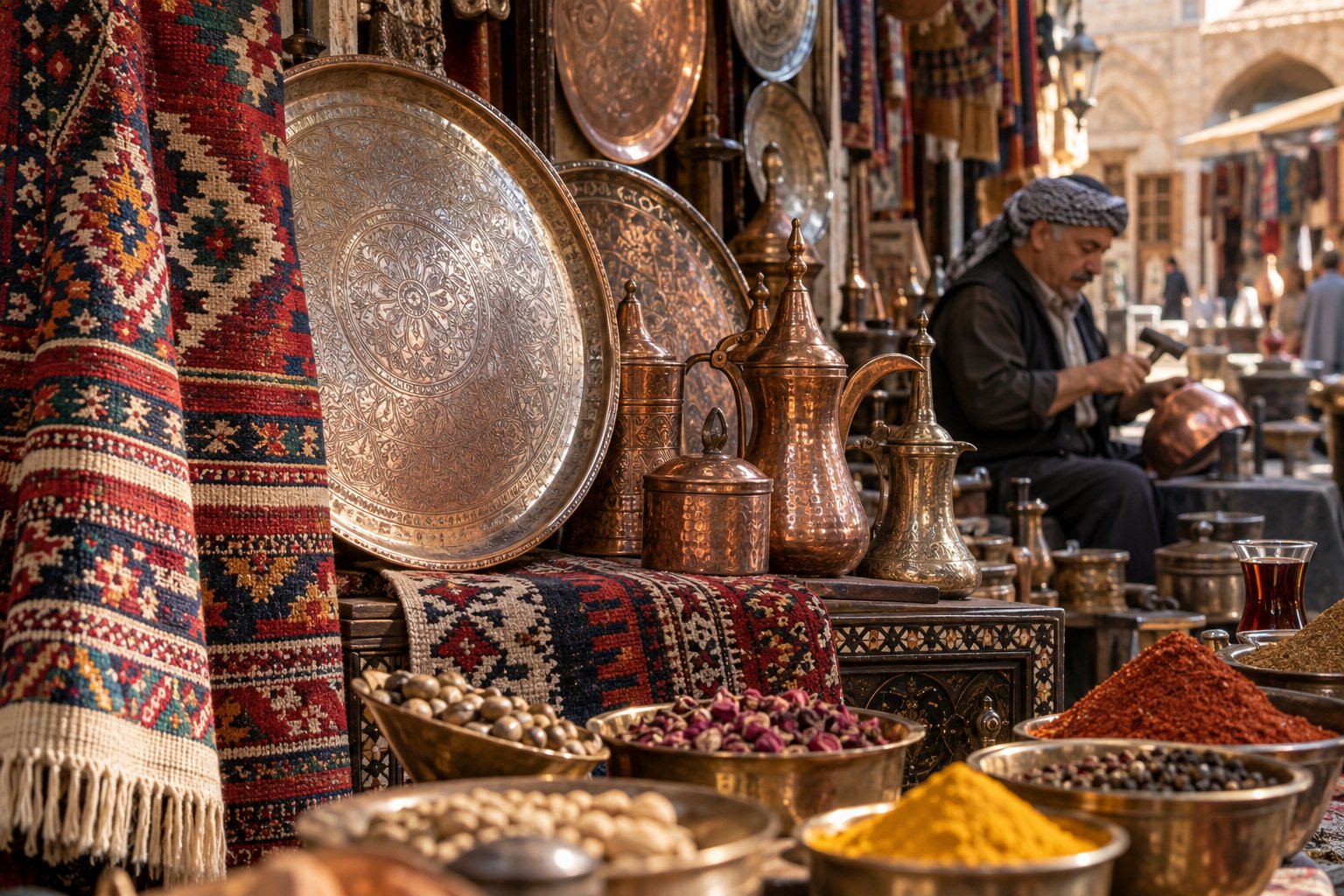
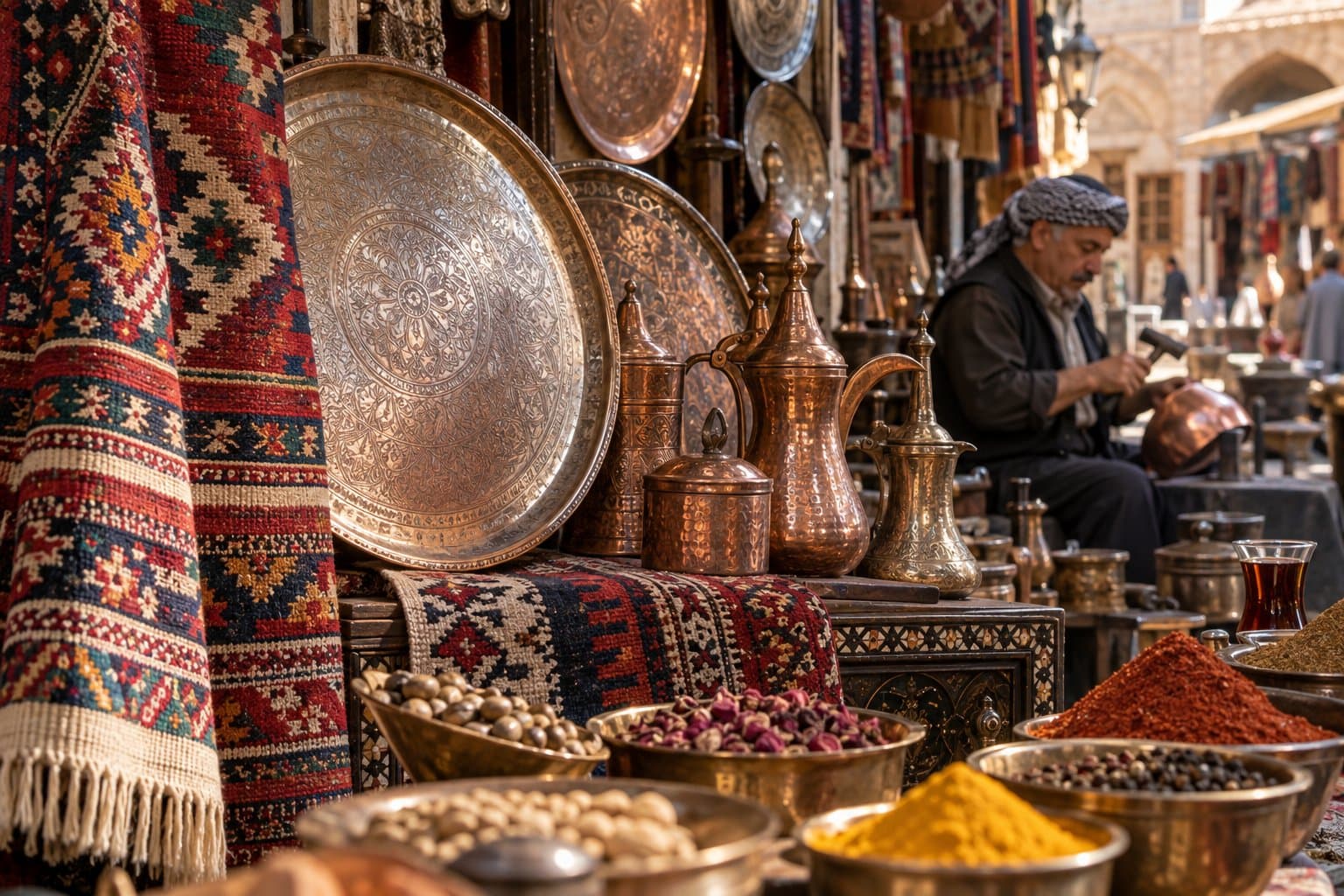
Hand-hammered copperware
Copper crafting has a long heritage in Mesopotamia, centered primarily in Baghdad. According to the United Nations in Iraq, coppersmiths in the historic market district continue to shape raw metal sheets into functional and decorative objects using traditional hand tools and rhythmic hammer blows.
Travelers will find classic items such as the traditional coffee pot (dallah or kahawa pot), patterned serving platters (siniya), tea kettles (quri), and wall plates engraved with historical motifs. When evaluating copperware:
- Check the weight: Solid copper pieces feel heavy for their size. Thin, lightweight metal bends easily under finger pressure.
- Inspect the surface: True hand-hammered pieces show slight variations in hammer mark spacing and depth. Uniform machine-pressed stamps look identical across the entire surface.
- Check the interior lining: If you plan to use copper pots or pitchers for food or hot drinks, make sure the interior has a clean, uniform tin lining (qazdir). Unlined copper reacts with acidic ingredients and hot liquids.
Kurdish rugs and flatweave kilims
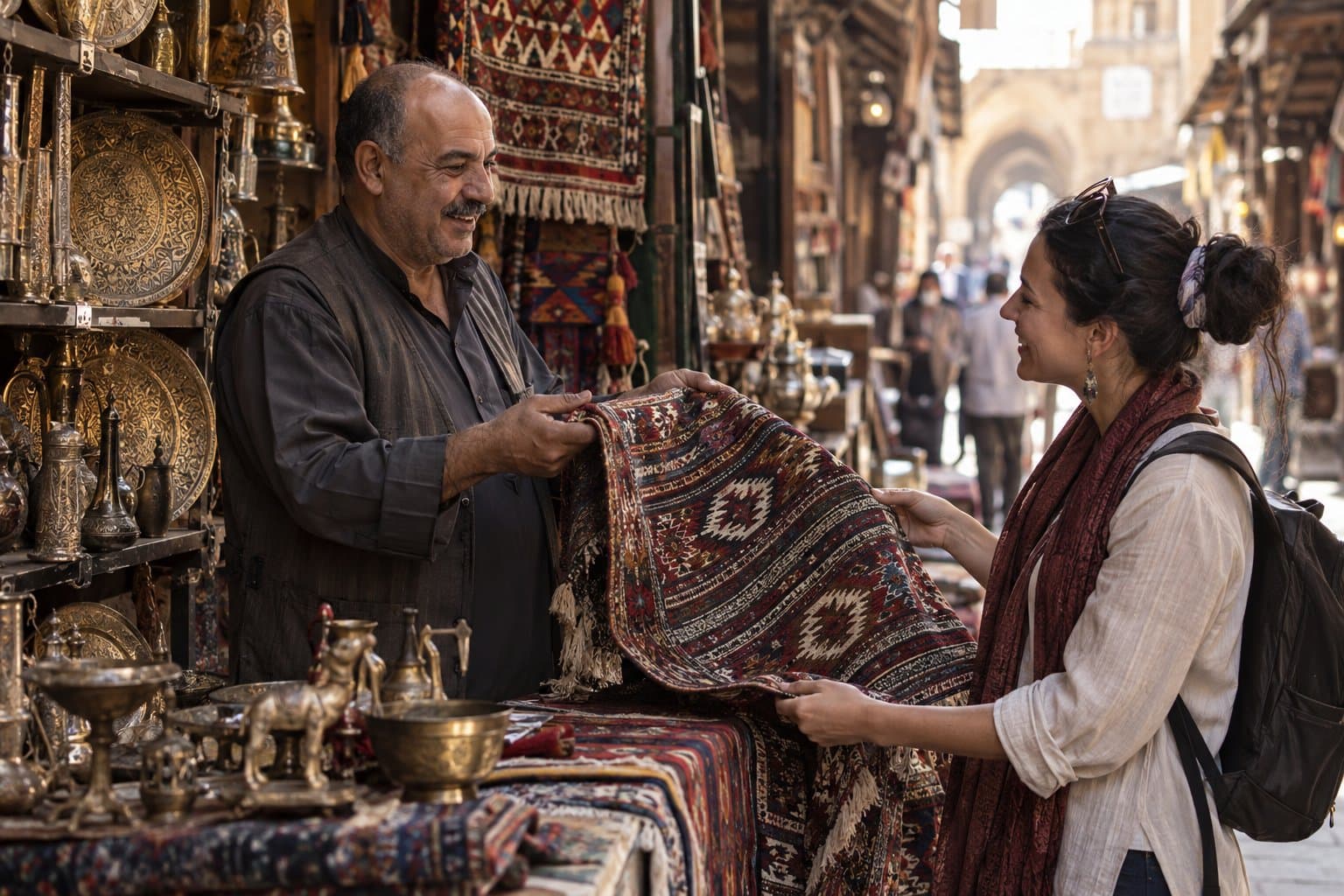
Northern Iraq, particularly the Kurdistan Region, is known for handwoven textiles made from local sheep wool. As documented by the Iraq eVisa Tourism Guide, Kurdish carpets and flatweave kilims feature distinct geometric patterns, diamond medallions, and natural color palettes derived from pomegranate rind, walnut husks, madder root, and wild indigo.
When examining rugs:
- Inspect the back: Flip the carpet over to examine the weave. Tighter knots on the reverse side indicate higher durability and finer workmanship.
- Check the fringe: Authentic handwoven pieces feature fringes that form an integral extension of the vertical warp threads, rather than separate trims sewn onto the border.
- Test the dye stability: Rub a slightly damp white cloth against a small colored section. Quality vegetal dyes will not transfer excess pigment onto the cloth.
Spices and culinary staples
Spices and preserved foods are among the most transportable items in Iraqi souqs. Notable items to purchase include:
- Numi Basra (dried black limes): Whole sun-dried limes from southern Iraq give a tangy, smoky flavor to stews like qeymeh and margat bamya. They are sold whole or ground into a fine brown powder.
- Sab'a Baharat (Iraqi seven-spice blend): A fragrant combination of ground cumin, coriander, cinnamon, nutmeg, black pepper, cloves, and cardamom, blended to season rice dishes and roasted meats.
- Sumac: Deep purple, coarse-ground berries with an acidic, lemony flavor, used over kebabs and fresh herb salads.
- Date syrup (dibs) and regional dates: Southern Iraq and the Euphrates valley produce prized date varieties including Barhi, Khastawi, and Zahdi. Jars of pure date syrup make excellent natural sweeteners.
- Green cardamom seeds: Used widely to perfume strong black tea and traditional holiday pastries like kleicha.
Prayer beads and semi-precious stones
Prayer beads (misbaha or subha) are sold across the country, especially in shrine markets. Common materials include carved olive wood, fragrant sandalwood, pressed amber (kahrab), and turquoise. In Najaf, vendors specialize in Dur al-Najaf, a clear quartz stone collected from the surrounding desert, shaped and set into sterling silver rings and bead strands.
Key souqs and market quarters by city
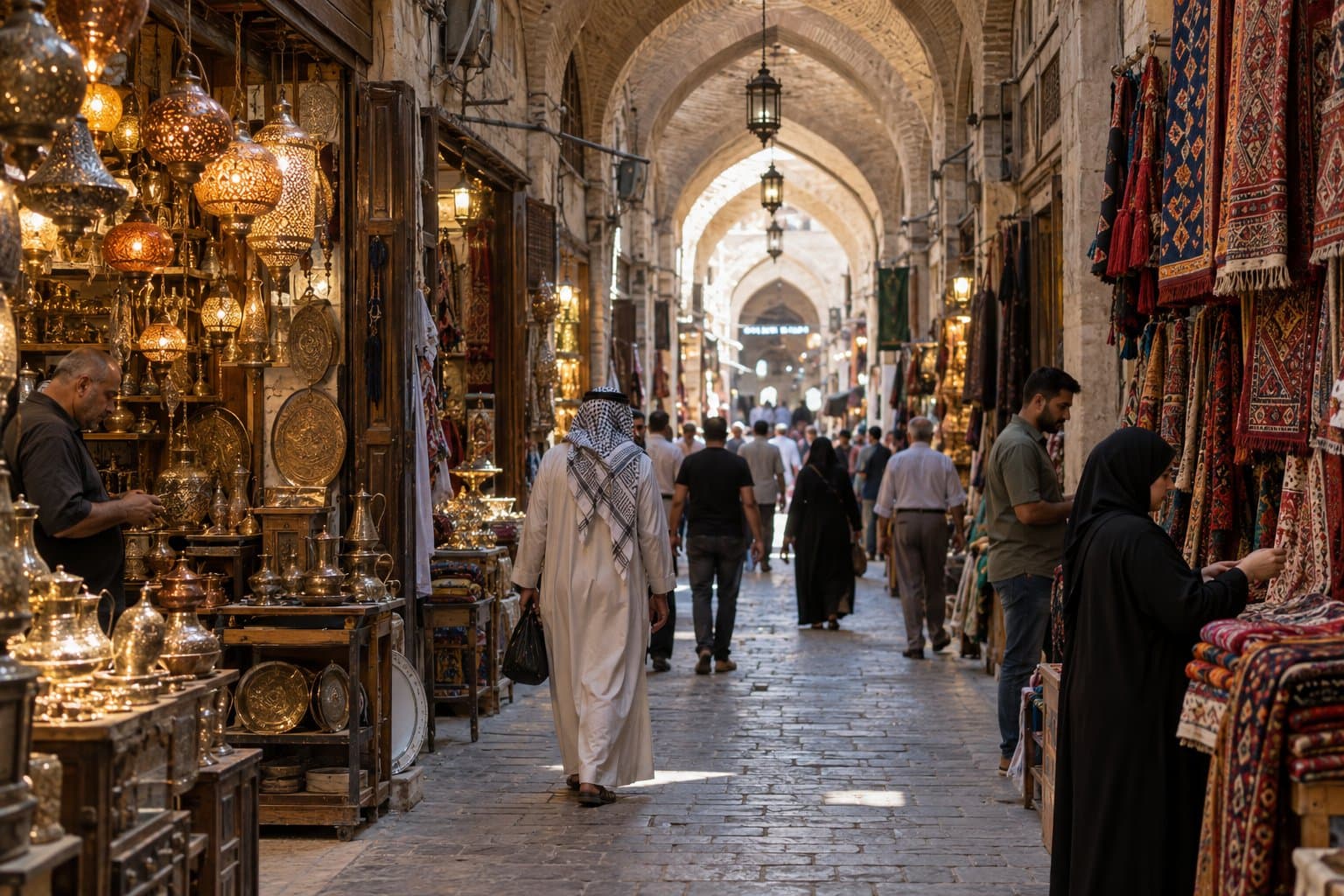
Every major Iraqi city features dedicated market quarters, often arranged by specific trades along interconnected alleyways.
Baghdad
- Souq al-Safafeer: Located off Al-Rashid Street, this coppersmith market dates back several centuries. While modern trade has introduced other household goods, workshops along the central lane still produce handmade copper trays, jugs, and engraved plaques, as highlighted by Lana Time.
- Al-Shorja Market: The commercial wholesale core of central Baghdad. Al-Shorja contains vast spice lanes, dry food sellers, tea merchants, and textiles.
- Al-Mutanabbi Street and Souq al-Saray: As detailed on Mutanabbi Street's historic records, this pedestrian street by the Tigris River serves as Baghdad's cultural hub for books, prints, and stationery. The connected Souq al-Saray features paper goods, leathercraft, and calligraphy supplies.
Erbil
- Qaysari Bazaar: Sprawling at the southern base of the ancient Citadel of Erbil, this covered bazaar contains distinct sections for Kurdish textiles, gold jewelry, raw honey, spices, nuts, and handwoven kilims.
Sulaymaniyah
- Grand Bazaar: Located in downtown Sulaymaniyah, this market is ideal for traditional Kurdish clothing, hand-knit woolen socks, cured sheep cheeses, sumac, and wild mountain herbs.
Najaf and Karbala
- Souq al-Kabeer (Najaf): Stretching from the perimeter of the Imam Ali Shrine, this covered bazaar offers vast selections of prayer beads, perfumes, frankincense, silver jewelry, and Persian and Iraqi carpets.
- Karbala Shrine Markets: The pedestrian streets between the holy shrines contain perfume stalls (oud and attar), embroidered wall hangings, and local confectionery such as date rolls with sesame.
Basra
- Souq al-Ashar and Souq Hanna Sheikh: Located near the Ashar canal in Basra, these markets are the primary trade centers for fresh dates, date syrup, sea spices, woven palm leaf baskets, and dried limes.
The etiquette of bargaining in Iraqi markets
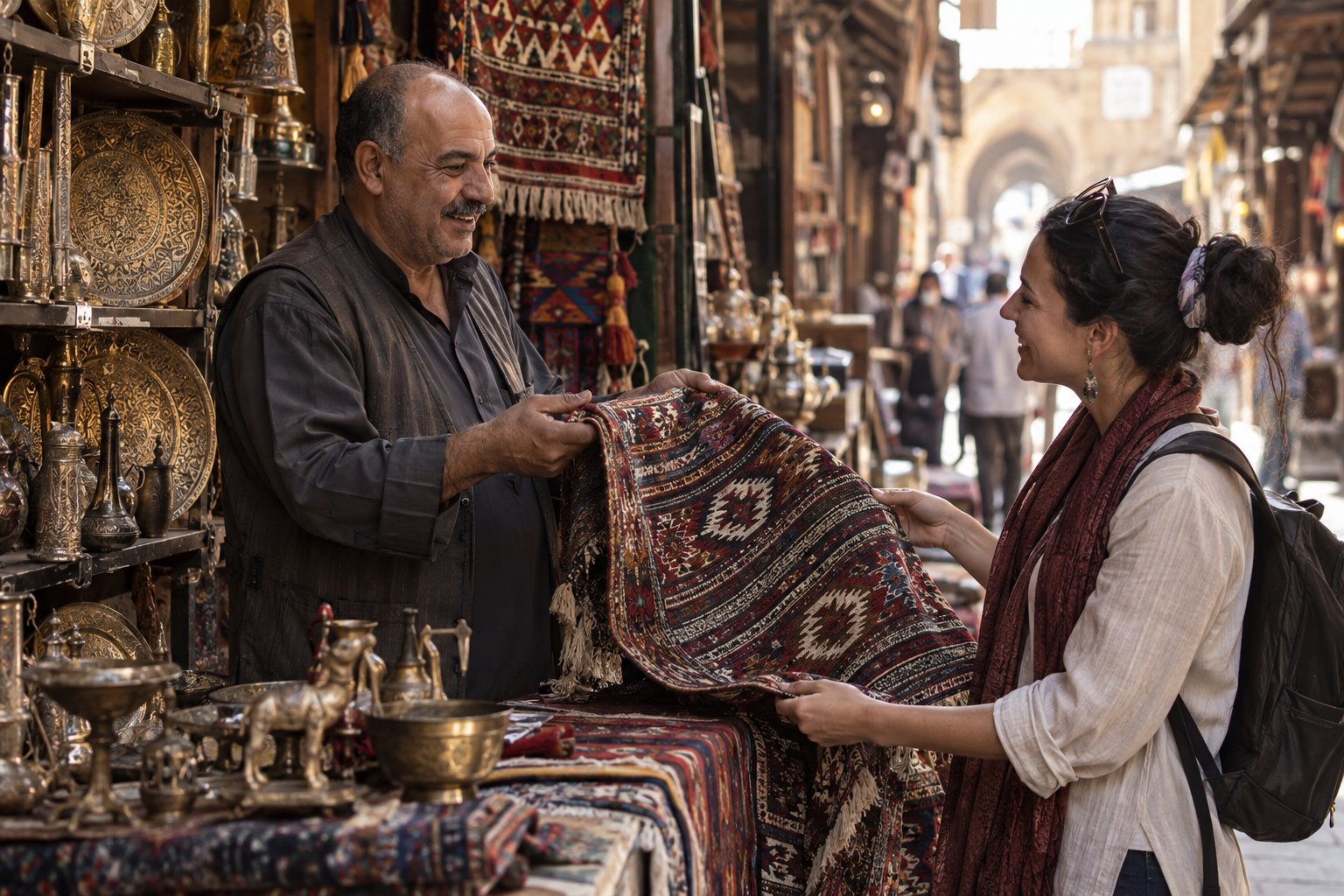
Bargaining, known locally as mukasara or fasal, is a customary part of trading in traditional souqs. It is treated as a polite social conversation between buyer and seller rather than an aggressive contest.
Where bargaining is expected
- Handicrafts and souvenirs: Copperware, carpets, antiques, backgammon boards (tawla), and silver jewelry.
- Textiles and clothing: Traditional dresses, scarves, blankets, and fabrics.
- Large spice and date quantities: Negotiable when purchasing in bulk or multiple kilograms.
Where prices are fixed
- Standard groceries and fresh produce: Daily vegetables, fresh bread, and individual bottles of water.
- Restaurants and cafes: Fixed menu prices, including tea shops.
- Modern retail malls and branded supermarkets: Barcode scanning systems with fixed rates.
Best practices for respectful negotiation
- Open with customary greetings: Greet the shopkeeper with "As-salamu alaykum" (peace be upon you) or "Marhaba" (hello). Establishing friendly rapport sets a positive tone.
- Accept offers of tea: Shopkeepers in carpet shops or copper stalls will often offer you a small glass of hot, sweetened tea (istikan). Accepting tea is a sign of mutual hospitality and creates no strict obligation to buy.
- Make realistic counteroffers: A common starting point for high-value handicrafts is roughly 15 to 25 percent below the vendor's opening quote. Offering an insultingly low amount devalues the artisan's labor.
- Remain calm and polite: Smile, maintain friendly body language, and avoid showing irritation. If the seller cannot meet your target budget, thank them cordially with "Shukran" and step away without arguing.
- Useful Arabic phrases for the souq:
- "Bikem hadha?" (How much is this?)
- "Akher se'er?" (What is your final price?)
- "Mumkin takhfeedh?" (Is a discount possible?)
- "Mamnoon" (Much obliged / Thank you)
Cash payment and currency handling
Understanding financial realities is critical when shopping outside international hotels. According to the Iraq eVisa Practical Travel Guide, the Iraqi Dinar (IQD) is the official and universal tender for all everyday expenses across the country.
The cash-first economy
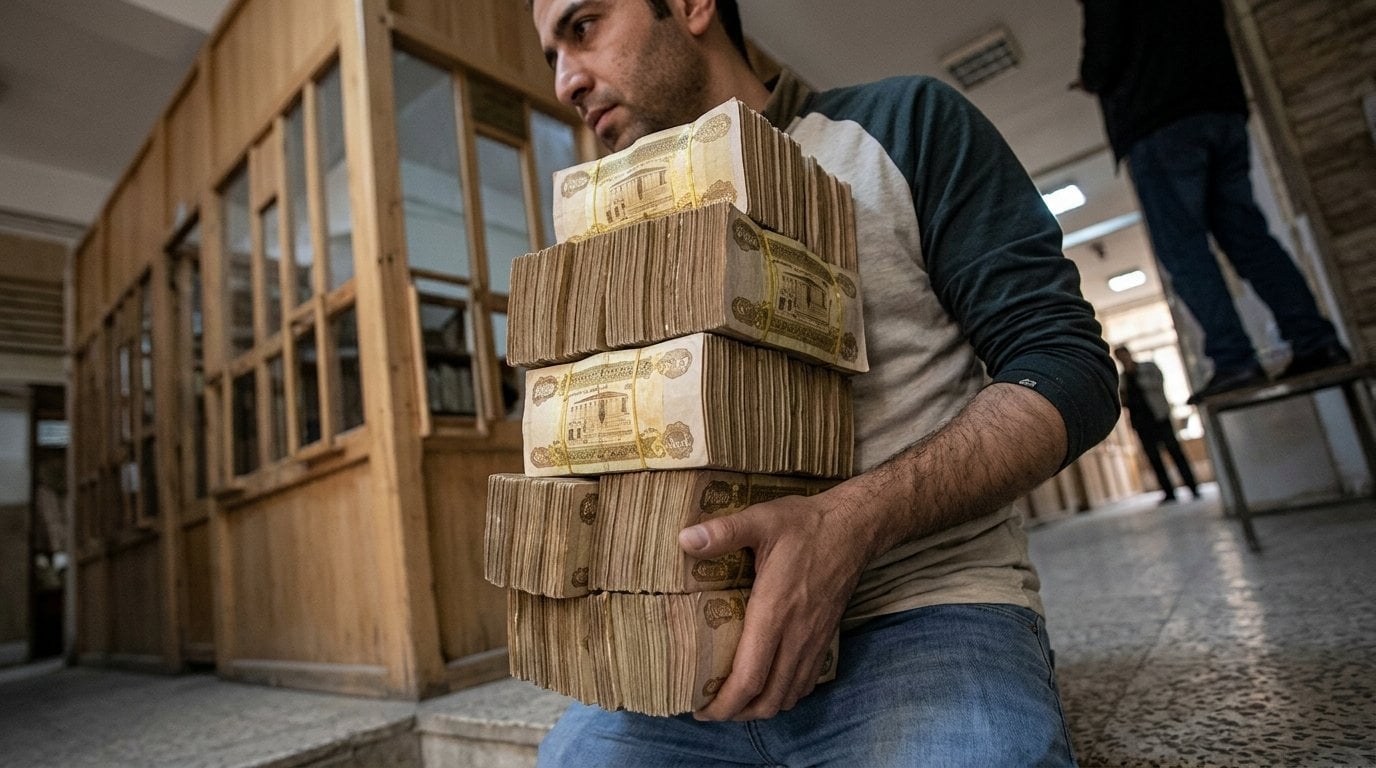
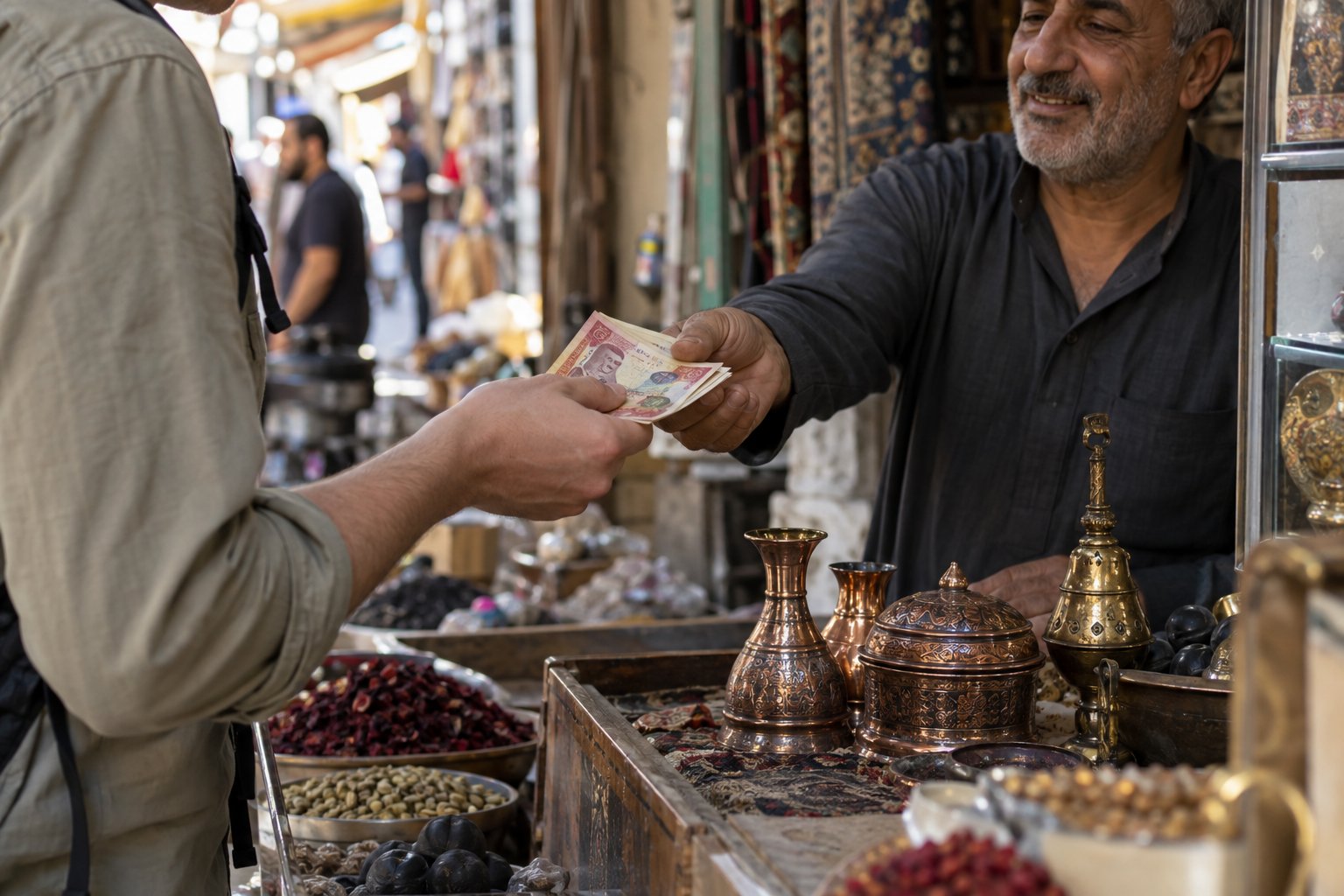
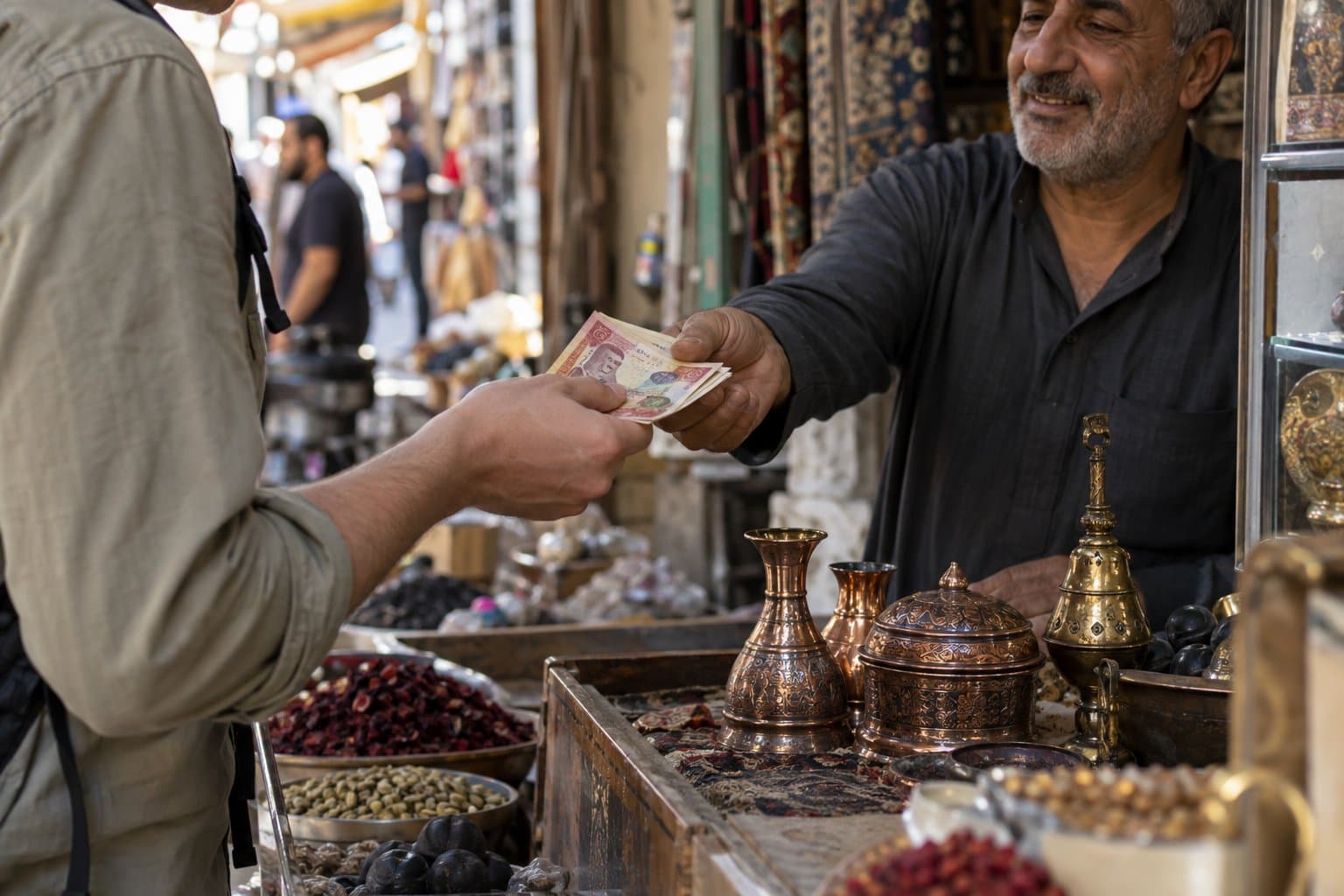
Credit and debit cards are rarely accepted in souqs, smaller shops, or dining spots. International point-of-sale terminals are generally restricted to upscale hotels in Baghdad and Erbil. You must carry physical cash for all market shopping.
Understanding dinar banknotes
As documented by the Central Bank of Iraq currency records, banknotes in circulation include denominations of 250, 500, 1,000, 5,000, 10,000, 25,000, and 50,000 IQD.
- Keep a healthy supply of 1,000, 5,000, and 10,000 IQD notes for smaller purchases such as tea, spices, and taxi rides.
- Vendors in small stalls often struggle to provide change for 25,000 or 50,000 IQD bills on low-value items.
- Carry a secure wallet or waist pouch, as large amounts of local currency can create bulky stacks of notes.
Exchanging foreign currency
- US dollars (USD) and Euros (EUR) are easy to exchange at licensed currency exchange offices found throughout city centers and major souq entrances.
- Ensure US dollar banknotes are pristine, flat, and printed after 2013. Local exchange bureaus and merchants regularly reject torn, marked, or older series bills.
- High-value purchases, such as large antique rugs, can occasionally be settled in clean US dollars upon mutual agreement with the merchant.
ATM accessibility
ATMs connected to international networks (Visa and Mastercard) are available at major international airports, commercial banks, and luxury hotels in Baghdad, Erbil, Sulaymaniyah, and Basra. They are scarce in traditional market districts and rural towns. Withdraw sufficient cash before heading into extensive souqs.
Tipping norms across Iraq
Tipping, referred to as ikramiya or baksheesh, is appreciated across service sectors in Iraq, though rules vary by venue.
- Restaurants: In casual diners and kebab shops, rounding up the bill or leaving 1,000 to 3,000 IQD in cash is standard practice. In upscale restaurants, leaving a tip of 10 to 15 percent of the total bill is customary if service is not already included on the receipt, as noted in the Iraq Travel Tips Guide.
- Traditional tea houses (chaykhana): Rounding up the change or leaving an extra 500 to 1,000 IQD is common practice.
- Souq porters and luggage handlers: If an assistant helps carry heavy carpets or bulky boxes through crowded souq alleys to your vehicle, a tip of 2,000 to 5,000 IQD is appropriate.
- Drivers and local guides: For dedicated private drivers or tour guides, tipping 15,000 to 30,000 IQD per full day shows appreciation for professional service.
Practical shopping and transport tips
- Visit at optimal times: Souqs are active from mid-morning until early afternoon, and again in the late afternoon after 4:30 PM. Friday mornings are quiet around major mosques due to prayer services, though specialty markets like pet or antique stalls may operate early.
- Packing and transit: Ask vendors to wrap fragile copperware, ceramic bowls, or glass tea cups (istikan) with cardboard and packing tape.
- Antiquities warning: Iraqi law strictly prohibits the purchase, export, or removal of genuine archaeological artifacts or ancient items. Always ensure historical-themed souvenirs are certified modern reproductions.
Sources
- United Nations in Iraq — "Baghdad, Iraq | The grand old, majestic Souq Al Safafeer", accessed May 2026.
- Lana Time — "Top Markets & Bazaars in Baghdad", published October 2025, accessed May 2026.
- Ard Al-Hani — "Souq Al-Safafeer: The Sound of Baghdad's Copper Heart", published July 2025, accessed May 2026.
- Iraq eVisa Service — "14 Best Souvenirs to Buy in Iraq for Every Budget", accessed May 2026.
- Iraq eVisa Service — "Essential Travel Tips for Iraq: Complete Guide for International Visitors", accessed May 2026.
- Wikipedia — "Al-Rashid Street, Baghdad", accessed May 2026.
- Wikipedia — "Mutanabbi Street", accessed May 2026.
- Wikipedia — "Citadel of Erbil", accessed May 2026.
- Wikipedia — "Iraqi dinar", accessed May 2026.
Gallery
❓Frequently Asked Questions
Here are answers to frequently asked questions about the content above
No. Iraqi souqs operate almost entirely on physical cash. International credit and debit cards are accepted only at major upscale hotels and select high-end supermarkets in major cities. Always carry sufficient Iraqi Dinars in cash when entering traditional markets.
The Iraqi Dinar (IQD) is the primary currency for all daily market transactions, street food, and transport. While some high-value rug dealers may accept clean US dollars, carrying local dinars in mixed denominations is essential for standard shopping.
Bargaining is expected for handicrafts, carpets, copperware, antiques, and textiles. However, prices are fixed for everyday groceries, produce, street food, and seated cafe orders. Always maintain a polite and friendly tone during negotiations.
Souq al-Safafeer, located off historic Al-Rashid Street in central Baghdad, is the traditional center for hand-hammered copper goods, offering coffee pots, engraved trays, and decorative plates crafted by hereditary coppersmiths.
Inspect the reverse side of the rug for tight, dense knotting, confirm that the fringe is an extension of the structural warp rather than a sewn-on border, and rub a damp cloth against the wool to check that natural dyes do not run.
Tipping is customary for good service. In casual dining, rounding up the bill or leaving 1,000 to 3,000 IQD is typical, while sit-down restaurants warrant 10 to 15 percent. Private drivers and tour guides are typically tipped 15,000 to 30,000 IQD per full day.