Experience midnight street food crawls during Ramadan in Iraq, exploring late-night dishes, sweets, and tea culture across Baghdad, Mosul, and Basra.
Suhoor Street Food Crawls in Iraq: Midnight Dining in Baghdad, Mosul, and Basra During Ramadan
Across Iraq, Ramadan turns the daily rhythm on its head. While city streets stay quiet during daytime hours of fasting (sawm), the hours after sundown bring sustained street life. Energy builds through the evening and peaks between midnight and dawn for suhoor, the final meal before the morning call to prayer (fajr).
Late-night dining across the country is a communal event with deep roots in local hospitality. From Baghdad’s boulevards and teahouses to the rebuilt alleys of Mosul and the river promenades of Basra, a midnight food crawl reveals the everyday character of Iraqi food culture.
How an Iraqi Suhoor Night Unfolds
Ramadan nights follow a distinct schedule across Iraqi cities:
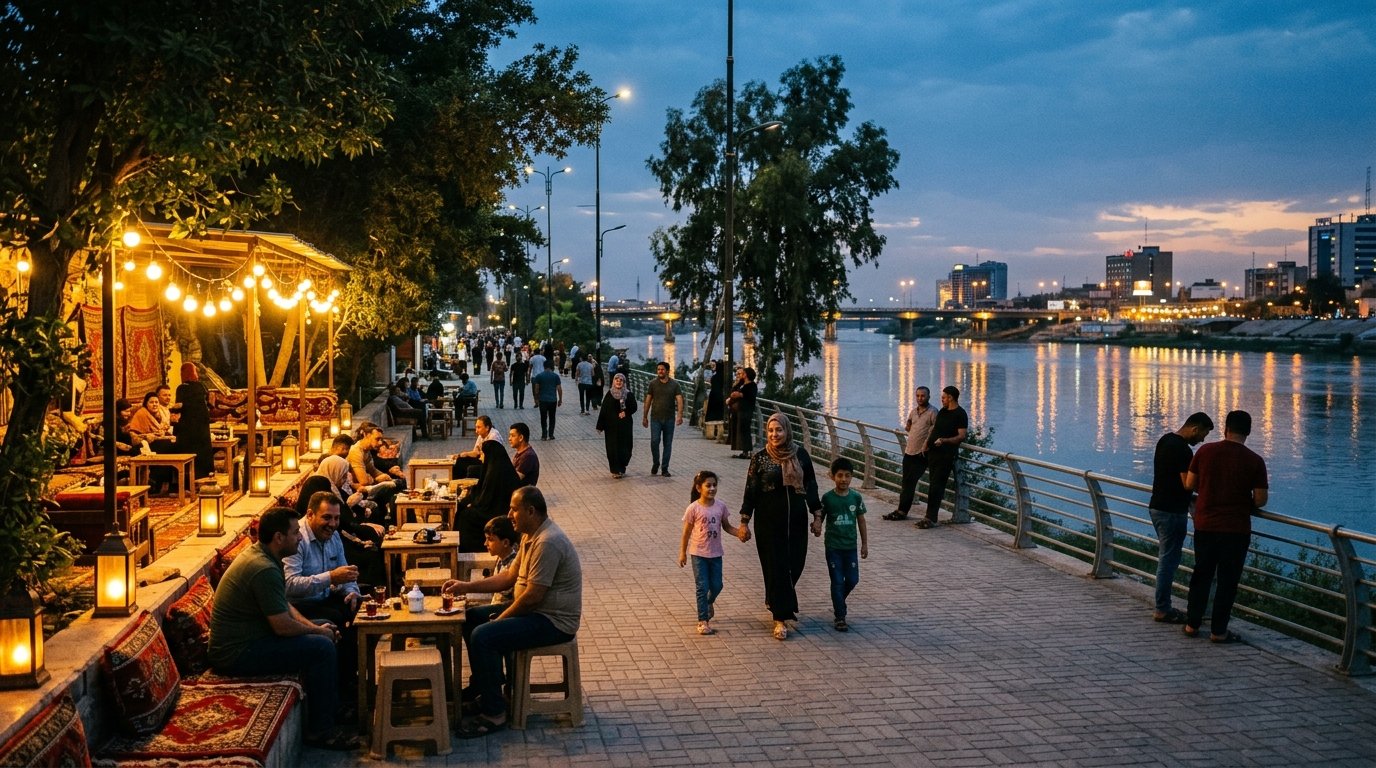
- Post-Iftar Gathering (9:00 PM – Midnight): Families head to public parks, riverside walkways, and markets. Tea vendors fire up charcoal-fed samovars, and pastry shops stack trays of syrup-soaked sweets.
- Cafes and Neighborhood Games (Midnight – 2:00 AM): Tea shops pack with people drinking strong cardamom tea and playing dominoes, backgammon, or Mheibes—a traditional Ramadan game where two large teams try to detect a small ring hidden in one player's closed fist.
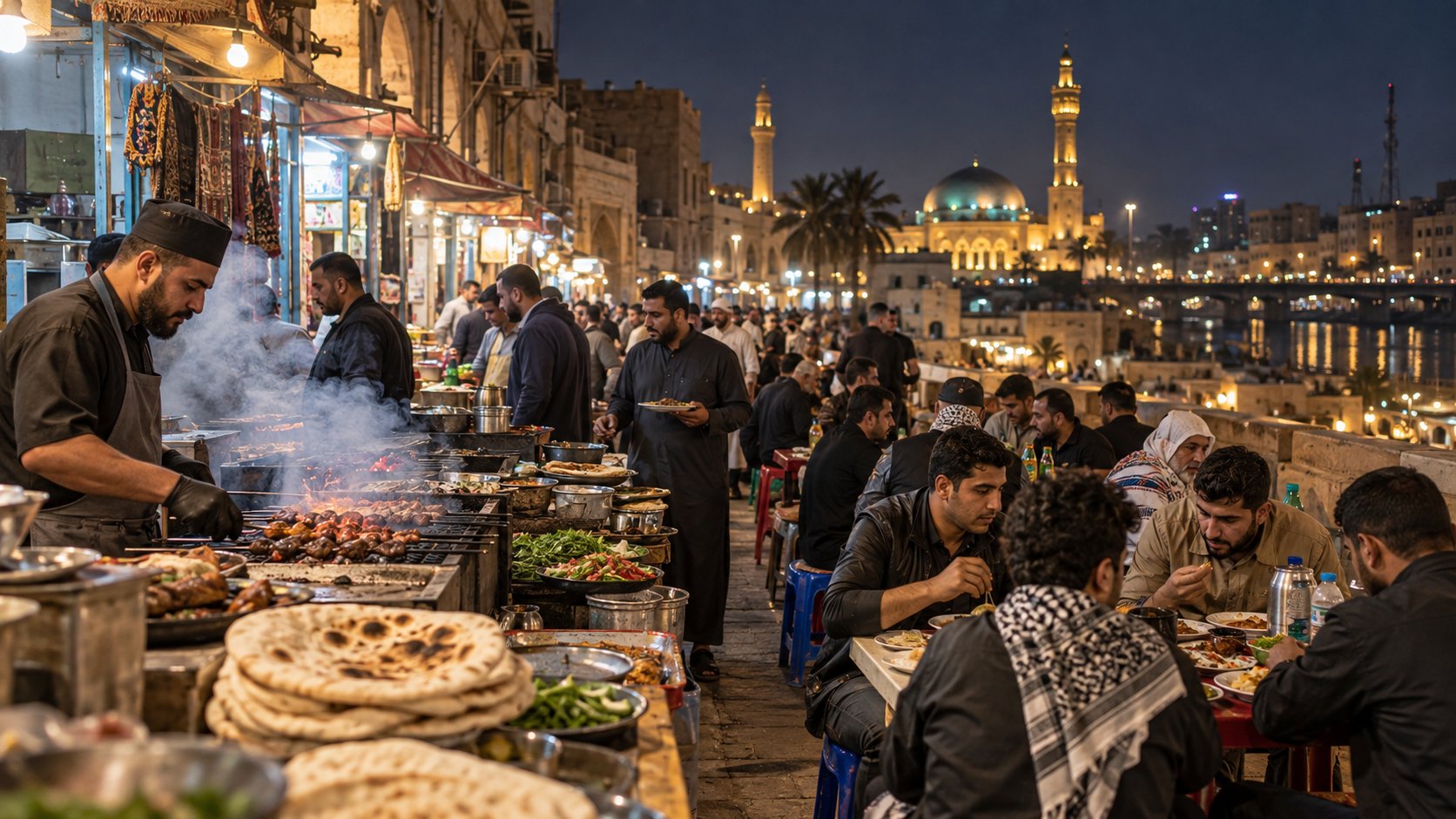
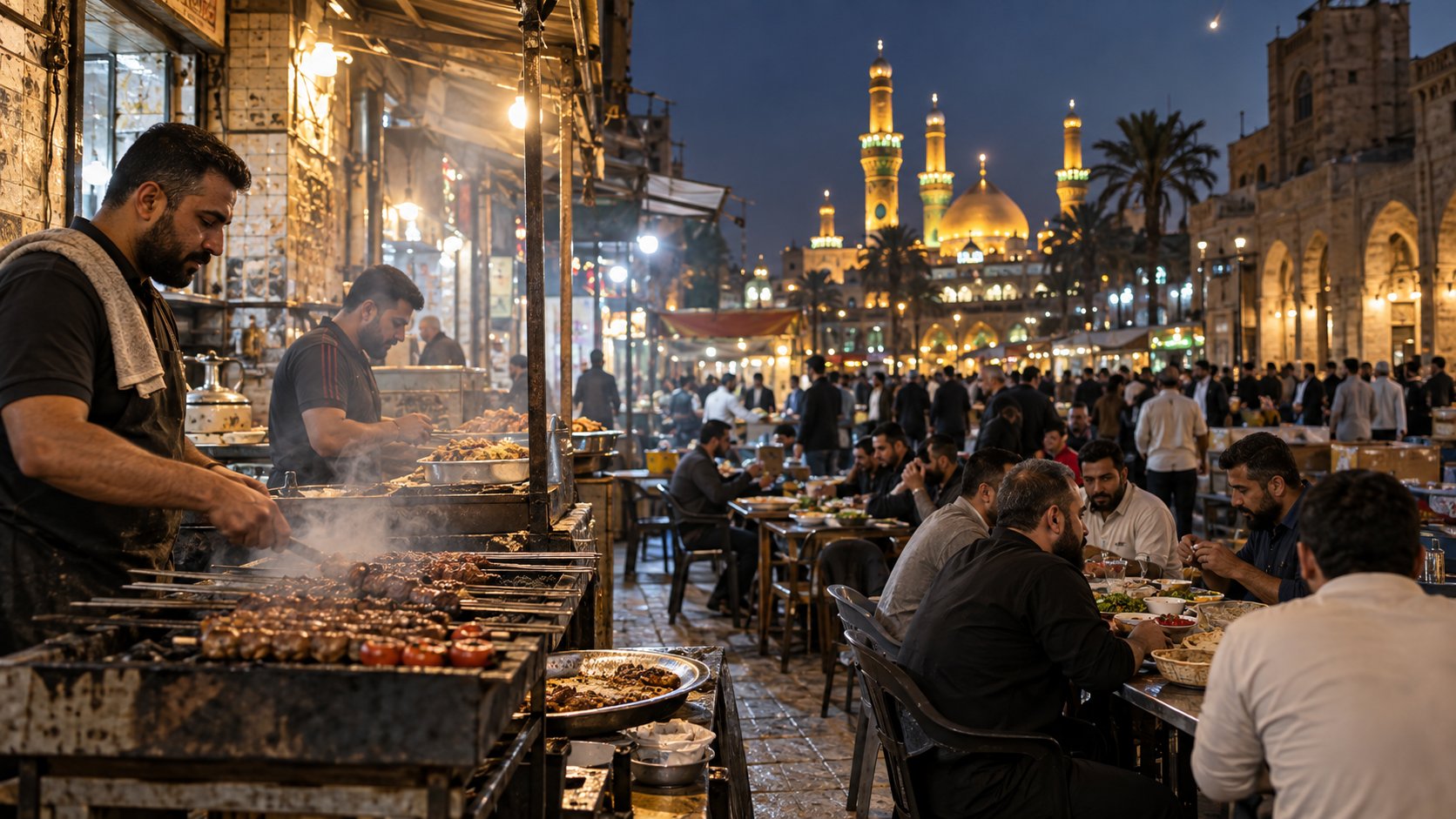
- The Suhoor Food Crawl (2:00 AM – Fajr): Charcoal grills fire up, bakeries slide dough into clay ovens, and street carts dish out hearty meals to carry diners through the coming fast.
Midnight Crawls by City
1. Baghdad: Riverfront Grills and Historic Quarters
In Baghdad, night crawls center on active commercial hubs: Kadhimiya, Karrada, and the historic streets branching off Mutanabbi Street.
- Kahi and Geymar: While famous as a morning breakfast, kahi—thin, flaky layers of baked pastry topped with rich water-buffalo clotted cream (geymar) and date syrup—remains a midnight favorite for suhoor.
- Kabab and Fresh Samoon: Skewers of minced spiced lamb (kabab koobideh style) grill over charcoal and slip straight into hot, diamond-shaped samoon fresh from brick ovens.
- Znoud el-Sit and Tea: Sweet shops in Karrada fry batches of crisp, cream-filled znoud el-sit (“lady’s forearms”), washed down with concentrated black tea spiced with crushed cardamom pods.
2. Mosul: Old City Flavors Along the Tigris
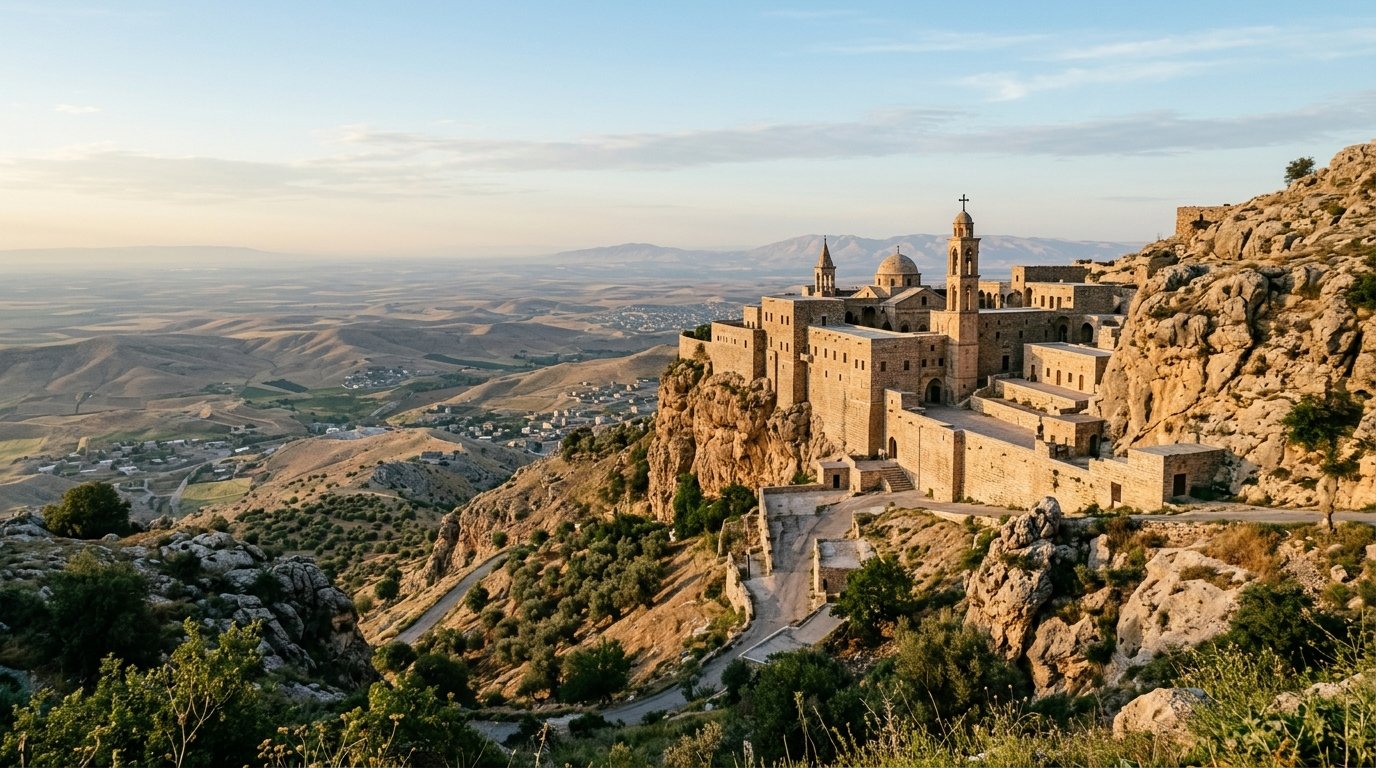
In Nineveh’s provincial capital, suhoor reflects the distinct culinary heritage of northern Iraq, emphasizing cracked wheat, aromatic herbs, and spiced ground meat.
- Mosul Kubba (Kubbat Mosul): Broad, flat disc-shaped kubba made with thin bulgur shells and packed with seasoned minced meat, almonds, and dried fruit are boiled or pan-fried on street corners.
- Maslawi Grilled Meats and Broths: Stalls in the rebuilt Old City and along the Mosul corniche serve spiced lamb skewers alongside hot bowls of chickpea and lentil broths.
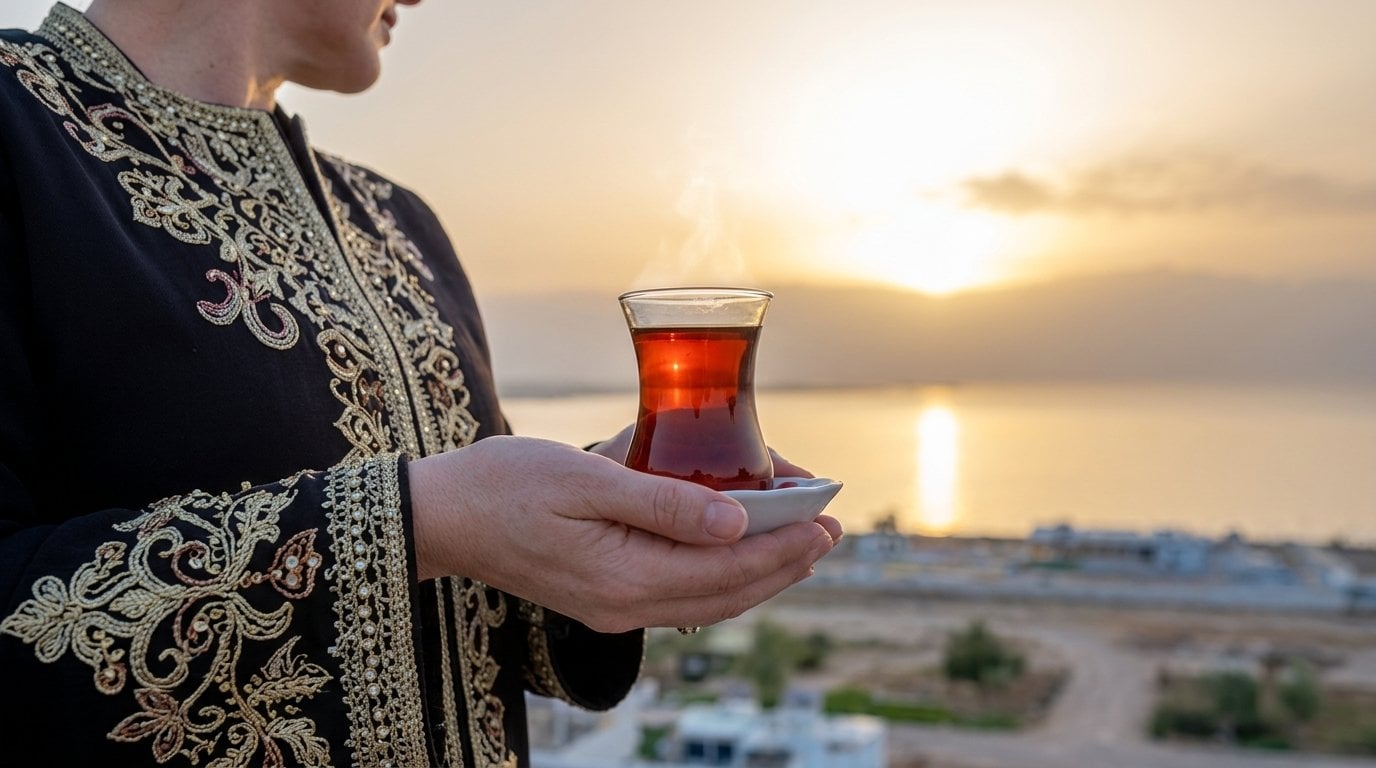
- Kleicha and Sweet Tea: Bakers prepare trays of kleicha, Iraq’s national date pastry flavored with cardamom and nigella seeds, served alongside small curved glasses (istikan) of hot tea.
3. Basra: Riverfront Dining Along the Shatt al-Arab
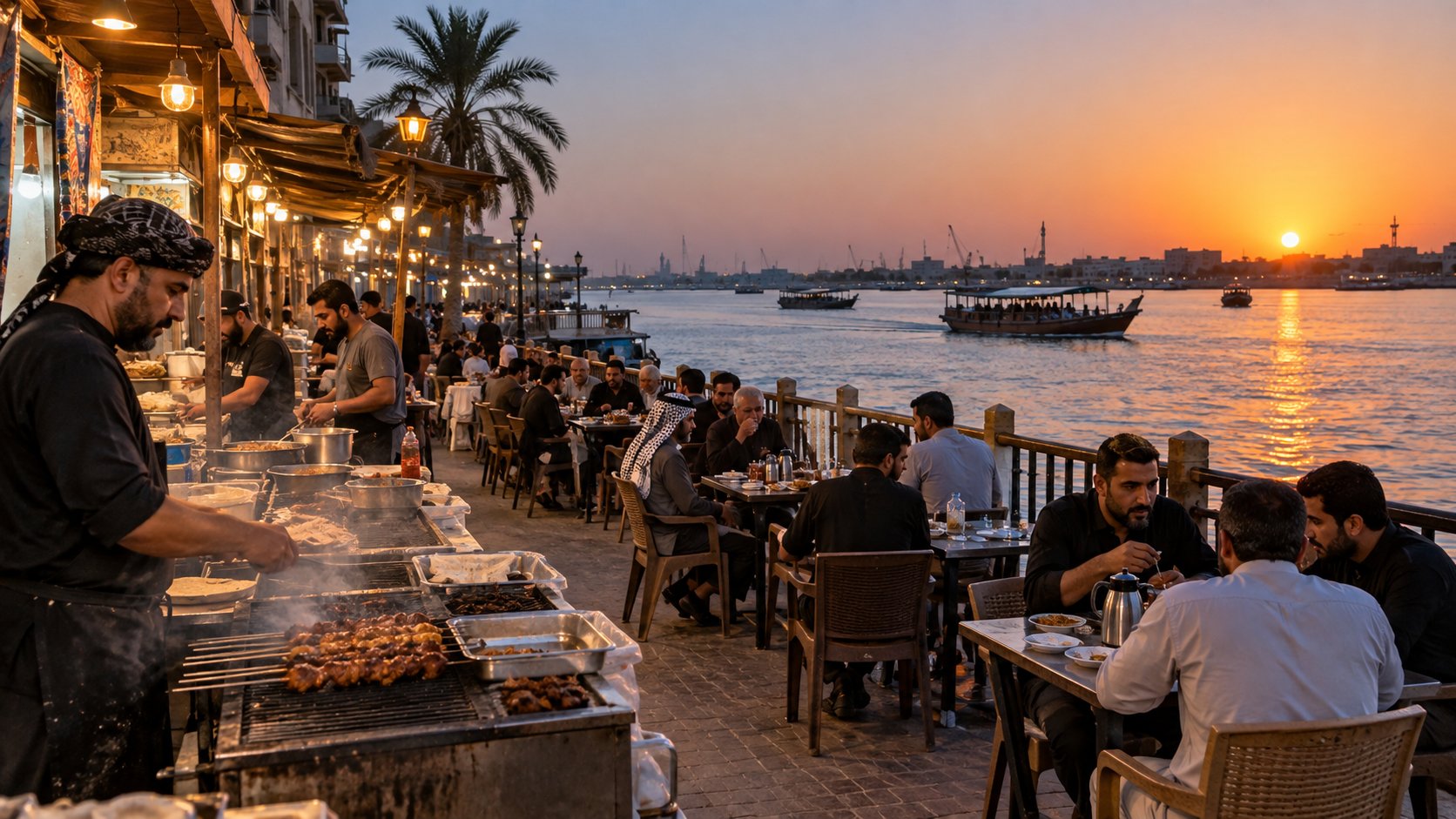
In the southern port city of Basra, cooler nighttime air pulls diners down to the corniche along the Shatt al-Arab waterway.
- Late-Night Masgouf: Seasoned carp, split open and slow-roasted upright around wood fires as masgouf, draws crowds to riverfront fish restaurants until the early morning hours.
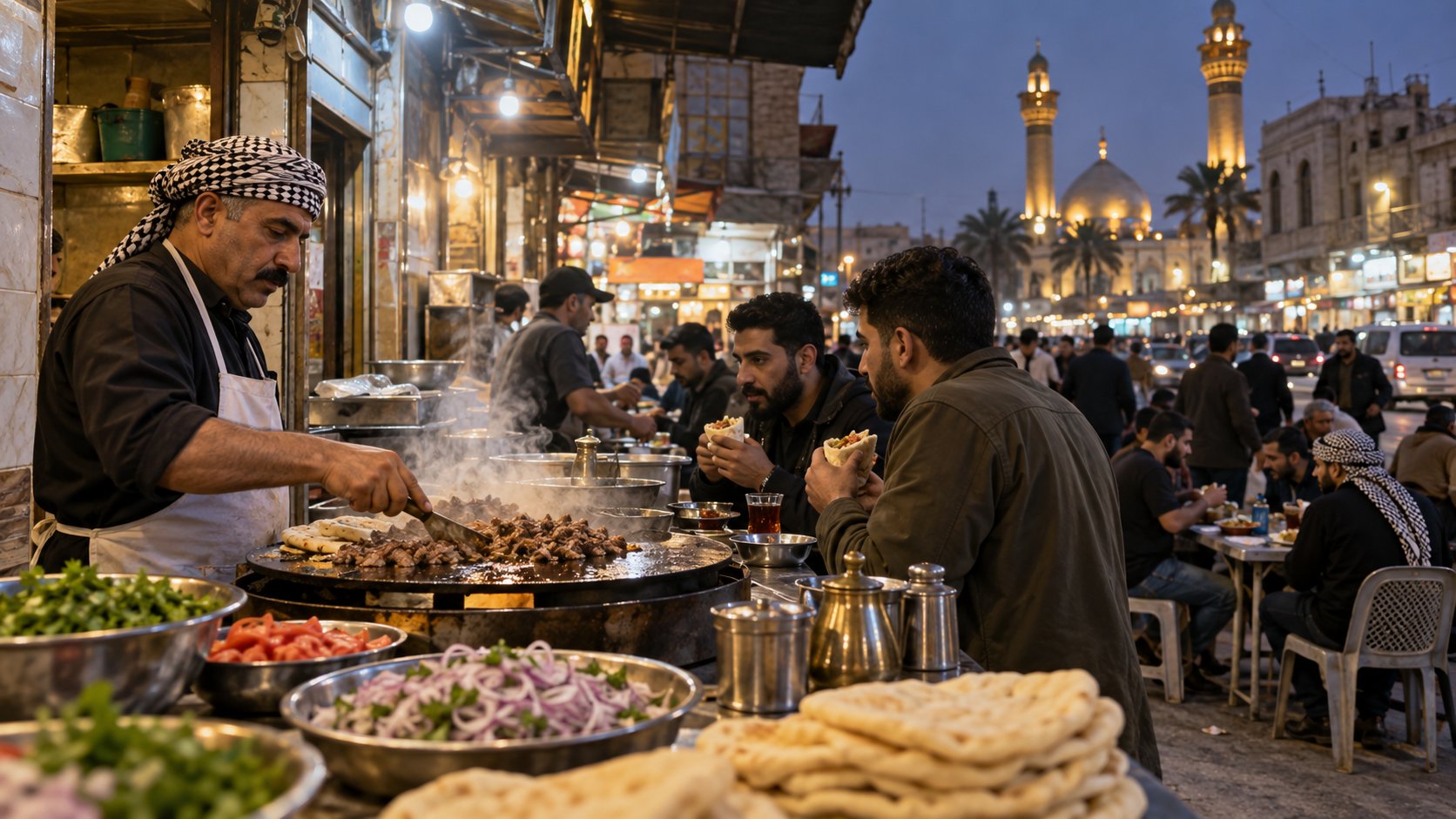
- Fresh Falafel Sandwiches: Small street carts fry spiced chickpea falafel patties to order, loading them into warm bread with pickled turnips, wild cucumbers (turshi), and tangy amba mango pickle sauce.
- Daheen and Date Confections: Close to southern palm groves, Basra sweet shops offer dense, caramel-rich daheen and sesame date cakes that provide sustained energy for fasting.
Practical Etiquette and Traveler Tips
- Timing Your Visit: Suhoor stalls hit peak business between 1:30 AM and 3:30 AM. Arriving around 1:00 AM lets you avoid long waits at popular bakeries and grills.
- Carry Cash: Street food vendors, small bakeries, and tea shops deal solely in Iraqi dinars (IQD). Carry small bills.
- Respect the Dawn Cutoff: All food and drink service stops the moment the dawn prayer call (adhan al-fajr) sounds. Vendors pack up quickly once it rings out.
- Accepting Hospitality: Street vendors and tea shop patrons frequently strike up conversations or invite visitors to watch a round of Mheibes. Accepting a glass of tea is standard courtesy.
Sources
- Wikipedia — Ramadan (Accessed: March 2026)
- Wikipedia — Suhur (Accessed: March 2026)
- Wikipedia — Iraqi cuisine (Accessed: March 2026)
- Wikipedia — Mheibes (Accessed: March 2026)
- Wikipedia — Kahi (food) (Accessed: March 2026)
- Wikipedia — Samoon (Accessed: March 2026)
- Wikipedia — Znoud el-sit (Accessed: March 2026)
- Wikipedia — Masgouf (Accessed: March 2026)
- Wikipedia — Kibbeh (Accessed: March 2026)
- Wikipedia — Daheen (Accessed: March 2026)
- Wikipedia — Kleicha (Accessed: March 2026)
- Wikipedia — Mutanabbi Street (Accessed: March 2026)
- Wikipedia — Shatt al-Arab (Accessed: March 2026)
❓Frequently Asked Questions
Here are answers to frequently asked questions about the content above
Suhoor is the pre-dawn meal consumed by Muslims across Iraq during Ramadan before the start of the daily fast at dawn (fajr).
Street food vendors and sweet shops typically open in the evening after iftar, reaching their peak suhoor activity between 1:00 AM and roughly 3:30 AM before closing at the morning call to prayer.
Popular midnight foods in Baghdad include grilled lamb kebabs tucked into diamond-shaped samoon bread, flaky kahi pastry served with rich buffalo-milk geymar, and cream-filled pastries like znoud el-sit.
A signature Ramadan pastime is Mheibes, an Iraqi deception and bluffing game played between two large teams where one player attempts to identify which opponent is concealing a hidden ring.
Mosul is famous for its distinctive thin disc-shaped kubba and regional spiced pastries, whereas Basra showcases riverfront grilled fish along the Shatt al-Arab and rich confections like daheen alongside date-based sweets.
Yes. Visitors of all backgrounds are welcomed at night markets, cafes, and food stalls throughout Iraqi cities during Ramadan nights, provided they observe local etiquette and respect the dawn fasting cutoff.