Packing for Iraq comes down to three factors: the region you visit, the season, and whether holy shrines are on your itinerary. This guide explains what men and women should wear across Iraqi Kurdistan, federal cities, and sacred sites like Karbala and Najaf.
What to Wear in Iraq: Dress Code Guide for Men, Women, and Shrines
Excerpt: Packing for Iraq comes down to three factors: the region you visit, the season, and whether holy shrines are on your itinerary. This guide explains what men and women should wear across Iraqi Kurdistan, federal cities, and sacred sites like Karbala and Najaf.
Meta Description: Complete dress code guide for traveling in Iraq. Learn what men and women should wear in Kurdistan, Baghdad, and holy shrines like Karbala and Najaf.
What is the basic dress code for tourists in Iraq?
The basic rule for traveling anywhere in Iraq is modesty. For both men and women, clothing should cover the shoulders and knees at minimum, while loose, non-transparent fabrics work best in the heat.
Iraq is a socially conservative country, but dress expectations shift depending on geography. You do not need to wear traditional local clothing, nor do foreign women need to wear a headscarf on every city street. However, wearing tight gym clothes, tank tops, or short shorts in public will draw unwanted stares and can cause entry issues at checkpoints, heritage sites, and restaurants.
Dressing thoughtfully shows respect for local customs, and in a country where hospitality is central, that small effort makes interactions easier and friendlier. As travel guides from Stay In Iraq and Travel to Iraq point out, the easiest approach is packing lightweight, loose-fitting layers that protect against the sun while keeping you covered.
Regional differences: Iraqi Kurdistan vs Federal Iraq vs holy cities
Dress norms vary across the country. What is standard in a café in Erbil is completely out of place outside a shrine in Karbala.
Iraqi Kurdistan (Erbil, Sulaymaniyah, and Duhok)
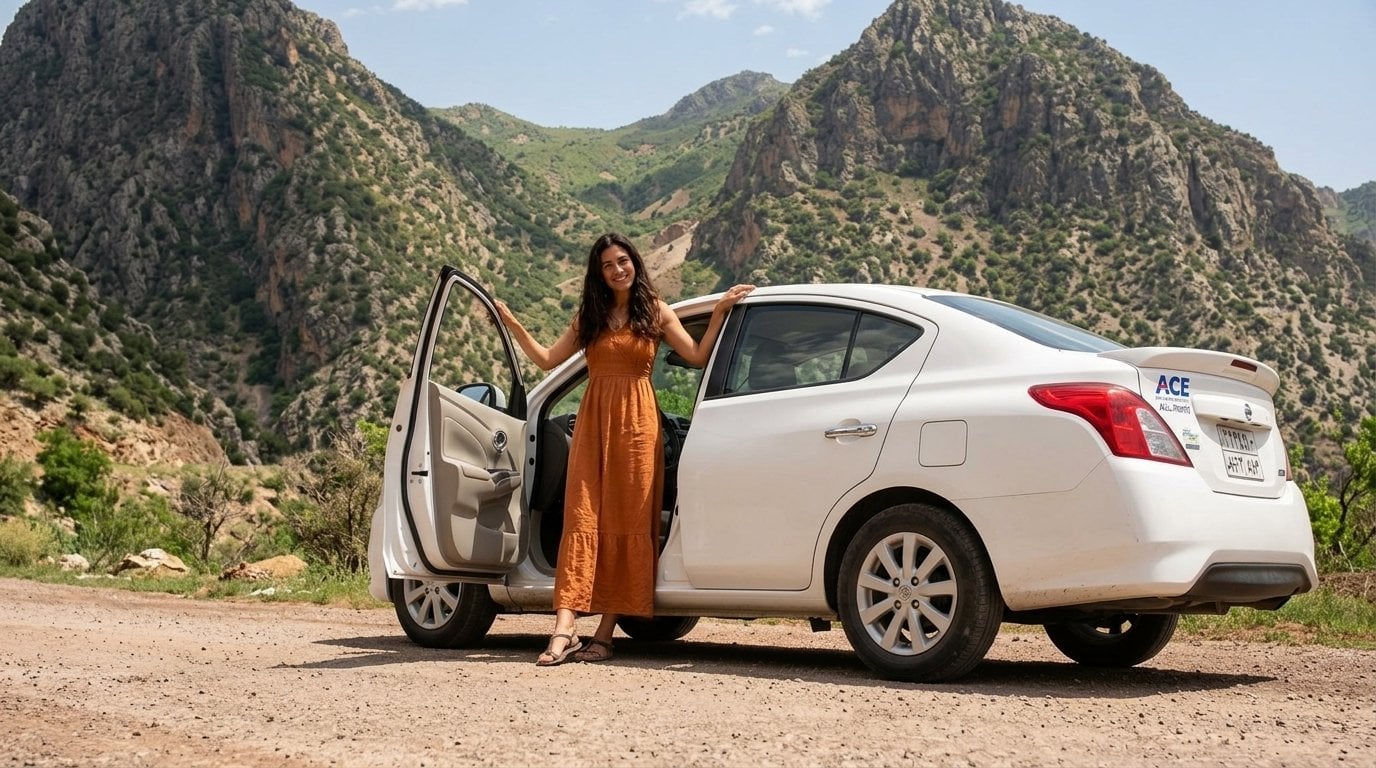
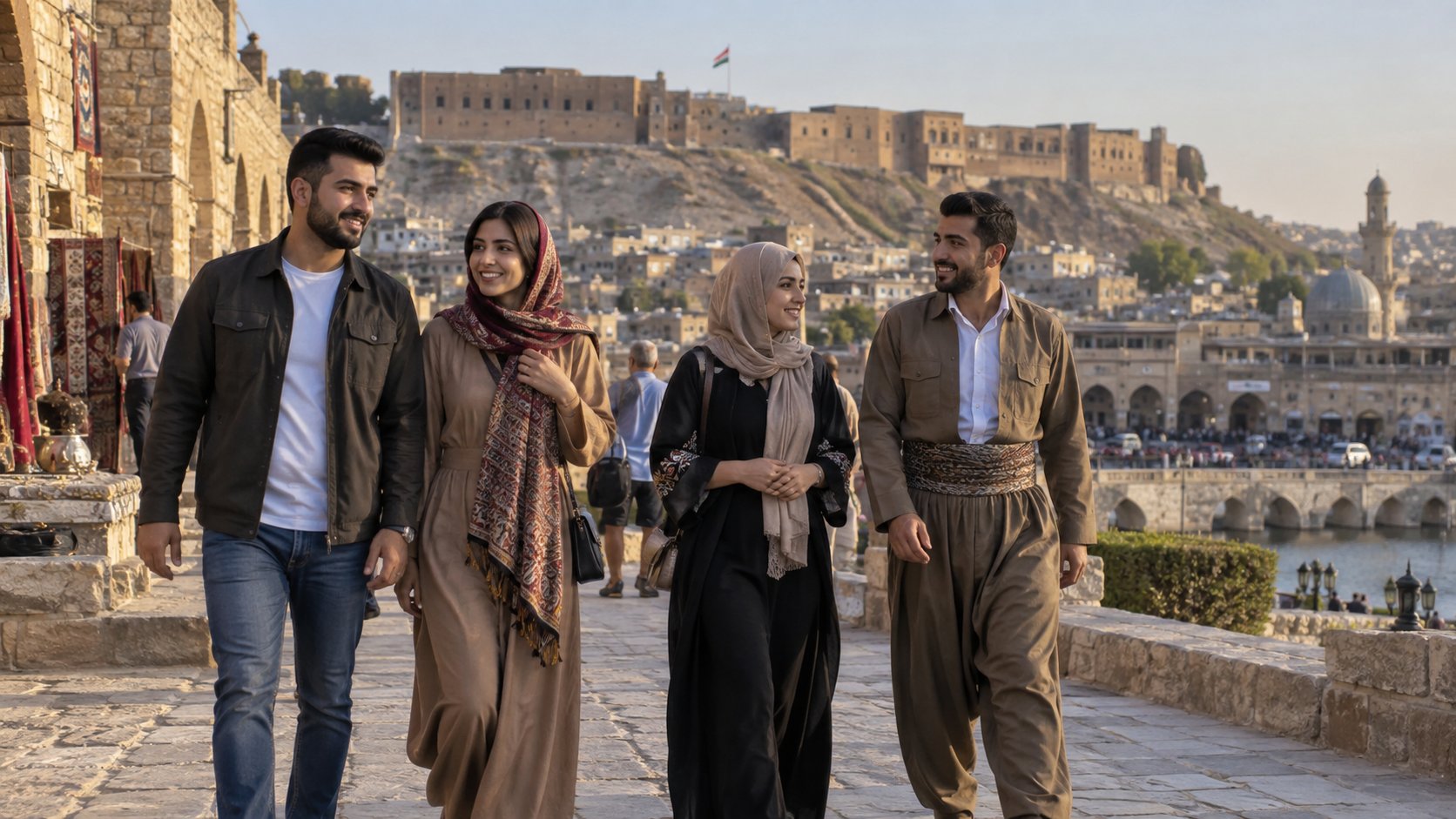
The Kurdistan Region in northern Iraq has the most relaxed dress expectations in the country. In urban hubs like Erbil and Sulaymaniyah, local Kurdish women wear a mix of modern Western outfits, jeans, t-shirts, and colorful traditional dresses, as noted by Laure Wanders.
Foreign women do not need to cover their hair in public streets, malls, or restaurants in Kurdistan. T-shirts and jeans are common, though tops should still cover the chest and shoulders. Men can wear shorts in Erbil shopping centres and modern café districts, as tour operator Ali Babylon Tours notes, although lightweight trousers remain the standard when visiting older bazaars or rural mountain villages.
Federal Iraq (Baghdad, Basra, Mosul, and Babylon)
Federal Iraq requires a slightly more modest baseline. In cities like Baghdad, Basra, and Mosul, people dress in contemporary but modest styles.
Foreign women in Baghdad do not need to wear a headscarf on ordinary public streets, as documented by Visit Iraq. However, wearing loose trousers, maxi skirts, or tunics with sleeves reaching past the elbow will help you blend in. Men in Federal Iraq almost exclusively wear long pants. Walking around Baghdad or Basra in shorts marks you immediately as an oblivious tourist.
The holy shrine cities (Najaf, Karbala, Kadhimiya, and Samarra)
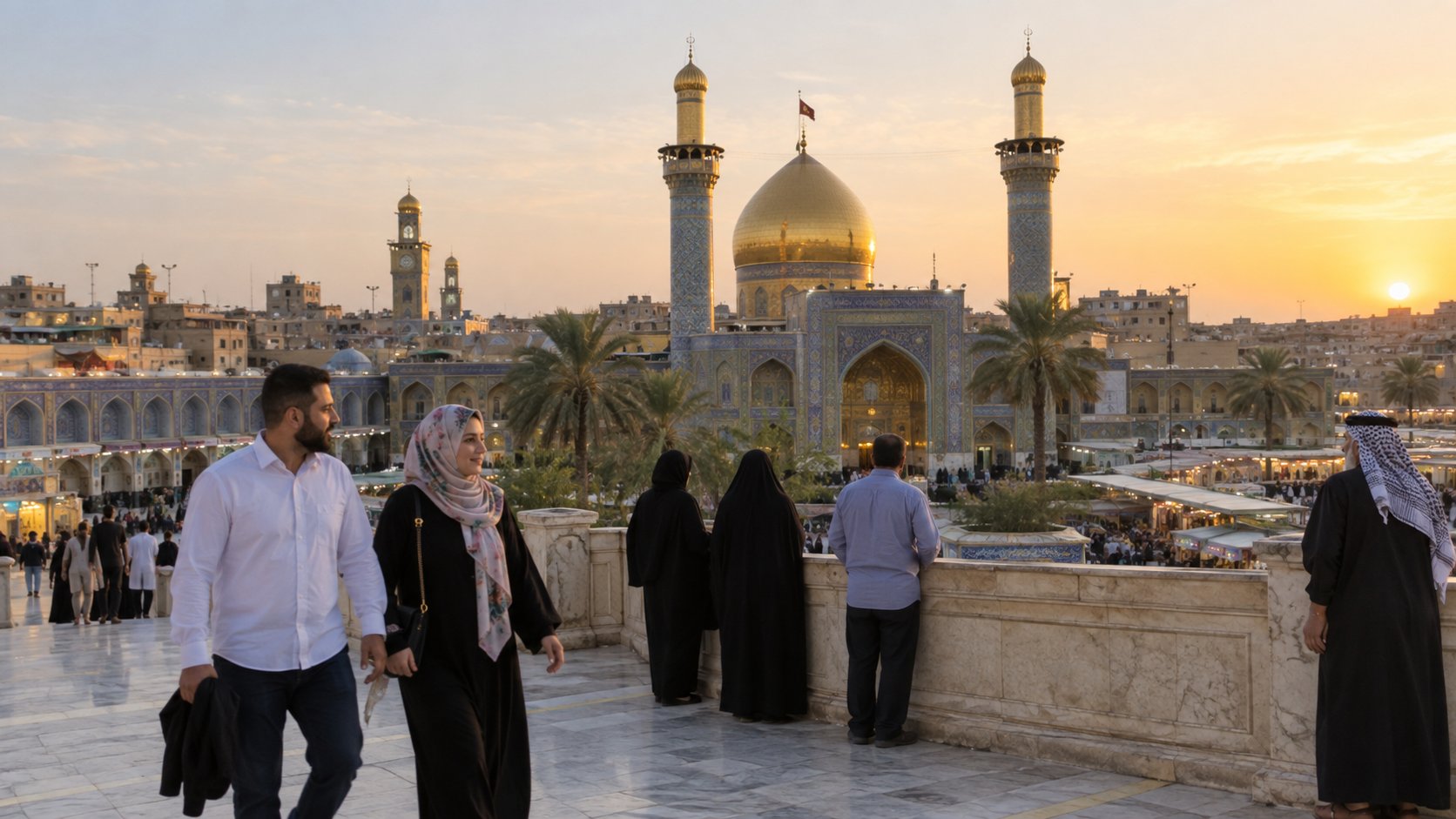
Religious pilgrimage cities follow strict, non-negotiable dress standards. Najaf and Karbala hold the sacred shrines of Imam Ali, Imam Husayn, and Al-Abbas, while Baghdad's Kadhimiya district holds the Al-Kadhimiyya shrine.
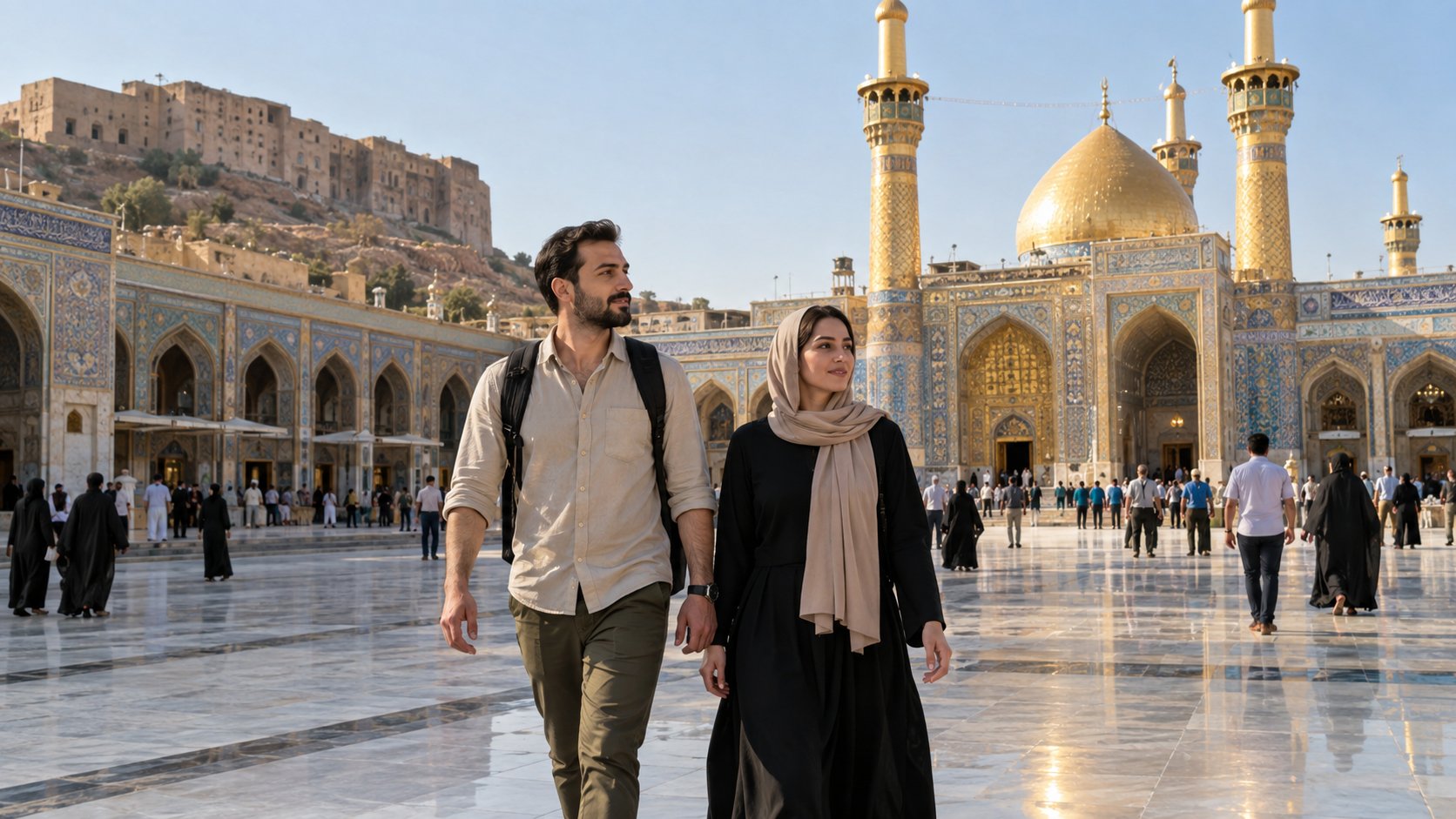
In these shrine districts, all women, including foreign visitors, must wear an abaya (a full-length black cloak) and a black headscarf covering all hair and the neck, as explained in the Visit Iraq Najaf guide. Modesty checkpoints at the perimeter enforce these rules before letting visitors enter.
Men visiting shrines must wear long trousers and shirts with sleeves. Shorts, sleeveless tops, and shirts with bold graphics or slogans are prohibited at shrine gates.
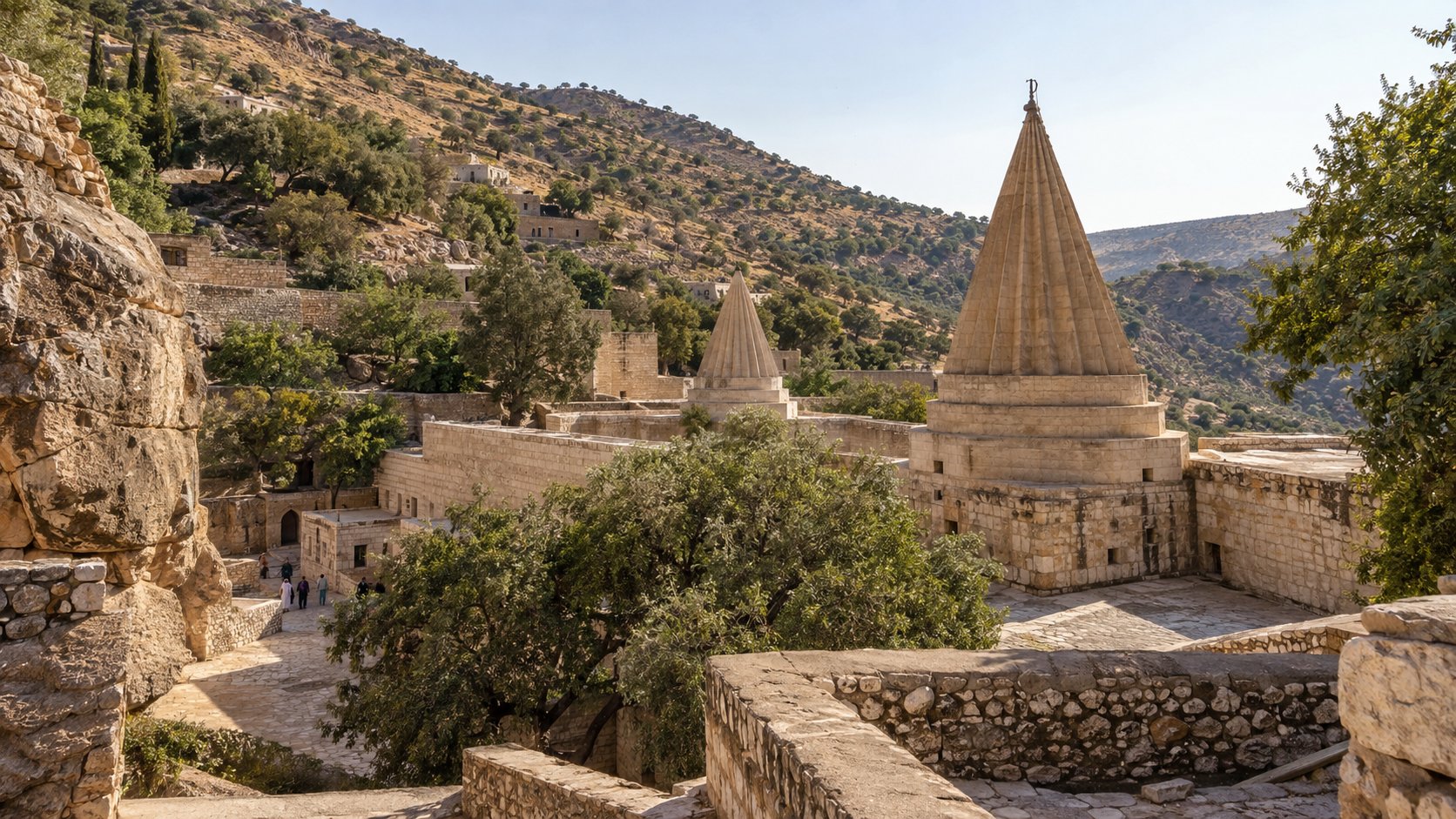
Lalish: the Yazidi holy valley
Lalish, situated in the Nineveh Plains of northern Iraq, is the holiest site of the Yazidi faith. Visiting Lalish requires following distinct spiritual customs, as detailed by As We Saw It and Young Pioneer Tours:
- You must remove your shoes at the town entrance and walk everywhere inside the valley barefoot or in socks.
- Pack a pair of thick, dark socks. In summer, the stone pathways get hot under the sun, and mulberry stains on the ground will ruin light fabrics.
- Do not wear dark blue clothing, as the color holds sacred significance in Yazidi tradition and visitors are asked to avoid it.
- Never step on stone door thresholds when entering shrines or stone rooms. Step cleanly over them instead.
What should men wear when traveling in Iraq?
For men, packing is simple, but there are clear boundaries between acceptable daily casual wear and inappropriate clothing.
What works well
- Long trousers: Lightweight cotton chinos, linen pants, and jeans are the best choices. They work across checkpoints, restaurants, archaeological ruins, and city streets.
- T-shirts and polo shirts: Plain t-shirts that cover the shoulders are fine in almost every public setting outside religious shrines. Polos and button-down shirts look sharp and help at security checkpoints.
- One collared long-sleeved shirt: Having at least one neat button-down shirt is useful for upscale restaurants, formal meetings, and shrine visits.
What to leave behind
- Shorts: Avoid shorts in Federal Iraq. While shorts pass in hotel gyms or modern parts of Erbil, wearing them on streets in Baghdad, Mosul, or Nasiriyah looks odd and attracts stares.
- Tank tops and sleeveless shirts: Sleeveless shirts are considered undressed in public.
- Clothing with political or military slogans: Checkpoint guards review tourist vehicles regularly. Wearing military camouflage prints, tactical gear, or shirts with political statements can create unwanted scrutiny.
What should women wear when traveling in Iraq?
Women have more wardrobe variables to consider, but following a few straightforward rules makes packing manageable.
Everyday outfits for Federal Iraq and Kurdistan
- Pants and bottoms: Loose linen trousers, wide-leg culottes, ankle-length cotton pants, and maxi skirts work well. Avoid skin-tight leggings worn as standalone pants, though leggings work fine under a long tunic dress.
- Tops: Long tunics, loose button-down shirts, and blouses that cover the hips and upper arms are ideal. Lightweight cardigans or kimonos worn over short-sleeved tops let you add coverage when moving into more conservative neighborhoods.
- Colors and patterns: You do not have to wear black every day. Modest colorful tops and patterned maxi dresses are common in Baghdad, Kurdistan, and southern bazaars.
How to manage the headscarf (hijab)
Foreign women do not need to wear a headscarf on ordinary streets in Erbil, Sulaymaniyah, Baghdad, or Mosul. However, you should carry a lightweight scarf in your day bag at all times. You will need it whenever you enter a mosque, pass through conservative districts, or visit rural villages.
A cotton or viscose scarf stays in place better than slippery silk or satin. Drape it loosely over your head and toss one end over your shoulder.
Buying an abaya for holy shrines
Do not buy an expensive abaya in your home country before flying to Iraq. Practical travel advice from the Iraq Tourism Guide emphasizes that local abayas and chadors are sold right outside shrine entrances in Karbala, Najaf, and Kadhimiya.
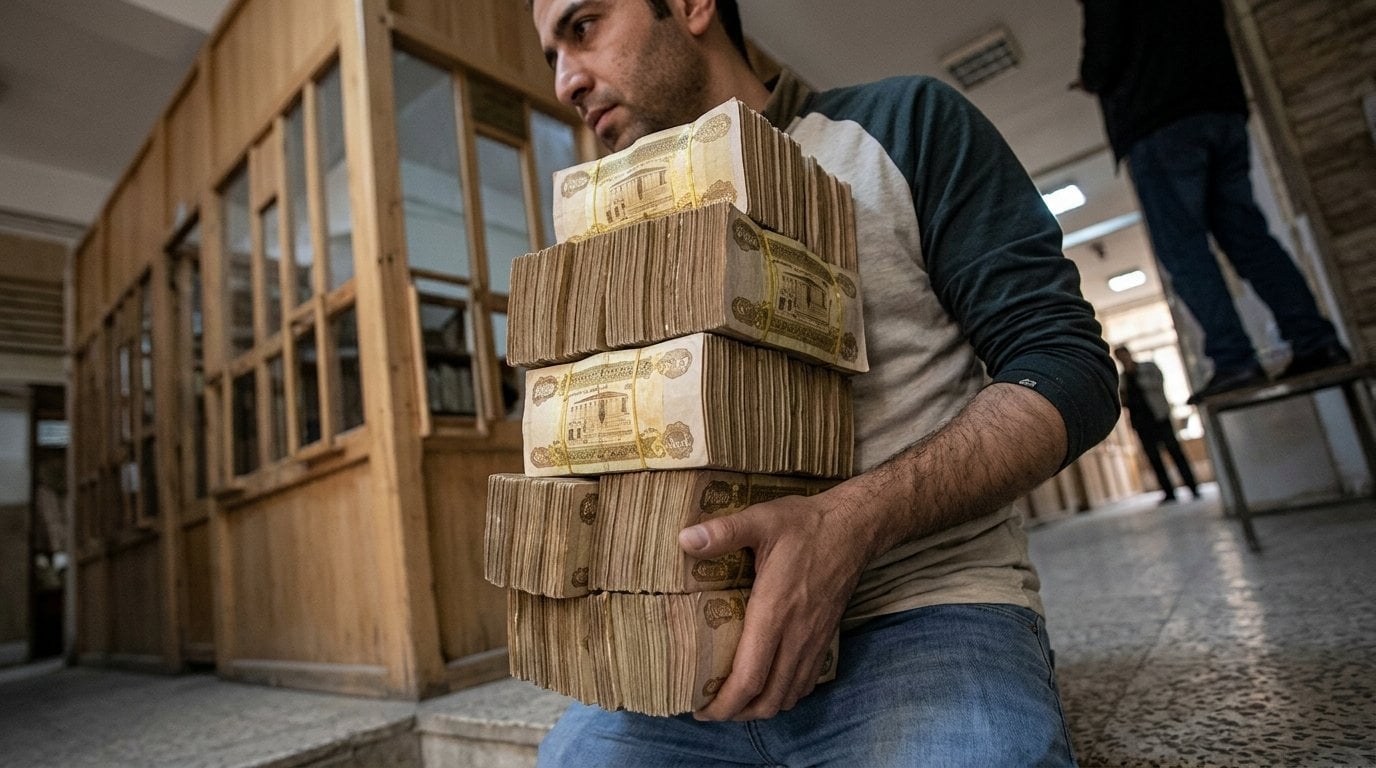
A simple black abaya or draped chador in the local markets costs between 5,000 and 20,000 Iraqi Dinars (roughly 4 to 15 US dollars). Local vendors will show you how to wrap and secure the fabric. Because these outer garments are black and trap heat, wear thin, breathable cotton clothes underneath.
How to dress for Iraq's seasonal weather
Iraq experiences dramatic climate variations, from boiling desert summers to freezing mountain winters. Packing the wrong fabrics can make sightseeing exhausting.
Summer (mid-May to September)
Summers across central and southern Iraq are intense, with temperatures regularly surpassing 45°C to 50°C in Baghdad and Basra, as recorded by the Iraq Tourism Guide.
- Choose natural, breathable fabrics like 100% linen or lightweight loose cotton. Synthetic fabrics like polyester trap sweat and heat against your body.
- Wear loose long-sleeved shirts to protect your skin from direct sun radiation. In extreme heat, light-colored long sleeves keep you cooler than exposed skin.
- Bring quality UV-blocking sunglasses and a wide-brimmed sun hat for open archaeological ruins like Babylon, Ur, and Hatra, where shade is scarce.
Winter (December to February)
Many travelers assume Iraq is hot year-round, but winters are cold and damp. Temperatures in Baghdad drop to 5°C to 15°C at night, while northern Kurdistan receives snow and freezes over mountain passes.
- Pack a warm fleece or mid-weight jacket for Baghdad and southern desert nights.
- If traveling through Kurdistan, bring a winter coat, thermal base layers, a beanie, and waterproof footwear.
- Indoor heating in budget hotels can be limited, so warm sleepwear is practical.
Spring and Autumn (March to April and October to November)
These shoulder months offer pleasant daytime temperatures between 22°C and 32°C. Light layers, casual shirts, and a light jacket for evenings are sufficient.
Footwear and essential packing accessories
Footwear choices require extra thought due to cultural habits and varied terrain.
The slip-on shoe advantage
You will take your shoes off frequently throughout the day: at mosques, inside shrine complexes, at Lalish, and when entering traditional Iraqi homes or guesthouses. Shoes with complex laces become an annoying delay at every stop.
- Choose comfortable slip-on walking shoes, loafers, or sturdy walking shoes that slide on and off easily.
- At major shrines, you leave your shoes at a dedicated deposit counter called a Kishwaniyah, where an attendant gives you a numbered claim token, as described in the Najaf etiquette guide.
- Pack plenty of dark socks. Mosque carpets and shrine courtyards gather foot traffic and dust, and socks protect your feet from direct heat on outdoor marble tiles.
Other key accessories to pack
- Dust scarf or buff: Dust storms occasionally sweep across central and southern Iraq. A light cotton scarf protects your mouth and nose when dust picks up.
- Cross-body bag: A secure cross-body bag keeps your phone, cash, passport copy, and folded headscarf accessible while keeping your hands free.
- Universal power adapter: Iraq uses Type C, D, and G plugs at 230V, with British Type G being the most common in modern hotels, as detailed by Ali Babylon Tours.
Sources
- Laure Wanders — What to Wear in Iraq: Dress Code + Outfit Ideas (Accessed March 2026)
- Stay In Iraq — How to Dress in Iraq as a Traveller (Accessed March 2026)
- Young Pioneer Tours — What to Wear in Iraq: A Complete Guide (Accessed March 2026)
- Iraq Tourism Guide — Iraq Packing List: What to Pack for Iraq (2026) (Accessed March 2026)
- Travel to Iraq — What to Wear in Iraq: A Guide for Tourists (Accessed March 2026)
- Visit Iraq — Najaf & Kufa for Visitors: A Guide to Etiquette, Dress Code, and Best Times (Accessed March 2026)
- Visit Iraq — Solo Female Travel in Iraq: Dress Codes, Etiquette, and Transport (Accessed March 2026)
- Ali Babylon Tours — Iraq Packing List: What to Bring (Accessed March 2026)
- As We Saw It — Visit Lalish, the Yazidi Holy Site of Iraqi Kurdistan (Accessed March 2026)
❓Frequently Asked Questions
Here are answers to frequently asked questions about the content above
No. A headscarf is not mandatory on everyday streets in Baghdad, Mosul, Basra, or Iraqi Kurdistan. You only need to wear a headscarf when entering mosques, religious shrines, and conservative holy cities like Najaf and Karbala. However, carrying a lightweight scarf in your bag is recommended.
Men can wear shorts in modern areas of Iraqi Kurdistan like Erbil, as well as inside hotel gyms. In Federal Iraq, including Baghdad, Basra, and historic sites, wearing shorts in public is culturally discouraged and viewed as inappropriate. Men should stick to lightweight trousers.
Women must wear a full black abaya and a black headscarf covering all hair and the neck. Men must wear full-length trousers and shirts with sleeves. Shorts, sleeveless tops, and clothing with bold slogans are banned at shrine security gates.
You do not need to bring an abaya from home. Stalls and shops located directly outside the gates of the shrines in Karbala, Najaf, and Kadhimiya sell abayas and chadors for between 5,000 and 20,000 Iraqi Dinars (about 4 to 15 USD).
At Lalish, the holy Yazidi valley, visitors must remove their shoes at the entrance gate and walk barefoot or in socks throughout the town. Visitors should wear thick dark socks, avoid wearing the color blue, and avoid stepping on stone door thresholds.
Natural, breathable fabrics like 100% linen and loose woven cotton are best. They allow airflow and dry quickly in summer temperatures that frequently exceed 45°C (113°F). Avoid synthetic fabrics like polyester, which trap sweat and heat.