Experience winter in Iraqi Kurdistan with snow-covered Zagros peaks, Mount Korek cable cars, and Choman mountain cabins. This comprehensive guide covers cold-season packing, winter driving, Hamilton Road scenery, and practical mountain travel tips.
Winter in Iraqi Kurdistan
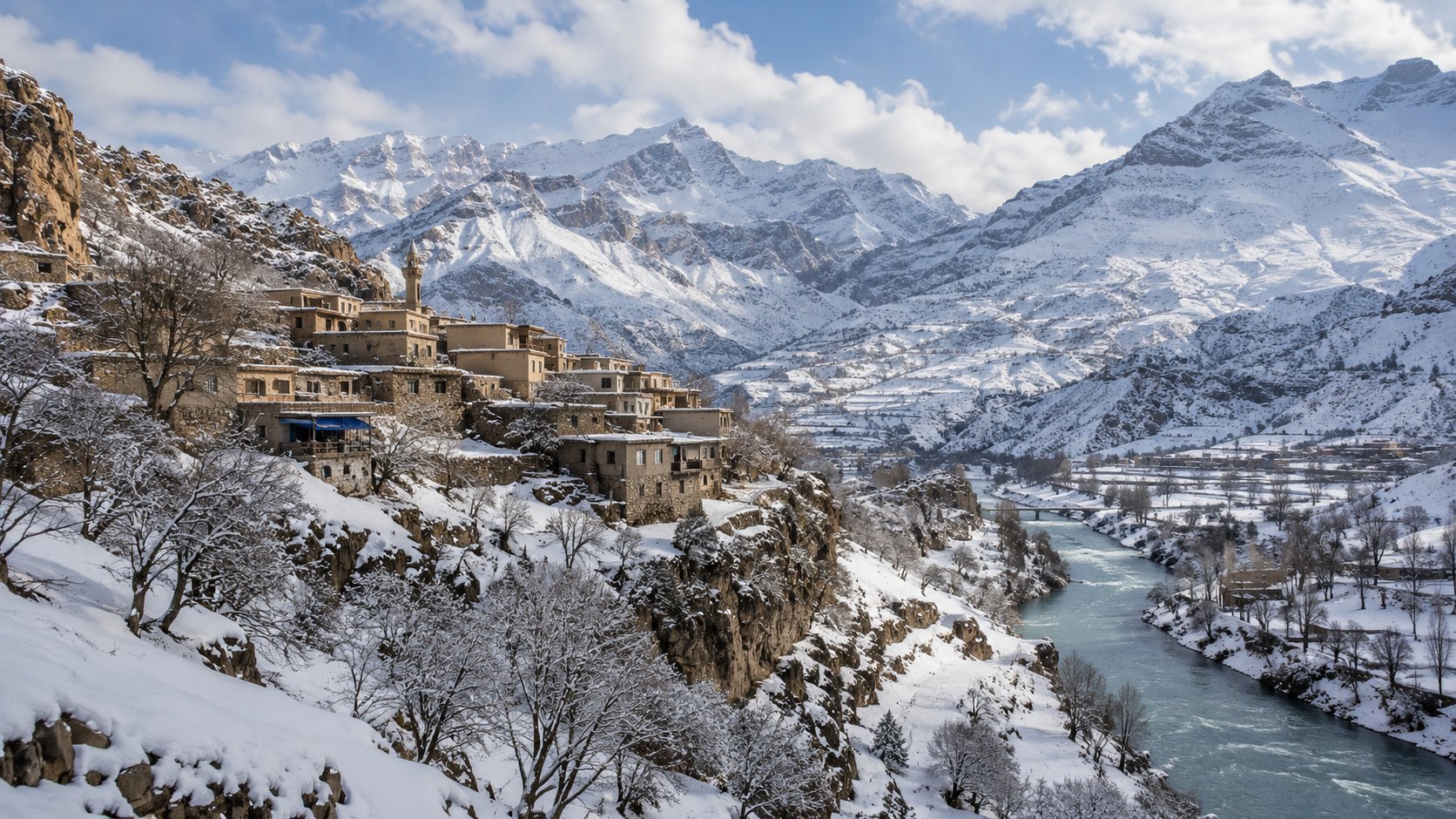
Most people picture Iraq as flat desert, date palm groves, and southern marshlands. The northern highlands of the Kurdistan Region are a completely different world. Between December and March, winter covers the Zagros mountains in snow. Cold air masses from Anatolia and the Caucasus push temperatures well below freezing, bringing several meters of snow to peaks above 1,500 meters.
Life slows down across the highlands once the snow arrives. Roadside waterfalls turn to ice, wood smoke hangs over stone villages, and mountain highways run between frozen river canyons. Visiting Iraqi Kurdistan in winter means dealing with subzero temperatures and icy roads, but it also means empty heritage sites, dramatic mountain drives, and warm guesthouses.
Snow at Mount Korek
Mount Korek, known locally as Chiyaye Korek, rises to 2,127 meters above sea level in the Soran district of Erbil Governorate, as recorded by Wikipedia Mount Korek. In 1973, the Iraqi government began building the Erbil Observatory near the summit, planning an astronomical observatory equipped with Swiss and German optical and radio telescopes. Missile strikes during the Iran-Iraq War damaged the complex, leaving behind an unfinished concrete shell that still overlooks the surrounding valleys.
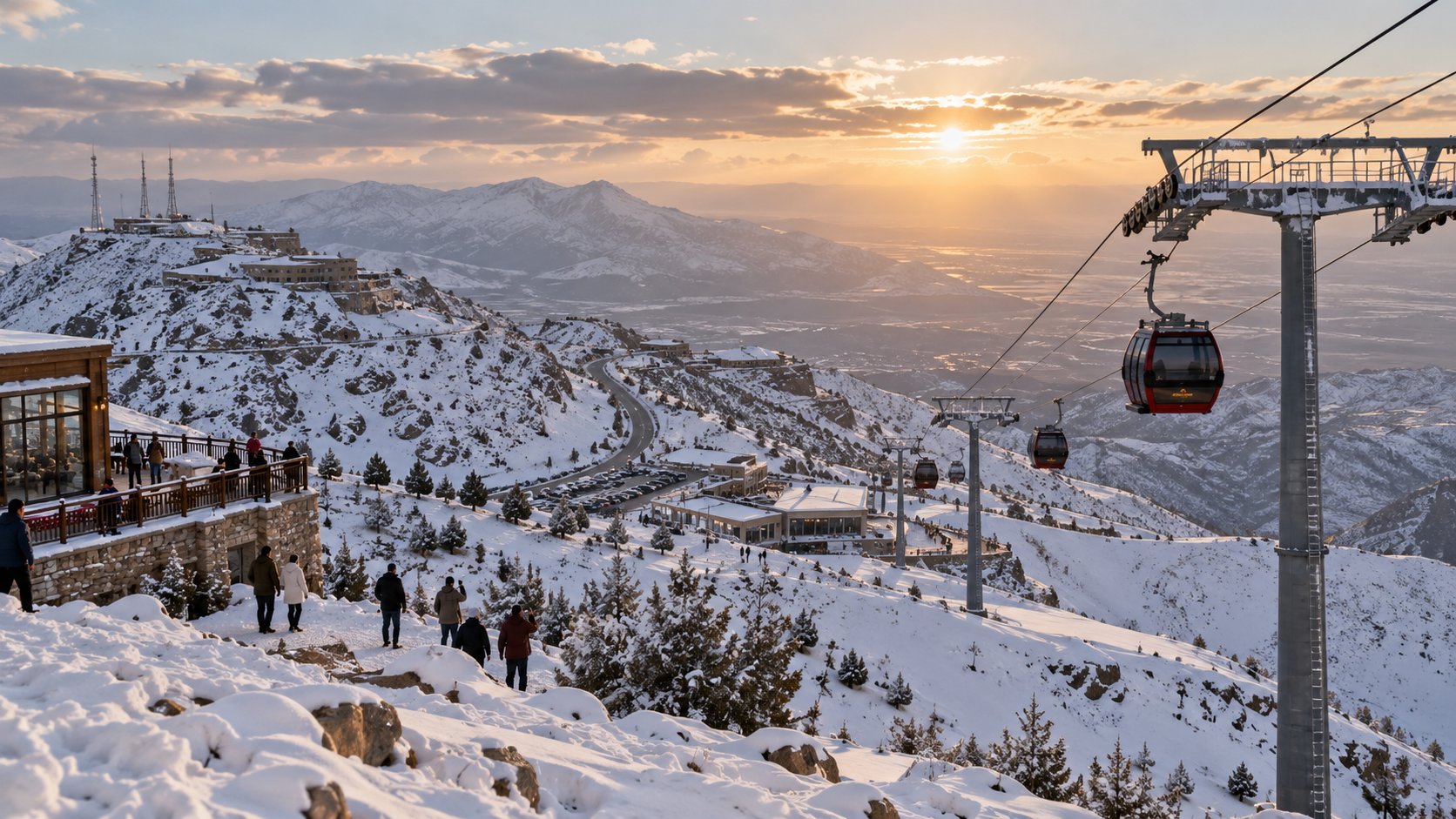
Today, Mount Korek is northern Iraq's primary winter mountain resort. A four-kilometer Doppelmayr cable car, documented by Korek Mountain Resort Teleferic, starts near Bekhal at roughly 650 meters and climbs to the resort plateau at 2,000 meters. The twenty-minute ride passes over limestone bluffs and pine valleys.
At the upper station, Korek Mountain Resort & Spa has 132 chalets, the Chiya Restaurant, Cafe 1690, and an open snow park. In winter, visitors rent sleds, drive snowmobiles, and look out over the Zagros peaks. The mountain averages 60 to 100 snowy days each winter. Temperatures regularly fall below freezing and can drop to minus 14 degrees Celsius during major storms. You can visit on a day trip from Erbil or book a chalet for an overnight stay.
Choman mountain cabins and the Balakayati valley
Driving northeast from Soran along the Hamilton Road brings you into Choman district, described by Wikipedia Choman District. Located 180 kilometers northeast of Erbil near the Iranian border, Choman includes the sub-districts of Galala, Haji Omeran, Samilan, and Qasre, along with 166 mountain villages across the Balakayati area.
Choman is the primary base for exploring Iraq's highest mountains. Mount Halgurd rises to 3,607 meters, as detailed by Wikipedia Halgurd, looming directly above Nawanda village. Next to it, Cheekha Dar reaches 3,611 meters on the Iranian border, documented by Wikipedia Cheekha Dar. Both mountains hold deep snowfields that survive well into summer.
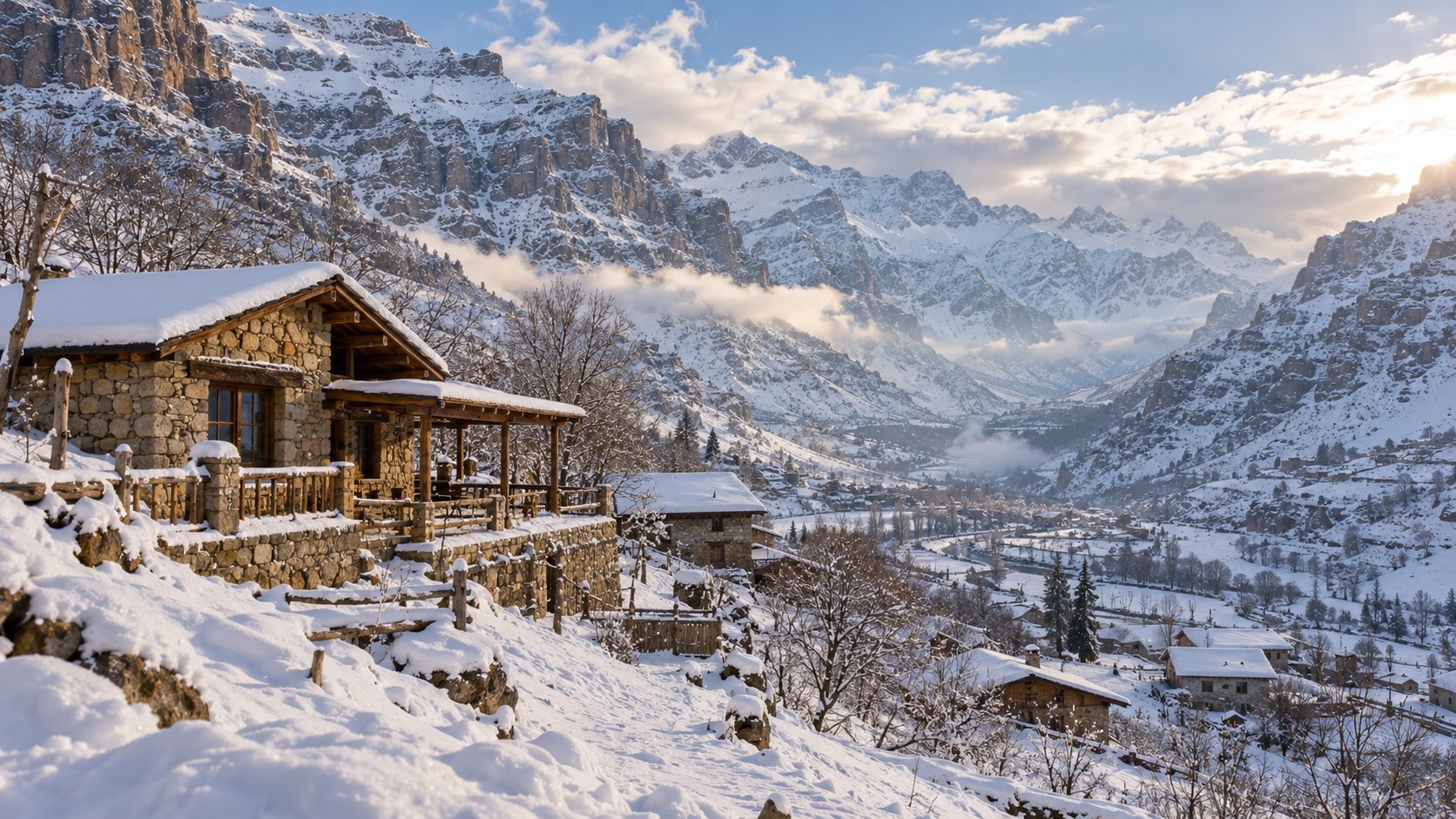
In recent years, residents in Choman and the nearby hamlet of Przhe have built stone and timber cabins for travelers. Most sit beside mountain streams, with broad windows facing snow-dusted limestone ridges and terraced walnut orchards.
Staying out here in midwinter takes some practical planning. Cabins rely on cast-iron wood stoves called sobbas or kerosene space heaters to counter night temperatures that regularly hit minus five. Heavy snowfall often knocks out the local grid, so confirm beforehand that your cabin has a working diesel generator. In Choman and along the highway, small tea shops run their wood stoves all day, dishing out hot black tea, lentil soup, and fresh flatbread.
Farther up toward the border, Haji Omeran records the heaviest snowfall in the region, according to Wikipedia Haji Omeran. Drifts pile meters high along the road banks. Down in a side valley, Lake Felaw freezes solid under sheer cliff faces. Snowshoers with local guides hike out across the frozen basin when weather permits.
Winter scenery along the Hamilton Road and Zagros passes
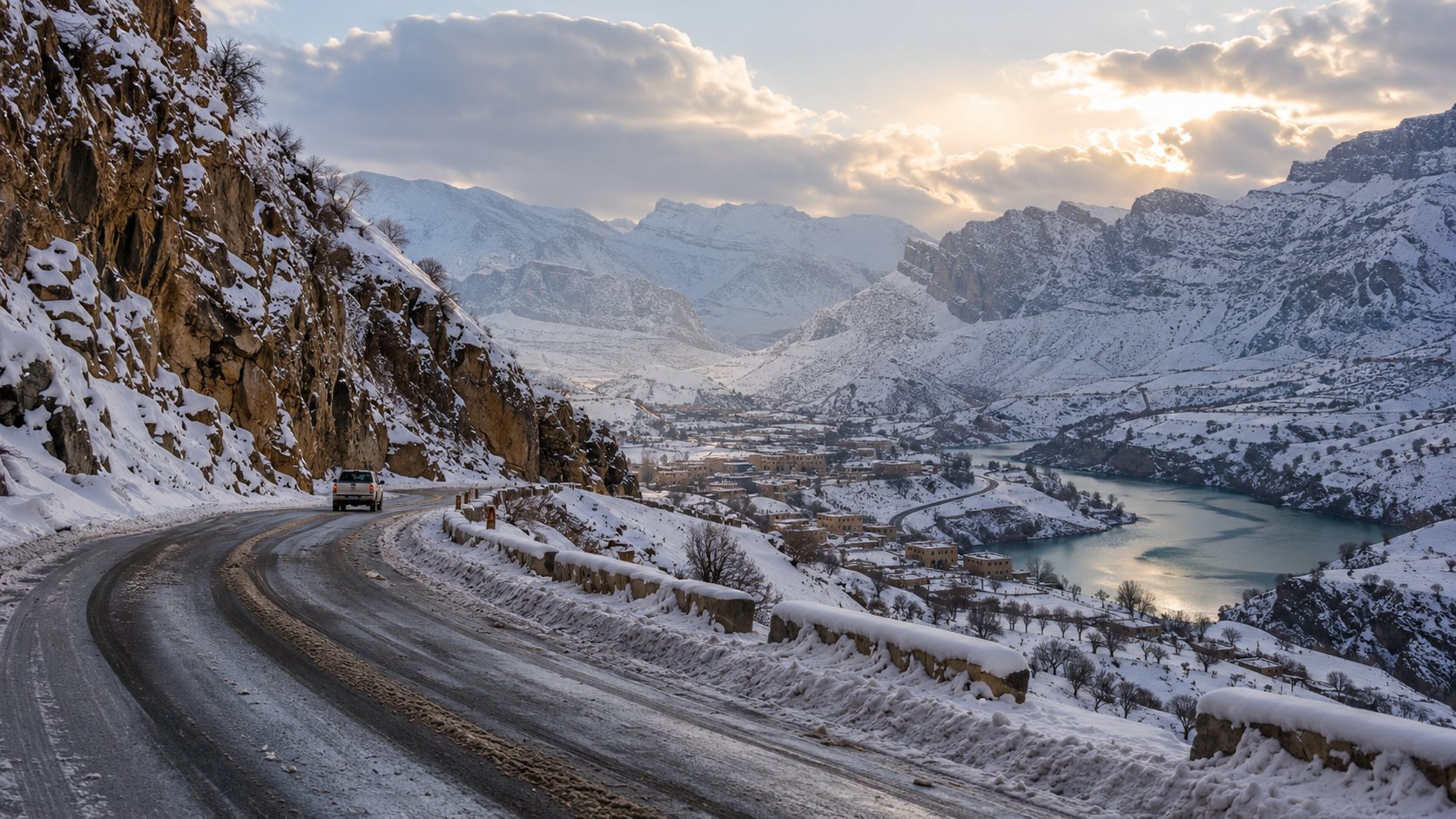
The road from Erbil to the Iranian frontier follows the Hamilton Road, highlighted by VisitKurdistan Rawanduz Guide and Wikipedia Rawandiz. Built between 1928 and 1932 under New Zealand engineer Archibald Hamilton, the route cuts straight through the limestone cliffs of Rawanduz Gorge.
In winter, the canyon changes character. At Gali Ali Beg waterfall, depicted on the Iraqi 10,000 dinar banknote, thick shelves of ice encase the rushing torrents. A few kilometers up the road, Bekhal waterfall freezes into curtains of icicles clinging to mossy rock. Fog often settles low in the canyon before lifting in the afternoon to expose the white peaks above.
Other corners of Iraqi Kurdistan show off their own winter scenery. In Sulaymaniyah Governorate, Penjwen sits at 1,272 meters along the eastern border, as noted by Wikipedia Penjwen District. The district is known for bitter cold and deep snow that buries its oak and pine forests. Closer to Erbil, Safeen Mountain above Shaqlawa, documented by VisitKurdistan Shaqlawa Guide, draws day-trippers from the capital for winter trail walks among snowy oak groves.
Cold-season packing guide
Weather in the high Zagros shifts fast. A clear morning can turn into a driving blizzard by midday, and mountain winds cut through light clothing. You need solid cold-weather gear to stay warm and dry.
Layering strategy:
- Moisture-wicking base layer. Thermal tops and bottoms in merino wool or synthetic fiber keep sweat off your skin.
- Insulating mid-layer. A thick fleece pullover, wool sweater, or packable down jacket holds body heat.
- Weatherproof shell. A waterproof and windproof jacket with taped seams stops driving snow and canyon gusts.
- Outdoor pants. Wind-resistant hiking trousers over thermal leggings work well; bring waterproof shell pants if you plan to walk through deep drifts.
Footwear and accessories:
- Waterproof winter boots. Ankle-high hiking boots with waterproof membranes and deep rubber lugs give purchase on snow, slush, and frozen mud.
- Heavy wool socks. Pack three or four pairs of thick wool socks, and keep a spare dry pair in your daypack.
- Insulated gloves. Waterproof outer gloves with fleece lining keep your hands functional on windswept ridges.
- Warm hat and neck gaiter. A wool or fleece beanie and a snug neck gaiter protect against biting mountain wind.
Sun and skin care:
- Polarized sunglasses. Snow reflects up to 80 percent of sunlight, producing blinding glare on open slopes.
- Sunscreen and lip balm. Intense mountain sun and dry winter air will crack lips and burn exposed skin within hours.
Electronics and cash:
- High-capacity power bank. Freezing cold drains phone and camera batteries in minutes. Bring a 10,000 or 20,000 mAh portable battery pack.
- Headlamp or flashlight. Rural power outages happen during storms, so keep a reliable light handy for finding your way around cabin grounds.
- Insulated thermos. A vacuum bottle keeps hot tea or water warm on cold drives and snow walks.
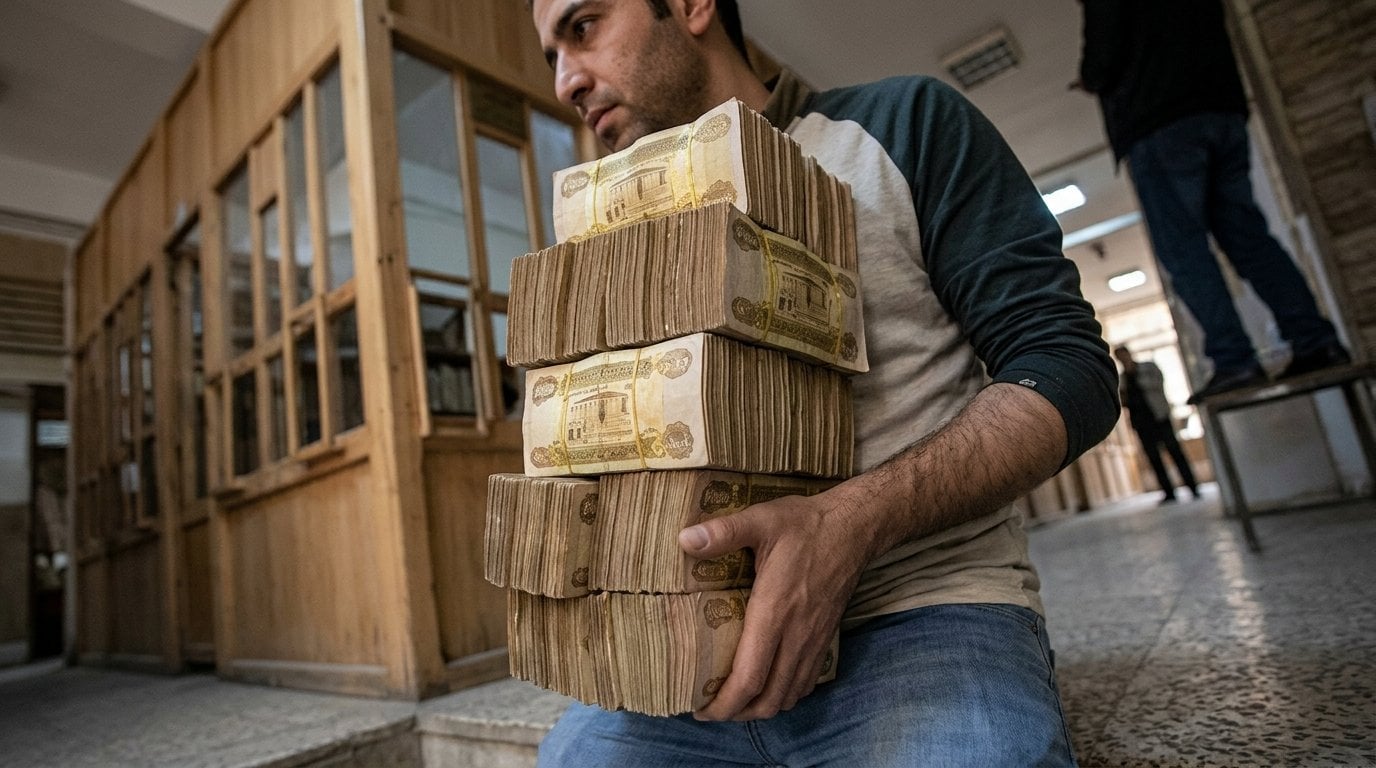
- Cash in Iraqi dinars. Remote cabins, village markets, and small restaurants do not take credit cards, as noted by VisitKurdistan Practical Travel Tips. Withdraw Iraqi dinars in Erbil or Soran before heading uphill, and carry crisp US dollar bills as backup.
Winter driving, road safety, and checkpoints
Driving through the highlands by car lets you stop at canyon overlooks and mountain villages whenever you like, as noted by Beyond the Bucketlist Iraqi Kurdistan Road Trip and Against the Compass Iraqi Kurdistan Itinerary. Mountain roads in winter, however, require deliberate driving and the right vehicle.
Rent an all-wheel-drive vehicle or an SUV with decent ground clearance in Erbil. Small sedans struggle on the slushy, steep grades past Soran toward Choman and Haji Omeran. Road crews run snowplows along the main highway connecting Erbil, Shaqlawa, and Soran, but secondary tracks to isolated cabins often stay snowpacked for days. Ask your rental company for tire chains if you plan on driving uphill during active snowstorms.
Avoid driving high mountain passes after dark. Melted snow freezes into black ice as soon as the sun drops, and stray cattle or sheep frequently step into the roadway. Keep your gas tank at least half full at all times, since rural filling stations can run out of fuel during prolonged storms.
Checkpoints run by Peshmerga and Asayish units sit along every major route. They are standard procedure across the region. Keep your passport and Kurdistan Regional Government entry slip within reach. When approaching a checkpoint, roll down your window, turn on your interior dome light if it is dark, and answer questions politely. The regional visa or eVisa stamped at Erbil International Airport is valid throughout Erbil, Sulaymaniyah, and Duhok governorates, but crossing south into Federal Iraq requires a separate federal Iraqi visa.
Frequently asked questions
Sources
- Korek Mountain Resort, "Doppelmayr Teleferic & Resort Facilities", https://www.korekmountainresort.com/teleferic (accessed October 2026).
- VisitKurdistan, "Rawanduz Travel Guide: Gorges, Waterfalls & Tips", https://visitkurdistan.com/rawanduz/ (accessed October 2026).
- VisitKurdistan, "Practical Travel Tips for Iraqi Kurdistan", https://visitkurdistan.com/travel-tips/ (accessed October 2026).
- VisitKurdistan, "Shaqlawa Travel Guide: Mountain Resort & Tips", https://visitkurdistan.com/shaqlawa/ (accessed October 2026).
- Wikipedia, "Mount Korek", https://en.wikipedia.org/wiki/Mount_Korek (accessed October 2026).
- Wikipedia, "Choman District", https://en.wikipedia.org/wiki/Choman_District (accessed October 2026).
- Wikipedia, "Halgurd", https://en.wikipedia.org/wiki/Halgurd (accessed October 2026).
- Wikipedia, "Cheekha Dar", https://en.wikipedia.org/wiki/Cheekha_Dar (accessed October 2026).
- Wikipedia, "Haji Omeran", https://en.wikipedia.org/wiki/Haji_Omeran (accessed October 2026).
- Wikipedia, "Rawandiz", https://en.wikipedia.org/wiki/Rawanduz (accessed October 2026).
- Wikipedia, "Penjwen District", https://en.wikipedia.org/wiki/Penjwin_District (accessed October 2026).
- Beyond the Bucketlist, "How to Plan an Epic Iraqi Kurdistan Road Trip", https://beyondthebucketlist.co/iraqi-kurdistan-road-trip/ (accessed October 2026).
- Against the Compass, "Places to Visit in Kurdistan Iraq: 2-Week Itinerary", https://againstthecompass.com/en/places-visit-iraqi-kurdistan-itinerary/ (accessed October 2026).
❓Frequently Asked Questions
Here are answers to frequently asked questions about the content above
Heavy snow starts in late December and runs through February, with snow lingering on the highest Zagros peaks into May. Cities like Erbil get cold rain and rare flurries, while highland areas such as Mount Korek, Choman, Haji Omeran, and Penjwen face deep snow and subzero temperatures through January and February.
Mount Korek is about 110 kilometers northeast of Erbil. Drive the paved highway through Shaqlawa and Soran toward Bekhal, which takes two to two and a half hours. The base station at Bekhal runs a four-kilometer Doppelmayr cable car up to the resort plateau at 2,000 meters.
Cabins in Choman and the Balakayati valley range from simple family chalets to modern timber cabins. Most rely on kerosene space heaters or traditional cast-iron wood stoves called sobbas. Because heavy storms can knock out the local power grid, choose cabins with reliable diesel generators and confirm fuel supplies before arriving.
Main highways between Erbil, Shaqlawa, and Soran are paved and plowed regularly, but driving higher into Choman, Haji Omeran, or off-highway cabin roads requires an all-wheel-drive vehicle or an SUV with good ground clearance. Check road conditions at local checkpoints and carry tire chains during active storms.
Travelers from eligible countries, including the EU, UK, US, and Canada, can obtain a 30-day Kurdistan Regional Government visa on arrival or an eVisa at Erbil International Airport. This regional visa permits travel across Erbil, Sulaymaniyah, and Duhok governorates, but does not permit travel south into Federal Iraq.
ATMs accepting foreign cards are rare in mountain districts. Restaurants, village grocers, and cabin hosts deal almost exclusively in cash Iraqi dinars. Withdraw enough Iraqi dinars or exchange crisp US dollar bills in Erbil or central Soran before driving into the mountains.