Iraqi Khubz Tannour
traditional dishes
About
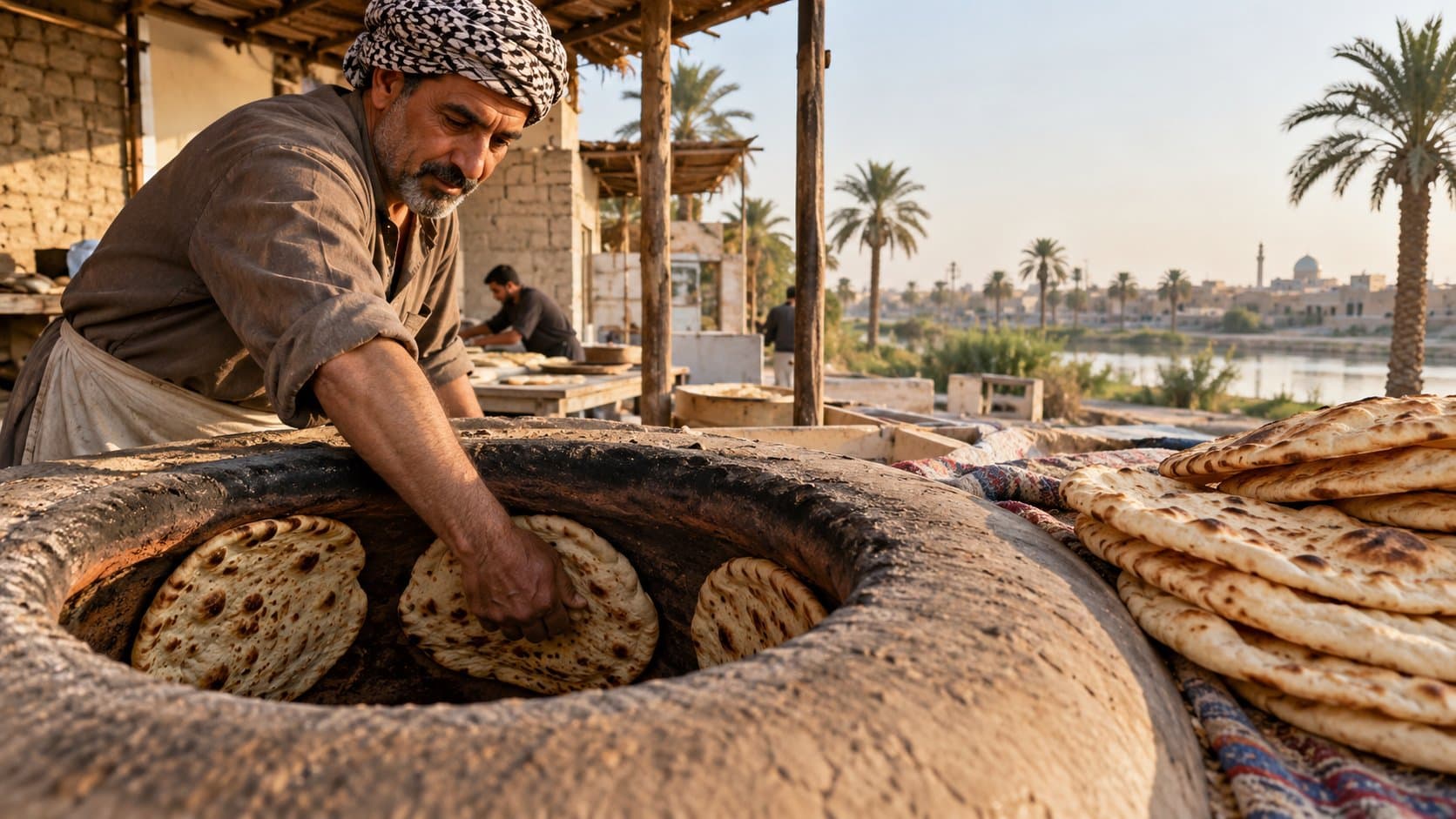
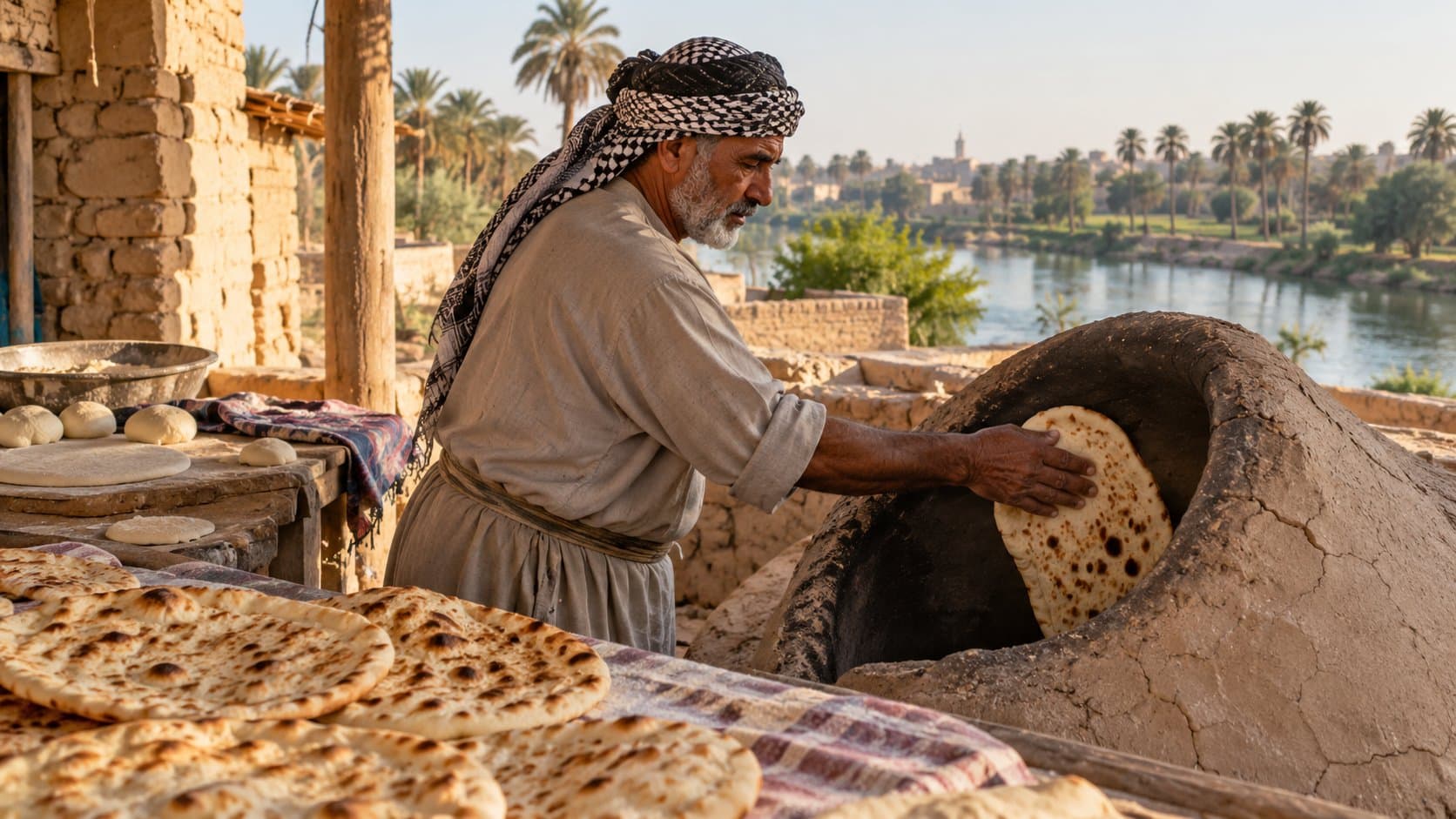
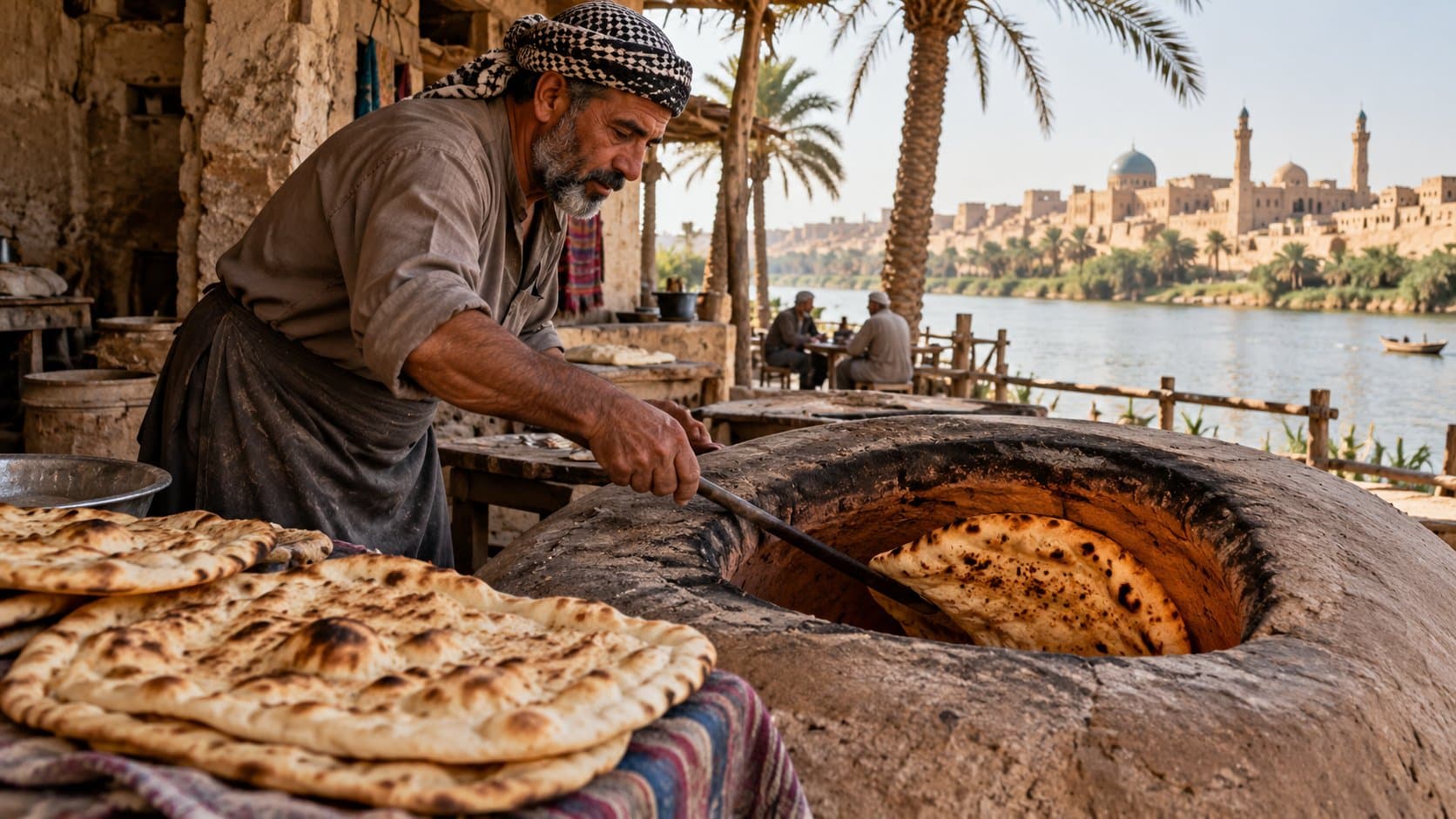
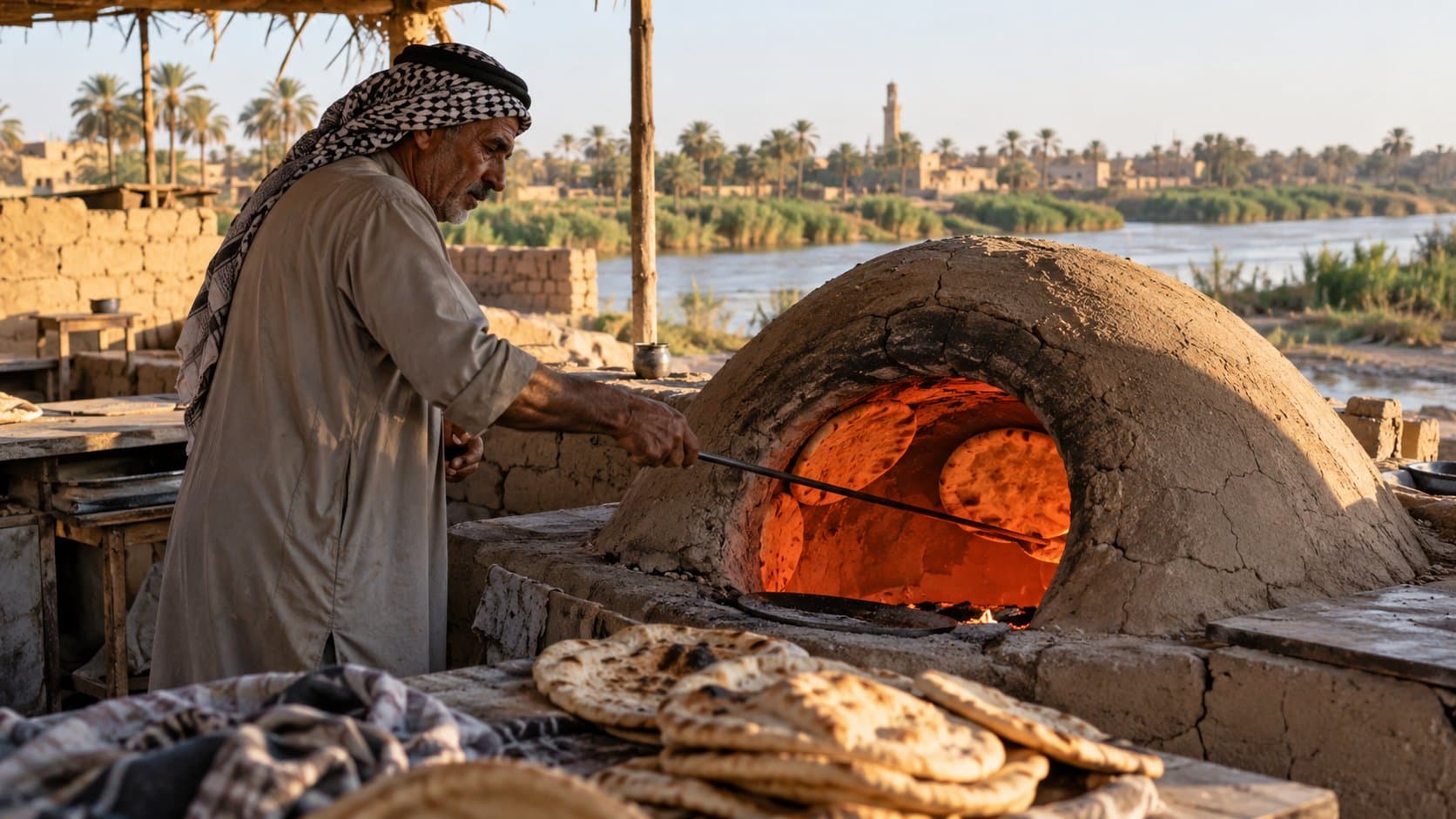
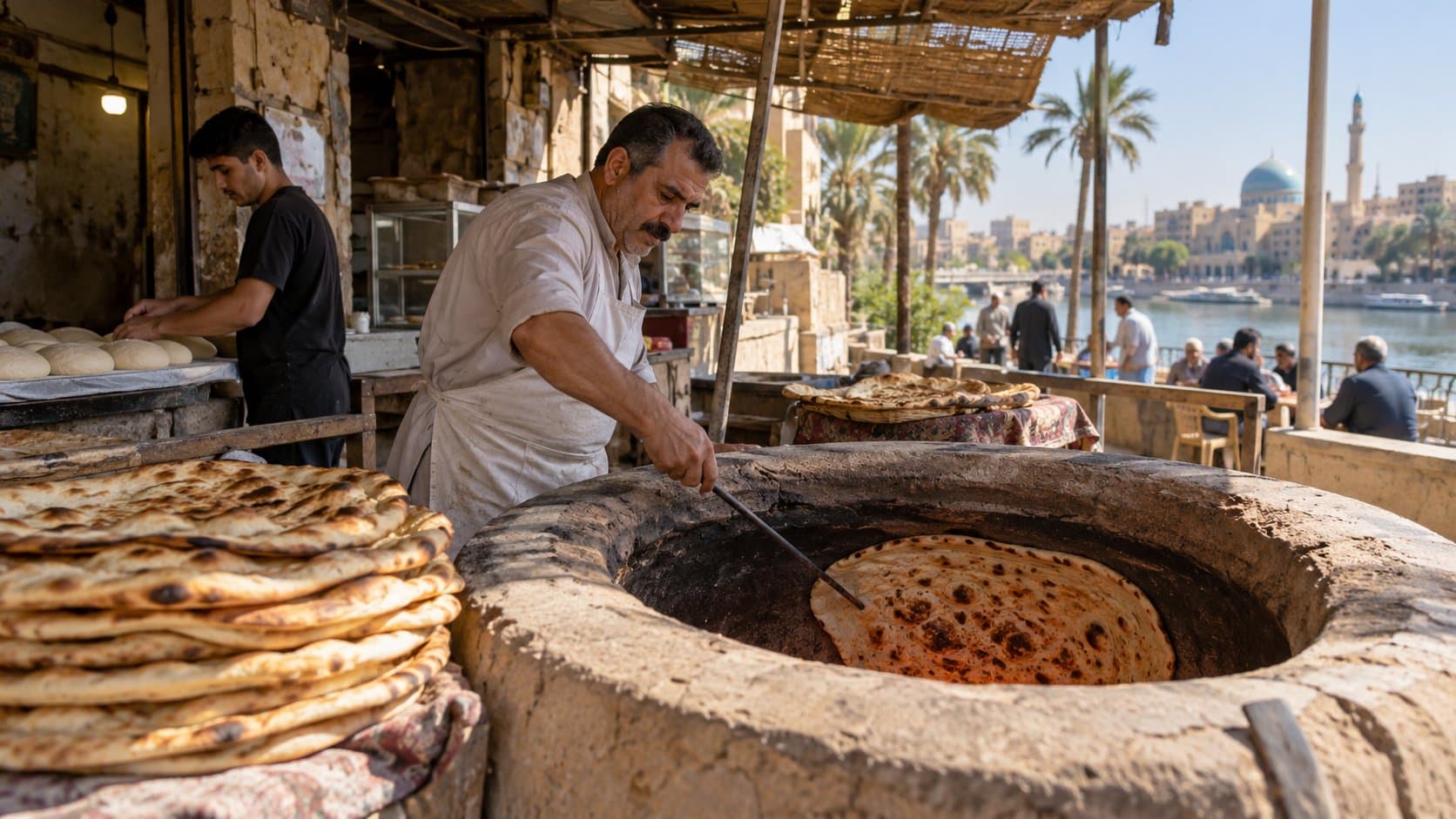
# Iraqi Khubz Tannour\n\nKhubz tannour is an everyday Iraqi bread made with a few basic ingredients. The baker stretches the dough and presses it against the hot inner wall of a clay oven. It cooks quickly, forming bubbles and browned patches while staying soft enough to fold around a bite of stew.\n\n{{image}}\n\n## Bread made for the tannour\n\nIn Arabic, *khubz* means bread and *tannour* means oven. Iraqi food writer Nawal Nasrallah describes khubuz tannour as a bread made with flour, water, salt, and yeast, with no added fat. She also gives its other name, *khubuz mei*, or "water bread" ([Delights from the Garden of Eden](https://www.iraqicookbook.com/recipes/bread)).\n\nA traditional tannour is a clay oven with a tall, domed or cylindrical chamber. Once the walls are hot, the baker pats the dough into a thin round and sticks it inside. The loaf bakes against the clay until the surface bubbles and browns, then the baker lifts it away.\n\n{{image}}\n\n## Soft, blistered, and ready to share\n\nKhubz tannour is thicker and softer than pocket-style pita, with a slightly chewy texture. Tear off a piece to scoop up dips or sauce, pick up food, or wrap around meat and vegetables. [196 flavors](https://www.196flavors.com/khubz-tannour/) describes it as a regular part of meals and a practical alternative to cutlery.\n\nThe bread varies with the oven and the baker. In a recipe shared by the [Real Bread Campaign](https://www.sustainweb.org/realbread/bake/jan24-lemon-tree-trust-syrian-style-khubz-tannour/), bakers at the Azadi Community Garden in Domiz 1 camp make a Syrian-style version in a tannour. They shape the dough into discs, sometimes add sesame or nigella seeds, and stick each disc to the hot wall. It is a related bread with its own local recipe.\n\n{{image}}\n\n## An oven that still matters\n\nA 2023 report by [Shafaq News](https://shafaq.com/en/Iraq/Tannoor-ovens-remain-a-staple-in-Iraqi-homes-despite-modernization) describes families in Karbala who still bake daily bread in clay ovens, alongside gas and electric ovens. It also profiles a local craftswoman who makes clay ovens to order. The report documents a household skill that continues across generations.\n\nBaking beside a tannour takes care and can be demanding in summer. A home oven will not give the bread the same surface and aroma as hot clay. Nasrallah suggests using a pizza stone and parchment in a regular oven as an indoor alternative.\n\n{{image}}\n\n## How to enjoy khubz tannour\n\nServe the bread warm with a meal and tear off pieces as needed. Its softness makes it useful for scooping hummus or baba ghanoush, catching the juices of a stew, or wrapping a filling. If you buy it ahead, keep it covered so it does not dry out. For a home-baked loaf, the 196 flavors recipe recommends cooling the bread before storing it in a bag.\n\nThe defining step is simple: the baker presses the dough against the hot clay wall and lifts it away once it is cooked. That method gives khubz tannour its bubbled surface and makes it well suited to meals shared around the table.\n\n## FAQs\n\n### What does khubz tannour mean?\nKhubz means bread in Arabic, and tannour is the clay oven used to bake it. The name refers to bread traditionally baked against the oven's hot inner wall.\n\n### What ingredients are used in Iraqi khubz tannour?\nA basic version uses flour, water, salt, and yeast, without added fat. Recipes vary by household and region.\n\n### How is khubz tannour baked?\nThe baker flattens the dough and sticks it to the hot inner wall of a clay tannour. It bakes against the heated surface until bubbles and brown patches form, then is lifted off.\n\n### What does khubz tannour taste and feel like?\nIt is soft and slightly chewy, with a thicker crumb than pocket pita and a surface marked by bubbles and browned spots.\n\n### What can I eat with khubz tannour?\nUse it to scoop dips and sauces, eat it alongside stews, or wrap it around meat and vegetables. It is often served as part of a meal.\n\n### Can I make khubz tannour without a clay oven?\nYes. Iraqi food writer Nawal Nasrallah recommends using a pizza stone and parchment in a regular oven as a home alternative, though it will not exactly match baking on a tannour's clay wall.\n\n## Sources\n\n- Nawal Nasrallah, *Delights from the Garden of Eden: Bread*, https://www.iraqicookbook.com/recipes/bread (accessed June 12, 2026).\n- 196 flavors, *Khubz Tannour - Middle Eastern Bread Recipe*, https://www.196flavors.com/khubz-tannour/ (accessed June 12, 2026).\n- Shafaq News, *Tannoor ovens remain a staple in Iraqi homes despite modernization*, https://shafaq.com/en/Iraq/Tannoor-ovens-remain-a-staple-in-Iraqi-homes-despite-modernization (accessed June 12, 2026).\n- Real Bread Campaign, *Khubz tannour*, https://www.sustainweb.org/realbread/bake/jan24-lemon-tree-trust-syrian-style-khubz-tannour/ (accessed June 12, 2026).