Tazwan: Kurdish terebinth coffee
beveragesErbil
About
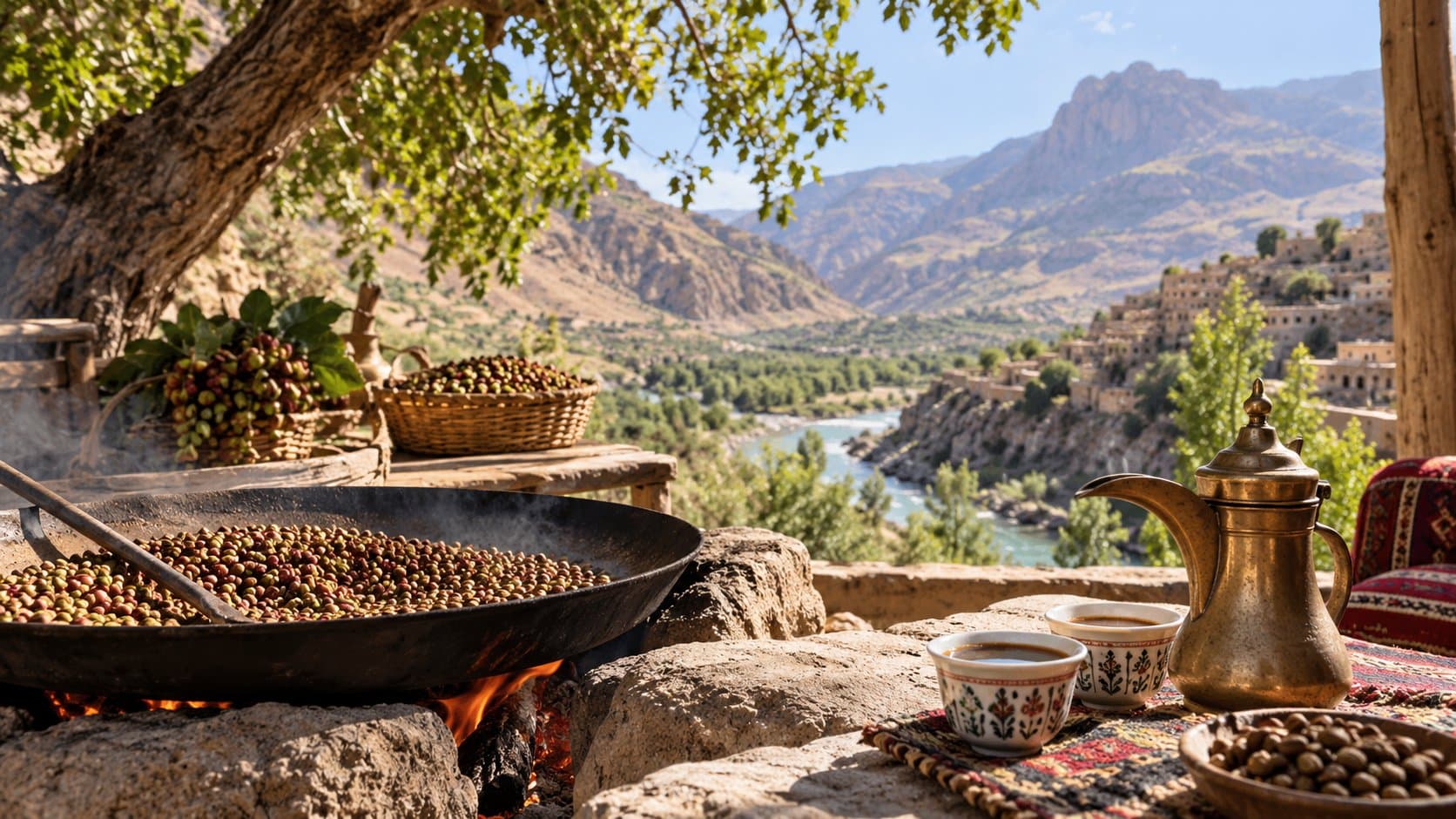
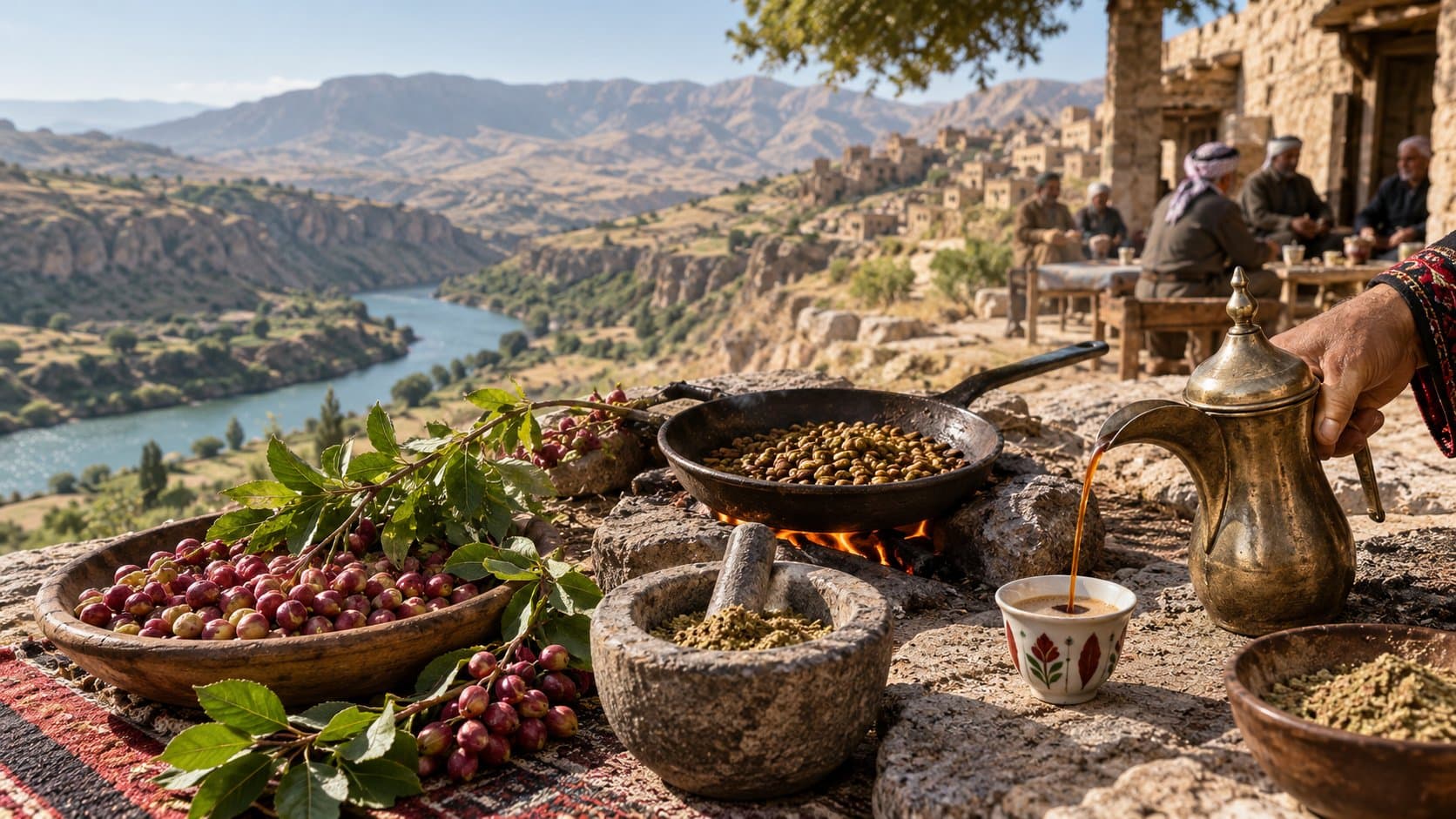
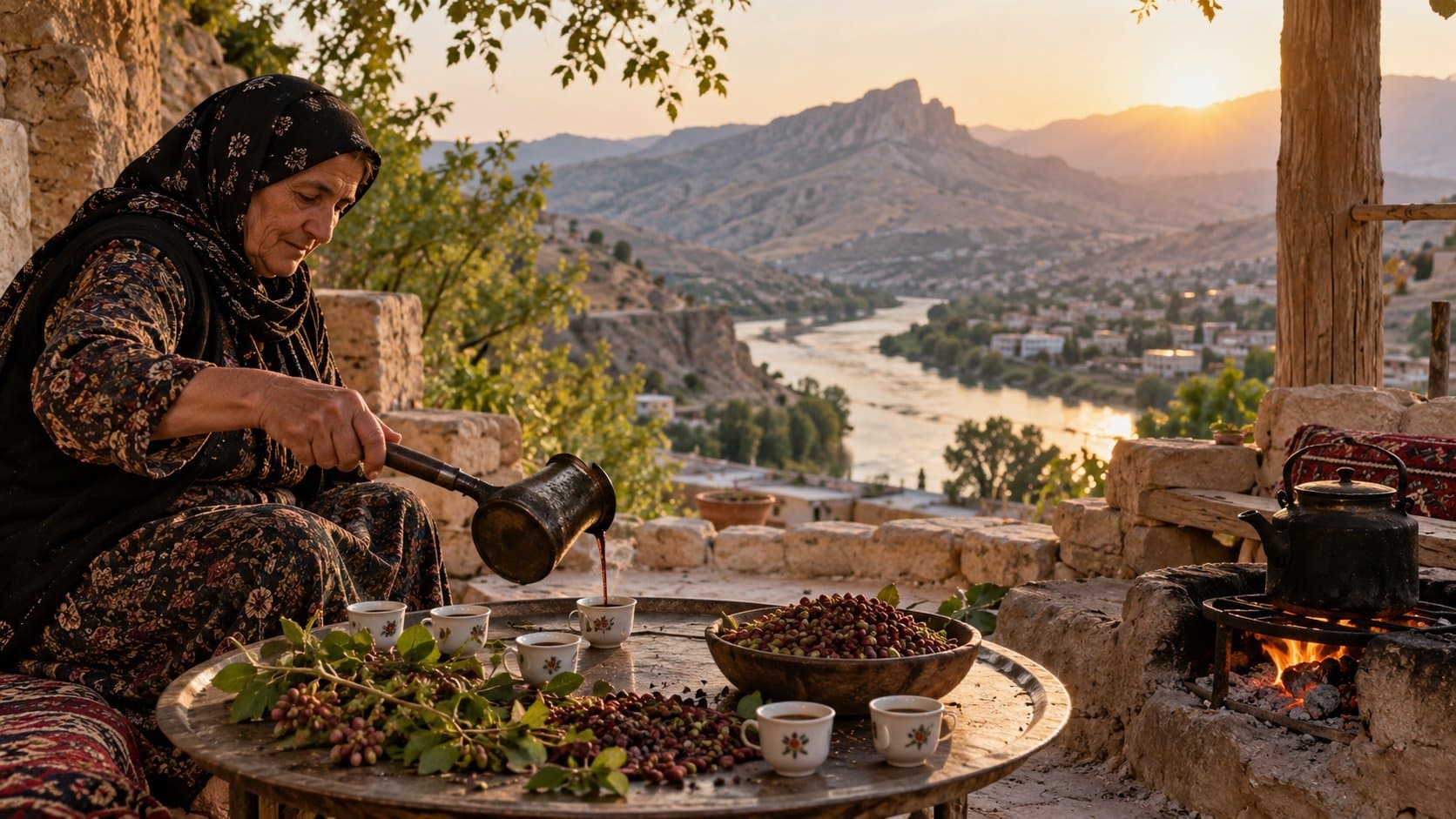
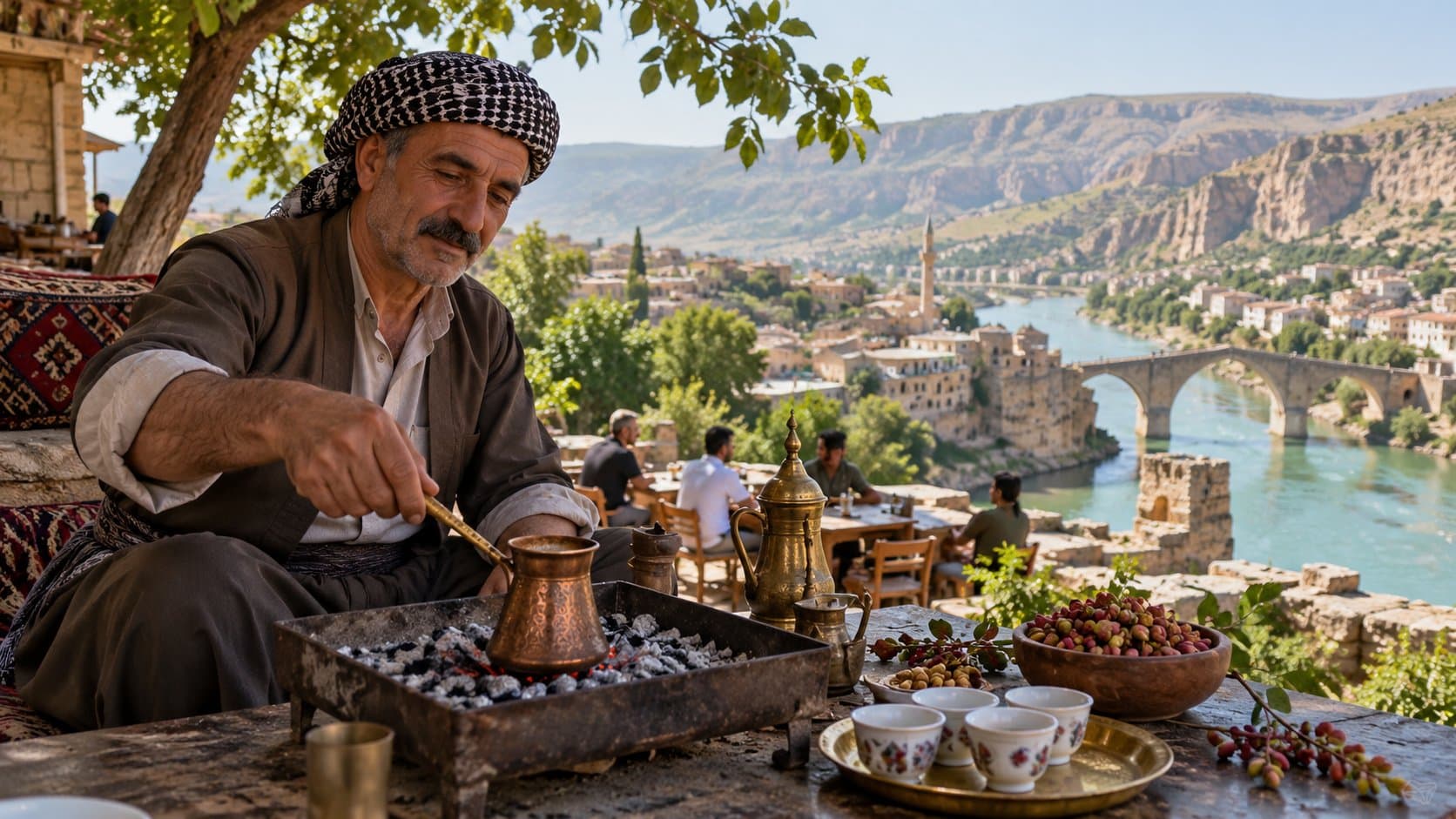
# Tazwan: Kurdish terebinth coffee In Erbil, ask for qazwan if you want to try Kurdish terebinth coffee. This hot drink starts with roasted terebinth fruit rather than coffee beans. Milk gives it a smooth, heavy body, while the fruit brings a nutty taste with a faint bitter edge. Both [Kurdistan24 describes its preparation in the Kurdistan Region](https://www.kurdistan24.net/en/story/26704-University-lecturer-calls-for-renaming-terebinth-coffee-%E2%80%98Kurdish-coffee%E2%80%99%C2%A0) and [BBC Travel describes its flavour](https://www.bbc.com/travel/article/20251219-menengic-turkeys-ancient-caffeine-free-coffee-alternative) when covering this traditional regional drink. In Erbil's bazaar, a brass pot warming over a tray of hot sand does not tell you what is brewing inside. You have to ask the maker directly. {{image}} ## Tazwan, qazwan and other names English travel guides occasionally spell the name "tazwan", but in Iraqi Kurdistan the drink is called qazwan. Local tea stalls and restaurants serve it under that name. Cabra Coffee Roasters lists it as Qazwan on its web shop, with the Kurdish spelling قەزوان. [See Cabra's Qazwan listing](https://coffee.krd/product/best-kurdish-coffee-in-erbil/). You will also see it called Kurdish coffee, *Qehweya Kurdî*, *Qehweya Kezwanan*, or the Turkish name *menengiç kahvesi*. [The Kurdish coffee overview](https://en.wikipedia.org/wiki/Kurdish_coffee) documents these names across the region. Different names often indicate different recipes, so the title alone will not tell you whether a mix contains real coffee beans or added sugar. ## What goes into the cup? Terebinth trees produce small, oily fruits often called berries. Botanically, the plant is a wild pistachio, not a coffee shrub. Harvesters gather the fruit, roast it, and grind it into an oily paste or powder. Kurdistan24 describes stirring this paste into hot milk and serving it in small cups. Ground terebinth can also be simmered with water, as noted by BBC Travel. Pure terebinth contains no coffee beans and has zero caffeine. [BBC Travel's report](https://www.bbc.com/travel/article/20251219-menengic-turkeys-ancient-caffeine-free-coffee-alternative) confirms that the base drink is naturally caffeine-free and completely distinct from coffee. Commercial blends vary widely. Cabra's product page notes that qazwan is often brewed with cardamom, but does not publish a full ingredient list. Some commercial packets mix roasted terebinth with standard ground coffee, milk powder, or sugar. Check the label or ask the seller before assuming the powder is pure terebinth. {{image}} ## Roasting first, heating second Roasting develops the fruit's natural oils. Grinding then turns it into the paste or powder that the maker mixes with liquid and heats for the cup. If you see a vendor moving a small long-handled cezve through hot sand, that sand serves only as the heat source. In the traditional sand method, the vendor controls cooking speed by shifting the pot deeper or shallower in the sand tray. [Death Wish Coffee explains that method](https://www.deathwishcoffee.com/blogs/coffee-talk/turkish-sand-coffee). Sand heating is not unique to qazwan. In Erbil, bazaar carts use sand pans to brew ordinary Turkish or Arabic bean coffee far more often than terebinth. Many qazwan makers simply use a small gas burner. Never assume a pot set into hot sand holds qazwan, or that terebinth coffee requires sand to brew. Ask the maker what is in the pot. ## What does it taste like? Expect a warm, nutty profile with a resinous, herbal bitterness rather than sweet fruit juice. Calling the fruit a berry describes its botanical shape, not its taste. When simmered in milk, qazwan turns thick and creamy, producing a dense layer of foam. Prepared with water alone, the flavor is sharper and leaner. Do not confuse qazwan with other local hot drinks: - Iraqi chai is black tea brewed from tea leaves, poured clear and sweetened into an istikan glass. - Turkish or Arabic coffee is ground from roasted Coffea beans and simmered unfiltered with water, as described in [the Turkish coffee preparation overview](https://en.wikipedia.org/wiki/Turkish_coffee). - Traditional qazwan contains no tea leaves and no coffee beans. Sugar and cardamom also change the cup. If you want to taste the wild pistachio fruit itself, ask whether the mix is already sweetened or spiced. {{image}} ## How to order in Erbil Start with "Qazwan?" or show the Kurdish word قەزوان. Before the vendor brews the pot, ask a few direct questions: - Is this pure terebinth, or is ground coffee added? - Do you make it with milk or water? - Does the powder already contain sugar or milk? - Can I have it without added sugar? For packaged powder to take home, Cabra Coffee Roasters lists a 250-gram pack of Qazwan powder for 12,000 IQD, reachable at +964 750 555 1999. Confirm current stock and pickup arrangements directly before heading out. In the covered lanes of Qaysari Bazaar below the Citadel, ask spice merchants and coffee stalls for loose or packaged qazwan. ## Allergen precautions Because terebinth, *Pistacia terebinthus*, is a wild pistachio, anyone with an allergy to pistachios, cashews, or other tree nuts must avoid qazwan. [FARE's tree-nut guidance](https://www.foodallergy.org/living-food-allergies/food-allergy-essentials/common-allergens/tree-nut) notes that tree nut allergies can trigger severe reactions and that related species frequently cause cross-reactivity. Roasting does not make nut allergens safe. Milk is another primary ingredient to check. Regional vendors usually simmer qazwan in whole milk, and instant powders often blend milk powder into the mix. Asking for your cup to be prepared with water will not protect you if the powder already contains dairy solids. Cross-contact is also common in crowded market stalls. Vendors routinely use shared grinders, scoops, and brewing pots across nuts, spices, and coffee beans. If a vendor cannot confirm the full ingredient list or uses shared equipment, skip the drink. ## FAQs ```json {"faqs":[{"id":"faq-1","question":"What is Kurdish terebinth coffee?","answer":"It is a hot drink made from roasted, ground terebinth fruit, a wild pistachio. In Iraqi Kurdistan, it is called qazwan and is traditionally simmered with milk in a small pot."},{"id":"faq-2","question":"Is tazwan the same as qazwan?","answer":"Tazwan is an occasional English spelling, but qazwan is the name used across Iraqi Kurdistan. When ordering in Erbil, ask for qazwan or show the Kurdish spelling قەزوان."},{"id":"faq-3","question":"Does qazwan contain coffee or caffeine?","answer":"Pure terebinth coffee contains no coffee beans and is naturally caffeine-free. Some commercial blends mix roasted terebinth with standard ground coffee, so check the ingredients before buying."},{"id":"faq-4","question":"What does qazwan taste like, and is it chai?","answer":"It tastes nutty, rich, and slightly resinous or bitter, especially when made with milk. It is not chai, which is brewed from tea leaves, and it is not ordinary bean coffee."},{"id":"faq-5","question":"Is qazwan always prepared in hot sand?","answer":"No. Hot sand is simply an external heating method used at some regional coffee carts. Many vendors use gas burners or stoves. Sand heating does not change the ingredients."},{"id":"faq-6","question":"Where can I buy qazwan in Erbil, and what should I check?","answer":"You can find cups at tea and coffee stalls around Erbil's bazaar, or buy packaged powder from roasters such as Cabra Coffee Roasters. Always check whether the mix contains milk powder, added sugar, or ground coffee."}]} ``` ## Sources All sources accessed on 25 October 2026. - Kurdistan24, "University lecturer calls for renaming terebinth coffee 'Kurdish coffee'". https://www.kurdistan24.net/en/story/26704-University-lecturer-calls-for-renaming-terebinth-coffee-%E2%80%98Kurdish-coffee%E2%80%99%C2%A0 - BBC Travel, Jen Rose Smith, "Turkey's ancient, caffeine-free coffee alternative". https://www.bbc.com/travel/article/20251219-menengic-turkeys-ancient-caffeine-free-coffee-alternative - Cabra Coffee Roasters, "Kurdish Coffee - Qazwan". https://coffee.krd/product/best-kurdish-coffee-in-erbil/ - Wikipedia, "Kurdish coffee". https://en.wikipedia.org/wiki/Kurdish_coffee - Death Wish Coffee, "What is Turkish Sand Coffee?" https://www.deathwishcoffee.com/blogs/coffee-talk/turkish-sand-coffee - Wikipedia, "Turkish coffee". https://en.wikipedia.org/wiki/Turkish_coffee - Food Allergy Research & Education, "Tree Nut". https://www.foodallergy.org/living-food-allergies/food-allergy-essentials/common-allergens/tree-nut