Explore Borsippa, Nabu’s ancient cult center southwest of Babylon, and its towering ruined ziggurat, often linked in folklore to the Tower of Babel.
Borsippa (Birs Nimrud)
Borsippa lies southwest of Babylon. Known today as Birs Nimrud, the ancient city was an important center of worship for Nabu, the Mesopotamian god of writing and wisdom. Its ruined brick ziggurat rises above the surrounding plain.
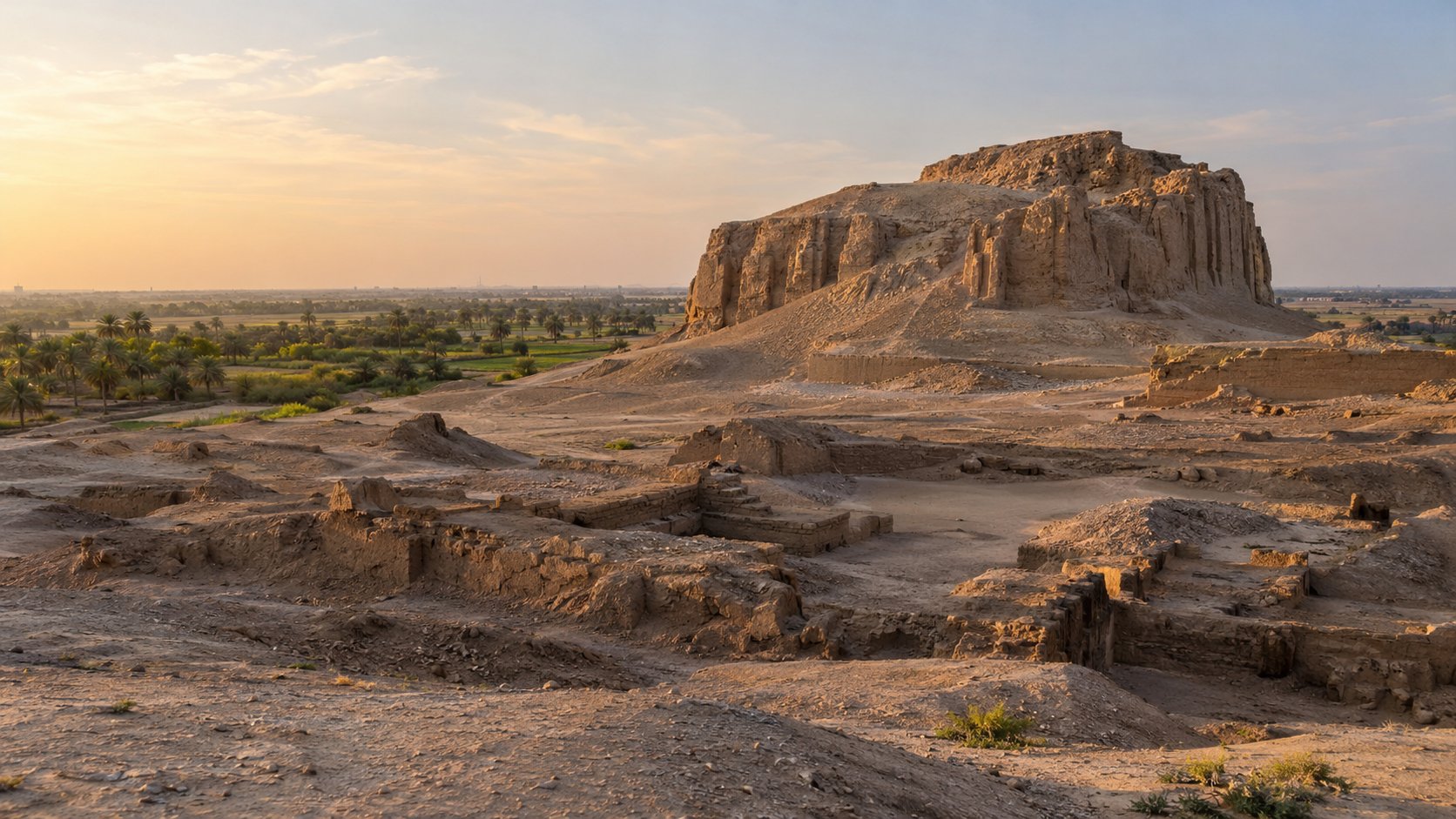
The city of Nabu
Borsippa stood about 18 kilometres southwest of Babylon. The cities were close neighbors, yet Borsippa had its own religious importance. Its principal sanctuary, Ezida, was dedicated to Nabu. The city's ziggurat was part of this sacred complex. The World Monuments Fund's overview of Borsippa describes the site as an important place of worship for Nabu and identifies the surviving tower as one of Iraq's most recognizable ancient structures.
Ezida was rebuilt and repaired by Babylonian rulers over many centuries. The surviving ziggurat is associated with the reign of Nebuchadnezzar II in the sixth century BCE. Excavations have examined the tower, the temple precinct and parts of the wider settlement (Borsippa, archaeological summary).
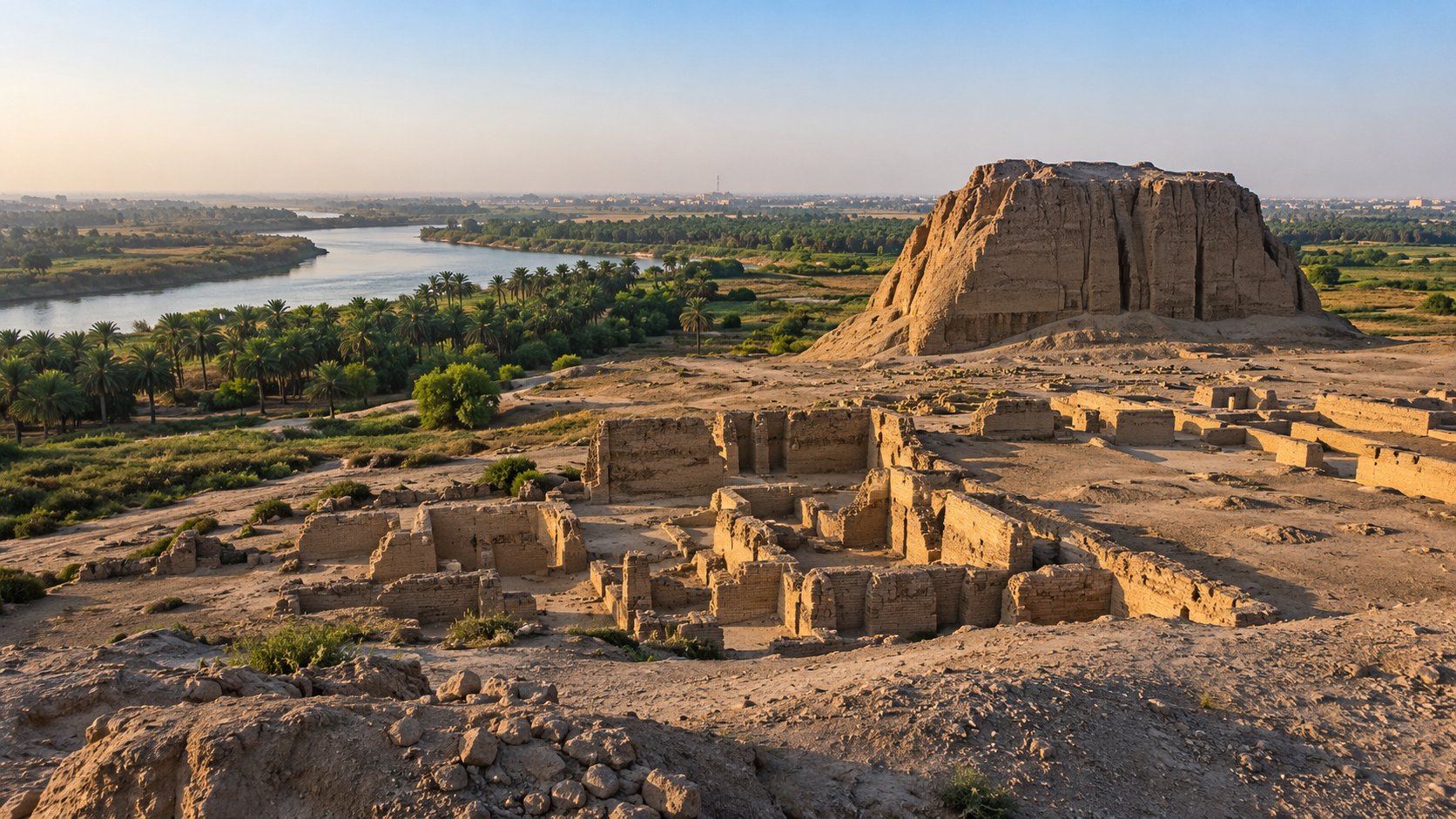
The ziggurat and the Babel story
The tower is often linked in local and popular tradition with the Tower of Babel. That connection makes a striking story, but it is not the accepted archaeological identification. Borsippa's ziggurat belonged to the city's cult of Nabu, while Babylon had its own major ziggurat. The names Birs Nimrud and "Tower of Babel" reflect later traditions, not proof that this was the biblical tower.
The surviving upper section is sometimes called the "tongue tower." Its exposed brickwork gives the ruin a stark, broken outline. Look closely and the scale of the structure becomes clear: this was a monumental building, not an isolated mound. The World Monuments Fund notes that the remaining brickwork includes the ziggurat's pinnacle and that earlier excavations left mounds around it.
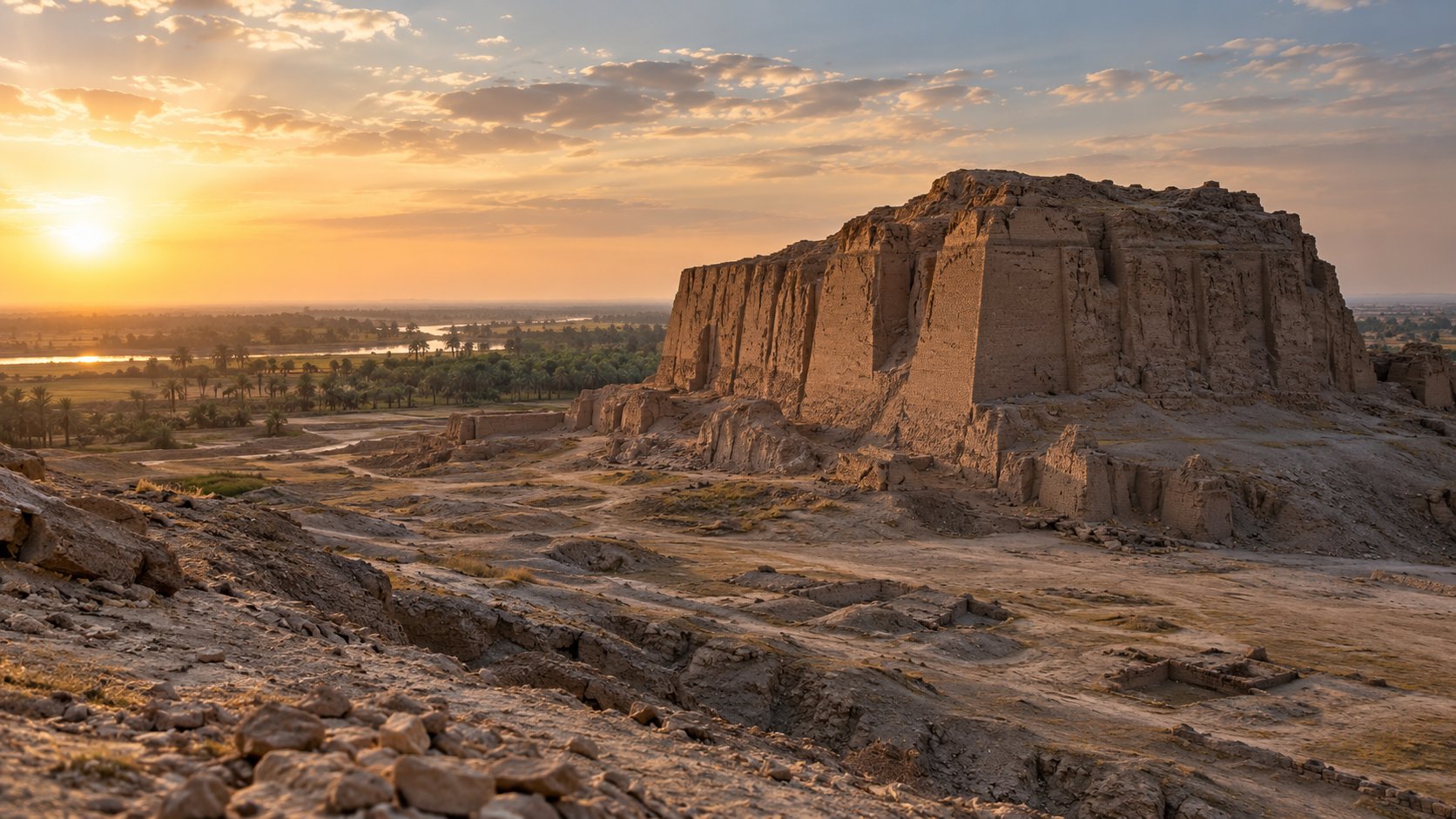
What to notice at the site
Take time to look across the open plain before focusing on the tower. Borsippa's location near Babylon helps explain why the two cities shared close religious and political ties. Then study the ziggurat's layers and brick surfaces. Weathering and past excavation have left different textures across the ruin.
The site also faces conservation pressures. The World Monuments Fund has documented waste around the archaeological area and calls for stronger site management and local partnerships. Stay on established paths, do not climb fragile walls, and leave all bricks and fragments where they are.
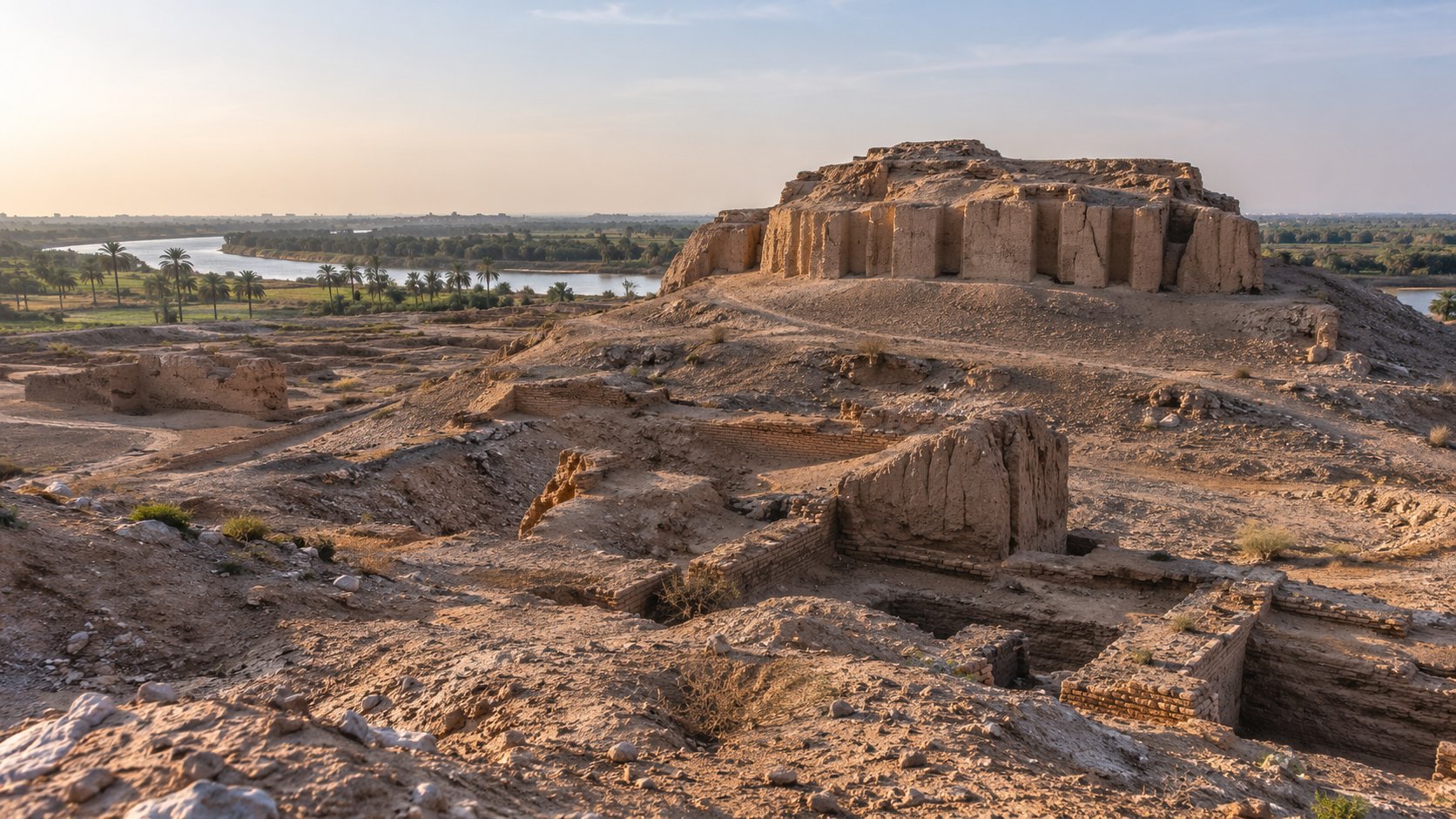
Planning a visit
Borsippa lies in Iraq's Babylon Governorate, southwest of the ancient city of Babylon. It is an archaeological site, not a developed visitor attraction with dependable visitor facilities. Check current local access and security conditions before setting out, and arrange transport and any required permissions through a trusted local guide or relevant Iraqi authorities. Do not assume the site is open simply because it appears on a map.
If you visit, bring water, sun protection and sturdy shoes. There is little shade among the ruins, and the ground can be uneven. Keep your visit low-impact: avoid climbing the ziggurat and do not remove anything from the site.
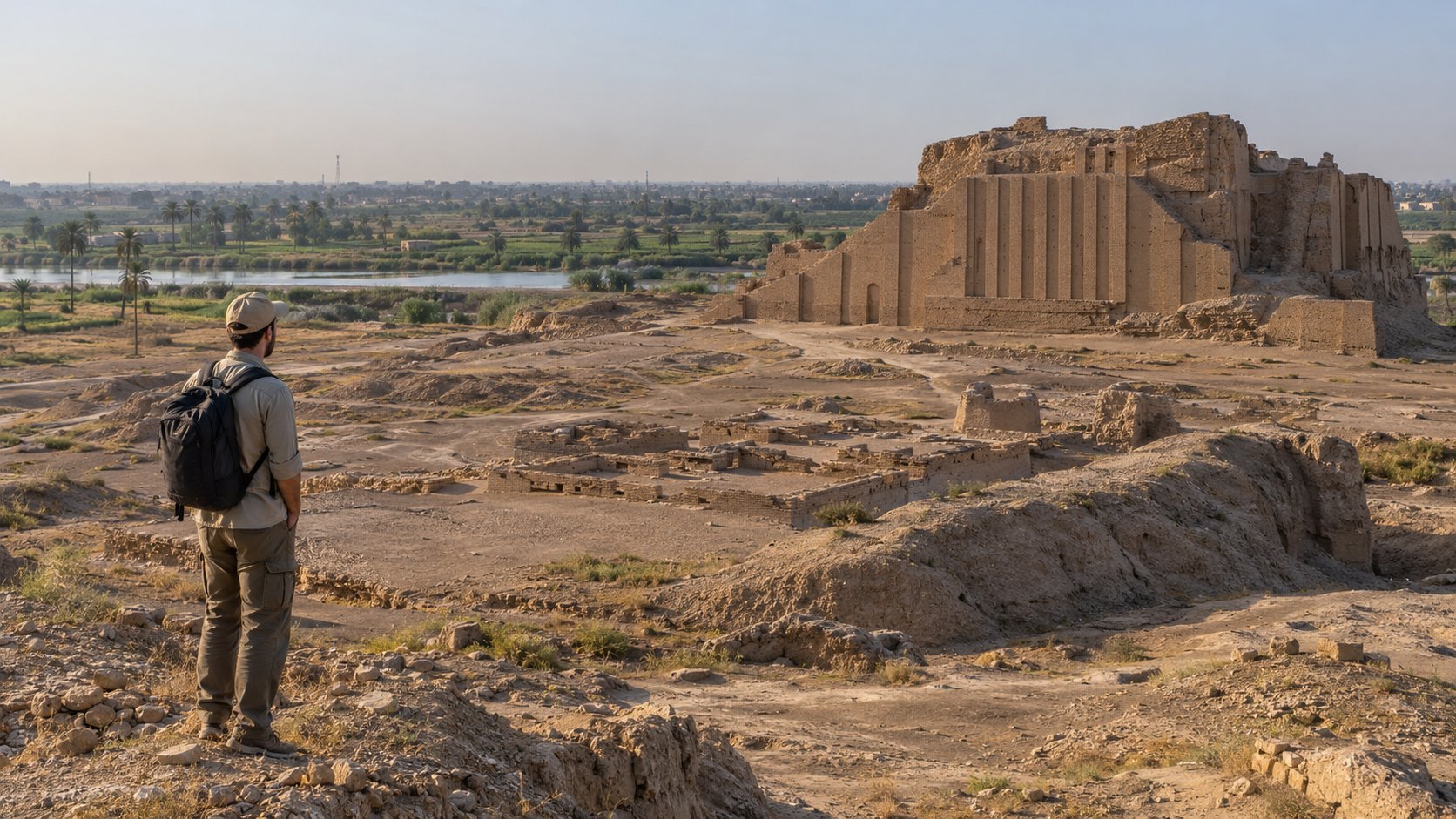
Borsippa and Babylon
Borsippa's ziggurat belonged to a city devoted to Nabu, distinct from its nearby neighbor Babylon. The Tower of Babel story is part of the site's later folklore, not its archaeological identification.
[
  {
    "id": "faq-1",
    "question": "Where is Borsippa?",
    "answer": "Borsippa is about 18 kilometres southwest of Babylon, in Iraq's Babylon Governorate."
  },
  {
    "id": "faq-2",
    "question": "What is Borsippa known for?",
    "answer": "It is known for its ruined ziggurat and its ancient sanctuary of Ezida, dedicated to Nabu."
  },
  {
    "id": "faq-3",
    "question": "Who was Nabu?",
    "answer": "Nabu was the Mesopotamian god of writing and wisdom."
  },
  {
    "id": "faq-4",
    "question": "Is Borsippa's ziggurat the Tower of Babel?",
    "answer": "The site is linked to the Tower of Babel in later traditions, but archaeology identifies the ziggurat with the worship of Nabu."
  },
  {
    "id": "faq-5",
    "question": "When was Borsippa's ziggurat built?",
    "answer": "The ziggurat was repaired and rebuilt over time. The surviving structure is associated with Nebuchadnezzar II's reign in the sixth century BCE."
  },
  {
    "id": "faq-6",
    "question": "Can visitors go inside the site?",
    "answer": "Access and security conditions can change. Check locally before travelling, and do not assume the archaeological site is open or has visitor facilities."
  }
]
Sources
- World Monuments Fund, “Ancient Iraq: Borsippa,” Google Arts & Culture, https://artsandculture.google.com/story/kgXRlNxPZNXKIQ (accessed March 8, 2025).
- Wikipedia contributors, “Borsippa,” Wikipedia, https://en.wikipedia.org/wiki/Borsippa (accessed March 8, 2025).