Perched on the southern cliffs of Mount Alfaf, Mar Mattai Monastery is a 4th-century Syriac Orthodox sanctuary offering panoramic views across the Nineveh Plains.
Mar Mattai Monastery
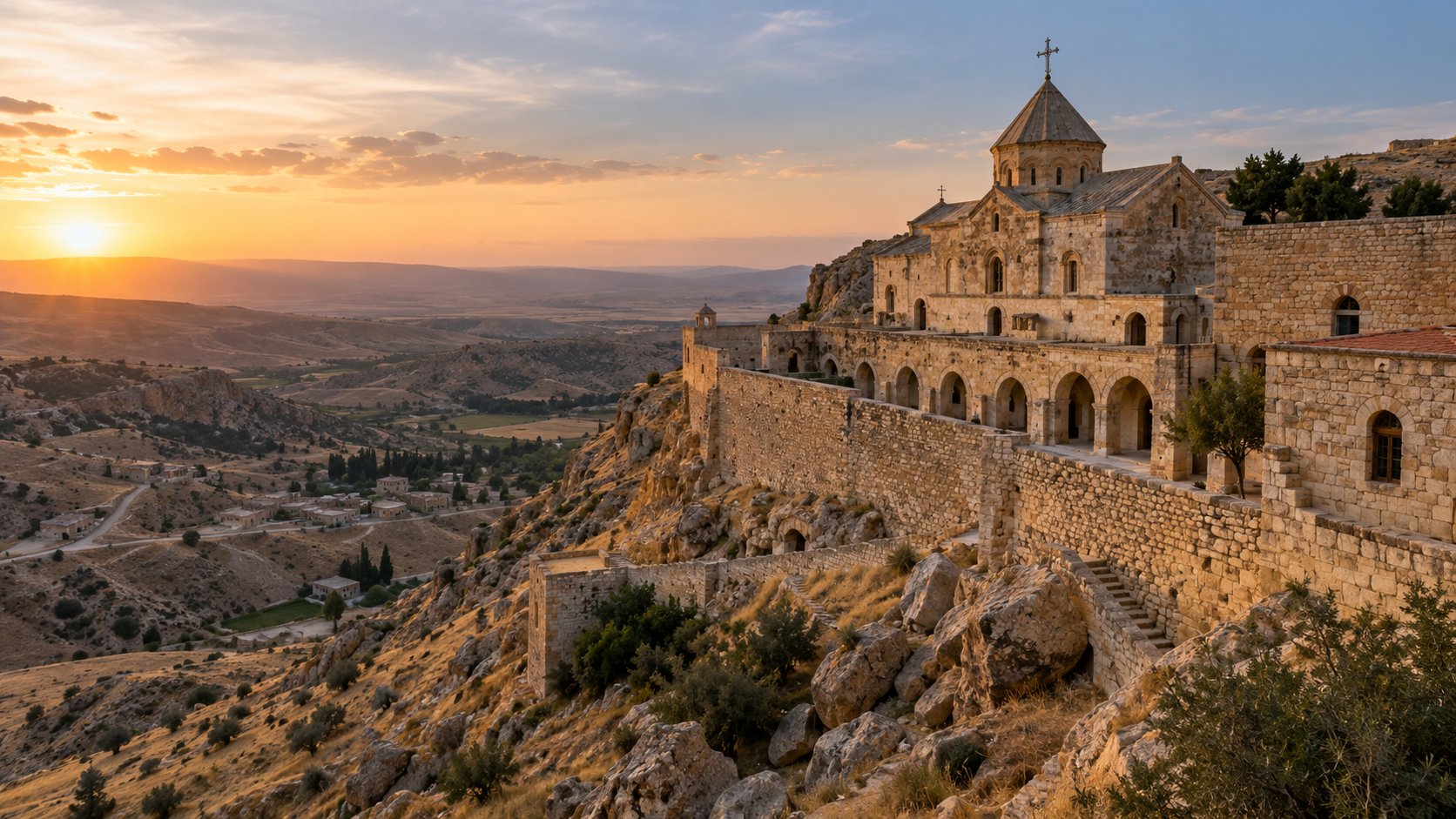
Perched on the southern face of Mount Alfaf (Mount Maqlub), Mar Mattai Monastery (Dayro d-Mor Mattai) is one of the world's oldest continuously inhabited Christian monastic sanctuaries. Located 38 kilometers northeast of Mosul in Nineveh Governorate, this fourth-century Syriac Orthodox stronghold sits 820 meters above sea level against sheer limestone cliffs. From its stone terrace, the monastery looks out across the Nineveh Plains toward the Tigris basin.
Through centuries of regional conflict, theological scholarship, and shifting borders, the monastery has sheltered ascetic hermits, fleeing villagers, and pilgrims. Today, the winding road up Mount Alfaf takes travelers into the cradle of early Christian monasticism and the living heritage of Iraq's Syriac community.
Historical Origins and Founding
Mar Mattai Monastery was established in 363 AD during the reign of Roman Emperor Julian the Apostate. According to Syriac Orthodox accounts documented by Mesopotamia Heritage, an ascetic monk named Mar Mattai (Matthew) fled religious persecution in Amid (modern Diyarbakir, Turkey). Heading south into Upper Mesopotamia with several fellow hermits, Mattai settled in the natural limestone caves of Mount Alfaf.
Local tradition links Mattai's hermitage to the royal court of Nineveh. Legend recounts that Mattai healed Princess Sarah of an incurable ailment. After Sarah and her brother Prince Behnam converted to Christianity, their father King Sinharib (Sennacherib of Nimrud) executed them. Grieving and remorseful, the king later converted, asked Mattai for absolution, and funded the construction of a permanent stone sanctuary on the mountain.
By the fifth century, monastic life flourished here. Mount Alfaf earned the name "Mount of the Thousands" (Jabal al-Alfaf), reflecting historical accounts that thousands of ascetics lived across its cliff caves, hermitage cells, and monastic halls. In subsequent centuries, Mar Mattai became the seat of the Maphrian of the East—the metropolitan bishop leading eastern dioceses of the Syriac Orthodox Church—and maintained theological ties extending to the Malankara Syriac Church in southern India.
Architecture and Monastic Layout
Approaching along the winding switchback road, Mar Mattai seems cut into the rock face itself. Built from local limestone quarried from the surrounding ridge, the tiered stone complex steps naturally up the mountainside.
The Church of Saint Matthew and Martyrion
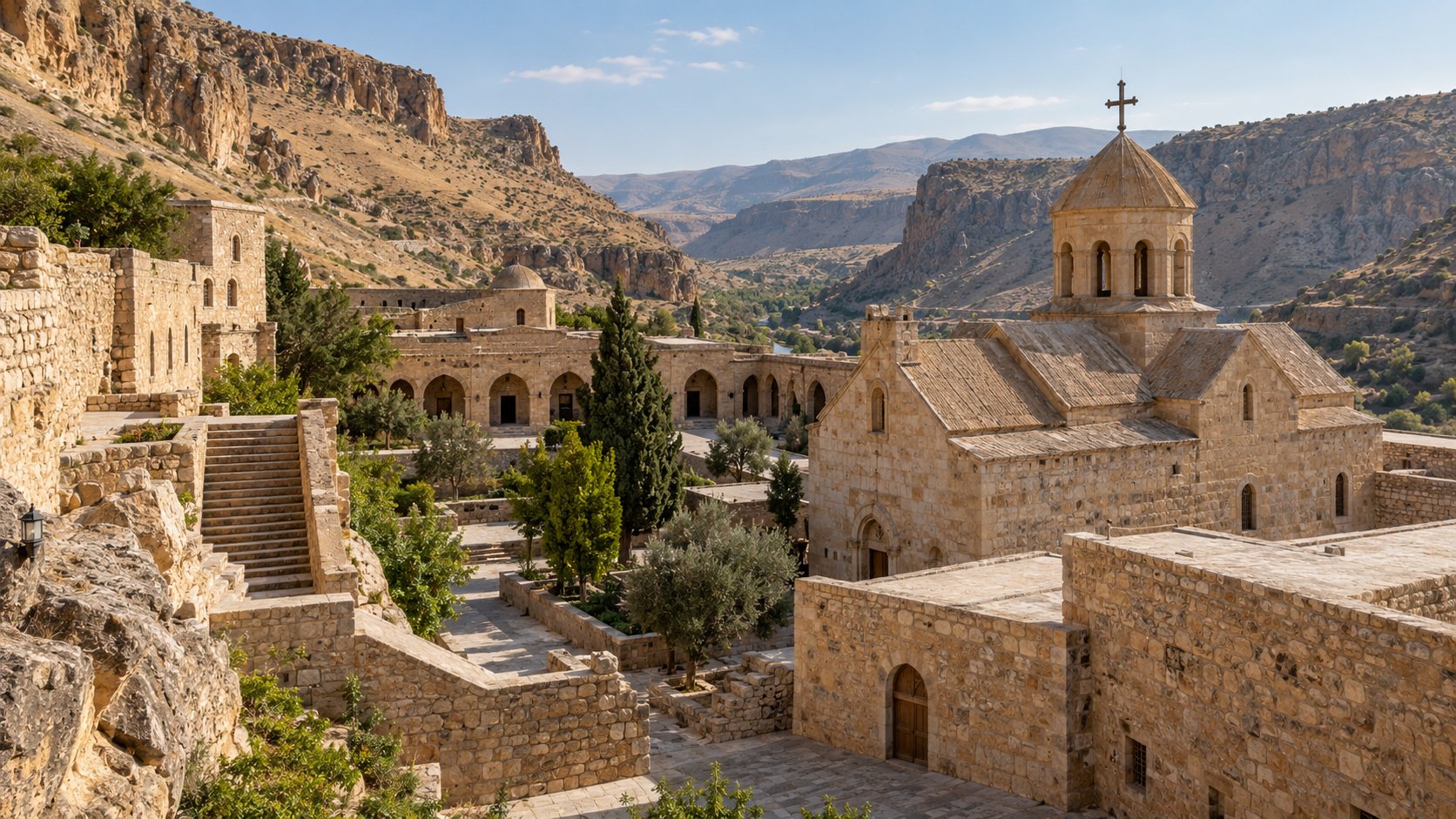
At the heart of the complex stands the Church of Saint Matthew. This barrel-vaulted stone hall features traditional Syriac architecture: thick masonry walls, carved Aramaic inscriptions, arched portals, and embroidered liturgical curtains before the sanctuary. In the adjacent martyrion (bet sahde) lie the tomb of Mar Mattai and the burial niches of medieval maphrians and bishops, including the polymath and Maphrian Gregory Bar Hebraeus (1226–1286).
The Manuscript Library
Throughout the Middle Ages, Mar Mattai was an intellectual powerhouse for Syriac literature and manuscript illumination. Scribes copied and translated scriptural texts, philosophy, and regional histories here. While centuries of conflict and fires destroyed large parts of the archive, the library still holds rare Syriac codices and illuminated manuscripts dating from the thirteenth century onward. International heritage projects, including efforts supported by L'Œuvre d'Orient, have digitized surviving texts to preserve them for scholars.
Hermit Caves and Cliff Terraces
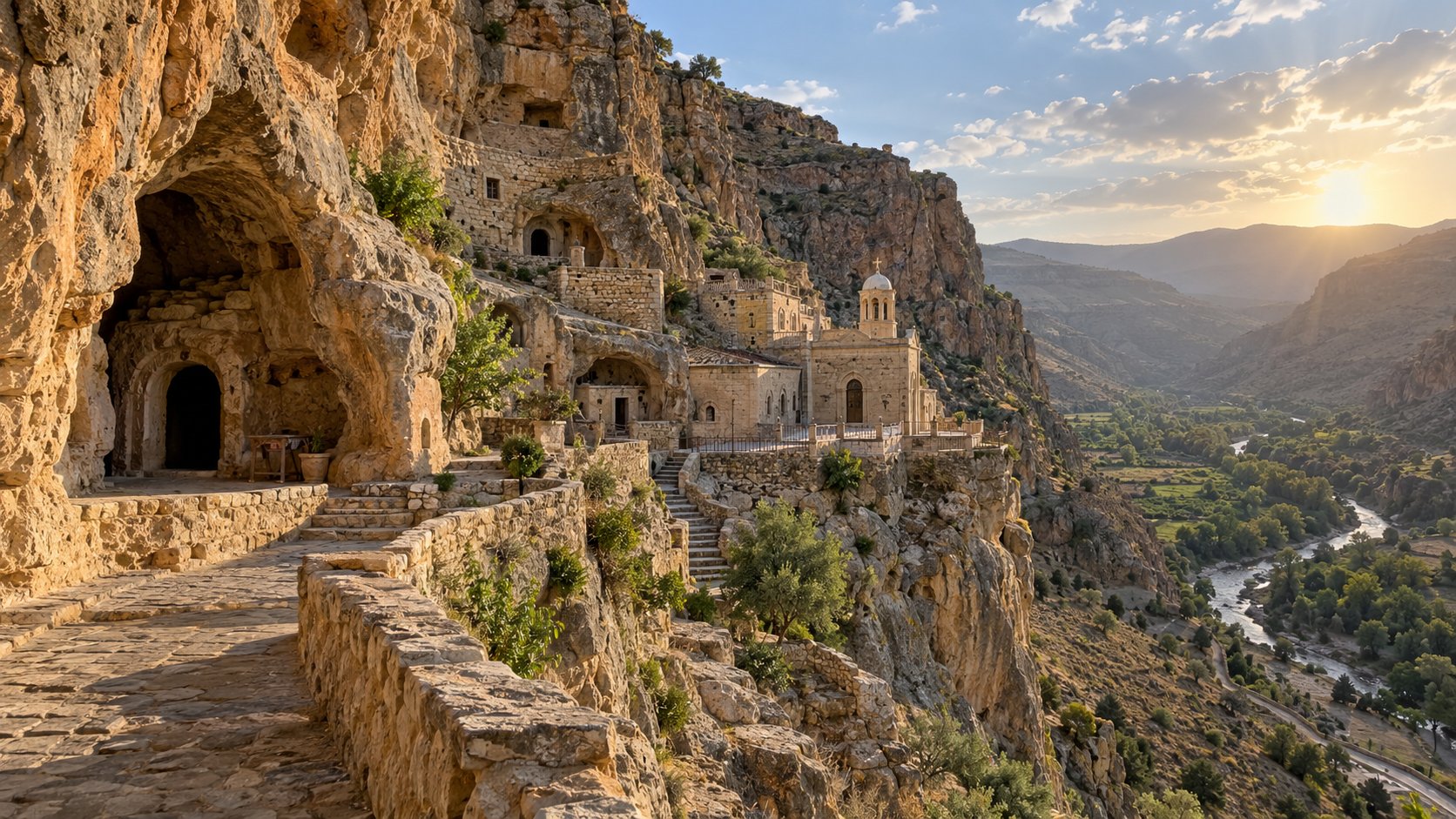
Pathways lead outward from the central courtyard to natural karst caves and rock-carved cells across the upper cliff face. Early ascetics lived in these dry, windblown shelters year-round, gathering in the main sanctuary only for Sunday liturgy. Visitors can walk the upper cliff paths to see these early hermit dwellings, with clear views across the entire Nineveh valley.
Visiting Hours and Practical Information
- Location: Mount Alfaf (Mount Maqlub), Nineveh Governorate, Iraq. About 38 km northeast of Mosul and 90 km northwest of Erbil.
- Visiting Hours: Open daily from 8:00 AM to 5:00 PM. Access to the main chapel may pause during prayer services or private liturgies.
- Admission: Free. Modest cash donations for building maintenance and the monastic community are welcome.
- Annual Feast: The monastery marks the Feast of Saint Matthew on September 18. Thousands of Syriac Christians and visitors gather on the mountain for open-air prayers, liturgies, and shared meals.
- Best Time to Visit: Spring (March to May) brings mild temperatures, green foothills, and clear visibility across northern Nineveh, as noted by TravelDojo. Autumn (September to November) provides similarly pleasant weather. In summer (June to August), temperatures frequently climb past 40°C, making early morning visits essential.
Getting There and Visitor Etiquette
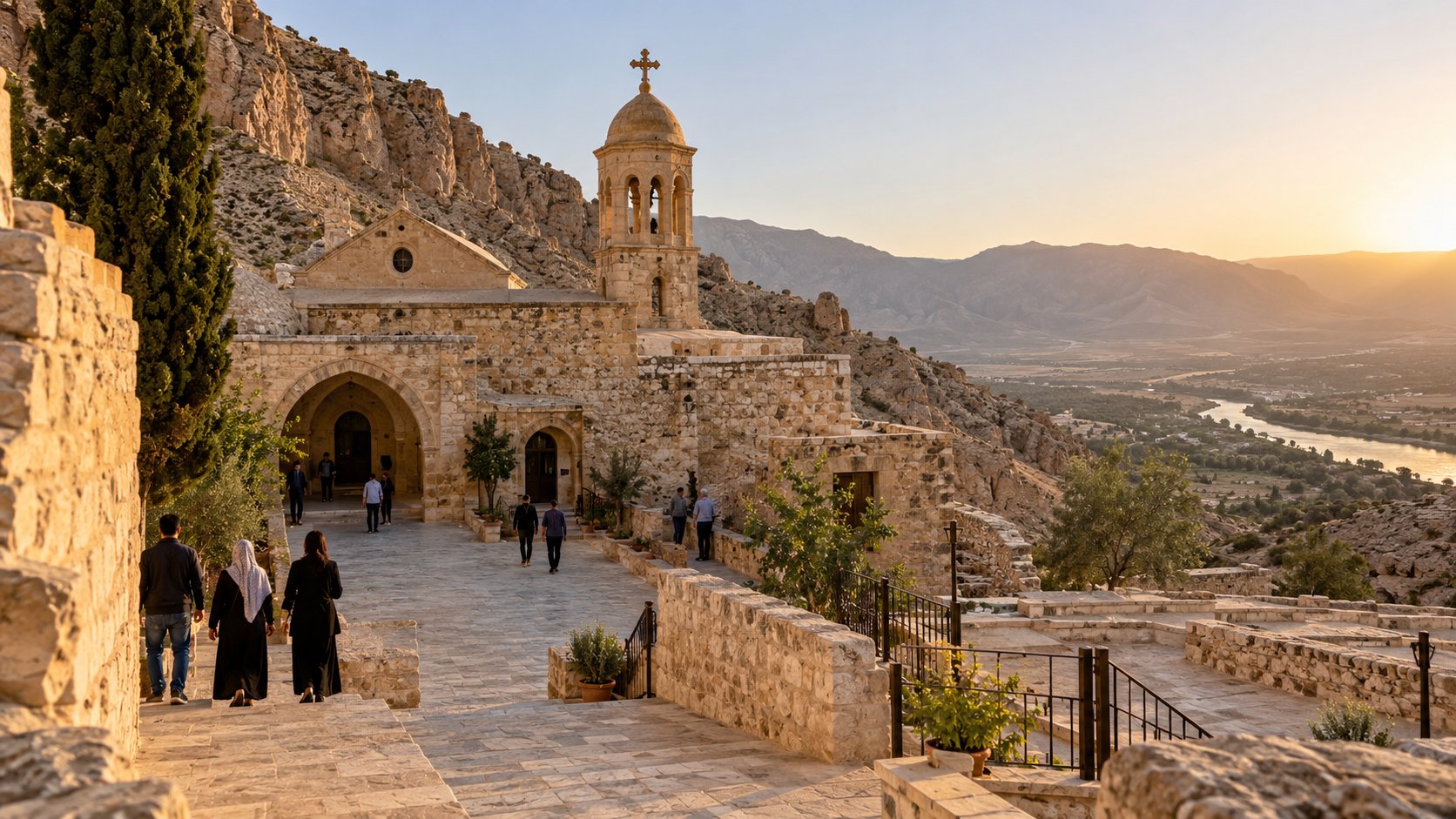
Mar Mattai is an easy day trip from either Erbil or Mosul. From Erbil, drivers take the westbound highway toward Bartella before heading north along paved secondary roads to the foot of Mount Alfaf. A well-paved mountain road leads directly to the upper parking terrace.
Because Mount Alfaf lies within Nineveh Governorate outside the Kurdistan Region's internal borders, travelers pass through checkpoints staffed by Iraqi Federal Police and local security forces. International visitors must carry their original passport and hold a valid Federal Iraqi visa or e-visa (an Iraqi Kurdistan-only stamp is insufficient). Hiring a licensed private driver from Erbil or Mosul is the simplest way to clear checkpoints without delays.
Visitors should observe monastic customs:
- Dress Modestly: Cover shoulders and knees. Women entering active prayer spaces often carry a headscarf.
- Keep Voices Low: Mar Mattai is an active monastery with resident monks. Keep conversation quiet inside church halls and corridors.
- Photography: Photography is welcome on outer terraces, courtyards, and scenic lookouts. Ask permission before photographing monks or church altars during services.
Sources
- Mesopotamia Heritage — "Mar Mattai Monastery" https://www.mesopotamiaheritage.org/en/monuments/le-couvent-de-mar-matta/ Accessed April 2025
- TravelDojo — "Mar Mattai Monastery" https://www.traveldojo.com/mar-mattai-monastery/ Accessed April 2025
- Visit Iraq — "Christian Heritage in Northern Iraq: A Guide to Alqosh, Mar Mattai, and the Nineveh Plains" https://visit-iraq.com/en/blog/christian-heritage-in-northern-iraq-a-guide-to-alqosh-mar-mattai-and-the-nineveh Accessed April 2025
❓Frequently Asked Questions
Here are answers to frequently asked questions about the content above
Mar Mattai Monastery was founded in 363 AD by the hermit monk Mar Mattai, who fled religious persecution under Roman Emperor Julian the Apostate and settled in the caves of Mount Alfaf.
The monastery is located on the southern cliffs of Mount Alfaf (Mount Maqlub) at an elevation of 820 meters, roughly 38 kilometers northeast of Mosul in the Nineveh Governorate.
Visiting hours run daily from approximately 8:00 AM to 5:00 PM, though access to indoor sanctuaries may be restricted during scheduled monastic prayer or liturgical services.
There is no mandatory admission fee to visit the monastery grounds or main church, though voluntary donations toward site upkeep and monastic hospitality are appreciated.
Travelers should wear clothing covering shoulders and knees, speak quietly in devotional areas, and request permission before photographing monks or altar interiors.
Yes, Mar Mattai is easily visited as a day trip by private car, taking approximately 1.5 to 2 hours from Erbil or 45 to 60 minutes from central Mosul, subject to standard security checkpoint procedures.